Tag: Arts & Culture for Good

Stories at the intersection of arts, culture, and social impact, from creative projects to businesses using art as a tool for connection and change.

  • In A Landscape: Outdoor Piano Concerts, Headphones, and Conservation with Hunter Noack

    In A Landscape: Outdoor Piano Concerts, Headphones, and Conservation with Hunter Noack

    Pianist Hunter Noack joins Kim Allchurch Flick for a conversation about founding In A Landscape, an outdoor classical piano concert series using wireless headphones that lets audiences wander through public lands while listening.

    Noack recounts growing up in Central Oregon, conservatory training (Interlochen, San Francisco Conservatory, USC, Guildhall), and being inspired by immersive theater to change classical music’s context through lighting, poetry, and site-specific productions, including a forest-set “Transfigured Night.”

    After returning to Oregon, he secured grants and support (including Jordan Schnitzer underwriting headphones and a rebuilt 1912 nine-foot Steinway Model D) to launch the project in 2016 with nine shows, later expanding to about 50 concerts per season across multiple states and Canada.

    The conversation highlights community-building, conservation education partners at events, logistical challenges, and Noack’s view of music’s healing role.

    Listen Now

    Time Stamps

    00:00 Welcome and guest intro

    01:05 Hunter musical roots

    01:54 Immersive theater influence

    04:25 First cross arts productions

    07:58 Transfigured Night concept

    13:18 Back to Oregon outdoors

    15:13 Grant and headphone idea

    16:26 Launching first season

    19:18 What In a Landscape is

    23:20 Choosing sites and stories

    26:40 Why music matters now

    32:09 Volunteer view and impact

    34:34 Decade growth challenges

    40:47 Community and nonpartisan joy

    44:07 Tickets and tour regions

    44:40 Dinner party question

    47:32 Closing thanks

    Kim Allchurch Flick: Hello and welcome to the Mighty Measure Podcast. Today is really unique. I’m speaking with Hunter Noack, a classical pianist and founder of In a Landscape, talking about melody and mother nature. Harmonizing music with conservation efforts in a landscape is interesting, unique, beautiful, and it’s a combination of an immersive experience.

    That takes place in urban and rural landscapes where conservation is taking place, where people can listen to one of the most gifted people I know and also be able to engage with the arts, the beauty of classical music in community and connection with increased awareness and appreciation. Here we are with Hunter Noack.

    Hunter Noack: Great to see you. Thanks for having me, Kim. 

    Kim Allchurch Flick: Thanks for being on. I know things are busy for you. And tell us a little bit about your journey and what has inspired you to this point with your music, but also the creation of In A Landscape. 

    Hunter Noack: I grew up in Central Oregon and I grew up spending a lot of time.

    In the outdoors and but also playing the piano. And so I went away to boarding school to study music, then went to at Interlochen Arts Academy finished high school in San Francisco and went to this. San Francisco Conservatory of Music. Went to USC down in Southern California, studied with John Perry, and then got a master’s in London with Ronan O’Hora and Paul Roberts at the Guild Hall School of Music and Drama.

    And both at USC and Guild Hall. At USCI was I really loved the work that the theater kids were doing. They were. They were like taking plays that they thought were interesting and just producing them in, in abandoned warehouses, in kind of old hotels. And it was like immersive theater.

    It was really scrappy and it felt really exciting. And so I, in contrast to what I was seeing in the classical music world, which was, there was some kind of interesting programming, but for the most part it, we were in the same institutional, like conservatory setting where it was, a lot of the focus was on competitions and on perpetuating this way of performing, which I think is amazing. In the concert hall, dressed up with formalities, playing complete works. No talking during the program. I think there’s, I think there’s value in that tradition and, and I do appreciate that, but I was just I found myself more like if I had a choice between which shows I wanted to go see, I would go see a theater show in an abandoned hotel downtown Los Angeles. Then go see a, a piano recital. So that kind of got me, I think. Interested in trying to figure out ways where I could bring a little bit of that adventurous spirit into my own work and performances. And for example, my senior recital at USC, I had some, I had some my, one of my.

    One of my best friends, who is an incredible actor, Lindsay Garrett, she read some poetry. I worked with a lighting designer to change the lighting. I roped off the seat, so everybody had to sit really close to the piano in the hall. And I just, and I, oh, and I also made the program like.

    I had each piece connected to a different poem that was read, and the program was printed a little bit more like a menu than like a formal program and. It was like slightly different. I still just came out and performed the pieces, some poetry read in between, but it was like a little window into just changing things a little bit.

    Changing the context and the environment in which people listened to this music completely changes their experience of it. And after USCI spent a year in San Francisco producing a play with my friend Joel Heinrich who’s a director and playwright. And we decided to create this a piece of immersive theater that was rooted in in some music.

    So at some, at times the. S actors would, with their text, would move the story forward, and then other times we’d let the music take on that storytelling role. So we had at Soma Arts in San Francisco, we had the piano on a rotating stage in the middle of the space, and we built a four room set.

    And so when. The actors were in run room. The piano would be facing them, and the audience was also in that room. And then as the actors moved to the next room, the p the piano would rotate. And so would the the audience would follow the the actors along and 

    Kim Allchurch Flick: Oh, wow. 

    Hunter Noack: And, I, it was so much fun and people, it was a wacky and weird play.

    That was also kind of dark. But it was my first, it was my first chance producing something, we were just having a lot of fun. We were like, we would meet at Dolores Park or meet in the cemetery at Oakland, and we would just like, brainstorm like, what, how could we make a, like the most fun show that we would wanna see and that, that kind of experiment.

    Took a few months. We held auditions for the actors. We raised some money. We sold out all of the, I think we did four or six performances. And and that kind of helped me, feel like, I was really kind of struggling with, okay, do I. Do I have a little window of time to do competitions.

    Most big competitions after you’re 30 or 32, you’ve aged out. And so there’s a narrow window to learn a bunch of repertoire and prepare for this kind of traditional track. And even in competition, it’s a gamble. It’s very political and everybody that per that makes it into even the semi-finals of the Van Clyburn or the Rubenstein or any of these international competitions.

    They’re like, they’re incredible pianists. And then the winners, are just, it’s they’re of course above and beyond, but I was still torn between going in that direction, full steam or trying to do something that was a little bit outside of, down a path that I couldn’t exactly see.

    So I decided to go to Guild Hall School of Music and Drama because they. They were very interested in positioning themselves as a 21st century conservatory. They were really promoting their collaborative arts program, or as they called it, cross arts, and they wanted to bring in students that had an interest in an exploring worlds between the kind of.

    Hard tracks of performing arts. So for me, I was really interested in theater and drama and also in, in classical piano. And so I chose to go there with the hope that they would have some additional resources for me to play. And and they did. I got to go to attend a improvisation conference in the Hague.

    I won a collaborate award to pro to produce my own kind of to produce a sh a piece of immersive theater at the Barkin Center. And that show I’ll talk a little bit about because that really teed up, I think, in a landscape. 

    So it was a kind of a. Theatrical girl presentation of a piece of classical music.

    So we took it was actually Johanna proNova her. She was, I played in a chamber group with her. She’s a phenomenal cellist and it was her idea to use this piece by Arnold Schoenberg, Verklärte Nacht, which means Transfigured night. And so it’s, this piece is Byberg who’s his legacy is in 12 tone music. But before he switched over to 12 Tone he was like, his music was very romantic and like kind of Wagnerian, this piece was inspired by a poem that was written a few years before by Richard Dehmel, which describes, it’s a short poem, which describes a woman who’s walking in a forest alone at night, or no, sorry, she’s not alone.

    She’s walking in a forest at night with the, with her lover. She’s pregnant and the father of the child is not her, the lover that she’s currently walking with, and. It’s a beautiful kind of poem because the man that she’s with basically says, I love you. I love this child as my own. And, there’s no shame.

    There’s no guilt. It’s all about basically love and acceptance and transforming. The kind of transformational power of love all set in a nighttime forest. And so I, when just listening to this music, it does feel cinematic. And what I wanted to do was try and bring that set, bring that environment into the space so that.

    Like my teacher Paul Roberts, one of the things I loved that he would do is lecture recitals where he would talk about each piece and give us some context. Before we heard the music, so that we knew what to listen for. And I found that kind of way of storytelling and way of listening to music, especially classical music.

    Really helpful because I was more engaged in the story. And then whether that was a story about the composer or the piece, or even about the performer. And so what my kind of task or goal with Transfigured Night was. I wanted to give the audience all of the information that they might get in a lecture recital, but give that to them in the physical set in the environment.

    So I worked with a set designer, Anna Drift Meyer, and a lighting designer Jack. We are both both students at Guild Hall at the time, and we like together created this world so that. In this black box theater, when the audience came into the space, they walked through what they walked through this forest and there was, oh, like fog and we had branches on the ground and stumps set out. So you it felt like I also burnt sage. So you know, there was some sense, different kind of senses being activated that made you feel like, okay, I’m in a different world now. I’m in, I’m clearly in the forest and it’s nighttime.

    And then we had two actors, dramatize. Basically perform the poem in period costume. And Sophie Roberts, the one of the actors, she ended up becoming my collaborative partner in starting a whole company that where this kind of theatrical project was going to be our mission.

    But anyway, so they performed the poem and then the moonlight came up on the actors. With her kind of seated in the middle of them so that it showed that this music is going to be their it’s like her inner world made audible. And so then they performed before performed the piece.

    And the like. I didn’t perform at all during that show. I was just, basically directing it and watching it. And it was so satisfying because one, I got to be on the other side of perf performing. But also just to see the power of context, the power of a different environment and what that effect is.

    On listening to a piece of live classical music. So after that, Sophie and I decided that, we really liked this kind of concept. We wanted to do it more. So we started a company called Reform Productions, and we were just going to be based in London and do these, theatrical presentations of classical music work.

    It was very open. But at that point I had to go back to the US because I was switching over my student visa to a work visa. And in that period of time she started a family and I, she fell in love and decided to stay in Portland. So our kind of reform productions company never really got off the ground in London.

    So I’m back in I’m in Oregon, in the state. I grew up in spending a lot of time outdoors and just remembering remembering how much I love being outside. The, one of the most like transformational. Experiences in my life was a backpacking trip with Sierra Club when I was 19. I think I was 19 and I went backpacking in Yosemite for, I don’t know, five or seven days.

    I can’t remember. And I just remember like leaving that trip and I had never felt as good as I. As I did that trip, and so remembering that, remembering time with my dad out fishing and hunting and I just, I knew that like in this next chapter of my life, I wanted to organize it so that I was able to spend much more time outside.

    I was in Portland doing kind of odd jobs, accompanying choirs, doing kind of whatever I could to make a buck. And then I, with the help of my partner Thomas Lauderdale and my mother, Lori Noack, who’s now the executive director of Landscape and Craig Comano, my stepdad we together they really helped.

    Write this grant that was to test out in a landscape or test out what became in a landscape. This first grant was to, was written for Regional Arts and Culture Council, which in Portland is like a regional granting program. The award money both to institutions and also to individual artists to try projects and.

    So the pitch was basically try and bring this music that I love into these landscapes that I find inspiring. And I am going to divert just for one ’cause there’s one other piece that was particularly inspiring to in a landscape, which was a show in Los Angeles by Yuval Sharon and his company, the industry, it was called Invisible Cities.

    And it was an a, a new opera that took place at Union Station in Los Angeles. There was a, an orchestra singers, dancers, and the. The audience was given wireless headphones, so the orchestra was in one area, but the singers were moving all across the station. So it was like an immersive play where you could choose your own, you could choose a character you wanted to see.

    It reminded me of this punch drunk show I saw in London where. You could go night after night and have a completely different experience because the show is whatever you, whatever character you followed. And I thought that was really cool. So I wrote a grant to try out this wireless headphone concept because that was a way to bring classical, acoustic music out into these spaces that aren’t designed for classical music.

    And. That’s so we, I got the grant. Jordan Schnitzer liked the idea and so he bought the, he helped underwrite the cost of the headphones the first year. And the, so we did nine shows in the three counties around Portland at WPA sites and public parks. Which was the theme of the.

    The grant wanting to get people in what I believe are our most democratic spaces, which are public lands, and also call attention to a government stimulus program that I know had a lot of problems, but generally I thought was really cool because it included the arts which is the works progress administration.

    During the Great Depression of the 1930s and through the federal music and theater projects, they presented thousands of free concerts and plays many of which took place outside in parks. I didn’t really know about that. Thomas showed me about a little more about the WPA and the different programs that just seemed like, so cool. So anyway, I, that was the impetus for the first year, which was in 2016. And then it went really well. The feedback was different than any feedback I had from my regular concerts. It was like, there was clearly people were coming to me afterwards, emotionally very moved. And I knew that there was something about the power of this music and the power of these places, that combination that was greater than this. Whatever that saying is, the sum of the parts is greater than, I can’t remember.

    So that, gave me some confidence to, I was like we have to, we should do this again. And so my mom was on board and so we we wrote another grant to Oregon Community Foundation to try and take this concept around the state. I asked Jordan if he would buy a nine foot Steinway grand piano for the project because I felt it was really important to have.

    Like the same instrument that’s at Carnegie Hall. Going to these, going to what I think are, as magical of landscapes as our great cathedrals and performance halls the tops of mountains, the middle of canyons and out in deserts. I thought we have to have this instrument that kind of also says.

    Like power and grandeur and, it can play as, as quietly as a little tiny flower, but also give you the feeling of being of grandeur and space. And so Jordan bought the piano that we still currently use, which is a 19 12 9 foot Steinway model D. And it’s been, totally rebuilt, but but.

    I guess I will maybe take a breath and let you ask another question, but that’s the, I guess the project summary of how I got to in a landscape and maybe I should say what in a landscape is, ’cause I’m not sure. So in a landscape is it’s a series of outdoor classical piano concerts where we give the audience wireless headphones so you can listen to the live music.

    And wander and explore the landscape with the music as a soundtrack to your experience. And so we do about 50 concerts every season. For the last, well, since 2016. 

    Kim Allchurch Flick: And as you were speaking, I was thinking about it is almost like a perfect convergence of. Outdoors. These things were not usual for an audience.

    And I grew up with a dad who loved classical music and in England and Holland to Belgium, and he took us to places to see ballet, but we dressed up to go to concerts and he would put me to sleep by playing an LP of sleeping Beauty, or it was something classical. I grew up with that. But it was never outdoors.

    It was never outside of these spaces. 

    Right. 

    Kim Allchurch Flick: And then when I moved to Portland and I didn’t know anybody I bought myself a solo subscription to the Oregon Symphony. It put me back into my childhood to sit in a hall and listen to beautiful music. It as a listener, it hadn’t occurred to me that much.

    And also technology has evolved over time. And until we could walk around with music. We didn’t and the thought of ha those two things coming together, having these, and I also am very outdoorsy. I’d love to be outdoors. To have the music and the outdoors come together is really something. And that’s why I think in a landscape is super, super special.

    And the technology, it’s almost the right places in the right time. To be able to do this that may not have been available to you earlier and you’re also love for the spaces, but also the thought of what the WPA did way back when that, that the arts are important and at a time when, you know budgets are being slashed and all sorts of things are happening, some might consider the arts frivolous and I really.

    Love that you and people like you in the arts put so much into saying, no, these, this is important. It’s important for human health. And then within a landscape, it seems like there’s also the spotlight on environmental health being added to that. So as landscape’s in its 11th year now, and as it’s grown, what have been.

    What journey is an overused word for this ’cause you’re journeying around all the time with this piano. And I’ll tell the listeners also, I have for the last probably nine years, been a volunteer for this. And what I find is that no concert is alike. I can hear the same music over and over again and be incredibly delighted with it.

    And also I have learned about landscapes that. Things that I never knew. For instance, knowing at Mount Pisgah that Oregon White Oak is endangered. While I’m listening to music, I’m also learning something about the beauty, but the fragility of all of this. And you’ve been to some landscapes. Where things are happening to make something better.

    Like converting a golf course into a space that has more biodiversity, that also means it’s being watered less, and all these things layered together while listening to music is pretty incredible. And so tell us what it’s like for you and what have, what’s happened during the 10 years? In the evolution of our landscape.

    ’cause it went from Oregon to now something at five States plus Canada. 

    Hunter Noack: Yeah. I I think the part of, when I, when we first started this, I was thinking, if we test this concept, other people will see it and then, other people will be doing this because it’s. It’s difficult, but the concept is simple.

    Basically we’re taking, we’re take, we’re using this wireless headphone technology to bring music into places that otherwise hadn’t been. And mostly the way that this, the way it is being used is with like DJs and silent discos. But there, as far as I know, nobody else is doing.

    What we’re doing, which is surprising to me. But I think it’s also, in a way, it’s not surprising because what my, because my interest is not just in classical music, it’s also in those things that you’re talking about. Like I, I love learning about, land projects, whether it’s, whether it’s how a timber company manages their forest, or how a conservation group is rehabilitating a landscape, or how a rancher, grazes their cattle on public land, in a way that allows them to graze every year. Everybody I find that like my interest is in the stories of the people that are living.

    That have a relationship with the landscape in which they’re living that is that is like deeply connected on a daily level. When we live in a city it’s a lot easier to become disconnected from systems and from how we get our food and our water and where our waste goes.

    And so part of part of like my desire to be outside is also a desire to like, to know people and know communities that have a different relationship with the land that they’re in. And so I think that drives a lot of that interest. Determines in part where we go, like where we bring the piano because, there are an, there are a gazillion parks from national parks to state to county to, city parks.

    And there are an infinite number of beautiful places and inspiring landscapes to. Put the piano and to have to share, a 90 minute experience together. So how do we choose 50 in a million? And it’s, it just becomes this like organic process where we learn about. Maybe it’s, I see something on the side of the road, or maybe somebody comes to a concert and they, they tell me about their biodynamic winery, and then I make it time to go look at it and learn how they got into this.

    It’s just like following the white rabbit down the path. And there are, of course, there are so many places where I wish we could bring the piano and do a concert where it doesn’t make sense to gather a few hundred people or, we, we have to make all kinds of decisions to whittle down the the sites that we actually get to go to.

    But I think the question about the function of, say classical piano is. Is an important one. Because there, there have been times when I’m playing the piano where I’m like, I see the world burning. And I’m like, is this really, is sitting in this practice room really the best use of my time?

    Shouldn’t I be out rebuilding? Shouldn’t I be out like physically in the world helping where I know where there’s like a. Life and death situations. And the way that I think about the purpose of all of this is that I really have to believe, I have to believe that what I’m doing makes a difference.

    And that I have to believe that telling. These stories that are in the music, I think of it like if I were if each piece were a spell and I could, some sort of healing spell and I, if I master it, then I can share that with people and it will on some sort of indirect plane of magic.

    Will help, will be helpful. And like I know that I’m not out there feeding soup to the hungry. I’m like but there’s there’s been a enough of a tradition and enough people that I respect that have said, this body of work, this music is worth. Is worth keeping alive and is worth sharing. And even though it’s not as easy for me to at this point articulate why I know because I’ve seen what happens when people listen to it and I’ve see, and I felt what happens when I’m practicing it?

    I feel, and I know that there’s there’s power and magic in it. And so I don’t think I think that playing this music outside and playing the music within the landscape with people gathered out in these, out in spaces that are very welcoming for everyone there. They’re parks. They’re like, maybe not the most spectacular parks all the time, but they’re community spaces.

    Like that feeling of coming together and gathering and like paying attention to something that’s beautiful is really enriching and rewarding. And so that, that’s made me fall even more in love. With the music and it changes the way that I like that I approach music. When I was like in my training, I was was very like.

    Regimented. I even from when I was about 11 years old, I woke up at four 30 in the morning to start practicing and I would practice before school and I was obsessed with having technique and I wasn’t ever like a prodigy, but I wanted to be. I maybe wasn’t always the best of the best.

    There was like always a star kind of super. Super human talent and my teachers through college, they all said that I had something really special and there was, they used this word potential and that, that’s, that was encouraging in a way, but also telling that, I wasn’t the rock solid competition winning.

    Machine that could, that, I would have memory lapses and I, my fingers would get cold and I would stumble around and I just, I didn’t there were definitely like challenges that I was really focused on trying to get over. And the consequence of that was that

    I didn’t do as much playing like joyful practice where there’s, most of my practice sessions were very goal oriented, like learning the notes, getting, figuring out how to get this music in my in, in me. But not a lot of kind of exploratory. Playful, fun practice sessions. And so I think through this project and through the, just even getting to play the same, perform the same program more than once it takes the pressure off and also allows for.

    Like more play. And that has helped me fall more in love with the music. And so I think if I mean for me in particular, if I didn’t have this project, I probably would be doing something else by now. 

    Kim Allchurch Flick: Interesting. I’ll say it again. It’s. Absolutely fine with me to hear the music over and over and over again.

    The same pieces. And sometimes it gets to the point where my earworm is an entire concert, and they’re all amazing and they all mean something. And I think about you being on the piano because in my role as a volunteer. I getting there early I see the work and your amazing team, and it takes a lot of work to set up and get ready.

    Then you have tuners coming and there’s so many moving parts and as people start arriving and sometimes I’m one of ’em arriving just a little on edge or having just heard the news or have work on my mind or whatever it might be, and leaving in a completely different emotional state often. Often amazing and calm, and I’ve called it the best and least expensive therapy I’ve ever had, and noticing people and noticing also, some of your greatest fans are not human.

    I’ve always seen birds. Will just fly over or perch the elk that walked in one time. And that is a, another connection to the, these landscapes. I also appreciate that when someone is there with an information table, like you have conservation districts or land trust or a private organization, I find that people spend more time with them than they might under other circumstances.

    The other thing about wandering and listening to music, it’s a slower pace than a hike might be. Yeah. And I think it also allows for more observation. Yeah. And when Rachmaninoff is playing and it’s grass blowing, what I really think about is often how do we help organizations protect this? How do we keep these places preserved might be the wrong word, but.

    Keep them cared for and cared about. 

    And the more people that know the better and the music is feeding into all of that and your talent and the way you play. It’s just in just incredible. And it is also, this is a business, a nonprofit, but there’s a lot of moving parts to it as well. There’s, you’re giving jobs to people, there’s logistics, there’s contracts, there’s.

    Numerous things happening. There’s also the advertising, and I was wondering as a big picture, what have, what has it been like to now go into a decade and beyond and what have been some challenges and what makes you optimistic? 

    Hunter Noack: I think it’s it. It really is. It’s amazing that we’ve been able to do this for 10 years or going to our 11th season.

    We have just a phenomenal team of people. You, the volunteers that it, there is so much, yes, we run as a business but it’s really fueled by people’s generosity. The, just the donations of time and money, they sustain the organization. And so , it’s a cool feeling to know that yes, we make money by selling tickets, but there’s so much more like Goodwill energy that.

    That I feel keeps us like floating and lifted. And that provides a tremendous sense of community and like binds our team together in a way that makes it feel strong. It’s. I think after 10 years, I am sometimes wonder okay, should we be doing more? There’s so many more places to go.

    Shouldn’t we be? I, I would like, on the one hand I would like to be. Have a larger geographic footprint. And so the challenge, one challenge is like navigating where do we go back and where and what places do we not go back to so that we can go to a new place. And it’s so hard to make that decision because every single place.

    I don’t, I think this is true, but if not every single, certainly most places that we go, I feel like, okay, I wanna live here. I’m, I, I fall in love with each place and part of that is I want to, then I think it gets to that feeling that you spoke about, which is a slowness and a space to actually observe and then appreciate.

    Where we are, and especially in landscapes where there is a lot of, where nature is thriving and there’s a lot of like biodiversity and then you add like a human element. And when things seem when it seems like there’s synergy and beauty and diversity. It’s like that gives me the feeling like I, I want, I wanna participate in that in that dance.

    And I want other people to like, to see this and to feel this. It’s hard to not go back to some places. Also because we build friendships and relationships in every place that we go. And and that’s a big part of a big part of the fun and the beauty of this project is the di like the broad.

    Cross section of people that come to a show. So at our, on average, about half of the people are coming from more than 50 miles away and half the people are local. So it creates this like wonderful and unusual situation where you have locals and visitors together. Both really focused on appreciating the landscape that they’re in.

    I am the, I’m like the focus of the show, but it’s different than a regular concert where, you know, whether, I suppose if you’re at Red Rocks or if you’re in another kind of like. Outdoor amphitheater, setting a big or even a really special concert hall, like the space is a part, is a big part of the experience, but the focus, most of the experience together is focused on the performer.

    And within a landscape, I’d say more of the focus is on that shared experience of the landscape and what. Kind of me as almost like a tour guide or a, a soundtrack background guide does to help people connect with that landscape. I love looking out into the audience and seeing the, like at the Alvord Desert, there’s the people who.

    The cowboys and ranchers that are actually working on the ranches that we’re on and the adjoining ranches. Then you have people that have driven eight hours from Portland and have never been, never been this far out. Never been to as remote an area as this. It’s a whole new world for them.

    You have other people, that have, driven for long distances, but where it’s like a place that they, it’s like a pilgrimage spot that they come to every year. And so you have all, you have so many different kind of perspectives ex together experiencing this landscape and it has a really.

    Unifying effect. And whereas normally there are, we put up all kinds of barriers and assumptions based on where we’re from. That the, and those kind of just, there maybe still there on, on some level for some people, but I would say like broadly speaking, people are just people and we’re suddenly like all, like at the Alvord Desert, they, they have food and we’re all sitting around having drinks and barbecue together and, it feels really neighborly. And that’s, I just, I love that. So it’s, I guess a challenge is part of me wants to just be on the road.

    All the time because it is really rewarding. And, but I, we, at this point, we, it doesn’t quite work for us to be out on the road all the time 

    Kim Allchurch Flick: well, and there’s weather considerations and Sure, yeah. Yeah. Amazing things. And that’s another thing is seasonality is. Part of where you might go.

    And as you were speaking, I was thinking about how truly nonpartisan this has been and going to some of these towns, talking with people, going to buy a sandwich some somewhere, and I say, Hey, I am here with you, the landscape. Are you going tonight? And people say, yeah, I heard about that. I’ll go if I can.

    And. Then seeing them come in or if they haven’t heard about it, but say, yeah, I have the night off. I could go. And I said come talk to me. I’ll be in the orange hat. And the delight of seeing them actually show up. The other thing that’s interesting is how people start to, to brag about how many, In A Landscapes they’ve gone to.

    And it’s delightful because people will come and say, that was my third one and I’m. I said, keep coming back. They’re all, and they’re all different and everything’s different because even when you play two nights in the same spot, the sky is different. The right people are different.

    The, there’s always something. And the music is so keenly beautiful, is the way I can describe it. Yet nothing’s the same because you have a beautiful repertoire that takes people all over the world and into all different moods. And the other thing that’s interesting about it is people sit where they wanna sit.

    It’s not like a concert hall where you can be super close to someone, almost literally rubbing elbows and never talk to them, never get to know them. And for me, there’s also that sense of claustrophobia, where in a landscape is. Exact opposite of that. You can be close to people wandering with them. The knowing glance is part of it is really something and people feeling connection and if the place is right, people take their shoes off and connect even deeper with the land while they’re listening and are grounded.

    And in a way it’s a, everywhere the piano goes, to me it’s a sense of. Giving healing to the people, the animals and the grounding in that particular place, and it leaves a memory.

    Hunter Noack: That’s amazing. 

    Kim Allchurch Flick: It is. It is amazing and I, I really want I’m so glad to have you a guest on the podcast for people to know a, that in the landscape exists and it’s shining a spotlight on places some of us have never heard of. And the other thing, it’s done for me in the beginning, just working. I didn’t have time to go to very many, but going just around Oregon, but going, getting off the freeway and going through all these little back roads and little towns and visiting general stores and little cafes and getting to know people.

    I think that’s another magical thing in the process of going to the concerts in a landscape. And you take us through places. To connect with people and slow down and really see what makes a state like Oregon. Oregon, yeah. It’s not the city of Portland. It’s, that’s the, my, that’s a part of it.

    But the state and Northern California many of these places are, and the real nature of them, date back in people’s families and into local tribes as well. That’s a lot that shines a light on that. So what else would you like to add before we go to the final question? 

    Hunter Noack: I can’t think of anything.

    Kim Allchurch Flick: I’ll add that tickets are available at InALandscape.org. 

    That’s, 

    Hunter Noack: that’s a good idea. 

    Kim Allchurch Flick: Yeah. And this year it’ll be Oregon, California, Washington State, Idaho, Montana, and Banff Canada. 

    Hunter Noack: Yeah, 

    Kim Allchurch Flick: maybe Wyoming 

    Hunter Noack: and we will maybe be adding some in Utah.

    Kim Allchurch Flick: I love that. Yeah. I know people in Utah. 

    Hunter Noack: Yeah. 

    Kim Allchurch Flick: With that, the final question is if you could have dinner with up to three people living or deceased, who would they be and why? 

    Hunter Noack: Yeah, I think that, I feel like this is a good question because it changes every day and today I was thinking, or in this moment, the three people that are just coming to mind, which should be a hilarious dinner party Leonard Bernstein, because.

    He just, especially like if it was like an older Leonard Bernstein Nina Simone and Mary Magdalene,

    either, either Mary Magdalene or Judas. I feel like, yeah, one of I, there, I just have so many questions for all three of them and I feel like they would all be really, it would make if we could have a long dinner party, that would be ideal. Maybe with wine.

    Kim Allchurch Flick: Wow. I’m so intrigued. You said Mary Magdalene or Judas? I mean, not that 

    Hunter Noack: Judas. I wanna get I wanna get his perspective. Mary Magdalene, I feel like she just probably had the most. Interesting life of all of the disciples. And there’s just a lot of lore around her. And, same thing.

    Or Jesus. There’s, I just wanna talk to more people that were actually in some of those stories. And then, I, I think Nina Simone is one of the greatest artists of all time. And Leonard Bernstein. Just,

    I, he there’s something like about, he was in the tradition of classical music, but I love I think we, if we could have a Leonard Bernstein doing the young people’s concerts again. I’m curious like the context in which that idea came to be.

    And he just, he’s like irreverent and funny and charming and ridiculous. So I thought that would be a good addition. 

    Kim Allchurch Flick: That is lovely. And it ties into what you were saying in the beginning about those funny, ridiculous. Plays that you were in and thinking about how to bring people down to a base level.

    And when you’re talking about Leonard Bernstein, it also reminds me how many children go to in landscapes and I watch them and I watch them dance and I watch them play with headphones and I watch them break away from their parents and go pick a flower or something. Yeah. Yeah. So you, I think you, in a way, you’ve got some Leonard Bernstein in you as well, because the children are there, and that to me is critically important for the future.

    Hunter Noack: Yeah, 

    Kim Allchurch Flick: They’re rolling in the grass and listening at the same time. It has been an honor. Thank you so much everyone. Thanks for listening to the Mighty Measure Podcast. Be safe out there. 

    This Episode’s Guest: Hunter Noack
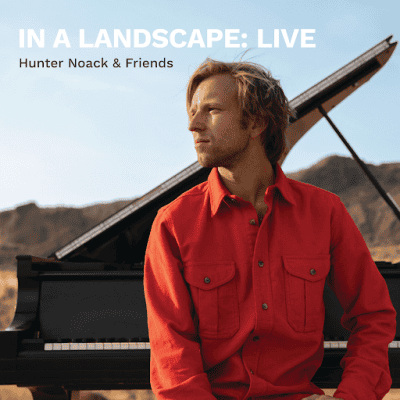
    Hunter Noack sits in front of his piano and looks to the side. Mountains in the background.

    Founded in 2016 by classical pianist Hunter Noack, IN A LANDSCAPE: Classical Music in the Wild™ is the outdoor concert series where America’s most stunning landscapes replace the traditional concert hall. A 1912 Steinway Model D concert grand piano travels on a flatbed trailer to awe-inspiring natural landscapes across the West, from national parks to urban oases.

  • Tropical Salvage and Earth-Friendly Natural Burial Vessels with Tim O’Brien

    Tropical Salvage and Earth-Friendly Natural Burial Vessels with Tim O’Brien

    Tim O’Brien, Director of Operations at Tropical Salvage and founder of Natural Burial Vessels, joins Kim Allchurch Flick for conversation about his environmental values and design-driven social enterprise.

    O’Brien describes early awareness of human-caused ecological disruption, then explains how travel and work in Indonesia led him to salvage deconstructed old-growth timbers—often from centuries-old buildings—into distinctive, durable furniture, later shifting to river “sinker log” recovery as competition raised costs.

    He discusses efforts tied to Borneo’s Katingan conservation project, restoration work in Java and Mount Muria, and challenges such as local impacts from reforestation shade on rice paddies.

    O’Brien then outlines his move into fully biodegradable woven funeral products, critiques pollution from embalming and cremation, notes growing U.S. demand for green burial (from two to hundreds of sites), and shares how to find Natural Burial Vessels.

    Listen Now

    Time Stamps

    00:00 Welcome and Guest Intro

    02:04 Early Environmental Awakening

    07:07 Indonesia and Salvaged Wood

    13:11 Building Tropical Salvage

    20:14 Borneo Conservation Lessons

    26:34 Java Reforestation Efforts

    36:19 Shift to Burial Vessels

    44:45 Greener Funerals and Cremation

    49:18 Finding Natural Burial Vessels

    52:43 Dinner With Influences

    57:46 Closing Thanks and Wrap

    Kim Allchurch Flick: Hello everyone. This is Kim Allchurch Flick, and I am delighted to have a dear friend on this particular podcast, Tim O’Brien, who runs Natural Burial Vessels and also a company called Tropical Salvage Role as Director of Operations. Tim O’Brien is a serial entrepreneur who has worked in Indonesia for over 25 years.

    He has focused on working with artisan communities to apply natural renewable materials to craft distinctly beautiful, multifunctional and earth friendly furniture and homewares. This history of design and craft segued into his current work, designing and marketing completely earth-friendly funeral equipment, including burial vessels, carriers, shrouds and urns.

    Tim’s design instincts are influenced to some extent by George Nakashima’s work and strongly by the mesmerizing beautiful forms and textures offered by nature itself. He believes that environmentally circumspect and supportive product choices should be available in every marketplace. He also believes that people evolve to prefer natural materials in forms to characterize their living and workspaces.

    Tim leads the natural burial vessels design team, and he also offers an experienced hand in logistics and management. Today’s topic is a lasting last and lasting gesture of peace within nature. Welcome, and thank you so much for being here. 

    Tim O’Brien: Hey, Kim. Good to see you. Thank you for having me on your podcast.

    It’s flattering and I’m inspired. 

    Kim Allchurch Flick: I’ve been inspired for years because we met a couple of decades ago. 

    Tim O’Brien: Yeah. 

    Kim Allchurch Flick: Because I found out about Tropical Salvage and I’d love the furniture and friendship has since blossomed and I’ve been following you into natural burial vessels. 

    Tim O’Brien: Yeah. 

    Kim Allchurch Flick: So I’m always inspired social enterprise at the very least, with environmental care.

    What inspired you in the beginning? What things did you see in life that helped you create tropical salvage and what are just, what are some of the values that led you along the way? 

    Tim O’Brien: I think in terms of my my determination. To work in capacities that are supportive of, environmental integrity.

    I think exposure to environmental tensions and dramas when I was a young kid that, predictably were man driven. One that I always found pretty interesting was just the I grew up along Lake Michigan in the suburbs of Chicago, the North suburbs of Chicago. And the Great Lake system has been artificially connected to the Atlantic Ocean, right through the St.

    Lawrence Seaway. And when I was a little kid, I liked to fish. And there was a period when a species called the Alewife, which is a kind of herring, that likes to. It’s sea going, and then it spawns and fresh water. It was just hordes of them were coming into Lake Michigan where they had never reached before because there was, there were too many, geographical obstacles along the way.

    There was just never there. But it was one of those things that occurred because we monkeyed with the ecosystem. And so when I was a kid, I remember these huge, really huge piles of this fish, that had died after spawning, piled on the beaches. And it was really awful. It looked very, it looked like a great disaster, which it was an ecological disaster.

    And in order to, and the reason that occurred, of course, is that. Another group of species has been, had been compromised by an also seagoing fish that had gotten into the Great Lakes because of that St. Lawrence Seaway. And that was the Lampre eel, and it was killing all of the big fish that ordinarily would eat the, but it’s a, it’s a very interesting series of ecological disasters that humans reacted to, to try to, fix.

    And so that, that was one of my early inspirations to understand how ecosystems work. Alright. And in school I’m certain I took some courses that focused on that my sort of inclination to, and readiness, to, to start tropical salvage. Was to some extent influenced by my mother, who always appreciated old wooden antiques and yeah.

    Oh yeah. She was a, wonderful sort of celebrant of old wood before it was a popular thing for, it was popularized, for example, by Martha Stewart or something like that. But in any case times were different. When we were young Kim, it was easier, this is pre-internet.

    It was easier, for example I think America had, though we have economic strength today, we had yet more strength in some of those earlier decades, late in the 20th century. My point being, I was able. As a young man who did not have debt from college to save enough money, you could afford your own apartment, you could save enough money to travel frugally in parts of the world that were extremely charismatic, not yet disturbed by the heavy hand of capitalism.

    And and I took advantage of that rather than seeking a, like a corporate job or something like that, as a lot of my friends did. And so during that time, traveling around Southeast Asia in particular, I became aware that there were all of one, you become acutely aware of biodiversity, right?

    Because it’s, especially back then, think of it. Between the time when I was about 10 years old and today the population of the world has approximately doubled, right? So there were many less, many fewer people back when I was adventuring, if you will. And you could do it so easily and affordably Back then, I many times I would stay in simple but clean, shared rooms, with several people for a buck or two a night, traveling in Laos or Thailand or Vietnam.

    But when I did finally make it to Indonesia in mid 1990s. I became aware that one, it’s one of the most biodiverse places on the planet then and continues to be today, though much has changed. And also within that scope of biodiversity, it had the most, most diverse number of tree species because of all the speciation that occurs on the world’s largest archipelago.

    It was a very foresty woody place. And yet it was, it’s wood resources were being recognized for such a narrow scope of species for the international market. And by that I mean they had vast teak plantations, they had mahogany plantations, they had rosewood plantations and then paper pulp, acacia tree plantations.

    They were not, they were creating all of these plantation scenarios for growing trees. And in order, ironically, a very common scenario in those days was they would cut down biodiverse old growth forest and then plant a plantation for the international market. And my feeling back then was, they’re wasting so much wood.

    And then at about the same time they had be, one of the expressions of modernization in Indonesia was they were deconstructing all of these old wooden structures and then replacing them with concrete and rebar. And so all of this deconstruction would be, I’d be traveling around one of the, beautiful islands there and discover that.

    Somebody had invested to expand or build new building, expand existing buildings, or build new ones. And they were deconstructing all of the old buildings, some of them three, four or 500 years old. And you just, you’d encounter these huge piles of beams and boards just sitting alongside of these dirt roads.

    And I just started asking questions because at the time I, I was thinking, I want to get into, I guess I already was doing import business. I was buying at the time silver jewelry in Thailand, in India, and then in Bali to send back to the United States. The, the profit margin was pretty good, but it’s something that didn’t really inspire me.

    It was just, I was chasing money around. It was reliable. It turns out that young people forever want to orate cement themselves with Bobs, right? So I’m selling lots of silver jewelry. But I started to see this as an opportunity that, I would encounter all of these wood opportunities, used wood, deconstructed wood.

    And there was not, the ethic of recycling had not really infected that culture yet the way it had in the United States. So I came with kind of what eyes open to a possibility like that because I mean it’s pretty, I think it’s plain why Indonesia didn’t start to practice recycling wood as quickly as the United States because there was so much wood there.

    And when people thought of. Acquiring wood for a project, they would just look at a teak plantation and gauge how many trees to cut, but in my opinion too, from my experience, my mother’s guidance of perspective when I was a kid about what is beautiful, right? I found old wood, particularly beautiful because of its history and its blemishes, its distress.

    And so a lot of these woods already had a quite distinguished history. My first project actually was salvaging I many mosques that they had deconstructed in order to build much bigger mosques. And I found that very poetically. Enchanting, the idea that this wood had been used in houses of worship for sometimes three and 400 years, absorbing all of that passion of belief, and suddenly it was just cast to the side of the road, right?

    And I just thought, wow, these beams were, they were like 15 inches square, five meters long. And they would sell ’em to me for a song. Sometimes they would be happy if I just would arrange to get them picked up. And I didn’t have any idea what I was gonna do with it, except that I knew that this wood was strikingly charismatic, strikingly unique.

    You couldn’t really see what the woods looked like. But because wood over time, it all there’s this uniform grayness that it all will acquire when it’s left in the weather. But my, the logic that occurred to me then was that, look, they’re not gonna, back in the day, 300 years ago, to build a special structure like a house of worship, they certainly would’ve chosen the best woods that were available at the time.

    And so I, not a big risk because just by lifting those beams, you knew that they were dip tarot carbs, which is a family of tree that grows in the Southeast Asian tropics. And and those are all really have always been sought after for their, integrity as wood. I just started acquiring all these piles of wood with no, of course I was already thinking we just have to make furniture out of this.

    I examined flooring as well, but. Whereas in furniture, I discovered people are much more willing to accept a variety of woods carpentered together as one form. Flooring is not the same. They want more uniformity. And so we could never really get the flooring thing going. And also because the woods were so distressed there, there were lots of blemishes that were acceptable and I would say even beautiful in a piece of furniture, but on a floor, people might see it as a flaw that, you might trip over or something, right?

    So anyway, we just started experimenting because again, it wasn’t expensive back in the day. This was pre-internet. This was, there were different sort of hierarchies of value in different parts of the world. Fine woods, which at the time were probably, fairly expensive in the United States, were regarded as just so many weeds.

    And, especially if they’re recycled or deconstructed or whatever in Indonesia. And so it was easy to, back then to experiment, to make mistakes. Mistakes were not so overwhelming, the cost of them was not so overwhelming. And so we just went about making different furniture designs making mistakes along the way.

    And eventually we started shipping containers to the United States. Of this, a hundred percent salvaged At the time it was deconstruction wood. I’ve been doing this for like 25 years. That deconstruction resource was cost-effectively available for about five years, and then many people recognized the resource.

    And so people with of greater, capacity, business capacity came in and started driving the prices up. And I realized that for what my sort of price structure was, I could no longer afford to buy that. So we alone in Indonesia, I believe, started seeking other salvage wood opportunities in, we, first thing we did was go to some of the water resources, the rivers and the lakes in the area.

    They were all full. Sinker logs absolutely full. In fact, I would say clogged in some places because nobody had ever salvage them, ever because there was no perceived need for it. But I was doing it to relieve stress, relieve impacts from existing forests, right? So I figured the more that people will buy these salvaged wood products, the less, impact there would be on forests.

    And I’m sure that that has worked its way into the, that calculus in some ways. But, I became pretty quickly aware that look, each human has just such limited capacity. And you pick your pursuits, you pick your battles. And this is something that I could do, I could turn what was just the other day perceived as garbage into value.

    Bring it to the United States, prove that value. Now, that didn’t come easy because I believe even in Portland, Oregon, which is progressive and has very woody aesthetics and everything, it was not an easy sell in the beginning to communicate to people, prospective consumers, buyers, that this is value, these, these distress, the history, the biodiversity of the wood itself, the different boards that are used, that, that has added value.

    Most people. They were used to in the marketplace encountering wood furniture with uniform grain, straight grain, uniform color. If there wasn’t the precise uniformity of color that the company, you know, that the consumer wanted, the company would just throw some artificial dye on it to darken it or lighten it or whatever.

    And my feeling was really the less we do to these beautiful representations of, these artifacts, of these ecological artifacts, these pieces of wood, the more beautiful they are. And that’s always been my perspective. It’s not shared by everybody, but I think we did turn the minds of many, many people, because tropical salvage today continues to have strong demand by a small.

    Sort of sector of the furniture buying economy.

    Kim Allchurch Flick: Yes. 

    Tim O’Brien: And I’ve noticed too many companies imitated us over the years. They, they started to bring distressed and story wood, this was from a burn barn in Iowa. This was from, and I feel like if I had some, effect on growing that perception, then that too is a positive outcome, right?

    I think we were very, certainly in the Pacific Northwest influential in, fortifying that value perspective, that these old woods are actually added value rather than, not as good as these traditional perspectives on how wood furniture should look so 

    Kim Allchurch Flick: well.

    And as a consumer, I can attest to that because I know I own some pieces that are unique, that even though the style may be the same, each one is unique. Oh. And when people see it the compliments, but also the longevity. 

    Tim O’Brien: Yes. 

    Kim Allchurch Flick: These will last for years. 

    Tim O’Brien: Absolutely.

    Kim Allchurch Flick: And I was wondering if you could also tell us what I’ve learned about your heart and your values over the years is also how the people who are doing the craftsmanship.

    Are treated and supported by you and also your desire to help save some of the forest in Borneo in other places. And how has that translated 

    Tim O’Brien: Java and Borneo? So we did, to clarify the, my connection to Borneo, we were part of a group that was developing one of the world’s largest forest conservation sites.

    It’s called the Katingan Project. And it’s in Borneo central Borneo, I believe. It’s an amazing thing. I know the principles in that project. I worked with them in the beginning and our contribution was I was working there before they were even, maybe they were envisioning it, but I had discovered, my group had discovered that in.

    South Central Borneo, the river salvage opportunities were like off the charts, amazing, huge sinker logs, and we did salvage many of them. And the reason they existed, of course, is because of the rapaciousness that people practiced in harvesting, the trees from those forests 40 or 50 years ago.

    Again, Southeast Asia has some of the most it, it’s densest or richest biodiversity. And then also the range of tree species that are phenomenal. Within the Dip. Tarro carp family have always been sought after. Chinese concerns have always recognized the great value in those, but.

    No one ever stopped to, these logging expeditions had occurred for throughout the 20th century, I’m sure. And nobody ever like dove into the rivers to assess what might have become cast off by those projects. I, so we started doing that discovered there again, so much wood salvage opportunity.

    We brought that to the attention of the project and the people who were envisioning the Kagan project and they, for a time included us as a a facet of the broader project. And so we were salvaging and we had, the point to a lot of this is to create jobs. That are, that are environmentally reasonable, right?

    So work on salvage wood was one of those things. What we did not anticipate was a cultural impediment. And this is, the world was so different back then, but Borneo to some extent was just in the parts where we were working. It was really only in a sleepy way beginning to participate in international capitalism, right?

    Many of the people, they lived these, they were no, they were diac people who no, no longer were nomadic obviously, but they still lived with a certain kind of. Ease and comfort in the simplicity and purity of the natural place they lived in. If they needed food, it was easy to go catch fish, or it was easy to walk into the forest and, capture a wild boar or many of the other mammals that lived there, then the weather was, is beautiful year round.

    And so you really just needed a shelter. The food, everything was there for you. And, as populations grew as business practices started to capture some of the natural resources, that ability to easily live life simply, diminished, right? So they began to participate in the the market economy.

    And we engaged crafters from in this area to, to work on making furniture parts. And then we would compile all these parts and send them to our central production in Java, and then assemble all those parts and refine them. That was the business model and it would’ve worked, except what we didn’t anticipate is the cultural tendency to, when you’re, when they’ve decided they’ve worked enough, like they’d work a week, maybe two weeks, and then decide they want to take a week off.

    And that was, that was a surprise to us. That was a cultural norm, because when you think of it of course people wanna do that, right? If you’ve never, if you’ve lived in a culture where life was, natural bounty surrounded you, what’s the point of working every day to scratch out a living, right?

    For, as they over time integrated with the global economy and global cultures, of course, they would form these ambitions and aspirations. Okay I hope X child will go to school here or whatever. But at the time it was very simple in this place and so we could not really make that work even as the Kagan project.

    Has continued to be a re like a world leader in forest conservation projects. And I think they can, they have modified the model, but I think they do have woodworkers on site now who are in a lesser, to respond to a lesser vision. I think they sell salvage wood objects at the site.

    So if there are visitors who go there, they might be able to buy something or whatever. But I saw, I envisioned something little larger at the time. So that was my involvement in Borneo. We’ve acquired most of our land in Java and that has been fascinating because again, it was inspired more by.

    Anecdotal observation over the years of working in Southeast Asia, intuition rather than deep and complex scientific calculation. So my view was, and the view of my associates was that nature is so driven to exist, to express itself in the tropics, with biodiversity and competition.

    And there’s just species, back in the day you’d go into some of these hinterlands in Indonesia where there had been few people ever and there were still, primordial forests. There were trees that were just one after another. Huge diverse. I just thought that was Indonesia, my naivete.

    I didn’t realize that this was the last gasp of this representation of nature right on the planet. Because I was visiting these places before the oil palm industry had yet really captured land. And but my experiences encountering biodiversity, in the mid nineties in the out, the far parts of Indonesia made it clear to me that if you just leave land alone, give it the time to make its, ecological decisions in a place that is.

    More suited to, to growth to life than any place on the planet really. Because in Indonesia, especially in places like Java, you have tro a tropical climate, and then you have a sort of, soil fertility aspect that’s provided by the 21 active volcanoes on the island of Java. And by that I mean they are always, one or two of them is always spewing.

    And we always, every year we read in the news here about a volcano that has erupted in Java, sometimes Sumatra, sometimes h Lui, but most of them are clustered in Java. There’s constant. Volcanic ash falling on Java. And that is some of the richest material for plant growth. So that plant growth begins and it attracts everything else, the insects, the, the birds, the reptiles, the small mammals.

    And so intuitively we understood, okay, this is the most, the richest, most dynamic growth, natural growth that occurs on the planet. And so we were like, okay, so if we set aside, our first purchase was I think two hectares. What is that? Five or six acres or something? I’m not sure.

    But a beautiful bit of land that previously had been a rice field, but had little sort of patches of forest still around it. And then there were other rice fields too, down to this beautiful and rare in Java, undisturbed small river. ’cause usually they’re, what happens to rivers in Java, which I think is the most densely populated place on the planet, is what happens to them in the United States.

    They get polluted. But so it was just an idyllic little spot. And so we purchased this land with the idea of the only work we would do on it would be to plant a set of these dip carbs and just let it grow. And occasionally, it had some fruit trees on it. So we’d go and harvest the jackfruit.

    The it had a mangus tree. It had a durian tree, but we bought it. Production was about two miles away. So we bought it in this like rural little enclave, very simple community and planted these trees. The, our local neighbors were pretty excited about an idea of somebody doing something different with the land that wasn’t agricultural, wasn’t usually growing rice, excuse me.

    And sure enough, within five years, the trees were growing incredibly quickly and sure enough, all of these species found the little spot, partly prob, I think because, the biodiversity was generated so. Rapidly there probably, because so many places were displacing species at the, just like I said, when I was a kid, the planet was, the population of humans in the world was half as much as it is today, and Java is a very densely populated place.

    But yeah, on six acres within five years, there were all these, insect species, reptiles. Within 10 years, we got C cats, we had squirrels, we had, small mammals and I believe, and within 20 years, the trees were really getting pretty big. Those that existed were huge and the local community took full advantage of the fruit that was grown on the property.

    And, we said go ahead and harvest it, but then an issue occurred. We didn’t anticipate this. So often we just don’t. People who were growing rice around our little forest restoration project said the shade that was now cast onto their patties was making them less productive.

    So the, as the trees grew bigger, the shade was making the rice patties less productive. And they had a local meeting, we weren’t violating any laws, but they basically at a local meeting and said, you have to cut down all the trees. It was really stunning and sad, but at the same time, just, this is what comes of.

    Lots of people in one place, and so we compromised with them and cut down the trees that were casting, the shade that was the most onerous to them. But, it’s the site still exist, exists today, as does another much larger site. We worked with the Indonesian government on Mount Moria to create a 60 hectare restoration product project, and those trees continue to grow today, which is, but unless really you have culture wide agreement to the importance of.

    Integrating our business pursuits with environmental rationality, right? We’re going to keep distressing the natural environment. And so what I do, what I’ve done with Tropical Salvage is just, a tiny example, a tiny demonstration of a person with an idea to do business without dis, with as few distresses, meet it out to the, natural environment as possible.

    And in many ways, benefiting the natural environment with, thoughtful restoration work like yourself, your 10 acres in battleground. That’s huge. That because you’re approaching it. Thoughtfully sensitively, you’re informed, but you have discovered what hard work is. It’s really challenging to try to do 

    Kim Allchurch Flick: it 

    Tim O’Brien: right.

    Kim Allchurch Flick: Indeed. And so wonderful to have help and to have the resources. And I think about your story in Indonesian, how really beautiful and wonderful it is to create a company that supports you and your family and others and gives back. And yet it’s not a complete panacea in terms of Oh, the rice and I think the other thing I’ve seen is small is mighty.

    And there are pockets of areas like Costa Rica for instance, re forested over 30 years from 25% only forest that was left to now 50. And a lot of it’s based on very small biodiverse. Farms not industrial and they’re connected together and it’s really made a difference. So like I have some hope there.

    And I al I’m also so intrigued by your story with Tropical Salvage, which still exists, is still amazing. And you’re also going into a new industry. Yeah. 

    Tim O’Brien: So this, so we have, as you mentioned, segued into weaving, using quickly renewable plant species to weave burial vessels and other funeral products.

    And I’ll tell you how we got into that. But I, it’s an exciting sort of offshoot of tropical salvage. We continue to use naturally occurring materials. So a part of Tropical Salvage has always been creating handwoven accessories for the furniture. Handwoven from natural naturally occurring species like sea, grass and water, hyacinth and pana and raton and so forth. And we’re known in our little space in Indonesia as a company who does that, as well as making the salvage, which would furniture.

    And a guy who I was acquainted with, who does his work in Europe, he asked us if this is now three or four years ago, he asked us if we could weave him. Some caskets and I was a little taken aback. I had never thought of that as a use of what we did. But after some practice we were able to do that to his satisfaction and it led me to consider something us of us who are living and life centric.

    Rarely consider what goes on in the funeral industry. We don’t really become acquainted with that until somebody close to us passes. And it is either our responsibility or partly our responsibility to answer the needs of that milestone. And, but because of business, I started thinking about, wow, he was really happy with these woven caskets, what’s going on in the United States with woven caskets. So I started to do a little research and discovered that not enough was being done in the United States with respect to earth friendly funeral practices in general, including what handwoven caskets.

    And while there was some established concerns, businesses, none of them had the craft ability or the range of material options that we were aware of and had used over many years in Indonesia and much of what was offered in the market for natural burial options or whatever. Were very simple and in my opinion, almost frumpy.

    They were entirely concerned with the earth friendliness, which is greatly admirable that that was happening. But there was not, in my opinion, enough attention paid to the aesthetics, which we had become very good at least envisioning and practicing within a range. Like I’ve told you what my aesthetics are.

    Not everybody loves ’em, but there, they’re rustic. They’re, but with an emphasis on fine craft, right? And using beautiful materials. And we envisioned those three years ago that we can. Bring our products to the United States and very, very cost competitively offer much better products. What I didn’t understand then, because in my mind it was just absolutely rational.

    If we can practice something in our culture that is much more earth friendly than how we’ve been doing it, and it’s not causing any kind of sort of market distress, of course people wanna do that, but I didn’t anticipate, as with in Borneo not anticipating some cul cultural elements of the people who we employed, I didn’t anticipate cultural elements of my own culture, which is just how.

    Committed to traditions. For example, one thing is committed to traditions. People are, even if they’re not particularly environmentally sensible and you gotta give people a lot of latitude when they’re interpreting what they want for the milestone of death, right? So whatever people want, we pretty much give them, but I figured if we get it into the, out, into the consumer awareness that, look, you can have beauty and earth friendliness if you choose to, bury your loved one, for example.

    This is something you can choose and it’s very affordable too. So I figured just offering better elements. Would appeal to people. And it definitely has caught people’s attention. I didn’t realize how few people, many progressive people I know, were not even aware that these options exist, like woven caskets that are, entirely handwoven. And I should add, this is a bit of a non-sequitur, well, not a non-sequitur, but it’s a bit of a departure from what I’m talking about right now. What really excites me about this industry as well is that the weaver weaving community we work with, I’ve watched it absolutely collapse in 25 years.

    There’s still little families who work here and there to make the furniture accessories that we produce. Storage vessels and floor mats and table settings, things like that. We still sell that stuff and they still make them, but there’s just not wide demand when you’re, when you have competition from, say China, where they have great government supported, machinery to do the weaving in any case the market.

    But with the caskets that we now weave and the carriers and other woven products there’s such a demand that occurs in the world now, and it’s just growing, just beginning to grow in the United States that I’ve watched these little groups of family, cottage industry weavers. Begin to work with bigger weaving groups and get paid more money because they really do have a very clear, a lot of them have a very clear skill that is in demand.

    Because when it comes to end of life, many people like myself, we were, and you Kim, we were raised on being, trying to be sensitive to the environment whenever possible, right? Even in a world where we’re jerked around to do many things that we know aren’t really the best thing for the forest around us or whatever.

    But we have that sensitivity. It’s ingrained, we were raised in the 1970s, the eighties, and my feeling is that a lot of people, if they’re, oh, I was talking about that. So the demand is rising because more people are buying into it. It’s that simple, right? 

    Yeah. 

    They don’t want their last gesture on earth to be contamination of the soil and water.

    And frankly, I know this is really it’s troubling to say it perhaps, but cremations are not really a great thing. Okay. The they’re 

    Kim Allchurch Flick: actually really bad. 

    Tim O’Brien: They’re really bad, right? But you don’t wanna be the one to get out. I’m not gonna get out on a street corner and start saying, cremations are bad and waving my finger because they are the most economical and maybe they’re not environmentally economical in the long term, but in, in the short term.

    With respect to people’s, financial profiles. People don’t have a lot of money to spend on a, a burial plot and what other accoutrements, right? And so I think a lot of the choice of a cremation for people often is almost purely economical. But I am here to say that many people can’t afford alternatives that aren’t so expensive, but certainly are more expensive than a cremation.

    And if they really, if the person who has passed really cared about environmental issues and the providing the kind of, ceremony that is appropriate to that person’s perspective during life is not too economically onerous for a family. They really should consider alternatives to a cremation Yes.

    And but at the same time, somebody, some people are going to have to get out there to report that the system of cremations is not really good for us. All of these, particular matter is that occurs from cremation. It goes into the atmosphere. There are not, strong filtering systems that are applied 

    Kim Allchurch Flick: Yes. To 

    Tim O’Brien: these 

    Kim Allchurch Flick: criminal and I’ll add to the show notes, a blog that I wrote when my mother passed away, because it’s often, we don’t think about burial until something happens. And I have empathy for anyone who’s surprised by a death and they have to make a decision.

    But when we know someone’s aging and there’s time to plan what my sister and I found out is that there weren’t many options until we asked and we started asking I knew that cremation is very heavy carbon load and it’s not environmentally friendly at all. So we asked for aquamation and it took I think eight different mortuaries to find one that would actually do it because the competition is so heavy to keep the old industrial.

    Burial paradigms going, there’s a lot of money there. And the other thing was, where are your green offerings as we walk past all these multi-thousand dollar caskets that, that never biodegrade and that and lots. I also researched, I’ve and found out that when people are embalmed, a lot of times that pollutes soil in the end as things over time start to leak, horrible things to think about.

    But the thing that gives me optimism as as we wrap up this story, because what you’re doing is so innovative, even though it’s ancient and the thought that. Given the knowledge, people can make decisions even in the short term. And the optimism I find is in what you’re doing completely biodegradable, yet beautiful ceremonial ways of bearing people.

    Also finding that there are cemeteries popping up that only are green. That’s all they will take. And then the other thing is the advent of many states approving and legalizing soil transformation, also known as human cremation. And that all these things are coming at the same time. And part of it is asking the questions.

    And I’m hoping that in the future it doesn’t take somebody like my sister and I going to somebody and saying, where are your green offerings? And finding out that they’re tucked in the back corner somewhere, but they’ll be more in the forefront. This is what I believe you are doing with natural burial vessels and also the other two companies that are doing the the soil transformation are gaining traction.

    Absolutely. So you’ve got a, a wave to ride. So I was wondering as we wrap up, if you can tell us what makes you optimistic and how can people find you and find out about these things? 

    Tim O’Brien: They can find us. Just, you can go, our email is info@naturalburialvessels.com. Our website is natural burial vessels.com.

    We are, so we’ve restricted our work to the Pacific Northwest thus far because there’s a lot of demand here. And as you just noted the, the numbers of dedicated natural burial cemeteries or sites have really, really grown dramatically in only like 16 or 17 years. I think 16, 17 years ago, there were two dedicated natural burial cemeteries in the United States today, I think it’s in the six hundreds and rapidly multiplying because consumers want this.

    And another thing that I encountered that I didn’t anticipate is just these sort of resistance within the established industry to yeah, to paradigms that are not in accordance with what’s been established now for about 150 years. And. They, I think many of them thought they could just ignore it, just avoid it.

    And it was a trend that would go away. But in fact, this is a deeply held feeling of many, of an increasing number of people. And I think because baby boomers are beginning to pass, right? And they really believe that we, when we can we should be an ally to the natural environment and not a, an impediment to it, smoothly occurring.

    And

    Kim Allchurch Flick: oh, what beautifully said, what a beautiful quote, be an ally to the natural envi environment, not an impediment. 

    Tim O’Brien: Yeah, an impediment is a euphemism, right? We’re we have caused such contamination. And I know it was not intentional when a lot of these practices were formed and became habituated.

    I don’t think we were even thinking about the repercussions within the natural environment. We were just thinking about ways that we wanted to celebrate these people who we love. I think many families, if they understood that these established ways of celebrating people who we love was not really in keeping with the perspective of this person who we love, who has passed, they might want to adjust some of the practices.

    And I indeed, 

    Kim Allchurch Flick: I’m 

    Tim O’Brien: absolutely sure that that’s true. 

    Kim Allchurch Flick: What a beautiful way to, to wrap up this segment, be an ally to the natural environment, not an impediment. Then we both have optimism that people are catching on and also people don’t always live to be able to visit the loved one’s sites. So some of these other ways make memories and shrine’s different.

    Tim O’Brien: Yeah. There’s so many things. I mean, it’s exciting time.

    Kim Allchurch Flick: I concur. That 

    Tim O’Brien: was at the end. Okay. 

    Kim Allchurch Flick: Let’s, I have a final question for you that I always find so intriguing and did I lose you? You are so amazing at doing such incredible things with two businesses to make the world better. But the last question is, if you could have dinner with anyone living in 

    Tim O’Brien: deceased, I’ve lost you.

    It happened to our.

    Of course I think many people could think of many different people. Off the top of my head, I think this is a good time for satire in order to really needle what’s going on in our culture in the United States in particular. I think I’d really like to have dinner with Jonathan Swift.

    One of the most what pointed satirists of what 18th century, I think wrote Gu Gulliver’s Travel and several other notable. I’m not sure they were books, but they were treatises on just some of the problematic ways that England was, behaving back in the day. And that I think of another English guy I’d like to meet, who his name is William Dampier, also from, I think 18th century, early 18th century.

    He’s known as a a naturalist pirate. And the reason I’d like to meet him is ’cause he was able to witness much of Southeast Asia and Australia as well, those 300 years ago or whatever. And. What a wonderland at most. It’s a wonderland today, those places. But what a wonderland it must have once been.

    And he was very, very in inspiring, because he decided to train himself, let his curiosity lead him. He was extremely resourceful and he was an, acutely interested naturalist botanist, entomologist who, who wrote some, and there’s been some great stuff written about William Dampier.

    I forget the name of one particular historical novel, but definitely check him out. William Dampier. I would love to have met him. 

    Kim Allchurch Flick: Oh, wonderful. 

    Tim O’Brien: I think too I’d have to. Mentioned my grandfather on my father’s side, who I knew until I was about 13, but I just never had the wherewithal to asked, ask many of the questions I would ask him today because he was a very colorful and shrewd man.

    He, as a young man, an 18-year-old, he was flying a, one of those double winged aircraft in World War I even did some bombing runs when they were basically throwing bricks with hand grenades tied to them. He also was tasked to take aerial photos. Of the battle lands of World War I, all of the trench warfare.

    So he would be flying over it and taking these photos of the atrocities the destruction, that caused by war. Yeah. And later, oh my goodness, a story where as a tra traveling salesman for US Steel, he pulled up to a gas, gas stations were another thing back in the day. They’d always have a restaurant with them.

    There would be in the in, and this was during prohibition, and he was asked to, when he was filling or having his car filled with fuel, they asked if he wanted to have a drink. And he unfortunately was a, quite a drinker for too long. But, at the time, he was a young man, a young traveling salesman.

    His the gas station attended, asked him during prohibition if he wanted to have a drink, goes in back of the gas station where there’s a Betty, a gambling hall, and was able to meet Al Capone who was there too, having a drink. But anyway, there’s a lot of colorful stories of the life he led.

    And he was an extremely wide and deep reader. So my, that grandfather, I’d like to have a chance to talk to him again, and I, 

    Kim Allchurch Flick: wow. 

    Tim O’Brien: There’s 

    Kim Allchurch Flick: a book in 

    Tim O’Brien: there somewhere. I think I’d really like to talk, I’d love to talk to John Muir. The wit the guy who witnessed California when it was still undisturbed,

    Kim Allchurch Flick: yeah, your table’s getting even bigger. I think there’s a book in there somewhere about your grandfather and Tim, I really appreciate your time here and I want everybody to know about TropicalSalvage.com because the furniture is beautiful and Natural Burial Vessels for a whole new look at how we can be kind to the planet while we loved on our deceased loved ones as well.

    Thank you. Thank you. This is Kim Allchurch Flick

    I am always so encouraged to be around people like you, Tim, who are doing great things for the world.

    This Episode’s Guest: Tim O’Brien

    Tim O'Brien is sitting with another person, outside and smiling.

    Tim O’Brien is a serial entrepreneur who has worked in Indonesia for over twenty-five years. He has focussed on working with artisan communities to apply natural, renewable materials to craft distinctly beautiful, multi-functional, and earth-friendly furniture and homewares. This history of design and craft segued into his current work designing and marketing completely earth-friendly funeral equipment – including burial vessels, carriers, shrouds and urns. Tim’s design instincts are influenced to some extent by George Nakashima’s work and strongly by the mesmerizing beautiful forms and textures offered by nature itself. He believes that environmentally circumspect and supportive product choices should be available in every marketplace. He also believes that people evolved to prefer natural materials and forms to characterize their living and work spaces. Tim leads the Natural Burial Vessels design team and he also offers an experienced hand in logistics management.

  • Operational Excellence, Change, and Community: Turning Big Ideas into Action with Ozzy González

    Operational Excellence, Change, and Community: Turning Big Ideas into Action with Ozzy González

    Ozzy González – an architect, educator, facilitator, and performing artist – about “operational excellence,” joins Kim Allchurch Flick to discuss his career path, and community leadership.

    Ozzy describes his Mexican upbringing as shaping his resourcefulness, agility, and commitment to constant improvement.

    He discusses founding P3 in 2019, a private consulting practice that helps clients turn big ideas into structured strategies, policies, and operational roadmaps; P3 has supported initiatives such as supplier diversity programs, zero-carbon and zero-waste goals, and respectful workplace programs on construction sites.

    Ozzy explains how his board service and policy involvement (including chairing the Oregon Governor’s Commission on Hispanic Affairs) both serve the community and sharpen his focus on mission, measurement, and knowing what to say no to.

    He connects architecture to systems thinking, project delivery, and facilitation, and credits theater with empathy, storytelling, and helping groups bring their “whole selves” into strategic planning, including using playfulness and early failure to support learning and change.

    The conversation addresses heightened divisiveness in January 2026, Ozzy’s layered concept of community, and his frustration that state-level work cannot fully address federal immigration enforcement impacts that are increasing fear and anxiety in the Hispanic community.

    He also notes Oregon’s economic and political challenges and their effects on opportunities and small businesses.

    Ozzy shares optimism based on human adaptability and describes change as often occurring only when staying the same becomes more painful than changing.

    He advises people to study how systems work – follow decision-making, incentives, jurisdiction, and history – so actions are precise and effective.

    Listen Now

    Time Stamps

    00:00 Meet Ozzy González

    01:59 Journey and Values

    04:56 What Consultants Do

    07:34 Operational Excellence Defined

    08:46 Board Service Benefits

    11:21 Whole Self at Work

    13:23 Architecture Meets Theater

    18:57 Fail Fast for Change

    21:08 Community in Heated Times

    23:22 Defining Community Layers

    24:20 State vs Federal Tensions

    26:35 Oregon Obstacles Today

    29:45 Early Adopters Drive Change

    32:04 Why Humanity Adapts

    35:42 Learn the System Levers

    40:41 History as a Playbook

    41:24 Where to Find Ozzy

    42:32 Dream Dinner Guests

    43:32 Closing Thanks

    Kim Allchurch Flick: Welcome everyone. This is Kim Allchurch Flick. I’m so excited to be here today with Ozzy Gonzalez and. This is a fascinating individual who has done many, many things. Ozzy Gonzalez is an architect, educator, facilitator, and performing artist who brings creativity and empathy to every aspect of his work.

    Over his 25 year career, Ozzy has served on over a dozen boards, including most recently as TriMet board president, and currently as chair of the Governor’s Commission on Hispanic Affairs in 2019. Founded P three, a private consulting practice dedicated to helping clients realize their grandest ideas by guiding them through the story they wish to create into tactical strategies, organizational policies and operational roadmaps to success since its founding in 2019 P three has helped clients create supplier diversity programs, implement zero carbon and zero waste goals.

    Roll out respectful workplace programs to construction job sites. The topic today is operational excellence, whatever that means. Ozzy, welcome. It’s so great to have you here. 

    Osvaldo “Ozzie” González: Thank you so much, Kim. It’s such a treat to be here. 

    Kim Allchurch Flick: And as we were talking before, we met years ago through I believe LinkedIn Local.

    You were a presenter and at the time you were also doing a play. And then we also had a dinner where you talked to me about your time in Arcadia, Northern California, and your knowledge and love of the redwoods from a scientific perspective, but also just a love of nature perspective. So I would call you a polymath, meaning.

    Good at very many things and a multipotentialite. It’s very good at so many things. So let’s get started. What has been your journey and the values leading you to this point? Ending in the creation of P three and then growing P three. 

    Osvaldo “Ozzie” González: Cool. Thank you. That was a nice intro. Like, wow that person sounds pretty neat.

    I want to hear their show. That sounds fun. Thank you. I appreciate that. It’s, and I appreciate you recalling our conversation during our first meeting that draws from periods of time in my life that I feel are so far away right now. My mind’s been elsewhere, so it’s really nice to recall those things.

    I, first and foremost, I consider myself. I think the easiest way for me to understand me is to first and foremost recall my upbringing as a Mexican. It is so deep in my culture and it speaks to some of this. These fancy words that you attributed me to that I just think of as well. We gotta be able to be resourceful.

    We gotta be able to be agile and learn how to solve problems from many different vantage points and try to understand systems the way things work so that you know how to not get caught behind the ball of something that you don’t understand. So getting good at mechanical, technical, artistic living a life of right brain, left brain and learning how to solve problems that.

    Nobody’s asking you to solve. And just seeing 

    With clear eyes that we’re in a constant state of improvement and innovation and there’s always something that can be done. A little cleaner, a little better, a little bit more efficient, or a little bit more holistic. There’s so much area for improvement that it feels like an endless journey of invention and reinvention.

    So that creates in me a spirit of can-do. Let’s figure it out. Things can always be done better. So constant improvement, constant growth, and that’s just resulted in. An adult that can do all sorts of different things and knows how to have fun creatively has, isn’t afraid of the technical side of things.

    And I have to apply myself in life and not wait for people to guide me into the problem I need to be solving. I’ve always had to learn how to be resourceful, even in where I put my own attention. 

    Kim Allchurch Flick: That’s so fabulous and good words for all of us, and to be resourceful and be agile and nimble.

    And as you’ve done so many things, what do you see as the importance of things like board service, policy advocacy and your current work, but also your previ previous work? What is some of the importance of that in the community and your own learning? 

    Osvaldo “Ozzie” González: Thank you. On the surface, it might look like my career over, over the years is a bit schizophrenic because I’ve done a lot of different things that too many are seemingly disconnected and it could look like my career has shifted from one problem set to another.

    And it makes it a challenge. Also in this version of myself where I’m a consultant and I have my own business people consistently ask a fair question to ask any consultant, what do you do? And I find that that’s a hard question to answer for no matter what you do as a consultant. In those types of businesses are typically ones that are solving problems that people have not thought to ask for.

    Necessarily, yes. No one wakes up wanting to hire a consultant for something. You have to understand your problem before you know there’s even help in it. For me, it feels even more complicated to answer the question of what I do as a consultant because I solve problems, and those problems can be.

    A variety of sorts and what ties a thread through my entire career and what allows me to jump from equity work to sustainability work to policy work from very technical exercises to very creative ones are that by and large, what I’m helping do is. Take a loose idea that doesn’t really have form and help create some structure around it so that you can bring that idea to life, and that is a magic process that in from my experience.

    At its best, it’s done at an organizational level because the most complicated, the most wonderful things we as a species can accomplish are things that we accomplish through collective action and the luxury to be able to walk into a space with someone that says, I have a lot of influence and I have this big idea I want to bring to life.

    And I wanna bring my team along with me. Taking that and turning that into a process where you get buy-in, you get people Yes. Getting out of their own silos, exposing their vulnerabilities sharing ideas and challenging each other’s ideas, maybe even growing and learning along the way. That’s the luxury I get to experience when I bring a team through a process of strategic planning and facilitation.

    So what ties it all together for me is. I am highly motivated for this idea. You meant, you, you questioned this notion of op operational excellence. What it means to me is we get better at doing the things that we want to be good at, and we have to know what we wanna be good at, and then we have to know how to measure.

    If we’re doing better or not. And once we get there, we can self-reflect, we can self-evaluate and correct. To always strive to be, get closer to that better. And so for me, I don’t necessarily choose which version of better. So it allows me to go into equity work. It allows me to go into sustainability work.

    I’m working on it with a client right now that simply wants to help increase retention. And through that conversation we’re talking about mental health, psychological safety. We’re talking about support programs, mentorship, career development and there’s a lot inside of that. And it’s all pointed right to helping with retention.

    But that retention word became. The box that we were able to enter this conversation through. And it was, it’s really exciting. Yeah, a little bit of how my life has gone from one place to another. And I’d say board service is an important element to that. For me, it’s one of the ways I give back to community.

    But it also feels very selfish because I get so much out of it. The people you get to meet, the problems you get to work on, the fact that they are by and large volunteer positions eliminates so much confusion about why you’re there. And it’s really nice to be able to rally around the mission of an organization.

    And being able to do that work has really helped sharpen my skillset on how to quote unquote, keep my eye on the prize. When you’re doing some good work with so much work to do in this world knowing how to focus an organization and their effort around a mission is an important piece of the puzzle.

    Knowing, part of operational excellence, part of doing better is knowing what to say no to. And so having a clean mission and an idea of what you wanna get really good at makes it easier to know what you can say no to, what you can outsource, and not have to own as you’re part of your problem set.

    And that, that’s exciting stuff to me. 

    Kim Allchurch Flick: And you, you mentioned also getting a lot out of it, and it almost sounds as an, as a metaphor. Feeding people, nourishing them and being nourished at the same time. And those two things can be true at once while you’re serving on a board. It’s, and it’s not food nourish, but emotional nourishment collective nourishment, forward motion, nourishment.

    Osvaldo “Ozzie” González: Yeah, 

    Kim Allchurch Flick: just the nourishment of understanding and clarity, things of that nature. 

    Osvaldo “Ozzie” González: Absolutely. I like the way you frame it. I do think of it as nourishment. It’s, it goes back to a little of your first question on who I am. I think growth is vital to our wellbeing. I feel like there is no homeostasis in this lifetime.

    You’re growing or you’re decaying just based on where you’re putting your energy. And so for me, consistent and constant growth shows up in the form of curiosity. Wanting to learn more, wanting to really understand a person and not being afraid to, continue to challenge myself.

    That I don’t know how else to do it, Kim. I feel like that gets me outta bed in the morning. It keeps me nimble and flexible and hopefully strong and healthy longer. But that’s how I operate. 

    Kim Allchurch Flick: And I think that’s why I was so excited that you could accept this podcast is I knew that A, it would be a joy, and B, I’m always learning something from you.

    That’s amazing. And how in your life do you see the architecture. And being an actor as informing these other things. And it seems that you don’t leave things behind. They may evolve and be in the background, but there’s something there still being informational to you. 

    Osvaldo “Ozzie” González: Good catch. In early days in my career, I used to think that those different skill sets that I brought to something.

    Had a place and architecture wasn’t the place where I needed to bring my acting and theater skills, for example, and vice versa. Over the years, boy have I learned differently and I have learned to bring my whole self into all the spaces that I occupy. So I love this question because it. I feel like now more than ever, I celebrate the fact that I bring architecture into my work.

    I bring acting and theater and performance art into my work. I bring my whole self because part of what I try to do when I lead groups through a process is that I try to. Call up their whole self as well. I invite them to bring their whole self, not just the business card, not just the title, not just their degree or their discipline in the stakeholder meeting, but to their whole self.

    And so I feel like I. I have to own that within me. 

    Before I can expect anyone else to do that. And this is where theater becomes very useful. I’ll say I, I do some mentorship once in a while, and one of my favorite things to tell young students is that architecture, my degree, environmental science and architecture, those are my degrees.

    They got me in the door of some really important rooms with some really big conversations. But theater pays my bills. Theater is what lets me be effective in that space. And what I mean to say by that is that, I received the technical discipline of architecture. I learned through architecture about project delivery processes, about government contracting, about risk management, about how to make.

    A lot of complicated and interdependent decisions in a clean way and how to give people enough creative license to be able to do their work and bring their best talent without having to gain approval for every decision they made. I learned how to, how. That doesn’t always happen as a designer. You sometimes get hired and told exactly what to do, and it does not let you bring all of your skills to the solution.

    For example, and it’s made me very sensitive to not doing that. Whether I’m talking to a designer, an engineer, or I’m just talking to, a stakeholder from a meeting a community member whom I don’t know what they studied or if they studied, I like to give people that space to, to teach and to learn.

    So in architecture I learned a lot about how to facilitate a large group of. Very busy, very expensive, smart, ego driven people and get us to have a collective e experience. Doing that over and over gave me a lot of skills. And, I use a lot of techniques from that. Just basic things like, how.

    How to lay out an 18 month plan on the wall with sticky notes and a pen and paper. With a lot of moving pieces. Doing those kinds of things is, are really useful. When I’m facilitating groups, our theater has allowed me to tap into a level of empathy that I don’t know how else I would’ve gotten, frankly.

    Not only does it give me the space to. Be creative to take the power of storytelling and use what I’ve learned in theater through storytelling and bring that to technical experiences. It’s why, in, in my intro I talk about and how I, it’s how I present my business. I help you write the story.

    That you want to tell and then I help you bring it to life. And that comes first straight at a theater for me. But it really feels that way. Really it’s tantamount to, I. What, what is our five year strategic plan? What kind of organization do you want to be five years from now? There’s there’s a very dry, black and white way to walk into that conversation and there’s a very open-ended let’s dance around and explore this idea a little bit and then let’s see what feels good. So that I get to draw from different type of processes. Really left brain, really right brain and.

    To me it’s it’s a luxury. I get to give people the creative license to get outside of their bubble and think about bad ideas or silly ideas and be playful. And it’s the artist in me that allows me to do that and be silly. And then that gives my room of engineers a little bit of wiggle room to be silly.

    And so that’s, that, that playfulness is, I think, part of the process of bringing the whole human to a problem and ultimately remembering, yes, this is all serious adult stuff we’re doing by trying to make the world better. Or dealing with things like sustainability and policy. Equity.

    These are heavy, burdensome, terms. And they’re real and there’s a lot of emotions attached to them. But at the same time, we’re talking about life and making this world a better place, and we must know how to rejoice in our triumphs and laugh at our tribulations, so enough that we can actually grow from them.

    And we don’t let ourselves get beaten down. Change is an exhausting line of work, and if you can’t fill your battery and know how to give I’d say give appreciation and celebration to the fact that you got up again and you’re still in the fight. No matter how hard it may be, that is fuel that I 

    That I draw from and I try to transmit. So I think theater has given me a lot of that, a lot of historical context as well in the human story. Architecture taught me. How we as a civilization can shift and reprioritize elements of society. Theater has taught me what behind all of that is still universal about humans.

    And what makes us tick. So I feel like that those two have given me such a gr breadth of of experience to be able to draw from. 

    Kim Allchurch Flick: I love that. I don’t, I was thinking as you were speaking, because I’m also a consultant that observing how. Through either Concern, worry, or Hyperfocus that people can actually get in their own way from making the progress they actually want to make.

    And they might see the goal, but they don’t know how to get there. And I love the way you talk about being plateful and bringing joy and possibility and silliness into that process because it may help some people break down those barriers. Take a breath, relax, and look at. Possibility and then the process becomes so much easier.

    ’cause sometimes we fight our own way through a process. 

    Osvaldo “Ozzie” González: Oh boy, you’ve heard, don’t let perfect be in the way of progress. 

    Kim Allchurch Flick: Indeed. 

    Osvaldo “Ozzie” González: Or phrases of that nature. 

    Kim Allchurch Flick: Yes. 

    Osvaldo “Ozzie” González: Yeah. Yeah. It’s amazing because we do, we tend to take ourselves, our lives, our jobs ourselves, so seriously that, we’re afraid to get it wrong and we could become hesitant to try a new thing because we are not sure if it’s gonna work.

    It’s so liberating to know that you’re supposed to try a new thing so that you can fail as early as possible so that you can start to find out how to work it. And no matter what you try in the beginning, the I most important quality you can incorporate into this change is the ability to adjust. Trying something early, seeing where it failed. Learning how to adjust is the most, is such an important part of the musculature of change. A lot of people tend to, wanna get it right the first time or be afraid to try something that might be wrong and have to be corrected. And one of my challenges is to get people over that, frankly to say, no, no, let’s try to fail as often and early as possible in the first three months so that we can correct as many things as possible.

    And sometimes it’s same with the strategic planning exercise, if you’ve got an all day retreat and you’ve gotta get people to some clear idea, in eight hours with a lunch break in between. Trying to get them to give you all of the, I find a lot of pro of joy and benefit from just getting people to give me all the bad ideas first.

    If we were to try to get this as wrong as possible Yeah. If we really wanted to break it, what are the things we would do to break it? And it leads to silly conversations, but there’s a lot of ahas in the process of what I really want out of this. And why? Why is that breaking a bad thing?

    Kim Allchurch Flick: Indeed, and helping people anticipate. I think that’s some of it too, looking forward and saying, okay, what are the roads that this will take? Take you to anticipate the good, the bad, the possible. And sometimes it makes a shift. 

    Osvaldo “Ozzie” González: It’s so much easier sometimes for us to begin with what we don’t want than to just come out and say, this is exactly what I want. 

    Kim Allchurch Flick: I love that. And how do you see around your community is large and multifaceted. From the political to friends, to the theater, to businesses. You’re very active in your community. And how are you seeing the community’s needs?

    And this question is coming up. In January of 2026. So particularly currently,

    Osvaldo “Ozzie” González: we seem to be in such heightened times. The stakes seem to be really, really high right now across all communities. And I hear this question as. As a way it brings me to reflect on what I consider to be my community or the community. And we’re in such interesting times where there is so much divisiveness that I see people from within the same community, the same family structure, the same city, the same state really at odds with each other, having a hard time reconciling differences.

    And a lot of disagreement. So I, I’m aware of that. However, that’s there, there’s, even though we’re in heightened times now, there’s always been some version of that. It’s not like we were frictionless before. However, throughout all of this time and including this heightened time.

    I’ve navigated the world with the sort of Russian nesting doll concept of community because there’s always like the nucleus, like my house, my kitchen table, my, my household and the people that are on my street the, I grew up in, in a very small. Like enclave of Southern California where the people on my street only spoke Spanish.

    No one spoke English on my street. But you go outside of that street, you cross the street. And you’re in now a place where no one speaks Spanish and they only speak English. And so for me it cultivated this idea that I have there’s the first sort of doll inside the Russian nesting doll.

    That’s my family. Yes. And my household, my kitchen table. There’s my community as in my neighborhood, my physical geographic proximity. So here, it’s the neighborhood I live in. It’s the city of Portland. And I extend that to the state of Oregon. I extend that to the country. I live in the United.

    States. And then I extend that to the, I say the continent because I’m lucky enough that, my, my dual citizenship, my dual identity is Mexico and US and they’re geographic neighbors. So it’s just continues to extend geographically that way. So I’d say North America is a community for me and then of course it’s the world.

    And all of those are versions of. My community. And I would say when I think of the world, I’m thinking of humanity at large and what is in the best interest of human beings. And it’s interesting because, I could have a conversation at my kitchen table with somebody across from me that I consider in my nucleus of my community, and I could have a very different answer about what is best for us to do right now than if I’m thinking about humanity at large.

    And 

    Kim Allchurch Flick: that makes sense. 

    Osvaldo “Ozzie” González: And it’s, and same like with Oregon State versus federal, I’m on the Hispanic Commission, I’m on the Oregon Commission on Hispanic Affairs. It is a state organization. We are serving the Hispanic community, which is in an. In a peak moment in my lifetime, this feels like a feverish moment of fear and anxiety about their wellbeing and their stability.

    My community is more afraid than I’ve ever seen them. And yet I’m sitting in this policy advisory body and it’s at the state level. And the problems that we’re having have my community’s having are not state level problems. In fact, the animosity between the state of Oregon and the federal government.

    Is not necessarily a of service to protecting the safety of my community in Oregon. Those kind of things are really difficult to navigate. Frustrating because I see a big problem and I have a fancy title connected to people in government, yet there’s not much those people in that layer of government can do for the community that.

    I have that I’m connected to, and that’s deeply frustrating because these, these issues have so much to do with how the federal government’s doing whatever they want. And the states are trying everything under the sun to cooperate, not cooperate challenge litigate. And none of it is making my neighbor feel safe to go outside today.

    It’s all they’re talking around it. They’re talking about legal support, but that legal support only begins after someone’s been picked up and they’re trying to find them. It’s very frustrating. Okay. 

    Kim Allchurch Flick: I’m listening and thank you for that. That’s the layers are deep and broad at the same time, it seems, and I think awareness.

    Osvaldo “Ozzie” González: So yeah, 

    I 

    Osvaldo “Ozzie” González: feel like I have 

    Kim Allchurch Flick: layers of 

    communities 

    Osvaldo “Ozzie” González: and they all have different needs. Sorry. 

    Kim Allchurch Flick: Yes, indeed. So it, the question about what are the obstacles? You’ve in a way already. Answered in, in that area, in other areas of your life, what do you see as some obstacles to doing what you want 

    Osvaldo “Ozzie” González: to know?

    Oh gosh. As I started, there’s so many, so much room for improvement. So many areas to, to innovate and improve. We’re having a hard time right now. The state of Oregon is having a hard time. Economically politically we’re in a weird sort of, it feels like a limbo stage. The urban rural divide is palpable.

    And. Portland as a city, the urban side, the I five corridor is struggling right now as if you compare it to other, our states neighboring to the north, south and east. Yes, we are a tough we’re not the horse to beat right now. We’re not sure if we’re even in the race.

    It feels, that’s a challenge. And that doesn’t bode well for opportunities for people in Oregon. As a small business in Oregon, I definitely feel that reality, I’m trying to, I’m trying to cultivate clients in the area, and if I were to grow as a business, what growth potential does this area provide me?

    And I know I’m not alone. And I’m just a small guy with my own shop. There’s businesses all up and down the state having to make the calculation that I, in a similar way that I’m making. And it’s a tough, it’s a tough one. And I don’t know that our, I feel like our relationship in the state of Oregon between job market I’d say employment centers, education centers, and.

    And quality of life are not strong right now. And I wish our leadership was a little bit less focused on us and them tit for tat who took the credit. And really more on just trying to think about the wellbeing of the whole state. And so my community needs that needs something different here.

    My Hispanic community across the country needs something. We are watching right now. How federal immigration enforcement is crossing beyond the original premise of, oh, we’re just gonna take criminals, convicted criminals that are not, that don’t have documents, and we’re gonna get the bad ones outta here.

    To where now people are seeing through that and are seeing the inconsistency to be diplomatic between those words and what we’re seeing outside in the world on camera, in the streets it’s only feeling farther and farther from that premise. Which was not a good answer to begin with, but it was the palatable one. And yeah, I don’t know where I was going with that. I lost my train of thought. I just think it’s a messed up situation. 

    Kim Allchurch Flick: It’s easy to do these days and yet you and I are in a community Portland, Oregon area where, and you’re one of ’em. See people that I gravitate to and I find so much strength and commitment to doing things.

    And we were at the pregame brunch just a couple of weeks ago. There are organizations that are just forging forward that are. Very diverse and inclusive and small actions collectively can be become pretty big. So what do you think about that in individual actions and actions of small organizations and what makes you optimistic?

    Osvaldo “Ozzie” González: I’ve been in the, thank you for that. I’ll take that in pieces. So I’ve been on the, I’ve been in the change making space for a while. I’ve been on the edge of industry change, many times. And I’ve learned, I’ve seen the patterns over time of how change, takes place and becomes normalized. When it’s on the fringes at the beginning.

    You need those early adopters, the ones that are mission-driven and unafraid of the uncertainty factor to be able to take something on and do it. They become the proof in the pudding that motivates everyone else to make that change. And those people are technically, generally speaking our.

    Willing to take a risk that may not, that many perceive as a risk that they see as an opportunity to get to increase value. And that’s what demonstrates it to everyone else. I. Find myself really excited to find those people as early as possible and work with those people as much as possible to get that case study proven and to go do the thing without needing anyone else to show us the way that.

    Allows me to get farther faster.

    I don’t have to be doing the convincing when I’m trying to get someone to be motivated to make change. And it’s. So long as I could keep finding those people, I feel like I won’t, I will not get bored and I will be able to continue to do good work and stay on the edge of innovation.

    It’s not that I’m a, an adrenaline junkie per se. I just I’m comfortable in that space and it’s, and I understand that many people are not. And I’ve guided people through the unknown of, into uncharted areas of an organization. That it’s, yeah, I’ve seen the pathway enough times that I can guide people through it.

    I’ve tried to do some of that. Now. One thing, now, having said that I, I do consider, my experience has shown me that it’s a minority of people that are those early adopters. Sure. It’s, it’s not the majority of people that are, that in the beginning. You gotta find the oddballs, and having done that, I feel like it, it’s a good reflection of what makes me optimist about society. We are, even though my client base is predominantly the more proactive of the bunch, I will say I am most optimistic about. Humanity about all the layers of the community in the rushing nesting doll.

    Kim Allchurch Flick: I love that 

    Osvaldo “Ozzie” González: and I’m optimist about all of ’em from the kitchen table to the humanity at large. I’m optimist that. We are, we have demonstrated to be an incredibly agile, adaptive resilient species that can live in any climate zone, that can create shelter out of anything that has tools and abilities to allow us to find ways to sustain ourselves.

    And in. Every condition this planet has thrown our way. We are incredible at that. We are incredibly agile at adapting ourselves. I don’t think we’re very good at being proactive about it. So I’m not surprised when we go through these cycles of struggle. When the push to change feels so messy and has ups and downs and two steps back and before a step forward kind of thing.

    I feel like that is a part of the process of change. And from that frustrating moment, a couple of outliers will pop out of it and go try something new. That cycle can happen overnight. We watched, we felt that when we got the pandemic, the, couple years back, how profoundly we can shift our patterns and so quickly.

    Because of changing conditions and something that might have felt so not normal before could feel so normal. For a while there we weren’t sure we’d ever come back to commuting to work because it just did not feel, it felt so foreign. I forgot how to tie a tie for a while there. We are nimble and I’m optimistic in that.

    When push comes to shove and even though sometimes our back has to be up against a wall, human beings are so powerful at being able to adapt and find survival. It doesn’t come easy and it doesn’t come in the beginning and it usually takes a lot of pain and suffering to make the change.

    And we’ve heard, perhaps you’ve heard the Adam from the Axiom from. Change makers, change occurs when the pain of staying the same becomes greater than the pain to change. And that’s, oh 

    Kim Allchurch Flick: wow. 

    Osvaldo “Ozzie” González: And that’s another way of for me, understanding this idea that, we are really good at change.

    We are just really bad at doing it before we have to. And that is what gives me such faith in us. 

    Kim Allchurch Flick: Oh, that’s a quote. Good at change. We’re really bad at doing it before we have to. 

    Osvaldo “Ozzie” González: Yeah. And so all of this like push to climate change and climate action. I understand. We don’t know what’s gonna happen and I come from science and so I can argue the studies and the projections.

    But at the end of the day I feel confident that, when push comes to shove we will adapt. I just don’t know what that means yet. 

    Kim Allchurch Flick: Indeed. Oh, this is so profound and so good. It, what are just one or two things? You see some of those people that are, see change needed but are slow. What are just one or two things that they could do?

    Now in that thought process, oh, what’s an action people can take? 

    Osvaldo “Ozzie” González: Oh, this is the way I operate learn how the machine is functions so that you know which lever to push. So take time. You know the, you know how I think it’s a Einstein quote, and it was like something like if I was given. I don’t know.

    It was, if I was given 10 hours to solve a problem, I’d spend nine hours and 55 minutes understanding the problem and five minutes solving it. And I think that, that’s what I’m saying here is, before you go beautiful screaming and raising your arms and writing letters or whatever, getting all up in a bunch.

    Look at the machine, look at the system. Follow the money, follow the decision making process. Look at how it is it actually operates, and who stands to gain by the thing doing what it’s doing. Who stands to lose by the thing changing? Look at all of that because those are gonna become the winds,

    of your crosswinds, those are gonna become the resistance that you are going to face. Even if the idea is good and a benefit to humanity. Change does not take place without impacting somebody. And even those that want the change might. Might gri when it actually requires them to get up and do something different.

    Change is hard even for the people that are asking for it. Keep that in mind and look at the way the machine is built, understand all the little pieces and you’ll find that it might just be a little pin that you need to pull in one little cog and the whole thing unravels. And if you just spend time getting to that little pin.

    Save yourself the trouble from all the other sort of just walking up with a sledgehammer and just trying to beat it up. There’s tactic and precision to these things. And don’t think for a second that whatever you consider the counter forces against humanity that they’re not thinking the same way.

    There’s a lot of what we’re seeing right now. There’s a bit of a tangent. A lot of what we’re seeing right now. Playing out at the federal government level, in the government level in the US right now, I would say the reason why a bunch of us are having to brush up on constitutional law and the checks and balances of our system are because they’re all getting tested.

    Somebody out, there’s pushing levers, pulling buttons, and messing with the machine. But believe you, me. They studied this machine for a while before they, they started all this stuff. This, this is years in the making of understanding how, how voting systems work, how electoral systems work, how the maps work how the checks and balances work.

    How are court systems work. Though all of these things are part of a strategy that is very precise in its interventions. And if we, and to all of my friends out there that are very concerned about what’s happening and what can I do? My first answer is go study and learn a little bit about how, what, how this has been done in the past and what is actually being done now before you go and take action.

    Go see what is being done and why, and who stands to gain. These are really important things to really know how to make the change. Otherwise I would. I would go bonkers right now. Serving at the, OR advocacy commission at the state level Advocacy Commission for Hispanic Affairs. In this time I would go nuts and I have some colleagues that are going bonkers right now because we are not doing enough in the advocacy commission for our community.

    And I walk into that work knowing that. The work that needs to be done for our community is not gonna be done or supposed to be done or can be done within this particular bubble of influence. The machine that needs to be tinkered with is in another department, and we need to learn how to get to that department and find.

    Those allies. Meanwhile there’s needs that our community has right now. So it’s deeply frustrating if you don’t know how a machine works to be somewhere where you think there’s influence and be hitting, an empty wall or just getting, it’s getting nowhere. And I think that we do that too much.

    We waste a lot of energy barking up the wrong tree because we don’t know, we’re not in the right. Jurisdiction. We’re not in the right layer of government to do the thing we’re trying to do. Learn the machine and learn the layers so you know precisely which office, which phone number to get to, to get the thing done.

    Otherwise, yeah, we get frustrated. It’s already hard enough 

    Kim Allchurch Flick: and thank you for that. And it’s a good reminder. And I would add to that I’m a history buff. I find knowing history is such a good tool for anticipating and seeing something that’s happening again and then saying, okay, this has happened before, so we need to be earlier, nipping it in the bud because this is not a new idea.

    And thank you. Look what happened and I think it’s the same thing, knowing how the machine works, is history teaches us that as well. 

    Osvaldo “Ozzie” González: You see the pattern? And you’re seeing what we’re, what’s happening now. You’re seeing how it’s not, this playbook has been seen before. 

    Kim Allchurch Flick: Yes, exactly. 

    Osvaldo “Ozzie” González: Yeah.

    Kim Allchurch Flick: So you are so fascinating. Is there anything else you’d like to share? And how can people reach you to work with you at P three to oh, thank you. 

    Go to a play that you’re in. What, how can they reach you? 

    Osvaldo “Ozzie” González: You wanna see me in the real world? You can come see a play.

    I’m actually gonna be performing in Milagro Theatre this February and March. There’s a Spanish language production that I’ll be involved with called Los. And that’s at milagro.org. Let’s see, that’s the artistic side. I do open mics once in a while and perform music here and there, but there’s no rhyme or reason.

    So I don’t know how to point you other than follow me on Instagram. I am, on Instagram, digital nomad, PDX, I’m on LinkedIn and you could also try to chase me down on YouTube. I’ve got a small channel that I’m starting to grow. To answer the question, what does Ozzy do for work? And so that’s where I’m sharing small snippets of the a day in the life of the kind of activity I do, what gets me excited about it, what sort of challenges I come into so people can see what is happening behind the curtain of change.

    Kim Allchurch Flick: Fantastic. I love that. And the last question is, if you could have dinner with anyone up to a table of four living or deceased, who would they be? Need.

    Osvaldo “Ozzie” González: Gosh, the people that come to mind right now are deceased by and large, and they’re folks, and I think about that because I feel like they’re gonna be able to give me like the most candid. Answers to things like they could tell me all the things they couldn’t tell me in life about themselves, about how they see us, the situation we’re in.

    I I wanna ask some historical people and I think of my grandfather, as one of them. I grew up on a farm in my very early years and I would spend time in Mexico with my grandfather. He loved baseball, so I would want to talk about baseball with him and about where we are in the world.

    He was a really wise man, so I would love to hear his perspective on things. My mother and my sister, because I didn’t get to have enough conversations with them. 

    Kim Allchurch Flick: That’s so beautiful. Thank you so much. 

    Osvaldo “Ozzie” González: Yeah. 

    Kim Allchurch Flick: You are a treasure. And listeners, thank you for being here. 

    This Episode’s Guest: Ozzy González

    Ozzy Gonzalez is smiling at the camera wearing a blue jacket and blue plaid shirt.

    Ozzie González is an architect, educator, facilitator, and performing artist who brings creativity and empathy to every aspect of his work. Over his 25-year career, Ozzie has served on over a dozen boards including most recently as TriMet Board President and currently as Chair of the Governor’s Commission on Hispanic Affairs. In 2019, Ozzie founded P3 – a private consulting practice dedicated to helping clients realize their grandest ideas by guiding them through the story they wish to create into tactical strategies, organizational policies, and operational roadmaps to success. Since its founding in 2019, P3 has helped clients create supplier diversity programs, implement zero carbon and zero waste goals, and roll-out respectful workplace programs to construction jobsites.

  • From the Streets to the Stage: Amplifying Voices & Building Community with Charles Shambry

    From the Streets to the Stage: Amplifying Voices & Building Community with Charles Shambry

    Charles Edward Shambry Jr. shares his journey from a struggling student surrounded by violence in 1990s Portland to becoming a motivational speaker, media producer, nonprofit founder, author, and community leader.

    Charles reflects on the pivotal mentorship that changed the trajectory of his life, igniting a passion for education, emotional intelligence, and public speaking. From teaching HR and self-development seminars across the country to building his own media platform, Interviews with Charles Shambry, he has dedicated his work to amplifying underrepresented voices and strengthening community through storytelling, live events, radio, and television.

    You’ll hear about:

    • The power of mentorship and belief in shaping identity
    • How emotional intelligence transforms lives
    • Why community radio still matters in a digital world
    • Building a nonprofit media platform focused on visibility and impact
    • Creating spaces for diverse communities to be seen and heard
    • Empowering others to speak, write, and share their stories

    Charles also shares his vision for the future, including expanding his nonprofit, producing quarterly fashion shows and galas, mentoring new speakers and authors, and continuing to build platforms that inspire and empower.

    This conversation is a reminder that voices matter. Stories matter. And when we invest in community-centered media, we create lasting impact.

    Listen Now

    Time Stamps

    00:00 Introduction and Welcome

    01:06 Meeting Through Voices of Vision

    01:38 Understanding Multipotentialites and Polymaths

    04:14 From Gang Violence to Transformation

    05:35 Kelly’s Life Changing Impact

    07:40 Journey into HR and Insurance

    08:18 Pursuing Education and Degrees

    12:19 Teaching Emotional Intelligence

    13:27 Fixed Beliefs and Self Concept

    15:26 Impact on Seminar Attendees

    16:35 Discovering Toastmasters and TV

    19:25 Building the Personal Brand

    21:14 Expanding Into Event Management

    22:48 Meeting Pallavi Pende

    24:13 The Power of Community Radio

    29:31 Building a Nonprofit Organization

    32:15 Future Vision and Political Aspirations

    33:55 How to Connect

    34:21 Book Writing Program

    37:44 Public Speaking Coaching

    38:52 Dinner with Inspiring Leaders

    41:39 Final Thoughts

    Kim Allchurch Flick: Hello everyone. This is Kim Allchurch Flick, and I am delighted today to introduce a wonderful human being that I met a few months ago. This is Charles Edward Shambry Jr. The founder and host of interviews with Charles Shambry. A media and event production platform focused on storytelling, visibility, and community engagement.

    In addition to television, radio, and podcasting, the organization produces live events, including red carpets, fashion shows, galas and community showcases. Charles serves as host and mc while leading teams in photography and videography to capture moments that elevate brands and causes his work blends media live experiences, and purposeful conversation into memorable community events.

    Our topic today is creating impact through media, live events, and purpose driven storytelling. Welcome Charles. 

    Charles Edward Shambry Jr.: Thank you, Kim. Thank you for allowing me to come to your show. 

    Kim Allchurch Flick: I’m so glad you’re here. We met in late 2025 when our friend Pallavi Pande invited me to your KBOO radio show, Voices of Vision.

    I was so impressed by both of you and had so much fun. I just couldn’t wait to get you here to the podcast. 

    Charles Edward Shambry Jr.: Cool. Yeah, you did an awesome job. Very proud of you and what you’ve created and excited to be here. 

    Kim Allchurch Flick: Oh, thank you so much. So you are what I have a dear friend who has a word that kind of mimics the word you used on the radio show.

    You said you’re a polymath. And I totally agree. And I have a friend who would also say that you are a multipotentialite. 

    Charles Edward Shambry Jr.: Yes. I use that word frequently. So yeah, I’m a multipotentialite polymath and phy math. Which is another word that we express right before your interview, you usually have two interviews back to back.

    And so I use the that other term when with the other guests that we had. 

    Kim Allchurch Flick: Yes. 

    Charles Edward Shambry Jr.: So I think, and and polymath of the two terms I use as well as multipotentialite, 

    Kim Allchurch Flick: I just, I love that. And I think what it says to me is a person who is so creative that. They can, their life can take them in many different directions, but yet connect most of them and still have many purposes, but a common value set.

    Charles Edward Shambry Jr.: I’d agree. And I looked at your background. I feel like you, you are all three as well. So would you agree with that or what was you saying? 

    Kim Allchurch Flick: I think I do, I, through life it’s come about that we are more than one thing. Yes, we are more than one direction. We are more than one. Idea.

    And I, the more I meet people like you, the more I love that about humanity because it also shows potential, 

    Charles Edward Shambry Jr.: right?

    Kim Allchurch Flick: And if we allow ourselves the curiosity to grow into it, and it doesn’t mean sending ourselves into overwhelmed by doing too much. That’s

    different. But I think having varied aspirations and different ways of getting to. A vision of what makes our life better, what makes the world better.

    Charles Edward Shambry Jr.: Yes. 

    Kim Allchurch Flick: I think there’s a lot of people that do that, and we’ve never really known what to call it. 

    Charles Edward Shambry Jr.: Yeah. 

    Kim Allchurch Flick: And some people might say, oh, they’re so scattered, and I couldn’t exactly work with somebody who’s going in so many different directions. 

    Charles Edward Shambry Jr.: Right. 

    Kim Allchurch Flick: So how to embrace it and say maybe this is how humanity is, or for some of us anyway, 

    Charles Edward Shambry Jr.: Can I answer that too?

    Kim Allchurch Flick: Yes, absolutely. 

    Charles Edward Shambry Jr.: So, another term for multipotential is somebody who is multi-skilled and has multipurposes, right? A lot of people will say that, that you’re scattered and that you’re doing so many different things, but when you really look at it, those who have built platforms or great empires, they’re multipotentialite.

    Kim Allchurch Flick: Yes. 

    Charles Edward Shambry Jr.: And what happens is that a lot of times when you’re in transition, it looks like scattered, but once it’s built, then it looks like an empire. So that’s something to think about too. 

    Kim Allchurch Flick: Indeed. And there’s some amazing people who have done that. I, that is so wonderful. What has your story been?

    What’s inspired you along the way to, to get to where you are now?

    Charles Edward Shambry Jr.: Great question. Yeah. I started way back in high school. I met a very special person. Her name was Kelly and I was a thug in the streets trying to be a tough guy and hang out with the best groups and it was a, I don’t know. How long have you been here again? 

    Kim Allchurch Flick: In the Portland area? 

    Charles Edward Shambry Jr.: In Portland area? 

    Kim Allchurch Flick: Since 1983. 

    Charles Edward Shambry Jr.: 1983. Okay. Yeah. So in the nineties. In the northeast area, it was a lot of gang violence and things were very dangerous. And I was involved in those things. Not, I didn’t commit crime, but I used to hang around people who were very involved in those activities and I was a failing student.

    I was not doing really well with school. And during that time, my friend had got shot his name. We’ll just call him a. I don’t wanna say his name but let’s say a and sure. He had just got shot and actually before that another friend had just passed away. The first killing on the tri bus, he got shot in the head five times.

    And that’s why they have security on trim now because of that that terrible crime. 

    Kim Allchurch Flick: Yes, 

    Charles Edward Shambry Jr.: on my friend. And because my friend got shot and my friend had passed away, I wanted to change my experience change my life. And I went to this homework club with a friend that got shot a and I met a, like I said, a very special person name was Kelly.

    And I was just there to, like I said, help him as he was doing his homework. And I had homework in my pocket and. I did, got finished with the homework and it was amazing because I never did my homework. I would take it, put put it up, put it in my pocket and that’s probably why I was a failing student and.

    Got my homework done and this lady, Kelly, really inspired me and we became friends and I went to the homework club every day of school that we had school, she would take me home after school. And which got me away from those crowds that were violent and that were that could potentially get me into trouble.

    Wow. And I went to having a one point, having a 2.3 point, the four point grade point average I had straight A’s. And it was such an inspiring story that I started doing public speaking on it when I was in high school, and that really inspired me to be a speaker, motivational speaker. And it started with Kelly, who’s my good friend now.

    She’s a professor. In Cincinnati I forgot the school’s name. But she’s become a great friend and mentor and I love her very dearly. But she, it was from her that she inspired me to be one. I am today since then I’ve been putting on seminars.

    I went across the country for a number of years, over a decade putting out seminars. Teaching emotional intelligence, managing emotions under pressure. Worker’s comp, hipaa, a lot of self-development courses as well as HR classes. Wow. That’s my background. My master’s is in, in that area. And yeah, I encouraged her to get her PhD and she’s encouraging me to get mine.

    But to answer your question, when me is just Kelly getting really immersed in education and then from there on. Being a promoter of educate us education. And the Latin means to build, educate us means to build. So I’m always about building people up, inspiring them.

    Kim Allchurch Flick: What a great name. And how is it that you came into hr and how does that inform. Speaking, but also re reaching out to people with the context of human resources. 

    Charles Edward Shambry Jr.: Yeah. So I, so I’m a broker too. I’m a broker insurance. I’m a broker for 16 years now, and I, when, it’s funny, I had, I’ve been encouraged to do education with Kelly and then I.

    I lost her somehow for many years. I went to the military. I traveled the world. And then when I got married I lost her. Like I, we lost contact somehow. And then I got married and everything and started my life. And then Facebook came into being I found her there and she said, why are you not in school?

    Why you don’t have your bachelor’s degree? Before then I went to missionary school. I wanted to be a minister. I wanted to be an evangelist. That’s what I wanted to do. And I went to school for three years at one place. Went completed at another school, similar school for one more year to complete the four years, but the college credits weren’t transferable. Oh. So they told me I had to start all over again.

    So that’s why I wasn’t a school. But Kelly didn’t know that. So when I met her with her after maybe four years or so, I didn’t talk to her. She says, why are you not in school? You need to get your, at least your bachelor’s degree. So I got my bachelor’s degree and I was doing insurance on the phone.

    Have you saw there’s a movie called Wolf of Wall Street. You seen that movie before? 

    Kim Allchurch Flick: Yes. Yeah, long time ago. Yeah. It’s been a while, but yes, I 

    Charles Edward Shambry Jr.: remember. 

    Yeah. Jordan Bedford so my experience was like that. So I worked in call center. High stake sales, and I’m se selling insurance products, life insurance, financial products, and it’s a grind.

    And I was really successful at that. I was usually top three, top five number one sometimes. And, but I felt that, remember we talked about what inspired me was public speaking. That was my passion. But I was stuck in the office in a cubicle. And so when I got my degree, I wanted to do something else to get out the office.

    To feel fulfilled. And I worked a job with American Fidelity and American Fidelity would give us assignments where we had territories over school districts, and I would teach financial courses to the teachers. I would guide them and then we would do a presentation, sometimes an hour long presentation, a 15 minute presentation where we would guide teachers on how to use their finances.

    So that’s how I got into public speaking. From then on, I was like, I want to do speaking full time because it was part coaching, selling insurance products, and also teaching. But I want to do. Teaching full-time. And so I worked with her prior other seminar companies, got more contracts and that’s how I got into HR and self-development courses and teaching that.

    And then it was so funny because I would be teaching the six hour courses around the country, and a lot of them, let’s say if I’m teaching HIPAA, for example. A lot of the, a lot of the attendees, they have their doctorate degree. And they have their masters and above.

    And so I was like, and I used to joke in classes, say, because remember I only had my bachelor’s degree at that point. And I would say like I have I have my own honorary doctor degree. ’cause I had my background in theology for the four years and I went back to school for business. So that’s four years.

    So four and four, eight years. So I have my honoring doctorate degree. And so I said I can’t say that too much. I need to get at least my master’s. And so I said, what’s the quickest way to get my master’s to get my doctorate? The quickest way is to get it in HR because I’m already teaching classes in that area.

    Kim Allchurch Flick: Oh, so how did it speed up the coursework? 

    Charles Edward Shambry Jr.: What do you mean?

    Kim Allchurch Flick: You said the master’s quickly in hr. How would a degree in HR as a focus make the degree go faster? 

    Charles Edward Shambry Jr.: Yeah, so because I already know about the topics, so I see I would teach for example, I teach a class called How to Deal with Difficult People.

    That class is basically a conflict management course with an employer law as well as psychology. All those are hr points. If I’m teaching hipaa, that’s an HR course. Usually it’s taught by hr or taught by a lawyer. But for insurance companies and medical fields and groups, it’s usually it’s usually an HR topic.

    And so if I already know about hr content. It’s gonna be easier for me rather than learning something about physics, which I have no background in. 

    Kim Allchurch Flick: Yeah, I see what you mean. 

    Charles Edward Shambry Jr.: Yeah. 

    Kim Allchurch Flick: That’s fascinating. And along the way with HR and the other backgrounds that you had and what was developing, what started to matter to you and were you starting to see any patterns in terms of what people need the community and in teaching what?

    The reception was from the audience. 

    Charles Edward Shambry Jr.: I feel like the emotional intelligence class was, is one of the ones that was my favorite and had the most impact on others. And which transitions to what I do now. ’cause I don’t do similar as like I used to busy with so many other things, but I teach it at PCC as an adjunct professor.

    But yeah, from all the different courses teaching that one stood out because I used to ask this, I used to make this point, I said that people cry at the seminars. They cry in a good way because they’re touched. And I say who else do you think may cry? Who else do you think may be touched? And oftentimes it’s me because I get touched by hearing getting the feedback from others. So for example we’ll cover emotional intelligence and

    we’ll cover a section on fixed belief systems.

    And a lot of our fixed beliefs come from our upbringing, what our parents taught us. What we’ve heard as far as compliments and we create this self-concept and to change the self-concept if we wanna change it, especially if it’s negative. We need to have affirmations and we need to reflect on and also contend with this negative belief system.

    ’cause may, may be true, may not be true, but we need to evaluate it to to figure that out. So that we have healthy self-concepts. And so someone will say my parent told me I wasn’t smart or told me I wasn’t attractive and so I’ll have our students get up and say tell us how that belief system is true or false.

    And so when they’re talking they’ll cry and they’ll make statements why it’s not true, because different things in their life have shown that this is a contradiction because they’re successful at work. They have degrees.

    They’ve done well in their life to say that this belief system is not true. That they are smart. And like I said, to put me in the picture, why I make cry is because when I you said what inspired me. Kelly was the first person to tell me that I was smart. When she said, you can get straight.

    A’s she pushed me to do that, I was like, I cannot do that. That’s for smart people. And then I got straight A’s. I was like, that’s amazing. And it changed my life but it makes me think about that, it touches me. And so those are portions when I may cry and feel it.

    Other portions in the course is when we talk about empathy. I’ll see somebody crying and not, might get touched. And these are healthy tears. But yes that hopefully answered your question

    Kim Allchurch Flick: What a beautiful, in a way, feedback loop, but also a gift to them and to yourself. And as people heard what do you, what sense do you have that, what did they take and share with others when they left, when they cried and felt this, how did it move out to their families, communities? 

    Charles Edward Shambry Jr.: Typically at the seminars they’ll have feedback form. So rate the presentation from one in 10 in different areas. So how was the speaker? How’s the overall seminar? What are some takeaways? So at the bottom, they’ll have a portion to really express how it impact them, the seminar. And you’ll get a lot of comments like, changed my life.

    I’ll change my job. Yeah so you’ll see a lot of points about people’s lives being changed and how they’re going to modify a few things in their daily. 

    Kim Allchurch Flick: That’s incredible. It’s such a beautiful story to think about because giving information that people can take forward and actually make some actionable life changes and have some things to ponder.

    To make their world better and maybe help others. I think that’s what pay, pay it forward. That term came from a film, but it makes some sense in this context.

    And what is current for you and how did you go from the speaking, which you still love into the other things that you’re doing, such as the radio and the media?

    Charles Edward Shambry Jr.: I had been doing the speaking and it was interesting when I said that I wanted to do more speaking from American Fidelity. And during that time I was part of Toastmasters. Have you heard of Toastmasters before? Yeah. I was very involved in Toastmasters and I would say I was a star in Toastmasters.

    And that was one of another reasons why I was like, I need to do this full time because most of the folks in Toastmasters would love the opportunity to speak professionally, get paid for it. And I took that risk to do it. And then moving forward from that, I they had a.

    Was called TV Toastmaster. It was a program on tv. It’s a hybrid program of Toastmaster. So typical Toastmasters group is that you have three speakers, then you have three evaluators, and then you have table topics. At the end. Table topics is part where you know, you speak off the cuff and it’s really fun.

    Tv toastmasters had just formed a new version of it where they wanted to coach people on how to do interview formats or questions, and very similar to what we’re doing right now. And I was one of the first persons, or first Toastmasters to be involved in that. And I helped the team expand to four locations.

    ’cause I was like one of the only hosts to interview fellow Toastmasters and any other guests that we would have from the outside to come to be on the show. And so that was kinda the first start in doing like interview sessions with folks. And then over time I became the president over tv Toastmasters.

    I had got more involved with public speaking and doing the seminars I, I spoke of with Fred Pryors and other seminar groups. And they asked me to come back. And when I came back, they only had like two clubs. Remember there were four clubs, which they had their own crew cameraman. So a whole crew, usually about four individuals.

    Someone to control the boards, someone to facilitate the flow of different interviews that would come through. So a crew, so four locations with four members per crew. And when I got back, like I said, there were only two locations and when I got back, I expanded it back to the original four on top of being busy with all those other things.

    I was a superintendent during that time and I still was doing the seminars full-time. So I was very busy running around. That’s how I got into doing interviews. It was from TV, Toastmaster. And then after I was the president, I said, Hey, I want to do this with my own name.

    I want to start my own brand. Because what would happen and I’m not sure if this happened to you at all, but what would happen, I was so involved with Toastmasters that anytime I did public speaking, they would assume that it’s a Toastmaster program. This was my own business, right?

    I told you I was working with prior as a contractor and several other contracts I had as my own business, Charles Shambry, LLC. Everyone would think it was a Toastmaster service. And the same thing when I was doing tv, and they would assume that it was a Toastmaster because I would do other things. I had my own show outside of that.

    So I was like, let me build a whole brand. And so that’s what I did. I started interviews with Charles Shambry and with my own logo. And now if you look me up on social media, you see my logo everywhere because I wanted to make a separation between Toastmasters and my brand, which is interviews Charles Shambry.

    And then during that time I also was working on the radio with KBOO on the side. The recordings from my TV show. The audio would go to KBOO and I had two media platforms or mediums for the show to go out to radio and tv. And since then I produced, with Pallavi, Voices of Vision. 

    I found Pallavi and I says, Hey Pallavi, she’d be willing to come to radio. I says, Pallavi, I like almost begged her, I says, Pallavi will help you. I will support you. I’ll help you build your show. We can do it together. And so we started that and I have miked up. I found another co-host.

    Miked up. So I produced that with my team and she’s more the main host, but I support her and I have other shows coming up in the future. But that’s how I got into doing more TV and radio. And then this is you said how I got here. What happened is that I’m, as I was doing the seminars and teaching, I also was MCing and I would.

    Asked to be an mc at different events, and it started happening more and more. And asked to be the mc at fashion shows. And it started happening more and more. And I noticed that a lot of them didn’t have a team. Some of them were starting groups, but they didn’t have photography. They didn’t have management.

    Some of them were starting off their first time doing fashion show, so they needed that help. They needed that. That leadership or help. With management. And so I said, let me expand Interview star sharing, not just being a TV show, but also being a support for events. And so that is starting to scale and then starting to get more momentum and so much to the point where I’m doing my own fashion shows now. So that’s what’s new. So for the whole year of 2026, we’ll have a fashion show every quarter of the year, and then a gala at the end. But it comes from the TV and radio doing KBOO radio. And also doing the Toastmaster sessions. 

    Kim Allchurch Flick: It’s this fantastic. And as a reminder to listeners, Pallavi Pende of the Dtocs Company is also has an episode. 

    Charles Edward Shambry Jr.: Oh, very cool. 

    Kim Allchurch Flick: Yeah. So she’s Oh, 

    Charles Edward Shambry Jr.: she spoke well of me. 

    Kim Allchurch Flick: Yes, absolutely. 

    Charles Edward Shambry Jr.: Did she talk about me at all? 

    Kim Allchurch Flick: I don’t, 

    Charles Edward Shambry Jr.: Let me talk about her. Can I say something about her? 

    Kim Allchurch Flick: Absolutely. 

    Charles Edward Shambry Jr.: Just to add to that. Yeah. So what happened too is that I had, so remember I had still been working with, had my show, I had interviews from Shambry.

    I had still been sending recordings to KBOO Radio and KBOO had needed a host for an event.

    For the Pacific. I forgot the actual, the, I think it’s the panel. I forgot the ex actual name of it. But they need a, the need a host for that event for their live event. And they said they were giving some help and I didn’t know who it was and Pallavi came, and I was like, who is this? So we worked together that night and we had instant chemistry.

    I told her, I said, we have to do this again. Somehow I’m gonna figure out how to do it. And I had been looking for another co-host to start a different show because I wanted to expand. And I also because I’m all about education. To build people up, to inspire them.

    I felt like I can inspire other co-hosts to do their own show and to support them with my team. And and it’s been it’s been such a wonderful experience working with Pallavi. She’s not just a co-host, but she’s a good friend. 

    Kim Allchurch Flick: Oh, absolutely. And Voices of Vision is, I believe, a very important radio show because it’s, it fits this podcast well, it’s voices of people who are founders, creators, thinkers about making change for a better world.

    I love that radio program. Tell us a little bit about how you feel about local radio. Like how does it fit in community and what kind of power does local radio have that people like me may have missed over time? Because I tend not to listen to radio as much as I used to. And your show actually brought me back to local radio quite a bit.

    So what do you see in radio and the potential of 

    Charles Edward Shambry Jr.: cool? Yeah, so I, I had worked with KBOO as just a host and I worked on different crews and I have, like I said, my own show where I was seeing recordings there and I had listened to KBOO when I was. My early teens, pre-teens, actually, we would do dedications, girlfriends would send dedications to me.

    And I had thought it was a I thought it was an African American show when I was younger. But when as I got older I realized it’s a show about, or at least k the community is about. However the community is, however it’s shaped or whatever it looks like, whatever color it is, however, it’s changed.

    Community radio, KBOO radio is there to support that community. And I had really wanted to be on KBOO from my early teens. And I got a chance to do that, like I said, through the recordings. And then I had also wanted to be on the leadership team and I wanted to be on the board and it was hard to get on the board, but I finally got on the board and I was on the board for three years.

    And I was on the nominating committee for. For the board. So I would do the help nominees come on. I would cover the history of KBOO radio and the importance of community that KBOO is about reflecting that to, to educate them and also to amplify the voices of the community. So to answer your question, is that the benefit of KBOO Radio is that it’s, it is local.

    But it also gives people that are in the community for no charge, gives them a chance to be host, gives ’em a chance to run the boards and talk about what’s happening in their lives in the community. And so that’s different than the for-profit, radio channels. Yes, they’re all for profit and it’s for sales, and it’s not necessarily training people.

    It has some more of a view for profits opposed to community. So again, that’s why we support or be more involved with KBOO Radio and our other sister community radio stations, which are around the country. More so on the East Coast and Midwest. Yes, is that we’re there to train people and give them a a bigger voice in the community 

    Kim Allchurch Flick: and it’s local and it can speak to the concerns.

    The joys of the local community. 

    Charles Edward Shambry Jr.: Yes. 

    Kim Allchurch Flick: And yet there’s still a sisterhood. So knowing that whatever community someone may be listening from, there’s a radio station in their community as well. Hopefully that they’re still being funded and finding funding.

    Charles Edward Shambry Jr.: Can I answer that too? 

    Kim Allchurch Flick: Yes. 

    Charles Edward Shambry Jr.: Yeah. ’cause when I was saying community, I was really talking about really using it as a synonym to being local. But yeah, community is different too. so let me add to that because we amplify different communities. So there’s the Russian community, there’s the African American community, there’s the African community, there’s the Asian community.

    They’re all highlighted more. They’re all highlighted. On that platform, KBOO radio which is different than the other groups.

    So it’s just something to think about. So again, it is focusing on what’s local and also focusing on the different communities here. 

    Kim Allchurch Flick: Yeah. So listeners, you can go to KBOO Radio’s website and also go to the station and pick up on some of these stories.

    And that is important for building community. The inclusion part of it, seeing how really diverse our communities are. I have been in Beaverton for a while and I learned from the city when I joined a committee that Beaverton, Oregon represents 197 languages. And there are a lot of people represented 

    Charles Edward Shambry Jr.: Yes.

    Kim Allchurch Flick: In our communities. And to have their voices be heard is extremely important. It also reminds me a little bit of we chatted a bit on the preamble about a book and a film called All the Light You Cannot See, and it’s about during wartime how radio was used to send signals and messages and reach people and help them decide what to do, but also help them be informed.

    In ways that weren’t. Obvious to those who might want to harm them. And I found that to be such a touching thought and a way of activism that’s gentle and kind and yet very profound.

    And the way you’re speaking about the community coverage at KBOO, it seems that that could also serve a very similar purpose to inform people and help us understand.

    The community at large makes us stronger. 

    Charles Edward Shambry Jr.: Great. I love it.

    I want to go back to a point recall I was saying I wanted to separate myself from. Toastmasters, because everyone associates me with Toastmasters, but I’m able to do things on my own.

    I have my own things, so I don’t want to get that stuck with KBOO Radio. Like KBOO is a partner. KBOO has their nonprofit and but I have my own nonprofit too. So my nonprofit is interviews with Charles Shambry. We have a heavy emphasis on community and when we do events, we are doing it.

    And the various different types. So like I said, the Asian community Hispanic community, and when you look on my website which i’m sure that the listeners will be able to get to, you’ll see that the mission is to amplify voices. More minorities and the different communities surrounding the Northwest.

    So why nonprofit does something similar to KBOO and KBOO is a partner with interviews with Charles Shambry, a great 

    Kim Allchurch Flick: partner. 

    Oh, fantastic. So many, many places that people can hear your voice. What are the obstacles that you see? 

    Charles Edward Shambry Jr.: I think that one obstacle is. A little bit of obscurity. So I think that just the last point I left with is that a lot of people may not know it’s a nonprofit that I have.

    And I think over time it will be more well known and hopefully as known as KBOO Radio and some of the other bigger nonprofits. So again, getting the word out there that this is a nonprofit.

    It’s not just me talking, but I have for example, I have 20 photographers that are on my team. I have about five or so videographers. But a lot of the photographers are videographers too. They’re multi potential lights. And then I have small little team, so I have a team that, that helps me with my fashion shows.

    Like I said, I have Voices of Vision, which we produce that show Pallavi handles all the administration for voices of vision. So I got that team. I have my other team from my other show. And so again, what I’m trying to say is that. The barrier is just allowing people to know that this is a structured group.

    It’s a real organization. It’s not me just by myself doing interviews. It’s, we’re a team and we support the community. So again, the barrier is just letting people know that, that we’re out there, that this is a nonprofit, it’s a real thing. 

    Kim Allchurch Flick: That’s fantastic. I am committed to helping spread that word.

    Charles Edward Shambry Jr.: Yes. Thank you for allowing me be able to show to do that. 

    Kim Allchurch Flick: Yeah. Oh I appreciate it and I also think it’s very important. And what does the future look like for you? What makes you optimistic? 

    Charles Edward Shambry Jr.: Oh, the future is that the nonprofit will, will get bigger and bigger which I can amplify more voices that need to be heard.

    And that I might want to run for office. It just depends. Maybe in, maybe 30 years from now or 20 years from now we’ll see. But I definitely want to support the community. And I think that on the horizons, I’ll do that in a bigger way as we as we progress.

    Kim Allchurch Flick: And appreciate that we need a future with people like you who are dedicated to building community and having platforms for people to share their stories. Because stories inform us and people’s histories inform us. and perspectives inform us, and that’s so valuable. What are some key things that you’d like people to take away from this in terms of what you do and what listening and engaging with you and your creations can do for the community?

    Charles Edward Shambry Jr.: I think a good takeaway is that we do a lot of events, so if you need someone to help manage your event, you need support. When it comes to red carpet, you need a mc. If you need photography work that we will help you because we want to support community. And also if you want to come to my show.

    You can do that. Or voices of Vision, which is a part of our show. So one of my shows we want to get the word out. If you’re doing something positive, we’re doing something inspiring. Let us help you with that. And with that we help each other out as we have a culture of positivity and empowerment.

    So those would be some takeaways I would leave to the listeners

    Kim Allchurch Flick: Everything will be in the show notes as well, but how can people find you? What is the best website and locations for them to connect with you?

    Charles Edward Shambry Jr.: Okay. Yeah. So you can look up in Interviews with Charles Shambry on my website and you can look me up on Instagram Charles Shambry, as well as Facebook Charles E Shambry. And that’s how you can stay in contact with me. 

    Kim Allchurch Flick: LinkedIn I found as well. 

    Charles Edward Shambry Jr.: Yeah, LinkedIn too. Yeah. You’ll see more of the businesses.

    It’s funny that you said LinkedIn. ’cause I’m an adjunct, professor. But I’m also an author. So I’ve written seven books and I have a book writing program. So that’s something I could lead with the listeners. So if you’re interested in writing a book I’ll help you about.

    Five books in my coaching program right now. But yeah, I’ve written seven books on my own. I’m constantly writing, I’m writing two books right now in the middle of it. One is on clothing, it’s called Quantity versus Quality. How to purchase clothing in a frugal Way for Formal Wear. And then the other one’s on logic.

    So I’m in the middle of that one. ’cause I teach, usually when I’m teaching emotional intelligence, I’ll teach a portion of logic. So for critical thinking skills for folks. And I wanna teach a separate class for that full six hour course. At some point I try to pitch that at PCC. But but yeah, I have this writing program and that’s something for.

    Listeners to stay in contact. What was the question before that? I like got too excited there. 

    Kim Allchurch Flick: Oh, it was also, let’s see oh, the key things that people can do and think about and take away from the work that you do. 

    Charles Edward Shambry Jr.: Well, yeah, I guess just the writing program, if they want to be involved in that, then they can definitely do that.

    Kim Allchurch Flick: And also their voices matter. 

    Charles Edward Shambry Jr.: Yeah. A great way to let their voices great. Get it out there. ‘Cause their voices matter are writing a book 

    Kim Allchurch Flick: Indeed. 

    Charles Edward Shambry Jr.: But for others to see. And it’s more static that way ’cause it is there. Yeah. 

    Kim Allchurch Flick: And if listeners are like me, I’ve had a book in my head for a long time.

    Maybe two sentences have hit a page, and if that resonates with anyone out there, know that there’s help here with Charles. So sometimes we, the help is needed. It writing is hard, at least for some people. Some people are prolific, but I find with quite a few people that the ideas aren’t difficult. It’s the actual doing of the writing that becomes difficult and it’s nice to know that there’s help out there.

    Charles Edward Shambry Jr.: To add to that is that a lot of folks have ideas and I usually, when I see somebody I say, Hey, you have multiple books in you. For example, I’m looking at you, especially with your rich background. I was like, you have you have many books.

    You could write And yeah, I noticed that a lot of writers, they have good ideas, or at least ones that come to my coaching program. Great ideas. What I see consistently is that the structure of it all. So if they could write an outline, a good outline, then they can get to the sweet spot.

    The sweet spot typically in writing books is. 100- 200 pages. So I would say sweet spot is 150, but you need to at least get to a hundred for it to be a book that’s credible. ’cause if it’s under a hundred, people think it’s not a real book. Like I wrote one of my books is I wrote on social media and it’s about 60 pages or something like that.

    My daughter, who was like 12 at the time, and she’s an avid reader. She’s like this. It’s only 60 pages. If it lost credibility with her, I’m sure lose credibility with other, educated readers. Adult readers. And but yeah, the industry standard is up to after a hundred pages, 150.

    And in order to get to that spot, you need to have a good outline. And a lot of people just don’t know how to get there. And in the training I help them do that. And then it’s usually easier from that point on for them to write a book and get it published. 

    Kim Allchurch Flick: Frameworks help so much.

    Charles Edward Shambry Jr.: I also have another programs called speak, and that’s gonna be starting up here pretty quick.

    I have five students in this program. It’s a new program. I usually coach people on one-on-ones. That’s it. But this one’s kind of like a toastmaster slash TV radio thing where I’ll have students I’ll close them for five weeks and then we’ll come together.

    We’ll critique each other to do an overall presentation at the end. And then once we do a presentation at the end, they bring their friends and family to congratulate them on a great job. Giving a speech on something inspiring. Five minute speech Toastmasters is usually five a speech. So they’ll give a five minute speech memorized talking about or sharing their story.

    Which is to inspire the crowd, inspire the people. Then after that, they have a chance to be on radio and tv, and then I’ll send them your way to be on your podcast. 

    Kim Allchurch Flick: There’s something magic about that. Giving people confidence to speak and succinct. Succinct in five minutes. That can be incredibly powerful, that is so terrific. Thank you.

    If you could have dinner with anyone living or deceased. Up to a table of four, including you. Which one, two or three people would they be and why? 

    Charles Edward Shambry Jr.: There’s a lot of folks that I can list, love, history but not to be political or anything like that.

    I would pick Barack Obama. I like that he is so eloquent. I like that he’s had to endure a lot. He’s dealt with racism. He’s dealt with a lot of issues within his own party, other parties, and I feel like that requires a green amount of strength and perseverance. and knowledge to be able to overcome those odds.

    And I feel like his experience is similar to mine, but I was in a higher level because he was the president of the United States. And I would just like to, to get into his brain see how it takes and see how it could get inspired, get, learn a few things from him on a one-on-one.

    And then, MLK. Because of the same things his is more profound because, he had to deal with racism, at a high level. And him gleaning from, Gandhi, the system of nonviolence and seeing if it works here in the United States and when no one else believes in it.

    When the majority are opposed to it. How do you go through it all? Maintain your calls to reach the goal? Yes. Regardless of the setbacks, regardless of being abused, regardless of having violence, regardless of being sent to prison. How do you maintain your cause and, so those two folks I would love to sit down with.

    Kim Allchurch Flick: That would be just incredible and the vision that comes up about how these people from civil rights and some other areas maintain dignity, going into places where they knew they might be beaten up and always suit and tie looking professional, dapper calm, and doing it over and over and over again.

    And I’m actually surprised. Myself that in my lifetime, there’s six degrees of separation. I have met two people who were on the Samuel Pettus Bridge in the march. 

    Charles Edward Shambry Jr.: Oh, really? 

    Kim Allchurch Flick: Isn’t that amazing? 

    Charles Edward Shambry Jr.: Oh great. That’s awesome. 

    Kim Allchurch Flick: That’s 

    Charles Edward Shambry Jr.: amazing. 

    Kim Allchurch Flick: So it’s, and just those images that come from that, when you were talking about Martin Luther King Jr.

    I was that image of the bridge was. In suits, marching slowly being calm, and yet knowing they were gonna be hurt, and yet knowing that the cause was worth it. It’s a pretty profound point to end on. 

    Charles Edward Shambry Jr.: Thank you. 

    Kim Allchurch Flick: Thank you. Everyone, thank you for listening. Please do listen to what everything Charles has to say on his platforms, because there’s a lot out there that’s valuable to all of us, and learn what your communities are doing so that we can be better informed, knowledgeable is more supportive.

    Thanks so much everyone. 

    This Episode’s Guest: Charles Shambry

    Headshot of Charles Shambry looking at the camera. The background is black and there is a heavy shadow on the left side of his face.

    Charles Edward Shambry Jr is the founder and host of INTERVIEWS with CHARLES SHAMBRY, a media and event production platform focused on storytelling, visibility, and community engagement. In addition to television, radio, and podcasting, the organization produces live events including red carpets, fashion shows, galas, and community showcases. Charles serves as host and MC while leading teams in photography and videography to capture moments that elevate brands and causes. His work blends media, live experiences, and purposeful conversation into memorable community driven events.

  • From Purpose to Presence: Building Brands That Mean Something with Eleazar Ruiz of Odd Notion

    From Purpose to Presence: Building Brands That Mean Something with Eleazar Ruiz of Odd Notion

    Host Kim Allchurch Flick interviews Eleazar Ruiz, Dominican-born award-winning brand strategist and founder/creative director of Odd Notion, a brand development studio focused on businesses that benefit people and the planet.

    Ruiz shares how Odd Notion’s purpose crystallized in 2020 after George Floyd’s death, prompting reflection on community impact and leading him to leverage graphic design and brand strategy for change. He outlines Odd Notion’s guiding values—presence, simplicity, and hope—and explains their pro bono initiative providing brand work for minority-owned businesses.

    Ruiz describes how his team re-energizes founders by digging into the “why” behind their work, and introduces the “take a left” approach to differentiation (zig/zag and Blue Ocean strategy), connecting it to his immigrant experience of assimilation and the freedom and business leverage of embracing difference.

    The conversation covers challenges for B Corps and purpose-driven companies in balancing impact with running a fiscally healthy business, and discusses marketing values through proactive content (podcast, LinkedIn video) rather than relying only on search.

    Ruiz notes support from the Impact Collective in aligning business outcomes with purpose, and shares optimism drawn from Portland’s community efforts (including the 1803 Fund and the Albina Trust) and the power of creativity and art to shape culture.

    Listen Now

    Time Stamps

    00:00 Welcome and Guest Intro

    01:08 How We Met in B Corps

    01:53 Odd Notion Origin Story

    04:27 Core Values Show Up

    08:48 Pro Bono Impact and Client Fire

    13:15 Take a Left Differentiate

    17:32 B Corp Tension Purpose vs Profit

    20:35 Marketing Values and Hope Framework

    26:42 Business as a Force for Good

    28:11 Optimism Creativity and Community

    31:01 Where to Find Odd Notion

    32:55 Dinner Guests and Closing

    Kim Allchurch Flick: Hello everyone. Welcome to the podcast. This is Kim Allchurch Flick and today I am with Eleazar Ruiz, a wonderful human being who I met a few months ago. The business is odd notion and his the creator and director. Eleazar is a Dominican born award-winning brand strategist, creative director, and entrepreneur with almost two decades of experience in design teams, agencies, and startups.

    Ruiz founded Odd Notion, a studio focused on brand development for business that benefits people and the planet. His approach centers on strategic clarity and visual storytelling guiding organizations from concept to confident brand launches. He has earned prestigious accolades, including Anthem Awards, brand new print, and the Webby Awards where he now serves as a judge.

    Our topic today is from purpose to presence, how to build brands that mean something. 

    Eleazar Ruiz: Thanks for having me. 

    Kim Allchurch Flick: Welcome. I am so glad to have you here. We met because of the. Basically the B Corps community in the Portland, Oregon area and beyond. And a lot of it is these brands were rebranding brands that I know, and when they were revealed, everyone said this was done by odd notion and what a great thing to do.

    They were, they’re so unique. And then I got to meet you from Odd Notion and say, you’re the guy that did all that wonderful rebranding work. I’m excited to have you here. Welcome. And for the record, you also helped me with my rebrand, which will be announced later in the podcast series. 

    Eleazar Ruiz: Awesome. Thanks for having me, and it was wonderful working with you. 

    Kim Allchurch Flick: It’s been fun. What inspirations and values have come to light in your life journey to this point,

    Eleazar Ruiz: Odd Notion got started. Because of a moment that all of us know and remember it wasn’t that long ago. It was 2020.

    George Floyd I think for a yes, for a lot of people. That moment meant a lot of different things. For me was a moment of reflection into my own life and asking myself the question, have I done anything to, stop this from happening or have I done anything to yeah, help the problem get solved, and 

    And the honest answer for me at the time was no I haven’t like actively served in my community in a way that I would feel proud of and in a way that would bring lasting change or a different outcome than what we saw and. That really was like a wake up call for me. And an inspiration.

    I think most of the big moments in my life I have. They have been born out of pain. And odd notion. Odd notion was born out of pain out of seeing our world wrestle through that moment and feeling a bit powerless into what can I do to help. And yeah, our notion was born out of that urgency and feeling of.

    Being, feeling paralyzed not feeling like we, I could do anything meaningful to prohibit that or to help that. And I’m like, I’m a graphic designer, like what can graphic design do? To change the world, I guess, and yeah. So I was like, I’m building, I was in the middle already of launching a studio with a different name and, and in the middle of that I was like, I feel like that moment was the, when the heart of a notion was implanted into the brand. Before it was just like, we’re just gonna help brands launch. Then that moment was like, no, no, no. We’re gonna launch these kinds of brands for this kind of purpose. And literally it was like a body with no heart.

    And then that moment happened and the heart was implanted into it. And that’s where I felt the most passion about moving forward. Yeah. And that, so to me, everything’s built on this kind of urgency and. My selfish desire to do something and to show up and to feel good about showing up in a sense,

    Kim Allchurch Flick: and 

    Eleazar Ruiz: being present, I think that’s, I think that there’s three, three values that we run by now is presence, simplicity I forgot what the other one is, but, presence is about the idea that 

    When big moments and big catastrophes happen in people’s lives, someone died and you showed up for them, you really didn’t fix the problem. That person’s still gone for them and they’re still suffering. And all you had to do was show up and be present and be there for them. And I think that concept translates to cultural moments where we’re like, well, I can’t change racism or I can’t change a lot of the problems that we’re seeing today as an individual, I cannot really do anything about it.

    But collectively and with presence, I think we can do something. And really it requires just being present and being there and available to collectively with that group of people to do something about a problem. So I believe in presence. Like I may not have all the tools and all the things, but showing up goes a really, really long way.

    Worst case scenario, I’ll learn something. Best case scenario, I link up with a group of people that want to do that and we’re able to to move the needle together. So that’s one value that has been really important for me and to remove the performance I would say Western mentality of like results.

    And. I need to come, I need to go to this place. I need to get something out of it. And removing that mentality from my engagement with community is more about showing up whether I get something out of it or not. About showing up. So show up. It’s really the name of the valley is show up.

    Just show up and see what happens. I think the other one values simplicity. I didn’t really reinvent myself and learned a whole new I didn’t learn a whole new skill. I didn’t learn a whole new set of anything to make an impact. I leveraged what I already knew to do something so that, I call that simplicity.

    A lot of people get paralyzed by, oh man, I can’t change, I have to be a politician to move the needle. I have to learn social justice. I need to learn like all these laws. I need to learn. I, there’s so many hurdles that I have to jump over in order to do something, and I’m like, like, no, no, no, no, no, no.

    Actually, it could be very simple. You’re not, that people are not wrong in thinking, I need to be a politician to change something. They’re not wrong in thinking that, but I think they’re wrong in being paralyzed by not being a politician. And I would say, something that has helped me is what’s in my hand.

    What’s currently in my hand that I can use to drive change. And so that has been, so for me is graphic design. I’m a strategist. I know marketing. I’m a brand person. Like I’m, I know how to influence culture through brand. And I know how to say things through the power of brand, and I use every single one of our engagements to say something about what they’re doing that I also want to say that I think is worth saying.

    And brand is a great tool to say stuff. And some of it gets like culturally relevant and exposure. And that message spreads really big. And I would say simplicity is, I think, catalytic, to understanding like my role in the impact world, if you will if I wanna make an impact.

    I think simplicity. Simplicity is huge. So show up. Use what you know, use what you know and do something with what you know. Yeah, man, I forgot what’s the, what the third value is. So I’ll revisit how important it is, but I re I remember it being very important. But those, I think simplicity and presence has been like the most impactful values in the last few years for me.

    Kim Allchurch Flick: And I think being around you, I’ve also noticed that you exude the values even if they aren’t spoken and see that in the work. What do you see in the community and as your worldview as good in the, and what are some examples of how your work has inspired others?

    Eleazar Ruiz: Man I’ve seen some folks have emailed me, especially when we launched our we, one of the ways that we show up is that we donate pro bono brand work to minority owned businesses. And 

    Kim Allchurch Flick: yes, 

    Eleazar Ruiz: Some folks have reached out to us saying, Hey. I was like, I think that’s really dope.

    I’m like, like this is another like, service industry owner. Business type of person. And they’ll, they reach out like, Hey, that’s a great idea. You inspire me to do the same. So they like started to do pro bono work for causes and organizations and people that they’re passionate about.

    So some folks have reached out and said thanks for the inspiration. That’s awesome. Yeah I think, I would love to think, I think one of my goals is to, mobilize through passion and inspiration. And I would like to think that whenever I, we engage with a client.

    At least we definitely get that feedback is that, some folks come in and they’re like, they’re coming like, Hey, I need a new logo, I need a new website. And they come out feeling really like motivated and really inspired. And really moved. And I think that’s because, we really get to the heart of the thing that they’re doing that most of the time they forgot why.

    We literally, first question we ask when we jump in a call in a three hour call, it’s like, why? Why should I care? Why do you wake up in the morning? Why should anybody care? I 

    Kim Allchurch Flick: love it 

    Eleazar Ruiz: about what you’re doing. That starts to like really dig about the thing to remind them, oh, I started this ’cause I’m so passionate about honey, or, I’m so passionate about whatever, and I’m so passionate about health.

    I’m so passionate about this. I’m so passionate about kids, or, I’m so passionate about education. I’m so passionate about all these different stuff. And they just get going. And the kind of like, my job is almost kinda not done, but there’s the flame. Like whenever I can see the flame.

    When I see the flame, I’m like, oh, okay. There it is. And I can always pinpoint it in a strategy call. I know I got something when I see the flame in the founders. Speed of speech, they talk to start fast and passionate or whatever or they get really angry or they get really riled up.

    I was like, okay. I’m like, I’m up to something here. And so I’m looking, that’s what I’m digging for, and I think folks are, they need that reminder. And so our strategy sessions really help them be reminded of that. And then he hones them in and centers them. So now they can rebuild or continue to move in the direction that they started with, and be reminded of that.

    And then we build a whole, we either rebrand or brand from the beginning and just like really energize, bring that into the energy of the brand and launch in the brand. Literally the call that I was in right before this one it was like someone that we’ve been helping for the last six months. And they’re about to launch this week.

    They’re gonna like launch at a conference. They, we did a booth for them and she’s like, oh, giddy. And like happy and stoked and and yeah, just feeling, seeing it all come together and her feeling really energized, like really gives me a lot of energy as well. But yeah, I think our impact’s really, it’s a great question.

    I think our impact is really in like a. Encouraging the people that are already doing good work to keep doing that good work. And we use brand as a way to re-energize them. ’cause they’re the ones doing the work, we’re just here to let me equip you and help you do your work better, and more effectively and reach more people through brand.

    But you’re the one doing the work up there. Out there doing it. We’re just trying to give you as many tools as possible for you to be effective at it. 

    Kim Allchurch Flick: And I’ve seen that being a part of that as well for my own brand, which will launch fairly soon. But the other one we’re in a group working together and it is inspiring and we do talk faster and we do get excited.

    And for listeners, the, I’ve also noticed that the beautiful genius way you work is people don’t come in and say, I wanna rename my company to whatever. You’re not gonna let that happen. It’s much more experiential than that. And it, and I also love how you bring up, it’s good to take a left and have examples.

    So what do you mean by take a left? 

    Eleazar Ruiz: Yeah. If you’re doing any kind of a branding effort for yourself the. The goal should be differentiation. Everybody’s taking a right. You take a left. There is a book on branding called SIG Sag or it’s called sag, I think I’m actually looking at it right now. And that’s, it’s like literally the synonym of left, just take a left zag where everybody’s zigging, go to the other opposite direction.

    It’s also if you are familiar with the ocean the blue ocean strategy, it’s the same concept of a red ocean is an ocean where there’s lots of sharks and they’re eating everything. And you don’t want to be in a red ocean. It is a lot of competition. You don’t want to be there.

    You wanna go to a blue ocean, no blood, no one’s fighting, it’s open skies, like the, you want to go where nobody’s going. And that’s good for business. It gives you more opportunity, makes you stand out, all that stuff. But in branding, it’s also that same idea of just take a left, like really go completely the other.

    The other direction within your industry in order to stand out in order to communicate your unique value proposition. And I use the analogy of my own experience as an immigrant to talk about this. We, our tagline as a brand is Embrace your difference. That is speaking to brands, telling brands, embrace your difference.

    Take a left.

    Your difference. It is the one predicator and there’s it’s so important, at least when it comes to branding to differentiate if you wanna win in business. There’s so many people solving that same problem. Why should I choose you? Why, how are you choosing that?

    How are you solving that problem that I should choose you over the others? So it is very important. But I use the immigrant experience, which is an experience of assimilation. It’s an experience of trying to survive, brands are doing the same thing. So brands when I talk to a founder, they’re trying to launch, they have some ideas of what they’re gonna do or how they’re gonna look like, potentially because they are seeing other people do it. And so they’re like, oh, I think it’s gonna look like this. I think it’s gonna be named this, and here’s some references. Here’s some other folks that are doing it. And so if we don’t get involved, really they’re just going to look like them and do what those other businesses are doing.

    Maybe slightly different, communicate a little bit differently, but at the end of the day. They’re gonna present themselves very similarly to how their competitors are presenting themselves. And that is a desire for lowering risk. 

    A desire for Hey, if you work for them, you should work for me.

    So why not just do what they’re doing? So lowering risk, survival, what immigrants do we assimilate, we try to imitate and become as much as the majority culture. To remove risk, lower risk we wanna be accepted, we want to get the jobs, we wanna do all that stuff. So we’re gonna remove risk by becoming like everybody else.

    I people do that. Brands do that. Brands are run by people. That’s why the psychology works and lines up. And I think that’s the brand experience, that’s the immigrant experience. And so we’re like. My own journey was 10 years of assimilation, 10 years of fitting in, 10 years of dress, trying to dress like everybody else was dressing trying to get the same haircuts, the same facial, the same, trying to remove my accent, trying to like, just survive, trying to not stand out. But standing out is eventually what gave me freedom as a human being and the most happiness.

    And I think in the business world, different freedom and difference and embracing your difference is what gives you the most business leverage. And so for a psychologically, for a person, it’s really healthy and really awesome. It feels great. And for a business. It just creates this like infusion of cash if you do it well, that allows you to be healthy as a business.

    And so I just see that correlation and that’s why, that’s our tagline. And that’s what we mean by take a left, embrace your difference. 

    Kim Allchurch Flick: I love that. And also your company notion is a B Corps as is mine. And this community is important. And with that. What obstacles and challenges do you see along the way?

    Eleazar Ruiz: Yeah I’m actually experiencing it right now. I think, the B Corp community, anybody who’s doing, like a lot of the folks that are doing like, good through their business and try to make an impact and are very intentional about that. We all have kinda I noticed just in the room there’s an energy of a lot of optimism for sure.

    But I think at least in the conversations that I’m a part of this feels just to be like let’s do good. And sometimes the real, the realistic expectations of what a business needs to be. Kind of get forgotten, we’re so focused and so energized by doing good that we don’t do a good job at running our business.

    In order for you to do an, to make, to be impactful, you also have to run a healthy business to do that. You wouldn’t, you couldn’t do it without it. And so running a healthy business is just as important. I think because we’re such typically our community, we’re givers, we’re very generous. We’re willing to take LS even when they don’t make any sense financially.

    We’re just willing to do it ’cause we’re, we are passionate about making an impact. And I think the side of the coin that’s not great is that we sacrifice the livelihood of our business to do that. And I think the challenge is running a healthy business. That’s fiscally responsible and is doing really well while also care caring about the community and being impactful in that front as well.

    I think doing both of those with the right amount of tension is really challenging. And so I’m notion ourselves, we’re in this for the last maybe nine months year, we’re like balancing ourselves a little bit. ’cause we started with this, we’re. Trying to show up, this conviction that we need to show up, we need to do right by our community.

    We need to do all this stuff. And because we’re, we were so focused on that, I think some of the bi more of the business metrics things start to not really work out the way that we wanted to for them to work. And so we’re like in this, trying to like fine tune and. Create the right amount of tension between the business side and the purpose side and have more of a balance there.

    And so I think the challenge is just like, how do you make money and also show off for your community and have time to do it all and do it all responsibly and with the right amount of tension, i’m a very intense. Like I’m a one track runner I’m a sprinter, and so doing multiple things and doing it well and the balance act is really challenging.

    So that has been probably, I think what I see other people cha wrestling with and what I’m wrestling with myself. 

    Kim Allchurch Flick: Indeed and Sprints, that’s how you run rebranding and doing the work is in sprints and they are fast and they are informative and they are so amazing. I wanna speak to you about this as well because I heard a quote that values should be marketed like a product and I know in my work and just observations, being a business coach and I’ve seen extremes.

    Like companies that are really good at marketing their product or services, but their values are nowhere to be seen. And I’ve also seen front page values all over the place. But you have to look and see what are they selling? What did they do? And somewhere in between you meet this sweet spot.

    And we also know from Nielsen studies. That back to 20 14, 20 17, there’s several studies pointing in the same direction. I’d say that, and I’m paraphrasing, but two thirds of consumers globally are willing to pay more for products and services when they know a company has good values. 

    And my question and what I work on is, okay, fine, they’re looking and you have values, or this company has values.

    Where’s that straight line between finding. And between wanting good values and finding, and granted certifications do give directories and there’s some Google searching that can happen. But in between that, in my experience, if I’m looking for something and I use words like eco-friendly or sustainable or impact, or it’s a sea of mess to try and really pinpoint, I love what you say about, the being so values driven and the right amount of tension. What could you speak to that a bit about? You gotta make money, sell your product and service and be found for those values as well. Because if you can express values, people should know. 

    Eleazar Ruiz: Yeah, I think we have a when it comes to marketing, we have a more we go with where the customer is.

    We’re not like sitting around. Waiting to be found where at least ourselves. Like the way I run marketing for that notion, it’s very we’re gonna go to them and we’re gonna so we, if you follow us or if you know anything about us, we have a podcast as well. We have video content, we have video content on LinkedIn.

    And that’s our way of we’re gonna get in front of you. We’re not gonna rely purely on, SEO or like being found on Google. We’re gonna no, no, no, we’re gonna, we’re gonna get in front of you and we’re gonna be talking about this stuff. And, we’re in the middle of, we’re gonna release some content that we recorded over the summer last year.

    And it’s all about putting, creating the conversation on social, at least for us on LinkedIn, creating that conversation around. The values creating around how the values and the bridge between the values and the work and brand and that sort of thing, and really bridging that gap.

    But I think, yeah, I think something that has also been super helpful for us in bridging the gap between business and impact is we have higher the Impact Collective, which they’re like another consulting firm in town. And they help folks like us figure out and figure out how to line up the business outcomes with the strategy and that sort of thing.

    And yeah, we, they helped us a lot with connecting these are our three values. And I found my third one. My third one is actually the most important one is hope.

    Kim Allchurch Flick: Oh, beautiful. 

    Eleazar Ruiz: So it’s hope, simplicity, and presence. I can do neither simplicity or presence without hope. ’cause hope is the idea that I believe that showing up works.

    I believe that I can make, I can move the needle if I show up and if I use my skills. I gotta have hope first before I can do those things. And so we literally created a framework for the business that Hope is our business line, is our purpose line. And that thing shows up in many, many ways, in different ways throughout the business and throughout our purpose.

    And we’re delivering on both. Profit planet and people we’re delivering all three of them at each column on simplicity. How are we doing simplicity? How are we doing hope, and how are we doing presence? And so presence for us is like events. We put events together. We talk about those subjects.

    Sometimes we charge for them, sometimes we don’t charge for them. So that’s where like the profit part of it, like how do we make sense? How well do we make that sustainable from a business standpoint? Sometimes we get a sponsor so we have somebody else pay for it, and just figure out the business of it.

    You can’t do it all for free, simplicity is a lot of what we do with. Dream Night, which is our pro bono initiative. Simplicity because is our, we’re using our own skills, like we’re not reinventing the wheel. We’re using our skills, we grabbing underserved community, and we’re saying, we’re gonna help you with our skills.

    So that’s simplicity. We’re not changing. We’re delivering to them exactly the same service as we deliver our pay clients. We’re not rewiring that. We’re not, it’s based similar to like when you have a product company like Tom’s, these shoes, it’s the same shoe. You’re making the same shoes, the same factor, it’s the same process is the same, everything.

    You’re just shipping it to a different place. It’s that same idea. How do you, 

    How do you not reinvent the wheel in order to deliver impact? And so because it doesn’t make sense to, to which is a business problem, like it doesn’t make sense to reinvent the wheel for something you’re gonna do for free.

    So how do you make the business work? How do you keep the tension between the business, the needs of the business and the needs of your community? And so I’m like, okay, well, we can fix that by just using the same business, with the same people, with the same skills, with the same process, with the same deliverables that we use on the business.

    And we let’s just repurpose it and do it for people that need it. And so it’s always finding that oh, how can we. Use our business structure to deliver on this thing. So yeah I think it’s always, I think that’s always the challenging part. I think it’s very easy to do purpose with no business and to do business with no purpose.

    But it’s really hard. It’s, it can be very hard to do bo both with tension and delivering on bo on both fronts. 

    Kim Allchurch Flick: Indeed. And do you see, or do you experience and observe businesses as a force for good? Do you think that’s possible? 

    Eleazar Ruiz: We believe that we wouldn’t, yes. We wouldn’t do what we do without that notion.

    I think it’s our responsibility. I think especially the bigger guys, I think start small. But I think the bigger guys have even more of a responsibility just because they have more access to the we wealth and marketing. And people. And users, and they have a bigger microphone. They have. They just have more responsibilities like the Spider-Man line, with more responsibility, it comes with great power, comes great responsibility. And so it’s, 

    Kim Allchurch Flick: yes, 

    Eleazar Ruiz: the more power you have, you need more responsibility. But I don’t believe that that’s only reserved for the big guys, we mostly serve small businesses and so I think while it’s hard for us to do it because we’re smaller and we don’t have as much margin and all this different stuff, I think if you don’t start small, there’s a risk that you may never start at all. It’s harder to do when you’re bigger but if you started with those values and you built your business with those values it’s hard to get away from them too. I think. I think the best place to start with those values is at the beginning is the easiest.

    It’s easiest to become a B Corp when you’re small is easiest. Like it’s just easier all around. And then you just build on top of that. And even, yeah, so I would say, I forgot what the question was, but I hopefully I answered it. 

    Kim Allchurch Flick: I think you did. Absolutely. And what makes you optimistic? 

    Eleazar Ruiz: The collective really, there’s so many people in Portland and beyond, but I’m connected to the Portland community.

    They’re doing so much awesome work out there. And I don’t think we speak about it enough. There’s so many amazing things that are in the works right now, like the 1803 fund stuff that’s happening locally. There’s. Ibin trust. There’s so many amazing, inspiring things that are happening around us that gives me a lot of optimism.

    Doesn’t make me feel as alone. I’m not the only one who’s seeing the problems. Other folks are seeing those same problems. And they’re getting to it, and so we’re not passive, we’re I think a lot of us are moving forward and we’re pushing. So that makes me really optimistic.

    We’re not being passive in our work. Yeah the collective is really, I think I’m also like super optimistic about this sounds as a creative, probably super nerdy, but the power of creativity continues to be a very powerful force. I think there are, I think there’s something about creativity similar to comedians.

    Comedians can get away with saying a lot of crazy stuff in the middle of their show. And a lot of the times get away with it, and. I think it’s because comedy kind of lowers the walls, it opens people up to a new form of communication that has a wink to it that 

    Just allows for the message to land in a less confronting way. I think creativity is just the same. Comedy is creativity, but visual arts. Art in general brands really employ to do their, to do, deliver their message is really powerful. You can create cultural moments around that stuff and and so I’m always optimistic about the power of art.

    I think there’s something about art that, what art can do that politics cannot do. There are arguments that there’s arguments that art can have with people that politicians cannot have with people and win. And so like their election or whatever. But art can have that kind of conversation in a way that people are willing to engage with it.

    So I’m always optimistic about my craft and the power that my craft has to deliver that message,

    Kim Allchurch Flick: and you are very artistic and branding is such an art form as well. It’s incredible. I will put in the show notes the Albin Trust in 1803 links, so listeners can see that this is about formerly and currently displaced communities over the past 70.

    Even more recent years and starting to reverse those trends, but understanding history brings us to a place where it’s important to make amends. And there’s some great things happening in the area and I really appreciate that. Is there anything else you’d like to add and how can people reach you?

    Eleazar Ruiz: No, I think that, thank you for all the wonderful questions. This was super fun. Yeah, I, you can find us on Instagram, at LinkedIn odd Notion Studio. And we have a podcast called Sony Brands. You can listen to that. A lot of conversations like this one where we kinda, we dissect different brands.

    And we figure out like. How are they doing it? What can we learn from the way that they’re doing it? So we cover any, we cover like Lego, we cover Patagonia of course, and we cover several brands there that we try to learn how are they integrating purpose into their massive business. Yes, we cover a few smaller folks as well, and we wanna continue to do that.

    And then our website is@notion.com. You can find us there. 

    Kim Allchurch Flick: I love the Sunny Brands Podcast and I have learned so much. And there’s also the term social enterprise, like define it. Some companies are created or there’s an innovation where the product or service itself is the innovation is the doing good in the world.

    And then there are other companies in two I Portland come to mind. One does oil changes and one does trash and recycling on a commercial scale. And they’re both B cores and part of that is some innovation in that space. Which is still a space that it has trash and recycle or oil changes can have some ne negative impact.

    And yet they’ve found innovative ways to do it and it’s the way they treat their employees, run the company, work with their communities that make them that social enterprise. And I love so brands for bringing up topics like that saying, is this product really a social enterprise? Probably not, but the way they’re running the companies and doing things for the community really is, so, I highly recommend everybody go to Sunny Brands as well, so thank you for that.

    Of course. Last question. If you could have dinner with anyone living or deceased up to one, one person, or up to a table of four, including you who would those people be and why? 

    Eleazar Ruiz: Man. Yeah, that’s so tough. For selfish reasons. I would probably want to have a long conversation with my grandparents on both sides, so that kind of fills the room already.

    There’s just a lot That’s 

    Kim Allchurch Flick: so beautiful though. 

    Eleazar Ruiz: There’s a lot about my background that I don’t know. And I just wanna know more. Yeah. And, I’m also, religious and I obviously would love to have a conversation with Jesus and see what all of this stuff is all about. So that, that would be really interesting for me as well.

    Kim Allchurch Flick: That would be incredible. Thank you so much. You are such a joy to spend time with, every moment is creativity like possibility. Fast-paced often and truly Wonderful. 

    Eleazar Ruiz: Amazing. Thanks so much. 

    Kim Allchurch Flick: Take care everyone. Have a good day.

    This Episode’s Guest: Eleazar Ruiz

    Eleazar Ruiz of Odd Notion

    Eleazar is a Dominican-born, award-winning brand strategist, creative director, and entrepreneur with almost two decades of experience in design teams, agencies, and startups. Ruiz founded Odd Notion, a studio focused on brand development for business that benefit people and planet. His approach centers on strategic clarity and visual storytelling, guiding organizations from concept to confident brand launches. Ruiz has earned prestigious accolades, including Anthem Awards, Brand New, PRINT and The Webby Awards where he now serves as judge.

  • Values and Visionaries with Russ Stoddard of Oliver Russel

    Values and Visionaries with Russ Stoddard of Oliver Russel

    In this episode of The Mighty Measure Podcast, host Kim Allchurch Flick talks with Russ Stoddard, founder of the B Corps social impact branding agency Oliver Russell.

    Russ discusses his journey, including his inspirations from nature and past work experiences that instilled in him a commitment to environmental and social responsibility.

    He elaborates on his latest endeavor, Inspirationally, a community hub and co-working space in Boise, Idaho, designed to foster creativity and social impact.

    Russ also shares insights on the importance of value-driven business practices, the challenges of maintaining those values, and the benefits of certification like B Corp.

    The episode touches on how businesses can effectively communicate their values, the significance of benefit reporting, and the importance of local engagement.

    Russ concludes by emphasizing the continuous role of good actions in combating societal challenges and offers inspiration drawn from community interactions and historical figures.

    Listen Now

    Time Stamps

    00:00 Introduction and Guest Welcome

    01:26 Russ Stoddard’s Journey and Inspirations

    03:30 The Impact of B Corps and Social Responsibility

    05:26 Challenges and Opportunities for Mission-Driven Businesses

    08:28 Connecting Values with Consumers

    13:17 Environmental Impact and Personal Choices

    25:28 Inspirational Murals and Community Engagement

    30:46 Final Thoughts and Inspirations

    33:31 Closing Remarks and Contact Information

    Kim Allchurch Flick: Welcome everyone. This is Kim Allchurch Flick, and I’m so excited to be here today with a dear friend Russ Stoddard. Who is founder of Oliver Russell, a B Corps social Impact branding agency. His latest endeavor is Inspirationally, a community hub and co-working space to spur and support creativity and social impact in Boise, Idaho.

    And he also serves as a senior advisor to the social media lab. At Stanford University, Russ publishes a weekly newsletter on social entrepreneurship called Godspeed, and I highly recommend following it. And he is author of an Amazon based bestseller, rise Up, how to Build a Socially Conscious Business as well As a Being a published poet, playwright and journalist.

    The topic today is really about. What we can all see and do that is good for the world and values driven. I see Russ welcome as a multipotentialite and there’s so many things that Russ does and does well with values and a smile. I welcome you here. Thanks for being here. 

    Russ Stoddard: Kim, it’s great to be here.

    I I hope I can live up to that entry. Thank you. 

    Kim Allchurch Flick: I think you already have in my eyes. Anyway, so we’ve known each other for a while. I’ve been in B Corps circles and even did co cos spoke together at a b local PDX conference a couple of years ago, and I was just wondering what has been your journey to bring you to the multi things you’re doing today and what’s been your inspiration along the way?

    Russ Stoddard: I guess I had a couple of inspirations probably that come top of mind among many. I’m certain. And the the first one is as a young guy, I was a river guide on a a wilderness river here in Idaho. The middle fork of the stam. And it’s an inspirational place to.

    To begin with, to be there. And when you’re out there in the wilderness you. You innately feel the power of nature and the earth and the planet. And I think just the whole idea that this was conserved and protected as a wilderness area was inspiring to me that on the environmental impact side of things, Hey, you know what?

    We need to work to preserve not only areas like like this but others, a around. And I guess that extends today to trying to figure out ways to flight, fight climate change and what have you. So that was an inspiration on the, environmental side. And then one of the first jobs I had, first quote unquote, real Jobs I had after being a River Guide, was working as communications director for a building materials company here in Idaho that was quite progressive and they lived up to having a basic business values.

    So they inculcated that in me, that, Hey, you know what? A business can and should have values that they hold as a guideline for how they operate. So when I I came away from that experience and started my social impact branding agency, Oliver Russell, I was certain to have business values to begin with and one of those was to be socially responsible. And as far as being socially responsible for about the first 15 or so years of business that expressed itself primarily through volunteering in the community and making donations and what have you until, one day I heard about a thing called B Corps.

    Somebody here in town who’d been involved with some B Corp down in California told me about them and said, Hey, you should become a certified B Corp. And so that was in 2011 and I looked at it and was like, wow, what a holistic model for a business to actually create change and positive impact in the world.

    So I became a B Corp and haven’t looked back since. 

    Kim Allchurch Flick: And you were on the cutting edge of B Corp? That was early in the. In the beginnings of the B Corps movement. 

    Russ Stoddard: I generally am on the bleeding edge of things Kim, and typically I’m a guy who doesn’t necessarily look to see how deep the water is before I jump because I’m just a jumper, I guess.

    So, yeah, I was early on in, in that, I think I was like B Corp around 400, and I know there’s 10 or 11,000 now around the, so I’m happy to have been like, like you and others among the pioneers who were able to prove that it’s a business model that works. 

    Kim Allchurch Flick: Absolutely. And I’m so fascinated by Oliver Russell, and yet you come from a history of.

    Really embracing, preserving the planet from that rafting trip. And one thing we have in common is, I didn’t do rafting like you did, but I had summer jobs in Glenwood Springs, Colorado as a raft guide. Oh, did you? I didn’t know that. Bringing out, being out there. You are absolutely right. It’s so inspirational to be outside in nature, but also with that power.

    Russ Stoddard: Yeah. Oh, for sure. 

    Kim Allchurch Flick: What has it been like being early in B Corps and as B Corps has grown and changed? What has it been like for Oliver Russell and how has it led you to inspirationally and other things? 

    Russ Stoddard: I guess I, I get a lot of inspiration from the community of B Corps that are out there, like you and your company and so many others, and friends that I have developed over the years who are a source of inspiration refuge moral support and what have you.

    In the early days, it seemed like it was a a tighter community. Of course that happens when you don’t have that many B Corps to begin with. And as it’s grown, I’ve managed to retain a lot of those friends and collaborators and what have you, while also growing my network of other B Corps.

    And that’s really some of the, the, the value I find in the certification is it gives you a great framework if you wanna build a holistic bus business that’s actually contributing to solutions rather than actually creating them. Then the other thing aspect of it is just the network of people, when you say you’re a certified B Corp as far as entry to maybe making connection with someone else, there’s just an instant recognition that you’re both cut out of similar cloth. You might be different in any number of ways, but it’s it’s certainly a a door open or a what have you to actually finding help and support from others and perhaps being able to share some of the things you’ve learned as well.

    Kim Allchurch Flick: I totally agree. And what do you also see in your community with the B Corps, but also those who have clear values but may not, may be struggling? What are some of the things you see in the community about mission-driven businesses? 

    Russ Stoddard: You always struggle when you have values and you try to adhere to them.

    Esp, esp, especially if they are purpose-driven values. Because what that means is you’re going to be confronted with decisions that are. Hard to make and oftentimes have financial consequences for you. Yes. That the temptation is there to basically say, oh, you know what? I’ll hold my values for tomorrow as opposed today because I could really use this new client, this account.

    The sale or what have you. But if you’re living up to your values, which I think most B Corps do, and many mission driven businesses as well, then you basically take a hit today to keep those values going forward. And that’s really what I think differentiates the the businesses that are built for the long terms around purpose as opposed to those who are just basically living for the short term.

    Kim Allchurch Flick: Indeed and we also hope, if you build it a B Corps, they will come. What do you see, because you’re in have a wonderful branding agency as well. What are some companies missing in terms of connecting those values with the consumer base? 

    Russ Stoddard: Oh I think there’s two types. There’s the type, and this is not necessarily B Corps necessarily.

    I’d say this follows into the category of greenwashing where you have people who purport to be mission driven or what have you, and they use it as basically a marketing ploy. And which is unfortunate. But the the good thing is that, people these days, they can smell bullshit a mile away.

    And oftentimes they’ll look at claims and if they aren’t substantiated through actions, they’re like, nah, I got you here. And that really comes back to hurt the company that’s making those claims. And you see that, whether it’s small companies or mega corporations, and for those who do live up to their values through their actions, I think.

    Oftentimes, some people simply just let the actions try to speak for themselves, but in a crowded and competitive world, I think you have to be far more proactive than that. And oftentimes the way to do that is let third parties do the storytelling for you. Whether that’s a, a supplier, a customer, an employee or what have you, people who are have the credibility to tell the story and shine a light on you.

    And I think those are the ones that most of your stakeholders respond to. 

    Kim Allchurch Flick: I love that. And I think it’s so true. And as the movement grows, we’re seeing some of that. And there’s also a statistic that. Nielsen studies, they do so many studies that are amazing and in the social enterprise space, there have been a couple from 2014 and 2017 where they found that two thirds of consumers globally are willing to pay more for products and services, including B2B when they know a company has good values or sustainability.

    And then they studied millennials only and it was like 73%. And as a marketer, and I can see for clients too, that there’s a lot of customers in that two thirds. So everybody has some customers that are there. What are some ways to reach them? How do we connect those dots? Because sometimes it’s difficult to search for values driven companies.

    How do people find us and them, the clients that you serve? 

    Russ Stoddard: Yeah that’s the big question, isn’t it? And, I’ve known so many people who’ve tried to start, say purpose driven marketplaces online to help consumers find the type of country companies that they and their values align with those of say like the the shopper, what have you.

    And it’s just tough because, so much happens online today that it’s really, really tough to stand out and get people. To find you and get them to pay attention. One place where it’s increasingly easier to do that. I think it’s a little bit of a response to what’s going on in the digital world these days with the skunks of Silicon Valley and ai.

    And what have you is to do it on a a local basis. Because I think people in their own communities, it’s more of a physical touchstone for ’em, and they’re looking for it. Once they, they’ve. Find it, it resonates with them and they come back time and again. 

    Kim Allchurch Flick: I absolutely see that and agree with you and be locals have been popping up over the years.

    Be locals. For the people listening are local communities and cities across the country that bring B Corps and purpose driven companies together with some structure, with some education, with events, and. Do you see that being of help as well? 

    Russ Stoddard: Oh, sure. And I think we’re going to see more of that. I think it will be definitely a reaction to too many of us spending too much time on our computers and what have you.

    And I think, people es especially with miss and disinformation that’s out there, it’s harder and harder for people to gauge what’s real. But I tell you what, if you pick a tomato that you’ve grown, you understand that’s real. Or if you shake some per anybody’s person, someone’s hand, or give them a hug at an event you know, that stuff is real.

    So I think we’re gonna see, more of that, whether it’s a B Corp. Gathering in Wisconsin this year, or just you just going to stay like a grocery store and making a connection with somebody who works there in the organic produce section. 

    Kim Allchurch Flick: Oh, absolutely. We’ll go back to organic produce and regenerative ag in a second, but with you and your customers, and we’re talking in January of 2026, what are some of the obstacles that you’re seeing?

    Russ Stoddard: Oh, the obstacles? Well, you know, one is purely economic. I think the state of the world in our country and what have you is in such a crazy shape right now that people are holding onto their dollars in many regards especially on the shopping side. And I know that’s affecting an awful lot of small businesses.

    The, and I don’t necessarily think the economic indicators that they have out there on the more of the macro economic side of things really are telling the story about small, local based businesses that are just trying to hold on. So that’s what I’m seeing right now is a lot of struggle that you don’t hear people nationally talk, talking about today.

    Kim Allchurch Flick: Yeah I concur with that. I also find because of my work, some frustration with mission-driven companies that I know their values are deep and strong, and yet I don’t see it online. I don’t see it in the marketing, the product definitely. Or the service. And in asking them. Often they’ll feel like working on the value side is like having a second job and doing that.

    Marketing has to be separate and it takes more time or also that they feel it might dissuade from, or people might not see the product as much. I was wondering, particularly since you’ve had Oliver Russell so long as a values-based marketing company, do you see companies that don’t. Articulate their values as much as you’d like to see.

    And what do you say to them? 

    Russ Stoddard: Oh, sure. And, I think it’s a fallacy that it’s a second marketing job or what have you, I think should be integrated. Creating a brand is all about differentiation. And if you have a clear differentiator, then it needs to be a part of your marketing mix.

    Not all for sure, because you’ve gotta talk about your product. Your service and the benefits of that. But it should be integrated into your content matrix, the calendar that you put out there. And you can certainly talk about your product. You can talk about your service, you can talk about.

    Your company and you can talk about your values, and it’s all a different, it’s all a great differentiator. So I think that’s really a fallacy. And if you look at your values as a product, which in some regards you should be communicating that 

    Kim Allchurch Flick: values as a product. That’s a beautiful way to reframe it.

    Yeah. I want people to remember that. Think of your values as a product. How do you market your product? How do you market your values then? 

    Russ Stoddard: Yeah, exactly. So I think it’s just, I have firsthand experience at this over the decades, and I can tell you that it works. It doesn’t mean that you don’t have to be competitive on pricing.

    Doesn’t mean that you don’t have to have great quality. Those things are all almost a given anymore, but if everybody else has similar sort of offerings, and how do you differentiate one of those is. Through your values and people know whether you’re a consumer or it’s B2B, that when they spend money with you, some of that is going to be spent towards good works in the community or for the planet.

    Kim Allchurch Flick: Absolutely. And what do you say to companies in your clients about their benefit reporting? 

    Russ Stoddard: I understand the challenges there because the fact of the matter is most don’t do benefit reporting and that falls into the category of great intentions. It’s.

    It’s hard enough and work enough to actually be creating a social and environmental impact all year long. And then it’s like, okay, we better do a benefit report or AKA, an impact report. And then, you know what, you’re into your next year and all of a sudden the challenges of the market what have you kind of, take over.

    So people don’t do it. And I just think it’s a it’s a, it’s an opportunity that is missed out on. And I think if people, I think if people came, if they started actually working on their benefit report all year long and. Pieces and parts. If you’re including your impact in your content calendar for actually communicating it all year long, then you’ve got a repository right there that enables you to actually pull that stuff together at the end of the year and create a a benefit report that goes out to your stakeholders and communicates really the difference that you’re making and oftentimes you’re making on their behalf.

    Kim Allchurch Flick: And do you feel that a company that isn’t certified or verified as B Corp or Benefit Corporations for Good or one of the others yet, or maybe won’t, but they do have good values, is it beneficial for them to have a benefit report? 

    Russ Stoddard: Oh, I think absolutely. It is, B Corp. Public benefit corporations what have you.

    Those are, say for instance one way, but there are many ways towards doing this. And you for sure can have a company with values at its heart that is doing good in the community and is mission driven to an extent without certifications. And as long as you can prove that. And proving it usually is through actions and numbers and what have you for things that you do, by all means you should be doing a benefit report.

    Kim Allchurch Flick: I thank you. I love that. I find I’m one of these people that looks for benefit reports with companies, and they can be inspiring. They can be truly amazing. And I also love what you said about start early and document through the year. Don’t wait till the end. It doesn’t have to be like crazy tax time or something.

    Russ Stoddard: Yeah. I always look at the equivalent of remembering back when I was in a college, the equivalent is basically not studying for your final until the very end and cramming for it, as opposed to if you did that all semester long then you’d be in far better shape for it.

    Kim Allchurch Flick: Indeed and I truly think you’re, I love the term multipotentialite because I’ve, as I’ve gotten to know you over the years, it was Oliver Russell and also h how you live on land, and then the inspirationally piece and the authoring and Godspeed, which I. Wait for with bated breath, and as soon as that pop pops into my email, I’m always reading Godspeed and I do recommend everyone take a look.

    But how did, how do you manage it? And also comes to this question because I find companies that are working with products or services or more industrial, that they find it difficult to grasp environmental impacts. That aren’t like offsetting or volunteering, which is all good. I’m not dissuading from that, but I do believe there are things, no matter what we’re doing in life, we can still make personal choices and changes that improve the environment as well.

    And I was wondering if you could speak to that because you. Are also like me. I think, enjoy dirt therapy every once in a while, which is being out there. Absolutely. And I know, I realize, and I apologize that was more than one question but seeing how you are, there’s so many facets to your life and it seems to me that you enjoy them all and they’re all inspiring and they’re all different.

    And how do you incorporate all that? Keeping the environment in mind. 

    Russ Stoddard: Keeping the environment and in mind. I’m a little bit all over the place. When it comes down to it, I have a hard time saying no to people, and I’ve got an active mind that creates ideas a mile a minutes.

    In, in some regards, I might be better served by having more focus on just one thing, but that’s never how I’ve rolled. So I try to spark a lot of things and see if they catch fire. Create good in the world. And as far as the environmental side, a lot of that comes, personally it’s everything.

    So I’ll look at two things. Riding bicycles, for instance. And then doing some farming. So both of them can be very selfish endeavors when it comes down to, bicycling is fun. I do that for me. Farming is hard work. I get something out of it, which is produce and what have you.

    But at the same time, both can be quite good for others as well. On the bi bicycling side, obviously increases my health. It gives me a far better connection to my community than driving around because oftentimes as you’re riding your bike. You see things you wouldn’t otherwise. It might be somebody taking a walk who you know, and a simple wave turns into a two hour conversation, and then you ride merrily along and at the same time you’re not creating e emissions or what have you.

    Then on the farming side, you put your hands in the dirt, the science says, Hey, there are organisms there that’re gonna transfer through your your dermal layer or what have you, and make you healthier as, as far as that goes. And you can compost the organic matter that you generate in your household and regenerate the soil outside.

    So it’s all, all like circular sort of stuff that has. Not only steal gain, but also community benefit as well. 

    Kim Allchurch Flick: I concurrent, I was thinking about for people who don’t have access to farm but might have even a small backyard or a patio, there are ways that we can do things because pollinators love plants that have pollen and they’re beautiful to look at.

    So even in pots having. Having the more native, the better, but creating some beauty in a small space that attracts those pollinators as well can be a way to, to think of contributing to environmental good. 

    Russ Stoddard: Oh, sure. Container garden on your patio is absolutely fantastic. And, you can e it’s, you can even see the difference, say for instance, in the soil, if you’ve started amending it with a compost that you, you, you make yourself, there’s a difference in the way it feels and looks, and you realize, oh, that’s productive and it’s healthy, and there’s no way quite like doing that. You have two different containers, one that you amend. With compost that you make and one that you don’t, and it’s like, wow.

    I can see a difference in the difference. The plant’s healthier, I get more fruit from it or what have you. And it just feels better. Is that healthy, earthy lowy sort of soil? 

    Kim Allchurch Flick: And do you see possibilities to integrate some of that into offices as well for the people? But it’s also a way on the impact assessments.

    To say there’s a contribute contribution locally and in person to the environment. 

    Russ Stoddard: Sure, sure there is. It goes back to everything from rewarding alternative methods of transportation that create fewer carbon emissions to just your basic. Basic recycling. And then in an office, you can also have composting forever in a, a day, I’ve taken a compost that from here at the office and, or I should say organic matter that can be composted and take it back to our small farm. And what I’d really love to do is have a an actual composter here at my coworking space so that people could see the results of that. 

    Kim Allchurch Flick: That would be amazing. So tell us about inspiration Ally. Oh yeah. 

    Russ Stoddard: Forever and a day I’ve wanted to have a co-working space.

    I’ve seen them in larger communities and worked at a few, and always en enjoyed that. And I thought, wow I’d like to have one here. I own a building here in downtown Boise that I’ve been here for nearly 25 years and it’s a cool old building that’s become. I guess a little bit of a landmark in the community for the architectural style of the building.

    And then it sort wrapped in wrapped in large scale murals of social and environmental impact heroes. So people really know about it. And I thought, oh, I’d like to create a company. Place where creative types can come together and create a community. And so I started that about a year and a half ago, Kim.

    And I, that makes sense. I hit the market, I think. Right? It’s not like I’m minting the money or anything. But over the last year and a half, I think people are not only exiting the pandemic, but with what everything is going on in society right now. People are hungry for the ability to get out and work and talk and be around others who are similarly trying to do not only like.

    A a great job at their their work and progressing their careers, but also to be in the the harmony of others who are hoping and working towards a better community and planet. 

    Kim Allchurch Flick: And I’ve always, I love that. And I’ve always seen you as having a spirit of understanding and wanting to help the innovators and the new entrepreneurs help them be as strong and.

    And compelling to their clients and customers as possible. 

    Russ Stoddard: Yeah. And I get to do that on a daily basis with a mix of very interested, interesting, and smart people from our members range from a guy who’s a forester to a market researcher, to an architect to what have you.

    So it’s a very, very broad and interesting group of people here. And it’s it’s keeping me young Kim, which, you get up in the ears and you gotta take every little bit of fountain of Youth that you can get. 

    Kim Allchurch Flick: Indeed. I also appreciate that you have somewhat of an activist heart.

    And tell us about the murals. And some of the inspirational and important things that have been on the murals of inspirationally through time. Oh, 

    Russ Stoddard: okay. I always had, this was another dream of mine to do a project like this, that, not only honors champions of social and environmental justice, but also does it in an art artful way.

    So during the pandemic, I thought this is my opportunity here. Idaho is a, very, very, very conservative state. Boise is probably purple, but I thought, you know what? I want to put up an honor and hopefully inspire some people by the lessons and models of of those in society who have done something that oftentimes they’ve had to make.

    Pretty significant sacrifices for, so I hired a couple of super talented muralist street artists here in Boise. They go by the collective named Sector 17, and we started putting up, murals around the building. The first one was Colin Kaepernick and Maya Moore, both out of the sports world, who made significant sacrifices in their life on behalf of social justice. And the community rallied around those. So I did a couple more. I did Dolores Huerta, who is from the United. Farm workers movement and is a hero to many, but specifically to the Hispanic community. And then I thought, okay, I’m going to see if I can wrap the entire building in them.

    And I did a community crowdfunder because I thought the first ones I paid for. And then I thought, I wanna involve others and see if we can get the community behind this. And we raised nearly 20,000 dollars to do that. And we’ve got people who are, as far as the icons go, we’ve got, every, just about every sort of ancestry. We’ve got Muslims, we’ve got Hispanics, we’ve got Japanese Americans. We’ve got more women than men. And it’s really re rewarding to be able to watch the community respond to that and see people come every day and take pictures and selfies with, uh mm-hmm.

    Some of the people who are there. So that’s that’s the genesis and execution of that Kim. 

    Kim Allchurch Flick: Oh, and with that, I love that and I’m gonna bring you back to your quote that values is a product, and in a way, your values have become art. Creating a building that’s a coworking space is also a dynamic space for.

    People to learn something. And you mentioned people that I hadn’t heard of until I read your post, that these really important stories to think about and you have so many layers in ways that you express values. And that’s one of the things that I’m so impressed by with the murals and also the way you live your life.

    And I’m curious what inspires you into the future? 

    Russ Stoddard: Oh, what inspires me into the future? I see online I see a lot of courageous people out there doing things that I hope and I wonder if I would actually do when confronted with them. And a lot of that. Has to do with the societal unrest that we’re experiencing today.

    But I’m inspired when I go to a a rally at the State House here in Boise with thousands of others that are protesting the current administrations. Many of its political actions. And then day in and day out here in my coworking space, I am inspired by young people. Who see things in a different way than a lot of my generation certainly did.

    And I’ve got hope for them to actually address all these pressing issues not the least of which is climate change, which I think, sometimes I look at it and go holy smokes. I’m worried. I’m worried about my kids and my grandkids and the the world they’re going to inherit from our generation.

    And then I’m around them and I’m like, emboldened and heartened by the fact that, you know, what, they were working on it in a way that I probably wasn’t when I was their age. So that’s incredibly inspiring to me. 

    Kim Allchurch Flick: And I’d love that you have all sorts of diversity and inclusion in your life and your world and your work, including generational.

    And there’s something to be said for that that I think is truly in inspiring for people to think about is where is wisdom? How do we create it? You are a B Corps of your company. Oliver Russell has been one of the, one of the early B Corps. And you’ve been through that journey and seeing the changes so you can give so much perspective and yet gaining perspective from youth.

    I think there’s so much value to that. It’s circular. 

    Russ Stoddard: Yeah, I you can’t live forever, but there’s some days I wish I could not like the Silicon Valley guys who are trying to do that. It’s just like, wow, there’s so much unfolding. I’d love to see how it turns out, and I’d love to keep contributing.

    Kim Allchurch Flick: Me too. I’m a, I don’t wanna miss out on anything. I’m a big, I’m a big believer that there are innovations to come that people are working on now and. I at least can I be aware of them and support them in some ways. And I see you doing the same. 

    Russ Stoddard: Yeah. Yep. Is 

    Kim Allchurch Flick: there anything else you’d like to share about Oliver Russell inspiration Ally your work and your community.

    Russ Stoddard: Oh, I don’t think there’s anything I’d like to share there. I guess I’d like to just use those as examples to others. Yes. For what I hope they might be doing in their own communities. It’s just reaching out and connecting with others and maybe spending an hour or two each month volunteering or helping someone.

    Kim Allchurch Flick: Absolutely. And how can people reach you? 

    Russ Stoddard: Oh gosh, I’m all over social media. I’m on LinkedIn quite regularly, so that’s a great place and easy to find through an internet search there. My newsletter, as you mentioned earlier, Godspeed is another way, and that’s hosted on the Ghost Plat platform.

    So you can check out. Find me there and connect with me through the newsletter every week. So that’s two good ways. My maybe in show notes, you can link to my email address to rto@oliverrussell.com. 

    Kim Allchurch Flick: That sounds wonderful and you’ve given us so much to think about that values as a product.

    Also think about how to incorporate even small ways of. Doing some environmental things where you are, even if it’s a pollinating plant in a pot that attracts a small habitat. Also being aware of community and what’s out there. I think it’s, IM important to think of community as a way to not only improve business by commun, by being in community.

    People wanna buy from each other. But as a way to make things better in the world and sharing values can do that. It creates something strong. You’re also an activist and I hope that people will pick up the links for the book as well. And I have one last question, and that is if you could have dinner with anyone living or deceased.

    Who might that person be or why? And you could have up to a table of four, including you, 

    Russ Stoddard: but it could be a table, just one table of four. Okay. Well, let me I think I’ll start with Greta Thunberg, the environmental and social Activist. She would be a great one because I admire her courage for sure.

    And I think she’d have many great stories to tell and would probably be challenging to me to up my game as well. Second, I think I’d include Mother Teresa. Because just the the fullness of her heart and that she dis displayed, I think I would like to learn from her as well.

    And she’s another courageous one, I think. And then I might end with, john Steinbeck, the author and I guess oh. I absolutely love his writing, both his short stories and his novels. I don’t think there’s a finer writer around, and then he also probably has the the quote that has stuck with me that I return to often as a source of inspiration.

    So I’ll read that now if I could. Absolutely. Okay, so here’s the quote from Steinbeck that I use as a touchstone, and it’s all the goodness and the heroism will rise up again. Then be cut down again and rise up. It isn’t that the evil thing wins, it never will, but that it doesn’t die. And so for me, I use that as an acknowledgement that yes, there is evil in this world.

    And I think we get to see that on display, unfortunately, on a daily basis today around the world. But the forces of good are the only thing that keeps that from running rampant. So I. Have that as kind of a call to arm to use good here in the community and wherever I can to actually combat that.

    Kim Allchurch Flick: The forces for good. Keep that from running rampant. I am truly inspired by that because I think a lot of us can feel unsettled at the very least, at sometimes, but it’s that continuing on. Continuing to do. That’s why I love having you on this program because you are an inspiration and you are someone who has continued on and does and is so innovative about the ways to do that, but also.

    It’s so embracing of community at the same time. Yeah.

    Russ Stoddard: It’s helpful to remember that every day is a new day, and on any given day you can help someone, whether that’s smiling and waving and saying hi on, on a street to a stranger, or by actually going out and doing some volunteer work.

    Kim Allchurch Flick: Indeed. Thank you so much for being here. Everyone, thank you for listening. I’m Kim Allchurch Flick. Take care. 

    This Episode’s Guest: Russ Stoddard

    Russ Stoddard, founder and CEO of Oliver Russell.

    Russ is the founder and CEO of Oliver Russell, a B Corp social impact branding agency.

    His latest endeavor is Inspiration Alley, a community hub and coworking space to spur and support creativity and social impact in Boise, Idaho, and he also serves as a senior advisor to the Social Media Lab at Stanford University.

    Russ publishes a weekly newsletter on social entrepreneurship called “Godspeed” and is author of the Amazon best-seller Rise Up: How to Build a Socially Conscious Business, as well as a published poet, playwright, and journalist.

  • A Mighty Dramatic Impact

    DG Copyright Management becomes a Benefit Corporation for Good!

    I have wonderful clients, they show me windows into their incredible work and DG Copyright Management DG(c)M is fantastic. Based in New York, they do work that is important for all of us who love plays and musicals, and see the importance of dramatic works and the creators. DG Copyright Management provides Estate Planning and Copyright Management for dramatists, by dramatists. As a new company, the long term potential is huge for protecting what people have created, and DG(c)M does this with a dedication for inclusion, equity and social good. Mighty Epiphyte helped the Executive Director, Deborah Murad Esq. examine their impacts, create intentions for 2021 and beyond, complete their Benefit Corporations for Good Assessment and certify! Working with Deborah and learning about DG(c)M has been pure joy. DG(c)M is now a Benefit Corporation in New York! Their impacts are far reaching.

    This is a delightful two minute video about this wonderful Benefit Company – DCGM a Certified Public Benefit Company and read their Benefit Report!

    Mighty Epiphyte Consulting is dedicated to guiding companies to greater impacts! I help measure and track while sharing ideas about how to make your business a force for good, service people and the planet while improving profits. What is your purpose? Want to certify? Running a business is a lot of work, I am like a river pilot navigating you and your company through ways to improve efficiency and do more good, while taking on intensive B Lab and other assessments. Let me know your needs!

    @mightyepiphyte

    Mightyepiphyte.com | mightyepiphty@gmail.com

    Unity

    Dedicated to advocacy, anti-racism activism and equity

    Stay tuned for stories our another client. Meanwhile know you can support local bookstores buy purchasing through out affiliate link Bookshop.org/shop/mightyepiphyte Search an independent bookstore you would like to support!

  • Community & Creativity in the Time of Covid –         Mighty Collaborations

    Community & Creativity in the Time of Covid – Mighty Collaborations

    Amid covid chaos, there are brights spots of community concern, help and collaboration – Portland has a great ecosystem of support!

    LinkedIn Local PDX
    LinkedIn Local PDX

    LinkedIn Local PDX recently had several community leaders share great ideas and the creativity they see from businesses, organizations and individuals. This is a recap with links to the resources discussed and the wonderful giving people who rise for others, share and help. The group is tremendous and the perspectives are full of care and desire to understand what people are going through, and to help. These are examples of many good things happening in our communities. Please share others in comments.

    Mighty Good to Know

    Risking Light – Kilong Ung of Golden Leaf Education Foundation

    Mighty Perspective – Kilong Ung is a Khmer Rouge Survivor, refugee, founder of Golden Leaf Education Foundation and is a business owner. He sharing of gentle perspective is inspiring. – Watch the film Risking Light a documentary featuring Kilong!

    Mighty Help for online shoppers and businesses – My Trestle is helping local and small as well as mission driven companies with this creative approach to e-commerce:

    My Trestle helps Businesses!

    From Jennifer Johnson CEO “We added a small-local business override on the myTrestle Button, where the button will pop up similar products that you are buying from a local small business who are selling a similar or the exact same product. “We are adding more businesses and products every day and here’s my call to action. “We want to help any and all small businesses who sell products online. We are doing this for free and we need help spreading the word.1) If you don’t have it yet, add the myTrestle button to your Chrome or Firefox browser. If you want to support small businesses during COVID-19, choose the Small Business Override feature.2) If you know of any small businesses who should be on Trestle, please send them to https://www.mytrestle.com/brand-sign-up/.”

    Music We Remember –
    John Van Beek

    Mighty Music to the ears – Music We Remember, in a pivot from in person performances for elders in senior centers, John Van Beek took the performances to YouTube. The work from home sessions are hilarious, the music joyful. Something great to share with families, isolated seniors and each other. Music We Remember – Songs We Can’t Forget

    Don’t forget to wash your hands!!!
    Unity – Hussein Al-Baiaty

    Mighty Artful – Hussein Al-Baiaty helps refugees through his story and through RefuTEES. His story is another of profound perspective, his art is a gift.

    greenHAUS subscription box – Cole and Dayna Reed

    Cole Reed is an amazing artist who co-owns greenHAUS Gallery and Boutique – she is a Master Interpreter, making food and necessities deliveries to community members and sharing gifts from greenHAUS to show support and love. They also started a wonderful greenHAUS subscription box.

    Dr. Carol Parker Walsh

    Mighty Helpful – Dr. Carol Parker Walsh is a dynamic speaker, career coach and supporter with a heart for people in transition, students and now those suffering job loss from covid – 19 fall out. Her online presence is profound and help is here!

    MakerForce.org

    Mighty Donations – Shashi Jain and Juan Barraza were able to secure 3D printed donations from MakerForce with parts from PDX Hackers Space. I was blessed to have volunteered with them and others to package 1000 much needed face shields for health care heroes at Legacy and later some that I was able to deliver to Providence St. Vincent covid ICU! This is a tremendous ongoing effort. Thanks to all the makers who are donating.

    Rational Unicorn Legal Services – Michael Jonas

    Mighty Events online – The More You Glow is a great series of very important events offered by Rational Unicorn Legal Services

    Mighty Change – Heidi Krause of Krause Consulting has much to offer about helping with change, workplace change, job change.

    Jackie B. Peterson

    Mighty Response – Jackie B. Peterson of Better Smarter Richer loves entrepreneurs and has devoted much time to “Encore” preneurs, those in transition who start businesses instead of retiring. With passion she helps people follow their dreams and creativity. Jackie is also a member of the SBDC Rapid Response team, on the front lines currently helping business owners navigate through the time of covid and into the future. Covid Resources from SBDC

    Business for a Better Portland

    Mighty Organization – Business for a Better Portland ; Colin K. Krader II provided the LinkedIn Local Panel a terrific list of resources and guidance from BBPDX:

    • Our civic engagement on-ramp: Our recent sign on letters.
    • Town Halls with elected officials, and local/state economic bureaus
    • Coalition efforts that include rural and community specific chambers of commerce.
    • We consistently update our members and email subscribers of the progress of economic relief efforts, and our advocacy for small businesses. 
    • Switchboard
    • Observing the rise of other coalition efforts.

    Mighty Good Events more

    Look for the Built Oregon and PiE Crowdcast series! They’re great opportunities to learn, ask questions and be a part of the community of Oregon Businesses with fabulous people!

    Ciara Pressler Pregame May 11th a LinkedIn Local PDX event – 10 Clarifying Questions for Your Business Goals register in the link

    Mighty Epiphyte Consulting is here to help you! With a love for social enterprises, I help companies examine opportunities, measure and track impacts, make greater impacts and hone marketing messages to help your company attract customers! I also nurture clients through the B Lab Assessment, carrying much of the time burden with expertise of knowing the current version 6 very well. @mightyepiphyte.

    Read past blogs for other resources!

    Kudos to Arrow Coffee House for treating people well and sharing great coffee and food. And Deadstock Coffee for collaboration and community support (stories on twitter). And for taking good care of all the presenters in the aforementioned crowdcasts: Reverand Nat’s Hart Cider with delivery

    Bonus article from Mary Ann Harmer: The 7 Virtues, the Case for Corporate Culture Reboot