Tag: Benefit Report Writing

Tips and guidance for writing a clear, honest benefit report that documents a company’s social and environmental impact and meets certification requirements.

  • Accountability, Certification, and the Triple Bottom Line with Tom Hering of Benefit Corporations for Good (BCFG)

    Accountability, Certification, and the Triple Bottom Line with Tom Hering of Benefit Corporations for Good (BCFG)

    Tom Hering, co-founder and managing partner of Benefit Corporations for Good (BCFG), joins Kim Allchurch Flick for a discussion about whether small businesses truly reflect their values and how to communicate them with accountability.

    Hering shares his three-act career journey from advertising to purpose-driven business through the Benefit Corporation structure, and describes BCFG’s work since 2018 certifying businesses across 13 states and one Canadian province around people, planet, and profit.

    They discuss challenges including a trust deficit from purpose-washing, accessibility for small businesses, funding and scale, purpose fatigue, and an awareness gap about Benefit Corporations.

    Hering outlines BCFG’s process (values quiz, legal benefit status, 60-question assessment across eight standards, annual public benefit reports) and highlights community-building events, student support from University of Oregon’s Allen Hall PR teams, optimistic market data and generational expectations, ways listeners can help, and how to connect via BCFG’s website, newsletter, and YouTube.

    Listen Now

    Time Stamps

    00:00 Welcome and Guest Intro

    02:00 Tom Journey to Purpose

    04:38 Trust Deficit and Community

    09:44 Key Challenges Today

    14:34 Why Optimism Is Rising

    18:04 Expansion Beyond Oregon

    21:39 How Certification Works

    27:05 Student Outreach and Mentorship

    33:53 Recertification and Value Proof

    39:33 How to Support and Connect

    43:22 Dream Dinner Guests

    47:00 Closing Thanks and Wrap

    Kim Allchurch Flick: Hello everyone. This is Kim Allchurch Flick of the Mighty Measure Podcast, and I’m thrilled to be here today with a friend. Tom Hering is co-founder and managing partner of Benefit Corporations for Good, also known as BCFG, an organization he launched in 2018 along with Mary Anne Harmer to grow the benefit company movement across Oregon and North America.

    Under his leadership, BCFG has certified businesses in 13 states and one Canadian province championing a triple bottom line of people, planet, and profit. He is the co-founder of two books. Putting soul into business, how the BI Benefit Corporation is transforming American business and 25 building blocks to create a conscientious organization and currently serves as a member of the advocacy action team for the Interfaith Alliance on Poverty.

    Tom holds a degree from the University of Oregon School of Journalism and Communication. Today we’re gonna talk about. Does your small business truly reflect its values? And there’ll be some key takeaways why a responsible small business communicates its values to all stakeholders. What lies at the heart of small businesses practicing the triple bottom line, and how a small business builds in accountability to its mission, vision, and values.

    Tom, welcome. It’s so great to have you here. 

    Tom Hering: It is awesome to be with you, Kim. I am honored and look forward to chatting with you here over the next few minutes and see if I can, help bring some interesting viewpoint or enlighten a few people or just reaffirm some things to some of the great leaders that might be listening to your podcast, 

    Kim Allchurch Flick: all of the above.

    And a nod to Mary Anne Harmer. I met her first and she led me to BCFG in 2018, and we’ve all been friends ever since. So I am truly blessed by that. So let’s start with what has been your life journey and the inspirations that brought you to this point? 

    Tom Hering: This is just a very interesting question. I know that, you sent these ahead to me, Kim, to look at ’em, and really, my journey is simply defined by three x.

    All right. And honestly, I didn’t really figure out how they were connected until I was deep into this one, the third one. And little bit about the first two acts they were spent in advertising. I was copyrighted creative director. Are two decades of learning how to shape stories communicate what a company stands for.

    And I really did love it at that time, but somewhere along the line I started asking a harder question, particularly in my second act, that what do I actually wanna stand for? And, the question started to become impossible to ignore. And that is I wanted my third act to mean something beyond the campaign, beyond the ads, beyond the beyond beyond the radio spots.

    And so I started exploring the intersection of business and purpose, along with my co-founder and now retired partner Mary Anne Harmer. And that’s when we discovered the Benefit Corporation structure. The idea that a company could embed its commitment to people and plan it into its legal DNA, not just in its marketing materials or pr brochures.

    But something that was genuinely electrifying. And my inspirations have always been, the entrepreneur, the entrepreneurs who refuse to accept the false choice between profit and purpose, that they were not, opposites but actually work together. And those business owners who you know, who look at their team, their community, their environment, and say, these are not trade-offs, these are responsibilities.

    Every one of our certified members in the BCFG community inspires me, including you, Kim, and you are our very first certified BCFG. I want listeners to know about that. And we’re very humbled still to this day by that and you all in, in that community and our community are really proof that there’s another way of doing business.

    You know that it’s not only possible, but it is actually happening.

    Kim Allchurch Flick: What a lovely way to put it. And thank you for the nod. It’s the so much fun. I was so delighted to hear about BCFG. And learn what you and Maryanne were putting together. And I thought, I’m, I’ve gotta be on board and haven’t looked back. I’m so delighted. What are you seeing and hearing in the community and what do you see about you in terms of what you’re doing and how the community’s responding?

    Tom Hering: Yeah the way I see it as the communities we serve are small business owners and they are simultaneously really the most underestimated. And as I see the most powerful force in the American economy the issue I see most clearly with them, it’s a trust a deficit. Consumers are, increasingly skeptical of corporate purpose claims and rightfully so. purpose washing is everywhere. I remember hearing about greenwashing so much the very first time I heard about Oregon Benefit Company in 2017. From a good friend of ours in the Oregon Secretary of State’s office, and, there’s this thing about companies plastering sustainability language across their websites without a shred of accountability behind it.

    And I think the cynicism, it damages everyone, including the businesses that are general, generally trying to do things right. Another issue that bubbles up for me is accessibility. The infrastructure for purpose-driven business has historically been built for larger companies with ESG departments or legal teams that have the monies to engage with those those specialists, those subject matter experts and small businesses, which represent the vast majority of employers in our country have been largely locked out.

    And so that’s why we came up with Benefit Corporations for Good a, a solution that has a certification but is aimed at the small business person. And this is from solopreneurs to, we have a few businesses that are in the thousands, a 1500 thousand employees are teams. But for the most part, they’re for smaller businesses.

    And our standard really was developed alongside, respected bodies like B Lab and what is the other one I’m thinking about? Green America, GRI, those are similar organizations that are recognized by the Oregon Secretary of State. And designed to be really accessible to small businesses, and we are humbled to be on the, on that page with those three other great business organizations.

    And then we also offer something just as valuable as the certification itself. And I call that community, when our purpose-driven business owners find each other. They’re able to accelerate and encourage and inspire each other, and they share practices, they refer customers, and the cool thing is that they really raise the bar collectively.

    And so the solution really to a trust deficit is verifiable accountability. And I think that’s what we provide to these purpose-driven leaders that become part of our community. 

    Kim Allchurch Flick: I concur from my vantage point as well being in Portland, but also you’re building this across several states and your gatherings are mostly in person, but there are some virtual ones as well, and they aren’t typical networking events.

    I think the magic that you do is bring people together where everyone gets to announce who they are, what they do. And it’s a chance to see who’s in the room. And it brings people much closer together. And I know that I personally have done business with a lot of BCFG businesses because of that, because we’ve had a chance to shake each other’s hand and say hi.

    But not in a sense of networking. It’s more in a sense of the commonality of we’re all here too. Work our butts off, earn money and do it for a higher purpose. And everyone has their own individual view of that. 

    Tom Hering: Yeah. Yeah, absolutely. To use an old cliche, you are all singing out of the same hymn book, and it delights me to no end.

    When we have those happy hour for good events or get togethers that bring not only just to our community, but others that are interested or are also purpose-driven leaders, nonprofit leaders come, that it is something that inspires me. That’s what really keeps me going. It is it’s great energy and I’m grateful for every one of those really inspiring professionals that are in the same room on those events in particular, to see that energy and that connect connection.

    Kim Allchurch Flick: And I think you also do something magical, which is bring a focal point. There’s always someone who’s talking about something specific for 15 to 20 minutes, not too long, not too short, and yet it, it encapsulates the meaning for a particular event. So you’re very, very good at that. We’re gonna switch gears just a little bit and say, what are some of the obstacles and challenges that you’re seeing these days?

    Tom Hering: Yeah, so I, yeah, I came up with three. And these are the ones that, it definitely enters my mind and my heart, pretty regularly every week. And, the very first one is really about scale and advocacy and certification for good. Don’t necessarily attract traditional interested investors.

    We’re not a product, with a hockey stick kind of growth curve. We’re really building infrastructure for a moment and a movement, I should say, and that requires a different kind of patient mission aligned support. Finding that support at the scale needed to grow our impact remains our most persistent challenge.

    And so that’s cer certainly one of the three obstacles challenges I think that are on that weigh on me pretty regularly. And the second one is what I call purpose fatigue. There’s so much noise around ESG and sustainability and social impact. That I feel business owners and consumers are becoming somewhat numb.

    When everyone claims to be purposeful, nothing feels meaningful. And our job is really to cut through that noise with something concrete and certification and accountability and annual reporting all add up to, to proof not promises. And I think that’s a good direction.

    And then the last one, and this has been one, since Maryanne and I founded this in this organization in 2018 it’s the awareness gap. And it’s surprising how few people still know about the Oregon Benefit Company or the Benefit Corporation across the United States at this time and date, even though that ability for a business to incorporate as one has been on the books since 2008.

    We’re talking almost 20 years. A remarkable number of small business owners have never heard of it, and a lot of them are living the triple bottom line in practice how they run their businesses. They just don’t know that there’s a legal framework and a certification that formalizes and then validates exactly what they’re doing.

    Every conversation we have is partly in education, and education at scale takes time and resources. That’s something I finally have accepted. So none of these, it’s funny, Kim. None of these challenges really discourage me, but they certainly help clarify the work that I need to do as the leader of this community.

    Kim Allchurch Flick: And you’re doing it well and you bring up something really important it that it is true. There is still greenwashing and purpose washing, looking good, but not really doing it. And then there’s the other thing that you and I have talked about is in our community, finding these small companies bumping into some, someone in retail may be walking through a door and it’s obvious that they’re doing things with heart, with soul, with purpose, doing some really great things.

    And to see the depth at which they are thinking about their employees, their sourcing. This happens a lot in food. And so ask a couple more questions what is your purpose? What are your values? What do you do? And. They tell me and then I say, oh, and how do you track that?

    Oh, we don’t. Or, it’s, or there’s some vry to it. So there’s the also this I’m not gonna call it a trend, that’s not what I see, but people that really are doing great things and they haven’t thought about really bringing that to light and the value of measuring and documenting and keeping track of that and.

    I find that because of our work my work as well, because I live in the certifications and verifications world and want to showcase what companies are doing, and part of that is measuring and reporting it so that consumers can find the companies that are doing well and know exactly what it means to these ones that are doing great things and don’t showcase it at all.

    And. And that seems to be a gap. And I was wondering what you’re seeing in that regard too. Not the over promising ones, but the ones who are doing great things and can’t even find it on their website or 

    Tom Hering: I think that’s, getting that message out and clarifying that there is some third party that’s helping, to validate claims that have been made by businesses that are doing good is a helpful thing. And you’re right, there are many that are doing that, and I think that’s the one thing that Maryanne and I saw. Back in 2018 is that there were so many good small solopreneurs, small businesses doing amazingly good work but didn’t either have the time or the resource to go through a formal certification.

    I think until we, I think we came along at least and offered an alternative there, things that are really making me optimistic because I was talking about my challenges, but I think there’s some things that are really making me optimistic. Data Next Generation and the businesses I meet every day are totally fueling that for me.

    So a couple interesting recent stats here. For your audience and this is really some data that is pretty much unambiguous. So PricewaterhouseCoopers in 2024 in their voice of consumer survey, found that consumers are willing to pay nearly 10% more. For sustainability produced goods, and this is even in an inflationary environment.

    So this was just two years ago, not even two years ago, Deloitte found that purpose-driven companies retain employees at a 40% higher rate. And a 2024 study from them showed that 94%, 94% of Gen Z consumers expect companies to address social and environmental issues. These aren’t fringe numbers, they’re mainstream market signals.

    The way I see it. This next generation does give me enormous hope particularly millennials and Gen Z. They aren’t asking whether businesses that you know, business asking the question whether a business should be purposeful, but rather they’ve already decided it should be. They’re the dominant consumer and work workforce for the next three decades.

    And they’re businesses that the businesses that understand this now are gonna have a structural advantage for sure. We always say to businesses that are considering coming to our community or whatever certification standard they might be seeking, is that if you really wanna attract the best and the brightest in terms of employees, make sure that you’re paying attention to the needs of those two generations.

    And that is. Basically they wanna work for a business that does more than just make a profit. And, and then I guess the last thing really is that there are the inspiration I find are from, as I mentioned earlier, the business owners themselves. Every company that we’ve certified, from solar providers to law firms, to artisan food producers.

    It’s proof that profit and purpose are not opposites. And these opportunities aren’t sacrificing performance for values. They’re discovering that values, their values are a competitive advantage. And so when I look at all of this together I just don’t feel optimistic. I feel like we’re on the, the right side of history.

    We’re really at an inflection point, I think, and I think that history is moving faster than a lot of people realize. 

    Kim Allchurch Flick: I think you’re so right and it’s why I think I have the best seat in the house with this podcast series as well, is hearing the stories of those people and collectively how much optimism I have as well.

    Because there are innovators and creators and supporters that are doing something for good and collectively, this is a pretty large force of just values and purpose-driven people. In concentric circles all over the place. 

    Yes, and 

    and you’re right. And it’s really encouraging to hear those statistics as well.

    Very encouraging. Yeah. And tell me about the expansion. Other states you’re in 13 states now. Not all states have the, legal entity of Benefit Corporation, but a lot do. And what are you seeing beyond the local area? 

    Tom Hering: I think they’re very similar. right now, I think it’s 40 states that offer Benefit Corporation legislation.

    And I gotta believe that almost every state’s gonna have that at one time or another. Before this whole chapter I guess is written, but what I see a really no different than what I’ve seen in the businesses that we’ve certified in in Oregon. They they’re very purpose driven.

    It’s all built Kim, on values. Their values are aligned. All 13 states have values that are aligned. And I think this is something that I always say, even in our happy hours for Good, which is in person here in Portland, and that is, people should be talking with one another.

    It’s always one of, you’ve heard my pitch, dozens of times now. But I always say to everybody in the room, and we have plenty of people that are new that come each time that are not necessarily certified, but I say. You should be talking to your neighbor who, even if you don’t know them at this point, because your values are aligned, and why would you not wanna do business with somebody who, believes and acts the same way that you do in terms of how you run your business?

    So I see that in these, 13 o other states. I just certify one of our businesses in New Mexico two weeks ago. And it always comes through loud and clear that, they are built on. The belief that the triple bottom line that people, planet and profit that idea is the only way to do business.

    And they’re doing it, they’re doing that. They’re reflecting that in their certification process with BCFG. 

    Kim Allchurch Flick: Well, congratulations. That’s another state. And I think the other thing I see happening with the magic that you create between companies, and I wanna say not everyone’s like-minded, but certainly like valued.

    And I think the beauty of it all is also diversity of thought that comes into it. Diversity of businesses, diversity of the types of people running those business and working with those businesses, but doing the work together and discovering. Supply chain. Discovering potential partnerships, discovering supporters, discovering contractors discovering.

    Helpers and the assistants and all within that community and beyond. And I know that because of it, I’ve found great companies to work with that I didn’t know of if I wouldn’t, may not have known of if it wasn’t for your group. And because of the group, we’re all getting to know each other more. And that differentiator is values driven because we all have competition too, and some values driven, some not.

    But having that differentiator and being able to find it is really, really something. 

    Tom Hering: It really is. And you’re right. And that’s a, another real benefit of being certified is it is a clearly a differentiator in how you market your business. And it’s something to be, as I said earlier, something that younger generations are particularly looking for.

    And they will do their due diligence and they will look to see what does this business, whether they’re a customer or a prospective customer or a prospective employee. Or just a prospective supportive community member, see what this particular business stands for and stands up for, is what I say. So 

    Kim Allchurch Flick: abs, absolutely.

    And would you mind talking a little bit about the evolution of BCFG since 2018 and what the assessment’s and any changes you’ve made to it? 

    Tom Hering: Yeah, I think ours, is a, it’s a simple process. Really there are just we say there are really three things to move forward into our community. And that first thing is obviously to see if you’re a good fit. And we have a free values alignment quiz that is on our homepage. There are 12 questions. It takes you less than two minutes. You get a good idea of whether you’re a good fit now, whether you’re working toward it.

    And then we’re able to offer some follow up information to help them get on that path if they need more help. Secondly we always suggest that they incorporate their business or amend their business if they’re already incorporated to include that benefit company or benefit corporation box and that structure in their legal documents on their Secretary of States website.

    And then the questionnaire is 60 questions. Somebody goes through it, and our pricing is all based on the number of FTEs in a particular company. And as you could imagine, we, the majority are in our smallest fee range. And that’s five FTEs or less. And those questions are based on eight standards.

    And the eight standards are understanding the values of Benefit Corporation, what we call conscientious leadership diversity, equity, inclusion. Green practices, community engagement, customer service, strategic business practices, and work life, or what we call life balance. 60 questions based around those and it’s self-evaluating.

    And then once somebody’s done, we ask if they’re supporting documentation on why you gave yourself a particular score. To include that. And then we go through the process of not only scoring, but evaluating what are some quality steps that you might be able to take to improve your scores and here’s where you’re doing great work.

    And recently we’ve added a new written report then that follows that we hadn’t been doing that. Because of our, what we felt was a very low price point. But now we’ve added this not only in documentation, but in scoring and an infographic that shows a company leader what’s being done well and where can we improve and something they can refer to each year.

    And we do, speaking of each year, we do require our founding 20. Businesses. Our first 20 businesses ask that we bake in some real accountability, and that is the annual benefit report must be produced. That is pretty much a legal requirement in all 40 states. How did you improve people and planet, or that’s the simple word.

    There’s some more policy statement that talks about positive impact, positive material impact on people and planet. But and nobody gets re-certified in our committee until that report has been, not only created and, but it has to be published on that particular businesses website.

    Kim Allchurch Flick: That’s super important. And you’re saying something that is so. Critical to remember is the state is requiring it, it’s, it is written in there and that means make it public. It can be on a website. And there are other organizations we know other verifications and certifications that are also saying Benefit report annually must be public.

    I find re-certifying annually to be. Something where you gotta brew a good pot of tea or something and sit down and just do it. You’ve made it so it can be saved and can go back to it. But I also find that I love having a sense to look back and look forward and retrench. Certification is usually the hardest because sometimes we don’t know what documents to prepare, and that’s where consultants and people like I come in.

    But also, once you’ve done it. The documentation doesn’t have to change. It needs to be updated, but the platforms created can be similar and it doesn’t have to feel like a second job. It can be part of the operations to keep documenting in those eight standards, and then you’re ready to prepare and in some ways, preparing for taxes annually.

    Feeds into this type of documentation because if you’re a company that’s tracking philanthropy volunteer hours, things of that nature, then you’ve got some of the documentation there anyway. And I think that’s where some people get scared and put off is they think that the tracking is gonna feel like a heavy load, but when it becomes.

    When it becomes I’m trying to find the right word for it, but when you have a system 

    And can create a system that works really well, it can be plugged into so many different things and you feel really good about it. But for companies that do have employees or to be able to share with partners, like to attract part partners in a supply.

    That’s also something that becomes really great to share and people start to find each other. 

    Yeah, so 

    I think what you’re doing has so many layers to it, that the assessment itself is one thing, but what it does for companies is many things. And that’s great to know and it has been updated. And tell us a little bit about your outreach too and how you’re being supported by and are supportive of the U of O students and others.

    Yeah that’s a bright spot too. That’s a really cool thing. 

    Tom Hering: It is a very bright spot. So I’ve been fortunate. So this is almost the end next week I think is the end of my fourth year of engaging with Allen Hall pr, which is a student run. PR organization with the University of Oregon, my alma mater, and I’ve had the privilege of working with a different student team the last four years who’ve helped me and BCFG with its social media and some great creative thinking to help me problem solve particularly when it comes to communication.

    About our community about our businesses, and it’s, I’m gonna do it again. I’m gonna be, I’m gonna be signing up for year five because it’s something that I get their creativity and their energy and their smarts, and they get a little bit of mentoring from me. But I’ve had some students on those teams that have gone on and are doing great things at very young ages at least in my perception.

    And it’s been a total delight and joy. They’re just really I think students today, the majority that work on these teams, they’re passionate and yet they’re really maxed on time on the time that they have because the majority of them are all working as well. They’re working part-time to get themselves through school.

    And, I was privileged to go to a time where I could work on a summer and make enough money to put myself through school. And that’s just not a realistic thing. So I even have I place even a higher value of what they bring because of that and because. They have been doing such good work for our community.

    Kim Allchurch Flick: Yes. And I see the products of that on your LinkedIn post. I know they’ve been creating some of those graphics. Yes. And that beautiful infographic that you create for the people that have certified, that becomes a beautiful marketing tool and something to put in a benefit report. But the highlighting that you’re doing of members and when the teams show up at the BCFG happy hours and when they do a survey.

    All these things are a huge part of the community that’s built through BCFG, and I’m very appreciative and I know a lot of other people are as well. So what makes you optimistic? 

    Tom Hering: Optimistic I think is pretty much, what I think I mentioned a little bit ago about just having meeting with the company leaders, these business owners.

    They’re the ones that truly make me the most optimistic. I see them firsthand. I’ve met them. Some screen to screen, but mostly face-to-face and what they’re doing and their commitment as leaders to do something that is very mission-driven. Even though they’re not necessarily nonprofits, but they are very mission-driven in how they approach their business.

    I recently certified a business in the last two weeks. That is doing some amazing work for teenage financial literacy, and I am just absolutely blown away by these two co-founders who. Found this deep need through one of the founder’s nephews as a matter of fact. And it’s being around people that wanna do good and not only wanna do good, but are doing good, Kim, that really give me this good, healthy dose of optimism and a world, at least from my viewpoint, that needs a whole lot of it right now.

    And that’s where I can find it for me for sure. 

    Kim Allchurch Flick: I thank you for that. Yeah, it’s, it, this is 2026 and people are having some challenges and, we find this network that we have in our community, but also see in other communities of mission-driven, values driven entrepreneurship. That there’s a lot, and that’s where I find my optimism is small, but collective is mighty and I think there’s a lot of good people.

    People are doing some really great things and you also help bring people together so that they can see it. And because of that, I mean I’ve been able to hire people and get jobs done with because I’ve met people through your organization and your networking, and I have an opportunity to really find out how they feel and how.

    They care about their employees. One was solar panels and it was a really rough time because of tariffs. And they were talking about the, the employees were talking about how they loved working for this company, power Northwest, that, and they’d been with other companies that probably would’ve laid them off, but.

    They, they kept their jobs, but the other thing I saw is they were empowered to be creative problem solvers and they really worked together and issues came up and they solved together. And I was able to observe it and they were great to be around and they did a phenomenal job. So I think that’s part of it too.

    It ripples down and it ripples up and it ripples through everything that companies do because when employees recognize it and feel happy and they say, yeah, we could go to a similar company anywhere, but we wouldn’t be treated like this. That’s just one example. And we have others. And you know who they are too.

    But some produce, food, some produce, services, some produce a variety of things. And collectively it really makes a difference in how we do our work, but also how we live our lives. 

    Tom Hering: Absolutely. Yes. Yeah, it makes a real difference. I think that whole stakeholder’s approach versus a shareholder’s approach works wonders for everybody in a business across the board.

    And I think the one thing that, again, we see that is a very consistent marker of the leaders that are in our community is this idea. Not necessarily a new idea, but still a great one is servant leadership. They walk alongside their employees, not in front of them, and their team members and they’re all treated equally.

    And it is really refreshing and that’s why. Employees, team members stay together. They recognize that. And this whole, this example you just shared Kim about Power Northwest is, I didn’t, I wasn’t aware of that. It’s very impressive. And I believe that’s happened to a couple other companies recently that I’ve, recertified.

    So I’ve been hearing the same kind of story. It’s just how these leaders are built. It’s what’s in, their DNA. 

    Kim Allchurch Flick: Absolutely.

    Every once in a while somebody’ll say, oh, we’re not gonna recertify anymore for a variety of reasons, but we’re doing the work. What do you see and what are your thoughts about that?

    Tom Hering: Yeah. I think that’s a, it’s a, it’s an interesting question and certainly we’ve had, a good number of businesses that have chosen not to recertify with us. I think, my feeling is that. The mission of that particular business might have changed the profitability of that organization might have changed.

    And that has been probably the most, those are the two most common reasons why people haven’t recertified with BCFG. Now, I recently heard from a. Business that had been certified then did not recertify for two years, and now wanna be back and recertify. And I said absolutely. They said that they believe in our mission.

    We were helpful as a community. They’re still struggling a little bit, but they’re working out, their revenue scenario. And I always say particularly to to historically challenge communities, we do offer scholarships too. That means, there is no cost to go through our certification if there indeed is a financial challenge with that particular business. As long of course as they’re aligned and with the triple bottom line movement. So we try to do that as well. But overall, I think that the majority, we have businesses like you, Kim, that have been with us, eight, nine years now I think, and several as a matter of fact.

    I think what it help, what helps with businesses that continue to recertify is it, I was gonna mention as we were talking earlier. That a leader gets each year at the recertification while it at 60 questions seems pretty onerous to some people. I understand it, particularly if you’re a solopreneur, but the information that you glean from just going through that process, even if I’m not involved, that leader is able to recognize almost right off the bat, here are some things I need to be doing better.

    Let’s see what BCF GC is doing this. It’s this self-awareness of, wow, here’s a way I can improve my business with my team members. Here’s something that I’m missing. Or I haven’t thought about this particular grain practice. Why haven’t I looked into that? It is an ama It’s very enlightening.

    You’ve been through it and I know that you’ve discovered that yourself. And I think that’s the one thing that I keep telling people that even though I heard from one of our leaders and I, a solopreneur and rightfully so, just a week ago on, on how, she saw this questionnaire and thought, oh my gosh, 60 questions.

    Do I have time? And that’s the question. It’s not that they, that she didn’t believe in it, but did she have the time? And I said, here’s how to do it. Chunked this out. However, whatever guidance I could give her. But in the end I know that she will find some new things that will help her be a better purpose-driven leader and as a result, better purpose driven business, which I think is gonna be more attractive too.

    The, types of customers and prospective customers that she wants as part of her business. 

    Kim Allchurch Flick: I concur. And I think it also goes back to those statistics, and I’ve always done the older Nielsen 20, I think 20 14, 20 17, that said two thirds of consumers globally were willing to pay more for products and services when they know a company has good values.

    I’m paraphrasing. And around 2017, they said that 73% were millennials, and now you have the 2024 PricewaterhouseCoopers. Are justifying paying up to 10% more in the Deloitte, up to 24% more, and 94% of Gen Zs expect values driven. So having a verification helps all those percentages of people find you if you’re a company owner and also helps us find each other.

    When we wanna do business, ’cause we as business people are also consumers 

    Yes. Of 

    something either whether B2B or B2C. So having the proof points and that beautiful infographic, it can be enlightening for somebody who’s looking to do business with someone who’s has great values. So that’s one of the reasons why I personally am driven to recertify, is to keep current, to keep up to date.

    Also, because I like to know how things work and I help others do their certification. So I have a different motive. But I also have a motive for myself, and that is striving and being recognized. For that and what you have as an infographic and a badge that is becoming increasingly recognizable.

    And so all of this helps because consumerism is full of, we know this, millions of messages daily and how do we sort through it? So this is, gives people a way to, to cut through. And those percentages I think are very important. And, but I also don’t wanna dismiss that there are people who’ve been consumers longers.

    Baby boomers onwards, and a lot of those people have good values too, whether it’s originally or evolved over time. And people are also getting more data. And the more we know, the more we might seek to do something good or work with companies that are doing good and there are new innovations that didn’t exist back, didn’t give us choices.

    So having new choices also means we can shift and our values can be pointed in that direction to make choices. 

    Tom Hering: Absolutely. Absolutely. Yeah. 

    Kim Allchurch Flick: So what else would you like to share? 

    Tom Hering: I just, I think what I would share maybe is a couple things, how people might be able to help me better listening help me move the needle a little bit more on this expanding this community.

    And I would say, the first and probably obvious one is maybe to tell someone about it. And particularly if you’re a small business owner listening who cares about the world they’re operating in, thinks about their team, their community, their carbon footprint, tell ’em a little bit about BCFG.

    I, being in the, my first two acts in the advertising world, word of mouth from Trusted Voices is still our most powerful growth engine, and I don’t think that’s ever gonna change. The second is maybe if you’re interested to champion certification as a standard.

    As you were saying earlier, we live in a world where consumers and partners increasingly and those stats from Pricewater House Coopers you know, and Deloitte increasingly, underscore that people wanna support businesses that mean what they say. And if you’re in a position to, to recommend vendors or choose choose certified benefit corporations or certified B Corps you know that they’ve been verified if you’re a journalist or an investor or a community leader, talk about certification, the way you talk about other quality standards and normalize this expectation of accountability.

    And then I guess again, maybe just as a little part A part B of the last, second point I just made there about championing certification is think about maybe being a certified member. And again, whether it’s through our community or through one of the other three communities in Oregon, or many of them are available throughout the United States.

    Do that. I just put a pitch for us is that we’re a Lean Oregon. Organization. We have an outsized mission. Every dollar, every relationship we bring in, goes directly into building the infrastructure for a more accountable econ economy. We don’t need everyone to do all three.

    We just need more people maybe to do one of those things. 

    Kim Allchurch Flick: Well said. How can people reach you? 

    Tom Hering: The best front door is obviously our website benefit corporations for good.com. I know it’s a mouthful. Everything lives there. You know how certification works who’s already part of our community.

    You can see the annual benefit reports of those that have been recertified. You know how to start a conversation about becoming a certified member. If you wanna stay connected with our movement, the. Best practices, member stories, policy updates tips and tricks.

    Sign up for our newsletter. It’s also available on the website. We make it worth your inbox. And, if you’re a small business owner who’s asking the right questions about what your business stands for I’d love to hear from you directly. You can reach out through the website.

    Our work really grows through conversation more than anything. I’m generally energized by every, small business leader, entrepreneur who’s ready to take the next step towards accountability. And then I’ll just say the one thing that we’ve just been building out is if you wanna even just learn more quickly.

    Our YouTube channel now is getting several shorts that have been posted. They’re usually one minute, and that’s at ben Kors for good.com. You can find us on the YouTube channel. So those are some ways that you certainly can reach us. 

    Kim Allchurch Flick: Very clever and I highly recommend the newsletter as well.

    You always have great tips and all sorts of things happening, and it’s for beyond Oregon. It’s a really solid, good monthly newsletter. Yes. 

    Tom Hering: Yeah. Yes. Appreciate 

    Kim Allchurch Flick: it. So thank you so much. And now for the final question, if you could have dinner with up to three other people living or deceased for a beautiful table of four, who would they be and why?

    Tom Hering: So this is, I’m smiling as I’m saying this because I, I thought about this more than I probably should admit, but I kept coming back to the same three people. And not because they’d agree with each other, because the tension would make for the most honest, important conversation I could imagine.

    And because I recently read what, I could probably say is the most important and memorable book I’ve ever read. It was the biography on Martin Luther King, Jr. And it’s a book called King by Jonathan eig. It was written in 2025, I believe, and it got the Pulitzer Prize. Dr.

    King understood something that most business leaders still haven’t absorbed, and that is that economic justice and moral justice are inseparable. His vision, the of the beloved community wasn’t just about civil rights, it was about building an economy where every individual, every person has dignity.

    That’s the North star of what we’re trying to do at BCFG. I’d want him, to push us on whether we’re being bold enough. Probably he’d say no. But the second seat would go to Yvonne Sheard the founder of Patag. And, most people who are aware of the B Corps community or of that particular organization, or both, know that he recently gave his entire company to a trusted, dedicated trust dedicated to fighting climate change.

    He’s the most radical practitioner, I think of exactly what benefit corporations certification is meant to protect. He’s also as people that are, familiar with him know he’s a reluctant entrepreneur who stumbled into purpose. The same way many of our members do. Not by following a framework work, but by following his conscious or conscience or values, I would say.

    So I’d wanna learn from him what he got right and what he’d do differently. And then the third seat’s gonna be probably a clank here. But this is the one people might raise an eyebrow as I said here. It goes to Milton Friedman. And so for those that are unfamiliar with him, he was the Nobel Prize winning economist who wrote the, the famous 1970 essay arguing that a corporation’s only social responsibility is to increase its profits.

    And that essay became the intellectual foundation for shareholder primacy, the ideology that we at BCFG is, essentially built to challenge. We were built to challenge that. So I’d invite him not to argue, but to listen because I think if Friedman were sitting at the table with Dr.

    King, with Yvonne Chouinard and with the evidence of what purpose-driven business actually produces for employees, for communities. For long-term value, he might be the most interesting person in the room to watch, change his mind. I think that dinner would be worth every minute. 

    Kim Allchurch Flick: I think that would be amazing.

    You’ve really got me thinking there. Yeah. And the snarky side of me wants to say, and I’d love to video the whole thing, encapsulate it and put it on 60 minutes.

    Tom Hering: Maybe we could Yeah. Have Scott maybe get Scott Palley to introduce it too. Yeah. 

    Kim Allchurch Flick: Indeed. Oh, well it is 2026. What are we gonna say? Yeah, Tom Hering you are a treasure. I also wanna thank you for. Just this the beauty and friendship you bring to everything. And a nod again to our friend Mary Anne Harmer, who co-founded with you and continues to be a friend to both of us and all things there.

    Thank you for everything. Thank you audience for listening. This is Kim Allchurch Flick. I appreciate you listening to the Mighty Measure. Please share it with friends and listen to other episodes because there’s a common thread running through this and I’m noticing it sometimes purely by accident, but there’s a lot of good out there and a lot of people doing great things to give us a lot of optimism.

    Thank you.

    This Episode’s Guest: Tom Hering
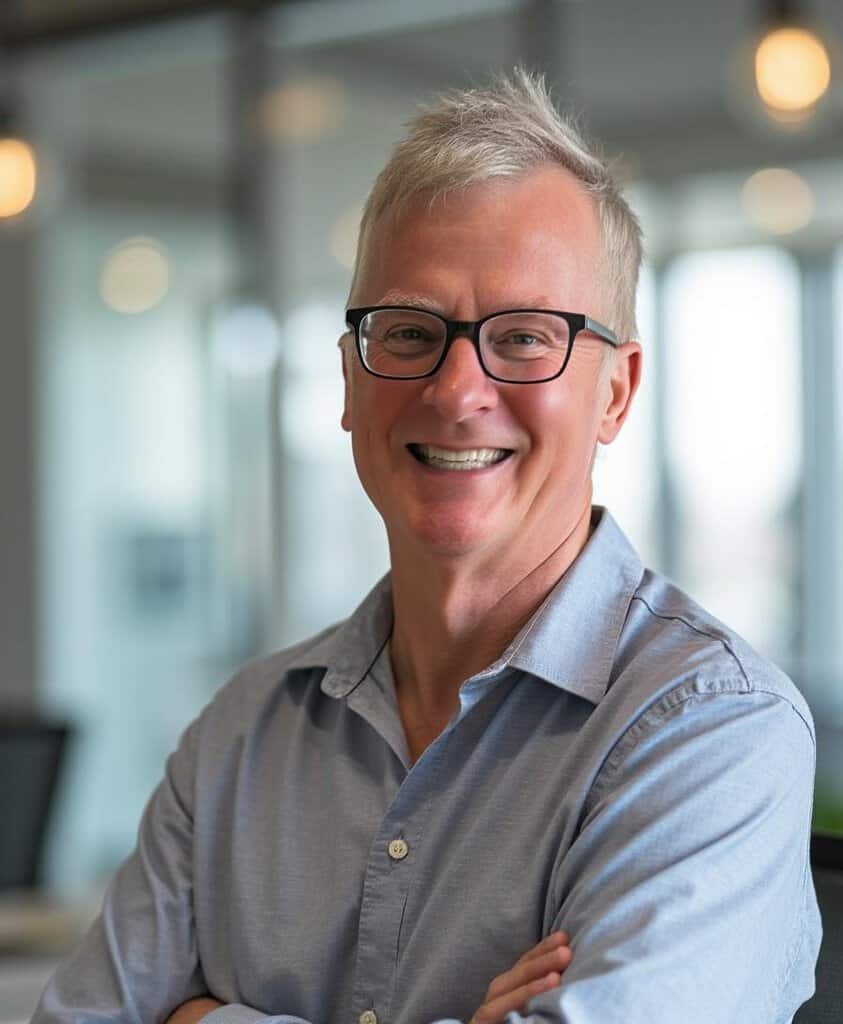
    Tom Hering headshot, smiling, in an office setting.

    Tom Hering is Co-Founder and Managing Partner of Benefit Corporations for Good (BCFG), an organization he launched in 2018 alongside Mary Anne Harmer to grow the Benefit Company movement across Oregon and North America. Under his leadership, BCFG has certified businesses in 13 states and one Canadian province, championing a triple bottom line of People, Planet, and Profit. He is the co-author of two books, Putting Soul Into Business: How the Benefit Corporation is Transforming American Business and 25 Building Blocks to Create a Conscientious Organization, and currently serves as a member of the advocacy action team for the Interfaith Alliance on Poverty. Tom holds a degree from the University of Oregon’s School of Journalism and Communication.

  • Navigating the New B Corp Standards with Hazel Horvath of Ecolytics

    Navigating the New B Corp Standards with Hazel Horvath of Ecolytics

    Hazel Horvath, founder and CEO of Ecolytics, a sustainability platform, joins Kim Allchurch Flick.

    The conversation explores Hazel’s journey into the field of sustainability, including her early influences and experiences that fueled her passion.

    They delve into Ecolytics’ role in helping companies measure, improve, and communicate their social and environmental impact, especially in the context of the new B Corp standards, also known as V 2.1.

    The discussion covers the importance of data in sustainability, the challenges and opportunities for businesses across different sectors, and the evolving landscape of the B Corp movement. Hazel also emphasizes the critical role of continuous improvement and stakeholder capitalism in today’s business environment.

    Listen Now

    Time Stamps

    00:00 Introduction to The Good Measure Podcast
    00:08 Meet Hazel Horvath: Founder and CEO of Lytics
    00:58 Navigating the New B Corps Standards
    01:59 Hazel’s Journey into Sustainability
    06:55 The Origin of Lytics
    09:05 Lytics’ Approach to Sustainability
    15:51 The Importance of Carbon Accounting
    19:28 Trends and Challenges in Social Enterprise
    32:38 Optimism for the Future of B Corps
    37:04 Final Thoughts and Farewell

    Kim Allchurch Flick: Welcome everyone. I’m Kim Allchurch Flick here today with Hazel Horvath of Lytics. Hazel Horvath is founder and CEO of Lytics, a sustainability platform that helps companies measure. Improve and communicate their social and environmental impact.

    Lytics is a recognized platform in the evolving B Corps landscape, having guided organizations through both certification and recertification. Most recently releasing tools that streamlined the transition to the new B Corp standards, also called V 2.1. Her work combines sustainability data, ESG strategy and technology to make meaningful impact more accessible for growing organizations.
    Hazel also serves on the board of Be Local, Mid-Atlantic, and frequently speaks on the future of sustainability, impact reporting, and purpose-driven business. The title. Topic of today’s podcast is from PDF to Playbook, navigating the New B Corps standards. Hazel, I’m so excited to have you here. I am too.

    Thanks so much for having me, Kim. I’m delighted. So we met during we, we both went through the new standards training and feedback sessions over a period of, gosh, it’s been like two and a half years, and went to the B Corps training online and we were placed in a Zoom breakout room together, and I was just fascinated to meet you and have.

    Time to talk in that big group. We actually had time to talk together. Some things we have in common. We both worked with companies on B Corps certifications and recertifications. We both went through the training and we’re both on the boards of Be Local. Yes. And now on the board of Be Local PDX, which is actually Oregon.

    So welcome. I’m so happy to have you. What has been your journey and what. What through your life has led you to this point? Like inspirations or obstacles? Frustrations. Yeah. What is it that led you here? 

    Hazel Horvath: Starting off with a big question. Yeah, and I, this journey has been, deeply personal too, so.

    Might get a little personal off the bat as well, just ’cause it’s always funny in. When you’re reflecting back in hindsight, you’re seeing can see those pieces of the puzzle that put together lead to where you’re in your career or especially us in the impact space. But I think in the most formative experience.

    I had was actually during high school, I had the opportunity to do a fellowship, a research fellowship that brought me out to the Central Valley of California where most of the agricultural output of actually the world is happening. And at that time, California was in the seventh year of one of its cycles of drought.

    And I was out there researching the impacts of the drought on the agricultural industry. And then also looking at, talking to policy makers, regulators, talking to farmers and all the different stakeholders involved in what, in the environmental sustainability field is called a wicked problem, right?

    These problems that, that don’t have a clear solution and often as many people that are applied to work on it, really won’t have that, that, silver bullet solution to solve them that many different solutions need to build off one another to start to work, to make progress. And so from that experience, really just the people that we talk to where, we’re trying to manage and mitigate this, but really we just hope it rains.

    And so as a I think I was 16 at the time realizing that the. The, the adults are working on the problems, but that there are these problems that don’t have clear answers. Really just got me obsessed with environmentalism and the ways that climate change would only kinda exacerbate these issues.

    And that, that really sparked in me something that I wanted to spend. My life dedicated to working on these systems and issues that would be further exacerbated by climate change. And that’s kind of the, the origin story of me starting in the impact movement. So then that, that led me to, pursue in college.

    I, I went to Duke University where I studied environment sustainability. I always thought of myself as a generalist, but then kept feeling like finding myself back in those classrooms or, using environmental issues as case studies in different, data analysis classes and that kind of thing.

    And I worked for a little bit and found really my experience and where I felt like I could make the biggest impact was in that data analysis and being able to, as I saw through work working with businesses, seeing how there were companies out there trying to to be better and trying to.

    To make a positive impact as they grow their business. But that getting to those solutions was difficult and especially having the data to drive those changes, it was just taking companies years to be able to even measure their data, get great numbers, to then inform decisions that gap between taking action and actually implementing or measuring and then actually implementing positive changes.

    Was just so large. And. Those companies that were trying to do good. That, that actually brings me back to where I first heard about the B Corp movement. Was during an internship at Greenpeace. I was part of their business and policy. I think the name of the team was, group. And so they often had businesses coming to Greenpeace saying, we don’t wanna be on your next report. We wanna do everything that, that we can to improve. And the companies that we’re most closely communicating with Greenpeace would be. Ended up being a lot of B Corps, I started seeing that about what, what we, what can, what are those highest levels of sustainability that exist and that we really wanna hold ourselves to those standards.

    And that was when I first got exposed to the B Corp movement and I think really found where I align. Not to be, but I found my people in that, see, those people that saw, sustainability as not a zero sum, game that you would have to sacrifice profits in order to be sustainable.

    That actually sustainability was not a part of their operating system because it benefited their company as well as people in the planet. 

    Kim Allchurch Flick: Wow. And it sounds like through those experience, you’re starting to see some patterns and where are the helpers and where’s the lack of help, things of that nature.

    Exactly. Nature. Wow. That’s fascinating. And I can see a future podcast that’s just focused on agriculture. That’s such a big topic, and, but yet it affects us all. So it’s incredibly important. What led you to create lytics? 

    Hazel Horvath: Yeah. So get taking me back to that origin story of getting exposed to the B-Corp movement and then I was working, more on the business side of sustainability. So I was also exposed to like I said, that timeline of how long data, even data collection took for companies to start taking action. And so that really sparked in me. I knew that there were companies, asking for a solution for this.

    But there just weren’t good solutions. On the market that could make sustainability more accessible, especially outside of the Fortune 500 companies, right? When a small business is trying to be more sustainable, maybe they’ll purchase some carbon offsets or they’ll take one, one or two actions, but to be actually create a that, that is a part of their operating system.

    Companies don’t really know where to start with that. And, for good reason, it’s complicated. And there’s, so much jargon within the sustainability field. There’s a barrier to entry there for businesses. And so that was really my goal with Lytics was to make that.

    Barrier to entry lower for companies by creating a platform that would help them measure all the data needed for sustainability, help them set up a plan to improve, and then also help them report, be more transparent about their impact as well. 

    Kim Allchurch Flick: And that’s so helpful. And often, and so you probably have, I work with clients who have big hearts who are doing big work, but when it comes to expressing it or documenting it.

    Sometimes it’s non-existent and a reflex start might be an Excel spreadsheet or something like that. But we’re talking about some topics that get bigger. Than Excel and pivot tables, but also how to express it publicly on benefit reports and in marketing. And the other thing is sustainability and impact in our world are.

    Much used and often I think if we get in a room with 10 people, we’ll get 10 different opinions about what the definitions of those words are, uhhuh. So within that, having structure and framework must be really helpful. How do you create and work with companies that are in different sectors, say manufacturing.

    It’s very different from consumer goods, which come from manufacturing retail, to food, to service, to tech. What are some, what are you seeing in terms of the needs and some of the solutions that Lytics is providing? 

    Hazel Horvath: Yeah, that’s a great question. I’m excited to, to talk about this because, so for.

    As Kim you just mentioned in my intro for listeners out there that aren’t familiar with Lytics and all the services we provide that we. Primarily work with B Corp to help them streamline the process of certification recertification and be a single management platform for that process. Because what B Corp does is helps companies create a really great sustainability program.

    It has that framework for them. And so like the B Corp assessment, any company in any sector can. Fill it out or now, go into the B impact portal with new standards. They can use that as a tool to see a framework of what they can improve for their business. And that’s. How lytics functions as well is that we can work across sector to help companies through that same formula of measuring the data that matters, setting up a plan of those high impact changes that they can put in place.

    And then again, reporting and being transparent but getting into the differences between the sectors. We work with some professional services companies will use our platform where we, one of the services within the platform is. Doing that carbon measurement for businesses. And we use APIs to make it as, as easy as possible, so there’s very little manual data entry needed.

    And so once companies see the, see those results, they’re seeing that like a professional services company, they might have a lot of business travel that is all captured in their accounting software. And so we can do those calculations from there. Versus a product company, is purchasing those physical products.

    And so that footprint looks a little bit different, right? Absolutely. But ultimately they’re getting out that same output of looking at first their carbon and then also their waste and water, and then also their social impact metrics as well. So again, for a professional services agency, there might not only be a.

    So a couple things that they can do in the climate action area or the environmental area, but then they really wanna invest in their people. So then tracking metrics related to their employees, their stakeholders are really where they can make a lot of high value changes as well. 

    Kim Allchurch Flick: Indeed. Versus like 

    Hazel Horvath: a physical product where you have that waste and you can reduce that.

    Kim Allchurch Flick: Indeed. And also I’m sure you’re seeing as I am, that there are companies who are well versed with. B Lab have been through version six or maybe even older ones, and we’ll be going into the new standards at some point as a recertification. Then there are other companies who are more new to the movement, have not been involved in a certification, so we’ll be going straight in to the new standards without having experienced the version six.

    And the platforms are quite different. The look is different and. There’s more to think about. I think one of the things I’m most impressed with version six is it’s very forward looking and the competition isn’t against the score that you had, but with no score in version six is it’s competing with ourselves against where we are today, where we will be in 2, 3, 5 years.

    And it gives a goal setting. Ability as well. Yeah. Which is exciting. And the other thing I really like about it, it’s as a, some people are very visual that it’s a much more visual platform and it’s meant to be engaging and meant to be thought about as a way to look at how do we give ourselves a pat on the back while striving to improve.

    Hazel Horvath: Definitely. 

    Kim Allchurch Flick: Yeah. It’s been, and what do you think about that? What does it look like to you? 

    Hazel Horvath: Yeah, it’s been great to see that evolution. I personally am excited about the change to the new standards. And that raising the bar, I think it really is for companies. But then I think. I think also the transition will take a little bit of time for businesses to, to learn the new standards and all that, and we’re really excited to help with that.

    But I think, again, looking at the broader picture, as you said, that as companies were going through the previous standards there. Might be some things on that assessment that didn’t apply to them at all based on their size or their sector. Because a solopreneur was looking at pretty much the same assessment as a large company. Correct. Versus now with the new standards, they’re tailored for company size and sector, and so companies are getting looked at on requirements that. Meet companies more where they’re at. And then they’re also, like you said, a piece of the new standards is this continuous improvement.

    So looking that your company is setting goals and is tracking your progress towards them. So that allows companies a little bit more flexibility to do and create a plan that makes sense for them, that they’ll get that highest ROI out of. 

    Kim Allchurch Flick: I totally agree. And I think another thing that it offers, and one of the frustrations with companies particularly who are innovating or on the cutting edge of some new system or technology is the old standards would have a question that wasn’t easily answerable.

    Because it wasn’t up to date with what’s happening. And I also looked at this as B Lab’s, good attempt to. Keep up with a rapid pace of change, and particularly in environment, when we think about who’s integrating ai, what is the benefit, what is the cost? And talking about environment, not only what is a company doing, but there’s the scope one, two, and three.

    What are the partners doing? What is the world doing? How do we take a look at the big picture as well and the roles that we play in that. And then. The class that I took from B Lab and another company about carbon accounting is, it’s eyeopening. It’s really incredible to think about, and yet most of us, unless there’s a big team that are technologically savvy in measuring tons of carbon.

    Most of us are not, need those tools to be able to access that. And I was wondering if you could speak to that, to innovation new sectors of work and the carbon side of it, the carbon accounting side, and how it’s different and how it’s important to think about, but it can feel scary. 

    Hazel Horvath: How the carbon accounting can feel a little bit scary.

    Kim Allchurch Flick: Yes. For some, because it, for some that don’t have the tools. So how can we speak to those who feel like that’s almost too much to grasp? 

    Hazel Horvath: Yeah. That’s a great, it’s a great question. A little bit why our platform exists, to make that more accessible for businesses. But I think also there’s an important, to your point, it’s, there’s an important.

    Understanding that needs to happen of of why companies are doing this work and why that measurement matters. And when we talk to businesses about sustainability in general too, we’re always talking about. What this means for their business that B Corp are for-profit businesses, nonprofits aren’t able to become B Corp certified.

    Because part of sustainability too is creating a financially sustainable business as well. So we talk about how, especially for carbon accounting or carbon measurement, carbon footprint, whatever name you wanna call that practice that. When you’re looking at your carbon emissions, a lot of times you’re also looking at line items on your budget sheet.

    So every time you turn on your lights that is something that you are, you’re using that energy, but you’re also paying for it. And so figuring out ways that, that your company can manage that also can help make your finance and accounting team happier too. So when to try to, make that a little bit less overwhelming.

    There’s definitely some free resources out there from the EPA and if you’re in the United States. And other just educational tools that help companies get. Started or a beekeeper, right? Someone working on the assessment to start to understand what that looks like. And obviously too if you’re in the B Corps movement, right?

    The b impact portal has some great tools now and resources related to that climate Action plan new requirement. 

    Kim Allchurch Flick: Absolutely. And helping people understand more, what is an impact and how is it relatable with data, it can really help and definitely data, data that can be explained.

    Hazel Horvath: Yeah. When people say sustainability, ESG, all these things, they seems like such nebulous concepts, right? And for for good reason. They’re complicated and there’s a lot that goes into it, but when you’re taking that back to your business and looking to simplify it. Bringing data into that and what can we actually measure is such a key component so that you can start to look at what that actually means for your specific business, not looking at the full field of sustainability and what that can mean.

    So that, that’s definitely what we recommend. And then also try to help companies understand that it can be very manageable for their business. 

    Kim Allchurch Flick: Indeed and Lytics and my company also help define some of those terms. And bring it into a conversation that’s more accessible. Exactly.

    Which is super important. And what are you seeing in terms of the clients but also the community? Social enterprise and environmental impacts and social impacts, are you seeing any trends that are positive and are you seeing any obstacles that might be common to some people? 

    Hazel Horvath: Yeah, I think so we’re talking at the top of 2026, right?

    Yes. I think almost about a year ago things really shifted, obviously within the us and the new presidential administration and just changes of, if I remember at the beginning of last year, some wave of some big corporations, rolling back some DEI policies, some ESG policies. And so I remember, about a year ago just feeling like maybe, and talking with other business leaders and sustainability leaders and feeling how is this gonna affect the work that we do?

    And I, over the past year, it has been a very. I don’t wanna be reductive, but just say a very cool experience to be a part of the B Corp community, because I’ve seen the companies we work with, the businesses in the community have really stuck to their values because this is, they’ve. I’ve heard from many businesses saying that this is the reason we’re a private company, um mm-hmm.

    That we’re able to make our own decisions and decide how we wanna run our business. And being a B Corp is so integral to. How we function as a company, that these aren’t things that we can just roll, we, wanna roll back because our business would suffer because of that. If we were to take those actions.

    So that’s been just really heartening to see as companies. Continue to do business well. And make a positive impact. And then also it’s cool to see that, I guess, theory of B Corp, the like B Corp nerd in me coming out of that. The what B Corp is is right a making a movement of stakeholder capitalism.

    Yes. So instead of just focusing on your shareholders, looking at your company’s, all of your company’s stakeholders and looking at your the com, the business’s impact on all those stakeholders. And so that’s what a lot of business leaders, when an administration shift, when policy shifts, looking at your stakeholders and seeing.

    Is the business, is one of the big stakeholders in the business is that the government. And so for some companies that rely on government grants, obviously that that changed for them. And we’re directly having the government as a stakeholder, but for most private businesses looking at their stakeholders and seeing what do our customers care about?

    What do our employees care about? What do, what does our local community care about? Those were all B Corp principles, and there really helped them also continue to make the case to continue to be a B Corp in this political environment. 

    Kim Allchurch Flick: Indeed I totally see that as well. And I also see some companies that, mostly consumer goods that have wanted to become B Corps.

    And during the last year it is also financial investment. To earn that badge. But when a tariff goes for an import or a supply chain goes from 15% to 50, a lot of that budget shift is oh, we have to back burner. It doesn’t mean they’re doing less good in the world, or that their values aren’t in the same place.

    Sometimes it’s like getting even stronger and saying, I’m gonna get through this with even stronger values. But the reality of the budget impact. It’s one of the things I’m seeing, so anybody mostly who’s in either importing supply or and even exporting, there’s some, been some really hard hits on some sectors. And at the same time, like a lot of people, I go back to the. Nielsen studies and loosely translated o over the years, but one, I have two favorites from about 2014, it was Nielsen study said that two thirds of consumers globally are willing to pay more for products and services when they know a company has good values.

    So that was one. And then they studied millennials only, and that was 73%. This is globally what I love to tell clients and anybody who’s. Who wants to reach customers is your customers are in that two thirds, that’s more than half. That’s a lot of people. The question is, they are looking, how do they find, because unless there’s good SEO for value sustainability and other things, there’s a lot of nebulous things out there and.

    That’s one of the reasons why certifications and verifications can be so helpful because they create a directory. They create something searchable if someone knows that. But how? How do we do that? And where’s the marketing? And the good marketing can also come from good measuring and you have something to prove and say and make a claim and then make a story out of it.

    Those people in that two thirds. Have an easier chance of finding. And another thing that I love, and I’m very optimistic about the last three, four years, maybe less, is the Purchasing with Purpose Movement created by Rebecca Dre. And thinking of networks of networks of mission-driven companies connecting with each other and thinking about not only how do we partner, but if you’re shipping, who’s a values driven logistics provider, if you are.

    If you’re looking for manufacturing or templates, who’s a mission-driven manufacturing company? If you’re trying to make something, all these things that, while it can seem daunting at times, are also really, really encouraging. And two-thirds, 66%, that was a little bit ago. That’s growing. So if you want to be optimistic, take a look at Nielsen’s studies and social enterprise sometime and read some data because it really is encouraging.

    So I was just wondering what are you seeing there as well? 

    Hazel Horvath: Absolutely. Yeah. I think that I, from both the business perspective of having that agency over what vendors you choose to work with, I think is. Often as consumers, we think about using our purchasing power, but applying that same logic to businesses because that can have such a, an impact at scale is really powerful.

    So I’m glad, so glad you brought that up. ‘Cause that’s such a cool thing to see from B Corps and then just consumers as well. 

    Kim Allchurch Flick: Oh, in Indeed. And what’s, what are some key things you’d like to share regarding the new B Corps standards? What are key highlights that, that always are in your mind when you’re thinking about it really rolling out in 2026?

    Hazel Horvath: Yeah, so we kind of already covered the importance of these new standards rolling out as well as how they’re now more specific for your company size and sector, and because of that, I do think that that makes the standards more accessible for especially smaller businesses who might not have found that 200 question assessment as approachable.

    Not to say that the standards aren’t con still rigorous, be throughout, definitely still holding businesses to a high standard. But with the. The rollout of the standards for, that’s, I think the first thing for companies to, to understand of the differences. I also, like we talked about before too, that this helps company.

    The way that the standards are formatted really focuses on. The changes being more data driven when they can be. So that’s just a good sustainability practice and then also allows companies to do this continuous improvement because they have. Benchmarks, which again is very important for company sustainability.

    That it’s not a static practice. It doesn’t just happen, once it’s not one-off actions that it’s companies continually continuing to strive to, to improve. And the other thing that’s important to note is that the is the recertification cycle. So as companies look to be on this continuous improvement journey as well, there are requirements that.

    The first time that you certify under the new standards, that’s called year zero that you need to meet. And then there are additional requirements for year three and year five, and for some larger businesses, they can be audited throughout that cycle. So smaller companies will likely only be audited at year zero, year three, and year five, but larger companies will be audited throughout that cycle again.

    Yes. It’s an important piece of the movement and the changes of the standards so that companies really keep up this work. Previously, since companies only had to recertify every three years or so, companies, things could fall, fall to the wayside as you grow your business and certain actions.

    Who was taking you might not continue them if staff leaves and all that. So I think this will, this structure of the standards will lead to companies really integrating B Corp within their operating activities. 

    Kim Allchurch Flick: Indeed, and the other thing I picked up on through the trainings is the language has changed a little bit.

    And before there were always questions about equity, DEI inclusion. And they’ve been there. And it seems that in the new standards and in conversations that I have with people is that isn’t one data point that something like equity and inclusion is over employees, it’s over community, it’s over environment.

    It’s like an overarching theme, for lack of a better word, and. Some of the questions coming up that weren’t quite as strong previously are things about really thinking about like living wage and fair wage practices, things of that nature. And one of the goals that I, you and I both have with incoming clients or clients that have questions is reframing some of those topics not as one bucket.

    Among many buckets, but overarching themes across everything. And it helps me explain that it’s a, it’s more visual. It isn’t just questions where you can bookmark and you see a lot of words. There is a much more visual interface as well. So I am also really optimistic about the new standards.

    Doesn’t mean it’s easy, it does mean that. Things are changing and people are trying hard to, to not only accommodate, but be a part of change. And there, there will be some grumbling I’m sure, but at the same time I see it as a really optimistic move forward. 

    Hazel Horvath: I agree. I’m excited. 

    Kim Allchurch Flick: Yeah. And where you come in Lytics is capturing that data.

    And then it’s up to the rest of us to help people and you as well, to help people tell stories about what that data really means. We want those two thirds of people to find the companies that are going through the process and to make those connections because that also, that’s the high tide that lifts all the boats because it really comes down to companies doing good.

    Is really important. Companies making more money, doing good so they can give more and do more is important. And consumers who want to do better in finding eco-friendly products or sustainable thought processes or somebody to work with that’s making the world better, they wanna be able to find you easily.

    And I, I think B Lab and B Corp and these new standards are gonna play a role in that. But it’s still up to companies to because I find often that companies are really good at product or service, but shy on marketing or they look at marketing to values as a second job as compared to marketing, to product or service.

    And I see it as integral that the messages are really important and they have to be true, and they have to be authentic and they will make a big impact.

    Hazel Horvath: Exactly. It’s so cool to see with B Corp. What that there, I think B Corp is also a medium for sharing that journey. Yes. Here it’s always so interesting to hear the why behind the choice to pursue the certification. And just a great authentic way to share that story is through. Going through the certification process.

    Kim Allchurch Flick: Indeed. And it can help strengthen partnerships as well. Oh, definitely. Yeah. Yeah. What makes you optimistic? What makes me optimistic? 

    Hazel Horvath: We, I already talked a little bit about my optimism for the B Corp movement and now going into 2026.

    I think a point of optimism and some things that we’ve been seeing through our work with customers. I’ve noticed over the past year or so, the past couple years, just B Corp has become so, prevalent that it’s, I felt like maybe at the beginning we kinda had to explain, what B Corp meant and all, or at least so people had never heard about B Corp.

    But I think there just is this growing familiarity that I’ve anecdotally experienced working in the movement that I just think there’s a, has been a greater shift of. Employees both a, just as a citizen of the world, right? People noticing B Corp and being interested in what that means.

    Kim Allchurch Flick: I agree. And also the sectors that it’s popping up in. B Corp Real Estate B Corps Commercial Trash and Recycling B Corps. It was another one I found that was a, a. Really big surprise. Another thing is people are innovative and what may not have been available to us a decade ago, or maybe even five years, there are some solutions coming out that are very, very social enterprise environmental stewardship forward.

    And one story that I have is. Cleaning supplies just in life. I kept thinking I’m, one of my goals is to try and reduce plastic as much as possible. Zero is a goal, really difficult, but reduction is attainable. And I looked at laundry and cleaning supplies. I thought, I’m not gonna tell anybody in the household.

    I’m gonna run an experiment. And I searched for companies that are plastic free and plant-based cleaning supplies. And I bought from three different companies and I’d rotate all scent free though, because otherwise it would be a tip off. But didn’t tell anybody. Did laundry, did cleaning and found.

    At the end of the experiment, and when I’d finally emptied that Costco Jug of Laundry soap, that is huge. The packaging, zero plastic and mostly plant-based. Nobody said anything. It’s because there was no noticeable change or no noticeable. Like these clothes aren’t as clean as they used to be. Nothing. And so I revealed it, my little case study and said, okay, we’re switching. The other great thing was the price. Point was maybe a little higher in some, but not bad. And in some it was imperity. And the other things, the packaging, super good, zero plastic, mostly recyclable paper types of things.

    And another bonus, especially in laundry, is some of these products come in discs or their powder, and the volume of storage went way down. So from that super gallons of laundry soap down to, I put them in glass jars. I have so much storage space left. So all the bonuses of these innovations, and that’s just in one small person household place.

    And that I think is what gives me optimism as well, is when we’re looking to do better. But there wasn’t a ready solution. There are innovators out there who are creating solutions and. That is super exciting to me. I think if we keep looking, we keep the optimism because we can be in awe when somebody creates something and make a change.

    That, for me, was relatively easy. It didn’t take a lot to think about it and now it’s a hundred percent. Zero plastic. I love, I love lot of wine, laundry, cleaning, and we can do things like that. And the other thing is those get better because there was a one innovation, now there’s five, five or six to choose from and probably more as time goes on.

    So let’s keep looking and keep our thoughts open about what are the innovators doing. 

    Hazel Horvath: I love that. 

    Kim Allchurch Flick: I do too. Is there anything else you’d like to discuss before we go to the final question? 

    Hazel Horvath: This has been such a great conversation. Thank you so much for giving me opportunity to share a little bit more about my journey.

    Kim Allchurch Flick: Yeah. 

    Hazel Horvath: Yeah. Just I hope that listeners. Also have some optimism because I think we, we need some more of that in the world and hopefully we, us sharing that can help some people find a little bit more optimism as well. 

    Kim Allchurch Flick: Indeed. And remember everyone listening there’s help.

    Lytics is help. When I started my company, there was very few people doing the same thing, which is helping with B Corps certifications primarily, but more than that, coaching to business acumen. Think about measuring, prepping for certifications, and even if companies aren’t going to certify still how to do the good work, prove it and express it.

    Now there’s a lot of help. So there’s choices out there, and that makes the world a better place as well. 

    Hazel Horvath: Yeah, definitely. And I think I’ll add to that, so we. For this is, again, talking to the listeners that we partner with consultants like Kim all the time to, for our platform to streamline all the manual work that no one wants to be doing, and then for the consultants to aid your company through the process as well.

    So to make that work, work clear to that we’ve found a great partnership with B Corp consultants like Kim as well. 

    Kim Allchurch Flick: Yes, and thank you. And coming up with measurement tools is such a blessing because it’s hard for companies to measure everything they’re doing to run a company and come up with all these new ways of measuring when someone else is requiring some really detailed data.

    So that’s why help is good. Help is really good. How can they reach you? 

    Hazel Horvath: Feel free to, to reach out to me. Our website is eco lytics.io. You can find me on LinkedIn, just my name, Hazel Horvath. You’ll see it if you go to my profile, a lot of posts about B Corp. If you couldn’t tell from the, this interview the, you’ll see the B Corp nerd in me on there.

    But please feel free to reach out if there’s ever anything I or Lytics can do to help you. 

    Kim Allchurch Flick: Absolutely. And the final question one of my favorites because it’s so random. If you could have dinner with anyone living or deceased up to a table of four, which means up to three guests, who would they be and why?

    Okay. Up to three guests. It doesn’t have to be three. You could have one, two, or three, but just no more than three guests. 

    Hazel Horvath: Okay. Alright, well then I have to go with three. I can’t miss off this opportunity. So my first would be Melanie Perkins, who is the CEO and founder of Canva. She has such an interesting startup journey, a female founder who really bootstrapped Canva.

    To very far in the company’s growth because she was overlooked by investors and she has such a cool story and has also grown such a great company in terms of both social environmental impact. They’re not a B Corp, but I would love to, to talk to her about what if they, they looked at B Corp in that journey as well, because the way that just from the outside of viewing their I know some people at work there and like they’re all.

    Benefits for their employees and the way that they, they treat their customers is in such a B Corp ethos. And they also have big focus on sustainability and social giving too. So really look up to her as a business leader and would love to have a meal with her. My second is I gotta go with Bernie Sanders.

    He’s a politician that has just been on the right side of history for so long and just has lived through so much of, our country’s history. But then obviously, now in, in modern times has seen, where we are now. And so would love to just pick his brain about, what he thinks.

    And the last person I think I would go with Jane Goodall. She’s such a important figure in the environmental movement and, recently passed away. And I just really if you ever have the opportunity to go, honestly, just look up some of her speeches and things that she’s talked about on YouTube that she’s such a powerful speaker about.

    The way that humans interact with nature and the world and just her vision and impact on the world is so important. So would love to, to have a meal with her as well. 

    Kim Allchurch Flick: I love that. I was so lucky last year’s 2025, that Jane Goodall spoke locally and we had a chance to hear and what a, she’s so natural in.

    And candid and

    descriptive about her life and the things she cares about. And I think that one of the things I took away that I’d learned about before, but she really brings it home, is that to do her work sometimes she had to sit side by side with the people who were doing the destruction with these corporate owners.

    Fossil fuels or companies that were doing the damage and should have been a hundred percent the off opposition. And yet she said, you find a way to have a conversation. And that was one of the biggest strides that she made in helping preserve life for the animals was not being. Listening to them, but also creating a way to have a conversation.

    That said a lot to me because sometimes we can all be reactive or just to have a thought in mind about what somebody else is doing and it looks bad and want to press against it, and learning from her. That conversation and opening the gateway to. To thinking about things so that the other person will listen as well.

    I thought that was just something we can all take to heart. Definitely. Yeah, and I’m gonna try that practice more and more as well. It’s literally, it’s almost like how do you sit across from the enemy? She did and did on multiple occasions. And also seeing the value of multi-generational things.

    Because she talked a lot about her roots and shoots, which is the training for children that has grown globally. And also her process of going into her nineties and still being a voice of wisdom and a voice of innovative thought. So I love that you brought those up. I, all three of them. What a beautiful table you have.

    Hazel Horvath: Would love. Yeah. Would love to, to have that. Yeah. 

    Kim Allchurch Flick: Thank you so much Hazel Horvath of Lytics, and this is Kim Allchurch Flick, signing out and wishing you a wonderful year. Thank you all, and everything’s in the show notes for you. Take care and have a good year. Bye-bye 

    bye.

    This Episode’s Guest: Hazel Horvath

    Hazel Horvath is the Founder and CEO of Ecolytics, a sustainability platform that helps companies measure, improve, and communicate their social and environmental impact. Ecolytics is a recognized platform in the evolving B Corp landscape, having guided organizations through both certification and recertification—most recently releasing tools that streamline the transition to the new B Corp standards (V2.1). Her work combines sustainability data, ESG strategy, and technology to make meaningful impact more accessible for growing organizations. Hazel also serves on the board of B Local Mid-Atlantic and frequently speaks on the future of sustainability, impact reporting, and purpose-driven business.

  • Values and Visionaries with Russ Stoddard of Oliver Russel

    Values and Visionaries with Russ Stoddard of Oliver Russel

    In this episode of The Mighty Measure Podcast, host Kim Allchurch Flick talks with Russ Stoddard, founder of the B Corps social impact branding agency Oliver Russell.

    Russ discusses his journey, including his inspirations from nature and past work experiences that instilled in him a commitment to environmental and social responsibility.

    He elaborates on his latest endeavor, Inspirationally, a community hub and co-working space in Boise, Idaho, designed to foster creativity and social impact.

    Russ also shares insights on the importance of value-driven business practices, the challenges of maintaining those values, and the benefits of certification like B Corp.

    The episode touches on how businesses can effectively communicate their values, the significance of benefit reporting, and the importance of local engagement.

    Russ concludes by emphasizing the continuous role of good actions in combating societal challenges and offers inspiration drawn from community interactions and historical figures.

    Listen Now

    Time Stamps

    00:00 Introduction and Guest Welcome

    01:26 Russ Stoddard’s Journey and Inspirations

    03:30 The Impact of B Corps and Social Responsibility

    05:26 Challenges and Opportunities for Mission-Driven Businesses

    08:28 Connecting Values with Consumers

    13:17 Environmental Impact and Personal Choices

    25:28 Inspirational Murals and Community Engagement

    30:46 Final Thoughts and Inspirations

    33:31 Closing Remarks and Contact Information

    Kim Allchurch Flick: Welcome everyone. This is Kim Allchurch Flick, and I’m so excited to be here today with a dear friend Russ Stoddard. Who is founder of Oliver Russell, a B Corps social Impact branding agency. His latest endeavor is Inspirationally, a community hub and co-working space to spur and support creativity and social impact in Boise, Idaho.

    And he also serves as a senior advisor to the social media lab. At Stanford University, Russ publishes a weekly newsletter on social entrepreneurship called Godspeed, and I highly recommend following it. And he is author of an Amazon based bestseller, rise Up, how to Build a Socially Conscious Business as well As a Being a published poet, playwright and journalist.

    The topic today is really about. What we can all see and do that is good for the world and values driven. I see Russ welcome as a multipotentialite and there’s so many things that Russ does and does well with values and a smile. I welcome you here. Thanks for being here. 

    Russ Stoddard: Kim, it’s great to be here.

    I I hope I can live up to that entry. Thank you. 

    Kim Allchurch Flick: I think you already have in my eyes. Anyway, so we’ve known each other for a while. I’ve been in B Corps circles and even did co cos spoke together at a b local PDX conference a couple of years ago, and I was just wondering what has been your journey to bring you to the multi things you’re doing today and what’s been your inspiration along the way?

    Russ Stoddard: I guess I had a couple of inspirations probably that come top of mind among many. I’m certain. And the the first one is as a young guy, I was a river guide on a a wilderness river here in Idaho. The middle fork of the stam. And it’s an inspirational place to.

    To begin with, to be there. And when you’re out there in the wilderness you. You innately feel the power of nature and the earth and the planet. And I think just the whole idea that this was conserved and protected as a wilderness area was inspiring to me that on the environmental impact side of things, Hey, you know what?

    We need to work to preserve not only areas like like this but others, a around. And I guess that extends today to trying to figure out ways to flight, fight climate change and what have you. So that was an inspiration on the, environmental side. And then one of the first jobs I had, first quote unquote, real Jobs I had after being a River Guide, was working as communications director for a building materials company here in Idaho that was quite progressive and they lived up to having a basic business values.

    So they inculcated that in me, that, Hey, you know what? A business can and should have values that they hold as a guideline for how they operate. So when I I came away from that experience and started my social impact branding agency, Oliver Russell, I was certain to have business values to begin with and one of those was to be socially responsible. And as far as being socially responsible for about the first 15 or so years of business that expressed itself primarily through volunteering in the community and making donations and what have you until, one day I heard about a thing called B Corps.

    Somebody here in town who’d been involved with some B Corp down in California told me about them and said, Hey, you should become a certified B Corp. And so that was in 2011 and I looked at it and was like, wow, what a holistic model for a business to actually create change and positive impact in the world.

    So I became a B Corp and haven’t looked back since. 

    Kim Allchurch Flick: And you were on the cutting edge of B Corp? That was early in the. In the beginnings of the B Corps movement. 

    Russ Stoddard: I generally am on the bleeding edge of things Kim, and typically I’m a guy who doesn’t necessarily look to see how deep the water is before I jump because I’m just a jumper, I guess.

    So, yeah, I was early on in, in that, I think I was like B Corp around 400, and I know there’s 10 or 11,000 now around the, so I’m happy to have been like, like you and others among the pioneers who were able to prove that it’s a business model that works. 

    Kim Allchurch Flick: Absolutely. And I’m so fascinated by Oliver Russell, and yet you come from a history of.

    Really embracing, preserving the planet from that rafting trip. And one thing we have in common is, I didn’t do rafting like you did, but I had summer jobs in Glenwood Springs, Colorado as a raft guide. Oh, did you? I didn’t know that. Bringing out, being out there. You are absolutely right. It’s so inspirational to be outside in nature, but also with that power.

    Russ Stoddard: Yeah. Oh, for sure. 

    Kim Allchurch Flick: What has it been like being early in B Corps and as B Corps has grown and changed? What has it been like for Oliver Russell and how has it led you to inspirationally and other things? 

    Russ Stoddard: I guess I, I get a lot of inspiration from the community of B Corps that are out there, like you and your company and so many others, and friends that I have developed over the years who are a source of inspiration refuge moral support and what have you.

    In the early days, it seemed like it was a a tighter community. Of course that happens when you don’t have that many B Corps to begin with. And as it’s grown, I’ve managed to retain a lot of those friends and collaborators and what have you, while also growing my network of other B Corps.

    And that’s really some of the, the, the value I find in the certification is it gives you a great framework if you wanna build a holistic bus business that’s actually contributing to solutions rather than actually creating them. Then the other thing aspect of it is just the network of people, when you say you’re a certified B Corp as far as entry to maybe making connection with someone else, there’s just an instant recognition that you’re both cut out of similar cloth. You might be different in any number of ways, but it’s it’s certainly a a door open or a what have you to actually finding help and support from others and perhaps being able to share some of the things you’ve learned as well.

    Kim Allchurch Flick: I totally agree. And what do you also see in your community with the B Corps, but also those who have clear values but may not, may be struggling? What are some of the things you see in the community about mission-driven businesses? 

    Russ Stoddard: You always struggle when you have values and you try to adhere to them.

    Esp, esp, especially if they are purpose-driven values. Because what that means is you’re going to be confronted with decisions that are. Hard to make and oftentimes have financial consequences for you. Yes. That the temptation is there to basically say, oh, you know what? I’ll hold my values for tomorrow as opposed today because I could really use this new client, this account.

    The sale or what have you. But if you’re living up to your values, which I think most B Corps do, and many mission driven businesses as well, then you basically take a hit today to keep those values going forward. And that’s really what I think differentiates the the businesses that are built for the long terms around purpose as opposed to those who are just basically living for the short term.

    Kim Allchurch Flick: Indeed and we also hope, if you build it a B Corps, they will come. What do you see, because you’re in have a wonderful branding agency as well. What are some companies missing in terms of connecting those values with the consumer base? 

    Russ Stoddard: Oh I think there’s two types. There’s the type, and this is not necessarily B Corps necessarily.

    I’d say this follows into the category of greenwashing where you have people who purport to be mission driven or what have you, and they use it as basically a marketing ploy. And which is unfortunate. But the the good thing is that, people these days, they can smell bullshit a mile away.

    And oftentimes they’ll look at claims and if they aren’t substantiated through actions, they’re like, nah, I got you here. And that really comes back to hurt the company that’s making those claims. And you see that, whether it’s small companies or mega corporations, and for those who do live up to their values through their actions, I think.

    Oftentimes, some people simply just let the actions try to speak for themselves, but in a crowded and competitive world, I think you have to be far more proactive than that. And oftentimes the way to do that is let third parties do the storytelling for you. Whether that’s a, a supplier, a customer, an employee or what have you, people who are have the credibility to tell the story and shine a light on you.

    And I think those are the ones that most of your stakeholders respond to. 

    Kim Allchurch Flick: I love that. And I think it’s so true. And as the movement grows, we’re seeing some of that. And there’s also a statistic that. Nielsen studies, they do so many studies that are amazing and in the social enterprise space, there have been a couple from 2014 and 2017 where they found that two thirds of consumers globally are willing to pay more for products and services, including B2B when they know a company has good values or sustainability.

    And then they studied millennials only and it was like 73%. And as a marketer, and I can see for clients too, that there’s a lot of customers in that two thirds. So everybody has some customers that are there. What are some ways to reach them? How do we connect those dots? Because sometimes it’s difficult to search for values driven companies.

    How do people find us and them, the clients that you serve? 

    Russ Stoddard: Yeah that’s the big question, isn’t it? And, I’ve known so many people who’ve tried to start, say purpose driven marketplaces online to help consumers find the type of country companies that they and their values align with those of say like the the shopper, what have you.

    And it’s just tough because, so much happens online today that it’s really, really tough to stand out and get people. To find you and get them to pay attention. One place where it’s increasingly easier to do that. I think it’s a little bit of a response to what’s going on in the digital world these days with the skunks of Silicon Valley and ai.

    And what have you is to do it on a a local basis. Because I think people in their own communities, it’s more of a physical touchstone for ’em, and they’re looking for it. Once they, they’ve. Find it, it resonates with them and they come back time and again. 

    Kim Allchurch Flick: I absolutely see that and agree with you and be locals have been popping up over the years.

    Be locals. For the people listening are local communities and cities across the country that bring B Corps and purpose driven companies together with some structure, with some education, with events, and. Do you see that being of help as well? 

    Russ Stoddard: Oh, sure. And I think we’re going to see more of that. I think it will be definitely a reaction to too many of us spending too much time on our computers and what have you.

    And I think, people es especially with miss and disinformation that’s out there, it’s harder and harder for people to gauge what’s real. But I tell you what, if you pick a tomato that you’ve grown, you understand that’s real. Or if you shake some per anybody’s person, someone’s hand, or give them a hug at an event you know, that stuff is real.

    So I think we’re gonna see, more of that, whether it’s a B Corp. Gathering in Wisconsin this year, or just you just going to stay like a grocery store and making a connection with somebody who works there in the organic produce section. 

    Kim Allchurch Flick: Oh, absolutely. We’ll go back to organic produce and regenerative ag in a second, but with you and your customers, and we’re talking in January of 2026, what are some of the obstacles that you’re seeing?

    Russ Stoddard: Oh, the obstacles? Well, you know, one is purely economic. I think the state of the world in our country and what have you is in such a crazy shape right now that people are holding onto their dollars in many regards especially on the shopping side. And I know that’s affecting an awful lot of small businesses.

    The, and I don’t necessarily think the economic indicators that they have out there on the more of the macro economic side of things really are telling the story about small, local based businesses that are just trying to hold on. So that’s what I’m seeing right now is a lot of struggle that you don’t hear people nationally talk, talking about today.

    Kim Allchurch Flick: Yeah I concur with that. I also find because of my work, some frustration with mission-driven companies that I know their values are deep and strong, and yet I don’t see it online. I don’t see it in the marketing, the product definitely. Or the service. And in asking them. Often they’ll feel like working on the value side is like having a second job and doing that.

    Marketing has to be separate and it takes more time or also that they feel it might dissuade from, or people might not see the product as much. I was wondering, particularly since you’ve had Oliver Russell so long as a values-based marketing company, do you see companies that don’t. Articulate their values as much as you’d like to see.

    And what do you say to them? 

    Russ Stoddard: Oh, sure. And, I think it’s a fallacy that it’s a second marketing job or what have you, I think should be integrated. Creating a brand is all about differentiation. And if you have a clear differentiator, then it needs to be a part of your marketing mix.

    Not all for sure, because you’ve gotta talk about your product. Your service and the benefits of that. But it should be integrated into your content matrix, the calendar that you put out there. And you can certainly talk about your product. You can talk about your service, you can talk about.

    Your company and you can talk about your values, and it’s all a different, it’s all a great differentiator. So I think that’s really a fallacy. And if you look at your values as a product, which in some regards you should be communicating that 

    Kim Allchurch Flick: values as a product. That’s a beautiful way to reframe it.

    Yeah. I want people to remember that. Think of your values as a product. How do you market your product? How do you market your values then? 

    Russ Stoddard: Yeah, exactly. So I think it’s just, I have firsthand experience at this over the decades, and I can tell you that it works. It doesn’t mean that you don’t have to be competitive on pricing.

    Doesn’t mean that you don’t have to have great quality. Those things are all almost a given anymore, but if everybody else has similar sort of offerings, and how do you differentiate one of those is. Through your values and people know whether you’re a consumer or it’s B2B, that when they spend money with you, some of that is going to be spent towards good works in the community or for the planet.

    Kim Allchurch Flick: Absolutely. And what do you say to companies in your clients about their benefit reporting? 

    Russ Stoddard: I understand the challenges there because the fact of the matter is most don’t do benefit reporting and that falls into the category of great intentions. It’s.

    It’s hard enough and work enough to actually be creating a social and environmental impact all year long. And then it’s like, okay, we better do a benefit report or AKA, an impact report. And then, you know what, you’re into your next year and all of a sudden the challenges of the market what have you kind of, take over.

    So people don’t do it. And I just think it’s a it’s a, it’s an opportunity that is missed out on. And I think if people, I think if people came, if they started actually working on their benefit report all year long and. Pieces and parts. If you’re including your impact in your content calendar for actually communicating it all year long, then you’ve got a repository right there that enables you to actually pull that stuff together at the end of the year and create a a benefit report that goes out to your stakeholders and communicates really the difference that you’re making and oftentimes you’re making on their behalf.

    Kim Allchurch Flick: And do you feel that a company that isn’t certified or verified as B Corp or Benefit Corporations for Good or one of the others yet, or maybe won’t, but they do have good values, is it beneficial for them to have a benefit report? 

    Russ Stoddard: Oh, I think absolutely. It is, B Corp. Public benefit corporations what have you.

    Those are, say for instance one way, but there are many ways towards doing this. And you for sure can have a company with values at its heart that is doing good in the community and is mission driven to an extent without certifications. And as long as you can prove that. And proving it usually is through actions and numbers and what have you for things that you do, by all means you should be doing a benefit report.

    Kim Allchurch Flick: I thank you. I love that. I find I’m one of these people that looks for benefit reports with companies, and they can be inspiring. They can be truly amazing. And I also love what you said about start early and document through the year. Don’t wait till the end. It doesn’t have to be like crazy tax time or something.

    Russ Stoddard: Yeah. I always look at the equivalent of remembering back when I was in a college, the equivalent is basically not studying for your final until the very end and cramming for it, as opposed to if you did that all semester long then you’d be in far better shape for it.

    Kim Allchurch Flick: Indeed and I truly think you’re, I love the term multipotentialite because I’ve, as I’ve gotten to know you over the years, it was Oliver Russell and also h how you live on land, and then the inspirationally piece and the authoring and Godspeed, which I. Wait for with bated breath, and as soon as that pop pops into my email, I’m always reading Godspeed and I do recommend everyone take a look.

    But how did, how do you manage it? And also comes to this question because I find companies that are working with products or services or more industrial, that they find it difficult to grasp environmental impacts. That aren’t like offsetting or volunteering, which is all good. I’m not dissuading from that, but I do believe there are things, no matter what we’re doing in life, we can still make personal choices and changes that improve the environment as well.

    And I was wondering if you could speak to that because you. Are also like me. I think, enjoy dirt therapy every once in a while, which is being out there. Absolutely. And I know, I realize, and I apologize that was more than one question but seeing how you are, there’s so many facets to your life and it seems to me that you enjoy them all and they’re all inspiring and they’re all different.

    And how do you incorporate all that? Keeping the environment in mind. 

    Russ Stoddard: Keeping the environment and in mind. I’m a little bit all over the place. When it comes down to it, I have a hard time saying no to people, and I’ve got an active mind that creates ideas a mile a minutes.

    In, in some regards, I might be better served by having more focus on just one thing, but that’s never how I’ve rolled. So I try to spark a lot of things and see if they catch fire. Create good in the world. And as far as the environmental side, a lot of that comes, personally it’s everything.

    So I’ll look at two things. Riding bicycles, for instance. And then doing some farming. So both of them can be very selfish endeavors when it comes down to, bicycling is fun. I do that for me. Farming is hard work. I get something out of it, which is produce and what have you.

    But at the same time, both can be quite good for others as well. On the bi bicycling side, obviously increases my health. It gives me a far better connection to my community than driving around because oftentimes as you’re riding your bike. You see things you wouldn’t otherwise. It might be somebody taking a walk who you know, and a simple wave turns into a two hour conversation, and then you ride merrily along and at the same time you’re not creating e emissions or what have you.

    Then on the farming side, you put your hands in the dirt, the science says, Hey, there are organisms there that’re gonna transfer through your your dermal layer or what have you, and make you healthier as, as far as that goes. And you can compost the organic matter that you generate in your household and regenerate the soil outside.

    So it’s all, all like circular sort of stuff that has. Not only steal gain, but also community benefit as well. 

    Kim Allchurch Flick: I concurrent, I was thinking about for people who don’t have access to farm but might have even a small backyard or a patio, there are ways that we can do things because pollinators love plants that have pollen and they’re beautiful to look at.

    So even in pots having. Having the more native, the better, but creating some beauty in a small space that attracts those pollinators as well can be a way to, to think of contributing to environmental good. 

    Russ Stoddard: Oh, sure. Container garden on your patio is absolutely fantastic. And, you can e it’s, you can even see the difference, say for instance, in the soil, if you’ve started amending it with a compost that you, you, you make yourself, there’s a difference in the way it feels and looks, and you realize, oh, that’s productive and it’s healthy, and there’s no way quite like doing that. You have two different containers, one that you amend. With compost that you make and one that you don’t, and it’s like, wow.

    I can see a difference in the difference. The plant’s healthier, I get more fruit from it or what have you. And it just feels better. Is that healthy, earthy lowy sort of soil? 

    Kim Allchurch Flick: And do you see possibilities to integrate some of that into offices as well for the people? But it’s also a way on the impact assessments.

    To say there’s a contribute contribution locally and in person to the environment. 

    Russ Stoddard: Sure, sure there is. It goes back to everything from rewarding alternative methods of transportation that create fewer carbon emissions to just your basic. Basic recycling. And then in an office, you can also have composting forever in a, a day, I’ve taken a compost that from here at the office and, or I should say organic matter that can be composted and take it back to our small farm. And what I’d really love to do is have a an actual composter here at my coworking space so that people could see the results of that. 

    Kim Allchurch Flick: That would be amazing. So tell us about inspiration Ally. Oh yeah. 

    Russ Stoddard: Forever and a day I’ve wanted to have a co-working space.

    I’ve seen them in larger communities and worked at a few, and always en enjoyed that. And I thought, wow I’d like to have one here. I own a building here in downtown Boise that I’ve been here for nearly 25 years and it’s a cool old building that’s become. I guess a little bit of a landmark in the community for the architectural style of the building.

    And then it sort wrapped in wrapped in large scale murals of social and environmental impact heroes. So people really know about it. And I thought, oh, I’d like to create a company. Place where creative types can come together and create a community. And so I started that about a year and a half ago, Kim.

    And I, that makes sense. I hit the market, I think. Right? It’s not like I’m minting the money or anything. But over the last year and a half, I think people are not only exiting the pandemic, but with what everything is going on in society right now. People are hungry for the ability to get out and work and talk and be around others who are similarly trying to do not only like.

    A a great job at their their work and progressing their careers, but also to be in the the harmony of others who are hoping and working towards a better community and planet. 

    Kim Allchurch Flick: And I’ve always, I love that. And I’ve always seen you as having a spirit of understanding and wanting to help the innovators and the new entrepreneurs help them be as strong and.

    And compelling to their clients and customers as possible. 

    Russ Stoddard: Yeah. And I get to do that on a daily basis with a mix of very interested, interesting, and smart people from our members range from a guy who’s a forester to a market researcher, to an architect to what have you.

    So it’s a very, very broad and interesting group of people here. And it’s it’s keeping me young Kim, which, you get up in the ears and you gotta take every little bit of fountain of Youth that you can get. 

    Kim Allchurch Flick: Indeed. I also appreciate that you have somewhat of an activist heart.

    And tell us about the murals. And some of the inspirational and important things that have been on the murals of inspirationally through time. Oh, 

    Russ Stoddard: okay. I always had, this was another dream of mine to do a project like this, that, not only honors champions of social and environmental justice, but also does it in an art artful way.

    So during the pandemic, I thought this is my opportunity here. Idaho is a, very, very, very conservative state. Boise is probably purple, but I thought, you know what? I want to put up an honor and hopefully inspire some people by the lessons and models of of those in society who have done something that oftentimes they’ve had to make.

    Pretty significant sacrifices for, so I hired a couple of super talented muralist street artists here in Boise. They go by the collective named Sector 17, and we started putting up, murals around the building. The first one was Colin Kaepernick and Maya Moore, both out of the sports world, who made significant sacrifices in their life on behalf of social justice. And the community rallied around those. So I did a couple more. I did Dolores Huerta, who is from the United. Farm workers movement and is a hero to many, but specifically to the Hispanic community. And then I thought, okay, I’m going to see if I can wrap the entire building in them.

    And I did a community crowdfunder because I thought the first ones I paid for. And then I thought, I wanna involve others and see if we can get the community behind this. And we raised nearly 20,000 dollars to do that. And we’ve got people who are, as far as the icons go, we’ve got, every, just about every sort of ancestry. We’ve got Muslims, we’ve got Hispanics, we’ve got Japanese Americans. We’ve got more women than men. And it’s really re rewarding to be able to watch the community respond to that and see people come every day and take pictures and selfies with, uh mm-hmm.

    Some of the people who are there. So that’s that’s the genesis and execution of that Kim. 

    Kim Allchurch Flick: Oh, and with that, I love that and I’m gonna bring you back to your quote that values is a product, and in a way, your values have become art. Creating a building that’s a coworking space is also a dynamic space for.

    People to learn something. And you mentioned people that I hadn’t heard of until I read your post, that these really important stories to think about and you have so many layers in ways that you express values. And that’s one of the things that I’m so impressed by with the murals and also the way you live your life.

    And I’m curious what inspires you into the future? 

    Russ Stoddard: Oh, what inspires me into the future? I see online I see a lot of courageous people out there doing things that I hope and I wonder if I would actually do when confronted with them. And a lot of that. Has to do with the societal unrest that we’re experiencing today.

    But I’m inspired when I go to a a rally at the State House here in Boise with thousands of others that are protesting the current administrations. Many of its political actions. And then day in and day out here in my coworking space, I am inspired by young people. Who see things in a different way than a lot of my generation certainly did.

    And I’ve got hope for them to actually address all these pressing issues not the least of which is climate change, which I think, sometimes I look at it and go holy smokes. I’m worried. I’m worried about my kids and my grandkids and the the world they’re going to inherit from our generation.

    And then I’m around them and I’m like, emboldened and heartened by the fact that, you know, what, they were working on it in a way that I probably wasn’t when I was their age. So that’s incredibly inspiring to me. 

    Kim Allchurch Flick: And I’d love that you have all sorts of diversity and inclusion in your life and your world and your work, including generational.

    And there’s something to be said for that that I think is truly in inspiring for people to think about is where is wisdom? How do we create it? You are a B Corps of your company. Oliver Russell has been one of the, one of the early B Corps. And you’ve been through that journey and seeing the changes so you can give so much perspective and yet gaining perspective from youth.

    I think there’s so much value to that. It’s circular. 

    Russ Stoddard: Yeah, I you can’t live forever, but there’s some days I wish I could not like the Silicon Valley guys who are trying to do that. It’s just like, wow, there’s so much unfolding. I’d love to see how it turns out, and I’d love to keep contributing.

    Kim Allchurch Flick: Me too. I’m a, I don’t wanna miss out on anything. I’m a big, I’m a big believer that there are innovations to come that people are working on now and. I at least can I be aware of them and support them in some ways. And I see you doing the same. 

    Russ Stoddard: Yeah. Yep. Is 

    Kim Allchurch Flick: there anything else you’d like to share about Oliver Russell inspiration Ally your work and your community.

    Russ Stoddard: Oh, I don’t think there’s anything I’d like to share there. I guess I’d like to just use those as examples to others. Yes. For what I hope they might be doing in their own communities. It’s just reaching out and connecting with others and maybe spending an hour or two each month volunteering or helping someone.

    Kim Allchurch Flick: Absolutely. And how can people reach you? 

    Russ Stoddard: Oh gosh, I’m all over social media. I’m on LinkedIn quite regularly, so that’s a great place and easy to find through an internet search there. My newsletter, as you mentioned earlier, Godspeed is another way, and that’s hosted on the Ghost Plat platform.

    So you can check out. Find me there and connect with me through the newsletter every week. So that’s two good ways. My maybe in show notes, you can link to my email address to rto@oliverrussell.com. 

    Kim Allchurch Flick: That sounds wonderful and you’ve given us so much to think about that values as a product.

    Also think about how to incorporate even small ways of. Doing some environmental things where you are, even if it’s a pollinating plant in a pot that attracts a small habitat. Also being aware of community and what’s out there. I think it’s, IM important to think of community as a way to not only improve business by commun, by being in community.

    People wanna buy from each other. But as a way to make things better in the world and sharing values can do that. It creates something strong. You’re also an activist and I hope that people will pick up the links for the book as well. And I have one last question, and that is if you could have dinner with anyone living or deceased.

    Who might that person be or why? And you could have up to a table of four, including you, 

    Russ Stoddard: but it could be a table, just one table of four. Okay. Well, let me I think I’ll start with Greta Thunberg, the environmental and social Activist. She would be a great one because I admire her courage for sure.

    And I think she’d have many great stories to tell and would probably be challenging to me to up my game as well. Second, I think I’d include Mother Teresa. Because just the the fullness of her heart and that she dis displayed, I think I would like to learn from her as well.

    And she’s another courageous one, I think. And then I might end with, john Steinbeck, the author and I guess oh. I absolutely love his writing, both his short stories and his novels. I don’t think there’s a finer writer around, and then he also probably has the the quote that has stuck with me that I return to often as a source of inspiration.

    So I’ll read that now if I could. Absolutely. Okay, so here’s the quote from Steinbeck that I use as a touchstone, and it’s all the goodness and the heroism will rise up again. Then be cut down again and rise up. It isn’t that the evil thing wins, it never will, but that it doesn’t die. And so for me, I use that as an acknowledgement that yes, there is evil in this world.

    And I think we get to see that on display, unfortunately, on a daily basis today around the world. But the forces of good are the only thing that keeps that from running rampant. So I. Have that as kind of a call to arm to use good here in the community and wherever I can to actually combat that.

    Kim Allchurch Flick: The forces for good. Keep that from running rampant. I am truly inspired by that because I think a lot of us can feel unsettled at the very least, at sometimes, but it’s that continuing on. Continuing to do. That’s why I love having you on this program because you are an inspiration and you are someone who has continued on and does and is so innovative about the ways to do that, but also.

    It’s so embracing of community at the same time. Yeah.

    Russ Stoddard: It’s helpful to remember that every day is a new day, and on any given day you can help someone, whether that’s smiling and waving and saying hi on, on a street to a stranger, or by actually going out and doing some volunteer work.

    Kim Allchurch Flick: Indeed. Thank you so much for being here. Everyone, thank you for listening. I’m Kim Allchurch Flick. Take care. 

    This Episode’s Guest: Russ Stoddard

    Russ Stoddard, founder and CEO of Oliver Russell.

    Russ is the founder and CEO of Oliver Russell, a B Corp social impact branding agency.

    His latest endeavor is Inspiration Alley, a community hub and coworking space to spur and support creativity and social impact in Boise, Idaho, and he also serves as a senior advisor to the Social Media Lab at Stanford University.

    Russ publishes a weekly newsletter on social entrepreneurship called “Godspeed” and is author of the Amazon best-seller Rise Up: How to Build a Socially Conscious Business, as well as a published poet, playwright, and journalist.

  • Mighty Measure: Introducing the Podcast

    Mighty Measure: Introducing the Podcast

    In this introductory episode of the Mighty Measure podcast, Kim Allchurch Flick and Meg Brunson share their mission of using business as a force for good.

    Kim, the founder of Mighty Epiphyte Consulting, and Meg, the founder of Just Marketing, discuss their shared values of ethics, inclusivity, and positive impact.

    They explore the transition from Mighty Epiphyte to Mighty Measure, the importance of impact measurement, benefit reports, and the value of certifications like B Corps.

    They emphasize the significance of supporting equitable and sustainable practices in the business world, aiming to inspire listeners to align their businesses with their values for a better community and planet.

    Listen Now

    Time Stamps

    00:00 Introduction to the Mighty Measure Podcast

    01:01 Meet Meg Brunson: Founder of Just Marketing

    01:52 The Vision Behind Mighty Measure

    04:57 Rebranding to Mighty Measure

    11:56 The Importance of Benefit Reports

    18:25 Certifications and Verifications: Why They Matter

    25:40 Defining Impact and Making a Difference

    32:35 Conclusion and Future Episodes

    Kim Allchurch Flick: Hello, my name is Kim Allchurch Flick, and I’m here to introduce the Mighty Measure podcast series with my dear friend and my wonderful, supportive marketing person, Meg Brunson. I am going to introduce myself as the founder of Mighty Epiphyte Consulting, and I started that company 14 years ago. Because I really believe in entrepreneurs and small business as a force for good in the world, and I see it everywhere.

    And I also know that customers, consumers, stakeholders, partners, are looking for companies with good values and sometimes it’s really, really difficult to find. So my work helps. People with their marketing, their expression, and helps create those touch points so that your customers can find you. And I’m also going to introduce Meg to you now.

    So meg, would you tell us who you are? 

    Meg Brunson: Yeah. Thanks Kim. So I am Meg Brunson. I am the founder of Just Marketing. Just Marketing is a little play on words. It’s the place where justice and marketing intersect. And my Just Marketing framework prioritizes ethics, inclusion and accessibility in everything that we do in business and in marketing.

    So that’s what sets me apart in my approach. And gosh, Kim and I have been connected. For three plus years, and it has been a beautiful connection supporting Mighty Epiphyte. And now, we’re transitioning into Mighty Measure. And I’m really excited to be here today to introduce the podcast with Kim and let you know what to expect and also, shine some insights on what impact really means.

    So thank you so much, Kim. 

    Kim Allchurch Flick: We are very excited about the Mighty Measure podcast because as I mentioned, there’s so many people doing good in the world, and we want those stories to be shared. There’s so much innovation. I’d want those innovations to be shared. And this is one way to do it and get into the personal nature of things and to understand why people’s values resonate and how your values can resonate as well.

    So that is the main part of it, and we are going to rebrand the company also to Mighty Measure. so very, very excited about. Future. Future and how we can help each other and move forward as a community. All these conversations will be thoughtful. They’ll be interesting. We’ve already prerecorded some that are so fascinating, so I’m glad you’re aboard and we’d love to have you listen to as many as you can.

    Meg Brunson: One of the things that that you just brought up for me is, and something that makes us similar in our journeys, is that we are working in industries that historically have just been unjust, unethical, on accessible, on inclusive, all of those things, right? The way that business.

    Typically prioritizes profits over people. And the same thing with marketing, right? ’cause marketing is part of business. And so I think a big piece of this podcast is sharing those stories of how we don’t have to follow the status quo. You don’t have to do the things that other businesses are doing or the things that have always been done in your business.

    We can do things differently. We can do things with kindness and impact. Without sacrificing profits like we are still going to be profitable. However, we’re going to do that in a much more ethical way. And I think that’s like at its core, that’s what makes you and I so similar and it makes us work so well together is because we have that goal of making positive impacts in the world and then building profitable businesses to support that work.

    Kim Allchurch Flick: Oh, I concur. I also believe it was. Serendipity how we met? Yeah. We met because of early on at the beginnings of it, the Institute for Equity Centered Coaching, where I earned a certificate in leadership and coaching and then re-certified in that. And. You were always there. We went through the courses together, and that seems to be bedrock for Just Marketing.

    Equity is one of my number one values for Mighty Epiphyte Consulting and Mighty Measure. And equity is important to think of in all aspects. How do we treat people, who benefits, who’s burdened, who’s left out, all those questions, and those will come up through the podcast as well. So I really appreciate that we met and that we work together now.

    Meg Brunson: Oh, me too. Me too. And can you share a little bit about what sparked the transition to Mighty Measure from Mighty Epiphyte? 

    Kim Allchurch Flick: Yes, introspection part of it and feedback. I was a biology major. Long ago and was lucky enough to work in business, so I actually got a tremendous business education as well.

    When I created Mighty Epiphyte, it was to combine that science as a metaphor. For entrepreneurship. An Epiphyte is a plant that grows like orchids, bromeliads, ferns in the northwest. They grow on other plants, and the metaphor is they bring something beautiful and strong to the world, but they need a really good support system to do that.

    So I was really happy with my little metaphor, and yet through time, it’s hard to say. It’s very difficult for people to spell. So I’ve had that issue. And also there’s something about evolving that rebranding can help with. So Mighty Epiphyte is still in my heart as a metaphor. I think it’s still true, but Mighty Measure is future focused. It’s what we can all do. Think about what can we do with Mighty Measure? What is Mighty Measure? And a play on words that’s also fun and bright, and it can be introspective. Also very workable. One of the things about being found as a company for values and making impacts in the world is being able to demonstrate it as well.

    And part of that is measuring, and that can be really interesting and it can be fun. It doesn’t have to be droll or dry. So that’s what we wanna bring out about this is how helping companies be found for their mighty measures. 

    Meg Brunson: I love mighty Epiphyte. I love the story behind it, and I love the way that it really incorporates, an important piece of who you are and your interests. Once people get to know you, they really get to understand your interests in the environment and in plants. And, we could go on and on about like your backyard and, so I love how you had that symbolism baked right into your branding and.

    I love that with the new branding, with Mighty Measure that isn’t lost, it’s still there. People are still, as the branding evolves, they’re still gonna see that environmental impact and even. If people look at like the cover art for this podcast or the branding, they’re gonna see the little Mighty Measure icon.

    The little symbol which resembles a plant. So even though, I love the Mighty Epiphyte story, and I love that even in the rebrand, we haven’t lost that unique piece. That really makes it you, and I think that’s so important. I’m not a branding specialist, but I do consider myself a creative, especially in this marketing space.

    And so I love that that piece, that creative piece isn’t lost. It’s been carried along with you.

    Kim Allchurch Flick: And hopefully we’ll bring it to light throughout the podcast and all the other offerings that Mighty Measure is an advocacy for companies. 

    And the podcast is part of sharing that. So I’m really, really proud to launch into 2026 with you and this brand new podcast. 

    Meg Brunson: Me too. How else would you say that you’re different? Your advocacy for the environment, like I just mentioned to me, really sets you apart from others.

    But how is your approach different in this impact space?

    Kim Allchurch Flick: When I first started, I was at Portland State University in the first year of the certificate for the Business of Social Enterprise, and I thought, wow, I’ve been wanting to be like this. I’ve been around business owners that share values in those.

    Unfortunately, in some of the corporate work I did that don’t, but there was never a word for it. So taking that certificate to me was even more important than the MBA I was getting as well because it really put a framework around something and during that time. Through Net impact other students and I were on teams and we would work with local companies on their B Lab assessments to become B Corps or to Recertify.

    And when I did that with a winery, grocery store, a couple of others, I was just hooked. And after graduation, I decided to create a company to do just that. I loved it so much, and at the time, I was one of the few doing it. Now there are a lot of people who have caught the bug, which I think is a very good thing.

    It resonates that people want to be helpful, that in the space of social enterprise, we want people to be recognized and to be helpful. And the way I do it differently is to really give my clients an option to say they want me to carry the load, the time load, and the burden, and be a. Part of the system to relieve them from a lot of it, but also teach and show why it’s important and have them be very involved.

    So that’s one. If there are other companies who say I, or we, my team, we wanna handle this ourselves, but we’re gonna have questions along the way, will you be the nine one one call at certain times, I say absolutely. And there’s always a scope of work and things to talk about, but the really big thing is.

    To work with you companies, teams to be introspective about why you do what you do, what values do you want to be noticed and remember that consumers, partners are looking for companies with good values. It’s the how part. How does that resonate? How are those values expressed?

    How when you feel like working on. Benefits is an extra job on top of doing the work of owning a company, selling a product, and we work together to make that integral. So it feels almost like breathing, that doing the benefits reporting and even thinking about it becomes so much a part of the system of working.

    Doing the work and feeling good about it, that it becomes more fun, that people are more engaged, that the employees stay longer because they feel it, and it really becomes a value within and outside of a company to think along these lines. So we work together to really consider that way that’s personalized for your company and your team to think about how to be the best you can be.

    The steps along the way and have it be less of a burden than most people anticipate that it is. 

    Meg Brunson: I love that you brought up benefit reports, so I wanna talk a little bit more about benefit reports, what they are, why they matter, and also. If you can lead that into or include like a conversation around certifications.

    I know you are a certified B Corps, you’re a certified benefit corporation for good company. You’ve got a couple other certifications and verifications and benefit reports are an essential part of that process. And they’re also important for people who aren’t going through that process. So you help with the benefit reports, you also help with the certification processes. Can you break down for us all, kinda make that clear how all of that works together and integrates into your work? 

    Kim Allchurch Flick: Absolutely. And I appreciate that you also said that a company doesn’t have to be certified to do a good benefit report. Nonprofits also do them.

    It leads back to what I think when I read a good benefit report. There’s a favorite nonprofit that I’ve been volunteering with for years. I really look forward to their annual benefit report because the way they write it, it shares their vision and values. It shares highs and lows. Yes, it shares some financials because they’re a nonprofit.

    It’s so inspiring and to think about benefit reports is to think about it, not like drudgery, but as an experiential opportunity to share a recap and a forward looking viewpoint with the audience, which is everybody from customers, stakeholders providers, and to really. Give them something that’s tangible, not just little social media blurbs here and there, but it’s all encapsulated into one thing.

    And the beautiful thing about a benefit report is, and I do believe that some people look at it as drudgery that you have to do at the end of the year, kind of like taxes at the beginning of the year. You have to just sit down and do it all at once and get through it. That doesn’t have to be true.

    There’s several ways to really think of a benefit report as a group effort that can be fun and you total it at the end of the year. And what I mean by that is, if you have a team in your company to think about delegating, who really loves environmental issues, who really loves the social issues, who might really love taking care of the employees themselves and.

    Think of what impacts are being made throughout a year. You can delegate and bring people in and have discussions and think about how did we do month to month? What are some of the values? How are we reflecting our values? It’s also a way of thinking of decision making, which we also learned in the Institute for Equity Centered Coaching.

    When you have your values and there’s a decision to be made, if the values are more than a plaque on a on the wall, but they are something that you say, I’m gonna reflect every decision based. Does it fit? Does it mesh? What should the decision be based on our values? That all flows into tabulating and benefit reporting, and it’s a beautiful way to create a document to share, and that sharing is internal and outwardly facing as well.

    I think they’re a marvelous thing. They’re also a way to state what your goals are and to share aspirations and to be able to go with that and keep those benefit reports as an active living document, not just a PDF that people scan through and then put away, but to really think about, it’s a way of striving.

    It’s a way of patting yourselves on the back. It’s a way of. Consistently looking at values and saying, yes, we live these, and it is expressed as a benefit report, 

    Meg Brunson: and we’ll be sure to link to your benefit report not only for 2025, but you have previous years benefit reports as well. So we’ll link to those in the show notes.

    So you can go and see an example of Kim’s benefit report and then if you really want to get into it, you can dive into past years and see. A few things, like you can see how your business has changed. Obviously you’ll see like increases in from benefit report three years ago to now. But you’ll also see an evolution in the way that Kim, you have published your benefit reports.

    ’cause that’s changed over time. And I think the big takeaway there is that. You can start messy, like with most things done is better than perfect. get it done. It’s okay if it’s not focused on everything. Kim and I have talked this year. I’m probably gonna do my first one and now I’m saying it on this podcast, and now I feel like I’m probably gonna have to be held to that standard.

    But what I’m really focusing on this in my first one will be time, like my time, my volunteer work. It’s okay. Like you start small, you start with what you have and then you build upon it. And I think that you’ll see that in a way, through looking at all of your past benefit reports.

    Kim Allchurch Flick: I look back on my past ones sometimes and, it is inspiring. It is inspiring to make progress. It is fun to look back like an archive project, and it’s interesting to measure some things, particularly things like volunteer hours or donations. The other thing for certifications that they request is equity reports as well , who do you work with?

    Where do they come from? How much diversity is there, things of that nature. And. Every time we strive a little further, it opens up more questions, and it’s all about improving, but doing so in a way that is not meant to be stressful, but is meant to be inspiring. 

    Meg Brunson: I’ve noticed it in so many aspects of my business that when you track things, it makes it very clear. How you’re spending your time or how you’re spending your money and without tracking them, you have no way to measure improvements or measure anything.

    We have to track. We have to track. Anyhow, that might be a little bit of a babble, but I want to also talk a little bit about the certifications and verifications pieces. Can you touch on why somebody may wanna be certified or verified, and maybe even why it might not be the right time for someone to take those steps?

    Kim Allchurch Flick: B Corps. B lab, B Corps certification is one of the first and earliest almost 20 years and. It is rigorous. It’s also becoming increasingly recognizable. And when it comes to people finding you, this is one of the ways that can be helpful. B Lab has a directory. The icon is becoming more recognizable.

    And it creates a way for you to establish a marketing presence with addition to product and service, but also through values. There are some companies that prefer not to become B Corp for a variety of reasons. Some of it might be cost. B Lab has a set price for small companies, and then it’s basically scale to revenue.

    For big companies, that can be several thousand dollars. There is a value to a network that comes through that. B Corps tend to recognize B Corps. I also am really encouraged about the innovations as well, because. Some people might say I’m not gonna become a B Corp, but I still wanna establish a value presence.

    And seven years ago, the Benefit Corporations for good certification was created in the state of Oregon with the blessing of the Secretary of State’s office. And that is one that same premise to help a company establish that they’re a benefit corporation with a. A 60 question quiz where B Labs is hundreds of questions and a less cost point, and then about two to three years ago, along comes the Purchasing with Purpose Movement.

    That is a nonprofit that encourages partnerships and encourages people to go through the people in Planet First verification, which is five questions. And a much lesser price point. All of these things, and I believe in, find what fits. It’s all about what is best for you, your company, your presence, your time, and

    start where you think it’s best. I. Choose to certify in all three because I like to know how things work and if I know I can share and if I know I can guide and when I know I can help. That is one of the reasons, and it’s also to be a part of a community. You’ll find that there are in many cities across the US and where B Corp is in other continents as well, that there’s what’s called B Locals that can be joined and they become a networking community.

    Benefit Corporations for Good has one as well. That’s one of the beautiful parts, and you don’t have to be certified to join. You really get to know people and see what’s going on in the community with the businesses, have discussions and that I think is the real reason why the certifications may or may not matter to you, but knowing that they exist and knowing that these communities exist are around us.

    That’s like the high tide that raises all boats.

    Meg Brunson: And I know you mentioned some of the different price points. It’s also important to keep in mind that we’re not just paying for a badge. I participated in some of the B Lab trainings with you, so the cost of these certifications goes beyond a badge on your website. Each organization offers a variety of supports for the businesses that have those certifications. And, since working with you especially. And learning a lot about B Corps. I was familiar with it before, but I feel like working together now, I’m much more familiar and it does make a difference when I’m going to a website or when I’m at a store.

    If I’m looking at something and maybe comparing products and when you see that B Corps logo. It’s like, oh, this is a company that’s doing the work. They’re not just saying they’re doing the work.

    It doesn’t just say like, locally sourced on the front and you just believe it or you don’t. When you see that logo, it’s like, oh they’ve done the work. They’ve, they actually value this, you know, a little bit more about that company, and it gives you, it gives me at least a little bit additional confidence in supporting that business. So I definitely think there’s a value there, but like you said, it’s also the size of your company and things like that. And if you can’t afford those certifications or that’s not, in the cards for you this year, that benefit report is a good option. Something that anybody can do.

    There’s no requirement on how that looks if you’re not going through those certifications. 

    Kim Allchurch Flick: There’s a really good quote for one of the podcasts coming up where Katherine Latham said that small business for good as a strong small business is an act of resistance.

    And in a way these things, these verifications, certifications, business reports, benefit reports are also ways of making improvements in our world. Whatever your universe might look like to you, it’s business as a force for good and act of resistance. And the badges are a way of showing that journey because someone else is verifying and saying, yes, this company, this person, this leader is doing what they say they’re doing.

    So it’s a proof point. I also wanna recognize that there are some people who don’t wanna verify or certify or maybe looking to put it off for a future. Yet there’s still ways to work together and find that you can be recognized and found. For the values that you hold. 

    Meg Brunson: Yes, exactly. Getting found is the big piece of the puzzle, right?

    Kim Allchurch Flick: Yes. 

    Meg Brunson: Because marketing is hard. SEO is hard, standing out from others in your space is difficult. But if you can be found for doing the right things, for making those positive impacts, it matters to so many people. You can share your Nielsen quote, right? 

    Kim Allchurch Flick: Yes, indeed. Nielsen, I believe it was 2014.

    They do a lot of studies on social enterprise, and one is they found that globally, two thirds of consumers are willing to pay more for products and services when they know a company has good values. So how do they know? How do they find you? All of us have clients in that two thirds somewhere.

    How do we reach them? How do they find us? 

    Meg Brunson: And I’m one of those two thirds, I feel like so many people listening Yes. Are likely saying, yes, I’m in those two thirds. I’d rather spend a little more and know that business is using their profits for good. Indeed. Now, I feel like we’ve talked already, we’ve covered like the importance of measuring impacts, improving impacts.

    How exactly though do you define impact? It could, it gets one little word that I feel like could mean something else, something different to so many different people. But when it comes to Mighty Measure, what 

    does an impact 

    mean? 

    Kim Allchurch Flick: Oh, thank you for asking. And I do tend now to avoid the word sustainability because it’s so broad.

    That definitions do matter. I look at impact as what? What value is acted out to actually express and make something happen? And then how is that looked at? How is it documented? How is it felt? And impacts can be made within a company, within employees, and that can be things from good benefits.

    Good pay, but also how people are treated and what to expect and impacts themselves within a company can help blend to greater productivity and also greater retention that’s been shown. External impacts can be environmentally, and these are things that can be incremental. We don’t do it all at once.

    It’s we learn as we go. But what environmental impacts can be made. It can be through volunteering with organizations donating to heavy hitters. I always believe, there’s so little I can do by myself, particularly in policy or something, but supporting the heavy hitters who can. And the other thing is, what are the incremental changes we can make in our lives and in our business?

    Do you wanna reduce plastic? Do you want to, save energy, money. Do you want to ride public transportation more and not have as much a mission? Think of the things that matter to you most and prioritize. That’s an impact category. Another is socially. How do we look at supporting people in our communities and globally?

    And again, that can also come down to. Either volunteering or donating, but also actively, how do you engage with community? How do you purchase? All of these things can be impacts. How do we shift our purchase? An example of an impact that I made in my household, which is where my office is I went through and looked at all the plastic in cleaning and laundry supplies, and I looked for innovations.

    Found three different brands that are doing a lot of good plant-based cleaning supplies with zero plastic. And I put ’em through a quality trial for about four months. Pretty much everything sent free, so nobody else noticed. I wanted a really good quality control, and when I announced it to the family and said, this is what I’ve been using, nobody really noticed a difference.

    The price point’s just about the same. We brought the plastics down to zero in those categories, laundry and cleaning. What impact does that make? Tiny for one person, and yet I’m talking about it. Who else might be inspired to do the same thing? Tell the neighbors about it. These are things that we can do as part of life that take a little thought process, but also when you incorporate them into daily life, we’re cleaning and doing laundry anyway.

    Why not do so with impact? Impact can also mean lessening a bad impact. So, I think another impact is to really think in terms of equity. That statement, who benefits, who’s burdened, who’s left out, is a really good thing to layer over a decision and say, okay, who am I impacting positively or negatively?

    ’cause impacts can also be negative. I think we really need to think about it, take a breath, examine, compare it against our values, and then do some categorizing. And granted, there are a lot of categories that overlap each other and I think we catch on and I find that now my decision making, even in a store is guided by wanting to make.

    Lessened impacts that are negative, greater impacts that are positive. And for instance, one of the things I was looking for the other day was salad dressing. But instead of looking for a dressing that I really liked, I looked for glass. And even if there was a dressing, I really liked it. It was in plastic, I’m not gonna buy it.

    So the decision is like the priority shift is to look at. Packaging is a big place. And also I think when we recognize an innovation and give a shout out to them, give a review to them, I’m noticing innovations in packaging. There’s a lot to be hopeful about. And when we adopt that, it helps our companies and our personal lives in improving impacts as well.

    So there’s a lot more discussion about that word. I think, but think of it as a way to just go about your day and say, what kind of impact am I making? And it’s not just shopping, it’s other things as well. And if I have a choice to make, will the impact be positive or negative? Can I do something with less bad impact and greater good impact?

    And then start thinking about doing that over and over and over again, and then share it. 

    Meg Brunson: It reminds me of one of my, I don’t know if I could call it a quote because I can never remember the exact words, but the concept. The concept that if all the injustices in our world are this huge tapestry.

    We can, by pulling one little thread, it feels like it wouldn’t make that big of a difference. But if everybody’s pulling one little thread, we’re gonna unravel that whole damn cloth. That concept always sticks with me, and I feel like it’s so relevant when it comes to impacts because it feels like, I’m only one person, how does my buying a glass salad dressing really change the world? And like in, in the grand scheme of things, that one purchase, like you said, it doesn’t, maybe in the grand scheme of things, it’s the little thread, but. If everybody’s doing that, it will ripple.

    And it’s okay to start where you are. Plastic might not be something you can do right now, but maybe there’s something else. Maybe there’s something else you can do. And maybe it has to do with social justice or environmental justice. and that’s okay too. There’s no judgment, it’s just. Figuring out where you are, and this is where measurement comes into play too, like measuring to see where you are with things and then how can you. How can you change things going forward? This is obviously a topic we could keep talking about. Like even just this episode, so many things were raised that we could dive deeper into, but for the sake of keeping our episode at a reasonable length we can’t do that.

    But that’s what people are gonna get from this podcast. From every episode of this podcast going forward, right? Is diving into those topics like benefit reports and certifications and equity, and we didn’t even talk about the UN’s sustainable development goals, all of those types of topics, right?

    That’s what this podcast is here for, and most of the episodes are likely gonna be interviews and discussions. But there might be some solo episodes. But I think that also ties full circle back into what you were saying about Epiphyte, right? And it’s having that strong support that strong network.

    And so you, Kim, have an incredible network of folks, some of whom I’ve already gotten to listen to those episodes because of my role. I’ve gotten a preview already of what’s to come and your network is incredible. And so this podcast is gonna be such a great way for everybody to be able to tap into your network and the genius that exists there.

    Kim Allchurch Flick: I appreciate that. It is, there are some wonderful people out there, and I’m really excited about this particular podcast because everyone has something brilliant inside them and we can all learn from that and also know our own brilliance and share that as well. That’s what’s gonna help improve things.

    We don’t live in isolation. The whole point I really believe of being a benefit corporation is not to do the work solo, it’s about connecting, sharing, helping others along and being helped along at the same time.

    Meg Brunson: And episodes are gonna be dropping weekly for now, right? 

    Kim Allchurch Flick: That is correct. 

    Meg Brunson: I know that we were aiming for shorter episodes, but that’s not really what’s happening. So these are gonna be what range, would you say? Like 30 to 60 minutes? 

    Kim Allchurch Flick: That is the range, yes. 

    Meg Brunson: It’s hard to keep them shorter because there’s so much juicy information we just wanna dive into.

    So I think that folks are gonna really learn to love these longer form interviews and discussions. 

    Kim Allchurch Flick: Indeed, so far I’ve been absolutely fascinated and encouraged and have optimism because of the people that were coming into the podcast and that we’re interviewing.

    Meg Brunson: Kim, this was so great. Thank you so much for inviting me to be on this introductory episode with you. I’m so excited to be a part of this project and to see where everything goes from here. I wanna invite everybody who’s listening to subscribe and follow the show. If you’re listening to this on a podcast platform right now, you can go and hit subscribe right on that platform. You can also go to TheMightyMeasure.com/podcast we’ll have all the links for you there. Hit subscribe. Don’t miss another episode. And also connect with Kim on LinkedIn or Instagram. Those links will also be at TheMightyMeasure.com/podcast.

    And share this episode with anybody else who’s looking to align their businesses with their values. 

    Kim Allchurch Flick: Thank you so much, Meg. I couldn’t do it without you and everyone. I look forward to connecting with you if possible, and if you’re listening to these episodes that you also leave each one with optimism and a forward-looking spirit that we’re doing some good together.

    This Episode’s Guest: Meg Brunson

    Meg Brunson, Marketing

    Meg provides marketing strategy and education through her Just Marketing® framework – focusing on ethical, inclusive, and accessible practices. She helps equity-centered entrepreneurs build profitable businesses by aligning their marketing efforts with social justice values and disrupting traditional manipulative sales tactics.

  • B Corp vs Benefit Corporation (and Beyond): Which Path is Right for You

    B Corp vs Benefit Corporation (and Beyond): Which Path is Right for You

    If you’re a solopreneur or small business owner committed to doing good in the world, you’ve likely come across a tangle of acronyms and titles – B Corp, Benefit Corporation, Benefit Corporation for Good, People + Planet First – each offering a promise of credibility, purpose, and impact. But knowing which path to take – or whether to take one at all – can feel overwhelming.

    The truth is, there’s no one-size-fits-all answer. For some, certification offers a clear and structured way to align operations with values. For others, a well-crafted Benefit Report may provide all the clarity and accountability needed to track progress and stay grounded in purpose.

    At Mighty Epiphyte, we guide businesses like yours through this very process – not with pressure or checklists, but with partnership, reflection, and deep listening. Because choosing how you show up in the world as a business is more than a branding move – it’s a strategic decision rooted in your values and vision for impact that will help your customers find you.

    In this post, we’ll break down the differences between popular certifications and verifications, explore the benefits of Benefit Reports (even if you’re not ready to certify), and help you begin to map out what’s right for your business – right now.

    Ready to explore your options without pressure? Our signature program, the Continuum, helps you do just that – with support, structure, and space to decide. Join the waitlist today.

    Understanding the Landscape of Impact Certifications

    There’s a growing ecosystem of certifications and verifications designed to help mission-driven businesses articulate their impact – and be held accountable to it. But understanding the differences between them is the first step in deciding which, if any, align with your business’s purpose and capacity.

    B Corp Certification

    This is perhaps the most well-known third-party certification for businesses committed to social and environmental performance. Managed by B Lab, B Corp Certification requires companies to complete the B Impact Assessment, scoring at least 80 out of 200 points across five areas: governance, workers, community, environment, and customers.

    It’s rigorous for a reason – it signals a serious commitment to transparency, improvement, and stakeholder value. But that also means it demands time, resources, and often, a shift in internal systems.

    Best for: Businesses ready to align structure with values and commit to a long-term accountability framework.

    Benefit Corporation (Legal Status)

    A Benefit Corporation is a legal business structure available in many U.S. states that embeds a purpose-driven mission into the company’s articles of incorporation. Unlike B Corp Certification, which is third-party verified, the Benefit Corporation status is self-governed but legally binding.

    Companies must produce an annual benefit report, often using a third-party standard for measuring impact, and are required to consider the impact of decisions on all stakeholders – not just shareholders.

    Best for: Founders who want to legally protect their mission over time and signal commitment to stakeholder governance.

    Benefit Corporations for Good

    Lesser-known and highly accessible, Benefit Corporations for Good is a values-driven certification process designed with small businesses in mind. It’s rooted in relational accountability, not just metrics, and provides a more community-centered alternative to the more institutional B Corp process.

    It’s especially popular in the Pacific Northwest, though it’s expanding nationally. The certification process includes a commitment to specific values and community engagement, with a simpler application process.

    Best for: Small businesses seeking credibility, values alignment, and community without a heavy administrative lift.

    People + Planet First Verification

    Launched by Social Enterprise World Forum (SEWF) and supported by regional partners, the People + Planet First verification is designed for social enterprises and mission-driven businesses that prioritize impact over profit. It’s a global standard that elevates businesses whose core operations address social, cultural, or environmental challenges.

    The verification process focuses on ownership, mission, and reinvestment of profits—making it especially relevant for cooperatives, nonprofits with earned income, and social enterprises operating outside traditional corporate structures.

    Best for: Social enterprises and purpose-first businesses seeking a global, mission-aligned verification with equity and impact at the core.

    The Power of the Benefit Report (With or Without Certification)

    Even if you’re not ready – or don’t intend – to pursue certification, a Benefit Report is one of the most impactful tools your business can adopt.

    Text-based graphic defining ‘Benefit Report.’ Describes it as an annual reflection of how a business lives its values. It notes that while required for legally registered Benefit Corporations in many states, any business can create a Benefit Report to bring clarity, accountability, and intention to its work - highlighted in green.

    What Is a Benefit Report?

    A Benefit Report is an annual reflection of how your business lives its values. It documents your efforts across social and environmental impact, governance, equity, and stakeholder engagement. Think of it as a cross between a progress report and a storytelling tool – equal parts numbers and narrative.

    While it’s required for legally registered Benefit Corporations in many states, any business can create a Benefit Report to bring clarity, accountability, and intention to its work.

    Why Create One, Even If You’re Not Certifying (Yet)?

    Title: ‘4 Reasons to Create a Benefit Report (Even if you’re not certifying yet!)’ with four green-outlined boxes: 1. Clarity of Purpose 2. Credibility with Stakeholders 3. Year-Over-Year Progress 4. Low Pressure, High Value.
    • Clarity of Purpose
      Writing a Benefit Report forces you to articulate your goals and assess whether your business is living up to them. It sharpens your internal compass.
    • Credibility with Stakeholders
      Clients, partners, investors, and team members increasingly want to see proof of impact. A Benefit Report demonstrates transparency and commitment.
    • Year-Over-Year Progress
      Tracking your impact over time helps you make better decisions and set more meaningful goals. It’s a built-in feedback loop for continuous improvement.
    • Low Pressure, High Value
      Unlike certification, there’s no minimum score or audit. A Benefit Report is as flexible as you need it to be – start simple and grow over time.

    How Mighty Epiphyte Can Help

    At Mighty Epiphyte, we coach clients through writing and refining their Benefit Reports with a process that blends deep listening, data analysis, and values-based storytelling. Whether you’re starting from scratch or refreshing a legacy document, we offer support that meets you where you are.

    We believe that every business – regardless of size – deserves the tools to define, track, and communicate their impact. A Benefit Report is one of the best ways to start.

    How to Choose the Right Path for Your Business

    The best path forward isn’t necessarily the most popular or the most polished – it’s the one that aligns with your values, vision, and capacity. Here’s how to begin discerning which option fits your business right now.

    Infographic titled ‘How to Choose the Right Path for Your Business’ with four numbered steps: 1 - Start with Your Why, 2 - Consider Your Capacity, 3 - Avoid the All-or-Nothing Trap, 4 - Case-by-Case Is the New Standard. Each step is displayed in a green-bordered box against a green background with star accents.

    Start with Your Why

    Before jumping into frameworks or checklists, pause and revisit your purpose:

    • What kind of change are you here to make?
    • Who benefits from your business, and how?
    • What would accountability look like if it were truly aligned with your values?

    Understanding your “why” will help filter out certifications or processes that look good on paper but don’t support your mission in practice.

    Consider Your Capacity

    Impact work is important – but it’s not free. Every certification, reporting tool, or legal shift comes with a cost – in time, energy, and money. Take a clear-eyed look at your current capacity:

    • Do you (or your team) have the bandwidth to engage with a full certification process?
    • Is your internal data and documentation organized and ready for external review?
    • Are you financially prepared for the application fees, ongoing membership costs, or potential investments in operations or systems that certification might require?
    • Would starting with an annual Benefit Report give you structure and direction without stretching resources too thin?

    There’s no shame in starting small or growing your systems over time. In fact, building capacity – strategically and sustainably – is impact work. Your readiness today doesn’t dictate your potential tomorrow.

    Avoid the All-or-Nothing Trap

    You don’t have to certify to be credible. And you don’t have to choose a path forever.

    Many businesses find that starting with a Benefit Report helps them clarify their impacts, build internal systems, and gain confidence before choosing whether to certify. Others choose legal Benefit Corporation status for accountability without third-party verification.

    And some create a custom blend – a hybrid model that reflects their unique context and stage of growth.

    Case-by-Case Is the New Standard

    At Mighty Epiphyte, we often say: Intentionality beats intensity. Your impact doesn’t have to come wrapped in a certificate to be meaningful. The key is knowing your purpose, measuring what matters, and staying open to change as your business evolves.

    Introducing the Continuum – Your Pathfinding Partner

    There’s a lot of pressure out there to “get certified,” “prove your impact,” or “be the real deal.” But what if you could explore all your options without that pressure – just with support, space, and strategy?

    That’s exactly what the Continuum offers.

    Mighty Impacts Continuum: As a member, you'll experience... (1) Expert led classes. (2) Community and connection. (3) Hands-on learning. (4) Structured path to certification. (5) Private one-on-one support. (6) On-demand access.

    What Is the Continuum?

    The Mighty Impacts Continuum is a guided experience for solopreneurs and small business owners who want to align their business practices with their values, but aren’t sure which path is right – or even where to start.

    Instead of diving headfirst into certification or committing to a legal structure, the Continuum gives you space to:

    • Clarify your goals
    • Evaluate your capacity
    • Understand the differences between certifications and reporting
    • Map a personalized impact strategy

    This is not a one-size-fits-all checklist. It’s a values-centered exploration supported by coaching, community, and tools designed for businesses like yours.

    Why It Matters

    Most programs are built for businesses with full-time sustainability teams and robust budgets. The Continuum is built for you – the founder who wears all the hats, cares deeply, and needs real-world support to make meaningful decisions.

    Inside the Continuum, you’ll:

    • Learn what each certification or status actually requires
    • Understand the role of a Benefit Report (and how to create one)
    • Receive expert guidance without pressure to “perform”
    • Connect with other purpose-driven businesses navigating similar questions

    Join the Waitlist

    Ready to explore your options with support and no pressure?

    The Mighty Impacts Continuum waitlist is open now. Whether you’re considering B Corp, writing your first Benefit Report, or still figuring out what “impact” means for your work, the Continuum will help you find your path – and walk it with confidence.

    Join the Continuum Waitlist

    Next Steps

    There’s no universal roadmap for doing business for good. Whether you pursue a certification, formalize your purpose with legal status, or start with a simple Benefit Report, what matters most is that your actions align with your values – and that you’re committed to learning, improving, and deepening your impact over time.

    Each path – B Corp, Benefit Corporation, Benefit Corporation for Good, People + Planet First, or your own custom approach – has its strengths. And none of them are set in stone. The key is to begin with intention, explore with curiosity, and build a business that not only sustains you, but contributes to a more just, equitable, and sustainable world.

    At Mighty Epiphyte, we’re here to help you do just that – with tools, partnership, and perspective grounded in equity, sustainability, and long-term impact.

    Want a clear path forward – without the pressure?

    The Continuum is your space to explore what’s possible, get grounded in your values, and take meaningful steps toward impact.

    Join the waitlist now and start building your business on purpose.

  • Values Are More Than Words: How to Make Your Values Actionable

    Values Are More Than Words: How to Make Your Values Actionable

    What does it mean to live your values as a business?

    In today’s purpose-driven marketplace, it’s not enough to say you value equity, sustainability, or community – you have to show it. Customers, employees, and partners are looking for proof that your brand values are more than words on a website. They want to see them in action.

    At Mighty Epiphyte, we see this challenge all the time: well-intentioned small businesses and solopreneurs who care deeply about doing good, but feel stuck when it comes to aligning values with strategy. That’s why turning values into actions is at the core of what we do.

    In this post, we’ll explore how to move from intention to implementation, with practical insights to align your brand values with business strategy. And we’ll introduce two powerful ways to get support: the Summer Series and the Mighty Impacts Continuum.

    Let’s build businesses that walk their talk.

    Values Without Action Fall Short

    Many small businesses and solopreneurs articulate beautiful values – like integrity, equity, sustainability, or innovation. But when those values aren’t reflected in how decisions are made, how teams are treated, or how success is measured, they become little more than marketing speak.

    Text: ‘When values aren't actionable, they erode trust.’ Dark clouds and dry, cracked earth on left; clear skies and a field of blooming flowers on right. Below are three points: ‘Employees and collaborators feel disengaged, Clients and communities question your authenticity, and Progress stalls.’

    When values aren’t actionable, they erode trust.

    For solopreneurs and small business owners, this disconnect can be especially damaging. You’re close to your clients, community, and collaborators. They notice when what you say doesn’t match what you do. And most importantly – you probably notice, too. It creates internal tension, unclear priorities, and missed opportunities for meaningful growth.

    Here’s what can happen when values stay abstract:

    • Employees and collaborators feel disengaged – especially if decisions contradict the company’s stated commitments.
    • Clients and communities question your authenticity – and may take their loyalty elsewhere.
    • Progress stalls – because values aren’t linked to clear actions, metrics, or outcomes.

    Real leadership means asking: Are our values present in our policies, culture, and metrics? If not, it’s time to shift from saying to doing. With the right tools and guidance, your values can become the blueprint for strategy, growth, and impact.

    Practical Ways to Make Values Actionable

    Title: ‘Practical Ways to Make Values Actionable.’ Green trees frame the sides. Three points listed, with icons: ‘Connect Values to Strategy (compass icon), Use Human-Centered Decision-Making (hands and person icon), and Create Accountability Structures (clipboard and checklist icon).’

    Turning your values into daily business practices doesn’t have to be overwhelming. It starts with clarity, intention, and consistent action. Here are three powerful ways to begin living your values out loud:

    1. Connect Values to Strategy

    Your values should guide your priorities – not just your messaging. That means looking at your core business activities through a values-aligned lens.

    Start by mapping your core values to your strategic goals. Ask yourself:

    • If we say we value equity, how does that show up in how does that show up in hiring practices, vendor relationships, or pricing models?
    • If sustainability is a value, what are our policies around waste, resource use, and procurement?
    • If we care about community, how do we support and include our stakeholders in decisions?

    Use these questions to begin:

    • Where do our values show up in our business model?
    • Where are they missing?
    • What metrics can track this alignment?

    A Benefit Report is one of the clearest ways to assess how your values are translating into measurable outcomes. It’s not just for certification – it’s a business growth tool.

    From there, map your values directly to your business goals. For example:

    • A value of transparency could become a goal to publish quarterly impact metrics.
    • A value of inclusion could lead to implementing pay equity audits and anti-bias training.

    Use your next strategic planning session to crosswalk each value against your current operations. What’s aligned? What’s missing?

    2. Use Human-Centered Decision-Making

    Values-aligned businesses prioritize people – especially those most impacted by their decisions. That means stepping away from assumptions and embracing deep listening.

    Invite feedback regularly. Include frontline voices in planning. Co-create policies that reflect lived experience. These aren’t just good practices – they’re equity-centered approaches that build trust and resilience.

    3. Create Accountability Structures

    It’s easy to fall into a “values on paper” trap when there’s no follow-through. That’s why accountability matters – especially for solopreneurs and small teams.

    Build in structures like:

    • Impact reports or benefit reports
    • Board or peer reviews tied to your values
    • Quarterly check-ins on how values show up in operations

    External support (like a values-aligned coach or advisor) can provide both perspective and accountability. Mighty Epiphyte offers embedded partnerships that help you stay grounded in your values while navigating real-world business decisions.

    How the Summer Series and Mighty Impacts Continuum Can Help

    Living your values in business isn’t just about good intentions – it’s about building structures, skills, and confidence to take action. At Mighty Epiphyte, we’ve designed two supportive, interactive programs to meet you where you are and guide you forward.

    The Summer Series: Bite-Sized Tools for Real-Time Action

    If you’re ready to dip your toes into values-based transformation, the Summer Series is your starting point. These short-format workshops are designed to offer immediate, applicable guidance to help you build momentum.

    What you’ll get:

    • Practical tools to assess and activate your brand values
    • Insight into mapping values to your impact goals
    • Real-life examples from solopreneurs and small businesses like yours
    • Space to reflect, refine, and take that next step with confidence

    Ideal for: Founders, freelancers, and small teams seeking clarity and traction.

    The Mighty Impacts Continuum: A Full-Support Experience

    For business leaders who are ready to embed values into every layer of operations, the Mighty Impacts Continuum offers a comprehensive, cohort-based path.

    This isn’t a one-size-fits-all program. It’s a collaborative journey tailored to your unique business and values. Through coaching, training, and strategic advising, you’ll move from ideas to systems that sustain your values long-term.

    What’s included:

    • Deep-dive business analysis aligned with your core values and impact goals
    • Coaching on writing meaningful, data-driven Benefit Reports
    • Guidance through certification processes (like B Corp or Benefit Corporations for Good)
    • Ongoing education and team training rooted in equity, sustainability, and the UN SDGs

    Think of it as a values-aligned advisory board – on call and in your corner – helping you not just say you value justice, equity, or climate action, but truly integrate those into the DNA of your organization.

    Ready to Live Your Values?

    Values are the heart of your business – but they only matter if they move. If you’re ready to shift from aspirational to operational, from intention to impact, you don’t have to do it alone.

    Whether you’re taking your first step with the Summer Series or diving deeper with the Mighty Impacts Continuum, now is the time to turn your values into strategy, culture, and measurable progress.

    Get tools to live your values – access the Summer Series now
    Ready for deep, sustained support? Join the next cohort of the Mighty Impacts Continuum

    Let’s build something that lasts – grounded in your values, guided by purpose, and growing with intention.

  • Earth Month and Your Business: Measuring & Improving Your Environmental Impact

    Earth Month and Your Business: Measuring & Improving Your Environmental Impact

    Sustainability isn’t just for big corporations. Small businesses and solopreneurs play a critical role in shaping a greener future. Earth Month is the perfect time to step back, assess your environmental impact, and take meaningful action – without needing a massive budget or team.

    Beyond being good for the planet, sustainability also makes business sense. Reducing waste, conserving energy, and making thoughtful sourcing decisions can lower costs, build customer trust, and strengthen your brand’s reputation. More consumers are prioritizing values-driven businesses, and transparency around environmental efforts can set you apart from the competition.

    This guide will walk you through simple ways to measure your environmental footprint, implement realistic sustainability practices, and communicate your efforts with integrity. Whether you’re just getting started or looking to improve, Earth Month is a great opportunity to make changes that last.

    1. Start Where You Are: How to Assess Your Environmental Impact

    Before making changes, it’s important to understand your current environmental impact. A simple assessment helps identify areas where small adjustments can lead to meaningful improvements.

    Infographic titled “How To Assess Your Environmental Impact” with a green gradient background. It lists four steps: 1 - Track Energy and Water Use. 2 - Audit Your Waste. 3 - Examine Your Supply Chain. 4 - Set a Baseline for Improvement. Top banner reads, “Start wherever you are!” and bottom banner states, “Remember: Progress over Perfection!” Website “MightyEpiphyte.com” appears at the bottom.

    Track Energy and Water Use

    Start by reviewing your utility bills from the past few months. Look for patterns in energy and water consumption and identify ways to cut back. Smart thermostats, energy-efficient appliances, and turning off unused equipment can reduce usage without disrupting operations. Free online calculators, like the EPA’s Carbon Footprint Calculator, can help estimate your business’s overall emissions.

    Audit Your Waste

    Take a week to observe how much waste your business generates. This includes office supplies, packaging, and shipping materials. Instead of relying on recycling as the default solution, look for ways to reduce waste entirely.

    Consider what’s already part of your routine: are there plant-based, plastic-free alternatives with compostable or minimal packaging? Can you replace disposable office supplies with reusable options? Small shifts – like switching to refillable cleaning products, compostable packaging, or digital-first processes – can significantly cut waste before it starts.

    A waste audit will highlight opportunities to remove unnecessary materials, not just divert them to recycling. The less waste created in the first place, the less needs managing later.

    Examine Your Supply Chain

    Sustainability goes beyond in-house operations – it also depends on where your materials and products come from. Review your suppliers and vendors to see if they prioritize environmentally responsible practices. Local sourcing, recycled materials, and eco-friendly packaging are simple shifts that can make a big difference.

    Set a Baseline for Improvement

    Once you’ve gathered data, document your findings. Even a simple spreadsheet tracking energy use, waste reduction, and sourcing improvements can help measure progress over time. Setting a baseline now makes it easier to track the impact of future sustainability efforts.

    Progress Over Perfection

    Sustainability isn’t about being perfect; it’s about progress and transparency. Small businesses don’t need to overhaul everything at once. The key is to start where you are, take measurable steps, and share your journey openly. Customers and stakeholders value authenticity – and a commitment to continuous improvement builds long-term trust.

    2. Low-Effort Environmental Impact Practices for Small Businesses

    Sustainability doesn’t have to be complicated or expensive. Small changes in daily operations can reduce your environmental impact while saving money. Here are three simple areas where businesses can start making a difference today.

    Infographic titled “Environmental Impact Practices for Small Businesses” on a light green background. Large text highlights “3 easy changes you can make today:” followed by three tips in white rounded boxes with leaf icons: Reduce Energy Use, Cut Waste, Prioritize Sustainable Sourcing. Website “MightyEpiphyte.com” is shown at the bottom.

    Easy Changes You Can Make Today

    1. Reduce Energy Use

    Energy efficiency is one of the fastest ways to lower costs and emissions. Installing smart thermostats can optimize heating and cooling schedules, while LED lighting lasts longer and uses a fraction of the energy of traditional bulbs. Unplugging unused devices and using power strips with automatic shutoff features can further reduce unnecessary energy consumption.

    2. Cut Waste

    A digital-first mindset minimizes paper waste – switch to electronic invoices, cloud storage, and digital note-taking tools. If disposables are necessary, choose compostable or recyclable options. Improve your recycling system by clearly labeling bins and educating employees or customers on what belongs where. Small adjustments in daily waste management can significantly reduce landfill contributions.

    3. Prioritize Sustainable Sourcing

    Your supply chain plays a big role in your environmental footprint. Partner with local vendors to cut transportation emissions, opt for eco-friendly shipping materials, and look for refillable or reusable products instead of single-use alternatives. Even small shifts in purchasing decisions contribute to a more sustainable business model.

    Think Long-Term: Regenerative Solutions Beyond Office Habits

    Sustainability is important, but businesses can go further by thinking regeneratively – not just minimizing harm, but actively improving systems. Instead of simply reducing waste, look for ways to eliminate it entirely or turn it into a resource.

    Infographic titled “Regenerative Solutions Beyond Office Habits” over a background of green ferns. It lists three strategies: Shift to Circular Systems, Design for Longevity, and Rethink Everyday Operations. Diagonal green banners read “Think Long-Term” at the top left and “Small Actions = Big Impact!” at the bottom right. Website “MightyEpiphyte.com” appears at the bottom.
    • Shift to Circular Systems: Can your packaging be returned, refilled, or repurposed? Offer take-back programs or incentives for customers to return used materials.
    • Design for Longevity: Choose materials that last longer, repair easily, or biodegrade safely. A product that stays in use is better than one that gets recycled.
    • Rethink Everyday Operations: Swap single-use items for durable alternatives. If you’re already cleaning, doing laundry, or shipping products, seek plant-based, plastic-free solutions with compostable or reusable packaging.

    By embedding regenerative thinking into your business model – rather than just adjusting office habits – you contribute to systems that restore and replenish rather than just sustain.

    Thought Leadership Insight: Small Actions, Big Regenerative Impact

    Individually, small businesses may have a limited footprint – but collectively, they shape markets and influence industry norms. The shift from sustainability to regeneration means thinking beyond minimizing waste to actively improving environmental and social systems. By reimagining how materials flow through your business, you help create an economy that gives back more than it takes.

    3. Communicating Your Environmental Impact Efforts Without Greenwashing

    Sustainability messaging can strengthen your brand – or damage your reputation if done poorly. Consumers and clients are increasingly aware of greenwashing, where businesses exaggerate or misrepresent their environmental efforts. The key to effective communication is transparency and honesty.

    Infographic titled “Communicating Your Environmental Impact Efforts Without Greenwashing” on a light green background with a leafy illustration. It presents three tips in a vertical timeline format: Share Your Environmental Impact Journey, Use Real Numbers, Not Buzzwords, and Make It Engaging with Stories and Behind-the-Scenes Content. Website “MightyEpiphyte.com” appears at the bottom.

    Why Transparency Matters

    Customers don’t expect perfection, but they do expect honesty. Businesses that openly share both progress and challenges build trust, while vague or misleading claims can backfire. Authentic communication not only resonates with your audience but also sets a higher standard for sustainability in your industry.

    How to Talk About Your Efforts with Integrity

    1. Share Your Environmental Impact Journey

    Instead of only highlighting successes, be upfront about the process. If you’re in the early stages, explain the steps you’re taking. If you’ve hit roadblocks, acknowledge them and share how you plan to improve. Customers appreciate businesses that are willing to learn and adapt rather than pretending they have it all figured out.

    2. Use Real Numbers, Not Buzzwords

    Avoid generic claims like “We’re going green!” or “Eco-friendly business practices” without supporting details. Instead, back up your efforts with specific data:

    • “We reduced paper use by 40% by switching to digital invoices.”
    • “Our shipping materials are now 80% recycled content, up from 30% last year.”

    Measurable impact statements build credibility and show real progress.

    3. Make It Engaging with Stories and Behind-the-Scenes Content

    People connect with stories, not statistics alone. Show the real work behind your sustainability initiatives – whether it’s a behind-the-scenes look at your recycling program, a feature on your local sustainable suppliers, or a team challenge to reduce waste. Use blog posts, social media, and newsletters to keep your audience involved and inspired.

    Authenticity Builds Trust

    Today’s consumers are savvy and skeptical. They can spot greenwashing quickly, and once trust is lost, it’s hard to regain. Transparent sustainability efforts, backed by real action, strengthen customer loyalty and position your business as a leader in responsible practices. Authenticity isn’t just good ethics – it’s good business.

    4. Tracking Progress with Benefit Reports (Even If You’re Not Certified)

    Graphic with a light green gradient background featuring a yellow light bulb icon at the top, containing a green sprout inside. Below, bold text reads: “Small businesses should measure & report impact efforts.” A highlighted banner underneath adds, “even if you’re not certified.” Website “MightyEpiphyte.com” appears at the bottom.

    Sustainability efforts have the most impact when they’re measured and tracked over time. Even if you’re not pursuing B Corp or Benefit Corporations For Good certification, reporting your progress can help guide decisions, improve accountability, and demonstrate your commitment to customers and stakeholders.

    Why Small Businesses Should Measure and Report Environmental Impact Efforts

    Tracking sustainability initiatives and environmental stewardship ensures that efforts don’t get lost in day-to-day operations. A report provides a clear snapshot of progress, helping you identify what’s working and where adjustments are needed. It also strengthens customer trust – people are more likely to support businesses that show measurable impact rather than just making claims. Even if your business is small, documenting sustainability efforts helps create a culture of continuous improvement.

    How to Create a Simple, One-Page Environmental Impact Report

    Title: “Create a Simple One-Page Impact Report.” Sections: 1) Energy and Waste Reductions: “Reduced energy use by 15% this year.” 2) Sustainable Sourcing Efforts: “50% of our materials come from local suppliers.” 3) Community and Employee Engagement: “Hosted 3 sustainability workshops.” 4) Goals for the Next Year: “Switch all shipping materials to recyclable options by 2026.”

    A sustainability report doesn’t have to be complex. A one-page impact summary can highlight key metrics and progress. Consider including:

    • Energy and waste reductions (e.g., “Reduced energy use by 15% this year”).
    • Sustainable sourcing efforts (e.g., “50% of our materials now come from local suppliers”).
    • Community and employee engagement (e.g., “Hosted 3 sustainability workshops for staff and customers”).
    • Goals for the next year (e.g., “Switch all shipping materials to recyclable options by 2026”).

    Simple, clear data points make it easy to track improvements and share your impact with customers, partners, or investors.

    Using Environmental Impact Tracking to Make Better Business Decisions

    Title: “Impact Tracking Can Help You Make Better Business Decisions.” Three points: 1- Identifying energy inefficiencies can reduce expenses. (hand holding a coin). 2- Showcasing sustainability efforts can attract eco-conscious customers. (people and a magnet). 3- Having clear impact data can open doors to value-aligned business collaborations. (a handshake).

    Documenting your sustainability efforts isn’t just about accountability – it’s also a strategic tool. Tracking data over time can reveal opportunities for cost savings, brand differentiation, and stronger partnerships. For example:

    • Identifying energy inefficiencies can reduce expenses.
    • Showcasing sustainability efforts can attract eco-conscious customers.
    • Having clear impact data can open doors to value-aligned business collaborations.

    When sustainability is measured and reported, it moves from being a marketing angle to a core business strength.

    What Gets Measured Gets Improved

    Graphic with the phrase “What Gets Measured Gets Improved” in bold green text. A large upward-trending green arrow cuts across the center, symbolizing progress. The background features faded charts and graphs, including pie charts and bar graphs, suggesting data analysis and reporting.

    Businesses that track their impact are more likely to make meaningful, lasting progress. Reporting – whether internally or publicly – keeps you accountable, credible, and continuously improving. Sustainability isn’t about saying you care – it’s about showing real, measurable actions that drive long-term change.

    Turn Earth Month Into Long-Term Environmental Impact Action

    Earth Month is a powerful reminder to reflect on your business’s environmental impact – but sustainability shouldn’t be a once-a-year initiative. The most effective changes come from ongoing commitment and steady progress.

    Graphic with a soft green watercolor background and a stylized image of Earth at the bottom. At the top, a bold, colorful sticker-style graphic says “Take action” with a check mark. Below it, the text reads: “Let’s Turn Earth Month into Long-Term Action!” with a curved green underline emphasizing the message.

    Start small by picking one action today – whether it’s assessing your energy use, reducing waste, or sharing your sustainability goals. Even minor adjustments add up over time, and momentum builds with each step forward.

    And remember – we don’t have to do it all alone. There are many organizations already doing great work and by volunteering or making donations to help those environmental heavy hitters we can make big environmental strides together.

    Tracking your progress turns good intentions into a sustainable business strategy. Measuring impact helps you make informed decisions, improve efficiency, and communicate with credibility. Sustainability isn’t just about what you do – it’s about how you continue to improve.

    If you’re ready to take your impact to the next level, join the next cohort of the Mighty Impacts Continuum. Get hands-on support to measure, improve, and communicate your sustainability efforts – so you can create real change, year after year.

  • The Mighty Epiphyte 2024 Benefit Report

    The Mighty Epiphyte 2024 Benefit Report

    Read the Mighty Epiphyte Consulting 2024 Benefit Report

    To My Changer Makers Community,

    As I reflect on the past year, I am overwhelmed with gratitude for the inspiring work we’ve accomplished together. Mighty Epiphyte Consulting exists because of remarkable clients who are true change-makers, committed to building a better future through their companies. Each of you inspires me daily with your drive, resilience, and vision.

    In 2024, we made tangible contributions toward our mission, helping with certifications, and advocating for clients.  2024 brought 163 hours of volunteering, $3,854 in donations, and a dedication to forging deeper relationships and partnerships. These efforts have not only strengthened our community but have amplified our collective impact, setting new standards for accountability, integrity, and transformation.

    This year also brought valuable opportunities to share our work and insights with a broader audience. I was honored to speak at Portland State University, the Benefit Corporations for Good Happy Hour, the Better Business Together event, and two podcasts, all of which underscored the power of collaboration in creating meaningful change.

    I am continually filled with hope and optimism by cause-driven businesses like yours. Here at Mighty Epiphyte, we support and advocate for you wholeheartedly. Thank you for all that you do and for choosing to lead with purpose and compassion.

    Additionally, we began laying the groundwork for a long-envisioned cohort model, The Mighty Impacts Continuum, set to launch in early 2025. This initiative will allow us to support a wider community of purpose-driven leaders, fostering collaboration and building resilience as we navigate the challenges of impactful business together.

    Thank you for your trust, partnership, and inspiration. I look forward to another year of making a difference—together.

    Read the Mighty Epiphyte Consulting 2024 Benefit Report

    With respect and gratitude,

    Kim Allchurch Flick MIM MBA | Impact Coach | Mighty Advocate

    Kim Allchrch Flick sits on a rock during a hike. She's looking over a body of water.

    Read the Mighty Epiphyte Consulting 2024 Benefit Report

  • Companies Doing Good: The Case For Creating a Benefit Report

    Companies Doing Good: The Case For Creating a Benefit Report

    More and more companies are committed to making a positive impact on society and the environment. For solopreneurs and small business owners, this often means integrating ethical practices into their operations, prioritizing sustainability, and striving to create meaningful change. But how can you effectively communicate these efforts to prospective customers, especially if you’re not pursuing a formal certification like B Corp? The answer lies in creating a Benefit Report. A Benefit Report is a powerful tool that allows companies doing good to showcase their impacts in a transparent, structured way. Whether you’re looking to build trust, improve internal processes, or attract conscious consumers, a Benefit Report can be a game-changer for your business. Let’s explore why creating one could be the next best step for your company.

    Transparency: A Foundation for Trust

    Transparency is the foundation for building trust with all of your stakeholders. A Benefit Report provides a clear and detailed account of your company’s social and environmental impacts, showing that you are not just talking the talk, but walking the walk.

    When businesses are transparent about their practices, it builds credibility with customers, employees, partners, and investors. This trust is especially crucial in a market where consumers are increasingly skeptical of greenwashing and are seeking out companies that genuinely prioritize people and the planet.

    For example, imagine a small business that publicly shares its efforts to reduce its carbon footprint through a Benefit Report. This transparency not only strengthens relationships with existing customers but also attracts new ones who value environmental responsibility.

    Reason #1 your business needs a benefit report: it builds credibility with customers, employees, partners, and investors.

    Building Trust in a Competitive Market

    Consumers are becoming more discerning, and they are willing to pay more for products and services from companies that are committed to doing good. In fact, Nielsen research shows that two-thirds of consumers are willing to pay a premium for products and services that have a positive impact on people and the planet.

    By creating a Benefit Report, your business can authentically communicate its commitment to positive change. This not only helps differentiate your brand from competitors who may not be as transparent or impact-focused but also aligns your business with the growing movement of conscious consumers.

    A Benefit Report makes your impact visible, allowing you to share your story in a way that resonates with customers who prioritize sustainability and social responsibility. It’s a powerful tool for connecting with an audience that values purpose-driven businesses.

    Reason #2 your business needs a benefit report: consumers are willing to pay more for products and services from companies that are committed to doing good.

    Internal Process Improvement

    Creating a Benefit Report isn’t just about external communication – it also offers significant internal benefits. The process of compiling a Benefit Report encourages your business to assess and reflect on its practices, providing valuable insights into areas where you can improve.

    By systematically reviewing your social and environmental impacts, you can identify opportunities for strategic planning and set measurable goals for future growth. This process of self-assessment can lead to improved efficiency, stronger alignment with your values, and a clearer sense of direction.

    Moreover, the continuous improvement driven by regular Benefit Reporting can position your business for long-term success, ensuring that you’re always moving forward in your mission to make a positive impact.

    Reason #3 your business needs a benefit report: it can lead to improved efficiency, stronger alignment with your values, and continuous improvement.

    Attracting the Conscious Consumer

    The rise of the conscious consumer is one of the most significant trends in the market today. These are individuals who prioritize sustainability, social justice, and ethical practices in their purchasing decisions. For companies doing good, this presents a tremendous opportunity.

    A Benefit Report can enhance your company’s visibility among conscious consumers by providing tangible evidence of your impact. It’s a way to back up your claims with data and stories, making your commitment to doing good not just a part of your marketing, but a core part of your brand identity.

    Consider the case of a small business that uses its Benefit Report to highlight its fair trade practices. By showcasing this commitment to ethical sourcing, the business can attract and retain customers who are specifically looking for products that align with their values.

    Reason #4 your business needs a benefit report: it enhances your company's visibility among conscious consumers by providing tangible evidence of your impact.

    Preparing for Future Certifications

    Even if pursuing B Corp or Benefit Corporation for Good certification isn’t on your immediate agenda, creating a Benefit Report can be an excellent stepping stone. It lays the groundwork for future certifications by helping your business practice the reporting and tracking needed for these rigorous standards.

    Creating a Benefit Report is a way to future-proof your business, ensuring that you are ready to pursue certifications when the time is right. It’s also a way to start building the internal systems and processes that will make certification easier down the line.

    By starting with a Benefit Report, you position your business to meet the growing demand for transparency and accountability in the marketplace, setting yourself up for success both now and in the future.

    Reason #5 your business needs a benefit report: it lays the groundwork for future certifications.

    Summary

    For companies doing good, a Benefit Report is more than just a document – it’s a strategic tool that can help you build trust, improve your operations, and attract values-driven consumers. Even if you’re not pursuing B Corp certification, the benefits of creating a Benefit Report are clear.

    If you’re ready to take the next step in showcasing your company’s impact, join the Mighty Impacts Challenge. In this free challenge, you’ll learn how to quantify, measure, track, and report all of your impacts, helping you to create a Benefit Report that truly reflects your commitment to doing good.

    Join the Mighty Impacts Challenge today and start making your impact visible!