Tag: Circular Economy & Low-Waste Living

Approaches to reducing waste and building circular business models, from salvaged materials to low-waste retail.

  • Sustainability in Practice and the Evolution of Triple Bottom Line Businesses with Lisa Geason-Bauer of Evolution Marketing

    Sustainability in Practice and the Evolution of Triple Bottom Line Businesses with Lisa Geason-Bauer of Evolution Marketing

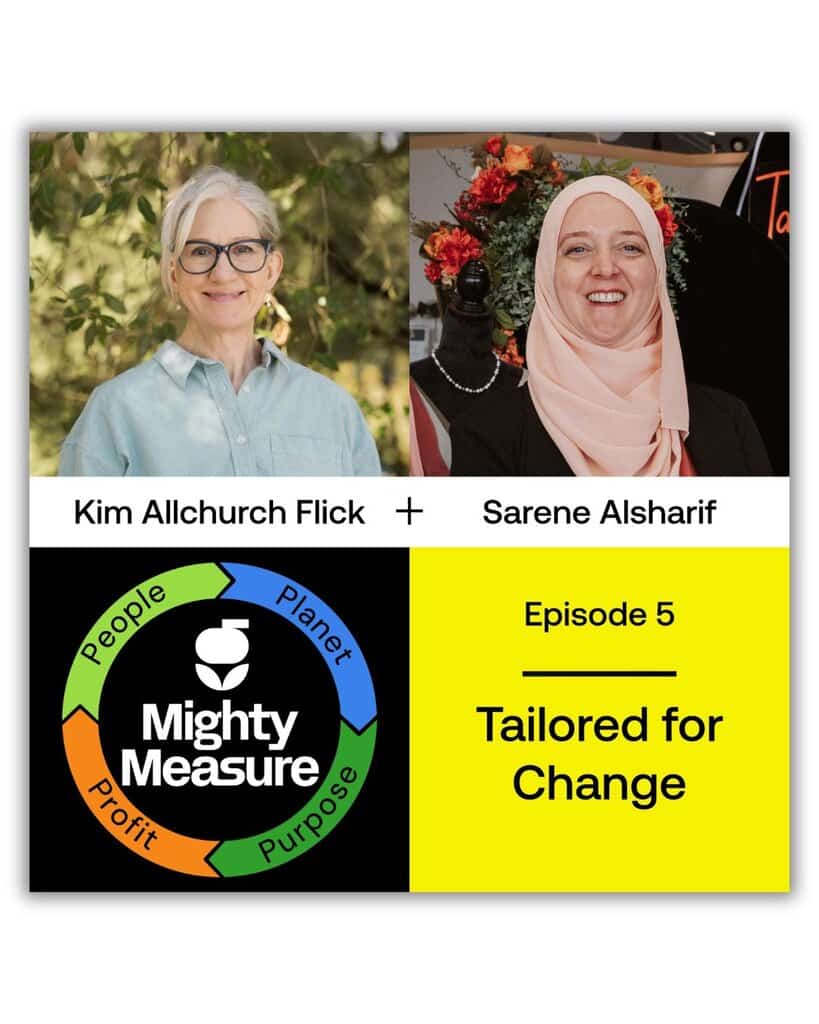
    Lisa Geason-Bauer, founder and president of Evolution Marketing, joins Kim Allchurch Flick to discuss sustainability/ESG consulting, impact storytelling, ethical marketing, and environmentally responsive design. 

    Lisa describes founding the firm on Sept. 15, 2007 to prove a professional services company can succeed using a triple bottom line lens – people, planet, and profit – while navigating Wisconsin’s long recessionary period after 2008. 

    She recounts building the state’s B Corp ecosystem through Be Local Wisconsin and helping companies certify, noting growth from a handful of B Corps to 26+ statewide and preparing members for B Lab’s new standards. 

    The conversation covers challenges like politicization of environmental and social sustainability, the need to find common ground, and Lisa’s optimism tied to launching Evolution Marketing’s 2025 Carbon Footprint and Operational Impact Report, climate education, and practical actions such as home efficiency, reduced plastics, local food systems, and Malarkey roofing innovations.

    NOTE: Lisa made an error, saying B Local Wisconsin started in 2007 when it was actually 2017.

    Listen Now

    Time Stamps

    00:00 Welcome and Guest Intro

    02:30 Evolution Marketing Origins

    02:40 Triple Bottom Line Explained

    04:43 Recession Era Lessons

    06:51 Wisconsin B Corp Growth

    11:26 New Standards and Recert

    12:53 Polarization and Language

    18:59 Finding Common Ground

    23:55 Climate Report and Hope

    27:52 Beyond Tech Fixes

    28:42 Clean Tech Optimism

    29:14 Off Grid Reality

    30:24 Low Cost Home Swaps

    31:27 Question Behind Green

    34:08 Responsible Consumption

    35:14 Local Food Mindset

    38:14 Farmers Markets Shift

    39:56 Beeswax And Preserving

    42:53 Eco Roofing Case Study

    46:07 Research And Community

    47:31 Dinner With Ancestors

    48:52 Land Stewardship Lessons

    51:16 Closing Reflections

    Kim Allchurch Flick: Hello everyone. I am Kim Allchurch Flick with the Mighty Measure Podcast. Delighted to be here today with Lisa Geason-Bauer of Evolution Marketing. She’s the president and founder, and our topic today is the 19 year journey of impact, sustainability and practice, and the evolution of triple bottom line businesses.

    Lisa Geason-Bauer is the founder and president of Evolution Marketing, a Wisconsin based woman owned, certified B Corporation, specialing in specializing in the area of sustainability consulting, impact storytelling, environmentally responsive, creative design, and ethical market. Lisa is a sustainability ESG practitioner and has been helping companies tell their impact stories for almost two decades.

    As a consultant, she has worked on projects in supply chain sustainability. For example, product transparency, social sustainability, for example, workplace or workforce engagement, culture and DEI, renewable energy, energy efficiency. The green building space. Lisa is a co-founder of Be Local Wisconsin and current co-president.

    Be local Wisconsin’s nonprofit. Mission is to connect, support and educate Wisconsin businesses on how to drive positive community impact. Through adoption of sustainable and inclusive practices since 2016, Lisa has helped companies become certified B Corps, and she is Wisconsin’s only consultant to have completed multiple to 2023 and 2026 blab US and Canada.

    Trained consultants program. So Lisa, it’s so awesome to have you here and reading this. I’m delighted because we got to meet in person at the Champions Retreat in Milwaukee, Wisconsin earlier this year, and I took one of the side programs, which was the Green Home Tour at your house, and I was. Jazz, I was awestruck.

    I was so happy. So welcome and thank you so much. 

    Lisa Geason-Bauer: Oh, thank you, Kim. I’m so excited to be here and I’m so glad we got to meet in person at the Champions Retreat and at my home. It was. It was. It was very nice. It was nice to see B Corps people and get to show the things that we’ve done over the last almost 10 years at my homes.

    Kim Allchurch Flick: Absolutely. So 19 years in business too. What has been your journey and inspirations to this point? 

    Lisa Geason-Bauer: Okay, so literally September 15th, 20 2007. Evolution Marketing was founded in Wisconsin, and when I started the business, my entire mission was literally to demonstrate that a pul, professional service company could operate in a triple bottom line manner, meaning that we could run all of our decisions through the lens of impact on community.

    So that would be the social side. So that’s people. We could run our decisions through the lens of environmental stewardship. So making sure that all the decisions we make actually we’re best for the environment. And then lastly, that we could be economically viable. Over long term. And again, it’s worked because we’re not, here we are 19 years later still in business.

    And that we’ve been able to actually make a profit, but also besides making a profit, have an impact on our local community. So that’s why I started Evolution Marketing and on our services, as you’d read. Our sustainability consulting and then marketing communications for sustainability consulting. So we’re, we work in this really intersectional space of public policy, operations, sustainability, and communication.

    And so when I started, nobody was doing this in Wisconsin and there were very few firms, I think honestly in the United States that were doing this really. I’ve looked to companies in the EU that were doing things similar. Again, maybe not exactly like evolution marketing. So when I started, I’m like, let’s just prove that we can do this.

    ’cause again. This is 2007. This is before the great Recession. This is, I’m in Wisconsin, so a truly purple state in the Midwest. Maybe a little bit more fiscally conservative, maybe a little bit more socially conservative, but big time environmentalists. So I really entered the market space doing a lot of environmental communication environmental communication tied to compliance like sustainability, storytelling about environmental actions a business was doing.

    And we’ve evolved over time. Of course, there was always the environmental consulting piece. Sustainability consulting piece or ESG consulting piece, pick a phrase in my mind is holistically I think of systems, but that’s how I entered the world. And at our 10 year anniversary we realized, hey, we’ve been doing this.

    We spent the first 10 years of our business literally beta testing my mission, and we were able to do it, which is gives us where we are now. But I think people forget that in 2007 the world was so different. We had a horrible, and then when the great recession happened in 2008 businesses in Wisconsin, really from 2008, actually, the recession, Wisconsin was under recessionary terms from 2008 to 2018.

    We did not come outta the Great Recession until quarter two. Our end of quarter one, early quarter 2, 20 18. So for 10 years we were under recessionary economic terms in the state. And so think about trying to implement really innovative sustainability stuff where there was a price tag associated with it would, it was very challenging.

    So we’ve come a long way since then, but I think people forget a lot of this stuff was new and triple bottom line from a concept. It, it only came out in the late eighties, early nineties. So that concept has only been around about, mid, like 30, 30 plus years. So we’re still perfecting what does that look like in practice?

    And so that’s what I strive to do with Evolution Marketing is to actually beta test it and demonstrate that it is doable to operate in a triple bottom line manner and also be successful and create impact and help my community, 

    Kim Allchurch Flick: and you’re doing such a good job of it. And as you’re speaking, I’m thinking I’ve been in the social enterprise world through corporate life quite a bit, but then with my own company fewer years, but over 10 and just how many landmarks you’re mentioning the great recession of 2008, and then there was COVID and how, I think part of it is companies that create resilience do so because they still have belief.

    In the triple bottom line and managed to work their way through it, but also how many things are changing and we’re both B Corps consultants and know that this new standards has been a topic of the last three years that is coming to fruition and actually being activated now, and how it’s like a great leap forward.

    There are a lot of these things happening, but I love how you’re hearkening back to. To the past and using some words that still have meaning. So with that what is your worldview of your community and what are you seeing happen with, how are people in your community rising up? How are people waking up to this and how have you been changing along the way?

    Lisa Geason-Bauer: Okay. So I think when you say community, I have a lot of communities that I’m part of. So there’s the, our B Corp community, which, as I said, this is my 10th year of helping companies become B Corps. So I was doing that before I was even a B Corp myself. And way before there was ever the B Corp consultant training program.

    Again, because I’m a sustainability person, right? So it’s really exciting to see in 10 years. We’ve went from when we started Be Local Wisconsin. We started rumblings of it in 2007. We officially launched January 1st, 2008. But throughout 2007 we were building the foundation for Be Local Wisconsin.

    And at that point we had. Five, certified B, either there five or six certified B Corp of the state, and it might’ve been five. And then that note, like November, December of 2007, the sixth one came in. My company was the seventh. And so I was like, well, we started this thing called Be Local Wisconsin. I’m helping folks in the B Corp community.

    My company really needs to be a B Corp. And I honestly, I just didn’t have time to do my own application because I was busy helping my clients. In 2018, my, we did, one of my interns, my intern that year she was like, I wanna do that. I’m like, fantastic. So she did our B Corp application the first time.

    And so July, I don’t remember the date, but I wanna say it’s July 23rd. Sometime in mid July 2018, we became the seventh certified B Corp in Wisconsin. And then. That fall, we had done a half day workshop for, with the, the handful of us that were B Corps in Wisconsin, half day workshop, and we had 20 plus people in attendance.

    Almost every one of those co people represented a company. Those companies have all, now, I shouldn’t say all, the vast majority, I wanna say it’s like 90% of them have now become B Corps in Wisconsin. So we went from this, this small scatter, like a handful, right? Or a. Whatever, six or seven B Corps, six B Corps mine mc became a seventh handful, to now we have over 26 in Wisconsin and that’s, to me, I know we think 2018 is a long time ago, but it’s really not that long ago. And I think we, we saw a big in influx of B Corps second half of 20 18, 20 19, 20 20. So we’ve seen a bunch of growth in that space, which is amazing. And these are folks from all across the state.

    And so we’ve really built up our community. And what I love about our little be local Wisconsin, I say little because we’re a mighty small, mighty nonprofit. Half of my board are folks that used to be at B Corps in other states, and they lived in Wisconsin, but they work for B Corps remotely and now over, career changes, job changes.

    They’re no longer at B Corps, but they’re still involved with B local Wisconsin which is really nice because that shows their commitment and maybe some of them are working in government or in other really social impact or social justice aligned positions. So I think. When you think about it that way, because there’s only 26 of us, we’ve really helped to grow the movement in our state by having folks associated with the B Corp community move into other roles and other jobs, which has, I think, been super helpful because in a state like Wisconsin we truly are a purple state.

    I mean our ballots are split ticket. One person votes, they vote for a for president, and you vote B for secretary sorry, Senator. So two diff from two different parties. But that’s how a lot of wisconsinites think. So with that I think it was really important for us to grow our community.

    And then in Wisconsin, we happened to have, it was originally called the Wisconsin Sustainable Business Council. They’ve rebranded to be the Sustainable Business Council a couple years ago. But I was on their board for a really long time and actually. Be local, Wisconsin came out of that board and out of that organization because it was the people in Wisconsin doing sustainability and said, Hey, we’ve got enough folks now in the B Corps space to let’s form a B local.

    So for me, when I think of community, I’ve got my sustainable business community, that’s B Corp. It’s folks that used to be a B Corps, but now in government and other jobs that maybe they’re not at B Corp, but they’re like B Corp allies or B Corp supporters. And then we have our sustainable business community, which is huge and continue to grow.

    And so that’s. That community in my mind is not stopping. It’s moving forward. We have a conference every year for the Sustainable Business Council and we bring together every year we have folks from the B Corps community who speak. It’s just a really nice, like holistic space where anybody who is.

    In, in that bigger holistic sustainability bubble, they all come together, right? And we meet, we talk, we learn from one another. And it’s not that, it’s like we’re learning about things that aren’t related to B Corps. Everything is related to B Corps at the end of the day. And I think in all sincerity, everything B Corps is doing helps the sustainability community, right?

    So I just think sometimes we need a little translator. And so I end up being that translator a lot of the time. Hey, we’re doing this in the B Corps community. What can the regular sustainable business community use? So that community it’s like it’s my family, right? I’m surrounded by them, they’re wonderful.

    But I think everyone right now is having just a challenging time from a community perspective, right? And so I think we doing programming where we can really help and educate the folks within the B Corp space especially about all the changes under the new V two version tube, I think is really important.

    And so that’s actually the theme for Be Local Wisconsin for the next year and a half, is what can we do to help folks in our community? Educate them to help them be prepared so that they can have a successful experience going through the recertification. And I say this as I was the first company in the US and Canada to submit for recertification earlier this year, and I’m still working through Evolution Marketing’s application.

    So it’s a process. The new standards are a big pivot, but it’s not a bad pivot. It’s just different. And I’m really excited about the new pivot. It’s just, it takes time to be prepared. With everything you need, meaning the documentation. 

    Kim Allchurch Flick: Indeed and with anything change can for some be a struggle.

    It’s always different and yet it’s still moving forward. And because it’s somewhat unknown. Maybe that’s part of it. And I was wondering if you could speak to obstacles and challenges you’re seeing some of which you already brought up. And you also mentioned that some B Corps have perhaps chosen this change in the standard as a window to, not recertify, but what are you seeing as obstacles and challenges for some of the people you work with, including those allies and everyone else in the community?

    Lisa Geason-Bauer: I think, at least in Wisconsin. So this is probably maybe a more Wisconsin or maybe a more Purple State issue, but many companies right now are afraid to talk about the things that they’re doing that might be pro Jedi, which is justice, equity, diversity, inclusion. Pro de and I, or I like to say social sustainability because they’re worried about what an elected official might say.

    There’s been proposed legislation in Wisconsin that has not gotten traction, but that. Doesn’t help the things that I’m doing say to say it kindly, right? And so I think there is a sociopolitical shift happening in some places where things have become partisan that actually are not. So to me, environmental sustainability is not partisan.

    I believe everyone. Republican, Democrat, libertarian, green Party wants clean air, clean water, right? They want to make sure that we have natural habitats for fish. When you go fishing, you want to make sure the fish you’re eating are healthy, you want to have the ability to go hunting. All of these things are all connected together.

    You. And I think in some cases there’s this partisan divide that’s occurred that’s made environmental sustainability a partisan topic, which it should not be. To me, environmental stewardship is not partisan, and the work that I’m doing is at these intersectional spaces. So I work with folks from all different sociopolitical and ideological differences on a daily basis.

    And I think ’cause of that, I’m very consciously aware that words have meaning. And especially right now, certain words may have been co-opted or influencers or media organizations may have attached meetings or co-created a new meaning for words. And so what you say to somebody really matters. And I am in one of, one of the, the Reds counties in, in the United States in the, I’m in the, the three, three most conservative counties in the state of Wisconsin.

    And every day I interface with folks who are different than me. And so it’s really important for me at least, to meet people where they’re at. And I think this goes to the challenges, but yet also the opportunity because I have young people that come to me all the time who are getting degrees or finishing school or in their first job and they’re like, oh my gosh, I had this problem.

    I got into a fight with my uncle at Thanksgiving. You know, about carbon reporting or about some, some nuanced thing, and. I said what happened? The young people are like I yelled at them and I was like, okay, hold up. Yelling at your family members is probably not a good idea, instead, I’m like, you need to take a step back. You have to be more neutral. And so this ends up being a conversation I, I have. A lot, probably more so than I actually wanna admit, but I, this also ties into how do we as sustainability practitioners advance sustainability? How do we as B Corps consultants encourage businesses to become B Corp and to advance the programming and the strategies and actually implement and op the, operationalize the B Corp standard.

    So I think we all really need to. Maybe take a step back Sometimes from the emotional response we may have to words and specific words or phrases that people put out because at the end of the day, I truly believe there’s more that unites us. Then separates us. And I think it’s hard to think about that sometimes because of the, the partisan nature of everything.

    It’s like everything’s been coopted by partisanship, which is a real problem. So I think that’s a real challenge. But we also have an opportunity because many of the people I work with, come across from very different perspectives, and I’m not saying one is bad or one is good.

    I have no I work in the nonpartisan space, because of the work that I’m doing. Because at the end of the day, it’s really about how can I help your company to advance sustainability? Whether that’s addressing your workforce issue and challenges or helping you to address environmental stuff so that you’re ready for your next audit.

    It’s, to me, that’s holistic sustainability. So does that answer your question? I hope 

    Kim Allchurch Flick: it does, and it makes me reflect a lot as well. There’s I have a, a couple of clients that have also, they are also in more conservative states, and when they share their values upfront with a client, sometimes they’ll get pushback, like what one said.

    She was, she would say, well, you’re just trying to turn me into a Democrat by a potential climate client. And we talked about okay, what can you bring to the table that makes the connection? Maybe it isn’t sharing the value so hard or leading with it, but what’s the work you can do together? And find a way to build that bond.

    But it also makes me laugh in a way, because when I was in Wisconsin with you and you’re very well run Champions Retreat, there was someone from Georgia who was talking about being a B Corps and going into a space which was clearly, clearly very conservative. Red hats and shirts everywhere. But she said she was going through this massive store.

    And seeing B Corps products on the shelf as well. So at the same time, two things can be together at once, and it doesn’t have to be opposing and polarizing. But I love what you said about being the interpreter. And I think that’s where it matters is because polarization helps people make assumptions and stereotypes, and that is no good at all.

    But when it comes down to it, yes, we all want clean water. We want clean air, we want to f. Feed ourselves and others. We want to live a basically good life and support our families, and you’re so good at interpreting across those lines and hopefully making the lines dissipate a little bit over time. So I love what you said about that.

    And we see it as well. I do wanna give some grace to also the people that are afraid. To speak up or present what they feel because potential backlash, which could come out of nowhere. And I live in a small rural town where that has actually been happening and happen yet with it. I, I think, that still things can still move forward and do well that serves everyone in a nonpartisan fashion.

    So with that, what makes you optimistic and what new things are you working on? 

    Lisa Geason-Bauer: Okay. I will address that in a minute, but I wanna say what you’re experiencing in your rural town. I think that’s very real right now and I just wanna voice over that. That it’s real. And I do, I, I had, I strive to give myself and my clients grace each and every day because these are really challenging times that we’re living in.

    And one of the things I’m a sociologist by training, so one of the things that we do here or that I do, that my team at Evolution Marketing does, when those situations arise. And I literally, I advise people on this all the time. Find something, find a common ground about something. Like for example, I was on our regional workforce development board for 15 years.

    I stepped off of it last year, and usually in the room I was, for a long time I was the youngest person in the room. I was one of the few women in the room. So I represented a lot of different diversity buckets, for lack of a better way of saying it. And of course, with my business being a B Corp.

    Very different than this room filled full of manufacturers that were owned by men. And so we would go to the board meetings and it don’t get me wrong, like I was on the board for 15 years, so it evolved over time. But when I first joined the board, I would find things that I could talk to elected officials about that we all agreed on.

    So innovation was something that everyone agreed on, saving money. Taking your operations, so finding efficiencies in your business operations, especially in manufacturing. So it’s finding whatever the, whatever those little pieces are. The other thing, at least in Wisconsin, and I think this is probably pretty universal across the US and Canada, a living wage.

    I was on the workforce of all award for so many years, and living wage was not a conversation point. And I’d say the last four to five years, living wage has become very important across the board. Vast majority of people, everyone I know says we should have a living wage. I don’t know, many people who are disagreeing that folks should be paid a living wage.

    And so I think finding those little nuggets or those little items that there’s agreement on, and then working from there, because I, that’s the only way I, and that’s, to me, that’s sociology 101 find our commonality and then work from that commonality towards a solution. But you have to also be willing to give and take, and I think that’s the part that’s hard. We’re told right now it’s like my way or the highway. And it’s like in actuality everything’s a negotiation, right? And you know what? There may be things that somebody else knows that I don’t know. So being open to hearing these ideas, and I truly believe the more diverse people you have at a table, the better the solutions are going to be.

    I know that’s a little off, off topic, but I just think it’s important to talk about. 

    Kim Allchurch Flick: Absolutely off topic, but on and here we are in 2026, more than halfway through the year. It also reminds me of some of something the British did. They took people from very different walks of life, but they knew they were, would be polarized, and they put two people in the same room and they said, you can talk about anything you want, but politics.

    And they started talking about. They’re church, they’re grandkids, they’re do I love dogs? Do, what kind of flowers do you grow? What type of work do you like to do? What makes you laugh? What’s your favorite music? And it started really breaking down some barriers. And there’s a little bit of magic that happens when we give ourselves a chance to be able to do that.

    And one of the things I’ve been doing in our small little town is no matter where I go. I smile and say hi to everybody in the grocery store, in the gas station line, whatever it might be. I’m just gonna approach everything in that fashion. And who knows maybe I’ll get a smile back, maybe I won’t but at least just not try to enter into anything as it might be a conflict, but enter into everything as it might just be a moment of grace in passing.

    Lisa Geason-Bauer: That is lovely and I 110% agree. My response in any situation is to smile. And I know not everyone does that. Sometimes people will frown or you can read facial expressions, but I’ve been in enough meetings over the last 30 years of my career where. Things are being said, and like my face, if I did not smile, my face would portray how I really felt, right?

    And so that, and that’s not gonna be helpful if I’m trying to negotiate and or come up with a solution that works for everybody. And so I think responding in a positive manner, smiling is really important because at the end of the day, we’re all humans, right? We are all people, and I think sometimes we forget that because we get into the emotions of everything.

    It’s like we take your step back, we’re all human. We all, at the end of the day, wanna take care of our families. We wanna support those that we love. We all should have access. I believe we should all have access to, to clean air, clean water be the ability to support ourselves and be paid a living wage.

    So 

    Kim Allchurch Flick: Concurs. And so what does make you optimistic and what cool things are you working on? 

    Lisa Geason-Bauer: Yeah, so what I’m optimistic about is we are just, we’re launching today the Evolution Marketing 2025 Carbon Footprint and Operational Impact Report. And Kim will be sharing out a copy of it with with the podcast, which I’m very excited about.

    And this year, because again, we’re working through the new standards and we’re going through our, verification part of that. Right now with Two cert, we have a whole section dedicated to our climate action plan. Again, my business was started in 2007. My first climate action plan was done in 2008.

    So I took, and we’ve been working on it for years, and I think what gives me hope is that there’s always something to do. I think a lot of times folks are like, here’s a goal. Let’s meet the goal and then we’re done. And it’s like, no, that’s not the case. We’re 19 years in. I have new goals for this year.

    We’re taking actions every year. Now, are the goals different today than, than they were actually, I should say were the yearly goals different? Yes, but the overall, the arching goals in our climate action plan have been the same. Our climate action goals were high enough level that we could implement yearly, and part of that is understanding holistic sustainability, which I don’t know if everyone does.

    I was in grad school in the late nineties. I’ve been working in carbon space since the late nineties, so I’ve been doing this a really long time. So when I started Evolution Marketing, I really wanted to make sure that we, in b in everything we’re doing. Operating in a climate responsible, climate friendly, environmentally responsible, pick a word manner.

    And to me that was decarbonization. And so we’ve been taking decarbonization actions for years. However, we’re at the point where we’ve decarbonized to the point where we can’t do anything else. Let get a sip of my water.

    But instead, now we do education. So once you’ve done the actions, then you need to educate about those. And so what gives me hope is that I truly believe and we joined this program, it’s called the Department of Natural Resources, so Wisconsin’s, department of Natural Resources, green Tier Charter for Climate Action.

    We joined it last year. It was a new charter last new charter. I think they came out in 20 23, 20 20, 23 or 24. So they’re pretty new. We were the, I think, the sixth business to join Wisconsin, either fifth or sixth. So there, there aren’t that many of us, but. When we did that we go we agreed to go to quarterly meetings with folks that are part of this program throughout the state of Wisconsin.

    And at our last meeting, our state of Wisconsin climatologist released a new state of Wisconsin Climate Impact report saying basically, this is what, what’s going on with climate in Wisconsin. And I’m borrowing his phrase, that’s why I’m talking about this. He said, we’re at a point in time where it’s all hands on deck moment, everybody.

    Doesn’t matter the size of your business, doesn’t matter the size of your home, right? Like everybody needs to start taking actions. And so in one way, it’s horrible that we’re in a climate emergency, but in another way, we have so many more tools now that we could use to address it. We have businesses like mine who are doing climate education on a regular basis.

    There’s so many more resources now. So my hope for the future is that every single person listening to this podcast can take action. And if you like something that we’ve done in our Impact report, copy it. That’s why we put this out there. We really want to help elevate the conversation and let business people know that small businesses could take action too.

    ’cause I also think sometimes we expect big businesses to make, Microsoft, we’re gonna decarbonize back to 1975. That’s amazing that Microsoft is doing that. However, they’re a huge multinational company. We can’t expect Microsoft to solve all the problems. Or the fact that, I love Google and I’m using the Google office suites and that’s running on renewable energy.

    That’s awesome. But that’s just one choice. There’s so many other little things we can do each and every day. And I know you were at my home, so we went through, like we compost. It’s just an example. We removed the buckthorn, which is a invasive species in Wisconsin, you know, so we do a whole variety of.

    Things that all tie into decarbonization every year. And that’s how we operate. But then we also educate and share what we’re doing with others so that other people ’cause you don’t know what you don’t know. And the older I get the more I’m really convinced that there’s a lot of things that, that I don’t know either.

    So being open and being curious to hearing about what things we can do to help address this challenge, I think is important. And just knowing that we all can have an impact. We can’t, we don’t, it’s not. We don’t want to put all of our hopes and dreams on technology. We can’t tech our way out of the climate crisis, right?

    So what can we do? We can all be empowered to take action.

    Kim Allchurch Flick: We can’t tech our way out of the climate crisis. That what a beautiful quote. And it’s so important and there’s small things we can all do as individuals. The other thing, as you were speaking, I was reminding myself how I’ve been so excited about innovations some things that weren’t there 3, 5, 10 years ago 

    Lisa Geason-Bauer: Yeah.

    Kim Allchurch Flick: That we can now embrace and future innovations are coming. And there are incubators for tech innovators, like clean tech incubators like Virtue Lab, which is based in Seattle and Portland. So there’s things there that even if we don’t see them every day, just knowing they’re there can help us with a little bit of optimism.

    And you’ve done so much with your house almost completely taken it off the grid in many ways. 

    Lisa Geason-Bauer: I wish we 

    Kim Allchurch Flick: could 

    Lisa Geason-Bauer: it, it’s illegal to go off the grid. Yes. We, so even if we wanted to, we could not leave the grid because it is currently illegal in the state of Wisconsin. 

    Kim Allchurch Flick: Oh, okay. That pardon my misstep then, but it does make sense.

    But your energy usage is so low and giving somewhat back to the grid. And I live in a house with solar panels as well, where every power bill is in the negative because it’s also giving back somewhat.

    There’s things we can do. 

    Lisa Geason-Bauer: Yeah. I wish we, this is a point of contention that I have with the state of Wisconsin.

    I wish we could go off the grid. But yeah, the way we have invest, we have five investor owned utilities, and currently that is not, if you build a new home, you could potentially build it not, and not connected to the grid, but it has to be a new home. And it has to be, there’s a bunch of criterion that have to, it can’t be like in a subdivision.

    It has to be, in a rural farm field surrounded by nothing for miles, but there’s a system in place that’s, that controls me in Wisconsin. 

    Kim Allchurch Flick: Yeah, indeed. And the other thing is it means we, we can continue talking about this and make a step at a time.

    Sometimes we can’t do everything at once. Some adjustments, particularly in environment cost money, like buying solar panels is not inexpensive and yet there’s an upside to it. But there are other things. That we can do that leave us pretty even. Some examples in my house are I decided I’m anti plastic as much as I can possibly be, even though food is almost impossible to wholly do away with it.

    But cleaning supplies, I now am down to zero plastic packaging and zero plastic content in any cleaning supplies in the house, and I start spreading the word the cost of that has. It’s been pretty much parody. It hasn’t cost that much more. And another bonus I hadn’t thought of in the beginning was because some of these things are.

    Dry capsules that you mix with water. I got so much space back inside of my cabinets that it’s just remarkable. So there are things and I think the other thing that you’re really wise about, you and your husband and I think about more is. Sometimes we tend to stop at the first question, and I’m gonna give an example.

    I was at the Oregon Zoo one time, which has a lot of conservation and whatever people might think about zoos, and I’m one of them. But this particular one has a lot of conservation science and is doing things behind the public view that are very strong for the environment. But there were some volunteers out of probably high school age who were standing by an exhibit that said There’s renewable palm oil.

    And I said, oh, what do you mean by that? And I said Palm oil grows, so once it’s planted, it grows and you never have to plant it anymore. And I said, but I’m gonna tell you a story about someone I know who’s a friend who happened to, at one point in time, be the US Ambassador to Malaysia. And in Borneo, there has been so much deforestation for palm oil that is yes, now sustainable.

    It is still growing in producing fruit every year. But all those orangutans lost a tremendous amount of habitat and. When the helicopter took off outta the forest and flew over the palm oil, the heat inside the helicopter increased. So what’s the question behind the question? Is this palm oil sustainable?

    Yes. If a plant keeps growing, keeps producing, all it needs is maybe some water, sun. But what’s the downside? What was before that? What was taken away? And I think that’s one of the mindsets that it’s hard for us to grasp. We tend to stop, like recycling is really good because we’ve been trained that, 

    Lisa Geason-Bauer: yep.

    Kim Allchurch Flick: Recycling has some huge downsides per the New York Times article of February 14th, 2025 and others before that, the green fence that I studied at Portland State University. Gosh, that was 2013. We knew then that recycling was bad, that China was sending full containers back of our recycling back to us because they wouldn’t take it anymore.

    Yes, exactly. So how do we reshape our questions and try to unpeel the onion a little more and ask the question behind that, that first point? Because. A lot of people would stop and say, oh yeah, recyclable palm oil. I feel better about that. I know that are renewable. So I think we’re. Framing that a lot has been done.

    We’re excited about where we are. We’re excited about innovations, but we can still challenge ourselves to keep thinking more and asking questions and saying, okay, this is good where we are at this point. What more can we do and what can we press against a little bit to challenge and say, yeah, but is it as good as we’re being told?

    What do you think about issues like that? 

    Lisa Geason-Bauer: I think you’re right and I wanna take it a step further and say. Again, I’m a sustainability person through and through, right? I’m a sociologist who worked in I’m a rural and environmental sociologist, so like that’s my classical training.

    So for, so me, for me, I’ve always watched people and watched companies and watched how things happen. And to your point, okay, what does responsible palm oil mean? How is it different than sustainable palm oil? And what third party certifications exist now? And I think. We’ve come so far from the late nineties when I was in grad school till now about factoring out or digging into, I call it, doing a deep dive right into these topics.

    And people are learning so much more. And I think taking, bringing the regenerative mindset is also really important. But also I think at the end of the day, we have to move away from this take, make, and consume model to. Do we do? First of all, do we even really need this? And if we really do need this, how can we do that?

    And I’m gonna use the word responsible because people define things differently, but for me, responsible is gonna be both socially and environmentally responsible. Okay? So should we be buying in the middle of summer tomatoes grown in a different state? Not state, a different country. In the United States.

    If we can grow our own tomatoes here, should we not be buying our tomatoes locally? And I remember being at a, a food ag conference, literally, I think it was like 2000, it was either 1999 or 2000 and Michigan State University. And the keynote speaker talked about apples and he said, I went to the, this was in the fall time, and he is like, I went, I think it was 2000 this happened.

    He went to, I went to the, the local co-op and he’s like, I looked at all the apples. There was only one, one set of apples that were local to Michigan. So fall and Michigan, there’s lots of apples, but they weren’t at the co-op. The apples were from Oregon, they were from Washington, they were from the West coast.

    So those, the food miles for all those apples. And so like that. Got me thinking about, okay. And I grew, and now I grew up on a dairy farm. So a lot of our food was local. Like we raised our food, we ate our food, we ate our animals, we drank our cow’s milk, we had our butter. All of that was from our cows.

    But I think a lot of people just go to the grocery store and they just, they want something, they get it. I remember being a kid. Avocados, were not at the grocery store in the wintertime, avocados and, I don’t know, I actually don’t know when avocados started showing up at the grocery store. But I was, I, from what I can remember, it was the nineties, like probably late nineties.

    I remember seeing avocados at the grocery store, unless you were in Hawaii or, ’cause trust me, like I’ve gotten lots of avocados awesome. In Hawaii or California or places where avocados go. But I think we’ve moved away from this seasonal diet, just as an example. And I think now, as we look towards the future, if.

    If we are, ’cause all the prices are going up. And my mother-in-law was really concerned about prices this fall for food because so much of the food that she buys at the grocery store is trucked in.

    An organic farmland surrounds us. It’s lovely. So I said to my mother-in-law, , well, you could go shopping at the Farmer’s market stores.

    And she’s like, yeah, but they’re only open Lisa from whatever, nine to five. And she started kinda giving me, like, pushing back and they don’t always have what I want. And I’m like. Yes. They won’t always have what you want, and you’re going to have to make the effort to go when they’re open.

    I get that you could go to the grocery store at any time of the day or night. Grocery stores are open 24 hours now. But I’m like, at the end of the day you’re also like, you don’t always need to have tomatoes. Don’t get me wrong. I love tomatoes. I love avocados, but I also realize I don’t buy tomatoes in the middle of winter unless I’m getting them at a farmer’s market where I know they were grown hydroponically by a farmer.

    Now I understand there’s a level of I have that privilege, right? And I know that there are people that don’t have that privilege, but I just think the more local we can eat as an example, that helps all of us. So then I can manage my pricing because I know, but I also need to realize that maybe in fall I’m eating different things and I ate in spring.

    And I think sometimes we want what we want, what we want it, and we don’t realize that there’s a cost to that. Not just a physical cost, but like a, like an environmental cost. And so to your point I mean I’m trying to use this as a good example, but I think people have started to really rethink food and food systems.

    I’m not saying it’s perfect. I’m not saying we’re done, but like I’ve been part of the farmer’s market food scene for over. 30 years now. A really long time and I know that we, during the great recession, more and more people across the United States went to farmer’s markets. More and more farmer’s markets opened in Wisconsin.

    Like I literally started a winter farmer’s market and then all these winter farmer’s markets started showing up all winter long during the Great Recession because people wanted to support farmers, but also help. Buy produce into the middle of winter. So you could buy 20 onions for, I don’t know, five bucks.

    I’m making up a number right now. But you could buy a lot of things at the farmer’s market that were gonna be cheaper, but you just had to know how to process it. I remember buying like bags of carrots and we made carrot cake, carrot muffins, we did all these different carrot things you know what I’m saying?

    So it’s like you have to understand how to process it and have the ability to do that, but. When we have less things and we, when we, when the price of things goes up, that I think encourages people to start to think about it. To do your point, ask these questions. What things can we do? That can change that, and I think growing up on a farm like I was taught, never waste anything. You only buy something if you’re, if you actually need it. Not because you want it, though. I do enjoy jewelry. That’s one of those things that it’s just. It’s an individual thing. My husband’s like, you don’t need any of that.

    He’s like, you just want that. I was like we can debate that. The point at the end of the day is, I’m not saying don’t treat yourself, but I think if we all start to look at our daily habits and the things we’re doing, there’s probably many things that each of us could do to live more sustainably or responsibly.

    And then the last thing I’m gonna say is, have you heard of bees wax paper? Oh my God. I love. I’m obsessed. I all of the presents, I do a lot of baking, so I gave vegan baking to all of our friends and clients. Last year for Christmas or for the holiday season, they all got it. It’d be bees wax, wax paper, and they all got their own set of bees wax paper with it so that they could start taking plastic out of their homes.

    Kim Allchurch Flick: I love that. There’s so much we could talk about. I think there’s a webinar in our future, you and I, about all the, the things that can add up by what seemed like small but mighty changes that we can make getting rid of plastic is a big one. And you’re also making me think of historically what did people do?

    They took their fresh produce and they preserved it. 

    Lisa Geason-Bauer: Yep. 

    Kim Allchurch Flick: Canned, and that’s where canning and freezing and in all, in some countries they pack things in salt, like fish and Yep, yep. There, there are ways to do it and, but also supporting local because I do think that a lot of us forget about what transportation costs are, and they’re not just monetary costs, they’re climate costs as well, 

    Lisa Geason-Bauer: discussion.

    Kim Allchurch Flick: So I do appreciate all these points you brought up. 

    Lisa Geason-Bauer: One, just with the transportation right now, the costs are going up because the fuel is went up. Right? 

    Kim Allchurch Flick: Fuel. Yeah. 

    Lisa Geason-Bauer: So my mother-in-law, she was really upset and concerned. She’s like, I don’t know how people, and she’s on a fixed income, she lives in a retirement home.

    She’s like, I don’t know how people are gonna be able to afford their groceries. And I was very nice when I said, there are winter farmer’s markets. There are things you can do. It may be inconvenient, but I think sometimes that inconvenience is probably gonna also be better for your health in the long run too.

    But people just, they don’t know what they don’t know. And so my mother-in-law’s awesome. And she means, well, she just, it’s from a generation that ha was, it had so many things like I can’t imagine. Growing up in the sixties and, and then looking at what we have in the two thousands, right?

    The fact that you could get any type of food you want any time of the day, it just it’s amazing, right? We have food from around the world in our grocery stores. And my mother-in-law loves to cook, so she loves exotic things, and I’m just like maybe tone that back a little bit, 

    Kim Allchurch Flick: yeah, indeed. Or get some exotic seeds and grow some under a, a light in the basement or something. There’s fun things we can do. 

    Lisa Geason-Bauer: Yes, exactly. She does not grow. She I literally, I’m growing organic lettuce for her and she’s like, oh my God, I want lettuce, Lisa. Because she’s, she does not grow. But that’s, we all, we each have our own thing.

    But the point, I just think we have to have these conversations though.

    Kim Allchurch Flick: Yes. And I loved what you said is responsible, what, thinking about what are things we can do responsibly that is a, and around a couple of layers of it. But there, there’s a future discussion here and I think it’s super important and ongoing.

    And also for everyone, everything will be in the show notes as well. There’s a lot of links that Lisa’s providing. Is there anything else you’d like to add before the final question? 

    Lisa Geason-Bauer: I think you should talk about the Malarkey River real quick because I think people need to know that. We have an Eco Home page on the Evolution Marketing website that’s in English and Spanish, and we showcased that page when we had our tour, the Eco Home Tour.

    But tell everybody your story, Kim, about what you learned and then what you did with the Malarkey RevX. I think this is just amazing. 

    Kim Allchurch Flick: Here we go. Because I was at your home tour standing outside as you were discussing with that group of people, all the energy efficiencies you’d added to your beautiful home.

    And one of them was these roof tiles, and you talked in detail about the roof tiles and how they actually reflect instead of pull heat in. And I know in older homes, if you’ve ever been in an attic in the summer, it’s in uninhabitable. And how that. This particular roof tile actually helped reflect that back out, but also that you said that, and these roof tiles were made in Oregon and two of us were standing there in Wisconsin saying, that’s an Oregon company.

    This is fantastic. And while my primary work is being a consultant in the same space in Oregon and Washington. I’m also a licensed real estate agent and we were selling, getting our house ready to sell in Beaverton, Oregon. It needed a new roof, so guess where I went for the new roof. Went over very well with the buyers and also two houses that I’m representing now have malarkey roofs on them as well.

    And it’s a very good company that. It has a lot of values driven I things baked into their charter and also my, our solar panels are from Oregon and they’re also from a benefit corporations for good benefit company. So that there are ways to do things that are really super, so it’s sometimes it’s asking the question, I need a new roof.

    What are some options? That are really good for the environment as well, and the good part is the price point was really no different than standard options, so I thank you for that, Lisa, because I didn’t know about a company in my backyard until I went to Wisconsin and saw it on your house. 

    Lisa Geason-Bauer: But you know what, that’s okay because what I did my research, and I think I drove my husband a little crazy before we put our new roof on, and I did all of this research and this was back in 2021, and I came down to it and I was like, okay, I want the malarkey roof.

    And so our roofer company was like, oh, okay, Lisa, they’re out of Oregon, so you’re gonna have to pay. A fee to get it shipped here. And I was like what’s the fee? And he’s like it’s $5,000. And I looked at him and he said, but you know what? Let’s, we’ll do Hals these, if you pay 2,500 for shipping, we’ll pick up the other 2,500.

    And I said, done. So like at the end of the day, yes, I paid a little bit more, but again, this is 2021. So I think the prices have probably come down since then, but. Well worth it because not only does it reflect the sun, it also pulls water out of the air and pulls well, actually pulls smog outta the air and makes, turns it into water, and it’s made with recycled materials.

    So O-M-G-I-I should just go work for malarkey because I’m so obsessed with our roof. But the reality is. There really are some cool companies, to your point about innovation and sometimes we just don’t know because these are newer companies, they have newer product lines, right? So it’s incumbent upon us to do our due diligence.

    But I think it’s hard because there’s so much going on in the world right now that we don’t maybe have the time. So I, that’s the other thing is I would just encourage people, if you have a big decision to make, take some time. Do some research, look into it, talk to people. ’cause that’s how my dad did it, 30 years ago or whatever, a long time ago.

    That’s how my dad and my grandpa did things, is they would talk to people. They were always asking, oh, we have to do this on the farm. Well, what have you done on your farm? And I didn’t ever fully understand that at, but now we, at, on our fingertips, we can ask Google and we, there’s so much more that we can find today where back in the day we didn’t have to, but I think.

    Reaching out to folks in our community is so priceless because let’s learn from each other. I don’t need to reinvent the wheel. So I think that’s a, something that maybe like a, a drawback or throwback to the way things used to be. 

    Kim Allchurch Flick: Indeed, a little bit of research can go a long way and some good keywords, and we have for some that are certified.

    B Labs directory. Or other places, other ways to search too. But keywords like eco-friendly. There’s so many ways to run a search and try and hone it down just a, a little bit and also and. Certainly try and keep it local, but this is an example of where the options weren’t available. So maybe more and more will happen.

    But I think you and I are both so encouraged by innovations and taking advantage of them as well. So for the last question, this is, if you could have dinner with one to three additional people living or deceased, who would they be and why? 

    Lisa Geason-Bauer: So I was just talking about my dad. So my father, my grandmother, and my grandfather are all deceased.

    My grandpa and grandma died on my dad’s side of the family over 30 years ago. My dad passed away 11 years ago. So I would have dinner with all of them and I would actually talk about what we what my company does, and how the world has changed. Because I keep thinking back to, I grew up on a dairy farm.

    My grandfather was born on the family farm. He died on the family farm. My dad was born on the family farm. He died on a piece of land next to the family farm, which was his home. That’s not gonna be my future. I am. I the, where I was, the home I lived in my whole life as a kid, that’s not the home I’m gonna pass away in.

    And just these shifts that have happened in familial like agricultural families where you have a piece of land. ’cause our family farm is 110 years old, and so like I would love to talk with my grandparents and my father about just. My father, not as much as my grandparents, just ’cause my grandparents had been gone so much longer, but how the world has changed and.

    Most people today aren’t born in the same home that they’re gonna pass away in. And most people don’t have that relationship with the land. And so I think land stewardship is so important to me. So I would love to talk with them about that and just see their take on the things one that I’d also love to like.

    Okay. We’ve done these things in my house. We’ve done these things in my yard. What other things could we do? Because growing up on a dairy farm, we did a lot of things that one might say. How do I say it the right way? Were environmentally responsible farming practices, but they also were things that just made sense and it was the way farming used to be done.

    50, 70, 80 years ago, you planted cover crops. You wanted to make sure that in the middle of winter there was something growing so the soil didn’t road. Because we live in Wisconsin and we have snow, and snow comes down and then snow melts, right? So erosion’s always been an issue here, however. More mainstream farms or bigger production, ag farms change their farm management practices to do things that maybe weren’t as environmentally responsible, that then the short term produced results.

    But at the end of the day, there were long-term ecological repercussions, right? And how does what I learned as a kid and what our farm did, and all of us kids working on the farm, how does that then translate to what I’m doing today? I’m striving to use that same mindset, of like a addressing, not per se I don’t have cover crops because I don’t have that big of a spot of land to have cover crops.

    But I have trees and I’m taking care of my trees and I’m planting things with the trees and and just trying to. Make good decisions. And so I would love, I think, to talk to my grandparents about that because they lived through the recession and as a child, like we had a cellar, and then the, the cellar were jars of, everything was tanned, or it was pickled.

    And then we started freezing things. I remember we got the chest freezer, I don’t know, maybe I was seven, five or six. They got this chest freezer and it was this big deal because then the meat went to the chest freezer, and so just all of these things that. To me we’re like huge technological changes, but have actually revolutionized how we eat, how we feed ourselves, how we take care of ourselves, right?

    And to see, and then the sustainability space. ’cause my grandpa would always be like do you really need that? I said this earlier, do you actually need that? No, I want that. You don’t need it, Lisa. That’s fine. Don’t worry about that. You don’t, you only worry about what your needs are.

    And I think if all of us as a society, maybe we’re less consumer driven, consumer product driven, I, I think that would make the world a better place and maybe help to address some of the plastic problem and. Other overproduction problem that we have. 

    Kim Allchurch Flick: Oh, indeed. What a beautiful table. I am so appreciative.

    I think there’s future conversations and let’s talk about that. Everyone, thank you so much for being here, listening. This is really special. This conversation is going to continue and we hope that you’ve all picked up something. Show notes are there for you. And this is Kim Allchurch Flick signing off with the Mighty Measure Podcast.

    Wishing you a wonderful day. Thank you all very much. Bye-bye. 

    This Episode’s Guest: Lisa Geason-Bauer

    Lisa Geason-Bauer's headshot. She's smiling and looking at the camera with glasses on, standing outside with trees in the background

    Lisa is a sustainability, ESG practitioner and has been helping companies tell their impact stories for almost two decades.  As a consultant she has worked on projects in supply chain sustainability (i.e. product transparency), social sustainability (i.e. workforce engagement, culture and DEI), renewable energy, energy efficiency and the green building space.  Lisa is a co-founder of  B Local Wisconsin  and current co-President.  B Local Wisconsin’s nonprofit mission is to connect, support, and educate Wisconsin businesses on how to drive positive community impact through adoption of sustainable and inclusive practices.  Since 2016, Lisa has helped companies become Certified B Corps and she is Wisconsin’s only consultant to have completed multiple (2023 and 2026) B Lab US & Canada Trained B Consultants Programs.

  • Solar in 2026: What Changed, What Didn’t, and What’s Next with Garrett Hartwell of Power Northwest

    Solar in 2026: What Changed, What Didn’t, and What’s Next with Garrett Hartwell of Power Northwest

    Garrett Hartwell of Power Northwest, a Portland-based residential and commercial solar installer serving Oregon and Washington, joins Kim Allchurch Flick to talk about the 2026 solar landscape and the company’s purpose-driven approach as a Benefit corporation.

    Hartwell describes how a 2019 reset in Spain and concern about climate change led him to start the company in 2020, navigate licensing and electrical code requirements, pivot during COVID to virtual consultations, and grow to 35 employees.

    He explains Power Northwest’s three pillars—happy homeowners, enriched employees (including apprenticeship programs), and a clean environment with extensive jobsite recycling.

    Hartwell discusses the end of the 30% residential federal tax credit, continued 48E commercial credit enabling third-party owned residential leases (including PPAs and prepaid leases), supply-chain disruptions, tariffs, and evolving compliance rules, while remaining optimistic about solar’s durability and impact.

    Listen Now

    Time Stamps

    00:00 Welcome and Guest Intro

    00:48 Garrett’s Solar Origin Story

    01:21 Spain Reset and Purpose

    02:31 Launching Power Northwest

    06:10 COVID Pivot and Growth

    08:20 Becoming a Benefit Corporation

    09:03 People Planet Profit Pillars

    11:04 Jobsite Waste and Recycling

    13:50 Customer Story and Team Culture

    16:41 Solar in 2026 Incentives Shift

    18:24 Third Party Ownership Explained

    19:55 PPA and Prepaid Lease Options

    23:54 Community Solar Explained

    24:43 Solar Future Vision

    26:26 Supply Chain Crunch

    27:13 Tariffs and Regulations

    28:17 Solar Economics Today

    29:29 Hidden Coal in Grid

    31:04 Solar and Shipping Impact

    32:22 Benefit Corporation Mission

    34:03 Climate Hope and Nature

    35:41 How to Get a Consult

    36:50 Winning the Solar Games

    39:16 Dinner Guests and Values

    41:22 Final Thanks and Wrap

    Kim Allchurch Flick: Hello everyone. This is Kim Allchurch Flick, and my guest today is Garrett Hartwell of Power Northwest, a local solar installation company at a Portland, Oregon. The company serves Oregon and Washington providing both residential and commercial solar services.

    Founded as a Benefit corporation, Garrett had a passion for creating a purpose-driven company, putting people and planet first. He believes that more profit simply means more purpose, and is striving to build a lasting company that can make a positive impact in the world where people enjoy going to work every day.

    The topic is the current landscape of solar in Oregon. Welcome. It’s so good to see you. Yeah. 

    Garrett Hartwell: Good to see you, Kim. 

    Kim Allchurch Flick: So tell us, we’re in 2026. So solar is certainly one of the options, has been an energy option for a while and things are changing constantly. But tell us about your journey and what has shaped your values to this point in time.

    What is, 

    Garrett Hartwell: yeah, 

    Kim Allchurch Flick: so what has your life been like? 

    Garrett Hartwell: I’ve been in and around solar for about 15 years. I was in a side market. I worked for an inverter manufacturer and a very small part of what we did was solar. But my wife and I, we had been saving our money for a handful of years and in 2019 we quit our jobs and we moved to Europe for six months.

    It was for us something we’d wanted to do forever and really just a reset, look, look at our lives and figure out what we want to do going forward. It was fun. We each had our own requirements, so she wanted Europe and somewhere with good food. I wanted to be able to work on my Spanish and then surf.

    And we landed on this little city in northern Spain that had everything. It had like great food and surf and but yeah, while we were out there, I was just, I read a lot. And climate change was just weighing super heavy on me. For me, it became really clear I wanted to create something where I could be part of the solution.

    And I’d been in and around the industry, but I wanted to be able to make a big impact on our local community. When I was at the inverter manufacturer, we would sell or design projects all across the country. And at the end of the day, it just was a project name. I had no real connection with it.

    But coming back and starting Power Northwest was phenomenal. I got to shake homeowners hands and it started with just me an electrician, so I sold the first couple of projects and we installed ’em together. But then it became tough, I would be doing project management from the roof and ordering the panels for the next job and trying to, answer homeowner questions while we’re, setting a ladder or, what have you.

    Pretty quickly I realized I needed help. And yeah, just slowly started hiring people. It started with a sales guy that. Did a great job and sold more than we could handle. So pretty quickly we got yeah, just a small crew and and grew from there. Gosh, six years later we now have 35 employees and hundreds of, I hope happy customers.

    And yeah, it’s been quite an experience. I’m really proud of what we’ve built.

    Kim Allchurch Flick: Wow, that is so amazing. I’d love to dial back to Spain a little bit and 2019, which means before COVID 

    Garrett Hartwell: Yeah. 

    Kim Allchurch Flick: That COVID happened. And what, how did that shape your thoughts about. How to come back and create a solar company, but also other things like comparisons of living in a different culture, different country.

    What was that like for you? 

    Garrett Hartwell: I could talk forever about the Spanish, like cultural experience. But just quickly, I think my biggest takeaway was how close they are to like family and friends. We quickly, met this group of three guys that brought us in and we still talk with them today.

    One of ’em is coming to visit us this summer, which would be super cool. But yeah, coming back after a break I was super motivated and had this idea in mind where, yeah, my, my goal was to install. I think what I wanted to do in that first year, which is 2020 was just one house.

    And I wanted to do everything perfectly, do a ton of research. And initially in 2020 it was already tough. Those couple months before COVID, just understanding the licensing requirements, the fact that I needed to know inside and out. The National Electric Code and then how Oregon changes and manipulates that code and they have their own set of rules and regulations.

    So what was this kind of fantas full like dream of mine all of a sudden just became insanely tough. But yeah, I just, I studied a ton. I read that code book from front to back. I took a handful of courses on it. Later I ended up taking and passing the Washington State Admin Test, which is supposedly one of the harder electrical tests in the country.

    It’s literally torture. It is seven hours. They lock you in a room and you can come out to go to the bathroom if you need to, but the clock keeps going and you need every second of it. I’ve taken a lot of tests in my life, but that was definitely one of the hardest. But yeah, so going through that process, understanding what’s required, and then the biggest thing, I was super fortunate to, to meet an electrician that shared a lot of my same values, but also knew solar inside and out.

    And as I mentioned, we got to install, a lot of the early projects together. Just the two of us, and I learned it from nuts and bolts up. But then yeah, COVID hit and my wife who had also gone on her own personal journey of what she wanted to do. She had landed at a great fertility clinic in town, so she’s a nurse and she realized she wanted to get into fertility, help families, create their families.

    And unfortunately they were classified as a non-essential group just because Fertility’s elective, and then that their clinic ended up having to donate a lot of their supplies to the hospitals. So she lost her job. I was spending money, not making money, and so we quickly had to move out of our house, rent it to somebody else, and we took our dog and my wife and I went and lived with my parents.

    And so at the same time. I was ramping up to go meet people in person and go see their roof and check the, the shading. And all of that just changed and I had to quickly pivot to doing virtual consultations which was nuts. But looking back, those first two years, COVID was super beneficial for us.

    People were home, people were using electricity at home people were looking at their monthly expenditures, and solar was a great solution. And it still is, but I think at that time it became a big focus for people and home projects became a big focus for people. It allowed for a lot of just organic growth.

    But yeah, at the time I probably would’ve. Told you a lot of opposite things. It was pretty scary, but, 

    Kim Allchurch Flick: oh, what a struggle. It’s, thank you for sharing that and it brings back, memories of the realities of that time as well. And I’m glad things worked out so well that, and it’s interesting how you’re right, I hadn’t thought about staying home.

    Working remotely means people see their own power bills. More than if they were going to work every day and somebody else is paying a working day power bill. But you’re right, it, it becomes personal then, and yeah. And tell us about being a benefit corporation as well. How did that come about? 

    Garrett Hartwell: Yeah. So I knew from the get-go I wanted to create a mission driven organization.

    And so that was in our DNA from the get go. I believe we got certified as a benefit corporation in 21 or 22. And that was a chance for us to write down and really put in writing what being a mission-driven organization meant for us. And then to have a third party come in and critique and articulate that and.

    It’s great and it’s great that every year we can revisit that. And so for us, what it means is we are a we’re a business that’s profit driven but everything is arranged around our mission. Our mission is to transition our community to renewable energy, and we support that with three pillars.

    First pillar is happy homeowners. So we’re super customer centric. We wanna make sure that everything we do, at the end of the day that the customer or well homeowner or business owner, is completely satisfied and they got everything they wanted and hopefully more. Our second pillar is enriched employees.

    I tell everyone this company’s built for us. We can make of it what we want. I want it to be a great place to work. We provide or we strive to provide a lot of resources. So we’re a training agent for journeyman electricians, which means that we have a four year apprenticeship program where people can come in with really no prior experience and work through both weekly classes.

    But then, obviously daily time in the field underneath a licensed electrician. We also have a subset of that, which is a two year program for, specifically for solar and renewable energy. So that’s the limited renewable technician apprenticeship program. So for everyone in the field it’s a great path upward.

    Electricians in Oregon, specifically in Portland make great hourly rates. And then we support that with great health insurance, a 401k program. So yeah, enriched employees is like very strong pillar for us. We wanna make sure that it’s a cornerstone of what we’re doing.

    And the third one is clean environment. So obviously that aligns with, the solar thing. But we try to take it a step further and look at how our business. Uses electricity and the carbon footprint that we create and how we can reduce that. So one of the things that really surprised me when we were first starting is how much waste comes off of a, just a single project.

    The amount of extra wire cut rail, all this packaging that everything comes in boxes, plastic, cardboard. So we have a great process now where we take all of that back. We recycle our cardboards, we actually get paid to recycle our metals. But then we actually pay to have our plastics recycled.

    So our films, our hard plastics we collect it all and batch it and sort it and then pay to have that recycled. So the amount of stuff that ends up in the landfill from a project is very minimal. And I just wish more companies were doing the same thing because, we hire installers from other companies and like they, they’ll tell us that sometimes they’ll throw away.

    I won’t even get into it, but I just it’s one of the important things that we really try to strive for is recycling. We carpool when we can, we fill our box trucks up with biodiesel, any little thing to yeah, just reduce our carbon footprint. 

    Kim Allchurch Flick: How. What about the recycling?

    Where do you get film and things like that? Where do you take 

    Garrett Hartwell: it? Yeah. Film has been a really tough one for us. We had a recycling partner, I believe it was Denison Plastics that used to take it for us. And then they stopped. And then we actually were taking it to New Seasons for quite a while.

    But we just recently found a new recycler. I’ll have to get back to you on their name, but they’ll pretty much take anything except for the straps that a lot of our pallets are strapped in. We’re still having trouble sorting those. But they will take our films and then in any hard plastic with a number on it, they’ll take for us.

    Kim Allchurch Flick: That’s so good to hear. And that’s commercial because I know that residential, Ridwell, started a while back and there’s a place by the airport, but they’ll take film bags lids that formerly, can’t go in the street. Recycling. Recycling is. Not as a simple thing. And it’s interesting to learn how to separate and get things to the right places so that it actually works.

    But on a commercial level with that volume, it’s really curious and so glad that you’re doing that. That’s really remarkable. 

    Garrett Hartwell: I reached out to rid. ‘Cause they’ve got a great setup and a great process. But I think we’re not. Might not be the right customer for them. I don’t know.

    They never end up responding who knows? But yeah we’ve got some decent avenues for recycling most everything that comes off a job site. 

    Kim Allchurch Flick: And that’s so good to know because every job site is a lot. And in, in discussion, we hired. We hired you to come out and install our solar panels a year ago and at our house, this is in Washington, a metal roof, and it was such a great experience, but I was so impressed with your guys because they were installing on a metal roof, which is really slippery in pouring rain over, I think it was four or five days.

    And what I observed was how. Incredibly engaged. They were with each other and something would come up and they’d huddle and problem solve. And because there’s so many components to it, just the installation. But the things I don’t understand so much is the electrical, the box, having to get the inspection, all of that is new to me and how much they work together.

    And it did not work around, but we’re saying, okay, this is the situation. We could do this, or this. Let’s decide. It was really on the ground decision making that I thought was so empowering for them because they, they were all involved in it. And the other thing I noticed is on, on breaks I’d let my dogs out.

    The dogs just fell in love with them, all of them. And they’d sit around on breaks discussing things and some of them were just talking with the each other about other companies they’d worked for and how it was so much better working for Power Northwest because of those benefits. Because the way they were treated, and this was in 2025, is still off the heels of COVID and how they felt taken care of.

    Appreciated. And so I, that made my heart feel really good because there are options to choose for residential, solar and we’re have zero regrets and are so happy. And so thank you for creating a company where it really shows when workers show up and you know that they’re. They’re happy, but also empowered in decision making and empowered in trying to figure out how to solve a problem and working together, doing that, it made a huge impression on me and I’m 

    Garrett Hartwell: Oh, that’s awesome.

    Kim Allchurch Flick: And we also paid nothing for our power. It’s really pretty incredible to see a power build. It’s in the negatives and how power is. Going off to somewhere else and feeling yes, we can make a reduction, we can help something. It is clean and I’m grateful. I’m really grateful.

    Garrett Hartwell: Yeah. That’s so cool. That’s awesome. 

    Kim Allchurch Flick: So what is it like in the solar community and what are obstacles and challenges now 

    Garrett Hartwell: right now? 

    Kim Allchurch Flick: It’s 2026, so I’m gonna guess tariffs, but what, what is happening in current now, but also your future view? 

    Garrett Hartwell: Yeah. Right now is tough. There was a big change at the end of last year the one big beautiful bill.

    Sunsetted the 30% residential solar credit at the end of December last year. And that was like the biggest incentive available for solar. That really did make it pretty viable. And so to give you an example our average system still blows me away how expensive it is. An average system’s about $30,000.

    And so that 30% federal tax credit took 30% right off the top. Got a lot of threes in here, but yeah, so that $30,000 solar system, nine grand would, would come right off the top. And so that net cost would be 21,000. So yeah, as you can assume, that’s a big chunk of money that is now no longer available for traditional residential systems.

    And when that came to pass in July last year I was pretty scared. I didn’t really know what that meant for the future of solar, but one thing that I’ve learned about the solar industry is we’re. Kinda a big group of people that really care about the environment. We care about the, our future as humans on this earth.

    And there’s a lot of innovative and creative people in this industry. And so one of the carve outs deep inside this bill was that they are continuing to allow the 48 e commercial tax credit. So that’s for businesses. But inside that category they also allow for third party owned systems.

    So a third party owned system is a solar system that’s owned by a business or a corporation, but it’s installed on a residence. And these are. Products that have actually been very popular in the solar industry. I read an article the other day that about half of the systems installed up to 2025 were categorized as third party owned.

    And they’re not as common in Oregon, but very common in Texas, Florida, California Illinois some of the bigger solar markets. But essentially third party owned system, they can set it up as a lease. And there’s a handful of different ways that these leases present themselves. But the main thing is we can still capture that 30% federal tax credit and then push those savings onto a homeowner.

    The two main lease products that we’re offering. We’ve vetted a lot of ’em because unfortunately there are some, I don’t wanna say bad actors, but there’s just some stuff that’s not as beneficial for the homeowner. But the two that we found we’re actually really excited about. So the first one is what they call power purchase agreement.

    This one specifically works really well in Portland General Electric or PGE Territory because. They if your h if your house big if your house is good for solar this company called LightReach can lock you in at a cost of power that’s actually below what you’re paying from the utility. It’s incredible.

    So most PGE customers pay about 18 to 20 cents per kilowatt hour. And LightReach can get you in at 17 cents. And they do that at zero upfront cost. And then that 17 cents it typically does increase over time. The term of the lease is 25 years, which aligns with a lot of the warranties around solar product.

    And it’ll typically increase at, let’s say 2.99% every year. So that 17 turns into 17.30 cents and then 17.60 cents or whatever it might be. Whereas historically we’ve seen the utility increase its rates at 5% or more. So not only are they able to undercut the utility day one.

    They’re gonna protect the homeowner against future costs of power, increase increases and provide them with something that’s very predictable. Yeah, speaking of COVID the four years after COVID utilities specifically PGE increased their rates 40%. And I don’t think that’s a trend that’s gonna go away.

    When we look at some of the macroeconomics of. Electric vehicles and the power consumption required for all these big computing data centers that are fueling ai. We’ve been pretty fortunate with historically low costs of power, but yeah I’m expecting it just to continue to rise in the future.

    So long story short, this power purchase agreement I’m excited about. I think it’s a great way for people to. Get free clean energy or less expensive clean energy. The other third party owned product that we have is actually a prepaid lease. So it’s common to a prepaid lease on a vehicle where you pay a large lump sum upfront.

    Now that lump sum has got the 30%. A 30% discount baked in. So for that $30,000 system, we’re actually able to offer it at $21,000. The lease is a shorter term lease, so it’s about six years and it’s year six. There, there’s three options for the homeowner. They can either renew the lease, they can.

    Cancel the lease and request that we come remove the system from their roof or they can purchase the system at fair market value. And the good thing about that last option is they can purchase the system at fair market value, but they get to apply that prepaid lease amount.

    Kim Allchurch Flick: Oh. 

    Garrett Hartwell: So yeah it’s hopefully a relatively small amount at the end of that lease term.

    In some scenarios it, it might be free, but yeah, it’s essentially a great way for owners that want to get that 30% discount, eventually want to own the system, it’s after you’re six. But yeah, caught in this weird place where. Federal tax credit just isn’t available for standard homeowners.

    Kim Allchurch Flick: That’s good to know. And we’ll put anything you can send us in the show notes as well. And I also think in some states there are, it’s not installing solar, but being able to pay into a large solar system that helps reduce. Power as well. So people are catching on in ways before they get to the point where they’re installing their own.

    Garrett Hartwell: Yeah. I know, I don’t wanna get too technical, but what you’re referring to is community solar. 

    Kim Allchurch Flick: Oh, that’s what it’s, yes, 

    Garrett Hartwell: and it’s great. Essentially either utility or a different entity goes out and they build a big solar farm and then they get subscribers and they can. Essentially offer usually less expensive power than from the grid.

    And it is generated by the sun. And so it’s like owning a solar system that just isn’t on your house, it’s in a field somewhere. Yeah, community solar is phenomenal. If it’s available in your area. 

    Kim Allchurch Flick: And the third party prepaid lease sounds really great as well. And before we open the.

    The podcast we were discussing the book, here Comes The Sun by Bill McKibbon. And what struck me about that book is how upbeat and optimistic he is. And this is a climate scientist who’s in high regard, has been thrown in jail many times for protesting, and is really passionate about all things climate.

    But to have him be this optimistic is really something. And he said that solar is one of the best future forward ways of getting clean energy and how solar is. It’s getting to the point where it can be so small, you can put it on a deck rail. You could put it on and it was mostly looking at what China is doing because they’ve been able to really reduce costs and put solar everywhere.

    Think of parking lots with roofs that are solar agriculture, where solar putting just right allows grazing animals beneath it and gives enough dappled shade that different crops can grow and enough sun that crops can grow. And it seems like what a genius way to use land if we need the energy and the solar to be able to multipurpose something.

    And so I was wondering how your, what is your current worldview and the future, and also in your industry, like what is the supply chain like and how’s it changing and what’s happening there? And what kind of partnerships, if any, are being formed? 

    Garrett Hartwell: Gosh, I don’t even wanna 

    Kim Allchurch Flick: talk questions. 

    Garrett Hartwell: Yeah. I don’t even wanna talk about the supply chain.

    Okay. It got crunched really hard towards the end of last year. So as you could imagine with the incentives going away, we had a lot of people that wanted to get in before they did. And we made a lot of commitments to people and. Everything went awry. Panels that we could usually buy were gone.

    Racking, disappeared overnight. And it was a really big challenge for us. Good news. We were able to get every single customer in by like December 31st at 8:00 PM but it took every ounce of our company to do it. Everyone was. January 1st, we were exhausted, we were done. So it’s like PTSD at this point.

    But. Going forward. Yeah we’re navigating tariffs. One of the new regulations is a foreign entity of concern. So for that commercial tax credit there’s another layer that was added to it. Essentially for us to still claim that for 48 e commercial one, any product that we use must comply with those FEOC regulations, or foreign entity of concern.

    What that even means. It has been very nebulous up until about last week. We finally got some clarification from IRS I believe it was last Wednesday, but long story short, it’s just very convoluted. Solar is becoming more and more complicated, more and more politic, politicized. But at the end of the day, it is a great technology.

    One of the best things about it is. In itself, very simple and it’s passive. It’s a set it and forget it sort of thing. The products come with 25 year warranties. I don’t know anything else that does. And they’re expected to last much, much longer. And so my outlook on the future is that solar will endure.

    We are going through some relatively tough times now but already. There’s some great solutions out there for people. And I think even as the commercial tax credit sunsets in 27 I’m hopeful for a world where solar can stand up on its own. I think what’s tough about that though is almost every other form of energy receives pretty substantial sub incentives or subsidies. And but I think what would be really exciting is if solar can continue to compete with alternatives without any subsidies. I saw an article a year or two ago that solar at scale. Is the cheapest form of new electricity. But what’s really encouraging is with this power purchase agreement, we’re seeing it’s the cheapest form of electricity even for a house, at small scale.

    Which to me is mind blowing that we can have a better form of electricity, solar that is less expensive. And just to touch on that real quick, small tangent we did an analysis of, okay, we live in Oregon. We get a lot of hydroelectric electricity. It’s relatively clean as far as carbon footprint’s concerned.

    But what’s the what’s in the rest of that mix? And we crunched some numbers and we passed ’em around to a couple experts. And what we came up with is the average home in Portland. This is nuts. Average home in Portland burns about 120 pounds of coal a month. And we even did a fun commercial.

    We took a wheelbarrow, we filled it full of coal and we dumped it on a porch. And that’s what’s happening without people even realizing that is our current. Energy mix, we get a lot of hydro, but then we supplement it with coal that’s purchased from outta state with natural gas fired plants.

    And with nuclear. And I, and nuclear I do believe is a pretty good source of energy. But that natural gas, which is just poisonous methane and obviously coal yeah are not good sources of electricity. So anyway, it’s my small tangent. On 

    Kim Allchurch Flick: hundred and 20 pounds of coal a month. 

    Garrett Hartwell: Isn’t that nuts?

    And we don’t even think about it. If it showed up at our porch every month, and we had to put it into a burner and watch all those fumes go up into the sky, people might think twice, because it’s all produced hundreds of miles away. Yeah. We just don’t even think about it.

    Kim Allchurch Flick: So true. There’s something else in the book that Bill McKibbon brings up as well is that the more solar is used, the less fossil fuel need to be used. And in supply chain and logistics, a lot of the ships on the ocean are filled with oil, are gasoline. We transporting like crazy and if more and more people went to alternative sources and there was solar, which becomes passive.

    So once it’s made and granted energy need is needed to make solar panels and all the parts, but as you said, it’s passive once it installed and just imagining if solar were the replacement and there was no need for the ships to transport. That’s how big the transition could be in the future.

    And what would that do for the environment, for the ocean environment as well? What would it mean to have fewer, granted, there would need to be transport ships for solar panels because we’ll probably still import export those. But it’s interesting to forecast that out and think what could solar do?

    And the other. Bonus about solar is it’s really quiet. It’s so passive that it’s just there and it’s super quiet and I think you’re really onto something. What has been, what’s been the upside of being a benefit corporation for Good? Has that been noticed in the world of solar? I know there’s competition for residential and commercial, but what has it been like for you to be a benefit corporation?

    Garrett Hartwell: Yeah. We don’t really market it that much. We do put our little seal on our proposals, but for us it’s just more of like, why do we get up every day? What is it that we’re doing? ‘Cause there are a lot of challenges we face. And so sometimes you just need that guiding light of, we’re here for a reason.

    And yeah it makes us feel good at the end of the day. And those three pillars, like every decision we make, how’s that gonna affect the employees? How’s that gonna affect our customers? How does that affect our carbon footprint? We run ’em through those three things. And does it align with the mission?

    For example as we prepared for a little bit of a reset in solar, we looked at, okay, what are other things that we can do? We’ve got great electricians on staff. We’ve got a team of roofers on staff. What are other areas that we can go into and what is that? How does that align with our mission?

    As we looked to diversify a little bit. So yeah, being a Benefit corporation has definitely provided us with kind of that guiding light and that rubric as we strategically plan out our future. And the end result of that has been pretty cool. Things like, like you mentioned, just we’ve got great people here and I think everyone subscribes to what we’re doing and we’re better for it.

    Kim Allchurch Flick: That’s wonderful. And what makes you optimistic? 

    Garrett Hartwell: As tough as things are and as hard as people might be trying to fight against renewable energy, which still just blows me away that that’s a thing. I’m optimistic about that future that you described where we’re not constantly polluting our planet where we can generate electricity and still have all of our common luxuries that we need but in a much more sustainable way.

    I got a little 2-year-old boy and I’m watching our winters get warmer, less snow. I’m, we go. Off to Mexico and coral reefs that used to be full of life are just bleached white. I’m already seeing changes and effects of climate change and I’d love, a future where we’re able to reverse some of those effects that we’ve we’re starting to see.

    Kim Allchurch Flick: Wow. 

    Garrett Hartwell: Yeah. 

    Kim Allchurch Flick: That’s really something and so important and I. Scuba diver. I’ve also seen that through time. And it is super heartbreaking. But there’s something we can do about it. And I find the resilience of nature to be remarkable. If we can lift the pollutants and give nature a chance, things come back fast.

    Garrett Hartwell: Yeah. 

    Kim Allchurch Flick: And it’s, and noticing going back to COVID, fewer people driving. Going outside and finding, there are mountain ranges behind mountain ranges that I’d never seen before. And it’s, and birds are coming back. And so if we give it a chance, and I think solar is a really big part of that. So how can people reach you?

    Garrett Hartwell: Yeah. Me personally, email works great. My email is Garrett@PowerNW.com. But I would encourage everybody that’s interested in having a solar discussion to just get on our website and you can schedule a time with one of our designers. And we can either come out or we can actually do quite a bit virtually, whichever you prefer.

    But it’s essentially a free service where we tell you whether or not your house is good for solar or not. ’cause not all homes are good for solar. And if it is good for solar, walk you through what options may or may not make sense. And that in itself is so fun for us ’cause we get to share our knowledge and expertise.

    But then fun for homeowners too, where they can learn about how much they could potentially save if solar is right for their house. 

    Kim Allchurch Flick: Oh I highly encourage it. I, it is fun and it is interesting and I’ve become a believer. I appreciate that very, very much. Anything else you’d like to share?

    Garrett Hartwell: We had a kind of a fun piece of news last week. So every year there’s a big solar conference it’s called Intersolar. This last year it was in San Diego and part of that conference, they’ve got all the booths and manufacturers there, but they hold what’s called the solar games. And it’s where.

    They pre-select I think usually it’s eight teams. This year was six teams. And it’s like you gotta apply to get in. It’s pretty tough. But they do ’em in head-to-head competition, so they’ve got this mock roof and they’ve got an inverter that you’ve gotta wire up and batteries. And so it’s this timed thing where you are judged on.

    Quality, speed, safety, teamwork, and then overall professionalism. Long story short, made it through the first day. There’s three days of competition, so we made it through the first day, onto the second day. We won on the second day by a big margin, by 20 points, just nuts because it’s out of a hundred points.

    And then on the third day we won the finals. Wow. With the highest score they’ve ever seen in solar game history. So we’ve got a picture of the guys with a $10,000 check and yeah, it was just, what was really cool to see is obviously everybody there knows what they’re doing. They’re all phenomenal installers.

    But I think what set us apart is. Our guys just worked together, so well, they could communicate together so well. It was I think one of the nicknames the judge had for us was the silent assassins. Like without even speaking, we knew what each person was doing and were able to just execute.

    So it was really cool. We’re really excited about the guys bringing home the gold,

    Kim Allchurch Flick: what fun your own Olympics. Yeah, and when you were talking about that, I was envisioning seeing those guys on my roof and in the driveway taking a lunch break with, this, with the dogs around them talking about things.

    And that’s exactly what I saw was that like collaboration and thoughtfulness and inquisitiveness and skill and 

    Garrett Hartwell: yeah, 

    Kim Allchurch Flick: and delight. It’s very cool. Anyway, it really is. Oh I’m. What a great story. What a great story to end on. If you, this is a final question. If you could have dinner with anyone living or deceased up to three people, who would they be and why?

    Garrett Hartwell: Okay. First one, Robin Williams. Yeah, I think that’d be a good one. Second one. Leonardo da Vinci. I just, I don’t know. That’d be crazy. He is a creator, an inventor. I, be a very interesting dinner. And then the third one I don’t usually like to get political, but I’m gonna say James Talarico.

    I don’t know if you’re familiar with him. But yeah, he’s the Democratic senator or I guess running for Senate out of Texas. And I just love his message of hope and love. I think right now a lot of our politics are driven by fear and hate, and I think the only thing I can truly fight hate is love.

    And he’s got a great message. Sounds like you’re familiar with ’em, but anyone who’s listening who isn’t, look ’em up. He actually has a great interview with Ezra Klein from a month or so ago. And yeah, a dinner with him would be super interesting and inspiring. 

    Kim Allchurch Flick: Yes. And I was exposed to an interview with him when he was on Stephen Colbert, and it wasn’t aired on Colbert.

    Garrett Hartwell: Right. 

    Kim Allchurch Flick: And it went to YouTube where it had more views than it would’ve been if it was only on Colbert and. You’re right. And he brings faith into it in a way that is for everyone. Yeah. And he you’re right. And we’re, we have a discussion here about solar that is evergreen, pardon the pun, but it can be heard for years to come, and we’re recording this in February, 2026, so it’ll be interesting as a look back to see what resonates in this conversation of about the people. But what a great table. Creative people. 

    Garrett Hartwell: Yeah. It’ll be fun. 

    Kim Allchurch Flick: Very inspiring and a lot of comedy. Yeah. Yeah. Thank you so much.

    You are a delight. I appreciate you. I do wanna be clear that I am a customer and I’m very appreciative and I know we picked the right solar company for us because of the values as well as it wasn’t just the, had the ability to get federal. Federal kickbacks and not kickbacks, that’s the wrong word.

    But to be able to take advantage of that timing. But we’re so glad it was Power Northwest and moving forward, it’s it every day. I feel like it’s a way that I’m in a tiny way, but tiny matters when a lot of us do it collectively. There’s a lot that can be done when more and more people do small things, and my house is not big.

    But it’s making a contribution and the more people that do it, the better we do. And it’s all about being able to breathe clean air and have the birds come back to the trees and all those things. It’s a little bit of a way to pave the road for that to get better. 

    Garrett Hartwell: Absolutely. Yeah. I love it.

    That’s why I get to do it every day. So it’s a lot of fun. Yeah. Thank you so much. And Solar 

    Kim Allchurch Flick: Works in the Pacific Northwest. It really, it 

    Garrett Hartwell: truly does. 

    Kim Allchurch Flick: I know it’s shocking, but it 

    Garrett Hartwell: does. Today is a beautiful sunny day, so it’s absolutely working. 

    Kim Allchurch Flick: Yeah. Thank you so much. Take care everyone. This is Kim Allchurch Flick signing off.

    Thank you. We’ll talk soon. Bye-Bye. 

    This Episode’s Guest: Garrett Hartwell

    Garrett Hartwell is the Founder of Power Northwest, a local solar installation company out of Portland, OR. The company serves Oregon and Washington providing both residential and commercial solar services. Founded as a Benefit Corporation, Garrett had a passion for creating a purpose driven company, putting people and planet first. He believes that more profit simply means more purpose and is striving to build a lasting company that can make a positive impact on the world, where people enjoy going to work every day.

  • Tropical Salvage and Earth-Friendly Natural Burial Vessels with Tim O’Brien

    Tropical Salvage and Earth-Friendly Natural Burial Vessels with Tim O’Brien

    Tim O’Brien, Director of Operations at Tropical Salvage and founder of Natural Burial Vessels, joins Kim Allchurch Flick for conversation about his environmental values and design-driven social enterprise.

    O’Brien describes early awareness of human-caused ecological disruption, then explains how travel and work in Indonesia led him to salvage deconstructed old-growth timbers—often from centuries-old buildings—into distinctive, durable furniture, later shifting to river “sinker log” recovery as competition raised costs.

    He discusses efforts tied to Borneo’s Katingan conservation project, restoration work in Java and Mount Muria, and challenges such as local impacts from reforestation shade on rice paddies.

    O’Brien then outlines his move into fully biodegradable woven funeral products, critiques pollution from embalming and cremation, notes growing U.S. demand for green burial (from two to hundreds of sites), and shares how to find Natural Burial Vessels.

    Listen Now

    Time Stamps

    00:00 Welcome and Guest Intro

    02:04 Early Environmental Awakening

    07:07 Indonesia and Salvaged Wood

    13:11 Building Tropical Salvage

    20:14 Borneo Conservation Lessons

    26:34 Java Reforestation Efforts

    36:19 Shift to Burial Vessels

    44:45 Greener Funerals and Cremation

    49:18 Finding Natural Burial Vessels

    52:43 Dinner With Influences

    57:46 Closing Thanks and Wrap

    Kim Allchurch Flick: Hello everyone. This is Kim Allchurch Flick, and I am delighted to have a dear friend on this particular podcast, Tim O’Brien, who runs Natural Burial Vessels and also a company called Tropical Salvage Role as Director of Operations. Tim O’Brien is a serial entrepreneur who has worked in Indonesia for over 25 years.

    He has focused on working with artisan communities to apply natural renewable materials to craft distinctly beautiful, multifunctional and earth friendly furniture and homewares. This history of design and craft segued into his current work, designing and marketing completely earth-friendly funeral equipment, including burial vessels, carriers, shrouds and urns.

    Tim’s design instincts are influenced to some extent by George Nakashima’s work and strongly by the mesmerizing beautiful forms and textures offered by nature itself. He believes that environmentally circumspect and supportive product choices should be available in every marketplace. He also believes that people evolve to prefer natural materials in forms to characterize their living and workspaces.

    Tim leads the natural burial vessels design team, and he also offers an experienced hand in logistics and management. Today’s topic is a lasting last and lasting gesture of peace within nature. Welcome, and thank you so much for being here. 

    Tim O’Brien: Hey, Kim. Good to see you. Thank you for having me on your podcast.

    It’s flattering and I’m inspired. 

    Kim Allchurch Flick: I’ve been inspired for years because we met a couple of decades ago. 

    Tim O’Brien: Yeah. 

    Kim Allchurch Flick: Because I found out about Tropical Salvage and I’d love the furniture and friendship has since blossomed and I’ve been following you into natural burial vessels. 

    Tim O’Brien: Yeah. 

    Kim Allchurch Flick: So I’m always inspired social enterprise at the very least, with environmental care.

    What inspired you in the beginning? What things did you see in life that helped you create tropical salvage and what are just, what are some of the values that led you along the way? 

    Tim O’Brien: I think in terms of my my determination. To work in capacities that are supportive of, environmental integrity.

    I think exposure to environmental tensions and dramas when I was a young kid that, predictably were man driven. One that I always found pretty interesting was just the I grew up along Lake Michigan in the suburbs of Chicago, the North suburbs of Chicago. And the Great Lake system has been artificially connected to the Atlantic Ocean, right through the St.

    Lawrence Seaway. And when I was a little kid, I liked to fish. And there was a period when a species called the Alewife, which is a kind of herring, that likes to. It’s sea going, and then it spawns and fresh water. It was just hordes of them were coming into Lake Michigan where they had never reached before because there was, there were too many, geographical obstacles along the way.

    There was just never there. But it was one of those things that occurred because we monkeyed with the ecosystem. And so when I was a kid, I remember these huge, really huge piles of this fish, that had died after spawning, piled on the beaches. And it was really awful. It looked very, it looked like a great disaster, which it was an ecological disaster.

    And in order to, and the reason that occurred, of course, is that. Another group of species has been, had been compromised by an also seagoing fish that had gotten into the Great Lakes because of that St. Lawrence Seaway. And that was the Lampre eel, and it was killing all of the big fish that ordinarily would eat the, but it’s a, it’s a very interesting series of ecological disasters that humans reacted to, to try to, fix.

    And so that, that was one of my early inspirations to understand how ecosystems work. Alright. And in school I’m certain I took some courses that focused on that my sort of inclination to, and readiness, to, to start tropical salvage. Was to some extent influenced by my mother, who always appreciated old wooden antiques and yeah.

    Oh yeah. She was a, wonderful sort of celebrant of old wood before it was a popular thing for, it was popularized, for example, by Martha Stewart or something like that. But in any case times were different. When we were young Kim, it was easier, this is pre-internet.

    It was easier, for example I think America had, though we have economic strength today, we had yet more strength in some of those earlier decades, late in the 20th century. My point being, I was able. As a young man who did not have debt from college to save enough money, you could afford your own apartment, you could save enough money to travel frugally in parts of the world that were extremely charismatic, not yet disturbed by the heavy hand of capitalism.

    And and I took advantage of that rather than seeking a, like a corporate job or something like that, as a lot of my friends did. And so during that time, traveling around Southeast Asia in particular, I became aware that there were all of one, you become acutely aware of biodiversity, right?

    Because it’s, especially back then, think of it. Between the time when I was about 10 years old and today the population of the world has approximately doubled, right? So there were many less, many fewer people back when I was adventuring, if you will. And you could do it so easily and affordably Back then, I many times I would stay in simple but clean, shared rooms, with several people for a buck or two a night, traveling in Laos or Thailand or Vietnam.

    But when I did finally make it to Indonesia in mid 1990s. I became aware that one, it’s one of the most biodiverse places on the planet then and continues to be today, though much has changed. And also within that scope of biodiversity, it had the most, most diverse number of tree species because of all the speciation that occurs on the world’s largest archipelago.

    It was a very foresty woody place. And yet it was, it’s wood resources were being recognized for such a narrow scope of species for the international market. And by that I mean they had vast teak plantations, they had mahogany plantations, they had rosewood plantations and then paper pulp, acacia tree plantations.

    They were not, they were creating all of these plantation scenarios for growing trees. And in order, ironically, a very common scenario in those days was they would cut down biodiverse old growth forest and then plant a plantation for the international market. And my feeling back then was, they’re wasting so much wood.

    And then at about the same time they had be, one of the expressions of modernization in Indonesia was they were deconstructing all of these old wooden structures and then replacing them with concrete and rebar. And so all of this deconstruction would be, I’d be traveling around one of the, beautiful islands there and discover that.

    Somebody had invested to expand or build new building, expand existing buildings, or build new ones. And they were deconstructing all of the old buildings, some of them three, four or 500 years old. And you just, you’d encounter these huge piles of beams and boards just sitting alongside of these dirt roads.

    And I just started asking questions because at the time I, I was thinking, I want to get into, I guess I already was doing import business. I was buying at the time silver jewelry in Thailand, in India, and then in Bali to send back to the United States. The, the profit margin was pretty good, but it’s something that didn’t really inspire me.

    It was just, I was chasing money around. It was reliable. It turns out that young people forever want to orate cement themselves with Bobs, right? So I’m selling lots of silver jewelry. But I started to see this as an opportunity that, I would encounter all of these wood opportunities, used wood, deconstructed wood.

    And there was not, the ethic of recycling had not really infected that culture yet the way it had in the United States. So I came with kind of what eyes open to a possibility like that because I mean it’s pretty, I think it’s plain why Indonesia didn’t start to practice recycling wood as quickly as the United States because there was so much wood there.

    And when people thought of. Acquiring wood for a project, they would just look at a teak plantation and gauge how many trees to cut, but in my opinion too, from my experience, my mother’s guidance of perspective when I was a kid about what is beautiful, right? I found old wood, particularly beautiful because of its history and its blemishes, its distress.

    And so a lot of these woods already had a quite distinguished history. My first project actually was salvaging I many mosques that they had deconstructed in order to build much bigger mosques. And I found that very poetically. Enchanting, the idea that this wood had been used in houses of worship for sometimes three and 400 years, absorbing all of that passion of belief, and suddenly it was just cast to the side of the road, right?

    And I just thought, wow, these beams were, they were like 15 inches square, five meters long. And they would sell ’em to me for a song. Sometimes they would be happy if I just would arrange to get them picked up. And I didn’t have any idea what I was gonna do with it, except that I knew that this wood was strikingly charismatic, strikingly unique.

    You couldn’t really see what the woods looked like. But because wood over time, it all there’s this uniform grayness that it all will acquire when it’s left in the weather. But my, the logic that occurred to me then was that, look, they’re not gonna, back in the day, 300 years ago, to build a special structure like a house of worship, they certainly would’ve chosen the best woods that were available at the time.

    And so I, not a big risk because just by lifting those beams, you knew that they were dip tarot carbs, which is a family of tree that grows in the Southeast Asian tropics. And and those are all really have always been sought after for their, integrity as wood. I just started acquiring all these piles of wood with no, of course I was already thinking we just have to make furniture out of this.

    I examined flooring as well, but. Whereas in furniture, I discovered people are much more willing to accept a variety of woods carpentered together as one form. Flooring is not the same. They want more uniformity. And so we could never really get the flooring thing going. And also because the woods were so distressed there, there were lots of blemishes that were acceptable and I would say even beautiful in a piece of furniture, but on a floor, people might see it as a flaw that, you might trip over or something, right?

    So anyway, we just started experimenting because again, it wasn’t expensive back in the day. This was pre-internet. This was, there were different sort of hierarchies of value in different parts of the world. Fine woods, which at the time were probably, fairly expensive in the United States, were regarded as just so many weeds.

    And, especially if they’re recycled or deconstructed or whatever in Indonesia. And so it was easy to, back then to experiment, to make mistakes. Mistakes were not so overwhelming, the cost of them was not so overwhelming. And so we just went about making different furniture designs making mistakes along the way.

    And eventually we started shipping containers to the United States. Of this, a hundred percent salvaged At the time it was deconstruction wood. I’ve been doing this for like 25 years. That deconstruction resource was cost-effectively available for about five years, and then many people recognized the resource.

    And so people with of greater, capacity, business capacity came in and started driving the prices up. And I realized that for what my sort of price structure was, I could no longer afford to buy that. So we alone in Indonesia, I believe, started seeking other salvage wood opportunities in, we, first thing we did was go to some of the water resources, the rivers and the lakes in the area.

    They were all full. Sinker logs absolutely full. In fact, I would say clogged in some places because nobody had ever salvage them, ever because there was no perceived need for it. But I was doing it to relieve stress, relieve impacts from existing forests, right? So I figured the more that people will buy these salvaged wood products, the less, impact there would be on forests.

    And I’m sure that that has worked its way into the, that calculus in some ways. But, I became pretty quickly aware that look, each human has just such limited capacity. And you pick your pursuits, you pick your battles. And this is something that I could do, I could turn what was just the other day perceived as garbage into value.

    Bring it to the United States, prove that value. Now, that didn’t come easy because I believe even in Portland, Oregon, which is progressive and has very woody aesthetics and everything, it was not an easy sell in the beginning to communicate to people, prospective consumers, buyers, that this is value, these, these distress, the history, the biodiversity of the wood itself, the different boards that are used, that, that has added value.

    Most people. They were used to in the marketplace encountering wood furniture with uniform grain, straight grain, uniform color. If there wasn’t the precise uniformity of color that the company, you know, that the consumer wanted, the company would just throw some artificial dye on it to darken it or lighten it or whatever.

    And my feeling was really the less we do to these beautiful representations of, these artifacts, of these ecological artifacts, these pieces of wood, the more beautiful they are. And that’s always been my perspective. It’s not shared by everybody, but I think we did turn the minds of many, many people, because tropical salvage today continues to have strong demand by a small.

    Sort of sector of the furniture buying economy.

    Kim Allchurch Flick: Yes. 

    Tim O’Brien: And I’ve noticed too many companies imitated us over the years. They, they started to bring distressed and story wood, this was from a burn barn in Iowa. This was from, and I feel like if I had some, effect on growing that perception, then that too is a positive outcome, right?

    I think we were very, certainly in the Pacific Northwest influential in, fortifying that value perspective, that these old woods are actually added value rather than, not as good as these traditional perspectives on how wood furniture should look so 

    Kim Allchurch Flick: well.

    And as a consumer, I can attest to that because I know I own some pieces that are unique, that even though the style may be the same, each one is unique. Oh. And when people see it the compliments, but also the longevity. 

    Tim O’Brien: Yes. 

    Kim Allchurch Flick: These will last for years. 

    Tim O’Brien: Absolutely.

    Kim Allchurch Flick: And I was wondering if you could also tell us what I’ve learned about your heart and your values over the years is also how the people who are doing the craftsmanship.

    Are treated and supported by you and also your desire to help save some of the forest in Borneo in other places. And how has that translated 

    Tim O’Brien: Java and Borneo? So we did, to clarify the, my connection to Borneo, we were part of a group that was developing one of the world’s largest forest conservation sites.

    It’s called the Katingan Project. And it’s in Borneo central Borneo, I believe. It’s an amazing thing. I know the principles in that project. I worked with them in the beginning and our contribution was I was working there before they were even, maybe they were envisioning it, but I had discovered, my group had discovered that in.

    South Central Borneo, the river salvage opportunities were like off the charts, amazing, huge sinker logs, and we did salvage many of them. And the reason they existed, of course, is because of the rapaciousness that people practiced in harvesting, the trees from those forests 40 or 50 years ago.

    Again, Southeast Asia has some of the most it, it’s densest or richest biodiversity. And then also the range of tree species that are phenomenal. Within the Dip. Tarro carp family have always been sought after. Chinese concerns have always recognized the great value in those, but.

    No one ever stopped to, these logging expeditions had occurred for throughout the 20th century, I’m sure. And nobody ever like dove into the rivers to assess what might have become cast off by those projects. I, so we started doing that discovered there again, so much wood salvage opportunity.

    We brought that to the attention of the project and the people who were envisioning the Kagan project and they, for a time included us as a a facet of the broader project. And so we were salvaging and we had, the point to a lot of this is to create jobs. That are, that are environmentally reasonable, right?

    So work on salvage wood was one of those things. What we did not anticipate was a cultural impediment. And this is, the world was so different back then, but Borneo to some extent was just in the parts where we were working. It was really only in a sleepy way beginning to participate in international capitalism, right?

    Many of the people, they lived these, they were no, they were diac people who no, no longer were nomadic obviously, but they still lived with a certain kind of. Ease and comfort in the simplicity and purity of the natural place they lived in. If they needed food, it was easy to go catch fish, or it was easy to walk into the forest and, capture a wild boar or many of the other mammals that lived there, then the weather was, is beautiful year round.

    And so you really just needed a shelter. The food, everything was there for you. And, as populations grew as business practices started to capture some of the natural resources, that ability to easily live life simply, diminished, right? So they began to participate in the the market economy.

    And we engaged crafters from in this area to, to work on making furniture parts. And then we would compile all these parts and send them to our central production in Java, and then assemble all those parts and refine them. That was the business model and it would’ve worked, except what we didn’t anticipate is the cultural tendency to, when you’re, when they’ve decided they’ve worked enough, like they’d work a week, maybe two weeks, and then decide they want to take a week off.

    And that was, that was a surprise to us. That was a cultural norm, because when you think of it of course people wanna do that, right? If you’ve never, if you’ve lived in a culture where life was, natural bounty surrounded you, what’s the point of working every day to scratch out a living, right?

    For, as they over time integrated with the global economy and global cultures, of course, they would form these ambitions and aspirations. Okay I hope X child will go to school here or whatever. But at the time it was very simple in this place and so we could not really make that work even as the Kagan project.

    Has continued to be a re like a world leader in forest conservation projects. And I think they can, they have modified the model, but I think they do have woodworkers on site now who are in a lesser, to respond to a lesser vision. I think they sell salvage wood objects at the site.

    So if there are visitors who go there, they might be able to buy something or whatever. But I saw, I envisioned something little larger at the time. So that was my involvement in Borneo. We’ve acquired most of our land in Java and that has been fascinating because again, it was inspired more by.

    Anecdotal observation over the years of working in Southeast Asia, intuition rather than deep and complex scientific calculation. So my view was, and the view of my associates was that nature is so driven to exist, to express itself in the tropics, with biodiversity and competition.

    And there’s just species, back in the day you’d go into some of these hinterlands in Indonesia where there had been few people ever and there were still, primordial forests. There were trees that were just one after another. Huge diverse. I just thought that was Indonesia, my naivete.

    I didn’t realize that this was the last gasp of this representation of nature right on the planet. Because I was visiting these places before the oil palm industry had yet really captured land. And but my experiences encountering biodiversity, in the mid nineties in the out, the far parts of Indonesia made it clear to me that if you just leave land alone, give it the time to make its, ecological decisions in a place that is.

    More suited to, to growth to life than any place on the planet really. Because in Indonesia, especially in places like Java, you have tro a tropical climate, and then you have a sort of, soil fertility aspect that’s provided by the 21 active volcanoes on the island of Java. And by that I mean they are always, one or two of them is always spewing.

    And we always, every year we read in the news here about a volcano that has erupted in Java, sometimes Sumatra, sometimes h Lui, but most of them are clustered in Java. There’s constant. Volcanic ash falling on Java. And that is some of the richest material for plant growth. So that plant growth begins and it attracts everything else, the insects, the, the birds, the reptiles, the small mammals.

    And so intuitively we understood, okay, this is the most, the richest, most dynamic growth, natural growth that occurs on the planet. And so we were like, okay, so if we set aside, our first purchase was I think two hectares. What is that? Five or six acres or something? I’m not sure.

    But a beautiful bit of land that previously had been a rice field, but had little sort of patches of forest still around it. And then there were other rice fields too, down to this beautiful and rare in Java, undisturbed small river. ’cause usually they’re, what happens to rivers in Java, which I think is the most densely populated place on the planet, is what happens to them in the United States.

    They get polluted. But so it was just an idyllic little spot. And so we purchased this land with the idea of the only work we would do on it would be to plant a set of these dip carbs and just let it grow. And occasionally, it had some fruit trees on it. So we’d go and harvest the jackfruit.

    The it had a mangus tree. It had a durian tree, but we bought it. Production was about two miles away. So we bought it in this like rural little enclave, very simple community and planted these trees. The, our local neighbors were pretty excited about an idea of somebody doing something different with the land that wasn’t agricultural, wasn’t usually growing rice, excuse me.

    And sure enough, within five years, the trees were growing incredibly quickly and sure enough, all of these species found the little spot, partly prob, I think because, the biodiversity was generated so. Rapidly there probably, because so many places were displacing species at the, just like I said, when I was a kid, the planet was, the population of humans in the world was half as much as it is today, and Java is a very densely populated place.

    But yeah, on six acres within five years, there were all these, insect species, reptiles. Within 10 years, we got C cats, we had squirrels, we had, small mammals and I believe, and within 20 years, the trees were really getting pretty big. Those that existed were huge and the local community took full advantage of the fruit that was grown on the property.

    And, we said go ahead and harvest it, but then an issue occurred. We didn’t anticipate this. So often we just don’t. People who were growing rice around our little forest restoration project said the shade that was now cast onto their patties was making them less productive.

    So the, as the trees grew bigger, the shade was making the rice patties less productive. And they had a local meeting, we weren’t violating any laws, but they basically at a local meeting and said, you have to cut down all the trees. It was really stunning and sad, but at the same time, just, this is what comes of.

    Lots of people in one place, and so we compromised with them and cut down the trees that were casting, the shade that was the most onerous to them. But, it’s the site still exist, exists today, as does another much larger site. We worked with the Indonesian government on Mount Moria to create a 60 hectare restoration product project, and those trees continue to grow today, which is, but unless really you have culture wide agreement to the importance of.

    Integrating our business pursuits with environmental rationality, right? We’re going to keep distressing the natural environment. And so what I do, what I’ve done with Tropical Salvage is just, a tiny example, a tiny demonstration of a person with an idea to do business without dis, with as few distresses, meet it out to the, natural environment as possible.

    And in many ways, benefiting the natural environment with, thoughtful restoration work like yourself, your 10 acres in battleground. That’s huge. That because you’re approaching it. Thoughtfully sensitively, you’re informed, but you have discovered what hard work is. It’s really challenging to try to do 

    Kim Allchurch Flick: it 

    Tim O’Brien: right.

    Kim Allchurch Flick: Indeed. And so wonderful to have help and to have the resources. And I think about your story in Indonesian, how really beautiful and wonderful it is to create a company that supports you and your family and others and gives back. And yet it’s not a complete panacea in terms of Oh, the rice and I think the other thing I’ve seen is small is mighty.

    And there are pockets of areas like Costa Rica for instance, re forested over 30 years from 25% only forest that was left to now 50. And a lot of it’s based on very small biodiverse. Farms not industrial and they’re connected together and it’s really made a difference. So like I have some hope there.

    And I al I’m also so intrigued by your story with Tropical Salvage, which still exists, is still amazing. And you’re also going into a new industry. Yeah. 

    Tim O’Brien: So this, so we have, as you mentioned, segued into weaving, using quickly renewable plant species to weave burial vessels and other funeral products.

    And I’ll tell you how we got into that. But I, it’s an exciting sort of offshoot of tropical salvage. We continue to use naturally occurring materials. So a part of Tropical Salvage has always been creating handwoven accessories for the furniture. Handwoven from natural naturally occurring species like sea, grass and water, hyacinth and pana and raton and so forth. And we’re known in our little space in Indonesia as a company who does that, as well as making the salvage, which would furniture.

    And a guy who I was acquainted with, who does his work in Europe, he asked us if this is now three or four years ago, he asked us if we could weave him. Some caskets and I was a little taken aback. I had never thought of that as a use of what we did. But after some practice we were able to do that to his satisfaction and it led me to consider something us of us who are living and life centric.

    Rarely consider what goes on in the funeral industry. We don’t really become acquainted with that until somebody close to us passes. And it is either our responsibility or partly our responsibility to answer the needs of that milestone. And, but because of business, I started thinking about, wow, he was really happy with these woven caskets, what’s going on in the United States with woven caskets. So I started to do a little research and discovered that not enough was being done in the United States with respect to earth friendly funeral practices in general, including what handwoven caskets.

    And while there was some established concerns, businesses, none of them had the craft ability or the range of material options that we were aware of and had used over many years in Indonesia and much of what was offered in the market for natural burial options or whatever. Were very simple and in my opinion, almost frumpy.

    They were entirely concerned with the earth friendliness, which is greatly admirable that that was happening. But there was not, in my opinion, enough attention paid to the aesthetics, which we had become very good at least envisioning and practicing within a range. Like I’ve told you what my aesthetics are.

    Not everybody loves ’em, but there, they’re rustic. They’re, but with an emphasis on fine craft, right? And using beautiful materials. And we envisioned those three years ago that we can. Bring our products to the United States and very, very cost competitively offer much better products. What I didn’t understand then, because in my mind it was just absolutely rational.

    If we can practice something in our culture that is much more earth friendly than how we’ve been doing it, and it’s not causing any kind of sort of market distress, of course people wanna do that, but I didn’t anticipate, as with in Borneo not anticipating some cul cultural elements of the people who we employed, I didn’t anticipate cultural elements of my own culture, which is just how.

    Committed to traditions. For example, one thing is committed to traditions. People are, even if they’re not particularly environmentally sensible and you gotta give people a lot of latitude when they’re interpreting what they want for the milestone of death, right? So whatever people want, we pretty much give them, but I figured if we get it into the, out, into the consumer awareness that, look, you can have beauty and earth friendliness if you choose to, bury your loved one, for example.

    This is something you can choose and it’s very affordable too. So I figured just offering better elements. Would appeal to people. And it definitely has caught people’s attention. I didn’t realize how few people, many progressive people I know, were not even aware that these options exist, like woven caskets that are, entirely handwoven. And I should add, this is a bit of a non-sequitur, well, not a non-sequitur, but it’s a bit of a departure from what I’m talking about right now. What really excites me about this industry as well is that the weaver weaving community we work with, I’ve watched it absolutely collapse in 25 years.

    There’s still little families who work here and there to make the furniture accessories that we produce. Storage vessels and floor mats and table settings, things like that. We still sell that stuff and they still make them, but there’s just not wide demand when you’re, when you have competition from, say China, where they have great government supported, machinery to do the weaving in any case the market.

    But with the caskets that we now weave and the carriers and other woven products there’s such a demand that occurs in the world now, and it’s just growing, just beginning to grow in the United States that I’ve watched these little groups of family, cottage industry weavers. Begin to work with bigger weaving groups and get paid more money because they really do have a very clear, a lot of them have a very clear skill that is in demand.

    Because when it comes to end of life, many people like myself, we were, and you Kim, we were raised on being, trying to be sensitive to the environment whenever possible, right? Even in a world where we’re jerked around to do many things that we know aren’t really the best thing for the forest around us or whatever.

    But we have that sensitivity. It’s ingrained, we were raised in the 1970s, the eighties, and my feeling is that a lot of people, if they’re, oh, I was talking about that. So the demand is rising because more people are buying into it. It’s that simple, right? 

    Yeah. 

    They don’t want their last gesture on earth to be contamination of the soil and water.

    And frankly, I know this is really it’s troubling to say it perhaps, but cremations are not really a great thing. Okay. The they’re 

    Kim Allchurch Flick: actually really bad. 

    Tim O’Brien: They’re really bad, right? But you don’t wanna be the one to get out. I’m not gonna get out on a street corner and start saying, cremations are bad and waving my finger because they are the most economical and maybe they’re not environmentally economical in the long term, but in, in the short term.

    With respect to people’s, financial profiles. People don’t have a lot of money to spend on a, a burial plot and what other accoutrements, right? And so I think a lot of the choice of a cremation for people often is almost purely economical. But I am here to say that many people can’t afford alternatives that aren’t so expensive, but certainly are more expensive than a cremation.

    And if they really, if the person who has passed really cared about environmental issues and the providing the kind of, ceremony that is appropriate to that person’s perspective during life is not too economically onerous for a family. They really should consider alternatives to a cremation Yes.

    And but at the same time, somebody, some people are going to have to get out there to report that the system of cremations is not really good for us. All of these, particular matter is that occurs from cremation. It goes into the atmosphere. There are not, strong filtering systems that are applied 

    Kim Allchurch Flick: Yes. To 

    Tim O’Brien: these 

    Kim Allchurch Flick: criminal and I’ll add to the show notes, a blog that I wrote when my mother passed away, because it’s often, we don’t think about burial until something happens. And I have empathy for anyone who’s surprised by a death and they have to make a decision.

    But when we know someone’s aging and there’s time to plan what my sister and I found out is that there weren’t many options until we asked and we started asking I knew that cremation is very heavy carbon load and it’s not environmentally friendly at all. So we asked for aquamation and it took I think eight different mortuaries to find one that would actually do it because the competition is so heavy to keep the old industrial.

    Burial paradigms going, there’s a lot of money there. And the other thing was, where are your green offerings as we walk past all these multi-thousand dollar caskets that, that never biodegrade and that and lots. I also researched, I’ve and found out that when people are embalmed, a lot of times that pollutes soil in the end as things over time start to leak, horrible things to think about.

    But the thing that gives me optimism as as we wrap up this story, because what you’re doing is so innovative, even though it’s ancient and the thought that. Given the knowledge, people can make decisions even in the short term. And the optimism I find is in what you’re doing completely biodegradable, yet beautiful ceremonial ways of bearing people.

    Also finding that there are cemeteries popping up that only are green. That’s all they will take. And then the other thing is the advent of many states approving and legalizing soil transformation, also known as human cremation. And that all these things are coming at the same time. And part of it is asking the questions.

    And I’m hoping that in the future it doesn’t take somebody like my sister and I going to somebody and saying, where are your green offerings? And finding out that they’re tucked in the back corner somewhere, but they’ll be more in the forefront. This is what I believe you are doing with natural burial vessels and also the other two companies that are doing the the soil transformation are gaining traction.

    Absolutely. So you’ve got a, a wave to ride. So I was wondering as we wrap up, if you can tell us what makes you optimistic and how can people find you and find out about these things? 

    Tim O’Brien: They can find us. Just, you can go, our email is info@naturalburialvessels.com. Our website is natural burial vessels.com.

    We are, so we’ve restricted our work to the Pacific Northwest thus far because there’s a lot of demand here. And as you just noted the, the numbers of dedicated natural burial cemeteries or sites have really, really grown dramatically in only like 16 or 17 years. I think 16, 17 years ago, there were two dedicated natural burial cemeteries in the United States today, I think it’s in the six hundreds and rapidly multiplying because consumers want this.

    And another thing that I encountered that I didn’t anticipate is just these sort of resistance within the established industry to yeah, to paradigms that are not in accordance with what’s been established now for about 150 years. And. They, I think many of them thought they could just ignore it, just avoid it.

    And it was a trend that would go away. But in fact, this is a deeply held feeling of many, of an increasing number of people. And I think because baby boomers are beginning to pass, right? And they really believe that we, when we can we should be an ally to the natural environment and not a, an impediment to it, smoothly occurring.

    And

    Kim Allchurch Flick: oh, what beautifully said, what a beautiful quote, be an ally to the natural envi environment, not an impediment. 

    Tim O’Brien: Yeah, an impediment is a euphemism, right? We’re we have caused such contamination. And I know it was not intentional when a lot of these practices were formed and became habituated.

    I don’t think we were even thinking about the repercussions within the natural environment. We were just thinking about ways that we wanted to celebrate these people who we love. I think many families, if they understood that these established ways of celebrating people who we love was not really in keeping with the perspective of this person who we love, who has passed, they might want to adjust some of the practices.

    And I indeed, 

    Kim Allchurch Flick: I’m 

    Tim O’Brien: absolutely sure that that’s true. 

    Kim Allchurch Flick: What a beautiful way to, to wrap up this segment, be an ally to the natural environment, not an impediment. Then we both have optimism that people are catching on and also people don’t always live to be able to visit the loved one’s sites. So some of these other ways make memories and shrine’s different.

    Tim O’Brien: Yeah. There’s so many things. I mean, it’s exciting time.

    Kim Allchurch Flick: I concur. That 

    Tim O’Brien: was at the end. Okay. 

    Kim Allchurch Flick: Let’s, I have a final question for you that I always find so intriguing and did I lose you? You are so amazing at doing such incredible things with two businesses to make the world better. But the last question is, if you could have dinner with anyone living in 

    Tim O’Brien: deceased, I’ve lost you.

    It happened to our.

    Of course I think many people could think of many different people. Off the top of my head, I think this is a good time for satire in order to really needle what’s going on in our culture in the United States in particular. I think I’d really like to have dinner with Jonathan Swift.

    One of the most what pointed satirists of what 18th century, I think wrote Gu Gulliver’s Travel and several other notable. I’m not sure they were books, but they were treatises on just some of the problematic ways that England was, behaving back in the day. And that I think of another English guy I’d like to meet, who his name is William Dampier, also from, I think 18th century, early 18th century.

    He’s known as a a naturalist pirate. And the reason I’d like to meet him is ’cause he was able to witness much of Southeast Asia and Australia as well, those 300 years ago or whatever. And. What a wonderland at most. It’s a wonderland today, those places. But what a wonderland it must have once been.

    And he was very, very in inspiring, because he decided to train himself, let his curiosity lead him. He was extremely resourceful and he was an, acutely interested naturalist botanist, entomologist who, who wrote some, and there’s been some great stuff written about William Dampier.

    I forget the name of one particular historical novel, but definitely check him out. William Dampier. I would love to have met him. 

    Kim Allchurch Flick: Oh, wonderful. 

    Tim O’Brien: I think too I’d have to. Mentioned my grandfather on my father’s side, who I knew until I was about 13, but I just never had the wherewithal to asked, ask many of the questions I would ask him today because he was a very colorful and shrewd man.

    He, as a young man, an 18-year-old, he was flying a, one of those double winged aircraft in World War I even did some bombing runs when they were basically throwing bricks with hand grenades tied to them. He also was tasked to take aerial photos. Of the battle lands of World War I, all of the trench warfare.

    So he would be flying over it and taking these photos of the atrocities the destruction, that caused by war. Yeah. And later, oh my goodness, a story where as a tra traveling salesman for US Steel, he pulled up to a gas, gas stations were another thing back in the day. They’d always have a restaurant with them.

    There would be in the in, and this was during prohibition, and he was asked to, when he was filling or having his car filled with fuel, they asked if he wanted to have a drink. And he unfortunately was a, quite a drinker for too long. But, at the time, he was a young man, a young traveling salesman.

    His the gas station attended, asked him during prohibition if he wanted to have a drink, goes in back of the gas station where there’s a Betty, a gambling hall, and was able to meet Al Capone who was there too, having a drink. But anyway, there’s a lot of colorful stories of the life he led.

    And he was an extremely wide and deep reader. So my, that grandfather, I’d like to have a chance to talk to him again, and I, 

    Kim Allchurch Flick: wow. 

    Tim O’Brien: There’s 

    Kim Allchurch Flick: a book in 

    Tim O’Brien: there somewhere. I think I’d really like to talk, I’d love to talk to John Muir. The wit the guy who witnessed California when it was still undisturbed,

    Kim Allchurch Flick: yeah, your table’s getting even bigger. I think there’s a book in there somewhere about your grandfather and Tim, I really appreciate your time here and I want everybody to know about TropicalSalvage.com because the furniture is beautiful and Natural Burial Vessels for a whole new look at how we can be kind to the planet while we loved on our deceased loved ones as well.

    Thank you. Thank you. This is Kim Allchurch Flick

    I am always so encouraged to be around people like you, Tim, who are doing great things for the world.

    This Episode’s Guest: Tim O’Brien

    Tim O'Brien is sitting with another person, outside and smiling.

    Tim O’Brien is a serial entrepreneur who has worked in Indonesia for over twenty-five years. He has focussed on working with artisan communities to apply natural, renewable materials to craft distinctly beautiful, multi-functional, and earth-friendly furniture and homewares. This history of design and craft segued into his current work designing and marketing completely earth-friendly funeral equipment – including burial vessels, carriers, shrouds and urns. Tim’s design instincts are influenced to some extent by George Nakashima’s work and strongly by the mesmerizing beautiful forms and textures offered by nature itself. He believes that environmentally circumspect and supportive product choices should be available in every marketplace. He also believes that people evolved to prefer natural materials and forms to characterize their living and work spaces. Tim leads the Natural Burial Vessels design team and he also offers an experienced hand in logistics management.

  • Joy as Counterculture: Building Quiet Climate Influence with Andrea Learned

    Joy as Counterculture: Building Quiet Climate Influence with Andrea Learned

    Andrea Learned, a Climate Influence Catalyst, writer, and podcast host, joins Kim Allchurch Flick for a conversation about using joy and curiosity as a countercultural way to build climate influence.

    Learned traces her “windy” path from public relations and marketing to women (including co-authoring “Don’t Think Pink”) to sustainable business studies and climate leadership, emphasizing authentic personal visibility over PR-driven messaging.

    She advocates small, joyful shifts—“veer” plant-based, try biking or e-cargo bikes, reduce plastic, rethink recycling, and restore native habitats—as subtle one-to-one influence that can spread through networks and policymaking.

    The conversation highlights innovations like compact detergents, balcony solar, and regenerative land efforts, and draws inspiration from figures like Bill McKibben and Jane Goodall. Learned shares where to find her (Blue Sky, Substack, LinkedIn) and previews her upcoming podcast, “Name and Fame.”

    Listen Now

    Time Stamps

    00:00 Welcome and Guest Intro

    01:26 Joyful Career Journey

    04:11 Building Influence Online

    05:55 Authentic Leadership Presence

    08:15 Small Steps Not Extremes

    10:14 Veer Plant Based and Bikes

    15:38 Innovation Sparks Joy

    17:44 Resistance and Counterculture

    21:28 Backyard Habitat Ripple Effect

    23:47 Joyful Discovery Loops

    24:11 Plant Based Parameters

    25:03 Solar Hope With McKibben

    26:23 Joyful Mayors And Leadership

    28:08 Water The Bamboo Patience

    29:11 Regeneration And Soil Health

    32:06 Swing Big Together

    34:19 Where To Find Andrea

    36:51 Optimism Through Joy

    39:58 Bring Values Forward

    42:06 Dinner Guests And Resistance

    44:50 Final Thanks And Sign Off

    Kim Allchurch Flick: Hello everyone. Welcome. I am delighted today to have Andrea Learned join me. Andrea is Climate Influence Catalyst and podcast host. Andrea is an author, speaker, commentator, and podcaster with a mission to catalyze climate influence. Leveraging her established platform on Blue Sky and Substack.

    She identifies and amplifies the people, places, and projects that are quietly changing the world. Andrea co-created and hosted the award-Winning Living Change, a Quest for Climate Leadership Podcast, and is currently incubating her new show. Name and fame with Andrea Learned. She is most known for her Deep Climate Network and her counterintuitive leadership visibility approach, which centers on loving others up with an early career in marketing to women during which she co-authored the book.

    Don’t think pink. What really makes women buy and how to increase your share of this crucial market. Andrea’s background may seem winding, but it all aligns beautifully through the lens of her contagious joy in celebrating big unexpected impact. Today we’re gonna talk about joy, the counterculture way to build climate influence.

    Welcome, 

    Andrea Learned: oh, I’m so happy to be here. Thank you for inviting me. 

    Kim Allchurch Flick: This just speaks to my heart in so many ways. As we were talking before I just love the thought of your journey being windy, and I guess I myself have had a windy journey from being a biology major to an MBA, to being in all sorts of business aspects of the world, and yet the biology major has been screaming to get out.

    And do things about climate, and I love dirt therapy. So welcome, welcome what has inspired you and been your inspiration and a journey to bring you to all of this that you are and doing now? 

    Andrea Learned: I’ve only probably recently really figured it out because I just keep moving forward, but I’m looking for things that bring me joy.

    It turns out. And try to hit the high points. I started really in college. I was a poly sci major. I didn’t know what I was gonna do. I ended up doing public relations sorts of things in a variety of roles, right outta college. And then the marketing to women thing came up and.

    It’s really interesting because what comes out of that is that it’s like a marketing book and it’s like women’s consumer behavior. And for me it was really like, oh, in the back of my head I was thinking like, oh, they’re a powerful force. They’re powerful force influencing things. It’s interesting to figure out how they make decisions broadly.

    In other words, I wasn’t as interested myself in selling more stuff to women because now here I am in climate and sustainability and I would hope that people would maybe consider buying less. And even at the time before my climate world, I was just like, I don’t think women need more help buying stuff.

    But what was interesting to me was how do these women make decisions? And so the fast forward from that is. Then I was like, oh, I’m actually interested in leading thinkers, and so then it became women as leaders. Then it became leadership, then it became sustainability and climate leadership.

    That’s how I got there. Now I did a master’s degree. So later in my life on in sustainable business and communities. And the whole point of my thesis was to look at how men, who are leaders in, because sustainability leaders for corporations, how they think or what they would say the key traits are that help them be the best leader in a sustainability position.

    And I wasn’t able to do, like scientifically do a hundred interviews or whatever, but I talked with a couple of really great guys and they were just like, they were like, listen. It’s psychology, communication skills, all these things that get attributed to women’s ways of leading. And they were just like, it has nothing to do with my MBA, it has to do with communications and kind of psychology and building community engagement. And so that sort of set me on this path. And long story short, I have joy in discovering in this knowledge. And just oh, that’s another puzzle piece, right? So then that’s another puzzle piece. And so then I realized that. I could get my writing out more and be more visible with this thoughts and kind of the cool people I was talking to if I got better at social media.

    So I got better. I’m an early Twitter user. 

    Kim Allchurch Flick: Oh, okay. 

    Andrea Learned: And that led to me getting some significant kind of contracts or opportunities in, climate, NGO social media, like during COP 21. And as I was doing that, I was like, oh, I should just be building my name as well as forwarding this organization.

    And then that’s how I became someone who’s just, and I say this a lot, I’ve never been with an organization per se, for longer than a year contract. I’ve never worked in some big corporate role. I’ve just been quietly building my own influence. And so to your point with the question, I think it’s been joy and curiosity that keeps pushing me forward.

    And all along the way I realized, oh, I’m also building more kind of contacts and networks for myself. Ultimately, I’ll figure out how to. Leverage that for good, and I think that that’s where I am with my career now. Like I’ve built all these pieces, I’ve had all this curiosity. Now I don’t have the world’s biggest network known demand, and I’m on blue sky, not Instagram, i’m on the more written word related social media platform, but I’ve got. High quality people that are following me that are interested what I have to say, because I’ve been building this up for so long and it’s all because I’ve been following a thread of joy and my own curiosity, I would say.

    Kim Allchurch Flick: That’s fascinating. And with those connections, how is that shaping your world view further and how are they listening to you? How is it changing some of these thought leaders? 

    Andrea Learned: What I’m realizing is that I’m bringing more, I feel like I’m bringing more permission for them to be themselves. A lot of times when people, when I’ve advised people in the past, they’ve been like, we gotta up our numbers and how do I get more known on this platform or that platform?

    And I’m just like, listen, back it up. Are you yourself on this platform or is your PR team for your nonprofit doing your feed? And I’m just like, I don’t wanna follow your, the structured kind of way that a PR team would do a feed for a person. I’ll give you an example, and I don’t know for sure, I believe that this person, but Paul Pullman, remember Unilever fame, he was, he’s been big and using social media well for a long time.

    And even way back in those old, COP 21, 20 15, that era. He was really good and you got the sense that he was doing it himself. What he would share what he would do and that’s an example of someone with a lot of visibility, a lot of influence just being himself on there.

    I believe that he’s continued to do that. I haven’t followed him lately, but that’s what I’m looking for. In other words, the leader. Is not an arm of the organization like they are the organization, but the leader needs to be sharing in their way as a human. And so that ended up being what I started to advise people on what my secret sauce was.

    And in a way. What I like to do is not get on people for it, but just go, Hey, did you realize that the fact that you like basketball is something you could throw into here? You have permission to do that. You have permission to be a human being. And so that connects to what I do because I ride my bike for transportation and it just came because it was faster.

    And I really liked it. And so that’s become part of my brand. And so the stuff I’m selling comes from me and is like personal joys that happen to have climate influence. And that’s what I wanna advise people and nudge more people to do. 

    Kim Allchurch Flick: Oh I love that. And along the way, what do you see as problems and the solutions that you can help create that you are creating but help others create, 

    Andrea Learned: Problems with?

    Doing that or with what? 

    Kim Allchurch Flick: It’s a big question and I apologize. I think what I see as problems is sometimes resistance or, like this particular time is 20, early 2026. There’s some inherent problems that are huge but also sometimes money is not available to make progress or lack of understanding of what issues are.

    And I think one example that I see is. As I learned more and more about recycling through time, I did a project on it through Portland State a few years ago, and recycling was broken then, and there’s a lot more that’s bad about it than good, but yet it feels like a panacea because we’re fed that and it’s no one’s fault to think that recycling is something they should do, but understanding the systems means.

    A lot of it’s broken and some people are doing some innovative things, but it’s still very, very wasteful and negative to the planet. So what are some solutions and how do we learn our way out of it to do better? Is one like an example that I came up with? 

    Andrea Learned: I 

    think 

    Kim Allchurch Flick: so what do you see as things like that are issues that are in intransigent?

    Andrea Learned: I think this is what I’ll respond to that with, and you can ask me if this wasn’t clear enough but. Like I, so for example, I’m vegan and so I forward kinda a plant-based diet. Also, I’m someone who rides a bike for local transportation. I currently don’t have a car, but I have in the past. So all that is to say, I’m not saying no one should ever have a car, right?

    I’m saying, wow, consider bikes for local transportation. I’m also not saying. You’re horrible because you eat meat and dairy. I’m not gonna say that. I’m saying you’ll be blown away by how much better you feel healthwise and you will find joy and you don’t even realize. Kind of what a ethical weight it is on your head that you’re eating animals.

    I I don’t even really get into that. So I think it’s this extreme situation that we’re in where you’re either for us or you’re against us. And I’m just saying, I’m aiming for the better world. I was just talking with somebody, you’re listening to a podcast about this and I did have a conversation with one of the people I interviewed for Living Change about.

    The idea of going vegan and people are like, I could never go vegan. I could never, and a lot of the thing is, I can’t give up dairy. And so the person that I was talking to was like, so I tell people, go ahead, eat, plant, place as much as you can and keep eating pizza or whatever. So it, and then the fact is, and this is what I know.

    It’s gonna self perpetuate. You’re gonna realize that eating cheese and pizza maybe doesn’t feel that good. And you’ll but no one’s saying you can’t eat cheese. I guess the point is that I use the term veer, right? Veer plant-based, because I trust in my soul that if you veer plant-based, you’re gonna keep veering and veering and veering because you feel so dang good.

    And I think the other thing with bikes is transportation. Veer towards a bike to take your kid to school. It will change your life because you’ll go, oh my gosh, these two mile trips. Are so much more fun and so I’m not, meanwhile, that person could have three SUVs parked in their driveway, right?

    It is what it is. I trust the universe that ultimately they’ll be like, Hey, I guess I don’t need that third SUV. So the whole thing is happening. It may feel like it isn’t overnight, but the other element of that kind of, from my work and climate influences. If you are out there having joy in riding your child to school on an e cargo bike, you better believe other people waiting in line in their SUVs in the school line are gonna be like that person looks like they’re having a lot of joy.

    You are gonna be influencing people. Same thing with plant-based, like you don’t run around with a t-shirt that says I’m vegan and I’m never gonna go anywhere to a restaurant with people who aren’t vegan. You just go, you just. Invite your friends to come to a great vegan spot and you just don’t hammer on it.

    And so my whole thing is it’s influence. It’s quiet, it’s subtle, it’s one-to-one. And the power of that is that we all have networks where maybe we have 10 quote unquote influential people, right? Whatever in our circles, whatever. If we in some way impact those leaders that we know that are in our circles to maybe eat a little less meat and to maybe ride a bike to take their kids to school.

    That will seep into their policymaking. They will go, oh, it will open up new avenues. And that’s the kind of quiet influence I’m talking about. 

    Kim Allchurch Flick: I love that. Would it be okay if I share a brief story that was inspired by what you just said? 

    Andrea Learned: Yes. 

    Kim Allchurch Flick: I have a mentor since Portland State over the last decade and a half and just met with her again with another friend a couple days ago.

    And this woman has held hands with the Dalai Lama. She led the business of Social Enterprise Certificate program. I went to Cambodia with her on social enterprise. Travels very, very, very inspiring. And we were talking about habits and how to change habits and how when talking or lecturing or teaching, not to try to change the whole world at once, but how maybe take one topic.

    And she was very good about talking about that. And I spoke with her about how. It’s taken a while to create a new brain pathway for me to think about how to use less plastic. I said, but now it’s like, what’s the first decision I make in a grocery store when I’m looking at what to buy? And an example was salad dressing, and there’s a salad dressing I really like and I really wanted, but it’s in a plastic bottle.

    Therefore it is eliminated from the choice what is the packaging. So it becomes the leading part of the choice. It’s not just do I like it, it is. Is this in something more eco-friendly? Is it in glass and is it in something cleaner? So I’m not taking microplastics, but I also don’t have to worry about plastic downstream glass.

    Not a panacea, but better. And when our decision choices, priorities are shifted, that can really help. Another one is vegetables or. Or meat, how to make that decision completely eliminate factory farming. 

    So if the choice is where it comes from, matters first, then the choice becomes, okay, if, ’cause I live with someone who likes to eat meat, is it a hundred percent grassfed?

    Was this local, are the vegetables organic from a local farm, those kind of things, because we can still eat the vegetables and I find it, it takes a while, but reshifting, our priorities then becomes a habit, and now it’s reflexive for some of these things. And the same thing in laundry and cleaning. I managed to, through experimentation, completely eliminate plastic and all my laundry and cleaning supplies because there are innovators.

    10 years ago there, those innovations may not have been there, but now there’s. Plant-based, eco-friendly packaged options out there. I was wondering how do you see that with innovations coming up and spreading that word so people don’t feel overwhelmed, but it sounds like your messaging can really get to someone to take a step at a time and not feel like they have to do it all at once.

    Andrea Learned: Yeah, and the thing that I was hearing when you were telling me your stories and even in the ways that your eyes lit up, there’s one of the things is you put in front of you. Are there other choices? And then because it’s innovations, it’s exciting and your curiosity is peaked, and so then there’s joy in oh my gosh, I didn’t know they had cleaning products that came in, cardboard containers or whatever. I’m working, I’m using a laundry detergent, that normally was in a big plastic jog and now I’m using, just it’s like a paper. The cardboard little, but it’s also that kind of really condensed stuff.

    So it’s this teeny tiny little thing that lasts me for like 50 loads. And I, I’m on this forever and I only just started doing that within the last like couple years and I’m like, this is so cool. So my thing is when you feel that joy bubbling up in innovation adds to the whole thing.

    I’ll give you another example that’s happening right now is all of a sudden, because. Of course we saw it happening in Europe much faster. Those balcony solar panels, everyone’s like, I don’t care what color your state is, you’re interested in balcony solar panels. Hello. Like that’s, and that’s joy.

    That’s a human joy. And you mean I could generate a little electricity and lower my electrical bill. You’re a Democrat, you’re Republican, you’re in on that and there’s a joy in going, this is so cool because there’s also a joy in telling your neighbor how cool it is. And I, that’s something I found with e-bikes and e cargo bikes, if there’s joy in innovation and I think that we aim if innovators can be telling stories that really integrate the joy aspect of that, of did you know that you could do the same thing? But in this approach people are just like, ah, they’re all over it. So I think I saw that in your eyes and in this like awareness. Once you like make an intention I’m not gonna, I’m gonna look at the choice and if I have a choice not to buy plastic, I’m gonna go.

    That just opens up the world to packaging innovations. And same thing with going plant-based or attempting to, I think there’s. Joy in that. And I, so I can’t remember the rest of your question, but I wanted to point that out. Your eyes lit up and you get excited. I do the same thing when I’m talking about these various things that I’m involved in.

    Kim Allchurch Flick: That is so cool. As you speak to people, how do you see people catching on? And if somebody isn’t or is resistant, what are some of the resistances that you come up against still? 

    Andrea Learned: One of the things that I’m trusting more in humanity, I think that there are a lot of people that are pushing their joy or their curiosity down because it isn’t cool.

    It isn’t in our culture. And so what I’m saying more and more is that this is counterculture, it used to be the hippies in Haight Ashbury, smoking pot, whatever, patchouli oil. And now the counterculture is those of us who are like wanting to ride an e-bike and grow our own food and do these things.

    And so it, I think counterculture is the new black. Like we should be cheering that on. And I think that lies just under the surface of a lot more people than we think and that so many of us, particularly probably, that are like ensconced in corporate business. They’re the CEO or they’ve been there for 20 years and they like, they, they’re expected to make decisions this way and it’s expected to be, just these little nudges here and there no big pivots for innovation that comes out of nowhere.

    I think that we have to tap more into our personal values and our personal joy. And then go, oh my gosh, this opens up a whole new, and I think that that’s just under the surface with a lot of people and they’re not giving themselves permission to listen to it and test out, making a little change that way.

    So to your point. It’s more accessible if people are like, oh, I can start checking out an e-bike. Just riding my kid to school a mile away. I don’t have to tell anybody. I can keep driving, and then as it gets more and more fun, they’ll be talking about it. So I think that lies just under the surface with regard to resistance.

    It’s funny because I do people get a little defensive around me ’cause they know I’m vegan and they just go, oh I still eat meat, and they cringe back and I’m like, I. That’s your prerogative. I’m certainly not here to they think they’re used to a culture of extremes and someone’s gonna jump on ’em for that.

    And I make a point not to jump on it. I just, I’m just like, that’s fine. But the thing is that I know that they’re curious about someone who could go vegan. How did that work? And. Once you kind of chime in, anybody who’s gone vegan or who’s not quite gone vegan, it’s always the cheese, they’re always like, I can never live without cheese.

    And so then you have this conversation and then you say, Hey, maybe try and have one meal a week without cheese, or whatever. All that is to say it’s just these, it’s these small steps, and I think that people have not tested themselves or listen to their curiosity or listen to the joy and the values in their gut.

    That they’d really like to express a little bit more, but they don’t know how in our political and kind of corporate climate the way it is. And I think now more than ever, is a really good time to do it. It’s like looking at renewable energy and all of that. People, we’ve got a federal government that’s just everything’s off the list in terms of climate action.

    So now the states and cities have to do stuff well. Everything’s off the table as far as big campaigns to eat less meat or whatever because our current administration isn’t gonna let that happen. So we need more of us individual people. It’s a smaller scale to be like in our communities making a difference.

    We are the cities and states of bigger change in climate and I think that our, one of my things is that we each have a lot more influence than we notice or use. And that’s what I’m here, that’s why the podcast is called, gonna be called name and fame, because I’m looking for people who are doing these little things and just going, wa you know, watch this space, watch this person, watch what this person’s doing.

    Check it out. I think there’s much more to be said for joy and love and like enthusiasm about cool innovations or cool things that are happening than we’ve given kind of attention to. 

    Kim Allchurch Flick: I love that. And it reminds me also that years ago, one of my friends who lives in a different district of Portland than I do, said my yard is a certified backyard habitat, which came through the then Audubon Society, which is now Bird Alliance of Portland.

    And it’s run by volunteers and there’s certification levels and it has to do with how, what percentage of native plants you have in a yard. And it can be a yard, it can even be. Container gardens small and up to an acre. So I got on the list and they didn’t have it in my county for two years, but I was on a waiting list.

    And then we did it. And by removing bad things like Ivy and Finca, replacing it with native plants, putting out some mason bee, and it takes time, but it’s. It’s such a joy to see how things change and it’s not just for me, it’s birds and squirrels and I’m actively still killing a part of my lawn that was too shaded anyway, and putting in native ground covers that are shade tolerant and everybody’s happy around it.

    It’s, and just the amount of creatures and watching spring and the seasons change, it’s really inspiring. I still see in the neighborhood people with leaf blowers where we keep the leaves. I just move ’em around and, but some people are also catching on and every once in a while you see another certified backyard habitat sign pop up and pop up.

    And I, I think people do get encouraged and sometimes people catch on slowly or they they hang on to thinking lawns are beautiful. It’s all a matter of. Slowly learning what the differences are, but I love what you said about individuals slowly starting to create a collective. Can make a difference even if we haven’t met each other.

    Numbers start to really make a difference. 

    Andrea Learned: I think to your point, this kind of longer term thing, again, our culture is I tried that. It didn’t work, overnight. And it’s and to your point with the joys of the I’ve done the same thing, I killed my whole front yard over time and I do this, every time I see another bird in my front tree that I planted in a big thing that just used to be a big pile of grass, I’m just like, oh my gosh, there’s a bird.

    The joy, these little, again, it’s innovation that you’re doing, right? You’re like, I’m gonna kill my yard and I’ll figure out what plants and dah, dah, dah, dah. And then you’re like, oh my gosh, a butterfly appeared and you’re like, your day is made. I think that people don’t remember what that’s like, and I think it’s this longer term game, and we’ve become a culture that if it doesn’t work in a sales quarter.

    It’s not a thing. And I think even when I’ve been involved in conversations or like moderated panels or something on, say a corporation moving in the direction of more plant-based food in their, what used to be, catering services or their food service when corporations still had lunch rooms or whatever that.

    It’s this longer term game and everyone that’s in the process, the chef, the people who come to dine, whatever, they’re in a learning process and all of a sudden they’ve got more plant-based meals to choose from. So they’re gonna try a few more, right? And all of a sudden the chef has more parameters, right?

    Which is don’t use as much meat that chef has to get more creative. You can say at the front end, oh, that sounds like a lot of work. I’m never gonna do that. But the fact is that having these interesting parameters starts to push people’s boundaries and they have more joy in the discovery of these cool things.

    And I think that is not talked about enough. 

    Kim Allchurch Flick: I concur. I concur. It’s, and speaking of joy bill McKibbon McKibben’s pretty famous and. And has often written things that almost seem like in the depths of despair until he wrote, here Comes The Sun, a recent book, and he was talking about innovations and the thing about solar being small and localized on banisters and railings, and he speaks about China and how even though they’ve have been in very bad air quality situations.

    But the fact of how they’re leapfrogging over fossil fuels and going to solar at such an extent that I read an article yesterday that they have had installed more solar over the last year or two than the United States has installed ever, collectively, total, and. It’s encouraging to when he’s upbeat about something with all his scientific knowledge and wrote this book, it’s super, super encouraging.

    Have a, yeah, go ahead. 

    Andrea Learned: Sorry. I have, speaking of Bill McKibbon, ’cause it’s the same thing. A lot of us, read somebody who’s been following this for so long and is so wise on that. Also, I lived in Vermont for seven years, so I and I, he was in some room that I was in once and I’m like, oh, he’s my best friend, but we follow each other on Blue Sky and whatnot.

    But. I’m gonna say the same thing with regard to both these potential things like these solar panels and to leadership. He also is looking for joy. And so there was an article that he wrote on in his substack, I think in like late October about the Mamdani election in New York City, and we in Seattle also had a quote unquote socialist mayoral candidate.

    And what. McKibbon said in the title is something like there’s, basically keep a look on these three mayors be, or, and candidates ’cause there’s something up and they’re having fun doing it. So he pointed to Joy in State City leadership and turns out right Mom, Donny just took it from there and everyone, you cannot deny if you’re watching that at all, that man has a lot of joy.

    He also mentioned Michelle Wu in Boston, who’s been on my list to interview potentially too for a long time because. She was riding ecar her kids to school on e cargo bikes before she became mayor, so just like the awareness and I’m just gonna pause there and say that there’s a thing about being aware and actually walking and riding bikes and taking transit in your own city.

    That changes your perspective. And so then the same thing is Seattle’s mayor Katie Wilson won. And so it was. Wilson, Mamdani and Woo, that McKibbon was highlighting. So he’s also highlighting people who are reflecting joy. So solar panels are joyful. And if people want, in mayors who have joy, more people wanna support ’em because they’re looking for joy, whether they realized it or not.

    Given the choice of a candidate who’s got some joy going and somebody who’s just doing the same old stuff, we’re all going for the joy. And so I, I. I love that Bill McKibbon ’cause he does write about the depths of darkness. Like he’s been watching this for a long time. It can be pretty horrific to look at this.

    And, but the thing is, those bubbles, they’re like little shoots, little bamboo shoots, right? So if it takes years underneath, in the ground for bamboo to start to develop and then they start shooting up in this way, I’m, I hope that I’m doing the same thing with the things that I bring up or help, emerge to the world.

    Kim Allchurch Flick: Yeah, there’s a book called Water the Bamboo, which is about the psychology of that. The importance of Wait for what you don’t see. 

    Andrea Learned: Exactly. It’s clear. 

    Kim Allchurch Flick: Don’t 

    Andrea Learned: give up. Wait for what you won’t see. Would be a great name for this episode of your podcast. 

    Kim Allchurch Flick: Oh, that’s a beautiful, 

    Andrea Learned: because and I think that we could go on and on about that because we haven’t seen it.

    It’s almost like leadership, right? Almost like we haven’t seen a black woman president. We haven’t seen it. It’s developing. It’s there, it’ll come up, but it’s just we lose heart and we think nothing will ever change, and we think that X is the social norm and that this culture that we’re in now, which is hell, is it.

    I call BS on that, other things are brewing. 

    Kim Allchurch Flick: Yes. And Jane Jane Goodall. Who I got to hear before she passed away, but in the same year she was in Oregon last year, said regimes end. And she was talking about a lot of other things as well, and talking about somebody who still had joy, even though with some pain, with all the things that she went through with diseases.

    And yet she has created so much joy in others. And I think I find inspiration too, from. Organizations that can, are heavy hitters, they can swing big. And when I feel small, I look and say, oh, I can help support them. Like Oregon has, Oregon Business for Climate, an organization that rallies businesses and the voices to take to legislation and policy makers things of that nature that really, really help.

    I also think. We’ve gotta give ourselves some grace where I grew up in England as a kid in the countryside where everything was pastures and these walls covered in moss and a occasional tree here and there in little streams, and it looked beautiful. And that’s what I remember until I also have been learning about how forested.

    The whole island of Great Britain used to be and how they’re really hurting in terms of their agriculture and their climate. It’s hurting a lot. And I read a book called Land Healer by Jake Fiennes, and he talks about that. He talks about people see beauty differently and now we’re trying to reverse it.

    And one example is the KNEPP farm, K-N-E-P-P. That was not making any money, I think 20, 25 years ago. And Isabella Tree, who wrote the book, wilding and her husband decided to stop farming and reclaim and regenerate that land. And they did such a beautiful job of it. And that book is my joy. I’ve listened to it, I’ve read it twice and.

    They have created now a place where people can go and stay and eat from the land. 

    That is so beautifully regenerated. The soil health is back, and when you look at a pasture and particularly look at farms, even in Oregon, sometimes at the wrong time of year, you can drive down a back road in the agriculture country and you’re driving through dust because somebody’s telling soil health matters.

    That book Land Healer and the net wilding farm and the film, biggest little farm, things that of that nature are showing how it doesn’t take that much to do some real good. And when we can get back to soil health and the native tribal people know this. Soil health is everything. It’s human health, it’s animal health, it’s wisdom.

    And I love that people are looking at that and trying to turn things around. 

    Andrea Learned: I agree, and I think to your point, you had mentioned this idea of swinging big, supporting the communities, the organizations, the, I think part of the reason that I want more people to be more visible with whatever influence they’ve got is that it’s almost like, oh, I didn’t know you too.

    Were on this bandwagon and we can start to form these mini collectives. I think a lot more of us could swing a lot bigger if we were aware. That there were more people out there that wanted to combine efforts, even if it was just like a massive, like talking about something on some social media channel or something.

    I think this idea of swinging big, bigger than we ever thought we could, and being involved in these organizations like that, Oregon Businesses for Climate that you mentioned and stuff like that. And from the storytelling perspective and from the podcast perspective and from what will get told.

    We don’t wanna hear the same old stories about, how boring are the stories about the corporations that did this or that? Or even the climate tech companies, like they got another funding round. Who cares? It’s these. Stories of the little guy or gal, right? Swinging big or figuring out a way to circulate their community to swing big.

    If you look at Minneapolis and resisting the ice stuff, like it’s these moms and dads and ki like just coming together at a very ad hoc level and doing these amazing things and we all, all over the country are all over the world, are riveted by what’s happening in Minneapolis community right now.

    They’re swinging so big with the amazing community and love that they’re reflecting. And I think that there, that’s there for a lot of things. It could be transportation, it could be food systems, it could be cities, affordable housing, whatever your thing is. And that’s one of the reasons that social media is so great.

    Like you can a monitor, you can just take a look at social media, even if you don’t use it much yourself. Who are the people that are, that you can sense a little bit of a hint of swinging bigger, follow them and support them and amplify them. That starts to, we can get more big swings happening.

    Kim Allchurch Flick: Oh, absolutely. I love being a backstage person that’s helping build the set for somebody else to shine, or at least being in an audience doing the standing ovation. They feel good to continue on. 

    Andrea Learned: Yes, 

    Kim Allchurch Flick: we all have a place in a space, even if we’re not on stage. 

    I love that. How can people reach you and.

    And learn from you and work with you? 

    Andrea Learned: I am very active on Blue Sky, which some people may not really be that familiar with it. It’s basically something that came. It’s the same sort of people that used to be on Twitter. It’s very there’s not, it’s not just about sharing pictures or whatever. It’s very much about links and resources.

    People that just, read too much probably and listen to too many podcasts. We’re sharing resources and things like that, and I’m on there a lot. The other tip I will give to other people who are listening to this, there are a lot of climate media on there, a lot of journalists in the climate space, and it’s really fun to follow them as the human beings that they are.

    So few of them are with. Established publications anymore. So they all have their own newsletters, et cetera, and it’s a really fun place to be. So I’m really on very active on Blue Sky. I’m on LinkedIn and just getting less and less active because I’m not. I’m not feeling the joy there as much.

    I have a newsletter. It’s currently on Substack. I may be migrating it, migrating that, but I’ll keep people posted. But I’m, what I’m trying to do with that newsletter is some audio posts. In the future, there may be some interviews, and as you mentioned way early on, I am just about to try and launch my new podcast name and fame with Andrea Lerned.

    That’s it’s a. It’s a big thing to do and I’m doing it independently, so I’m hoping to get that launched pretty soon. But you really get to know me by following me on Blue Sky. And the other thing is that you, I’ve I think on LinkedIn or anyway, I have a link tree from my, you can find my site, AndreaLearned.com.

    But that need is in need of an update. But I. Get interviewed by people a lot. So I have a link tree and I believe I link to it from my blue sky. I should check that right now. But you can go to the link tree in like recent podcasts that I’ve been on. I’ll put a link in there. So that’s a way, and I will share those on Blue Sky whenever that’s on there.

    So yeah, you can find me on Substack, you can find me on Blue Sky, you can find me on LinkedIn if you have questions, you can just, message me on LinkedIn and I can point you to certain directions. But I’m out there and hoping to refine easier ways to find me in one spot. But I’m out there.

    Kim Allchurch Flick: Yes. And we found each other because you’re out there, which is terrific. And is it at Andrea Lerned on Blue Sky? 

    Andrea Learned: Yeah. If you go to Blue Sky, Andrea Learned, it’ll just come up. I don’t believe I’ve got any competition for that. 

    Kim Allchurch Flick: And for listeners, we’ll put everything in the show notes as well.

    Yeah. 

    Andrea Learned: Great. 

    Kim Allchurch Flick: And what makes you optimistic? 

    Andrea Learned: I’m somebody who is fueled by joy, so what makes me optimistic are these little moments. So a couple of things. One, I am, watching these protests and kind of the horrors that are happening, I just took so much from. The inflatable frogs in Portland, it’s joy, right?

    The I, the joy is influential and fear is irrelevant. And so what Portland showed us, and I lived in Portland for 10 years. I love that place. I will never like it’s in my blood. So when they became famous for the inflatable frogs, it was incredible. And then I will say something like Bad Bunny’s halftime show.

    You right. These, the storytelling that he did, he was not yelling at the other side. He was just telling a story about how great, a real story of humans and how much buzz that did. It’s these. Again, these are these like smaller stories and I guess bad bunny is a big story, but it’s these moments where you are seeing, and I just am gonna keep saying it, joy as the influence and fear as the irrelevance and I think quote unquote other side is starting to see that the irrelevance of fear is not gonna get ’em everything they want.

    And the joy side is on the up and up and there’s a great op-ed in the New York Times today by Will McGrath. And so if you could put that in the show notes, it would be amazing. And he goes into detail on how all these families in Minneapolis are helping so many immigrant families get their kids to school and try and stay safe and all of this and driving these minivans, and whatever.

    It’s just lovely. Op-ed and I often mention this in a podcast. He mentions it too, and I don’t know the guy, but we have, we’re Kindred. He mentions a band called Idles, I-D-L-E-S, that is a post-punk band out of Bristol uk. They had an album called Joy as an Act of Resistance, and that’s the tattoo that I got on my arm.

    This is the first tattoo I’ve ever had. Joy as an act of resistance. And so his whole article is, and he talks about a song on that album, Danny Delco, which is about an immigrant story and. He’s talking about all these moments of joy and how these families in their minivans are rising up and I am just reading it going, oh my, like this is it.

    So these little stories make me optimistic, which is one of the reasons I stay alert and reading publications and staying on blue sky when I could just sign off and say, forget it. These little things bubble up. These are the same things that I wanna help bubble up with my work because it’s there.

    These little things bubble up and that’s how I stay optimistic. ’cause they exist and they’re not going anywhere and the fear won’t. Fear won’t beat us down. 

    Kim Allchurch Flick: I love that. And we’re one day into the year of the fire horse, which this is an evergreen podcast. Everything we’ve said today is relevant into the future, but I do wanna mark that it is February, 2026 as well.

    And what a, what an interesting conversation that we have had. I feel joy because of this, and. I’ll put a lot into the show notes. Great. I’d like to ask you if you have anything more to add, and then I’ll ask you the final question. 

    Andrea Learned: Do I have anything to add? I think if it didn’t become clear in our conversation, I would love for everyone who’s listening to this to really step back and think about what their key joys are, what their key values are, and if they’re, they’ve been in any way.

    Hiding them or not talking about them much, that they choose to bring them forward a little bit in their life. And if that influences one or two people and maybe just your next door neighbor. That’s huge power. And so I, I just want people to reflect back on if they’ve been holding back on their own joys and their own values in any situation.

    And I think ideally, since I work a lot with leaders and influence at a leader level, I really would love for people to like, identify that and figure out ways that they can maybe reflect that or share that or be a little bit more visible with that in their professional space. I think that’s it.

    Kim Allchurch Flick: And I think what we can all do is share your information and sometimes ask open-ended questions of some leaders. Say, Hey, this is on my mind. I heard this podcast with Andrea Learned who. Who mentioned some things, what do you think? Would you engage as well? Yeah. And see if we can make this flow?

    Andrea Learned: The other thing I forgot to mention is that , I’m so become kind of media and commentary and things like that are my thing. But I do, if people are. Called and get the sense that they might wanna have a conversation with me. I do our, hourly advising or just if you want a cheerleading call for an hour, I am available for that, especially for leaders because I want to help you tap this and move it along.

    And that is through this app called intro.co. And I’ll give you a link to that too. So I do all this media stuff. I interview people on podcasts and occasionally I still, if people ask for it and feel like they could get something out of talking with me. And most people do because they get a little dose of energy and kind of a realization that there’s something more they could be doing.

    So that is something I would love to help with. So I am available for that. 

    Kim Allchurch Flick: I love that mine shifts toward the positive and joy can make a big difference. So if you could have dinner with anyone. Up to three people living or deceased, who would they be and why Doesn’t have to be three. It could be one, it could be two.

    Andrea Learned: It’s so funny because it’s like how the three people that I would want at dinner, it would be a strange I’m not sure how they would all connect except if I really thought about it and it would, it was gonna be joy and love I guess they would all connect no matter what.

    But I will say that that band that I mentioned idols I, the lead singer of that band, Joe Talbot. Would be somebody that I would love to be sitting at a dinner with because he just exudes joy and has a real social justice angle to everything he does. Another piece person would probably be who I’m so bad at this because I just, I would like to interview or I would like to have dinner with somebody who.

    First came, came up with the electric bike, I would like to talk with somebody about that. I, and then I also, I will say, one more that I know is the person who was behind the advocacy campaign. I don’t know if you remembered or not, that they really the angle was, let’s stick it to the man by not smoking.

    So the way that smoking, became less cool, if you will. Was, let’s figure out how to get young people involved in saying, I’m not gonna die just ’cause big tobacco. 

    Kim Allchurch Flick: Excuse me, 

    Andrea Learned: I’m not gonna die just because big tobacco wants me to smoke cigarettes. And so I think there’s something I would like to talk with the person who is probably dead by now who activated that or made that happen.

    And again, it could be the leader of it or not, right? But who made that campaign happen? Because I think with regard to all the stuff that I do too, a lot of this is figuring out ways to stick it to the man or stick it to a culture. So we stick it to culture by choosing to eat less meat. We stick it to culture by choosing to drive and buy fewer fuel, fossil fuel vehicles, right?

    We stick it to culture, and so I want to get more educated and find more joy and kind of information sources about how we stick it to the man, which is our culture of awfulness by simplifying and analoging our life. If you will. Whoever can help me put together that dinner table, I would love it.

    So Joe Talbot of idols, whoever came up with the e-bike and whoever was behind the scenes of the stopping smoking, sticks it to the man, I want that at my dinner table.

    Kim Allchurch Flick: I love that. And there are still ways that we can stick it to the man on many levels and build. Build good businesses by changing our purchase habits and our thought processes and our habits. It’s such a great conversation. We could continue talking for a very long time. I have enjoyed this so much.

    Everyone, thank you for being here. This is Kim Allchurch Flick. Delighted, thank you. Delighted to be able to share this with the world. 

    Andrea Learned: Thank you so much, Kim. I really enjoyed the interview and I I hope that this conversation did start some joy for any of your listeners and gonna get them thinking about their own, how they’re gonna be more visible with their values and their leadership.

    So thank you so much for inviting me to do this. 

    Kim Allchurch Flick: Small as mighty little steps can make big journeys. Thanks so much. Signing off. 

    This Episode’s Guest: Andrea Learned

    Headshot of Andrea Learned, wearing headphones and sitting at a microphone.

    Andrea Learned is an author, speaker, commentator and podcaster with a mission to catalyze climate influence. Leveraging her established platform on Bluesky and Substack, she identifies and amplifies the people, places, and projects that are quietly changing the world. Andrea co-created and hosted the award-winning “ Living Change: A Quest for Climate Leadership” podcast, and is currently incubating her next show, Name & Fame, with Andrea Learned. .She is most known for her deep climate network and her counterintuitive leadership visibility approach, which centers on loving *others* up. With an early career in marketing to women, during which she co-authored the book “Don’t Think Pink: What Really Makes Women Buy and How to Increase Your Share of this Crucial Market,” Andrea’s background may seem winding, but it all aligns beautifully through the lens of her contagious joy in celebrating big, unexpected impact.

  • Low-Waste Living and Climate Action with Alex Gamboa Grand of Way of Being

    Low-Waste Living and Climate Action with Alex Gamboa Grand of Way of Being

    Alex Gamboa Grand joins Kim Allchurch Flick to discuss her journey into climate action and founding Way of Being, a Portland low-waste retail shop and e-commerce business launched in 2019 to make sustainable habits more approachable through education and product alternatives.

    Alex discusses conscious consumerism, the limits and misinformation of recycling, and the need to reduce consumption, plastic, and waste while staying nonjudgmental and recognizing different entry points such as health and wellness.

    They cover examples like toothpaste tabs, refillable or solid personal-care and cleaning products, safety razors, packaging-first purchasing, bidets reducing toilet paper, and innovations from brands like Dirty Labs, Under Luna, Kha, and Axiology.

    Alex shares optimism about cultural shifts toward less convenience, local resilience, and Project Drawdown’s high-impact household actions including reducing food waste, eating more plants, efficient homes, cleaner transport, and better composting and recycling.

    Listen Now

    Time Stamps

    00:00 Welcome And Introductions

    00:57 Alex Origin Story

    02:47 Climate Awakening

    04:29 What Is Way Of Being

    07:36 Small Habit Swaps

    08:59 Business Obstacles

    12:21 Recycling Reality Check

    16:33 Plastic Free Innovations

    19:29 Packaging First Mindset

    23:41 Toilet Paper Rethink

    28:53 Reasons For Optimism

    32:06 Hollowed Out Towns

    33:20 Supporting Local Business

    33:54 New Sustainable Innovations

    34:59 Tariffs And Supply Chains

    37:23 Seven Climate Actions

    42:09 Zero Waste Social Influence

    44:55 Costa Rica Lessons

    46:54 Where To Find Way Of Being

    48:10 Beauty Without Toxins

    55:21 Small Makers Big Impact

    56:21 Dinner With The Obamas

    58:30 Final Thanks And Wrap

    Kim Allchurch Flick: Hello everyone, and welcome. This is Kim Allchurch Flick, and today we’re talking about the undeniable power of individual actions to mitigate the climate crisis and make the world a better place for more of us. This is what Alex Gamboa Grand. Alex is the co-founder and showrunner of way of being a low waste shop.

    She’s a teacher and a friend offering supplies, education, and encouragement to support a sustainable, intentional, and delightful lifestyle where small everyday actions create a better world. She’s also an instructor and speaker, and she’s passionate about social entrepreneurship, conscious consumerism, and the power of individual actions.

    Thank you for being here and welcoming Alex.

    Alex Grand: Thank you so much for having me.

    Kim Allchurch Flick: Thank you. So what has been your journey and what inspired you along the way to be in this current time? 

    Alex Grand: Yeah, it’s such an interesting question. I think it’s interesting for everybody to reflect on that. What are the things that got us to where we are? And what I think about is, even when I was really little I remember, I grew up in a very like Christian environment and one of the things that I think really set in with that for me is the idea that we all have a purpose and this idea that we all have these different strengths and qualities and interests and passions and, the belief that we’re supposed to use those things to contribute in some way to the world.

    I always have felt that always really resonated with me. Okay, yes, I’m here for a purpose and like it’s, to contribute, to serve. The world in a way. And as I’ve gotten older, I really, I also have this belief that everything is interconnected. And everything we do does affect the whole.

    And that I think sometimes when I say that to people it sounds like overwhelming, that’s like too much pressure to put on yourself. But I think it’s actually an exciting opportunity, to live your life intentionally. And for me that’s always been really big.

    I’ve just been someone that, we see so many examples throughout history. I’m also a big I dunno if movie buff is the right way to say it, I’m a movie lover and I studied screenwriting in college. One of the things that was really interesting to me about that is I love looking at humans just like different characters and seeing how everybody has all these really unique things to them.

    Everybody has a unique story, but we all have something to bring to the table. And I’m really fascinated by that, like by the, by how the individual and like our unique individuality contributes to the whole in this way. And for me now I’m working in this like climate action space through my business way of being.

    And it’s just been one of those things like climate is. When I was a teenager, and I remember my dad first took me to sa Inconvenient Truth. It just kinda lit something in my brain of everything I’m saying about contributing to the whole what is more holistic, what is more important to everyone on this planet, every living thing on this planet than taking good care of our planet.

    Back in the day it used to be like I was a really avid recycler. That was what we knew that we could do on an individual level. So I was like, going through the, my, the trash bins at my high school and sorting out the recycling and stuff. And then as I got older I learned, there’s things, how we eat, the things that we purchase make a big difference and all of that kind of.

    Coincided and around the time that me and my business partner decided to start our business all those things started coming together. Like I felt okay, I need to do something. I also wanna remind people of their individual power, their individual agency and how they can contribute.

    And also just like the knowledge of recycling hasn’t, is not enough or it’s not really the solution. And I get it. I’ve just been getting more and more excited about all the other things that we can do. And so yeah, that’s what I feel like my mission is to use my voice and platform and, whatever levers I have at my disposal, which, and right now is my business to help encourage people to, use their daily lifestyles intentionally.

    Kim Allchurch Flick: That’s amazing. Tell us a little more about way of being. 

    Alex Grand: Yeah. So Way of Being is a low waste retail shop. We have a e-commerce shop way of being doco and we have a brick and mortar shop on Hawthorne in Portland. And me and my really good friend Lindsay, we started way of being back in we launched our online store in 2019, but back in 2018 was when we started first envisioning what it could be and starting to share content and things around it.

    But really it was, we were motivated by, okay we can’t wait for the government to make, do all these climate actions that we know it could be making. We can’t wait for all these big corporations. But Lindsay and I had actually also just gotten MBAs around that same time, and so it was really clear to us the power that business has.

    To, to shape the world we’re living in and how much businesses are shaped and influenced by consumers. Absolutely, that’s whatever we’re spending our money on is what we’re telling companies to keep making or to keep doing. We were really passionate about conscious consumerism and like in the, on the climate note, we also, we’re starting to get really excited about this zero waste movement.

    That was all about, reducing as much of your packaging waste, food waste as possible, like avoiding plastic as much as possible, switching from disposable goods to reusable goods and that kind of thing. So we were both adopting these lifestyle habits and we just saw, that is an amazing movement and people that are really trying to like, commit to a zero waste lifestyle, it’s very impressive and like noble.

    But we also saw that there’s like a kind of a gap. There’s all these other people we knew that really care about the environment and just don’t really know what else they could be doing. And there are so many other things. It’s, we really felt we don’t need everybody doing ev doing everything perfectly there, but there everyone can do something.

    For us it’s like you can change the way you brush your teeth. You can just use a different toothpaste or a different toothbrush and that makes it a huge difference. And just the amount of waste that builds up, you can change, the shampoo you’re using, you can take it to the dish soap, laundry detergent.

    All these things have all these myriad benefits beyond just avoiding waste. They have benefits because you’re reducing toxins like in your body and in the environment. They. They can be more cost effective over time. There’s like all these benefits to them and we just saw, ooh, we’re getting really excited about these things.

    We loved finding all the solutions and we wanted to make it easier, more approachable and more exciting in a way, to, for people to learn about these really small everyday habits that they could change that would really add up and make a difference, especially if more and more of us are doing it.

    So yeah, we actually started out just sharing a lot of educational content. We wrote blog posts every week and did like informational social media posts. And then we launched our online store in 2019 and, we’re still going. It’s really actually amazing to see all the people who have been with us all this time and, just who have been open to changing a habit or two over time.

    That’s been really exciting 

    Kim Allchurch Flick: and changing habits can be. It’s not like a switch that goes off sometimes. It takes some practice, doesn’t it? 

    Alex Grand: Totally. I, all the time I hear in fact, toothpaste tabs is one thing, like toothpaste tabs are basically a solid version of toothpaste. They look like little MITs, basically, you pop ’em in your mouth, chew it for a couple seconds, and then it turns into toothpaste in your mouth.

    And I’ve heard multiple people that have purchased them, but it’s just been sitting on their counter because it’s just a little bit, there’s like a little extra mental effort to just do a new, do something new. But we have plenty toothpaste tabs are also like one of our, some of our bestselling products too.

    So there’s plenty of people that have tried them and love them, but it’s, there is like a mental thing to it where it’s a little extra friction. We get in our comfort zones with certain things and I think that’s a big part of. What is challenging in this moment, as I think a lot of us are very like overwhelmed and adding like one more, one more thing to the list can be, can feel overwhelming.

    Even more overwhelming 

    Kim Allchurch Flick: in Indeed. And I think part of it in my life is thinking about making change in all sorts of different areas of life all at once. That can be overwhelming, but doing it one step at a time 

    Can start to create new habits. And along the way, what have been some of the challenges and obstacles for a way of being and for your lifestyle and encouraging others?

    Alex Grand: In terms of obstacles, there’s, a few different types of obstacles. There’s just, running a business and keeping it going for, this long, we’ve been in business for six years now. There’s, the obstacles around, our customers.

    And like I said on the customer end, I think it’s really that thing. It’s like there’s a lot, it can be frustrating sometimes to feel like, oh, we have so many different, solutions to things that like people could switch to. There is sometimes it, and for me it’s I was excited about it.

    So it’s different. I have a different point of view than somebody who, like we’re trying to convince. And so I think for us it’s one of the obstacles that I’ve made peace with is, people have to come to things in their own time. There’s no pressuring, there’s no, and certainly for us, like a big part of what we wanted our brand to be about is not, is nonjudgmental because we felt like there’s a lot in the environmental space, there’s a lot of like finger pointing and shaming over people not doing things the way you think they should be doing them.

    And we really didn’t wanna be about that ’cause we don’t feel like that’s welcoming. We don’t feel like that’s persuasive, in our, political climate in the last, decade too, it’s something I’ve noticed is like the more you judge people and shame them, like the less that you’re gonna convince them to, be on your side.

    For us it’s just been about, it takes time. Sometimes people, everybody has their different entry points. And now what we’re seeing is like a lot of people who weren’t really motivated from a sustainability point of view are motivated from a health and wellness point of view. And that there’s no wrong way.

    Like everyone can have different entry points, everyone can have different motivations. Sometimes it’s just the right time in your life. Something that I’ve been, that I’ve been seeing actually this year, just among my peers is and even actually in culture, like there’s this whole analog movement that like a lot of, even a lot of younger people are trying to switch to more analog versions of things.

    They’re canceling their streaming services and trying to like, read more and get vinyl and, CDs instead and that kind of thing. But to me, I’m really encouraged by, right now in this moment, it feels like there’s a cultural shift where people are trying to, they’re doing things that are less convenient.

    But they believe are either better for them or better for society or better for the environment. And that is really powerful. I think if once we take a step back and we can take a breath and see okay, the things I do actually do matter and what has been normal hasn’t really been working that well, maybe there’s something that I can do differently that’s small, that would make me feel better, would, have a positive impact on my life and have a positive, the kind of impact that I wanted to have on our culture.

    So I think that’s really exciting actually. That’s, there’s like a tension a little bit by we inherently just by existing, are challenging, like norms in the status quo. And I’m not trying to create tension there, but what’s really exciting is when people organically for their own reasons or become ready to try something new.

    Kim Allchurch Flick: I love that. And I think also the other thing is information and misinformation along the way. And we’ve been told for years that recycling is a good thing. But I think you and I met as way of being, was being created. But another connection we both have is Portland State. And when I was at Portland State, I did a with a team, did a project on what was called the China Green Fence.

    And this is back in 20 13, 20 12. And the green fence was them putting up a wall not a physical one, but a wall that said, we’re not taking your recycling anymore. And I hadn’t realized until I did that research that a lot of recycling goes out on cargo ships and it’s supposed to go to China when they say no and send it back.

    It makes what was supposed to be a panacea. A good thing for all of us to recycle and feel good about ourselves to something that was way, way worse. And some of these ships would be out at sea, wondering where are they gonna dock? Because they often didn’t know what was gonna come back.

    And then, so that continued, but it at least was be starting to become a little more public. And then last year, New York Times did an article about February 14th, 2025, about what a really broken system recycling is and how giant piles of clothing land up in other countries, but also waste that is even more toxic.

    And clothing as it breaks down is mostly microplastic ’cause people are throwing away fast fashion. But other things, e-waste becomes toxic to someone else’s pe, the other people in other countries. And it was really eye-opening that maybe the panacea isn’t. Recycle, but it’s the low waste part and now there are innovations coming up, like talking about mushroom enzymes and other things that eat up plastics that are already there.

    But I think the cautionary tale is that doesn’t give us a license to throw away more plastic. It means there’s already so much there. It’ll take decades, maybe centuries to clean up. So why don’t we pull back. And go to more toward the zero waste. 

    Alex Grand: Yeah, absolutely. This is exactly, what we were, Lindsay and I were like learning about, and our minds were being blown around the time we decided to start this business because we realized, okay, yeah, recycling’s not the solution.

    And talk about interconnected by the way, like literally the stuff that you throw in your trash can, or even your recycling bin is going to the other side of the planet. And and there’s, cases of there being just like garbage piles or even from the ocean little pieces of plastic washing on the shore and like Malaysia and things.

    But it’s stuff that we’re throwing away in the US it just does matter. I think we have this outta sight outta mind thing that once we throw it away, that it’s gone, it’s properly dealt with, but really it’s not. So I exactly. That we really felt like, okay, the real solution is.

    Is just throwing less away period, one way or another. It’s consuming less, it’s being more intentional with, the packaging of the products that you’re buying. Like I said, reusable alternatives to disposables. What materials are you consuming? Are they actually recyclable?

    Just going back to the toothpaste example, a plastic toothpaste tube is not recyclable curbside and like most, most, most places. So what are all those toothpaste tubes? Doing all the toothpaste tubes we’ve ever used. What are they doing? They’re, sitting on this planet somewhere. It gives me chills thinking about it because it’s so many toothpaste tubes.

    So I’m like, I don’t wanna use a toothpaste tube. I just don’t, I’m over it. I can be done with that. And it’s, that’s at least one less thing. And I love that you’ve spoke to. The harm that, you know, even if it’s sitting in a landfill and it feels okay, that’s dealt with, it’s still, it’s just breaking down into microplastics.

    It’s leaching toxins into our groundwater. There’s no part of especially plastic, there’s no part of the life cycle that isn’t bad for us. Yeah, I get excited about, okay, let’s figure out ways to minimize our use of plastic and things that can’t be recycled or can’t be composted.

    Let’s figure out ways to avoid them. And that’s actually been a really fun part of our business is there are so many amazing innovations that have come out. There are so many creative people that have come up with. With products that allow us to reduce that waste. And some of them are innovative, some of them are like I don’t even, what’s the opposite of innovative?

    Like they’re reverting back to a simpler way of doing things. One example that’s innovative is there’s this one brand called Do Mighty that they make a skincare products that are all solid. Like their, the first product that came out was called a Jelly Serum bar, but it’s like a facial serum, but it looks like a little, it almost looks like a Jolly Rancher and you just wipe it on your skin and it comes in a recycled paper box and you keep it in like an aluminum tin that you can reuse over and over.

    But a skincare product where you literally don’t need any plastic packaging, it’s all either compostable or reusable. That’s like an incredible innovation. And it’s a product that actually works really well, which is a really important part of our business too, is it’s important for us to carry products that are really efficacious because I think.

    There was, especially in the early days of eco-friendly products, I think people really got, the perce got the perception that if you were gonna choose an eco-friendly product, it was gonna be a compromise in terms of efficacy. And that’s just not true anymore. And in fact, a lot of the more sustainable products are actually better than the conventional op.

    They work better. So that’s been really exciting to be at the forefront of that and to see all those things. But then we also have some other products that are really they’re timeless. They’re classic, like a reusable safety razor that you know. My, my great-grandfather in the house that I grew up in, there’s like in the wall, in the bathroom.

    He like used to slide all his little razor blades, which is also not the right way to dispose of your razor blades, but he would tuck them in a hole in the wall. But he was using a reusable safety razor, like a stainless steel one. And it can last a lifetime if not be something that you can pass on.

    That’s something that we carry too, which is, it’s not innovative, it’s just going back to a simpler way that worked just fine. So yeah, I think I’m excited about the ways that we’re both simplifying and innovating and I love finding those brands and those people that are doing really cool things.

    Kim Allchurch Flick: And I love going into the store, which is in Portland, Oregon, but for those who can’t also online. There is so much because you have al almost every category of life there from cooking, cleaning body care, toothpaste. There’s so much there and the innovators are there. And another thing I’ve discovered is, particularly in the category of cleaning, I really decided I, I’ve gotta make a choice.

    And packaging is an interesting thing when we actually start to consider it because it’s easy to pick up a cleaner in a plastic bottle and say, but this cleaner is better. It’s plant-based and somebody who’s innovative. But there’s still that problem. And when I start to think packaging first, it completely changes the trajectory of the thought process to the purchase.

    And then what’s in these non package related or non-plastic related packages has usually. Plant-based cleaners and I did a little experiment at home in laundry and bought three different brands and started rotating them out without telling anybody. ’cause they were all incented. So there are no, clues and while trying to empty this giant Costco sized plastic bottle of laundry soap that was supposed to be eco-friendly.

    And so it took a while. But the thing is, the clothes all looked great. Nobody noticed as, ’cause I didn’t tell anybody, but one of the bonuses was once I got rid of the plastic bottles and didn’t buy anymore, the space I got back in the cabinet was enormous because mostly what I was dealing with powders and tablets that either come in.

    Tins or I’ve just ended up buying glass jars. 

    Alex Grand: Yeah, 

    Kim Allchurch Flick: and that’s a great bonus to have as well. More space for something else. And it’s interesting how we think about purchases our consumer behavior is what it is. And I started looking at my own and thinking, okay, going to the store if I want salad dressing, if I lead with what salad dressing I want, I come out with a salad dressing.

    If I lead with, I’m only buying salad dressings in glass, I will refuse to buy plastic. It becomes a fast decision because it becomes all about the packaging first, and then I can still find a really good product and maybe tell others about it. And then that leads to, okay, plastic and cell dressing, where else, what other things am I going to avoid that particular type of packaging?

    And it doesn’t mean it’s a hundred percent, it’s really difficult in food to go to zero plastic waste, but there are ways to whittle it down a lot and it takes a while. It’s a mindset change. 

    Alex Grand: It is a mindset change. And that’s, I think a really beautiful way to do it is just every time you’re buying, you’re like looking for a new product.

    Look for, okay, how can, what’s a version of this product that I can get to minimize waste? And yeah, I think that’s one of the easier things is like when you’re grocery shopping, look for glass or paper or aluminum packaging instead of plastic. But a lot of the times, yeah, like condiments and things like they’ll come in glass instead of plastic and glass is easily and infinitely recyclable.

    So that’s why it’s a better alternative and less, it’s not based on fossil fuels. But it, yeah, it is relatively easy to make that switch. And then the more we do it, the more they make those alternatives. That’s really where the power is, whatever we buy, that’s what companies realize they’re gonna make money on.

    So they shift to that. And we’ve seen all these different movements. I think I talked about, I think the most obvious one for us is like organic food, because I feel like, 20 years ago you could hardly find organic food, or there’d be a really small little section in the grocery store and now you can find everything.

    Or you can find an organic corn dog. You can find organic crackers cheese, whatever. Whatever you’re looking for, you can find an organic version of, and that’s because consumers purchase those products and companies followed suit. And now, and obviously we see it with all these different food movements, yeah. Plant-based gluten-free high protein now is big but whatever people are buying, the companies really wanna follow that. So if we’re buying less plastic, they’re gonna give us less plastic. It’s a missed opportunity really not to use that, that lever that we have every day.

    Kim Allchurch Flick: Indeed consumer behavior can push change when it’s collective. 

    There, there’s another topic that hadn’t thought about that much ’cause it’s an everyday thing, but I noticed a video about the evils of toilet paper and actually listened to it and this woman was coming up with how it’s processed, how there’s toxins in toilet paper that are bad for us and bad downstream, and yet it’s prolific.

    It’s another one of those things that’s prolific. And then so started thinking about that at the same time that there’s been a increase in very inexpensive, easy to install bidets. And so we actually did that ’cause it’s kind of nice. And with that living in a place that has a septic tank for different reasons, we decided to use bide and buy the Marley’s cotton.

    They’re like toilet cotton instead reusable. And how those, the combination of a bidet and that, and I just have a pail of water with bioclean or something and put them in there and wash ’em, reuse them and how we’re almost zero toilet paper household. And then we went to Costa Rica where they’re not zero toilet paper, but the country almost everywhere has signs telling people not to flush it.

    They have wastebaskets beside, and for the most part they incinerated it, but they do not go want it going into their water stream at all. And that made me think more what did they know that we haven’t talked about and what would it look like if more and more people went to self-install, installed bidet and started changing?

    And what is it about toilet paper that we haven’t known? And I think that’s part of it, is we can make good consumer behavior decisions with knowledge when knowledge isn’t there. Or worse when the plastic companies are still saying, oh, we’ll take a hundred percent back in recycling. And that was about two years ago on a 60 minutes interview with one of the plastic CEOs.

    And we can tell just driving down the street with how much plastic is at the side of the road that. You can never get to recycling at a hundred percent. So finding that that’s a fallacy and it’s really frustrating when, because there, there are, people have motives, everybody has a motive. And what is the motive to say that recycling is still good and you could do more and more of it when that’s not the real story.

    Alex Grand: Just think about a lot of the big toilet paper companies, especially those like soft plushy ones, they’re literally chopping down rain, the rainforest to make paper for us to wipe our butts with. It’s really like sad when you think of and yeah, then the chemicals and things that are not good for us.

    The thing that’s really interesting about that example too to me is it’s very cultural. Like I think in the US we are just used to our toilet paper, we’re used to our Charmin or whatever, and we have a hard time not being attached to it. But in many other countries around the world, it’s not the norm.

    Actually I first got this awakening when I traveled to India, actually when I was at PSU through a study abroad program. And they don’t use mo. Most places that I went to didn’t have toilet paper and they had a bidet or a version of it, like a hose or something, or even like a bucket with water.

    And I was really confused. I was like, wait, what are people doing? And I asked our host, our guide who was from India, I was like, so what are you guys doing? Are you just walking around wet all the time? And I feel terrible about this ’cause I just think my tone was way too judgy. And rude what I think about it.

    But, and she kinda looked at me and she was like, well, we think you guys are gross. Like, why would you not use any type of water to wipe yourself or to clean yourself? If a bird pooped on your arm, would you not, would you just use a paper towel to wipe it? And I just thought, this is such a good example of how this is totally cultural.

    And when we don’t realize that we get really attached to something that doesn’t necessarily make the most sense. It’s just what we are used to. So I do think the more we learn about all the different sides of it and all the different alternatives and we have the opportunity to make a choice that actually does really make sense for us and others too.

    But it’s just one of those things that we’re, you get so used to doing it your whole life that it’s hard to break the habit or can be, but I think that’s where we are right now. I think actually in our culture, it’s an interesting time because we’ve seen. Especially since COVID, but we’ve just seen so many things about our status quo that have become very clear.

    Like it’s not really working that well for a lot of people in a lot of different reasons, in a lot of different ways. But I think it does push us and challenge us more to think twice. Okay. What is a better way to do everything? So I think that’s just one, that’s one example. Literally doesn’t make sense for us to chop down the rainforest, to wipe our butts.

    And then, the whole plumbing and septic system, all of that too. There’s so many elements of it, but I think it’s a good time for us to start thinking 

    Kim Allchurch Flick: twice. I agree. I, and with that, what makes you optimistic? 

    Alex Grand: All the people that I know that are trying new things, even if it’s inconvenient, like I have, I noticed within a few months this year, my friends New Year’s resolutions, they were all things that were.

    That were like going against the green. I had one friend that said she was gonna try to buy 80% of her produce at the farmer’s market, I had decided that I was gonna try to like, take public transit more. I had another friend that said they were gonna try to stop using food delivery services as much and start cooking at home more.

    And there’s all these kind of like small ways that I see that people are becoming more and more willing to do something that you could argue, creates more friction in their lives, but they just they feel that it’s better for themselves, it’s better for their communities. And I also, something that is making me optimistic is people really being, becoming more and more aware of their, the power of their dollars.

    We’ve been seeing more boycotts and there was like a general strike. In January there’s all these moments where people are using wielding their consumer power and it really has a big impact. On whatever companies that are being targeted. And so I think what the real opportunity here is to make sure we’re funneling our dollars into business, local and small businesses into mission aligned businesses that, that share our values into our own communities and causes and those things.

    To me it’s like we’re waking up to, okay, we don’t wanna give our money to businesses or causes or things that we don’t align with. But then the opportunity, I think is to really refocus on our local communities. And I’ve been thinking about this like agriculture, I think about like regenerative agriculture, this kind as opposed to mono agriculture where.

    For, actually, this is part of our status quo in the US too, is that we’ve had all these mono crops that, one farmer will have miles and miles of land that’s all dedicated to one crop, and then there could be one drought. I like a, or not even a drought, just a year of relatively low rain, or there could be a pest that comes through or flooding or something that happens and the whole, their whole crop is wiped out.

    To me, that’s like in our culture when we have. These huge businesses that we’re all giving so much of our money to, and they’re trying to like monopolize every industry basically. It’s like a monocrop it can be more efficient, it can be more convenient in the short term, it could generate more profit in the short term, but in the long term it makes us less resilient as an economy.

    And I think like refunding our energy and our resources back into small local businesses makes our communities more resilient. In general. It’s like diversifying our farm with different crops and they all nourish each other. And I think, when you look across the country, my husband and I love to go to visit national parks and we drive through it.

    One of the cool things about that is it takes you to really random little pockets of the country that you know, are not necessarily a big city or anything. And so you drive through, you see everything. And one of the things that you know has become so clear is that there’s all these communities in this country that have just been hollowed out because one, because there was one major employer in the area that left, and because that one employer left, there were not enough jobs to sustain the rest of the community.

    And there used to be these thriving downtowns with all these small businesses. But now it’s all hollowed out. So to me, I think it’s a really good time for us to really nourish our communities and to make sure that like we do have that resilience to keep going. We’re not all, we’re not putting all of our eggs into one basket, basically.

    Kim Allchurch Flick: What a good way to think about it. And small communities used to be vibrant because there was collective people traveling through and big industry creates a lot of employment. But what does it do when it leaves? 

    Alex Grand: Yeah, and 

    Kim Allchurch Flick: we’ve seen cycles like that 

    Alex Grand: and then we, yeah, we do. And like unfortunately, sometimes it just, based on their profit motives, it makes sense for them to leave.

    But yeah, there, the whole community is basically a casualty of that. There’s plenty of places right now in the country where Walmart is like the number one employer and like the only source of groceries in a certain area. And so if Walmart leaves because there’s not enough people, shopping there, basically, then there goes the whole community.

    Yeah, so I just think there should be more smaller grocery stores that we’re supporting all the small restaurants and businesses. It’s one of the things that makes Portland really special is we do have all of these amazing small businesses, but it really they require our support.

    Kim Allchurch Flick: Absolutely. And what are you seeing in terms of, since way of being started the innovations you and Lindsay discovered, but what is, what has crept up since then as well? Are there new innovations that weren’t even there in 2016, 2018? 

    Alex Grand: I think one of the things is that things just keep getting better.

    Like for example, cleaning products I think is a great example. There are just new in, there are new innovations coming out. Like one brand that I really love, that actually is based in Portland, it’s called Dirty Labs. And I know I’m not a chemist, so I couldn’t explain to you like how it works, but they use this like BioZyme technology for their laundry detergent and dishwasher detergent and things like that.

    And it’s some of the best cleaning products I’ve ever used. It’s like the, my favorite dishwasher detergent ever. But, they’re just, it’s. Once you’ve had enough time to focus on adapting and figuring out these are like plant-based technologies, non-toxic ingredients.

    It’s pretty cool to see, how good it can get. And another thing that’s been interesting, this moment we just because of tariffs and things we’re seeing some inflation happening for sure, but we’ve also seen costs come down for products. And that is, that’s just because of.

    A number of things, but one thing is just more and more people buying them. Like the companies are able to benefit from economies of scale. So it does happen over time with sustainable products that when more people buy it, the they’re able to make the product more efficiently and at a lower price point.

    We’ve seen several things come down in price over the years, which has been really cool. And then, there’s this flopping, the flip flopping that’s happening now with inflation and the tariffs, which are definitely causing prices to increase. Without that having happened, we would’ve been seeing prices actually coming down for a lot of things.

    Kim Allchurch Flick: Okay. And so it sounds like a lot of your products are also luckily made us made and some are imported, 

    Alex Grand: some are. So actually probably like 90% of our products, or I would say 90% of our vendors are based in the US and we’re very intentional about that as much as possible. There are some products that they aren’t made in the US so, we get them overseas. But even for all the products that are made locally, packaging is often still comes from overseas. There’s some component packaging ingredients. We just don’t make everything here. So almost every product has been affected by tariffs.

    So it really just shows you how how global everything has become. Even soap, a bar of soap that there’s like some ingredients that you’re getting overseas that they, we just don’t grow, we don’t grow that ingredient here or we don’t make it here, or, yeah, most the packaging, I know, especially glass packaging aluminum is off, often comes from China, yeah. Many, many things have been affected beyond even just vendors that are based overseas. 

    Kim Allchurch Flick: Yeah. That’s so true. And I’ve noticed that as well with talking with people who are consumer goods providers. But you’re doing wonderful things and really appreciate having you here. What other things would you like to mention?

    Alex Grand: I talked about, that there’s a lot of power in individual action, but one of the things I think is really cool is I would love to share some of, some specific actions that people can take. Yes. That make it a difference. We actually are in this really incredible moment in time where, the.

    Climate is changing, like the, the international panel on climate, inter governmental panel on climate change. As said basically over the next 30 years, the climate is going to be changing, but over the next 10 years, we have the power to take enough action that we can actually reverse the direction of global warming.

    And that’s a huge opportunity that we can’t pass up. And actually according to Project Drawdown, which is a great nonprofit that, basically measures the impact of climate solutions. They’ve said that 20 to 30% of the total emissions reductions we need to avoid the most catastrophic climate change can be done at the individual and household level.

    So not only yes, does it matter like what we do individually, but it’s way too big of an opportunity to pass up. This is really an all hands on deck thing. So I’d love to share some of what Project Drawdown has identified is like seven of the most impactful individual and household actions we can take.

    So the first one is, please 

    Kim Allchurch Flick: do, yeah. 

    Alex Grand: Yeah. The first one is reducing food waste. And there are many. Ways to go about doing that. But that’s a huge one that not only has a huge impact because food waste creates methane, which is much more potent than carbon at warming the planet. But it also can save you money if you’re, better about not letting things go bad, when you bring them home, not, overspending on product that you don’t get around to eating before it goes bad, that kind of thing.

    So that’s the one. The second one is eating more plants and less meat and animal products. And then I don’t remember the order of the rest, there’s not commuting via public transit or not commuting via fossil fuel vehicle. So either using public transit, riding your bike, carpooling, walking, that kind of thing.

    That’s one of the things that I’ve been trying to focus on this year. There’s in making your household more efficient through your appliances, through your heating, there’s a variety of things you can do. Everything from LED light bulbs to making your, toilet more efficient, your heating all the things in your household.

    So that’s huge. Solar panels is another one. Then there’s reducing plastic and virgin paper consumption. So those are some of the things that we talked about, right? And that’s really where our business is focusing. We also have some food waste. Things that help you reduce food waste. And then opting for virtual meetings and work instead of commuting is a big one.

    If you’re an employer, letting people opt for virtual when it’s possible. And then, how many was that? Is that six? 

    Kim Allchurch Flick: 1, 2, 3, 4, 5, 6? Yes. 

    Alex Grand: What’s my last one? Let me look at my list really quick. Maybe we can. 

    Kim Allchurch Flick: Absolutely. And while you’re doing that I find myself looking at the list and listening to you and saying, yeah, I’m doing some of that.

    I can do more. Doing a little bit of an examination. 

    Alex Grand: Yeah. Okay, the last one is is focusing on your waste is recycling or composting as much of your waste as possible. So whatever you are still having to throw away, making sure you’re intentional about not putting stuff in landfill trash that could be recycled or could be composted.

    You know what I love about that list is that. Everyone can do something. The most, I think, costly one would be whatever you’re able to do to your own household. Not everyone owns their home or whatever is in a position to do that, but everyone can focus on reducing waste, food waste or reducing their plastic or paper consumption or or trying to be better about recycling or composting.

    There’s something, we all have something within our reach. So I think it’s really exciting actually that we can really all do something and make an impact. So I get really excited about that, that within my lifetime I can have seen, what the status quo has been and then see a shift and help us repair.

    Maybe within my lifetime I can actually see. Climate change start to reverse. That’s pretty exciting. And it’s way too big of an opportunity to pass up. So that’s a big part of why I get so excited about this topic and love sharing about it. ’cause I think there’s a lot we can do that we have a lot more control than we often feel like we do.

    Kim Allchurch Flick: I think that is one of the most important messages. You saying 20 to 30% of the changes can be at the household level. That’s all of us. And it isn’t that difficult. And I’m also noticing that it’s creating new trends that are kind of cool. Like having parties that are zero waste. Yeah. And how does one do that?

    Part of it’s selecting products by packaging and people can still get some great snacks, things of that nature with zero plastic. It just takes a little more to think about, but it also almost becomes. A competition or a badge of honor, and people are talking about zero waste parties and even yeah.

    Alex Grand: There’s something really powerful about just the influence we each have as individuals too. One person does something or you have somebody over at your house and they see that you’re using a solid dish washing block instead of, a liquid dish soap or something. And it opens people’s minds to things.

    And we’re always, whether we’re conscious of it or not, we’re always, we’re very aware of what our peers are doing. We just inherently biologically, evolutionarily we want to be accepted. We want, we, we also want to learn what’s working for someone else. Like something I’ve realized as the older I get is that we, adults talk in commercials a lot. Like we’re, we love telling each other, oh, I just tried this new yogurt. Like you have to. Or, oh, I got a new vacuum cleaner. I love this vacuum cleaner. We’ll tell each other about it, but we influence each other just living our lives.

    So I think it’s really cool to take that on as okay, this is gonna be something that I do. I don’t need to make it necessarily a big show of it, but if people see I’m bringing my own reusable Tumblr when I go to get coffee, like on a coffee date, it might remind them, oh, I could be doing that too.

    There’s little things that we’re planting seeds in just the way that we live our lives. I love it, we’re leaders whether we in intend to be or not, but I think it’s a great opportunity to, be intentional about that 

    Kim Allchurch Flick: and it can be fun. And someone else that we both know who’s been on the podcast, Avi, of detox who has single use items that are all compostable and there’s no resins in them, no it’s leaf plates even making straws now and.

    She had a sister’s wedding be a zero waste wedding, including the clothing. It wasn’t brand new. It was, they really put a lot of thought into it. And the pictures are absolutely gorgeous and everyone had fun and thinking about things in that way from little things we do throughout the day to events.

    That, that’s really something to think about. How to make an event zero waste. And then that feeds back to how many people are there, what do they learn from it, what do they take home and what can they do on a small scale throughout a day that could get to that 20 to 30% if we all think about it.

    And I’m inspired by countries like Costa Rica that are, have a lot of people really thinking along those lines. And what it boils down to is they’re also realizing that I. They were not great to their country in terms of deforestation. Over time, they deforested down to 20%, 25%, and now it’s backed up to 50% re forested because of intentionality and because small farmers are using biodiversity, but also doing the kind of things that we’re talking about here.

    How do they live their lives on that farm as well? Down to the toilet paper, down to the cleaning products, down to all of that. And there’s some of the happiest people I’m been around because they see what they’re living around and they see what they’re doing and they see the possibility and they share it with others.

    And I, I find that really inspirational. 

    Alex Grand: It’s actually really cool to me that you’re bringing up Costa Rica. My family, my dad’s side of the family is actually from Costa Rica. And I think in a way probably that has been a major influence, but it’s a great example of it’s a culture that, has made it their priority to take care of their environment their like local ecosystems.

    And you can see that it’s front and center and how good that is for the whole like a lot of Americans love going and retiring there because it just is, it’s a place that feels good. Like it from a standpoint of like the air feels clean and it feels lush and verdant, but also the culture is very, yeah, they’re like happy, they feel like they figured out some kind of balance, which I think we could learn a lot from really. So I think, and just our conversation is reminding me of like how much power there is in travel and just exposing yourself to different ways of doing things because we get so stuck in our ways and we forget that there are other ways to do things.

    So I think that’s can be really powerful too. 

    Kim Allchurch Flick: Yeah. I concur. It’s been such a delight to have you here. How can people reach you? 

    Alex Grand: They can always visit our storefront in Portland on Hawthorne and they can also visit us online, WayOfBeing.co. We’re also on social media WayOfBeing.co as well.

    Instagram and Facebook and all the things. But yeah, I would love to see them. I’m actually, I actually work in our storefront a lot of the time, so I’d love to chat with everybody. I love helping people figure out kinda where to start. What to focus on. I highly always recommend people starting with just one thing.

    Like when you run out of something, when you run outta your laundry detergent or you run out of your, moisturizer or whatever it is. Try to look for an alternative once you’re doing that and just start one thing at a time. And also, don’t feel like you have to start with the thing that you’re the most attached to.

    Like for me, I have curly hair. The last thing that I switched was my haircare routine because I was so worried that I was gonna have to have bad hair the rest of my life if I opted for a plastic free. And I will say that that is a hundred percent not true. But it was still like I didn’t start with the thing that I was the most precious about, so that’s another piece of advice that I would give you. But I, we can always reach out to us also. Hello, at way of being.co. We’re always happy to answer questions and help you out. 

    Kim Allchurch Flick: That’s wonderful. Can I ask about hair care products? And it reverts back to me ’cause I had a corporate life and used to color my hair all the time.

    And, but also side effect was my scalp didn’t feel great sometimes and I had to really work with my hair to get it to be this, corporate style that everybody wanted us to be. And then I just stopped, I got laid off and then COVID happened and during COVID I stopped coloring my hair and grew it out because I, my nephew inspired me because he grew his out and his hair was gorgeous and he donated it.

    I thought, well, I can do that. And now I’m on round two to donate it and to donate it. You can’t layer it and you can’t color it. And, but I’ve never had my hair feel so great. And the only products I use on it are oils and plant-based shampoos and things like that. And I was wondering what you’re seeing and if you’ve seen anything in hair and makeup that where people found it hard to let go of a norm for style be when they tried something else, that the benefit has been actually literally feeling better.

    Yeah. And the other thing I thought of was, we don’t talk about this enough, but hair color nails, all those things that are things of beauty when they go downstream, they’re carrying something and it doesn’t just go away. A lot of it’s very chemically based. So in, in that, what are you seeing in, through your store and through the innovations and.

    Alex Grand: Yeah, get how, 

    Kim Allchurch Flick: how people feel about that. ’cause it’s really hard to let go of fashion style and I’ve gotta give grace for that too, because there’s a lot of pressure for people. 

    Alex Grand: Yeah, I think it’s a really good point actually. It’s one of the things that we’re most cautious, we can be more, most cautious of because, I think we can say probably, especially women, we’re often judged by our appearance and so we really don’t wanna compromise.

    So one of the things that we carry is shampoo bars. We actually do carry liquid shampoo and conditioner two by this brand called Under Luna. That’s another lo local woman-owned brand. And we also carry a couple, few different versions of shampoo bars. And I think the biggest thing is that people.

    This is almost generally I think people can almost be harder on sustainable alternatives than they are in conventional options. If they’re gonna try something new, it needs to almost be better than what they tried before. And so I think people come into it assuming it’s not gonna be good, or maybe they tried one other shampoo bar somewhere else and it didn’t work well, and so they’re like, okay, it doesn’t work for me.

    I can’t do it. But really it’s just like anything else. It’s like, you have to do some trial and error sometimes. Not everything works for everybody’s hair type. But I will say, Lindsay, my business partner and I we’re very picky about these things too. I’m the type of person that I just love trying new products and things like, I don’t like to just stick to the same product for a long time.

    So we like to have a variety of options and like I said, for different hair types and scalp types. And one of the things that I’ve seen for haircare in particular is not only do we have packaging that’s different, but the brands that we carry have an more of an emphasis on the ingredients that are really good for you from.

    From a more holistic perspective. And what I’ve seen is actually more emphasis on the, on scalp care as like an important form of hair care that we really have been undervaluing. And so actually Kha, which is one of the it’s another local woman owned brand, and they carry, they make these shampoo and conditioner stones that are really like a high quality.

    And they have really complex botanical ingredients, but she’s really emphasized scalp care. And there’s all these oils too that are really good at scalp treatments and or you can use them on your hair. But it’s really just like a more holistic way of thinking about it. It’s thinking about solving health issues through like diet and, these more like inter like fixing a problem from the inside out instead of just trying to, put a bandaid on the situation. So that’s what I’m seeing in a lot of the products we’re carrying, is that they’re getting to like the root of issues. And, for example, one product that has, it’s actually a really, it’s a new product, but it’s been a really popular, it’s from the brand under Luna.

    It’s this hop and fused growth serum. But it’s like a scalp serum, but it helps basically to make your hair like healthy, actually come out healthier. It helped something that I had never heard of before is that it helps actually. Reduce like gray hair from growing because gray hair comes from like nutrient deficiencies, like at the scalp level, which I didn’t realize.

    And I’m not an expert on it, it’s just getting to the root of problems, which I really appreciate. And I’ve had a lot of people that have told me they’ve gotten like the best hair of their life from some of the products that we carry. That’s a really good example.

    But it’s, yeah, and the same thing for makeup. It’s axiology is this other great local organ woman, Latina woman owned brand. And like they’re making a foundation that is infused with rechy and snow mushrooms, and it actually improves your skin. It’s like skincare. And people actually say the more that they use it, the less that they have to use it.

    The less they need foundation basically. It’s just the way of thinking is different. For these makers that are not only trying to remove plastic and do things that are better for the earth, but it’s like they’re trying to do things that are actually better for us too.

    Even if it makes their product, obsolete or less necessary. I said that is something that I think is really special. 

    Kim Allchurch Flick: Oh, I love that. And it sounds like some of these, the wisdom of these companies is coming from like long ago indigenous knowledge as well, that these mushrooms have probably been used for centuries and for some reason we in the US and other places stepped away from some of that ingredient thinking by grad chemicals and going beyond.

    But I particularly noticed with hair that it makes a huge difference to stop using the bad products because not only for the environment, but. Literally our scalps do not like having a lot of chemical onslaught. 

    Alex Grand: Yeah. 

    Kim Allchurch Flick: And it makes a huge difference. So everything you’re talking about is so important.

    Thanks for all of this. And I can’t wait to look at some of these and I, I’m finding that there, as there are more innovations, it gives us more choices, which makes the choice to change 

    A little bit easier because it might be a better fit for us as individuals. And even in dog products too. There’s a dog shampoo that comes in a bar that is so much better than anything I bought for them before.

    It works really well. It’s very small, it doesn’t take out much space. The packaging is just a brown paper wrap on it, and I know what it’s made of and it actually works really well. Yeah, 

    Alex Grand: That’s just another great example of all of these individual people who are starting these businesses, creating these products.

    That’s really what we need more of in the world. And I’m, it’s really an, I think another case for supporting small bus, these small businesses and makers who are doing these things, because that’s just like one person that decided to do things a little differently. So many of them do it too, because, they had a kid and like their kid had eczema or they were solving their own issue, but from a really holistic place and now they’re creating a solution that can help a lot more people.

    But that’s who we really wanna be supporting. It’s, not these huge companies that are trying to make a product as cost efficiently as possible, and, not thinking about the end results. We need more of that. That’s exactly what we need more of. So support them. 

    Kim Allchurch Flick: Way of being is a shop with a lot of products in it across a broad range of needs.

    So I highly suggest everybody check it out. And our last question is, if you could have dinner with up to three people living or deceased, who would they be and why? 

    Alex Grand: The first thing that comes to mind really is like Michelle and Barack Obama. They, and actually I would like to invite my husband to come too, because he is very he is always said that Barack is like his role model, but I just think, especially in this moment in time, a, I would love to know all their thoughts on what’s going on.

    But B, I think they have also a really good perspective of how, individuals, can really make a difference with their actions. And they’re really trying to rise up this next generation of leaders. And so I, I would just love to kinda get that inspiration and insight on like where we really need people to show up.

    And, they just seem fun, like good timing. So I think that’d be lovely 

    Kim Allchurch Flick: indeed. I brought I think it dates back to maybe the first campaigns or after the inauguration, but Michelle Obama was wearing this beautiful dress and I saw it. I said, I have that dress and it is a Talbot’s dress off the rack.

    And turned out she loved that dress too. And she probably still has it. I still have it. And in 20, gosh, it’s down almost 18 years later, same dress. And it’s really nice to think of fashion that way too, as something that, that affordable, reusable, timeless. And, 

    Alex Grand: and it’s a good point actually. They’re both really intentional.

    I know Michelle she just came out with a book that talks about how intentional she was about all of her fashion choices over the years. ’cause she knew as a first lady, that’s what people are gonna be paying attention to. So she used it to highlight, American designers bipoc designers, women owned brands.

    I really appreciate that point of view and their intentionality. That’s a big value of mine. And, I just get comforted every, they’re just opt. There are people that are op, realistic but also optimistic, and we really need that energy

    I really appreciate that. I always feel hopeful and comforted after hearing them speak.

    Kim Allchurch Flick: Alex, it’s been a delight. Having you hear all these points touched on, really resonate every time. I am in a room with you or you’re talking about something, you’re, the TED Talk that you did a couple years ago really inspired me to rethink things and there’s always something new and every single thought and every change is progress.

    Alex Grand: Yeah, 

    Kim Allchurch Flick: absolutely. I appreciate that. You’re so inspiring. Everyone, thank you for being here at the Mighty Measure Podcast. And we hope you have a great day. 

    This Episode’s Guest: Alex Gamboa Grand

    Headshot of Alex Gabo Grand, of Way of Being.

    Alex is Co-Founder & Showrunner of Way of Being — a low waste shop, a teacher, and a friend offering supplies, education, and encouragement to support a sustainable, intentional, and delightful lifestyle where small, everyday actions create a better world. She is also an Instructor and Speaker, passionate about social entrepreneurship, conscious consumerism, and the power of individual actions.

    10% off with the code GOODMEASURE

  • Championing Sustainability and Empowerment with Pallavi Pande

    Championing Sustainability and Empowerment with Pallavi Pande

    Pallavi Pande, the CEO and Chief Dishwashing Officer of DTOCS, a company known for its classy, compostable tableware, joins Kim Allchurch Flick. They discuss Pallavi’s journey from noticing waste at social events to creating a successful business that promotes environmental sustainability and social empowerment. Pallavi shares her insights on overcoming business challenges, the importance of people in driving success, and her company’s commitment to ethical manufacturing and social impact in India. The conversation highlights how DTOCS tackles issues like FDA compliance and tariffs while championing eco-conscious products and supporting women workers and children’s education. 

    Listen Now

    Time Stamps

    00:00 Introduction and Guest Welcome

    01:44 Pallavi’s Journey to DTOCS

    05:13 Creating Sustainable Tableware

    07:45 Challenges and Successes

    08:46 Manufacturing and Social Impact

    17:25 Navigating Business Obstacles

    23:18 Transition to Bamboo Products

    24:21 FDA Compliance Challenges

    26:01 Partnerships and In-Kind Donations

    27:33 Consumer Education and Advocacy

    29:46 Bamboo Product Innovations

    32:25 Compostability and Manufacturing Processes

    35:08 Entrepreneurial Insights and Optimism

    37:12 DTOCS Brand Story and Social Media

    40:34 Dream Dinner Guests

    42:55 Conclusion and Gratitude

    Kim Allchurch Flick: Welcome everyone. I’m Kim Allchurch Flick, and today I am very excited to welcome a dear friend of many years, Pallavi Pande, who is the Chief Dishwashing officer and CEO of DTOCS, a company that I discovered through a marketplace that built Oregon a few years ago and just absolutely fell in love with.

    Pallavi is a Bipoc, mompreneur and founder of DTOCS, a brand creating classy, compostable tableware for events and DTOCS consulting, helping brands grow on Amazon. Recognized as one of America’s top 100 businesses. A Tori Birch Foundation fellow. Honoree. She also leads 2000 plus members South Asian Moms Group in Oregon and serves on the board of naturally Seattle.

    When not building businesses or mentoring founders, she’s likely dancing Zumba or sipping wine, always championing people, planet, and parties, and also her family. It’s so nice to have you here. Welcome. 

    Pallavi Pande: Thank you for having me. It’s a pleasure. 

    Kim Allchurch Flick: It is a pleasure to see you. I was enthralled with your product, the leaf plates, when I first saw you at that marketplace and have been using, sharing, encouraging others ever since, because I, right off the bat, I saw you as someone with a good heart for people.

    And the planet in true form. So tell us a little bit about your journey. I love 

    Pallavi Pande: that. Thank you for first giving me this warm welcome, this invitation, and then I’m so happy and want to thank Built Oregon again for initiating this opportunity where you and met when you, where you and I met in person and from there our rendezvous started and from a.

    A buyer, our relationship went into a mentor, to a supporter, to an advocate. So I want to thank you in this journey and beyond our journeys. I wanna go back to my journey to motivate me to where I am today. So let’s go back Six years ago when I started my Brandy talk, and it came into picture because I am a person, like you said, who loves to party, who loves to entertain, and when I was. Entertaining in my own home. There’s something I realized near Trash truck when I was having a trash talk near my trash can with my guests at homes, which was how much of single use do we use at our home parties? And if we do use them, what are those reasons? Is it we tired or washing our dishes?

    Is it because we are looking for convenience? Is it because we just want to make the cleanup easy breezy when we are hosting and not worry about it? What are those reasons and why do we use single use and. At that time, I noticed that everybody who was my guest wished for one thing, which was they wished that they had better single use disposables than the cheap paper, the toxic plastics and the expensive chinaware that we eventually have to handle properly, wash it, dry them, and then.

    Stack them. So that was a light bulb moment for me because I had 10 years of experience in supply chain. I was doing bare housing inventory for a private company for their products, and I knew how things would ship between across countries, across continents. What does supply chain mean? What is logistics?

    What is warehousing? How to get inventory, how to manufacture product. What does retail look like? What does wholesale look like? So I had all this hands-on knowledge. I just had to figure out how would I use this in my personal life and after my own parties. The fact that was that I had a nostalgia of the moments from when I was a child.

    And I grew up eating on banana leaves and I was like, why don’t I do this today in my home here in the us Though I am a first gen woman of color immigrant in this country, I don’t go back to India that often, that I would like to, and I don’t get to experience that. Eating off food on leaves.

    So how can I do that in my own home with being intentional and still create a meaning behind it? And that was the day when I realized I’m gonna use my hands-on experience and create a brand that empowers me to represent my Indian culture of eating on leaves, and at the same time create this into a business model with a purpose, of course, with an income plus an.

    Impact because now I have this power of going back to India, figuring out the raw materials, going back to my farmers, and start manufacturing this meaningful product that will add value to our lives and make it convenient for us to host without being guilty. 

    Kim Allchurch Flick: Oh, that’s such a beautiful story. And how did that progress?

    What? What were the beginnings like going into India and looking at the leaves and saying, how do we make this so whatever we learned, learn, do we turn a leaf into something that you can actually put in a shipping container? 

    Pallavi Pande: Right? So 

    Kim Allchurch Flick: sell to people. 

    Pallavi Pande: So I think when I launched DTOCS, I was more sound and I had that clarity on what I was doing.

    And the reason being before that, I had two prior e-commerce businesses and they were an enter failure. And they were an experience, and those are the experiences that taught me on why is it that I wanna start a business? Why is that I wanna create a brand and how I wanna create it? How do I want to go to India, launch my go to market strategy, figure out my raw material, get it on shipping containers, get it to us, store it in warehouse, and then create marketing with those products and get a customer to pay for it.

    So this. Was my third business DTOCS, which is my successful business. And it is because of those learnings that I had from my prior failure failed experiences because I had not done my market research, I didn’t know what supply chain would look like, which is finding the raw material, finding supply chain and.

    Working on the operations behind the logistics of how to get a product from country A to country B, and even after getting it, how do I market it to sell it? What are those values that I’m marketing? Or even just having that clarity on, instead of going behind 10 values, let’s focus on two. Or maybe three, because those are my challenges.

    And how many people are there like myself? Maybe a hundred, maybe thousands, maybe millions. So how do I amplify my storytelling to make it resonating with the people who are having the same struggles as me, which is, I want the convenience, I hate the dish washing, I hate the clean part. And I don’t wanna be guilty of using and throwing.

    So all of that learning really got me that clarity into going back to India, finding my raw material, working with ethical farmers getting the products manufactured in a ethical way, getting those products into containers, getting them shipped to the United States, storing them, hiring people, giving people jobs at their warehouse.

    And from there. Having a marketing strategy to give it to consumers who are eco-conscious and who give a damn about what they’re using in their kitchens and events. 

    Kim Allchurch Flick: Oh that’s such a wonderful story and I know you have a heart for environmental good impact and also social. And I also wanna tell listeners that in the show notes is the website so you can actually see the product.

    But what I love about. The way these leaves are is because they’re heat pressed. They have a gold and sheen to them, and they’re very sturdy st sturdier than any kind of disposable I’ve ever used. They’re beautiful. Yes, and they are a hundred percent made with palm leaves, people, palm leaves and heat, and that Some of the other alternatives that are green go through more processing.

    That can be environmentally mentally detrimental. The only thing that’s in this is heat, and I was wondering if you could tell us more about the harvest, that process and the giving back to the land, but also the impacts. Sure on the social side in India. 

    Pallavi Pande: Yeah. So I think to say a DTOCS I led with purpose, my heart was full of purpose and that really came into action with ethics because. What that meant was like you rightly said, figuring out a raw material that is not greenwashing, that is not just saying we are compostable, but still ends in landfill. We wanted to make sure this is a hundred percent compostable and palm leaves, and I’ll give you the variety of palm leaves.

    This is an areca of palm leaf, A-R-E-C-A areca. The purpose of the areca tree is to produce ar nuts. Areca nuts are something we consume in the South Asian countries, the Middle Eastern countries and the Areca nuts are generally coated with mint and it is used as a mouth freshener. That people just like to chew on.

    So that is the purpose of these areca trees and the farming. So the tree, it takes three years all the way from a seed to get into a full grown tree. Where it starts shedding its leaves, once it starts shedding its sleeves, it’s a renewable material which is on the ground. And that goes to waste if nobody takes care of them, which is fine because Mother Nature created it.

    The mother nature takes it back and it’s a fertilizer. But here is something where we did was with our cottage farming of the areca trees. We go and we collect these leaves that are actually on the ground, and it is a harvesting season because if you don’t collect these leaves within the certain time period the leaves will start decomposing at its own natural rate in the environment because of the oxygen and the air and the water. So it goes back to nature anyway, because nobody’s picking up those leaves. But here is something golden. This becomes our golden raw material, and we start gathering it, collecting it, and storing it.

    And after that it goes through an elaborate process of cleansing sanitization, because every leaf has dirt, it has bugs, it has different kinds of things attached to it. So we have to go through a quality. Protocol, which is figuring out which leaf to use and which leaf to discard. And this is done in three steps by humans.

    And also we use some of the machineries to figure out which leaves are something we can use and some leaves, which we have to discard because of X, Y, Z reasons. So after they are picked up, they’re, like you said, they’re heat compress, just like you iron your clothes with an iron. We take a huge ironing machine.

    We put the leaf under it, and the leaves could be as tall as four feet. So we take the whole leaf and we just heat compress it and give it the shape that we’d like. So we have an aluminum fo mold that gives the shape to the leaf, whether it’s a circular plate or a rectangle bowl, or an oval tray, or a spoon.

    And after it’s heat compressed again, it follows the protocols for quality and check. Of the thickness of the leaf or how the designs on the leaves are, because some of the leaves are very, very dark. It’ll have its own textures, and it’s like how every human being is beautiful. We are all different with our own skins and textures and colors and gradients, and it’s the same thing with the leaves.

    So again, it goes through quality analysis, it goes through sanitation, and then it’s wrapped and packed. And some of our SKUs are packed in a hundred percent compostable wraps. So again, we had to be intentional in packaging as well. So again, here is under, the challenge that I go through is we have to still sometimes wrap our products into recyclable packaging wraps because sometimes the compostable wraps do not.

    Work. They do not perform. They break, they melt. Yes. They tear. So at the end it is very challenging to not just come up with a zero waste product, but also the packaging around. And so we’ve been intentional and we have made the slow transition in the last six years to move into a hundred percent compostable wraps on just few of our products because of the shape, the way they are packed.

    Because with the half has and big trays and shapes. The compostable wrap packaging just isn’t, is not worth a try. It just tears and breaks. So we haven’t yet found the a hundred percent correct solution for the packaging. But in a g then we the products come in, the shipping containers go to our customers, and at the end, our customers have options if they would don’t have composting.

    Compost the pick up at home, curbside or, yeah, or curbside. They can literally put this in the trash. And the point is, because these are leaves, they will naturally decompose at their rate. They will not add any extra carbon emissions in the environment, so it’s completely safe to put it in trash.

    But if you have composting bins at home, you compost them in your bins or. We do it in the backyard. So because these are leaves, I have a big garden box and we use the plates as the brown component and we put it in a garden and within 90 days they compost as fertilizers. And what my kids would use is use our plates and bolts.

    Either for dog sitting. So when we have dogs around, we just give them water in those bowls. Or my kids put plants like seed starters in those bowls, and we take the whole bowl and put it in the ground. And within 90 days it disappears. And love that. And the third idea is because we love to camp, we just burn them in our camping fire pits, so there’s no trash bags.

    Kim Allchurch Flick: What great idea, and my understanding also is that the scraps of those cutouts from the leaves go back to nature. So they’re doing what the leaves do in the first place, which is part of nature’s cycle is decomposition because it enriches the soil and that’s where the nutrients come from to make new life.

    Yes. That’s such a genius cycle. And what about the social part? 

    Pallavi Pande: Yeah, so we take extra we go extra lens in making sure we hire women workers in the manufacturing unit. And when we do hire them, we make sure to measure how are we impacting their livelihoods. Because in India, even today, it is a male dominant, it’s society and most of the men.

    Would take the wages from the women and just spend it on alcohol or domestic abuse. So we wanna make sure that we are empowering these women to go back to home and see the other bread earners they are taking back a paycheck. And beyond that paycheck, we make sure we give them rations, whether. It’s basic food like rice and lentils so that it’s not taken away so that we know there’s hot food in their plates while they come to our facility to work hard.

    And in supplement to this, we make sure their kids go to school. So we do a lot of education scholarships for these children so that they’re enrolled annually in the schooling system and in India, it’s not free schooling system. All the way from kindergarten to college. You have to pay an annual tuition.

    So we make sure that we pay for this scholarship for the kids to stay enrolled in schools while we can with our profits. 

    Kim Allchurch Flick: Oh my. Thank you for that. Also, what region of India is your manufacturing primarily? So 

    Pallavi Pande: our manufacturing happens only in the southern part of India because the AR farming is in the tropical areas, which is the South India.

    So it’s only, the manufacturing is in South India, but our social impact is actually done for children who are in North India, in the state where I am from, which is near the foothills of the Himalayas and the beauties, some of those kids don’t even have the money for purchasing their school dress, like school uniform or their backpack, or paying for this dance class that they’re really passionate about after school.

    So we make sure it goes beyond just the annual tuition. This fund also goes towards buying them a backpack or paying for their bus that takes them to school, the bus ride or their dance school clothing. So we make sure that we are effective in the livelihoods of these women, these children, and we go beyond borders.

    We also do a lot of sponsorship to children here in Oregon. In a nonprofit called Greater Than Portland, where this fund or our annual donations goes to us making sure that these underrepresented children from Hispanic communities are going to school, whether they need money for iPad in school, whether they need money for a therapist or they need family counseling, or they need a mentor to guide them into college applications.

    We make sure that they are supported in every way here in Oregon. 

    Kim Allchurch Flick: That too is amazing. And your heart is one of inclusion. Diversity, the social, the people part, the environmental part, the planet part, and also profit and supporting a DTOCS has been growing and I’ve been so happy to see that. And along the way for any entrepreneur, there are obstacles and we know the reality that one of those obstacles for anybody importing.

    Or exporting is tariffs and other things. So what has it been like for you at DTOCS and what are some of the obstacles that you’ve had to weather? 

    Pallavi Pande: So last six years, 2019, since we’ve launched, we sold out within three months of launching. In 2019, we won our first retail award and we thought life is gonna be fun.

    Establishing business is gonna get viral and it’s gonna be easy. But none of that happened. Fast forward six years, every year we’ve had to hit a hurdle, a milestone. But the difference was instead of focusing, instead of believing in, oh, we can’t. Figure this out. We, when I say we, I mean my me, my team members and my mentor, we are always in a solution oriented mindset, which is how do we keep moving forward despite these challenges?

    What is that one little thing we can tweak? What is that one pivot we can do? What is this one thing we can figure out to get to next point? And that is has been our motivation and our strategy to keep conquering these challenges and to. Lay out the challenges. Let me start with 2020. COVID happened.

    Yes. 20. 20. I was doing zero sales. Until June because my inventory was stuck in containers in Jamaica and other ports, and I had to con cancel all my confirmed pos up to $300,000 just in my first year. And that I, that felt like a big loss to the business, and it was, but guess what? We quickly pivoted into Amazon.

    And that was our strategy during COVID because Amazon was still trying to figure out how to deliver boxes, two doors with minimal cross-contamination with safety. So they were doing the job for us. We just had to figure out how do we get on it fast? How do we quickly, how. Leveraged this resource. So we got onto Amazon, we started our listings.

    We put in whatever pictures we had from our dang phone at that time, ’cause I don’t even remember if I had an iPhone at that time. So whatever phone I had, I quickly took pictures, uploaded it. And guess what? It worked. We closed at a 10 x sales in 2020. Okay, so one challenge completed, which is, okay, let’s focus on Amazon because that is giving us the most revenue because we tried to get on walmart.com, we tried to get on our website, we tried all the social medias because that was the year because we had zero social media presence.

    We. Didn’t have a website, so 2020 was a year two launching all of these strategies. We deployed everything. After 2020, we saw our result at the end, which was like, which performed the best and why? Let’s dive into that data. So then 2021, we focused purely on Amazon, and that year we launched into vendor central.

    In Amazon, which is an invite only platform by Amazon, because Amazon saw we grew from zero to 10 X sales in one year. So that means, okay, there’s demand for products. People want to shop on Amazon. People do not want to step out of their homes, go to a grocery store, rather have the package delivered to their door.

    So now the data confirmed our, and validated our presence and our strategy. So 2021, we expanded through Amazon Vendor Center where Amazon became my vendor and they started buying from us, which was a confirmed purchase order every week and every week getting a check was. Very, very boost morale boosting it gave us the confidence.

    It gave us the stability. Then 2022 happened, of course, and there were supply chain issues, and I remember, at that time, the container prices were 10 x. So for example, the container that I bring from India, because they manufacture in India and it. If it generally cost me $5,000 per container in 2022, I remember paying $50,000 for that container.

    So that was another challenge because I was not ready to pay $50,000 for a container that costs five 5,000. So what that meant was, was it full? I sorry to interrupt, but was it a full container or a partial? It was a full container. It was a full container. Okay. Yes. And then what, again, quickly, I had to pivot and shift, and that was a mindset change was that instead of getting tin containers, I will survive this, I will thrive this into containers to had to, I had to cut back, I had to slow down.

    But again, guess what? We were sold out of those two containers. But I didn’t have the cash flow to order more containers. So again, I fell into that challenge of how do I navigate this cash flow? Because even if you get purchase orders, the net payment terms are net 90 days, net 15 days.

    So that gave me another perspective to work on how do I work on better net paying terms with our new vendors, our wholesale customers? So, every hurdle taught me something on how to crisp. How to clear my offering and how do I get to better terms, whether it’s paying my vendors my suppliers, whether it’s getting payment net terms with my vendors.

    So all of those were. Actionable items that I had to learn through my p and l and balance statements going through these challenges while I was navigating it, did I make them stop me? Absolutely not. But yes, I, those challenges made me slow, but at the same time, I was learning and I was iterating my processes and systems and I was getting better at it.

    And in 2023 happened, I fell into a very, very unfortunate lawsuit, which had a reminiscence of the repercu repercussions for two long tailgating years. And I was in a loss and a lot of debt until 2024. 2025. Started with a good start, but then we ran into, again, two big challenges. The first one was tariffs because there was a 50% tariffs for products made in India.

    So we quickly had to transition into bamboo products. That was the whole. Point of diversifying our product offerings from palm leaves to bamboo products because we did the SWOT analysis, which is an internal analysis of your brand, of your products, and how do you di diversify it. So then we started manufacturing bamboo fiber products from China at a lower terror, which was 35%, which was still better.

    So it’s still high, but that’s a lower comparatively, right? That’s why that context is important. So that felt like a good pivot at that time. And again, that was a good decision because we are seeing 30% growth compared to our Palm Leaf products on our bamboo products just in six months. So that validates again, there is a demand from customers and they want this product for X, Y, z purposes.

    So the use cases have, again. Empowered us to increase our offerings like now beyond homes, beyond events. We can talk about food service, we can talk about to go carry out clamshells airplanes. So we’ve been able to diversify in that. And then the second challenge was FDA compliance, which we are still struggling with.

    We are still trying to work with FDA because FDA now wants us to have an FD compliance on our Palm Leaf product. So we are under that process in 2026. So, like I said, every year. Something fun, something Challeng has happened. 

    Kim Allchurch Flick: Yeah, there’s that saying. There’s always something. There’s always and for the listeners, if you’re in food production or food accessories, production, this is a reality to many of you and to us as consumers.

    It’s also a reminder that when we’re purchasing something, the energy, the effort, the obstacles, the analysis, the striving that is behind that. Is real and often across the board. And food in particular has, FDA has USDA often, osha, there are so many hoops to jump through and they’re ne necessary. There are, there’s a reason for it.

    And hearing the story, just know that, we’re talking with Pallavi Pande, who I know is heart of gold, always concerned about people in the planet. Striving as an uphill battle and getting some rewards from it. And sometimes in the uphill battle there’s a storm, and sometimes in the uphill battle there’s a beautiful sunset or a sunrise at the top of the cliff.

    And this seems to be part of the journey of entrepreneurship and building and growing. So thank you for outlining some of that and. But there’s also bright spots and your certifications. And one of the things that we like to do, because I’m also in a social enterprise company as B Corps certified and more is I’m a service provider.

    How can I help someone in consumer goods? And one of the things that we’ve done a few times. Is partner for in kind donations where the DTOCS products are getting some use and some wonderful visibility. A nonprofit that we’re donating to gets product. We’ve done this for B Lab taste for Equity.

    Some other organizations I think there was some others and. You get the benefit of exposure, I get the benefit of giving because I, I purchased the products. And we both get to, to share that we wanna do something special. And it’s an education for those events, especially where there’s food being served is trying to make it as waste free as possible.

    So everybody gets that learning curve as well as, oh wow, we get to eat off this. Beautiful, sturdy thing, and it isn’t gonna hurt the planet and it isn’t overly processed and it, there’s so much good about that. So I’m delighted to be able to do that. And this is also what’s the reciprocal nature of.

    A partnership. I don’t make things, but I can support those who do. And you 

    Pallavi Pande: bring a great point here, Kim, because I was just listening to this yesterday, that people just don’t buy anything. There are more chances of consumers buying when they are made aware. So that education piece that you totally mentioned in this cross pollination, cross collaboration partnership, that is what really converts.

    That people care more than ever now, especially for the food like you were mentioning, and that was a gist that we took into our brand, which was not just what is important is on your plate, but what is in your plate is equally important because you’re using that to put your amazing food on and you go and spend all those money on those org.

    Organic groceries from Whole Foods or wherever you buying it from your produce. So not just the food is important, but where you put it on is also important. And if we supplement that with educating our customers about the product, about the challenges when it comes to when they’re using other sustainable alternatives that are so-called alternatives or so-called sustainable that still in landfill.

    That’s how we know we are doing the right thing. And that becomes an easy path for people to believe, test it out, and then become an ad advocate for it. And that is exactly what you did for me. As a supporter or mentor. You’ve been an advocate because you’ve tried it and you believe in it and you’ve seen how it works.

    Kim Allchurch Flick: Yes. Oh, and we did try it in 2022, didn’t we? Yes, because we, my husband and I had a celebration at our home, and it was outdoors in the summer. And it was with food, and we decided to make it zero waste, that everything would be either recyclable or compostable and there would be no trash. And I, we’re about 90 plus percent.

    And the plates made the difference. And like you do in your backyard we have a very large backyard that those plates are from 2022 to now have become soil a long time ago. Beautiful. And that’s what’s made me so dedicated. I am curious to learn about your, the newer Bamboo products. Can you tell people about that and how they might be similar or different in.

    Processing and what to expect. But there’s also different products that can be made from bamboo that can’t be made from leaves. Like clamshells didn’t work as well. With the leaves.

    Pallavi Pande: Yeah. Thank you for bringing that up. Because the whole purpose of introducing the Bamboo products was not just the pivot piece or the challenge piece that made us deploy.

    The products, but it was also a pressing challenge that we were having with our wholesale food service and hospitality vendors, which was like people were looking for clamshell boxes. They were looking for to go boxes that did not have a plastic lid, like those black and plastic containers or those plastic clear lids.

    They were looking for something that’s a hundred percent compostable, not just in terms of the box, but also the lid. That is why we were motivated to do this with bamboo, because we tried lids with palm leaves was not quite successful because the leaves, when you put a little bit of pressure on it, they break, they crack, and they are not as sturdy as the lids should be On a bowl that is full of hot.

    Soup. So we had to find an alternative where we could design a product like that, which had the perfect lid and bamboo made the most sense because bamboo is, again, a renewable material just like palm leaves. Bamboo’s also something that grows in nature within 12 months, and it goes back to nature. Not as fast as palm leaves, but secondary to that later.

    So that was our intentionality behind picking up another raw material and coming up with products that would now suffice a larger use case scenario. And coming back to the point of compostability again, they are compostable in home as well as commercial compostable surroundings and. It’s one thing to say and then another thing to claim it with third party certification, and that is why we’ve been intentional about using Compostability certifications through CMA.

    That stands for Composting Manufacturing Alliance. That verifies that products are compostable and on top of that. People plus Planet First verified certification that full, that tells consumers about our claims of community plus environmental impact. 

    Kim Allchurch Flick: Indeed. And can you tell us a little bit more about Bamboo?

    Because my understanding is there are different ways to process it and some are not so gentle. Yours, yours is, and how to make people aware when they’re looking at a bamboo product. What the variations might be and why yours is safe. Yeah. And compostable. 

    Pallavi Pande: Yeah. So I’ll say if you think about corn-based products or sugar cane based, or some bamboo products, they what is important to ask is from the companies that are offering it when they say compostable, the question as a consumer I think is what is important is asking compostable.

    Is it a hundred percent compostable or 75% compostable, or what’s the percentage of compostability? Because that is where the basic difference of greenwashing, the main compostability versus biodegradable comes into play, which is. N palm leaves is the only material which is 99.9% compostable in the nature within X amount of time.

    After that comes bamboo, and then after that, everything else is called compostable, but it’s not a hundred percent compostable. So that was a study done by Google in 2024 where they did. This Compostability challenge for 10 materials, and I think there should be a review or report on it on Google, somewhere where they clearly showed where Palm leaves was the only.

    Material that compost a hundred percent. And then the second best option is bamboo, which still doesn’t compost a hundred percent, but maybe up to 90% or 95. And then our so other products which are up to 75% compostable. So that is the basic difference why our intentionality was not quant star sugar cane, but gas, but it was bamboo.

    Kim Allchurch Flick: And that makes sense. And I do know in, and this is previous, a few years ago, that. In bamboo clothing and bamboo textiles, sometimes it’s the, is either resins or chemicals that help with the breakdown of the fibers, right? Which makes them, which has a toxic byproduct. So it’s just a cautionary tale to all of us that knowing the manufacturing process can be very informative to make a choice.

    To know is this like a leaf? Is this a hundred percent? Natural. The only manufacturing change is heat. And then the other is what is the breakdown process? And I’ve been surprised over time to learn about things like paper products that are recycled. Sometimes in that process there’s so much toxin added, right?

    That kind of scratch our head sometimes and think what is the balance? What is the. The payment to the planet. What is the negativity that harms us or the planet. And knowledge is power. So I appreciate you bringing up more of that. And what makes you optimistic? 

    Pallavi Pande: I will say it’s people.

    It’s always been people. I could be wanting to offer the world X, Y, Z, but do the people want it? That’s the real question. And that’s what entrepreneurship has really taught me. It’s not about what I want to offer the customers, the people. It’s what people want. And when I changed that messaging, or when I started listening more of what does this customer want?

    What does this person want? Does he wanna play? Does he want a bowl? Does he want a fork? Does he want a bowl with. Bento box kind of a thing. Does he want a lid? That really helped me move forward as an entrepreneur to scale, to grow. It’s always been people. And that came very late to me because it was first me, I wanna be a brand or I wanna offer this, I want, it was me, me, me.

    But then that shift to what can I do to make it better for this person? Tell me your challenges. And I think that’s. The day I went back to the trash talk that was happening right next to my trash can. When people were throwing away dishes and going back to that memory of they was, what were they saying?

    That, oh, I wish I could find a sustainable alternative and I’ll pay more for it. Or I wish there were plates that. Did this or did that, or it could go mic in the microwave or it could hold my drink for more than 10 hours. So going back to that memory really helped me change that mindset and become more optimistic that it’s people.

    People drive the business, people drive products. Consumerism is high. But one thing that I can do to enhance fire amplify is that. Add an impact with that consumerism. Because just with consumerism, you’re a commodity. But now how do I change that narrative and make noise and say, I’m not a commodity, just a product, but I’m more than that.

    I wanna do so much more. So I will drive my passion to create an impact, not just with the product, but in the c. 

    Kim Allchurch Flick: Indeed, and this is also why you are such a good business consultant as well. So everyone stay tuned for a second podcast with Pallavi about her business consulting because this is a very wise individual.

    Is there anything else you’d like to add and how can people reach you? 

    Pallavi Pande: People are always welcome to find me on LinkedIn. I love two-way communications. I love open-ended questions, and even after this podcast, if people have any questions, I highly encourage them to reach out to me. So find me on LinkedIn with the first name, Pallavi, last name Pande.

    And a fun fact here is the meaning of my name, pal V. It actually means leaf. This is something I learned four years ago that my Indian cultural language, Hindi means leaf. And I was like, okay. I was just time to do that. I’m very content and at peace doing what I’m doing. I’m happy I’m successful. So just a fun fact that my name means leave, and other ways to keep in touch would be our Instagram or TikTok under the handle DTOCS plates.

    And a funny story goes behind the handle name. Why I called it DTOCS plates and not just DTOCS. It’s because in 2020 when I was starting our social media, we actually launched our brand with four products, and all those four products were plates, and I didn’t have that vision of going beyond plates. I was like, I give this a try and see how, if I can sell these plates. So since then, our handle became DTOCS plates, but since then we’ve evolved into plates and bowls and SCU trays and cutlery and Togo boxes and CoLab shells and whatnot. But the handle stays the same. DTOCS plates. 

    Kim Allchurch Flick: I love that. And it’s DTOCS, TOCS? Yes. Com. The one 

    Pallavi Pande: factor here is if I ask you what do you think DTOCS would mean, Kim, what is your answer?

    Kim Allchurch Flick: I always think DTOCSify, but spelled differently, but I think it’s an acronym as well. 

    Pallavi Pande: I didn’t put it out as an acronym. You might always get that asked because I wanted to keep it short and sweet. So DTOCS came from that thought of we always think about cleansing or the cleansing process inside our bodies. Like we’re always conscious about what are we putting inside our bodies? And I was like, why not the outside as well. So inside and outside cleansing. Where DTOCS and the, it is a nonstandard right? Spelling, it’s a play on the word. So it became d-T-O-C-S because I was like, think more, think beyond.

    And I wanted people to have this as an icebreaker. What is this? D-T-O-C-S is a DTOCS. Am I saying it right? I’m like, yes, absolutely. It is a cleansing journey of the nasty single use disposables, because that is what I have notoriously become famous for, and I’m good at it, 

    Kim Allchurch Flick: and I love that. Also, I wanna add for the listening audience that.

    Personally and privately because these are single use products. But PAVE has taught me that if you use the plates and hand wash them, they can last for a long time, which isn’t great for resales, but it’s very, very good for knowing that they’re super sturdy and they work and that I have received some of your prototypes and the.

    The clamshell with the lid was one of them, and everything was super sturdy, but it’s leaves just don’t fit very well. And so you’ve, you have your pivot there where you have gone into a natural, another natural product that has better flexibility and fit so. Everything else is great. Do go to DTOCS.com and look at the pictures and the vast array of offerings from small to large.

    So it’s so much fun. The last question is, if you could have dinner with anyone living or deceased up to a table of four, including you, who would that person or people be and why? 

    Pallavi Pande: Very, very interesting question, and I love everything that’s around the table, like from the tableware to the conversations.

    So if I have to fill those three seats apart from myself, I think I would pick the first one would be Oprah Winfrey. And the reason being, she’s a movement and she’s one of the greatest storytellers, community builders that I have been following for years. And she has in this unmatched ability to amplify stories and those stories I’ve seen creating cultures, changing cultures.

    So I would love to talk to her and just learn maybe 1% from her of how she does it. I know why she does it. I’ve seen a passion. It’s just how she does it. And I would want to learn some of that. So that would be my first candidate. The second one I think I would choose is Melinda Gates because of her journey of how she empowers women and how she’s such a thought leader when it comes to supporting other women and doing so much in her foundation.

    So I’m like, that’s another, a reason in my heart to support other women because we have to lift each other up. And culturally we are not taught that. I haven’t seen much support from my own community in the past. Now. I have but I’m just saying that there’s more room to amplify that support for women within our community, outside of community, just women to women kind of thing.

    So that’s something I would learn from Melinda Gates. And then the third one, I think I would choose the. To keep it fun. Jackie Chan, I like his self defense defense and I’m like, I wanna learn that. I’m fascinated by the humor he brings in the movies. So that would be my third choice. 

    Kim Allchurch Flick: And I know from.

    Socializing with you at times as well, that you have a great sense of humor as well and your wonderful husband and your kids are always smiling, the girls. So it’s a joy to know you. I appreciate it. I appreciate your journey. You are so knowledgeable in so many things, business, including that supply chain aspect, the logistics.

    There’s so much to that and I. I really appreciate consumer goods and what you bring to the table. Literally more because of that knowledge of everything that goes into it. There’s so many moving parts, so thank you. Look forward to hosting you a again on another topic. And everyone thank you for listening.

    This is Kim Allchurch Flick and we wish you well and appreciate you being here. 

    Pallavi Pande: Thank you for having me. This was a pleasure. 

    This Episode’s Guest: Pallavi Pande

    Pallavi Pande is smiling while holding two Dtocs plates in the aisle of a grocery store.

    Pallavi Pande is a BIPOC mompreneur and founder of DTOCS, a brand creating classy, compostable tableware for events, and DTOCS Consulting, helping brands grow on Amazon. Recognized as one of America’s Top 100 Businesses, a Tory Burch Foundation Fellow, and Inc. honoree, she also leads a 2,000+ member South Asian moms group in Oregon and serves on the board of Naturally Seattle. When not building businesses or mentoring founders, she’s likely dancing Zumba or sipping wine—always championing People, Planet, and Parties.

  • Innovating for Sustainability with Michael Klepacz of Natural Materials Unlimited

    Innovating for Sustainability with Michael Klepacz of Natural Materials Unlimited

    Michael Klepacz of Natural Materials Unlimited joins Kim Allchurch Flick for a discussion into Michael’s journey from being an aircraft mechanic to becoming a sustainability advocate and business owner in Poland. Topics covered include the benefits of sustainable materials like hemp, the challenges and misconceptions around sustainability, and the importance of making conscious consumer choices. Michael also shares insights on his company’s innovative products and his future aspirations for shifting consumer mindsets toward more eco-friendly alternatives.

    Listen Now

    Time Stamps

    00:00 Introduction and Guest Introduction

    01:06 Michael’s Journey to Sustainability

    02:26 Defining Non-Climate Change Sustainability

    04:07 Challenges in Recycling and Sustainability

    05:54 Starting a Sustainable Business

    09:45 Innovations and Products

    12:59 The Battle Against Polyester

    17:03 Consumer Behavior and Market Challenges

    27:38 Exploring the Cost of Eco-Friendly Products

    28:54 Mindset Shifts Towards Sustainability

    29:43 The Hypocrisy in Cannabis Merchandise

    30:47 The Economics of Hemp Production

    33:52 Defining Sustainability

    41:55 Personal Choices for a Sustainable Lifestyle

    49:52 The Future of Sustainable Living

    56:30 Final Thoughts and Farewell

    Kim Allchurch Flick: Welcome everyone. I’m Kim Allchurch Flick. I am the founder of Mighty Measure, formerly Mighty Epiphyte Consulting, and my company is a B Corp, A People Plus Planet first verified and benefit corporations for good certified company. And I love to talk with founders and people who are interested in making the world a better place through their business and the way they live life.

    Today we have Michael Klepacz of Natural Materials Unlimited and he, on the website, he also has a book you can download called Hemp, the Future of Sustainable Industry. And it’s such a wonderful time to be here with Michael, who I’ve known for a couple of years, never met in person because Michael is speaking to us from Poland.

    So Michael, I would love to. Bring you in and say what interests do you have in, in speaking to people about what you do and your journey and your values to create your company? 

    Michael Klepacz: It started a really long time ago. I used to be an aircraft mechanic. And what actually got me shifted into sustainability was my own health, so I blew out my back when I was 20 in the Air Force working on airplanes.

    And I gained a bunch of weight because I wasn’t as active as I was when I was an aircraft mechanic. But I, but then I started eating really well. ’cause you get paid pretty decent in the Air Force and you don’t have to buy food when you’re young, the young one, you get food for free there.

    And so I just changed my food choices and I got back into good shape and I ended up moving back home. I gained a bunch of weight and. I moved to Poland for a while, which is where I am now. And I lost a bunch of weight. Wow. I’m eating pretty much the same. What’s the deal? I’d never really traveled abroad before, and when I moved back home, I gained a bunch of weight.

    Like this doesn’t make any sense. So I started looking into it and I have a background in project management from the Toyota Corporation. And so I started looking into why is my food making me fat? And then I fell down the rabbit hole of pesticides and herbicides and chemicals that are messing with our bodies and messing with the planet.

    And then it just became like a longevity mission. But in order to do that, then things needed to be sustainable, right? So I’m one of these like non climate change sustainability people, to get that Pandora’s box open right away. 

    Kim Allchurch Flick: Oh goodness. 

    Michael Klepacz: Yeah. Yeah, I know. Yeah. 

    Kim Allchurch Flick: Non climate change sustainability people.

    Michael Klepacz: Yeah.

    Kim Allchurch Flick: Can you define that for us a little bit more? 

    Michael Klepacz: I think in general, people like to latch onto things that they mildly understand, which I refuse to do. Like I’m not a climate scientist. I almost became a geophysicist at one point, but that more had more to do with whether than whether or not a certain molecule does or does not belong in mass in our atmosphere.

    And like I said earlier, I got into sustainability because of longevity. And climate change in general has become politicized and debatable. There are so many people saying it’s true. So many people saying it’s untrue. And I like to focus on things that I can measure and things that are very factual.

    And I could just rattle off a billion of them. Acidification of the oceans, dead zones and Gulfs of Rivers, microplastics, 90 million tons of polyester clothing being not recycled and just put in dumps every year. Cancer clusters, there are just, I could talk for hours about all of these things that are not climate change, that if fixed would fix climate change, including increasing our longevity. So that’s, those are the things that I like to to focus on the real concrete stuff, not the politicized boogeyman. 

    Kim Allchurch Flick: That’s interesting you bring that up too. And there was a, I think it was February 14th, ’cause Valentine’s Day referenced a New York Times article about how recycling is really broken.

    And one of the things they brought up in that is. Fast fashion ending up in landfills all around the world to the point where those countries are saying, no, we’re not your dumping ground anymore. Yeah. So it’s interesting you bring that up because recycling in this country is still a bit of a panacea in the minds of some.

    But this article, it’s really complicated. This before it, it’s been like 20 years of not working well. And this article really brought that up where the holes are in recycling, but also where the hope might be and where the optimism can be as an industry really recognizes itself and changes.

    But how we define things really matters. 

    Michael Klepacz: When I first moved to Poland, they didn’t, well, Warsaw in general the Warsaw metro area, they did, they weren’t even, they didn’t even have a composting program. So actually their laws were made in such a way that technically you could get.

    Food scraps from everybody in all of their condos. ’cause there’s no apartments here. Everyone has a condo, but there’s also hardly any houses here. Anyways. However, because of the way the law was written, if you were collecting the food scraps of a business person, they would have to issue a receipt for their food scraps.

    And so finally some common sense things have changed and we have just like Spain and just like other developed European countries, we have a metal bin, a paper bin, a glass bin, a food bin. So 

    Kim Allchurch Flick: it’s fascinating. I think another thing, a rabbit hole we could go down at some point in time is differences between countries and how countries respond to things.

    So how with this journey you had through the Air Force and that background of everything, how did you journey into creating your company? And what have been the steps along the way? 

    Michael Klepacz: That one is also like a bit of a strange story. So during this whole like eco-friendly rabbit hole that I went down, I ended up buying the website, StopMonsanto.org and like all this stuff.

    And I was too chicken shit. Too scared to publish the website, but at least I owned the domain for a while. And I had quit smoking cigarettes and I’m sure that you know many people who’ve quit smoking after about month 11, they become pretty evangelical about everyone not smoking. So I was freshly into the evangelical stage and I was trying to get my dad to quit smoking.

    And my buddy worked at a local head shop that family friend owned, and, I said, Joe, I said, my dad’s never gonna quit smoking if he’s not gonna. And because it is like before American cigarettes and like all this stuff how can we even make my dad like a healthier smoker, right? Because, like at the time it was all about longevity for me, quality of life.

    So he gives me like the best cigarette tubes, organic tobacco, this, that, and the other thing. And this wax string called hemp wick. And I’m like, what are we gonna do with this hemp wick? He’s you just, you’re supposed to light it and then you can light your cigarette or whatever with the hemp wick.

    And I’m like, that’s dumb. My dad’s never gonna go for that. Anyway, that night I ended up inventing like a hemp dispenser to make it more convenient for my dad to use and. That’s the stepping stone that took me from sustainable agriculture and project management into inventing stuff and kind of becoming actually a business owner.

    And so I had finished a program at UCLA for entrepreneurship. And that invention is what got me accepted to the program. A year later I got accepted to a business school in Poland and I started renting a farm here to do like organic agriculture while I was in business school here doing my bachelor’s and my master’s.

    And then it became clear to me that I needed more money to get the farm off the ground and we had so many extra buildings. So I thought why not start a side hustle basically in one of the buildings and then the side hustle be, became the primary business.

    Kim Allchurch Flick: Wow, that’s fascinating. And along the way what values were you creating this from and what did you learn and if anything changed, how have your values changed in this process?

    Michael Klepacz: I would say my values haven’t changed at all. I said to myself so there’s this design philosophy called permaculture. So permaculture, the design philosophy, permanent culture or permanent agriculture, nobody can agree to what’s what? And Bill Molson’s dead. So he can’t say what it is. But anyhow so I was like, what if like the principles of permaculture and the principles of Burning Man had a baby. And it became a business. And so it turns out that all other people have these ideas and they usually become a B Corp.

    And so that’s how, that’s honestly that was my thinking. Like Burning Man is very leave no trace, radical self inclusion and all this other stuff. And Permaculture is use everything, waste, nothing. I’m very much boiling down the two of them. So that’s how this country, that’s how this company was.

    That was, those were the seeds if Permaculture and Burning Man had a baby that started a business. 

    Kim Allchurch Flick: Oh, that’s fantastic. Yeah. And what is, 

    what have those seeds grown into? 

    Michael Klepacz: So much random stuff. Literally random things. We we started off making hemp wick because I knew companies in America who wanted wax string and at the time, we had no idea when the US would legalize hemp again. Like we knew that everyone felt like it was inevitable, but no one knew where the tipping point was gonna be. Sure, who would’ve thought it’d be 2018? But in the meantime, there were lot, there’s lots of hemp in Europe. And so we grew the hemp, hemp grows all over Europe.

    There’s spinning meals here still that survived that, that make great yarn and lots of beeswax. And so we started doing that. I landed a pretty good client and I just said to them I’ve been working in the hemp industry for a year, deeply within Europe. What else? What else would you want?

    And I’m like, well, can you do a vegan friendly guitar strap? And I’m like, why not? I played guitar. I know what I loved and hated about a guitar strap. And that was basically what we did. I just went to the store and looked at other guitar straps to see what guitar straps looks like now.

    Because I was 16 when I played guitar straps. I was, you know, 20, this was 10 years later maybe guitar straps had evolved. And then, so we did that project. And then it’s like, well, what else do you want? We ended up making, hemp silk robes for some ultimate fighter gig kind of thing.

    Wow. Like one of those, like boxer robes. We’ve done like a lot of dog stuff, like obviously like rope chew toys and things like that. Because the yarns that we use for making the wax yarn for the hemp wick is very specific. And if it falls out of like calibration, you could say so.

    The yarn is supposed to be 1.2 grams per meter, and if it’s 1.1 or 1.3, then we can’t really use it, especially if it’s less than that because then it’s like too thin or it’s too thick, it just doesn’t give the result that we want. So we just set it aside and then when we have enough of it, we spin it into rope and we use that rope to make rope leashes or chew toys.

    Kim Allchurch Flick: Oh, fantastic. So are those parameters for the hemp, is that for clothing or for ropes to hold weight? What are the parameters you spoke of? 

    Michael Klepacz: The per the parameters have to do with the thickness. So like most people say oh yeah, give me a one millimeter yarn, or a two millimeter yarn, or something like that.

    But this number that I mentioned is called Tex, TEX and it’s 1200 grams per kilometer. Yeah. So ours is 200 x sixt, which means. Six, 200 gram yarns, well threads spun together into a yarn. So little yarn lesson for kilometer. 

    Kim Allchurch Flick: I’m just imagining someone outside on a very straight road, which is rare in European countries and measuring a kilometer of rope.

    But it’s fascinating. And in your search for the guitar strap and other things, what have you been replacing? What materials?

    Michael Klepacz: Mostly polyester. Polyester. 

    Kim Allchurch Flick: That’s what I thought. 

    Michael Klepacz: Yeah. Polyester. Polyester is our that’s our thing. I’m just like with the climate change thing, I’m not completely anti polyester.

    I’m practical, my seatbelt’s made from polyester. And I hope that it continues to be for the foreseeable future until we can find something that’s better. Because I wouldn’t wanna wear a hemp seatbelt. I’ve had many vintage cars with original seat belts and they were made of polyester, and there’s a reason why.

    But that being said, something like, handles for bags or exercising straps or leashes for dogs or dog collars or just, you can you name it. It doesn’t need to be made out of polyester. Like polyester is 5 cents a meter, and hemp is a dollar a meter, $2, a dollar 50 a meter, depending on width, like plastic.

    It’s cheap, petroleum’s cheap, and the scale’s huge. If you looked at like the pie chart of global production of textiles, you would see polyester. That’s the big one. It’s like 75%. It’s probably less, but, and then you have cotton, so you have like polyester and other synthetics, and then you have cotton, and then you have a really, really super teeny tiny bit, which is ba fibers, which is hemp.

    Which linen nettle, Romy, Cecil jute, Canna. Those are the big ones. Yeah. And but that used to be the whole pie, like before the 1920s everything was ba fibers or cotton or wool or leather. 

    Kim Allchurch Flick: Yes. 

    Michael Klepacz: That’s it. 

    Kim Allchurch Flick: And that’s only a hundred years, so that, yeah. So that’s a big shift over a period of time.

    Huge. And so how do you see the role you play in future shift?

    Michael Klepacz: For a long time I really wanted to get, like into fashion, but I’m not a billionaire, right? And the, by fashion, I mean textile mail, like the Chinese in general, hemp started their millennia ago. They’ve never had it be illegal. They have billions of dollars invested in the textile space, and they’re not slowing down, for me it’s like all of these microplastics, like most of the microplastics are from clothing in our world, right? And like, all these microplastics are, because, it’s not being replaced by natural materials, and I want to be part of that movement.

    We’re a small team of people, I don’t have major investors. We’re all self-funded, I had to take out a bank loan after COVID, I’m fighting the good fight as fast as I can, but I, yeah, I’ve always wanted to become basically like the vision was always like, I wanna be the apple of eco, like I wanna make and develop mm-hmm. And sell eco-friendly products that just, that just don’t make the world worse. Like it’s impossible to make something like completely plastic free, nobody would buy a dog collar. You would have to get people to just stop using dog leashes and dog collars and actually train your animals before you’re gonna make it completely sustainable. Like it’s impossible to make it completely nonsynthetic. Like you can have it 95% natural, but you’re still gonna have a plastic buckle people oil.

    Why wouldn’t you wanna use a metal buckle then? Like instead of plastic, well pick your poison. They’re both in theory, not great, like metal’s, infinitely recyclable. But what about when you take your dog swimming in the ocean and the springs rust? You know what I mean? That doesn’t happen with plastic.

    What about the fact that it weighs five times more than plastic? What about the fact that the plastic that you use is highly recyclable? So you just have to pick your battles. That’s where I’m at. I’m always just like, which battle do I wanna fight? Right now the battle is microplastics.

    Kim Allchurch Flick: Thank you. And it sounds like there are a few caveats, but there are ways we as consumers can think. So what, for the audience listening, what are some tidbits or ideas or just a thought process where they could start to think about a future purchase and say, these are the considerations for me to switch to, like something that you’re creating or one of those materials you’re talking about.

    How do we even remember to prompt ourselves to say, I could buy this item. 

    How do I consider buying it made of something from your company or another company that’s doing the same thing? How do we start remembering to do that and then start to make it more of a new habit to consider replacing what we can with the materials?

    Michael Klepacz: If you seek out the alternatives, they’re there. The difficulty is getting people to wanna fork it out. One of my most favorite, least favorite stories is what I call like the dollar difference. And I’ll just quickly explain the story.

    ‘Cause this could be maybe a mind shift person, it could shift someone who knows. So I often have brands come to me ’cause I’m a factory. I make stuff like I don’t do brands. I supply brands. Brands are branding and marketing and sales and all the things that I’m just, they’re not my superpower, inventing and problem solving, that’s my superpower. And so one of my clients brought me a job that said, Hey, we want to redo this pillow. So it’s like a meditation pillow full of buckwheat shells.

    So it’s, 35 centimeters around about 15 centimeters tall. I apologize for the metrics everybody, but that’s how my brain works now.

    And he shows it to me. I get one in person ’cause I refuse to work on anything until I physically see what they’re working with right now. I look them up on Amazon, I see their ratings. It’s not great. It’s like three and a half stars and I don’t wanna make something that’s gonna be less than four stars.

    Like I want the goal’s of a five star product, if it’s not a five star, it’s not gonna sell. You know what I mean? And a four star is usually a four star. ’cause they’re mad about something that wasn’t my fault, and so it’s still a five star product, it’s just a four star experience, anyhow, so I said to him like, Hey, how much are you buying this for? And he said I’m buying it from China for $5 a piece. I said, okay, well here’s, it’s got a weak zipper. It’s got really thin outer liner and it, and the shells aren’t the best. What problems have you had? Well, I had one time we had returns because bugs were crawling out of the inside of the pillows.

    Like they weren’t sanitized properly. 

    Oh, okay. Sure. So you’re paying $5 a piece for like non-certified, non cleaned internal shells. And by the time, so your landing price the price that you actually paid by the time it’s in your warehouse is about $11. Am I right? And he’s like, yeah, 10 and a half.

    Okay, fine. Because by the time you pay for import and tax and shipping and this and that, that’s just how it is. It’s the landing price. So I said, look, I said I can make this for you with a heavier zipper. Heavier fabric, linen on the outside, organic cotton on the inside, certified shell and will definitely be paying, playing, paying people like 10, $12 an hour to make it, which is good money in Poland.

    And you know, what happened? He never called back? 

    Kim Allchurch Flick: Why? 

    Michael Klepacz: It was a dollar difference? I don’t know. 

    Never called back. But that kind of stuff happens all the time. So the consumer, the young ones, right? So the young consumers, right? I’m 40, you have someone who’s 20, I have t-shirts and jeans and boots that are 20.

    I’ll have this same leather jacket probably my entire life, you know what I mean? Like you just condition the leather every year. You take care of it, you have it forever, and so younger people, and I was in that boat too, like I’m the captain, planet generation.

    You know what I mean? And just to bash climate change one more time. Imagine if every episode of Cabinet Planet was about the same thing. It wasn’t. It was. Every episode was about a different problem, so I’m trying to captain Planet this problem and so a broad variety of solutions need to come in.

    But either way, so they’re mad about it, but it’s like they don’t wanna spend a dollar more for the organic cotton version or the linen version, or the whatever version. Everybody just wants to buy from Temu or Ali Express or whatever. It’s just for the people who have tight wallets, what you gotta do sometimes, like prices are going up, people are price sensitive.

    So that’s a rough one. 

    Kim Allchurch Flick: Indeed. And we’re speaking in the end of 2025, so that has become increasingly variable in, in some countries as well. 

    Michael Klepacz: Sure. 

    Kim Allchurch Flick: That, it’s fascinating to think about it because every, everybody has a pain point in terms of price and there is a statistic that I quote a lot when I’m speaking with people.

    It comes from Nielsen and they’ve done a lot of studies, but the main one was, I think it was 2014, it said that two thirds of consumers globally, and I’m paraphrasing, are willing to pay more for products and services when they know a company has good values or a company is sustainable. And that’s more the word they used.

    And then in a more recent study, they studied just millennials, and that percentage for the same characteristics is 73%. So that’s where my optimism lies. Yeah. That’s my, where my optimism lies, is that people are looking, they’re seeking and they’re willing to pay more. So something can be at the same price that might even increase the percentage of people, but that are willing to pay more.

    And the big difficulty is how do we make the connection for the consumer to the supplier that the values are there. And 

    Michael Klepacz: yeah. 

    Kim Allchurch Flick: And that’s one of the important things as well. And then you touch on something where it’s the dollar difference. So for some of those people, they might maybe be willing to pay more, but there’s always an upward limit to pay more.

    They may be willing to pay 25 cents more, but would they pay $2 more? And because every, everyone has their parameters for personal reasons and their life experience, right? So it’s super interesting to think about that. And yet, how do you let B2B, B2C, business to business, business to consumer people a, know that your company is out there, your products are out there.

    And find out what are they willing, what are they willing to pay? 

    Michael Klepacz: I mean for me, I do a lot of market in general. So let’s just say a company comes to me and they say, we want you to make this. What I’ll usually do first is I will go online ’cause I have to, I’m in Poland, and Poland is its own special little bubble.

    So you gotta go online and you gotta use VPNs and you gotta use private browsers and all this other stuff so that you get like fresh data, not biased location data. And. You say, okay, let’s see the high, mid and low tier products within this niche, right? Let’s see who the best manufacturers are.

    Let’s see who the worst manufacturers are. Maybe I’ll buy two or three of the worst stuff. Maybe I’ll buy one or two of the best stuff. We’ll bring it in. We will pick it apart. We’ll look at it and we’ll imagine to ourselves, okay, if, let’s just say our goal is we think the consumer based on what’s available would be willing to pay $50 for this due dad.

    And if we can produce this gizmo for $10 or less, it’s fine. So that’s usually like a it’s a times five. Like physical goods, usually like electronics and other things are different margins and I’m not familiar with those markets. But yeah, for the most part, if you are buying something for 50 bucks, it probably costs around $10 worth of materials and labor to produce for the most part.

    Kim Allchurch Flick: Okay. 

    Michael Klepacz: Unless of course it’s super inflated, like a Louis Vuitton bag or whatever,

    Kim Allchurch Flick: yeah. And before you mentioned that something made of polyester might be 25 cents or something you make of hemp is a yeah. So material costs come into play here too. And what are you finding with those other materials from the cotton and some of those other ones?

    Where can you find reasonable materials? 

    Michael Klepacz: Go to, you can go to, for example, you can go to Joanne Fabrics, not like I’m plugging Joanne Fabrics, but just to get an idea, right? And you can, if you ever buy a Hobby lobby or Joanne fabrics, like even if you don’t eat it, just go in one day just to poke around and you can see the price differences.

    So there, they’re talking about the price per yard, right? In general, when I’m buying, it’s linear meters, not square meters, right? Or square yards or whatever. So I’m gonna assume that that’s also true in America. I don’t actually know if they’re doing linear yards or not. So basically what that means is the loom, the weaving machine that made that fabric is only so wide, right?

    It’s not infinitely wide and it’s not super narrow. And so at a narrow point you have webbing and that, and then the wider you get it somewhere becomes, it turns from webbing into fabric. And so if you look and you say, okay, well per linear yard, this is a dollar, this is $2, this is $5, this is $10, this is $20.

    And it’s the same thing with natural materials, right? So you might have, and I’m just going to say a number, some polyester fabric is a as a dollar, but then you also have some crazy like high-end sports fabrics that are super technological or whatever, and they’re as expensive as linen or more.

    And then you have, your price for wool, right? So like, when you’re talking about wool for knitting, you’re talking about kilos. So you’re not really talking about yards. You’re talking about weight. So weight, yeah. Like a beanie might be 110 grams and you know that you’re gonna be spending, 30 euros for Marino wool, or 25 euros, or 20 euros for regular wool, or 15 euros for, 

    I don’t know, 

    22 euros for hemp, or cotton is 10, or some polyester is five.

    I’m just throwing out numbers. Some of them are real, some of them are not. I’m not sure what the synthetic numbers are ’cause I don’t pay attention. But yeah it’s, it’s all over the place, right? And you go to someone, I just. Shameless plugged hemp beanie naturally died.

    With acorns. It’s what makes black like something like this, like I said, 110 grams I did not mean, this is just you’re at my home desk, so I have prototypes everywhere. But like a polyester hat, like you can go on to you can go on to Alibaba and look up a polyester beanie.

    They might be 50 cents or a dollar, and of course by the time you get it, it’s $2, $3, whatever. And yeah, you might have to buy 3000 of ’em to get it at a dollar, sure. But something like this, which is 10 times the price, and it’s like, well, I really wanted to buy something for a dollar and sell it for 20, and then you make $19, or you could buy something for 10 and sell it for 40, and then you’re making $30.

    But then someone’s less apt or less whatever. There’s less people who are willing to buy like a $40 linen beanie or a wool beanie than they are to buy some unbreathable, super sweaty, gross polyester hat. Yeah.

    Kim Allchurch Flick: Oh I understand. What are you seeing in terms of shifts in people’s mindsets though? And I’m, I think I heard a couple of things about I think it was Billie Eilish in her tours and selling swag, and how she and her mother were very much considering what’s eco-friendly, what’s sustainable, and not going down the road of selling polyester based cheap swag t-shirts.

    And so that seems like a mindset shift that one person can shift a whole lot of other people’s thinking. Through fandom and through following. What does it take to have some of those mind shifts and have somebody else thinking, I really want that hemp beanie. I’m willing to pay $10 for it versus the,

    I think 

    the one for a dollar.

    Michael Klepacz: I think that’s a good example. Like we we, I often like the hemp beanies are a great thing for, let’s just say stoner bands, so if you’re like a stoner jam band or whatever, and you have a merch table, I often work in the cannabis space, and so you can go into any dispensary in any state, anywhere in the world and in general, they’re probably gonna have some swag.

    They’re gonna have a beanie, they’re gonna have a hat, they’re gonna have a t-shirt and a hundred percent chance. Not a hundred percent chance ’cause people like me exist, but a ve a small chance that there actually something there that’s made of hemp. Like they’re selling pro cannabis t-shirts made of cotton.

    They’re selling pro cannabis t-shirts made of polyester, and it’s really hypocritical. 

    Kim Allchurch Flick: Oh, that’s so interesting. Yeah. Yeah. That’s so interesting. It also sounds like the, your consumer base B2B or B2C, it could be really broad too, and if people really thought about it, they could have the products you’re talking about as an option.

    Michael Klepacz: Yeah, and the thing is too is that like this huge price difference is totally all about scale. You know what I mean? Sure. Like at one point in history, like there were something like 2 million acres of hemp being grown, and if there were still 2 million acres of hemp. The yarns and the fabrics made of hemp would not be $20 a yard, $25 a kilo because there’d be scale.

    So it’s just like you just have to vote with your wallet and once you can get it there, it’s like there, there are investors who are like, we want to invest into hemp. But, and like it’s an emerging market, I should say. It’s a re-emerging market, right? Yes. It’s a market that’s regrowing, the hemp industry here used was almost dead.

    Like at one point when I moved here, there was like 2000 acres of hemp left in Poland and now it’s bounced. It started to bounce back up. But like we are nowhere near our global maximum of hemp production again. And when you look at things like , the Horizon grants from the European Union, like any of these grant systems that are really about sustainability and stuff, or I have just tons of books.

    Like I, I bought this book about sustainable fashion and I saw it online. I just wanted it, I needed to have it. And I was so excited to see what this person was gonna talk about. And like hemp was mentioned once, like bass fibers in general I’m more of a bass fiber person these days than a hemp person.

    Like it really depends on where you are. Like the closer to the equator you are, the less you should be growing hemp. There’s a sweet spot for hemp. And there’s other bass fibers that are available for different climates. But either way, like this is cellulose, at the end of the day, as boring as it is, paper cellulose clothing is cellulose.

    All of our microplastics were synthetic replacements for cellulose. And so we need to be able to produce as much good cellulose, real cellulose as possible, and there’s a lot of interest in keeping things the way they are. Like that’s how cannabis became illegal in the first place was paper barons who owned forests and newspapers.

    Imagine being the guy who owned the forest and the newspapers and the paper mill. So you own the forest, the paper mill, and the company that needed the paper all at the same time. And then hemp is threatening you, therefore cannabis is bad. And that’s not even a conspiracy.

    That’s historical fact. 

    Kim Allchurch Flick: Yes. 

    Michael Klepacz: Read about it in my book that you can download for free. 

    I don’t really talk about it in there, 

    Kim Allchurch Flick: But it’s true. And we’ve seen that with other things like. When cars started emerging and being affordable for families.

    The tire industry and the vehicle industry fought the railroads because there could have been more mass transportation via rail and they said no and Right. That’s some historical fact as well. It’s really interesting to think about, but you also queued up a word which I want to quiz you about a little bit in terms of definition and that word is sustainable and sustainability.

    And we talked about one of my experiences where there were some volunteers at at a place where I went to, and they were talking about sustainable palm oil, and they b and Sweeten had been given the information to, to talk with people. And as I talked about it, I said, well, what does that mean? To you.

    And they said, well, Palm is something that grows. So you cut it, it’s like grass, it grows back so you don’t have to cut it down and replant it. And I said, yep. And where is it from? And usually from like Malaysian, Borneo, other areas like this. And he said, so what was cut down for the palm to be planted?

    And it turns out they, they didn’t know. But when we think about it, many, many, many hectares of forest habitat. So when that happens, what does the world word sustainability mean? And 

    Michael Klepacz: Right. 

    Kim Allchurch Flick: That’s something if we can hit on some kind of a common narrative and definition, because sustainability, especially in the B Corps world, is a word that has.

    Been bantered so much that the actual definition is somewhat dubious and sometimes we don’t know what other people are saying. So if palm oil is sustainable Yeah. But still has a negative impact on the planet how do we talk about what might have a positive impact on the planet, still be a product and Right.

    What does sustainability mean there? And so what are your thoughts on sustainability and sustainable? 

    Michael Klepacz: I’m pretty black and white about it. So I rattled some feathers. So last year I gave a speech for the Project Management Institute and I rattled a bunch of feathers talking about this exact topic.

    So sustainability has a lot of different definitions to a lot of different people. But for me I believe in this idea that we’re on a finite planet. And that this biosphere has this ability to regenerate. And that is because of the seasons and the water cycles and the nitrogen cycles and all this other stuff.

    But if we are extracting soil and trees and plants and oil and whatever faster, then it can regenerate, then we are unsustainable. And so if you look at I don’t remember the name of the project, but there’s basically, there’s a project that talks about it. It ranks every country in planets.

    And how many planets we would need if everybody lived like that country. And like the bottom on the rung is like Yemen. And the top of the rung is like the Saudi Arabia or UAE or something like that. And somewhere in the middle is the United States where if everybody in the whole world, ’cause because that’s the goal right now, right?

    Like the goal of quote unquote developing countries and all this and that is to not be developing or to not be a third world or whatever. And to have all the stuff and to consume all the things. And that’s the point. If everybody lived like Americans, we would need six planets. You know what I mean?

    And so like when I read Michael Pollan’s article talking about 10 calories of energy goes into producing one calorie of food that’s not sustainable. You know what I mean? And people think that we’re just gonna invent our way through some scientific miracle into using. Into being able to still use 600% of our planet’s resources, basically.

    And so I’m always just asking myself very plainly, does this lead to 0.99999 and it’s worth of resources, which is less than a hundred percent or not black and white. That’s it. That’s sustainability. 

    Kim Allchurch Flick: That’s fascinating. 

    Michael Klepacz: Super simple. 

    Kim Allchurch Flick: That’s fascinating. 

    Michael Klepacz: It’s that easy. It’s really freaking hard.

    It makes people very angry. But that’s it. It either uses more than one plant’s worth of resources a year and contributes to it, or it doesn’t, or, there are so many I’m gonna get on a high horse now. There are so much low hanging fruit that we can do as a society. So we are smart, we know how to do nature better than nature.

    You know what I mean? Compost teas and natural fertilizers and just all this other stuff. You know what I mean? I think one of the most radical things you can do is have a garden.

    Kim Allchurch Flick: I love that. 

    Michael Klepacz: There’s, it’s, it are things that we could be doing tomorrow just if I were king of the world, and I could just wave a magic wand and snap my fingers and a couple of things were changed, it would be a different place because it doesn’t have to be worse.

    Everyone’s oh, you just want us to go live in mud huts and loincloths or whatever. It’s by the way, cob houses, sand, clay and grass are awesome houses. There are people who pay a ton of money for artisans to come and build them a cob house.

    So, yeah, that’s a mud hut. It’s just a fancy mansion, and it’s like in Poland, we still have thatched roofs. I have a buddy with thatched roofs and it’s pretty crazy to look at,

    Kim Allchurch Flick: they’re very thick. It’s, it is incredible. Oh yeah. 

    Michael Klepacz: They’re wild. They’re wild. But it’s like the house, the houses that are made of natural stuff are so cozy when they’re made.

    Right, and so that’s, to get back to my point, is that we can do nature better than nature. And I don’t know if it’s a real phrase or not, but don’t they say that you can’t fight nature. Isn’t that a thing? You can’t fight nature. So then why the hell do we still try? Like why can’t we just finally start trying to enhance nature?

    If you think about it, like there’s no such thing as perpetual energy, but gravity and sunshine and nature is as damn close as we can get to it. 

    Kim Allchurch Flick: Indeed. And it reminds me of a book. Robin Wall Kimer, who is a, she’s our First Nations author, has written several things, but her premise comes down to don’t extract, be reciprocal.

    And we can live as one planet in parity because if what we take, we also give back. So we don’t need 1.2 to 2.5 to six planets. 

    Per person lifestyle

    and that wisdom, that goes back, it, it’s current in her books that goes back hundreds of years to how people lived. And so I thought it started thinking because it hadn’t occurred to me.

    What about the laws of. Don’t extract, just don’t do it. And and in a conversation about, we’re remodeling a kitchen and I was trying to find the most eco-friendly countertop, and this has taken like weeks worth of research to do. And somebody said why don’t you just go with the most equal friendly thing there is granite?

    And I said, no, because it’s extractive. Because I had learned from Robin ER’s book, what is the price you pay to extract something? And often when we extract, we don’t put things back. When somebody’s mining, sure. They don’t go back and fill the holes necessarily. So it’s interesting how it, it’s a thought process at a time.

    And sometimes it’s just a word like extraction that can, it sent me down a new thought process to think how do I consider, and if something’s extractive, would I do it or not? And it. It’s intriguing that we also have minds that can start to think along those ways as well. If we train ourselves.

    The other thing we’re trying to do in our household is reduce plastic. I would love to get it to zero with food, unless you grow yourself or go to a farmer’s markets, it’s almost impossible to get to zero. But there are ways to make decisions. So that is, packaging is a big part of a decision and instead of wanting a thing, I look at a category and say, I’m only gonna buy a thing if it’s not wrapped in plastic.

    Or if the packaging is not good. And it’s a process of elimination that now it’s more like a treasure hunt. It’s not that I want the thing so much, it’s that I want something that will suffice, that is also considerate in terms of. I have been able to reduce, and this is me also being optimistic because of people like you who are innovators, finding ways to do something differently that works.

    Laundry and cleaning that’s plant-based and the packaging is zero. Plastic has taken that category of life, laundry and cleaning to zero plastic so we can do it. And the parody of price was actually pretty interesting. It did. It has not cost a lot more to do that. So I think what that word sustainable is.

    The next question is how do you view the materials in general, but what is your, what gives you optimism for adoption To reach more people and have them go through the thought process to say, I’m gonna support Michael’s company. I’m gonna try and shift things one at a time. Whether it’s cleaning supplies, food, apparel, house housewares.

    What are some things that I don’t know, slowly encourage people to shift to what you’re doing. 

    Michael Klepacz: People usually, so there’s a lot of co cognitive dissonance, like people just wanna stay focused on what they know, what they love, people wanna be comfortable or whatever.

    This is a silly example and it doesn’t really answer your question, but it’s just like, do you know how crazy everyone’s going to think even with your crowd, that I make my own deodorant. I’ve been making my own deodorant for like 15 years, and everybody could make their own deodorant and it works better.

    I was on a vacation and I ran out of deodorant. I planned poorly and I ran out and I had to buy the commercial stuff. And my wife said to me, you smell terrible today. And I was like, yeah, it’s this store-bought deodorant , it’s garbage. And and so she was like I always thought you were weird ’cause you made your own deodorant.

    It just works better, you know what I mean? Smelling bad is just bacteria, and deodorant generally prevents the bacteria from growing. And it’s like, there’s little silly things like that. We, people don’t even make their own soap anymore. You know what I mean? And I don’t know, I just I just wanna see people do something small to do anything.

    Go to a farmer’s market, make some soap, do something, right? It’s I often think if there were some EMP or some massive solar flare or whatever, there’s no more YouTube, just everyone’s , everyone born after my, not everybody of course, but people born after the 1980s or just.

    Gonna be in a tough spot, like all the only digitals, the digital generation’s gonna be really screwed. You have to at some point take responsibility for your existence and want to somehow relieve the pressure that you’re putting on the planet. I know a ton of people who are super smart, who are like, well, I’m just not gonna have kids because I don’t want to add to the problem.

    And I’m like, but you’re the kind of person who needs to be having kids. Like people who think like you should be having kids, not people who think the opposite, having six, no offense to people who have six 

    Kim Allchurch Flick: And the future of good brains and innovators and people who are learning and thinking along those ways.

    I, I love that. And I think that is part of it, and I love. Seeing people that have kids and bringing them up to play in dirt and to have wonder about birds and to look at a tree. Yeah. And see how magnificent it is. Things of that nature. 

    Michael Klepacz: Yeah. I was teaching my daughter how to identify buckeye trees.

    So Buckeye trees and horse chestnuts are nearly identical except for the little bud the terminal leaf bud on the end of their branch during, once the leaves fall off, unless, you know, oh, I have to look for a smooth light gray bark. And these leaf buds you’re not gonna know that it’s a horse chestnut, but I talked, but she wanted to find the little Buckeyes, and she’s like, daddy, where can I find the Buckeyes? I’m like, just look for the trees that are this color. There are many trees that are that color, but that narrows it down. And then when you walk up to it, look at the branch and then look down and you’ll find them.

    And speaking of not being extractive. Like you try, I’m such a girl dad now, but you try telling a five-year-old girl not to pick every flower. I try. I’m like, you’re not allowed to pick the last flower. Those flowers have worked really hard to grow and they still need to, have food for the bees.

    So they still need to make seeds. So there’s flowers next year, like you can take one flower of each color. That’s it. And if there’s only two left, you’re not allowed to have it. 

    Kim Allchurch Flick: That’s so sweet. That’s so sweet. I know. And what kind of clothing is she wearing? What are the materials that her clothes are made of?

    Michael Klepacz: She wears a lot of, we’re like you for seasons. So she wears a lot of wool. A lot of wool.

    She also wears, cotton and linen, but she does not wear synthetics. 

    Kim Allchurch Flick: Yeah.

    Michael Klepacz: The only synthetics she has because I can’t say, do not, ’cause I would be lying, would be like pajamas that the grandparents in America bought her or whatever.

    Because wearing polyester pajamas to bed is normal in America, and then you like sweat in it. And there’s studies that talk about what happens when you wear synthetics and it just leeches chemicals back into your skin and all that stuff. And we wonder people are saying things like, well, our testosterone’s down and our sperm con’s down and this is down.

    And like the generation that was just born has a life’s expectancy less than ours. Why is that? How is it with all of these magical medicines and everything? Well, we’re just making our own more and more toxic. Because we want stuff. So our desire for stuff outweighs our desire to have a good, long life.

    Like the thing that should make people really angry that can makes me angry is like our meat suits hashtag Supernatural. That’s where I got the word supernaturals TV show. I love that show. They called it meat suits. Anyway so these meat suits could, in theory, live to be 120 and could you imagine like walking around like a 70-year-old or an 80-year-old does at 110?

    Do you know what I mean? Look at Dick Van Dyke. Dick Van Dyke is like 99, a hundred and i’m happy he’s still around, but I wouldn’t wanna be stuck at that meat suit, and but just imagine that, imagine being how Dick Van Dyke is now at 119, that’s 20 years later.

    You know what I mean? And we can’t because we’ve created this world that’s killing us slowly. It’s a soft kill. We have all of these chemicals, mostly, it’s mostly chemicals, and it’s all chemicals that, I mean, prior to the 1930s, we had mercury and other crazy things that we would do that would poison us, that we didn’t know about.

    But we’re still poisoning ourselves, thanks a lot indeed. Dow Chemicals and Bayer, indeed, Monsanto and everybody for the Forever Chemicals. 

    Kim Allchurch Flick: I love this conversation. I wanna end it up on optimism and a little story. 

    Michael Klepacz: And I’m so angry, Kim. 

    Kim Allchurch Flick: I know I went to Costa Rica for the first time in, gosh, about 30 years.

    And I didn’t realize the last time I was there that it had been deforested mostly for agriculture and industry. Down to about 25% of rainforest in a country that, except for the beach, it’s usually close to 99% of rainforest. If no humans were there and was just there staying in ecological only, and more than one person who didn’t know each other said that in the areas where we were staying, there’s such a move to regenerate agriculture and we stayed an ecolog that was growing their own food, with small exception for some organic, or emphasis on organic that they bought from a neighboring farm.

    The cows were there and both places where we stayed had been pasture.

    Now forest on several hectares growing their own food and to a person, they said that Costa Rica is now at 50%. So in that short period of time, like three decades before, they have regenerated from 20, less than 25% forest to 50.

    They also said there is still one of their biggest crops to export is pineapple. The people that fed us and grew their own pineapple and they also had small batch coffee and cocoa, but they grew everything else, they said they would never eat the commercial pineapple because of the pesticides. But they would eat the organic and how much differently it tastes. And the optimism part is a how quickly things rebound from less than 25% forest, which is 75 plus percent deforestation to. 50 in just a few short years. It’s like one early adult lifetime to make that difference, to have people be cognizant about it, to see what regenerative ag is one of the other things I’m really optimistic about.

    And that means biodiversity. It means understanding soil. There’s a ranch, Carmen Ranch in the Willows, Oregon, who a woman is trying to really restore tall grass prairie, and she understands what hoofed animals do and earn the first regenerative ranching certificate all on a hundred percent grass fed beef.

    And the thing is, we can choose to eat the beef or not. She sells beef, but yet knowing what she’s doing is really doing some climate change. So these are the things that make me optimistic are the innovators like you and the people who understand how things work. And that’s a pivotal point, I think is.

    We’ve gotta understand the how and why, and if we don’t know, at least learning along the way, and going back to the Robin Wal Kimer discussion about how to not extract and how to give back and how to be reciprocal so we can eat, but we can also feed the planet . So what are your thoughts about that?

    And then tell me if you could have anyone living or dead to dinner to have a continuing discussion, who would it be? 

    Michael Klepacz: Okay. Yeah, I would love to see, I would love to see us reciprocal more. I imagine one of these days I’m going to be involved in a real estate project where I get to do some consulting.

    I’d like to put my consulting hat and we’re going to design a whole condo. That doesn’t use drinking water to flush the toilet. ’cause that’s pretty insane. Like I on my LinkedIn, anyone can follow me on LinkedIn. I have crazy Wednesdays where I always rant about just a sentence or two of crazy things.

    And so yeah, using our drinking water to flush our own shit is pretty crazy, especially when we all have roofs and the surface area of those roofs is definitely big enough to handle the amount of toilet water volume that we need. It just makes sense. Or like what if every apartment had a chute for their food, instead of being ground up and putting back under the water or whatever.

    Like what if all of our cooking gas came from the biogas created from our building? You know what I mean? We generate so much weight, do you know the phrase, too poor to have a pot to piss in or piss pour? You would say, you know what they, you know where that comes from? Yes. Okay. Since most people don’t, back in the day before we invented the system to produce ammonia that we have now, which is nitrogen for agriculture. You used to sell your piss, so everyone had a pot to piss in, and you would sell it for agriculture. And so if you were too poor to have a pot to piss in, you didn’t even have enough money to buy the bucket to piss in it to sell your own urine.

    True story. Anyway. George Washington, 

    Kim Allchurch Flick: your dinner companion, what would the conversation be? 

    Michael Klepacz: Yeah I wanna talk to George Washington about hemp because there’s a lot of people who talk about the founding fathers and their love of hemp. I wanna know how true it is. There’s just, there’s so many like anecdotal things like, oh, it was they made it mandatory to grow hemp and all the founding fathers had there’s like a story there’s a book called The Emperor Wears No Clothes by Jack Hare.

    It’s all about hemp and cannabis. And he says in the book that apparently back in the day when Thomas Jefferson, was the ambassador to France, he hired mercenaries from Turkey to invade China to steal hemp seeds. And that, because it used to be punishable by death to export hemp seeds from China because that was their military industrial complex thing.

    Like you grew the hemp fiber for the sails and the rope and the clothing, and then the woody bits you burned for gunpowder, and so the hemp was really important for them. And so apparently there was some. Spy stuff, espionage stuff going on with America and China to steal their genetics to start the hemp industry here.

    And I just wanna know how true it’s, I wanna, I would love to have that conversation. 

    Kim Allchurch Flick: Yeah. That’s fascinating considering that companies like Monsanto have strict rules and patent processes on their seeds and they control 

    Michael Klepacz: it’s genetic pollution and it should be labeled as terrorism. 

    Kim Allchurch Flick: Yes.

    On that note , first of all, I love our conversations and I see how I would actually love to have you back to continue it because we’re talking about a large topic and details about it. Thank you in summary for some of the steps that you’ve helped provide to how we can rethink things, a purchase at a time or a thought process at a time and to make things better.

    And everyone listening, thank you so much. And what we’ll put in the show notes is the website, which is Natural Materials Unlimited is the company, NaturalMaterials.eu, is the website and you can download Hemp The Future of Sustainable Industry.

    And that is fascinating. I’ve read that and we appreciate it very much. This is Kim Allchurch Flick of Mighty Measure saying Goodbye, and we appreciate you. 

    Michael Klepacz: Thank you very much. Buy it nice or buy it twice. 

    This Episode’s Guest: Michael Klepacz

    Headshot of Michael Klepacz, smiling at the camera with trees in the background.

    Michael Klepacz is known for growing Natural Materials Unlimited into a lean, high-output producer of hemp wick and other natural-fiber goods while keeping the focus on honesty, usefulness, and craft.

  • Reforestation and Permaculture: Reconnecting People with Nature with Jason Yhost of Planet A-mor

    Reforestation and Permaculture: Reconnecting People with Nature with Jason Yhost of Planet A-mor

    Jason Yhost is a Miami-based permaculture designer working with Planet A-mor, a reforestation and improved forest-management project on 1,000 hectares of previously deforested land in Peru.

    Yhost shares his path from farming and professional volleyball to permaculture work in schools and communities, then joining Planet A-mor after reconnecting with its Danish CEO and learning the project’s origin story involving a Peruvian landowner.

    Jason and Kim discuss the need for transparency tools, monitoring, and funding to scale infrastructure, greenhouses, lodging, and technology, plus the challenge of engaging local communities through practical benefits like food and clean water.

    The conversation covers regenerative agriculture, native plants, trees’ role in urban resilience, examples of ecosystem recovery, and individual actions, partnerships, and investment opportunities to support Planet Amor.

    Listen Now

    Time Stamps

    00:00 Welcome and Guest Intro

    00:40 B Corp BeeHive Connection

    01:33 Jason’s Path to Permaculture

    03:26 Planet A-mor Origin Story

    05:46 Building Transparency Tech

    06:58 Reconnecting People and Forests

    09:06 Costa Rica Reforestation Lessons

    10:21 Miami Challenges and Tree Solutions

    15:05 Small Actions Create Big Change

    18:20 Scaling Planet Amor Obstacles

    19:57 Community Buy In and Food Culture

    27:09 Perception Shifts and Rewilding

    31:31 Optimism and the Soybean Example

    32:14 Let Farmers Farm

    33:31 Regenerative Proof Stories

    34:27 Seed Banks and Forest Recovery

    35:40 Common Sense Over Culture Wars

    37:07 Staying Positive by Solving

    38:07 Trash Pickup and Accountability

    39:28 Propaganda and Nature Perspective

    41:49 Local Wins and Dam Removals

    46:17 Rethinking Lawns and Beauty

    48:57 Kids Gardening and Real Food

    51:57 Meat Debate and Local Farms

    55:26 Convenience Culture and Waste

    57:24 Support Planet A-mor

    59:18 Banana Flour and Closing

    Kim Allchurch Flick: Hello everyone. This is Kim Allchurch Flick with a really, really interesting guest today. This is Jason Yost of who was a permaculture designer in Miami, Florida. Born in San Diego and working with Planet Amor for about four years. He’s passionate about prosperity, joy, neighborliness, and celebrating cultural differences as gifts that we give to each other.

    The topic of this is reforestation, improved forest management. Welcome. I’m so happy to have you here. 

    Jason Yhost: Thank you very much, Kim. It’s a pleasure to finally connect after a little back and forth.

    Kim Allchurch Flick: Absolutely. And we met because of B Lab. B Corps companies have what’s called the beehive, which is a place where people share information, and that’s where I found you and planet more.

    And I thought, oh. We have to have a conversation, so I’m so glad you’re here. 

    Jason Yhost: Absolutely. And it feels like, the beehive might be the first really functional application of social media. Kind of feels like a social media platform when I’m on there and it’s just people trying to do good work. So it’s a nice one.

    We’re B Corp certified actually, so that was just pending for a while and then now

    the last few months. So I just got on there. 

    Kim Allchurch Flick: Congratulations. Yeah. And as, as listeners know from my company, I help companies certify and my company just re-certified in November. I understand your pain and also the excitement of going, getting it done, so congratulations.

    So talk to us a little bit about your, the journey that brought you here to this place in time and what values led you to Planet a more. 

    Jason Yhost: So I’ve always been a nature lover and a bit of a green thumb. After college I did some farming, just for fun and while I had some other things going on.

    And then you fast forward I was involved in some things. I had played professional volleyball for a while in Europe. And then I came home and I wasn’t really sure what to do. I got involved in some tourism stuff and had started a business which the pandemic destroyed thoroughly. And I was talking to a friend of mine and he was a permaculture designer and he was doing installations and all that, and I just started volunteering for him and I loved it, it was nice to be back connecting, digging holes, planting trees, all that good stuff.

    And. Over a few years. I, he, right away he offered to start paying me just ’cause he liked working with me and things were going well ’cause I was doing it for free for a while, for fun. And so then I got into it for a few years, worked from for some different people and really getting to learn a lot.

    I got certified myself. Did some really interesting like school and apartment projects, really working a lot with kids and trying to replace the food in people’s grocery carts, with things that were growing at their school. And it was pretty cool. A lot of fun. Then I reconnected a few years ago with, at the same time I was doing this with our CEO, who was a friend of mine from beach volleyball.

    And we just started chatting. We hadn’t chatted for a while and then he said, Hey, what are you doing now? He’s from Denmark, he’s from Copenhagen. And I said, oh, I’m working in permaculture, this and that. And he said, no way. That’s crazy. I just started a permaculture company. We’re in Peru let’s meet, I’ll tell you all about it.

    We’ll talk and come to find out it was this planet of More, and it was one, it is 1000 hectares that was deforested a long time ago I believe by a European agriculture endeavor. And and then sold and left bear. Wow. So it was bought originally by our Peruvian owner. Then my friend Michael, I’ll try and it’s a really beautiful story.

    I’ll try and tell a very short version. He was on a motorcycle tour of South America. He’s like a sustainability guy, entrepreneur, et cetera.

    At this point, he was in his fifties and in the very remote part in the mountains of Peru. He got in a motorcycle wreck in the middle of the night and serendipitously.

    The Peruvian man who owns this land, rescued him, helped him, found them there. They were remote, no hospital, no hotel, no nothing. Helped him get back to Lima, get the bike there, took care of ’em, helped him get to a hospital. Thankfully he could speak a little English. My friend could speak a little Spanish.

    So they got all sorted out. Some months, maybe a year go by and he says, I’d like to thank you for helping me. How can I do that? My friend, the my friend the Peruvian guy said, well, I’ve got this land and I know I want to fix it. I bought it to do something with it and I don’t know what to do. And my Danish friend said, I’ll write you a plan.

    How we do that? Did it, studied permaculture, studied all these things, carbon markets, all this. Wrote ’em the business plan. And he loved it so much. He said, let’s do this together. Then there came in a third guy as well, a friend, another Danish guy who the two Danish guys had done business and worked together throughout their lives and other things.

    And he said, this is the third guy we need to make it happen. And then it was formed and they started planting trees very slowly. As anyone who has any experience in the snows, it goes very, very slow. So I got involved first. Helping to write some grants some uplink grants, and just getting to know the project, started studying carbon markets a little bit to help ’em out.

    Giving them some ideas. And then it just blossomed into this relationship where all of a sudden I was in, and we were working together and doing things, and it’s a startup and everyone’s been working for free for most of the entire project. And and here we are now and I’m responsible for a lot of our technology stuff.

    A lot of the things that we’re doing, we found there’s, a lack of the things we need to provide transparency. So we’re building a lot of things ourselves. Okay. In order to do things with, transparency, data verification, monitoring, all these kinds of things. We have to piece together a lot that will be, known to the world here pretty soon.

    And I do that, I do a lot of, 

    Trying to connect investors with our land. And 

    yeah, I do a lot of the white collar kind of stuff you could say. I’ve got my own business here doing permaculture designs, vegetable gardens, that stuff here in south Florida, my blue collar where I go and sweat and get my hands dirty.

    And then and then I’ve got this beautiful, beautiful thing. I’ve been to the land in Peru. I’ve seen it. It’s. The most inspiring thing I’ve ever done. When we first met, you said you didn’t want to do anything else, and that was the very same feeling that I got when I was there. I would like to finish this land that we have.

    I would like to expand and buy more land. I’d like to move into other countries ’cause it’s really all about, and I think we’re touching on some of the things you wanted to chat about today. It’s really about reconnecting people with nature. We get all these terms, these buzzwords, all these hot things, oh this is, climate finance and this and that.

    And really what it is a remembering of how people live with nature. There’s nothing new about what we’re doing. It’s actually, in my opinion, quite old. And we’ve labeled it new and we’ve tried to put science into it, which can help and that’s great. However. It’s just what we’ve always done before we had the capacity to do things at such large scale with technology the way it is, you, you just didn’t have the means to cut down a whole forest in a meaningful amount of time to sell the whole forest.

    You had to work with your part and you worked with nature and you found value in having the animals around. So for me, permaculture is just reconnecting people with what’s around them. Reimagining how we deal with forests, improve forest management is one of the real topics now.

    It’s like how do we get forest products and have more forest? People will never stop needing what comes from the forest. So how do we do that? And it’s easy. It’s not easy, if everyone gets on board, it’ll be easy. Yeah, 

    getting 

    easier more support.

    Kim Allchurch Flick: And I think, yeah, what we’re both chatting about as well is people don’t know what they don’t know.

    Sometimes we don’t look deep enough into where does our food come from and what are the alternatives if where it’s being sourced from is a burden on the planet, there are some alternative ways to get food that makes the planet healthier. And as you were speaking, I was thinking about the native wisdom.

    That there are people even alive now that were children when their land was taken, but they tell stories in the local tribes here about how being out in the forests and in the prairies was like being in a grocery store. Yeah. They knew where everything was. They know the reciprocity of everything.

    And then. It was taken away and now it’s a Superfund site. So there’s all this, but I’m also very optimistic. I was mentioning to you a short trip to Costa Rica for almost three weeks, only in eco lodges, but I’d been there before and thought it was beautiful. What I didn’t know when I was there before was it was deforested down to 25% remaining forest in the country.

    And when we went back last year, just a few months ago, every naturalist guide to a person said that the country has invested, and it is now re forested to slightly above 50%. And a lot of it is small plots, small farmers who are doing everything in a biodiverse way, which means native plants are growing with crop plants.

    The crop plants are native and they, every single one of them won’t buy a pineapple if it’s mass produced. They will if it’s off of their farm, but it’s changing a country. And so what we’re going to talk about during this time is also how can we think as individuals, even if we don’t have land, but if you have something or know somebody who does, how can it shape our perceptions about a, how we buy, what we think about, where our food comes from, and helping others who are the heavy hitters, like Planet Amor, who are doing some really big things.

    Jason Yhost: Yeah, I I’ve been able to have some really interesting conversations actually with people because in South Florida, I live down here in Miami and most of my time has actually been spent living in Fort Lauderdale. Just for those who are detail oriented and really care, it’s just normally easier to say Miami.

    And we have some really interesting issues, obstacles, heat flooding. Income inequality, all of these things, right? Like I, I personally am not on a crusade against wealthy people. I just think there’s a bare minimum that everyone can be afforded and we can probably find that, scraping the barrel a little bit.

    I think, such a place like the United States could really provide a quality of life for others. And, wealthy people, that’s cool. Most of them work very, very hard. I think, not to go on this crazy tangent, but I think wealthy people often don’t get enough credit for how hard they work and a lot of the, where their mind goes.

    And we have some really interesting dynamics here and I’m constantly preaching to everyone about how we need more trees. Trees will solve all of it. We have flooding problems, let’s. Plant trees, let’s we don’t see animals anymore. Let’s plant trees. We are hungry. Let’s plant trees.

    It’s too hot. Let’s plant some trees. We can do all of these things and solve so many of our problems. And, I’m constantly on this work to get people to replace their ornamentals with natives. 

    Kim Allchurch Flick: Natives, yes.

    Jason Yhost: We, it’s like I recently met a park ranger who gave me A-A-P-D-F that somebody in Florida had produced where it’s like, if you wanna produce or if you wanna plant this, consider planting this instead.

    And it’s all this beautiful, like substitutes with flowers and butterflies and birds and it’s really magical. And I think that those are some of the, when we say we don’t know what we don’t know, it’s sharing with people the value in that. I think that this is such an interesting place because it’s, it’s hard to talk about certain things because it automatically comes, with the climate of our culture at the moment. If you have an opinion, it comes in a basket of all the opinions. And so I tow the line here a lot with the conversations that I have. And it’s also unique because even the most diehard of people that you would think normally are not gonna care about the environment here, they love it.

    They’re water people. They love the Everglades, they love the ocean. 

    They love their stone crab and all of these things, and they see the value right away their houses on the intercoastal, on a waterway. And so we can bridge a lot of gaps. I always talk about let’s think about it simply, let’s talk about water.

    Do you feel comfortable drinking the water that comes from your faucet? Do you feel comfortable diving into the nearest waterway? Could we maybe reimagine how we’re treating that? There’s muscle repopulation programs in the intercoastal to start cleaning up the waterway, right? Like, I think so much common sense has been removed from our system, and I think that’s where we start.

    We start by sharing with people and connecting and meeting ’em where they’re at and finding what they care about and saying, Hey, this is how it’s deteriorating and this is a really simple way that we can bring it back. I don’t want to take things away from people. I want to have healthier systems so that we can all have more and have easier lives and enjoy our lives.

    And I think generally speaking, that if people feel like their baselines are taken care of, they have the capacity to care about others more. This watching out for themselves, and the selfish mentality comes from feeling not safe. And so if you could feel a little safer, if you could feel like the people around you were your allies instead of trying to come to get something from you, I think in your intro I had forgotten that I wrote that neighborliness is something that I really pray for a lot in my life.

    And it’s it’s like a fundamental thing that to me is what it is to be from the United States to be an American, you could say. And I think that comes with a level of caring about the people around you. And I think that’s missing from us a bit. And so that’s, being willing to talk about a group of people the way that you might talk about one person.

    We all, 

    you 

    could point to any group of people that has a stereotype, however, everyone knows someone who isn’t that. And it’s like, we’ll begin to talk about that group of people the same way that you would talk about that one person that you actually know. And I think there’s so many of these simple common sense things where we be kind to each other and we start to just pay a little more attention.

    And that’s where I think all the change comes from, whether you’re a big fish or a little fish, I shared with you earlier the universal arises from the specific, it’s something that, that really touched me in my life when I heard it, the idea that nothing was something that everyone did until someone did it, and

    until someone did it, and it catches on. And so these little changes that feel like it’s too much for one person to do that’s just not how it works. If you want something to be a trend, someone has to do it first. Someone has to be a thing. And let that be inspiring to others. Let them see you. We all probably have stories where we’ve been touched by something that someone did and they didn’t know we were watching, or they didn’t know that we knew that they did that.

    And we carry that with us in our lives. And so lives 

    Kim Allchurch Flick: Indeed. And sometimes just a little pearl of information. Like this happened to a friend of mine who started a restaurant based on the information that a hundred percent grass fed beef is much better for the planet and the individual than factory farmed and veganism is important too, but this is just to, to share some information.

    And his doctor told him that if he was going to eat beef at all, to eat a hundred percent grassfed, so he’s the kind of PhD scientist who did a deep dive on it, came out with Joel s you know, regenerative ag and. Books and data that showed why. And the why is stressed animals are like us. If we’re stressed, we’re not healthy.

    There’s high. Cortisols affects our lipid levels, blood pressure, everything that passes on down the food chain, grazing animals. It’s known that grazing is important for grass, for prairie, for a lot of things. And every animal contributes in terms of manure, which is healthy. Walking through it and cutting the grass makes everything healthier.

    And they’re healthier because of it. They’re eating things, their bodies were planting seeds, seed, stomping those seeds into the dirt, making the soil healthier. So the seed bank is so much better. And there’s a couple of films that talk about this. Kiss the Ground common Ground, which is the sequel biggest little farm.

    And there’s another one called the Serengeti Rules. And it’s more of a global film, but it’s a beautiful film about what is an apex predator and sometimes apex species are grazing animals. Why It makes the world so much better. And anytime I drive by a field that someone’s plowing and dust is rising up, I know the soil’s not healthy just because of watching one of those films saying, okay who’s planting their crops with cover crops?

    Who’s doing it? So the soil is getting healthy and everything you’re talking about are things that we can think about doing on a small scale too, even in a backyard. And so I was wondering what, you’ve talked about the problems that that were first noticed when the, your company was started.

    What are the problems are rising up that you see in the company sees as problems to be solved and what’s happening around you, where people are catching on?

    Jason Yhost: Wow. So I think there are, for anyone who’s involved already in the things that we’re doing who might be listening, they know all of the bureaucracy that it takes to do this. Yes, how expensive it is. That’s been actually one of the most mind blowing parts to me, is for all the good intentions, it is not easy.

    Our biggest problem is, yes, funding to scale, to pay more workers to be able to commit to a salary for people there. Like we’re creating a bunch of jobs and we can only create what we can guarantee. We need better greenhouses, more greenhouses. We can, we’re really interested in scaling up.

    Workers. So we need more places for them to stay. It costs money to to get the materials there, to build and to assemble all that, all of these things you would do to scale up. Eventually we’re gonna be planting with a thousand hectares, we’re gonna be planting far away, so that’s gonna take investment to be able to make that possible.

    Iot devices, all of these things that come with not just a forest, but also what you might need for carbon credits or for B Corp certifications. Sure. Like liquidity must be everyone’s number one issue when it comes to on the ground. I would say from my time there, speaking for myself, I think if you were talking to one of our owners, you would get different answers and they would also probably be very interesting.

    For me, the biggest hurdle. Is is helping the, because we do a lot of support for the local people we work with the, we work with, local communities as much as we can. We do a lot of support, some interesting things. And I’m 90%, maybe 99% sure that basically all of them, except for maybe our engineer and some of our workers, don’t grasp exactly what we’re doing.

    So Ashika is like a huge, there’s millions of people with different, I don’t know a ton about it. I just know that it’s, it’s a, people from the Amazon before these borders of countries were here. Okay. And so they’re extremely buried from A to Z. What type of practices remain?

    What new ones they have? It’s a huge community and so I, I certainly don’t speak for all of them in our area. I can only describe it as disconnected. They grow yuca and plantains and like sweet potatoes. We get all these interesting local things, Peruvian things. And the main staple for many people is rice with a small side of yuca and potato and plantain, right?

    Like they’re buying an imported starch that has basically the same digestive function as most of it. And having smaller portions of these foods that they grow around them. It’s almost like someone played a trick on them and convinced them something. The last time I was there we picked vegetables, peppers, and turmeric, different things 

    From the garden right outside the kitchen on the land there that they the lady that we pay when we go and visit, we hire a lady to cook meals. We bring like investors and different things down to see it. It’s the most touching special. I absolutely love it. It was my Thanksgiving last year.

    Thanksgiving’s my favorite holiday and I went down there instead and I had two pieces of white bread. ’cause we got there late and, it was like a little late night snack. I had two pieces of white bread with a fried egg as my Thanksgiving dinner and it was like, it was so touching.

    Normally I go crazy. But, they, it took us going out there to pick the things and in showing her how to incorporate them into the food, she didn’t realize that there was food and things out there. They were buying like broccoli and rice to feed us. And it’s like, I don’t want this rice, I want twice as much yuca, plantain and sweet potato.

    And it’s, and you don’t go demanding things. You don’t want to go and tell people how to live. It’s like showing them and reconnecting and inspiring. Like we, this is my favorite story. 

    Absolutely. 

    They under, they have chickens, right? They know chickens give you eggs, you can eat the chickens, whatever, the ducks.

    No. So we gave them ducks on the land to start breeding the ducks. Then they can get eggs and eventually we can be eating ducks. Just trying to provide food sources. Biodiversity, the whole thing, right? It’s a fantastic thing to have more animals. And it’s like a working farm and people live there.

    They go, you have to get there by boat. So they spend a few days there at a time, and then they go home and back and forth. So there has to be lodging, food, a kitchen, et cetera. Right away they just ate the ducks. No more ducks. And when you scale that out, when you extrapolate that to all the changes we would like to make and all the things we would like to do to improve the quality of water, right?

    I don’t want to tell anyone how to live. I wanna make sure they have clean water. I wanna make sure their food is good. I wanna make sure that they can meet the opportunities that they want for themselves. Live the life you want. Not really a too much concern to me. As long as it’s a good, healthy one your children have options.

    You feel safe, you feel well fed, right? And so there’s a minimum need, kind of what I touched on earlier, where we have to touch their lives and inspire their lives, the local people and let them see a benefit to their own lives personally, in a small way in their stomach, in their kids’ opportunities, in their wallet.

    Somehow that, oh, I’m interested in what they’re doing. Nobody’s listening. We can’t show up with a thousand ducks and say, now you have ducks. Your problems are solved. That’s like a month of good eaten, and the ducks are gone. What it is two ducks, four ducks per family, three families over and over again until they really are like ducks.

    I love this. Thank you. And they tell somebody else. And those people want ducks. And in a year, then there’s a thousand ducks because we started one at a time. And if somebody eats the ducks, we give ’em four more ducks. And we say, try it again. You see those guys, they got eggs, there is there is this level of disconnection where they’re buying food, buying medicine and buying water, we can clean the water instead, they can have clean water themselves.

    These kinds of improvements and. I before I went, I thought it would be easy to do that. And it’s not. People have to really it’s like the old saying, I used to do a lot of coaching. And especially with young kids, they say, and maybe teachers know this, they don’t care what you know until they know that you care.

    And so if you are less hungry and we sit down and we have some beers, then maybe you’re listening to me about the ducks. You’re not listening to me about the ducks when I show up and you speak a dialect that I don’t understand and you’re not listening to me and I get that.

    I wouldn’t wanna listen to you either. And so working like, can we produce things at a higher quality on our land in a really good regenerative agriculture way? That cost slightly less. Like organic people are not gonna pay extra for organic. They don’t care. Nobody cares. And so they just see that a kilo of limes is 5% cheaper, 10% cheaper, the quality is as good or better.

    And then they’re interested and they notice that maybe our presence is helping. And they’re curious. They see that we helped send a kid who wanted to study something to a university because she was really interested in music or art or agroforestry or engineering or whatever, and it wasn’t gonna happen.

    And we were able to help with that. Then they’re gonna listen. And so there’s the way, one of the biggest obstacles is, the World Economic Forum has nothing to do with the Han Inca. They don’t care at all about the un And these goals, they don’t care at all. Zero. Explain a carbon market to them.

    They don’t, they, it’s, they could understand if they had some idea of the reality that we are living over here and they don’t care about any of that. And so finding ways to connect with them to improve the life of the people around there, to make a ripple in a way that is inspiring, that we can have clean water, clean food, less import, right?

    I would love for them to import less rice from Asia or wherever that rice is coming from and stick to local products that are more delicious, healthier, cheaper, just all, it’s just all around better. Of course you can still have rice if you want it, but that’s not the biggest part of your plate.

    So that’s where I find, hopefully I answered your question. I, I find a lot of words very easily

    Kim Allchurch Flick: I think you’re touching on something too. And a lot of it has to do with perception and. And it makes me think about what people see now, what is their perception?

    A golf course can look beautiful to someone who doesn’t know what was there before or didn’t think about it. I grew up in England where when I was a kid I thought pastures and mall and hedgerows were absolutely beautiful and rolling hills and all of that. And then I grew up and start learning more and more about what was there first.

    And those are overgrazed and England is in trouble. And there are people like a man named Jake Fis, who wrote Land Healer just recently about, I was trying to turn that around, but I hadn’t seen a forest in England except maybe a couple small spots and what it would mean to reforest. There’s a farm in England called the nep, K and EPP that was dying.

    And Elizabeth Tree and her husband decided to do something differently. They were almost going bankrupt. And she wrote a book called Wilding about the 20 years of them bringing a variety of grazing animals in not to eat, but to actually wander to plant some more native plants to save an oak tree that was living by itself.

    And oak trees like to be closer together and to really learn about healing the soil. And now they have a place where you can go and stay in a tent and eat from the land and tour and learn. And it’s our perception. And I brought up golf courses because there are a couple places now that are actually reforesting golf courses and turning them into public spaces for everyone.

    And the amount of water it takes goes way down. The amount of heat generated way down, the amount of joy for the people that are visiting way up, more birds, more all sorts of things. And in Costa Rica, that had been down to 25% deforestation. We stayed in two eco lodges, one in the Caribbean side, one on the Pacific.

    And on the Pacific, a man from France came in and bought it cow pastures. And now it’s 10 years in. And he said, with planting, he said, the first ones to show up were the birds. Took five years for the monkeys to come back. And when they did, he said, now I know I’ve made it. Now I know that this is a habitat.

    This is a biodiverse habitat where everybody gets to play and be in like a, it’s a community and how important it is to support all the layers from soil to pollinators to bigger creatures. And I think that’s what you’re talking about. And, but you talked about the obstacles. Some people are against that.

    Some people see land is developable for a lot of money. How can we balance that as a species? And I was wondering what makes you optimistic and what can we tell people to look for, even if it’s small, to think about ways that we can support what people like you are doing or the biggest little farm or people that are truly doing regenerative ag.

    Where I live, Carmen Ranch is the first, I believe it’s the first regenerate certified ranch in the country. Because she’s actively restoring tall grass prairie with a hundred percent grass fed beef. And even if people don’t eat the beef, know that that land is becoming healthier. So it’s sometimes it’s not about what is the cow part of it, except they’re the ones making the land better.

    And how do we reframe things? So I was wondering if you could speak to that a little bit about what people can start to notice, how they can contribute, how they can contribute to planet and more so you, your work grows bigger and affects more land, more people. How can we make progress together as a community when we don’t always see that there’s a problem?

    Because what we’re looking at, like a golf course or a beautiful pasture look beautiful. And yet can, our framing is all what we know. 

    Jason Yhost: That’s true. My, my favorite example actually, i’ll touch on one and share maybe a little more in detail. My opinion on the other. One that most people will probably know is most recently we had this soybean debate, this big debacle about what are we gonna do with all of our soybeans?

    If I’m not mistaken, the government subsidizes the farmers to grow those soybeans. Someone is in the comments or knows better than me please help. I believe we make that viable for the farmers through subsidies and the fact that when there was not a buyer for our soybeans, right?

    We just had this big thing with China and they buy the majority of our soybeans, but they also don’t eat, they give it to animals. And that’s a separate thing. So we spend all of our resources to feed animals in other countries, which is absolutely insane to me. But never once in the entire conversation did I ever hear anyone, no matter what their opinion was.

    I’m shouting from the rooftops, but nobody’s listening is, how about we just let the farmers farm? How about we stop subsidizing the food that isn’t food, that’s, that we can use as like a leverage tactic and other countries are using as a manipulation tool. How about we just let farmers farm? I bet they don’t want to grow only soybeans.

    I bet they’d like to plant trees and have animals and have healthy biodiverse systems where they feel comfortable walking outside and eating their own food. I feel like we have enough land in the United States that we could start to localize a lot of people’s products. So much of it, imagine all these subsidies go to helping farmers convert to biodiverse stable systems to improving the logistics and supply chains of connecting local people to their farms of sharing all the data.

    Like, all you have to do is listen to the testimonials of farmers of ranchers who have switched to letting their animals graze. Like there, there isn’t a single, I’ve never heard of anything. Maybe they’re out there of somebody saying, you know what? This made things worse. I have to go back. I haven’t heard it.

    I haven’t heard it. 

    Kim Allchurch Flick: I agree with you. And that brings me to those two films. The first was Kiss the Ground Second, the sequel Common Ground. About that very thing. And there’s a farmer in both movies who was losing so much money because the industry had said, you need all these chemicals to support your soil, to give the plants more nutrients, all purchased.

    And his boundary is with another farmer. He decided, no, I’m going to do this differently. I’m not gonna plow anymore. I’m gonna have cover crop. I’m not, I’m gonna regenerate. I’m going to throw compost back into the soil. We’re gonna churn everything back into the soil. And there is a line where the neighbor is doing it.

    The well, the current more factory ways. Conventional way. Yeah. Would say conventional. And that land looks almost barren next door to the southern man that it bounced back. And I’ve noticed. Even in a small forest that I live on that is being regenerated with the help of a grant from Clark Conservation District the person who owned this before us used to mow down in the forest.

    We started letting everything own except for noxious weeds and just have pathways. And in six years, more and more comes up each year. And one of the experts that was down here was saying, it’s the beauty of a seed bank. And when you, when a tree falls, leave it there or wood chip it, put it back on, let things start to rot back into the ’cause.

    It’s not wrought in a bad way. It is, it’s a beautiful cycle of nature to have things be able to go back into the soil. And I started taking pictures year over year to see the change because you can’t always remember it. There’s a place where the first picture I ever took it was just trees and nothing but moss.

    Now it’s several species of ground cover and medium sized shrubs. That all came from a seed bank that was just waiting to be left alone. 

    Jason Yhost: Waiting to be left alone. Exactly. Yep. Exactly. Yeah. I think of all these kinds of things, and I think I tend to be kind of a one trick pony.

    I have a lot of opinions about a lot of things, and really it just comes down to like common sense and paying attention is like my number one thing. The other example that I, that we don’t have to dive into, ’cause it isn’t exactly nature related, it’s similar in thought process to me, to the soybean thing, which is when we maybe a couple years ago we had the big baby formula thing, and everyone was losing their mind, we don’t have enough baby formula.

    What are we gonna do? And. Never once. Never once did I hear a conversation about breastfeeding. I get it, that maybe there are not, maybe there are women who can’t breastfeed and they need formula. However, if we were having actual conversations about women’s health and about nutrition, then there wouldn’t be, there would be plenty of formula for the women who actually naturally couldn’t breastfeed.

    That must be such a small percentage compared to the norm, right? And not wanting to is not the same, right? That’s a stigma thing. That’s a cultural thing. Never once did we have a conversation about women’s health, about breastfeeding, about why do we actually need all of this baby formula.

    And we don’t have to dive into that. However, there’s all these things, right? When the conversation starts about formula, about soybeans, I’m like, why are we talking about this? It’s all dumb. Why are we arguing about the best way to preserve a system that doesn’t help anybody? It’s like, it just doesn’t compute to me.

    And so that’s naturally where I go. You asked me about staying positive. I’m just like that. It’s never had to be any work for me, to be honest with you. I just am happy to be alive. I think the world’s wonderful. And, for every problem there’s a solution, and it’s like, where does your mind go?

    If you were to tell me that you were thirsty, I don’t sit around thinking how sad. And imagine a dry mouth. I think of water, maybe a beer. If you’re old enough, maybe you’d like some juice or some lemonade. Like, where’s a water fountain? Do you have a bottle? Like, when you tell me you’re thirsty, that’s where my mind goes.

    I’m just like that. It’s easy for me. I love being alive. I love connecting with people. I love. All kinds of things. And for me it’s easy to make that connection to, I don’t dwell on things, I’m pretty sensitive to negativity. So when people start saying, a lot it’s you’re gonna get whatever you focus on.

    You’re part of shaping all of this, just like the rest of us. And so our attitudes mean a lot. The effort that we give, it’s, it’s kind of that universal to the specific thing is do you want to complain or do you just want to be able to live with yourself? Like I pick up trash everywhere I go.

    I have this big project that I’m working on for the city of Fort Lauderdale. There’s a venue, a big festival where they leave a lot of trash on the beach. And I’m kind of on this crusade to, to get some accountability so that when it’s over, they clean it up. And I pick up trash everywhere I go, boom, boom, boom.

    I just put it in my pocket, I throw it away, whatever. I don’t pick up gross stuff, but and it’s easy to be like, how can people don’t throw away their trash? And then, and it’s easy to feel overwhelmed and it’s also easy to look at that and say, if I don’t pick it up, it’s gonna sit there and at least that one won’t be there anymore.

    Kim Allchurch Flick: I call this karma pickups that it’s not my trash, it’s somebody else’s, but I still picked it up. So the world’s a better place in that little, 

    Jason Yhost: yeah. Yeah. That’s nice. I frame it a little different. I just say there has to be balance in the world, and there’s some people not picking up enough trash, so some of us have to pick up a little extra.

    And then soon everyone will just be responsible for their own. And so there will be balance and nobody has to pick up more trash than their own. That’s where my mind goes with that. But it’s the same as the karma thing. It’s just I don’t get defeated because things are a certain way, I always imagine that.

    Things are a pendulum and we’re swinging back the other way. For everything that’s happening, there’s a bunch of people who are sick of it, and no matter what you really believe in our society, I believe most people are very level-headed, very reasonable, ready to be neighborly.

    And really we live in, now get a little, bigger picture. We live in a giant propaganda machine, and what that machine feeds you is the really extreme ends of everything. And the majority of us live in the middle. However, many people are not stopping to think, wait, this person actually doesn’t represent no matter what they believe.

    This person doesn’t really represent what most of us think. And if I talk to anyone that I know, they’re far more reasonable and level headed and somewhere falling in this just want everyone to be happy kind of area. And so it’s easy to feel overwhelmed if you have that sort of personality where you think that the person screaming way over there and the person screaming way over there somehow represent most of us.

    They don’t, and it’s, there’s no money in, there’s no revenue, there’s no profit in letting a bunch of reasonable people be the voice for the majority, and so in knowing all of that, I just, I don’t get too down, I just like, I don’t think that we can really pollute water. I don’t think that we can ruin nature.

    I think we ruin water for ourselves. I think we ruin nature for ourselves and the other animals that are around. And if we make it bad enough, we are toast. And then nature will be fine. I don’t grieve for the earth, it’s not the earth. It’s not nature that suffers, right? Like it’s a very.

    Arrogant human thing to think that we can contaminate water and somehow the water is ruined. The water is the water, and the stuff in it is bad for us. The water will be fine and eventually the water will figure out how to clean itself. The landfills are cleaning themselves. All that will sort itself out.

    It’s just us. We’re cutting ourselves out of the equation. And that is something I would like for us to also keep enjoying life and live it in a balanced way, so I don’t think that I think it’s a human thing to think that humans are in control of everything and we’re not. And I find also a lot of peace in that, we’re gonna swing the pendulum and it’s gonna swing.

    And I think, hopefully it lands in the middle. I don’t know if that’s ever a thing. However I’m full of optimism. I’m full of belief in the power of nature and the power of inspiring people. And, that’s just where I’m at. It’s easy for me to be that way. 

    Kim Allchurch Flick: Can I share a couple of observations that were sparked in me while you were talking and it’s observations about where I live, but I think we can all ask questions wherever we live or wherever we go.

    But in the Portland, Oregon area of what I’ve noticed is there’s, over the last 20 years ago or so, and I didn’t even know this until recently because of the expert who does the planting, but there’s been an increase of what’s called bioswales where instead of putting water down a storm drain from the road, ’cause we get heavy rain here, it goes into a bioswale and they’ve been able to test it and they know how much pollutants and matter are captured that are not going all the way down the sewer system.

    So that’s one on small scale. There are so many nonprofits that are doing really niche and wonderful things. Like we have growing gardens, which deals with. Underprivileged and underserved communities to help them with gardens, even if it’s as small as containers on a patio or a deck. But they work in larger scales for community gardens as well, and they’re teaching people how to grow food, how to create nutrition out of it.

    And it’s such a bonding experience. There’s another one, a friend of mine has created a nonprofit to make medicinal gardens so physicians can actually write a prescription for these people to be able to go and cool and get the produce as a prescription. Friends of Trees is planted well over a million trees now, and we have a problem in Oregon where I’d say probably 30 years ago, plus no one built buildings with air conditioning, but heat in the summer that.

    Demands it. And most people who are underserved can’t afford it. So trees are a big part of that shade really, really helps. And underserved communities often don’t have the trees that richer communities. Do you know these organizations are doing that? And on scale from local, the things that you’re doing internationally as well?

    I think what we can all think about is what’s, what small things can we do on our own? If we don’t work in an organization that’s doing really, really big things, what can we do on our own? And then also, who can we support? Who are the heavy hitters, like Planet A more that we can support? So we’re all making a con contribution for regeneration.

    And it, and I know a lot of the references I had like Reading Healer, it’s quite scientific. It’s a wonderful book, but lighter reading is anything by Robin Wall, Kimmler about. Reciprocity and regeneration. She makes short books that speak to the heart of exactly what we’re talking about, and it brings in community as well.

    And another thing that just recently happened, and this involves the local tribes as well, is there are dams all over the place in Oregon and four were taken down, I think four four at the Oregon California border. It’s the Klamath area. And Senator Merkley was involved in that as well. Those dams came down after 60 years of no salmon.

    And wow. There were plantings like hun, tens of thousands of new plantings along the stream bed, making the stream better for young salmon. The native people reported that they saw salmon coming back within four to six weeks. 

    Jason Yhost: Wow.

    Kim Allchurch Flick: If you give nature a break. It’s amazing what can happen. And the same thing in Washugal Washington, a smaller dam that was built for Girl Scouts primarily 60 years ago so they could play and have camping and getting canoes.

    The water level got so hot, well too high and too hot. Salmon couldn’t live. And on the Wild Boy, boy Creek that comes out of that, they decided with the tribes to take the dam down. It’s a process. You don’t just knock it down, gotta prepare all the downstream. The stream had been denuded to bedrock and salmon can’t live on bedrock.

    They need organic matter. They planted, the dam came down within six weeks they had salmon, DNA. Wow. Amazing. So that makes me so optimistic. If we give things a chance to breathe the way they were supposed to. I’m a big com proponent, and I know I get pushed back on this ’cause people love lawns and they’re a place to play.

    Think of something else you can put there. Lawns take a lot. They release a lot of carbon. They take a lot of water. Yes, people like to play on lawns, but as I have literally killed a lot of my lawn through, shading it out and put in bark chips and pathways and ground covers that the dogs can run through by water.

    Less the number of birds and butterflies and all sorts of breeders that are, and it’s a small little backyard. 

    Jason Yhost: And your trees, 

    if there’s trees there, they’re probably doing better. 

    Kim Allchurch Flick: They’re every, everything’s healthier. And it’s such a remarkable thing to think about, but there was a time when I thought lawns were beautiful.

    I don’t anymore, but it’s, so we gotta give ourselves a little grace for having grown up with, ’cause most of us were born after a lot of deforestation. After a lot of sub developments with lawns. So we didn’t see what was before. So I want to really say that giving us all grace, that we only, we have a baseline and that baseline may be devoid of the knowledge of what the possibility of what had been.

    And to see something regenerate and come back can help us reset. And that’s where we can see beauty again. And to me, a forest with trees that are half down and all sorts of variety of plants coming up to somebody it looked, might look messy and chaotic. Nothing’s in rows, but to me it’s abs absolutely beautiful.

    And I think that’s what you’re talking about as well, is there’s a new beauty to be observed. And that’s in the movie, the Serengeti rules too. That’s about nature being regenerated. There’s, it’s amazing what we, what I didn’t know. Was possible when we leave nature alone. 

    Jason Yhost: Absolutely. It’s really amazing.

    Really, really amazing. We got it took almost no time at all, and we got leaf cutter ants back on our land. 

    there, there are, we have two kinds of monkeys. They don’t come into what’s been reforest yet. They stay, we have some places in our plot that were never cut down.

    And so those stay preserved. And so they, they tend to live in there. I think they know that they could be dinner, to be honest with you, if they come around the people there will, if it looks like it has meat on it, it could end up on a grill. So I think the monkeys are smarter than that, than to come around.

    Eventually they will, but yeah, I mean it’s really amazing how nature works. In terms of making an impact. I guess I would start with like an individual level. We talked a little bit in the beginning, I like to take my own to-go cup, whether that’s like my metal steel thing to get my coffee or my little ceramic espresso mug.

    If I don’t have the other one, I’ll take that and I’ll ask them to put my to-go coffee in there. Typically your small businesses are the ones that will do it and the big places are the ones that won’t anyway. So you’re doing yourself also a favor avoiding that moldy giant brand coffee.

    It’s got mycotoxins in it, so watch out. Those little things. For me, like every time you’ve mentioned the balcony gardening, I think of the value of connecting kids with food and with plants. Like adults are gonna be adults in some care and some don’t, and there’s not really much changing that in any significant way.

    However children are the action. I, I remember when I first started doing this, my first project I ever worked on, we built. A food forest, a farm, like row beds, this giant thing in a school. And there was this particular tree that was always fruiting. These little red berries, we call it like bubble gum tree or Jamaican chariot has all these cute names and the fruit are delicious.

    They’re highly perishable. You never see ’em in the store. It’s a beautiful tree. And I would eat a bunch while I was working. I’d be working, I’d eat some, and the kids would walk by and they would look at me like I was crazy. The idea that somebody would be eating something from a plant was entirely foreign to them.

    If it doesn’t come wrapped in a bag from Publix, from the grocery store, they do not recognize it as food. And over a few years, slowly, we had a garden club. We had kids taking things of produce home. The, when the kids were walking by the tree instead of looking crazy, they would 

    Show their friends how they were edible. And they’d all be picking ’em and eating ’em. And those are the ones who grow up to care about having their herbs on their patio. Those are the ones. If a parent is out there and really wants to affect the world in a meaningful way, grow some cilantro on your balcony.

    Like if nothing else, it’s cheaper, it’s more delicious. They’ll have fun planting the seeds. The, you can send them down ai, rabbit holes. You’re not gonna stop them from the technology, the computer stuff. So give them something interesting and meaningful to study. Tell them to tell you all about it.

    Find out about soil. There’s interesting videos and books. If you can connect kids with food and disconnect them from the idea that everything has to come from the grocery store. We’ve solved so many problems at once. We’ve solved people, getting outside, getting fresh air. We’ve solved a nutrition problem.

    We’ve solved a sustainability problem. We’ve solved like a circular finance kind of thing. We’ve taken at least a little bit of the revenue from these giant places that don’t give a crap about you and probably put it somehow in some, unless you’re getting, everything from Home Depot.

    Find a nursery around you. Be really mindful. You were talking about grass fed beef to tell a personal story, I tried for a while to stop eating meat. And it was terribly unhealthy. My, and I was with a woman at the time who was like vegan while she was a power lifter, and we were doing all the beans and doing all the, doing all the food, right?

    I’m not a processed food kind of guy. Like I was eating a ton. I was doing my best with all the, mushrooms and chickpeas and black beans and all these ways you can get all your protein and all that. And my hair was brittle, my nails. I looked unhealthy, I had no energy, and I couldn’t eat enough by the end.

    And I started eating meat again and I instantly felt better. Like right away. There are just those people who are not gonna be vegetarians. We’re never gonna force veganism or vegetarianism on the world. As an American, I highly resent the idea that people would produce these like fake patties and try to convince us that it’s somehow healthier than, this processed fake meat is somehow a healthier and more environmentally sustainable alternative to animals.

    This idea to me, and I’m probably ruffling a lot of feathers when I say this good thing I did it at the end is I don’t think that burping or farting cows are an issue at all. I think that people who want to change what we feed these animals so that they’re less gassy, I think that is stupid. Sorry to be offensive.

    However, if we put these cows in pastures where there’s biodiversity, nobody’s talking about the methane, are there more grazing animals and cows now in the world? Or are there less trees, bigger cities, more people, entirely different cultures, right? And so I don’t think that, I don’t think that old things are the problem to our new or to our new or the cause of our new problems.

    I think the way we treat animals, the way that we farm, the way that we do all that is an issue. And so I’m less about these high tech solutions, the stuff you can spray on grass. I had a long conversation with a guy who said, it’s made from seaweed, and it’s so good and it’s so interesting. Like maybe that just doesn’t seem, that doesn’t seem like there’s a lot of common sense, and so I’m all for natural common sense solutions that make people healthier. I think where we spend our money matters. It really matters that you support that farm that’s trying to produce beef in a different way. Unless you want Bill Gates who owns all of your farmland to tell you, you know what nutrition is, you have to support the small farms.

    You have to support local. You have to care about what you’re putting in your body. You have to reconnect children and your family with plants, with this idea, even if it’s something simple, growing a flower watching a butterfly turn or caterpillar turn into a butterfly. All these little things they really, really add up.

    And that, so if you wanna do things in your life, care about where your money’s spent, care about the trash that you’re making. And I think in just a way, I’ve probably by now saved thousands of to-go cups by just bringing my own assuming a little personal responsibility, making the commitment to remember it.

    To clean it, you’re gonna forget whatever, right? And you need your coffee. You forgot that day. Ha. Like you said, have the grace with yourself to just take the to-go cup. That’s fine, right? As long as it’s not millions of people every day after day, billions of cups every day. I think if you’re a, an entrepreneur, a small business, consider, especially if you have a lot of regulars, consider rethinking how you do business.

    If you’re a young person and you wanna start a business, consider that. You don’t have to subscribe to the same rules that were laid out to you. Some of it makes sense and other things don’t. My favorite example is I bartended for a long time and people always wanted to go cup for their water, and I always dreamed of just being able to say no.

    If you want a glass of water, I will give you a glass of water. You can sit here, I’ll give you 10 glasses of water. You can drink all the water you want. If you have a bottle, I’m happy to fill your bottle up with water. I’m not giving you trash that we paid for, that you expect for free, that I’m gonna pick up in the parking lot later, half full anyway.

    Because you think right now that you’re thirsty, wherever you’re going is between five 20 minutes away, there’s water there, you’re gonna survive. That’s my dream for businesses is to say, no, that’s dumb. You expect something that is unreasonable, and this is actually how we play it here. Thank you for your understanding.

    Thank you for caring. I think there’s an overhead in business that comes simply from cultural expectations that can make it easier. You don’t want your food to get more expensive. Stop demanding garbage just comes to you automatically, like you deserve it. I can I got a lot of strong opinions about things and I sometimes I could use a prettier bow on the language.

    However, I like to just be really straight and that’s really what I think, is we can readdress, we can address our relationship with convenience, with what we expect from people. With what we see as disposable. We can reconnect children these kinds of things. And that’s in the small day-to-day life, we can control where our money goes.

    And they trick us with packaging and it’s okay to make mistakes, right? And we all have a computer connected to the world in our pocket that we can check on a brand if it’s really important, those are the ways I think you gotta always check the back. The front they say is advertising and the back is information.

    So always look at the back, your, that’s good of your products. And then when it comes to the big picture stuff, there’s a lot of big projects out there. A lot of really great ones. I personally wouldn’t plug any of them. Now I would take this moment to plug us at Planet a more like every single project, we always, the number one thing you can do for us or any project is if you have it, is always investment. Some sort of liquidity. Invest in infrastructure, invest in some way, find out, if you want to talk to us, I’m sure we can get all my info, my contact info to people. There’s tons of ways that people need always financial support to scale to make, to invest in technologies that they need in order to do this work in a good, transparent way.

    All the bad actors have forced those of us doing the right thing to really have to go through hoops to prove that we aren’t monsters that we aren’t taking advantage of anyone. Your data is a huge asset that all of us have. Your infor your attention and your data, sharing our social medias, all the social medias of projects, searching things train your algorithm to send you things that are more enriching, that are like our stuff.

    Share our stuff. We always need help with. If you’re an influencer out there and you wanna help share our stuff if you’re involved in a university and you want to team up with us and send some students out there and start doing some really interesting, 

    there you 

    go. Research, like, we are very open to public partnerships, private partnerships.

    We work, we plant trees with tourism companies, with hotels, with private investors. We do all kinds of things. Your attention sharing, educational research opportunities. If you have experience in this work already and you want to go and check it out and work with us, somehow there’s no.

    Partnership collaboration that I’m not willing to explore. I can’t say yes until we talk, but there’s any way that you’ve ever dreamed of to get involved in this kind of work. Fantastic. We export banana flour if one of our forest commodities is green plantain flour. And we’re looking for somebody who is interested to start importing that from us.

    Organic regenerative agriculture, it’s a resistant starch, so it doesn’t spike your blood sugar. It’s gluten-free. Super, super good stuff, really high quality. So we’re looking for a bakery, a restaurant, a retail shop, anything who’s interested in our banana flour, so 

    Kim Allchurch Flick: I love that. Well, Jason, thank you so much and they can find you@planetamor.org.

    Jason Yhost: Correct. And I am jason@planet-a-mor.org. It’s, so, it’s planet hyphen a hyphen MO r.org. So planet hyphen a planet more.org. So it’s kind of a little play on words there, more planet and planet love. 

    Kim Allchurch Flick: I love that. Well, this is a very rich topic and I think this set the record for one of the longest podcasts.

    And the reason being, it’s a very rich topic. There’s so much to it, but we can all do something. We can definitely find ways to support your work. And is there anything else you’d like to say in closing before we say Adios? 

    Jason Yhost: Thank you very much, Kim. It’s been really a joy. And happy to work together, Chad, anytime.

    And thanks to your listeners, for checking us out and we’re here and happy to work together, thank you. 

    Kim Allchurch Flick: Thanks for all the tips and everyone, thank you for listening, the planet’s really worth taking a look at, and even on small scales, seeing where we can make change because it can all be good when the right changes are made and the planet gets a chance to breathe.

    So much, Jason. 

    Jason Yhost: Thank you, Kim.

    Kim Allchurch Flick: Take care everyone. 

    This Episode’s Guest: Jason Yhost

    Planet A-more logo. Reforestation for nature and people. Certified B-Corp logo. A smiling child.

    Permaculture Designer in Miami, FL.  Born in San Diego.  Working with Planet-A-mor about 4 years.  Passionate about prosperity, joy, neighborliness, and celebrating cultural differences as gifts we give each other.

  • Tailored for Change: The Journey to Sustainable Fashion with Sarene Alsharif of Tad More Tailoring and Alterations

    Tailored for Change: The Journey to Sustainable Fashion with Sarene Alsharif of Tad More Tailoring and Alterations

    Sarene Alsharif, CEO and Co-founder of Tad More Tailoring and Alterations, joins Kim Allchurch Flick on this episode.

    Sarene shares her journey from licensed dietician to sustainability advocate, and how a chance discovery about the fast fashion industry led her to create a business focused on repairing and reusing clothing.

    She discusses the environmental impact of fast fashion, the importance of microplastic reduction, and the role of circular fashion in promoting sustainability.

    Sarene also highlights Tad More’s mission to provide dignified employment to refugees and underemployed individuals, and explains innovative ways to maintain and recycle clothing.

    The conversation touches on the emotional and environmental benefits of vintage shopping and the cultural impact of responsible fashion choices.

    Listen Now

    Time Stamps

    0:00 Introduction and Guest Welcome

    01:40 Sarene’s Journey to Sustainability

    03:36 The Birth of Tad More Tailoring

    04:52 The Impact of Fast Fashion

    07:31 Solutions and Sustainable Practices

    10:42 Challenges and Opportunities in Sustainable Fashion

    14:04 Practical Tips for Sustainable Clothing

    15:34 Community and Cultural Shifts

    16:42 Personal Stories and Reflections

    23:51 Innovators in Sustainable Fashion

    25:30 Tad More Tailoring’s Mission and Vision

    26:00 Employing Refugees and Immigrants

    26:29 International Day at Tad More

    28:54 The Process of Using Tad More Tailoring

    31:49 Creative Customizations and Repairs

    33:17 Working with Uniforms and Supply Chain

    36:08 Optimism and Environmental Impact

    40:21 The Story Behind Tad More’s Logo

    42:48 Dream Dinner Guests and Final Thoughts

    Kim Allchurch Flick: Hello everyone. This is Kim Allchurch Flick and I am so excited. To have someone who I met at BUILD 2025 in Portland, Oregon through be local PDX. This is Sarene Alsharif, the CEO and Co-founder of tad more tailoring and alterations, a purpose-driven apparel service company, advancing sustainability through repair.

    Reuse and ethical employment. A TEDx speaker and community builder, she champions the idea that extending the life of clothing is one of the most practical ways businesses can reduce waste and emissions. Serene leads tad more tailoring with a people and planet first mindset, building workforce pathways while serving customers who value, quality and longevity.

    Her work sits at the intersection of circular fashion, dignified jobs, and responsible business. The topic today is tailored to last, how repair, circular fashion, and purpose-driven business can reduce waste and build strong communities. It is so good to have you here. Welcome. 

    Sarene Alsharif: Thank you for having me. I’m so excited to talk to you and really share the message of sustainability and how we can all together create a better world.

    Kim Allchurch Flick: I agree. And. Just to include the listeners we met at the BUILD Conference in Portland, Oregon. November, 2025, and I was so taken with your talk. Thank you. You had so many statistics that were ho, horrifying and also awe inspiring and as a solution, you’ve done something really amazing. So let’s go back to some early parts about your journey and what did you notice through life and experience that brought you to where you are today?

    Sarene Alsharif: That’s a great question. A lot of people don’t know that I’m a licensed dietician and I have my master’s in public health. And the way my journey started is I used to give a talk called the Dark Side of Food, and I would go, I worked at the local hospital and my job was prevention. So my passion, all my life has been health promotion and disease prevention.

    I want people to live happy, healthy lives and, so my job is to, was to go out to the different businesses and, talk to them about the chemicals and the additives and the Teflon and all the awful stuff that, that’s in their food. So as a good scientist, you always wanna review the research before you go and give your presentation.

    One day I put fast food into the Google and fast fashion popped up. This was in 2016, and I’m like what type of a joke is that? So I went down the rabbit hole because I was intrigued. I’m like, what? What is this fast fashion 

    Kim Allchurch Flick: thing?

    Sarene Alsharif: And I learned that the fast fashion industry is the second dirtiest industry in the world.

    I learned that it’s polluting our air, our water. I learned about the devastation in human rights. Yes. And after I learned that I couldn’t unlearn it because I wear clothes so I can be part of the solution. I started looking around and trying to figure what can I do now that I know this?

    What can I do? And the biggest difficulty that people were facing, according to the research is they didn’t have an access to a tailor. So let’s say your shirt, you get a hole in the seam and you don’t know how to fix it, but you don’t have access to a good tailor, so what are you gonna do?

    And the solution is. Providing accessible tailoring. It just happened at the time. My husband and I were helping the Syrian refugees who were moving to the US and one of them was a tailor. And my husband asked him, do you wanna start a business? And he said, yes. And that was. The birth of Tad more so we started tad more, and it’s been growing ever since.

    So we have our brick and mortar shop in Rockford, Illinois where people can come in for alterations. But in order to achieve our dream of helping reduce waste, we. We started our platform, tm taylor.com, where people can get online and they can request the alterations that they need. They mail it to us, we alter it, and then mail it back so they never have to leave their home.

    We get to also reduce emissions because they’re using USPS that goes around anyways, and we encourage people just to use a box that you have at home. It can be any box. You don’t need anything new. So we really try to focus on every step of the way of being intentional with reducing waste. 

    Kim Allchurch Flick: That 

    Sarene Alsharif: is fantastic.

    Kim Allchurch Flick: And how long has the company been in existence? We opened our doors in 2017, so that’s almost eight-ish years. Yes. That is fantastic. And let’s go back before we talk more about the companies. What about fashion? And you and I were talking at the build and it keeps resonating with me. An article that I read from the New York Times, February 14th, 2025.

    So it’s still fairly recent about recycling in general and how broken it is and how a lot of what the US creates ends up in other countries and they don’t want it and it’s toxic. But fashion was a part of that as well. And the photographs showing piles of clothing, most of which are. Microfibers microplastics made is, so there’s this big picture, and how big is, do you see the issue?

    What did your rabbit hole lead you to? 

    Sarene Alsharif: The issue is huge. I review the issue, the research on this every year because every year there’s more and more that comes out. The average human. Consumes 17 credit cards worth of plastic every year. I don’t know about you, but I don’t think any plastic belongs inside my body.

    Yeah. And that isn’t because we’re actually like eating plastic. It’s from the microfibers in the water that we’re drinking, in the air that we’re breathing. It’s all over the place. And it comes from a lot of the, it comes from the clothes that we wear, it says polyester or an nylon or spandex, but what that really means is it’s plastic.

    So when we wash those items, when we throw them away, when they’re burnt, when they’re somewhere on the shore in Ghana and the waves keep hitting them when they’re thrown in the desert in Columbia and the sand and the wind keep hitting them, those micro plastics break off and get into our environment and we might think, oh wow.

    Well that’s in Ghana. It’s not gonna affect me. Yeah, it does because it gets in the water. It gets in the fish, it gets in it’s everywhere. Yes. The, so when we think that, oh, that’s not happening here. To me, I’m in the us. No, it’s not. It’s polluting everything. And a lot of the research shows, like even the microplastics researchers are finding them in plants.

    The one thing that they gr agree on is that they are. Everywhere they’re finding microplastics in fetuses. So it’s a huge, it’s a huge problem. But I don’t like to leave with that dark perspective. I also like to highlight that we all wear clothes, so we all. Can have a role in the solution. Yes. And that’s buying less.

    Levi’s has great research showing that you don’t need to wash your jeans with every wa every wear. They say, I think they recommend like five to 10 wears. I’ve actually started I used to be one of those people. If I wear it once, it goes into the washing machine. And I’m really trying to be mindful of that and not.

    Put things in the wash until they smell or there’s a stain or something. And I’m noticing that my clothes can go a lot longer than I thought that they could go before. ‘Cause yeah, I don’t wanna walk around in stinky clothes. I don’t think anybody wants me to do that. But, to be more mindful about how we’re using our clothes.

    The other thing is, what are we choosing because. Those microplastics, they’re also living on our bodies. So when we’re buying something that’s made of polyester. It’s on us. So as we’re moving throughout the day, as we’re moving and the the fabric is touching and these are all microfibers that we’re breathing in.

    There’s research showing that these microfibers that we are breathing in are causing lung cancer in some people. So I don’t wanna add to that. I’ve got enough. F pollution in the air that’s gonna give me lung cancer. So try to select more natural fibers. Like cotton, wool, bamboo linen.

    There are so many options out there, silk, and they don’t need to be washed as much because they were created to. Be in nature so they don’t get stinky. So you can wear them longer without having, and you know what, I don’t wanna do a lot of laundry. So this whole thing about me not having to wash the things a lot, it’s really nice.

    I don’t have as much laundry either. So you know, tho these are choices that you can make that will make you healthier and will make the environment healthier. And one of the things is like thrifting is awesome. The clothing in the thrift stores I’m finding are better quality than the clothing in the box stores because you can find, I’ve bought 100% silk blouses at the Goodwill for like seven bucks.

    They’re fantastic and you take care of them, you wear them, you enjoy them, and you don’t have to continue feeding into the fast fashion. Because we right now, if we stopped all production of clothing, right now, we have enough clothing on the earth for the next six generations. So if we can thrift and use what’s already here.

    And we buy natural fibers that don’t release microfibers every time we wash them. Think about the impact that we make. Think about how much laundry, less laundry we would do. There’s how much water we would save. Like it’s a simple thing, but the impact is huge 

    Kim Allchurch Flick: indeed. So let’s ponder a little bit about what creates.

    A need for fashion. Not just wearing clothing but actual fashion and drives it. And what drives, I’m thinking of young people probably starting with peer pressure in schools trends, what’s in, what’s out, all sorts of buzzwords, how glitter is and sparklies are glitter part of fashion, which I know is another horrible pollutant and they may not be.

    Aware, but yet the compelling social drive to be fashionable or whatever the words are now is large. A lot of people. And how can that attention be grasped, and I’m gonna say loosely say youth, but beyond people don’t know this information. So what are some of the things that you think are ways to reach people about this?

    Sarene Alsharif: I think the more we can get onto different platforms and reach people where they’re at. So most people spend a lot of time on their phones and being vocal about the effects of fast fa, fast fashion. There’s also that psychological effect that. This constant bombarding of we need to do. What do they call clothing? What are they called? Box opening halls or something that the young, younger generations I see them doing, like they get these huge amount of clothes and they open them and try them on. That’s not healthy. That’s not healthy, for your wallet. It’s not healthy for the environment.

    Instead of viewing these things are great, maybe we need to start, going into the schools if we can and talking to everybody and educating them. I think whatever we can do to help people is important. Especially when we talk about times like this where there’s that huge economic strain.

    Why do we have to feel like we need to buy what we don’t need? 

    Kim Allchurch Flick: Indeed and also the turnover of fashion. It is, yes, seem to be driven by the fashion marketing that styles change, so therefore you need to continue to purchase. So you. Whoever’s listening to these messages are purchasing as often as every two months.

    Or I heard somewhere that once you’ve worn something five times, it’s too old. Get rid of it by a newer fashion. And that fashion is always like a train just roaring down a track and it’s constantly moving. For the fashion industry is, makes them a lot of money for the planet, can be devastating.

    And going back to what do people do with something after they’ve worn it five times and it’s no longer fashionable in the current vernacular of where they are in their, but their friends. What happens to it? And it’s either. And hearing again is, you know what? We’ve known and read about the ruse of donation.

    Oh, we’ll just donate it to orphans in another country. That has not turned out well either. 

    Sarene Alsharif: No, we don’t know how it gets to them. We don’t know if it gets to them. As we see now in a lot of the reports, it ends up in the deserts or on the shores or river beds, somewhere polluting instead of supporting, one of the things that people ask me a lot is, well, what do I do with the clothes that I don’t need anymore? Because the reality is we change, like our kids grow, our bodies shift. Like we, we do have to, change out the clothes that we have. So what do we do? What I love to do is I try to give the clothes, like my kids, when they grow out of, their two big for their clothes, I try to give them to a friend.

    Whose kids are a little bit younger than mine. So I know she’s going to use them. I don’t just give them to Salvation Army or don’t, or whatever these places are. I try to give them to a person and that helps. Like another friend of mine, her daughters are, they’re late, they’re early teens.

    And. I give her a lot of the stuff that I don’t like. If my body changes I give it to her and her daughters like it. And then they wear it. Yes. Try to give it to somebody who, you know, will keep it. And one of, one of my favorite things is. When my older son, he would grow out of his clothes and then my younger son would get the clothes.

    He’d be like, ha ha, these are my clothes now. And he’d be so excited and, I thought that was wonderful. A lot of people, they’re like, oh my gosh, I only get hand-me-downs. But he was so excited that he got his brother’s clothes and I’m like, yes, please continue loving that.

    Another one of the things that’s so awesome. It’s so cute. One of the things the culture that we have at Tad more tailoring is we all love thrifting, it’s a big deal when somebody comes in and like they have something cute on, like it’s showing off to be like, oh, I found it at Goodwill, or I got this out of clothing swap, or we’re proud. When we’re able to get something that’s been used and be been loved before. And I just love that, that we have that culture. We even have some pins that say either proud outfit, repeater. I wear that all the time ’cause like I’ll buy a blazer and wear it and a million times.

    And then and we have another one that says I thrifted it and. We, try to give them to customers and stuff to encourage that culture of reuse. What’s the big deal? So what if I wear a dress to three different events or five different events or over the 10 years? Why do I have to wear something new every time?

    I’m, I can look just as good and feel just as confident every time I wear it. 

    Kim Allchurch Flick: Absolutely. I just love what you said. Proud outfit. Repeater. 

    Sarene Alsharif: Yes. I think that’s 

    Kim Allchurch Flick: great. And recently because it, I used to be in corporate life, so had to dress in suits and very professionally for a long time. And I’m asked white wardrobe.

    And then after being laid off, I became an entrepreneur and spent more time at home on Zoom, but I still had these clothes to, to go out with. And then COVID, ID. More and more time at home. And I started thinking, and it was harder to make donations during COVID because just to keep people safe. But afterward I started noticing how many clothes I didn’t need because my lifestyle changed because professional suits aren’t part of my lifestyle anymore.

    I probably need one at the most and rarely, but it’s there. And then just last year. I was at my alma mater, Portland State University and noticed a flyer from the Career Center and it said, we’re taking donations for those students who are going for job interviews. And I lo also love Dress for Success and organizations like that to help people actually get jobs to, to help them look and feel better.

    And I, it was like an aha moment. This is my outlet. For all of these clothes that I don’t need anymore, but maybe able to help someone professionally as, as well as casually. And they also include shoes, and they also said that plus sizes, and I’m not in that category, but plus sizes are really needed.

    So I, I was hoping that, maybe get the word out for people who can donate that because there’s a need for, there’s some sizing. Things that aren’t always met even in the shopping world. So there are places, and that might be a thing for people listening to think about, is maybe look at your local universities career centers and see what did, what do they do?

    What do up and coming people who are need something professional do? And then what do we do with the casual clothes Is actually Serena, a question for you. What is a good. Way to cycle casual clothing so that it’s reused. And if, and I’m going to put a caveat question on this too. And if we’re giving away clothing that’s still gonna be washed and release microplastics, how do we start to transition ourselves away from that?

    It’s two questions that may not be great. 

    Sarene Alsharif: No, really, really good question. So first, yes. That idea about the universities, I love it. Here in Rockford, there’s also a homeless shelter. They take in suits and professional clothing so that the homeless individuals can also use those for interviews, because that’s one of the biggest, somebody was telling me at the homeless shelter that one of the biggest issues that a lot of homeless people have in getting jobs is.

    They can’t dress properly. Yeah. There, you’re right, there are so many creative ways that we can give away our clothes and support other people. Thank you for bringing that up. Casual clothes, like I said, I try to give them to somebody that I know will use them. A friend maybe to those homeless shelters.

    There’s the, the domestic violence survivor shelters, they’re always looking for things. And another thing that I noticed that they’re looking for, and I love this idea, is their look, they love the little shampoos and stuff from the hotels. Instead of, throwing those away if you don’t need them, give them to those local shelters, they they give them to a lot of the domestic violence survivors. But indeed, the about washing the clothes. Yes. Some of the clothes that you have are gonna continuously shed those microfibers. That’s a kind of a tricky one. So we’re like, so do I continue using it or do I donate it or do I, if you donate it, it’s still gonna be shedding those microfibers.

    Yeah. Either way. I always like to say the most sustainable clothing is this. What’s already in your closet? At least you’re not buying something new. I continue to use it, but when you’re gonna replace it, try to get something that has natural fibers. Now, one of the things that I’ve noticed since I’ve tried to make that shift is not everything is 100% cotton or 100% wool.

    But think about this. If you buy something like my jeans that I have on right now, 

    They are 97% cotton, 3% spandex. So they’re a little bit stretchy and they’re more comfortable than your regular jeans. But what’s better? Something 100% polyester or something? 3%? 

    I would definitely say the 3% is better.

    Yes, I’m gonna wash it. Yeah, it’s gonna shed some, but the amount that it’s going to be shedding those microfibers is a lot less. Another one of the, one of the biggest contributors to the microfiber breakdown is actually your dryer. Yes. So if you can find a way to hang them outside or not put them in the dryer would be fabulous.

    I know. I’ve done that with my jeans and right now the jeans that I have, they’re. I wanna say 10 years old, almost 10 years old, and they look almost brand new because I do not put them in the dryer. 

    Kim Allchurch Flick: So that would help. That makes sense. And I’ve heard that as well. I personally use a dryer minimally and usually only with a hundred percent cotton.

    Usually heavy things that take, because I live in the Pacific Northwest where it’s quite humid in the winter. And even on rack, if they don’t dry fast enough there’s mildew. But anything that is. Synthetic fibers. I hang dry on a rack and then in the summer it’s so great to hang them out on the line.

    Yes, but the no dryer hint. That’s a really, really important one. I wanna tell you a little story about frustration and why I think it’s so important that your company and your message is getting out there. I was the officiant for. One of my nephew’s weddings three years ago, and they had a color scheme and I couldn’t really find anything used in their color scheme and style.

    So I tried to find eco-friendly, formal wear. Casual wear is not as difficult to search, but formal really, really difficult and. I finally found one and I was able to buy a dress that actually ended up being vegan silk and really interesting innovation. So I was able to wear that and get through the wedding.

    I still have that dress. If I do anything formal, which is rare in my life, that’s my go-to it. It will stay in the closet for future rare formal events. And what it taught me was people are searching. It’s really hard to find. And in search, I had to go through claims of sustainability, which didn’t ring true.

    I had to go through, I looked in B Corps, like I said, casual, wear easier. Formal wear, not so much. And I’m hoping that more and more innovators will be able to get a presence. Innovators like you and. To be able to say, okay this is where we are. This is our claim. This is what the clothing’s made of.

    And we do have some good leaders, like we know Patagonia, even though caveat there is also polyesters in some of their clothing. But their mantra is also Buy it. Wear it for the rest of your life. We’ll repair it for you. It’s that kind of thought process. Yes. And. Hoping that the innovators will be able to really help us with more and more natural fiber clothing and vegan style clothing, that that can start to take over and still look good, and also encourage us to hang onto what we have.

    I still don’t see us changing the whole mindset of fashion for a vast majority of. Population very quickly, but hopefully this’ll catch on. And could you tell us more and more about Tad more and how you employ people and because it’s more than fixing the clothing too. This is about employing people, supporting community.

    And kudos to you. You are, have. I almost completed the B Lab certification. You know, you’re gonna certify, so we’ll celebrate that with you as soon as that comes through. But tell us more about Tad more. 

    Sarene Alsharif: Yes, thank you. We’re so excited about the B Corp certification. I can’t wait for that. But tad more tailoring we.

    Our mission is improving the fashion industry with every stitch, and our vision is to weave a world where both people and the planet look and feel great. And it’s a huge vision. And it started with where I told you about we wanted to provide a solution for people to continue loving the clothes that they already have because the average American only wears their items seven times.

    And our first, our business partner is a refugee from Syria. He still doesn’t speak English and as our business grew, we started employing more and more individuals who were from overseas because that’s where all of, the people who are learning sewing are coming from.

    And a lot of the people that we work with don’t speak English. And it’s great. You can go into tad more and you can say hello to people in six different languages. And we had, we called it International Day. It was this December 8th, and everybody, all of our team, they came in their traditional clothing from, their country.

    We have people from Ivory Coast and Mexico and Syria and Laos and just all over the world, and everybody brought one dish from their country. Oh wow. And we shared it and it was just such a beautiful moment. And, they brought their spouses and their children and I just saw the kids playing and, you know, the beautiful thing.

    There were kids from Syria and Ivory Coast and Laos, and they were playing with each other, like that. With such innocence. There was no, I’m one color and you’re one color and you’re from there, and I’m from here and I’m from, there was none of that. It was just the innocence of children playing and eating and just being kids.

    It was so beautiful to see that. I love to hear that. And it was one of those moments that I just, it was hard, I had to fight back the tears. I, it just. Looking and just watching the team then it was so beautiful. And so yes, we employ, we try to employ refugees. We try to employ immigrants.

    We try to employ people in the underemployed sections. ’cause a lot of the people that work with us, like I said, they don’t speak English. They wouldn’t be able to get good paying jobs. Anywhere else. The gentleman from Ivy Coast that I told you about, he bought a house. He welcomed his fourth child while working with us.

    Another one of our employees is from Mexico. She came when she was in her late fifties. She now bought herself a house and bought a car and houses her daughter and her two grandchildren. And she’s the main breadwinner. And it’s just amazing and so humbling that they. Trust tad more for their livelihood and that they include me in their lives and they make everything worth it. Just to see them grow and to see them, I wanna say, to achieve the American dream, that safety, that housing, that family that love community. That’s what we do. I dunno if I answered your question, but 

    Kim Allchurch Flick: You did and I love that and I do wish them all safety.

    So when someone finds Tad more, what is the process? How do they convey the information? How long does it take? How many different places does it the item go to? It goes to one 

    Sarene Alsharif: place. Okay, I’ll tell you that. You, they can get, people can get on our website, we have our menu of a la carte alterations that people can choose from.

    We have a notes section. People will write their notes if they know like they’re in seam or, let’s say you wanna hem your pants and you don’t know what your ins sea is, but you have this pair of pants that fits you perfectly. You just put the past, the pair of pants that fits you perfectly in a box that’s sitting around your house with the pants that you need altered.

    You send it to us, you can get on the website just 10 pants. We will send you a prepaid shipping label that you just print out and tape onto your box. 

    You can schedule and have the post office pick it up from your house. That way you’re not driving around. And once it arrives to tad more, it usually takes two to three days.

    To get from your house to tad more depending upon where you’re located. If we don’t have any questions, it’s usually out within 48 hours, and then it’ll take another day or two back to you, so it’s faster than your local tailor. If you do have questions, people, they’ll send us pictures via email or they can book a virtual fitting and one of our seamstresses will get on with you and walk you through the process and help you with the measurements.

    Really what, however people wanna get us their information. It’s it’s not very complicated and we try to meet people where they’re at. And I like your question about how many places does it go to? We are very particular about it going to one place for multiple reasons.

    Number one, we don’t want it going from one place to another because that’s a waste, that’s more carbon emissions. We want it in one place because that’s the more sustainable option. The other thing is. We have our sewing team, our quality control team, our customer service team, under one roof. So that way, you know, you get the best quality possible and the communication thrives between the team much better.

    And it’s, I’m very particular when it comes to that quality, the quality control. We wanna make sure that everything gets quality checked before it leaves. 

    Kim Allchurch Flick: That’s remarkable. How is the word getting out and how is the customer base growing? 

    Sarene Alsharif: The word it’s getting out, it’s getting out a little slower than I would like it to.

    We’re trying to use social media ads. We try to do, Google, we have our website. But yeah, word of mouth and things like this. The ta, the podcasts, and that’s just that general kind of slow growth. But it’s good because, we don’t wanna get this. Landslide of things.

    We get to grow slowly with, the alterations. 

    Kim Allchurch Flick: Indeed. And we’re talking about the beauty of repair. Or resizing or do you do things like if someone didn’t need to repair, say a jacket, but wanted to change it out and have different buttons or something, is that another thing that Tad Moore would accomplish?

    Sarene Alsharif: Oh, definitely. We do that a lot. We have people who bring in their suits, for example, and it’s like a black suit and they want purple buttons or, some, we had one gentleman, he would come and he wanted us to remake the Buttonhole different colors. So like the button holes on the front of his jacket, like yellow, red, and blue or wow.

    You know, just fun, creative things. There’s another woman that we’re working with, she’s in Tennessee and she is. Fashion designer, but she used vintage clothes. So we take the sleeves off of one shirt and put it on another one, and then she’ll take like a tie and like reline the outside. Like it’s really cool, the stuff that she does.

    One of the pieces that she sent us was a vintage Army coat from I think the Korean War, and we’re taking off the sleeves and putting on the sleeves from another wool coat that’s like. It’s really cool. And then there are moth holes because it’s 100% wool and it’s 50 or something years old.

    So she we’re making these cute little embroidery stars to close up those holes and it’s just so fun and unique and yeah we get creative with a lot of items. They’re fun. 

    Kim Allchurch Flick: Is there a possibility, because there are groups of employers who still require uniforms, are there, is there possibility of working with.

    Uniforms and refurbishing. Some as say employees rotate in and out, or there’s a style change or a name batch reset is it possible too? Absolutely reach employers. We do 

    Sarene Alsharif: that a lot. Okay. The Chick-fil-A, that’s in Rockford, they do that like they will, when an employee leaves, they’ll take the shirts and we’ll take off the name tag and put the name.

    The new name tag on another one that I had no idea about was. I guess it’s not that cold in Portland, but in Rockford it is freezing. It’ll get like subzero degrees. So the people that serve in the drive-throughs, they have these full blown snowsuits and at the end of the winter, they have like holes in them and there’s zippers will be broken, and those are, few hundred dollars a pop.

    So they bring them to us and we replay the zippers and we’ll patch up the holes and stuff like that. So it’s usable still. They’re not throwing it away, but also it’s safe and it looks good for the next year. So yeah, there’s a lot of 

    Kim Allchurch Flick: opportunity. 

    Sarene Alsharif: Sorry. That’s 

    Kim Allchurch Flick: so awesome. And what is your supply chain like for things like zippers?

    Buttons? 

    Sarene Alsharif: So those, we try a couple buttons. We try to get from the goodwill you be, surprised at how many buttons we find there. There are different places within the US that supply these. We try, there’s a, there are a couple American based businesses that we try to work with to get our things from.

    But every once in a while we have to get something from outside, 

    Kim Allchurch Flick: but we do our best. That makes sense. There may be people listening that are like me for all those suit purchases I used to have. They always have an extra button. On it or there’s a little button in a bag and I always kept them in a drawer and it’s been a very long time and they are still there and I don’t really need them.

    So I always thought there would be an art project, but it seems like I could send them to Dad more or take them to Goodwill. Absolutely. I’d rather send them to you and so that they could have more of a second life. Absolutely we would do that. 

    Sarene Alsharif: There’s an artist, she’s Turkish and she uses trash, like she uses cut up jeans and buttons and every piece of art is will focus on one piece of trash.

    And one of them was buttons and she makes these elaborate human faces with like different colored buttons or another one. She used pill, the. Plastic pill thingies that the pills come out. That you pop the pills out. Yes. She used that to make art or she used electric wires and the art that she makes is phenomenal.

    So people are getting really, really creative. And it’s optimistic to, to see how people are using more and more of the things. 

    Kim Allchurch Flick: Yes. Well, you’re so upbeat. What, what makes you optimistic? 

    Sarene Alsharif: I believe that. Human beings are good in nature. And then when we know. We can have a positive impact and that we can make the world a better place, we will do it.

    So like we all, like people right now might not be making the correct environmentally related decision when it comes to close, but I’ve seen so many people change when they find out the impact and that what keeps me optimistic is that we have the power. To make a difference, and it’s just spreading the word that will, that’s the only thing that’s gonna help change.

    So yes I definitely believe in that. Also, if you think about it, during COVID when the world shut down for a little bit, we started to see how the world started healing itself. Yes. For decades there were no dolphins in the canals in Venice. Within a week they returned. The world can heal itself if we give it the chance to, and we just have to spread the knowledge enough to give the world a break so it can heal, but we can make a positive impact.

    Kim Allchurch Flick: Yes, that’s a beautiful tee up for this podcast. I want it to focus on those types of things like land, healers, innovators, ways that in where I live. Dams have been removed that have been there for 60 plus years. Wow. And they have, salmon habitat became non-existent. And once the dams were down and there was some replantings, salmon were showing up in four to six weeks.

    Sarene Alsharif: Oh, that’s 

    Kim Allchurch Flick: beautiful. And so you’re worried about the planet can heal. It makes, it really does help. And during COVID. We saw mountains we’d never seen before because they’re mountains, behind mountains. And just the clearing of the air was so inspiring as well. So it’s a reminder that what you’re doing and what other innovators are doing and what we can think of, and also how when we make decisions, what’s the first decision aspect.

    And I find in fashion that it’s changed from, I like how that looks. Two, what is it made of? The first decision point is what is it made of? And if it is not friendly to the environment, it’s a dismissal. And I live my life, so I don’t need to be fashionable all the time. So I do wanna have empathy for those who feel fashion pressure.

    But I’m also hoping innovators, and you’re doing it with Tad more making. Good clothing, even more stylish little things here and there. I also love that people still love vintage and in Portland there are some vintage stores and those are fascinating. There’s so much fun. And anytime I wear something vintage, I always get a compliment.

    I always get someone who says, oh wow, that looks amazing. So vintage is is another way. Yes, definitely. 

    Sarene Alsharif: Yeah. How can 

    Kim Allchurch Flick: people 

    Sarene Alsharif: reach you? They can get on our website, tm taylor.com. We’re also on a lot of different social media. You can visit us on Instagram, TikTok, Facebook, LinkedIn. You just need to put Tad more tailoring and we’ll pop up.

    Kim Allchurch Flick: And I, I love that and I’m definitely going to, as I find things, keep you in mind as a first choice. Also, using the clothes we already have, spiffing them up. Not purchasing as much is, can really help the planet. And also remember that they’re the big box stores. They’re mega manufacturers of fashion, but there are also local handcrafted, absolutely organic cotton types of, there are purveyors in most of our towns that have something as well.

    So there are alternatives and it takes a mind shift and I have empathy for that. So the last question is well first, do you have anything else you’d like to add? Just 

    Sarene Alsharif: something small. You inspired me when you were talking about how you, how when they fixed the, when they removed the dams, the salmon started to return.

    Yes. And it made me think of the story of the logo of Tad more tailoring. The tad more tailoring logo is AAR Orex and it’s a gazelle that is indigenous to the Northern Sahara and the Middle Eastern region. That was extinct in the wild. And that’s the reason that. When we decided on the logo, that’s why we chose that logo, because we wanted it to serve as a reminder of why we do what we do.

    We never want that to happen to another animal, that it went extinct because of pollution and because of humans encroaching upon their land. And, that was in 2017 when we decided on that logo. And fast forward to 2024. And somebody said they one, a photographer, a wildlife photographer, was at Tad Warren was showing me pictures of the wildlife that he had taken pictures of.

    And he looked at the logo and he said, isn’t that a cinema orex? I said, yes, it is. How do you know? And he said, because I’ve seen one. I said, where’d you see it? And he said, I saw it in Jordan. I said, you, you saw it where he said, I saw it in, when I was in Jordan. It was at a reserve. But he saw it in like in the reserve in the wild.

    He showed me pictures. So I went and I looked it up and it turns out in 2023. The Simar Orx, they reclassified it as endangered in the wild, not extinct, because the Simar Orx started to make a comeback. And now when I look at that logo, it gives me so much hope that we can make a difference if the Simar Orx was able to make us come back and is slowly coming back and getting back into the wild as humans.

    We can make a positive impact That can you imagine it went from like extinct in the wild to it’s now, it’s still endangered, but it’s coming back. Like how inspiring is that? 

    Kim Allchurch Flick: So I What a beautiful note to end this on. That is so encouraging. I am, thank you. So appreciative of you and that story. So the last question is, if you could have dinner.

    With anyone up to three people. So you have a table of four, or it could just be a one-on-one. Who would it be and why? 

    Sarene Alsharif: I’ve been thinking about that for a while. The first person would be Yvonne Chenard and he is the founder of Patagonia. 

    Kim Allchurch Flick: Patagonia. 

    Sarene Alsharif: I just wanna talk to him about how he did what he did.

    I wanna learn, I’m reading his books. I just wanna absorb so that I can make a positive impact and hopefully, do great things like him. The other person is Adam Grant. Adam Grant is an organ organizational psychologist. And he talks so much about how to make the workplace better for everybody and how, I just love his research.

    And I just wanna talk to him about what can I do better? How can I serve my employees? Because I believe that as a business owner. I serve my employees first, and then when they’re happy and they’re taken care of and they’re supportive, then they can support the customers. My job isn’t to make my customers happy, my job is to make my employees happy.

    Yes. I wanna talk to him more about what can I do better? And then I was a toss up between Simon Sinek and Peter Drucker. I couldn’t decide. Simon Sinek are you familiar with him? He has a wonderful Ted Talk, but I love his mission in life. His dream is to create a world where people live with a purpose and love to go to work every morning.

    He says that all the time, and he’s I just dream of a world where people wake up excited to go to work and I wish for the everybody that I work with, that that’s. That’s how they wake up in the morning, happy and excited to go to work because how awful would life be if every day you dreaded going to work and you work almost every day?

    That’s I don’t want that life for myself or the people in my, I don’t want that life for people. So that, and then Peter Drucker is the the father of modern management and he has great, some great. Ideas and teachings. And I don’t wanna really talk to them, I just want all of them to sit at the table and I just want to listen to what they talk about.

    And how they come. What should this management that benefits people, the planet, and then is profitable, what does that need to look at look like and what needs to happen to achieve that in the world for every business? And yeah, I just wanna sit there and. Have them go at it and see what they come up with.

    Kim Allchurch Flick: That sounds so delightful. And Yvan, I Patagonia, also a B Corps. The other two have voices of wisdom and business acumen, but also just caring. Because business can be a force for good. It can be a platform for caring, and I appreciate everything that you’ve said. I wish you well. Thank you.

    Please let us know when Blab gives you that logo and the official stamp so we can start. Sharing that good information, celebrating information, and celebrate that. Tad Moore is a B Corps everyone. Thank you for listening.

    Take care, and we’ll talk to you soon. 

    This Episode’s Guest: Sarene Alsharif

    A neon sign reads 'Tad More Tailored.' Sarene Alsharif is smiling and wearing a light pink hijab, rust-colored blouse, and black blazer. She stands in a boutique. Dress mannequins adorned with orange floral arrangements flank her, with artwork and shelving visible in the background.

    Sarene Alsharif is the CEO and Co-Founder of Tad More Tailoring & Alterations, a purpose-driven apparel services company advancing sustainability through repair, reuse, and ethical employment.

    A TEDx speaker and community builder, she champions the idea that extending the life of clothing is one of the most practical ways businesses can reduce waste and emissions. Sarene leads Tad More Tailoring with a people-and-planet-first mindset, building workforce pathways while serving customers who value quality and longevity. Her work sits at the intersection of circular fashion, dignified jobs, and responsible business.