Tag: Housing & Community Development

How businesses and nonprofits address housing shortages and invest in community and economic development.

  • Strengthening Portland’s Socioeconomic Fabric: Strategy, and Community with Anja Taylor of Kinesis

    Strengthening Portland’s Socioeconomic Fabric: Strategy, and Community with Anja Taylor of Kinesis

    Anja Taylor, president of Kinesis, joins Kim Allchurch Flick for a discussion about her journey from international studies and work in Berlin to focusing on local community impact through owner-operated businesses. Taylor explains Kinesis’s long-term approach to helping companies thrive through strategy, creativity, leadership development, employee engagement, and relationship-based marketing, often partnering with clients for years and building peer networks to reduce owner isolation. She critiques an overemphasis on optimization and “growth for growth’s sake,” describing strategy as a theory of winning tested through assumptions and experiments anchored by mission, values, and vision. The conversation covers Portland’s fragmented efforts, the role of local businesses in community resilience, lessons from and beyond B Corp certification, and optimism drawn from values-driven leaders and initiatives like Albina Vision Trust. 

    Listen Now

    Time Stamps

    00:00 Welcome and Intro

    00:54 Anja Journey and Purpose

    03:00 Local Business Fabric

    05:02 How Kinesis Helps Owners

    07:39 Long Term Partnership Model

    10:35 Community Building for Owners

    13:45 Beyond Optimization to Purpose

    16:11 Strategy as a Theory

    18:54 Winning in Uncertainty

    19:40 Businesses as Community Anchors

    21:02 Purpose And Mastery

    21:44 Beyond B Corp Labels

    22:54 Building Local Fabric

    23:56 Business As Partner

    25:18 Inclusive Community Shift

    27:49 Innovation From Within

    30:07 Breaking Silos Together

    33:02 Challenges And Vision

    34:37 Albina Vision Example

    36:39 What Makes Us Optimistic

    39:02 Connect And Get Involved

    40:07 Dinner Guest Reflections

    41:53 Closing Thanks And Farewell

    Kim Allchurch Flick: Hello everyone. This is Kim Allchurch Flick with the Mighty Measure Podcast and I’m delighted to be here with Anja Taylor as president of Kinesis. Anja Taylor combines her leadership and operational experience with her passion for building thriving teams and businesses. Since joining Kinesis as director of Operations in 2017, Anja has played a role, a pivotal role in shaping the company’s approach to growth and collaboration.

    Anja is a natural galvanizer, that’s a word that I really love. Her passion for building strong cultures that foster employee engagement, fueling small business success, makes her an engaging speaker and trusted advisor to many business owners. Today we’re gonna talk about Kinesis local business and the importance of socioeconomic fabric an you welcome.

    Anja Taylor: Yeah. Thank you so much, Kim. I’m very excited to be here. 

    Kim Allchurch Flick: Oh, I’m excited as well. What has been your journey and the inspirations that have led you to this point? 

    Anja Taylor: Yeah, it’s, that’s such a good question. I love that. A lot of times I feel like our journeys only make sense in retrospect. We don’t necessarily set out on a path that, has us end up where we are in this current moment.

    So that’s very much true for me. I came to the United States as an undergrad student in, oh, the late nineties. I was at Portland State. I got a bachelor’s in communication and then went on to get my master’s in international Policy studies. At the Monterey Institute of International Studies and I was really motivated by wanting to contribute to making the world a better place.

    And so I went from a very broad global perspective and studied that and was really motivated on that level. Worked in that field a little bit. After my master’s, I moved to Berlin and worked at the US Embassy there, but ultimately came back to Portland. And had my kids here. So that focus shifted a lot more into the local and community level and even the interpersonal level from that global perspective.

    But there’s a lot of skills that I still. Used today that are acquired during those times. And I am very fortunate that I have this global perspective and a little bit more broader input, I think, into my work today. So I very much benefit from that, and I still wanna make the world a better place. I think my aspirations are the same.

    I’m also much more of a realist these days. So for me, the question is really where can I have impact? And the number one. For me is really on a personal level. I think that’s why I am so passionate about employee engagement, about the interpersonal things. I recently got certified as a coach. I got a certification as a coach.

    And I am not that. I use that a lot. I use it in my work at Kinesis working with business owners. It’s just more of a skill building for me, but it’s really my motivation to help people get better at whatever they want to do. And I truly believe that for us at this juncture where we are strengthening local communities.

    Through local businesses is a really important part of getting into the next economy, whatever shape that might be, but really moving away from just looking at corporations or so entrepreneurs as viable options. This whole idea about building up a business, scaling it, and then selling it and that gets celebrated is something that’s very foreign to me.

    I really believe that businesses are part of. Like you said in the introduction, like the socioeconomic fabric. So I want to contribute to that and I wanna make my community better through that.

    Kim Allchurch Flick: That’s so exciting to hear about. And I concur with you that some people are very content having a successful business and not scaling. ’cause there’s so much pressure and angst that can come with that as well. And I know that Oregon. Has, there’s something from Oregon Statistics that. Consumer goods are the engine of Oregon, and a lot of those consumer goods are small companies, and it’s the collective aspect.

    So the stronger those companies are, the better. Another thing I discovered in your opening is that we actually have some things in common. I’m also a PSU grad. I lived overseas, born in the us, but I lived overseas and I really see business even though they’re local, so many businesses still have overseas.

    Tentacles, overseas aspects for consumer goods often are manufacturing. There’s imports for supply, so that, but beyond that, there are other things as well. So it’s really great to talk to you. Mike. I graduated PSU with a Master’s of International Management, which no longer exists. Good.

    Now it’s in, now it’s an MBI, but it’s good to have this discussion about local can be global as well. There, there are touch points that matter. So what is your view of the community that you’re in and how does Kinesis serve problem solve? What are you learning from local? 

    Anja Taylor: Yeah, thank you. At Kinesis, we really focus on owner operated businesses, anywhere from a couple million dollars in revenue to like lower mid market companies, and we help the owners.

    Grow their businesses and that can mean many different ways. That doesn’t necessarily mean revenue growth or like scaling in which we typically understand that to be. It can be, I want my leadership team to function better. It can be I want my employees to have career paths so that they can actually thrive here.

    I want build a thriving company, and for me, that means that my employees are fulfilled here. Not only. In their economic needs, but also in their needs to grow and their needs to learn new things. Purpose, mastery, all those types of things are really important for, yeah, for the business owners that we work with.

    So at Kinesis, we do that work in many different ways. We’re first and foremost coming from a perspective of strategy and creativity. We help owners galvanize that. We help them identify where are we remarkable and. Amplifying that to their communities. So then with that we need to make sure that that’s true.

    Whatever we are saying is remarkable about them. So we help them shore that up, manifest that within their employees within their structures. I always think it’s three things. It’s the processes, it’s the tools you build, and then it’s the people part. And often the people part is.

    What people are struggling most with, what leaders are struggling most with, because it’s something that’s very un intangible. And so helping them, seeing the opportunities there, helping them craft better policies, helping them become better leaders, all of that as part of what we do, as well as marketing and the sense of, not digital marketing, but human to human marketing.

    So we’re helping companies build better connections, better networks, better referral partners. Talking to them about how can you bring something to your market that your customers see as valuable that nobody else does, and that is truly authentic to who you are. So those are really interesting conversations that come about because we’re tapping into.

    What the owner is passionate about, what they’re good at, what the company already has as strengths, and we helping them amplify that and we helping them building that into a system that really creates a flywheel and helps them grow. Now this is a process that takes two or three years. So we are long term horizon company and for the right client.

    It’s a magical relationship. We bring a lot of fun and creativity to our work, so they are excited to meet with us. We usually meet with them every week or every two weeks. So we get really close relationships with these owners and these leadership teams, and often end up on their org charts as a strategic partner.

    And that’s where we like to be. Often these engagements are six to seven years or even longer. So we have very, very strong longevity with our clients and they’re very proud of that and become really enmeshed in their business through the work that we do. And that’s very gratifying for us. 

    Kim Allchurch Flick: I think it’s beautiful as well, the long term.

    It’s almost like a family relationship in the business sense that becoming a part Absolutely. Of that and not a cold type of consultant who comes in and looks at the charts and gives off a checklist and leaves and comes back. This is really 

    Anja Taylor: not at all 

    Kim Allchurch Flick: touch point. 

    Anja Taylor: We are. We are sitting in it with them and I think that’s the value that we provide.

    And usually people don’t buy that initially from us. But they really appreciate just us holding the space. Yeah. That every week they come. To our meeting, and that’s the place where they can think higher level. That’s the place where they can have honest conversations. That’s the place where there’s a thought partner that truly understands their business, but still has a lot of outside perspective and helps them crystallize, galvanize ideas, figure out, okay, let’s try this.

    We are big on, running experiments, so to speak. So really taking some bets, having some business innovation that we wanna act upon without. Risking too much. So we have a lot of experience because we work with so many clients on what works, what doesn’t work, what might we try here, what is a small experiment that we can draft that will give us something to learn from, but doesn’t take a lot of resources.

    So all of those things are incredibly, yeah. Fruitful in the relationship and our clients really appreciate our perspective. And then we also, we get down into the work with ’em. We have a team that then helps to, create, maybe it’s a job descriptions or recruiting program or it’s a leadership offsite that we facilitate, right?

    Whatever it might be, whatever the need is. We also do that work when we sit. In that with them. And we come to their companies and we roll out things and we help their employees get through it. So we are very, very much on the pulse of what’s going on, and I think that that is something that a lot of smaller businesses.

    In this kind of revenue range from, I don’t know, 3 million to maybe up to a hundred million, don’t really have, but when they experience it, they really appreciate it and they are willing to put resources, time, energy, money behind that because it’s so valuable to them. Because often they feel very isolated.

    And so I think for me. This is part of our community building. We do events for our clients. We bring them together. We introduce people to each other. We really wanna build a network where they can rely on their peers, on other business owners. I think a lot of times when you’re an entrepreneur, when you run a small business, it feels very isolating and it feels very much like you have a bunch of problems or challenges or things you need to do that you know other people have too.

    But you don’t even have. The opportunity to reach out in a, in an organized manner. You often don’t even know who to talk to. Sometimes our clients have like peer networks. But not on a regular basis where you can really choose, do something and look at something from different perspectives and really sit down and continuously work on something.

    And I think in this time where we have so much change and so much uncertainty and so many things that are constantly thrown at us, where we need to be nimble and react and position ourselves and our companies in a way that is, is. Yeah. Not just successful, but it’s also adaptive, right? It’s this mix between responding to what’s incoming, but also being firm in our values and our vision and our strategy to some extent, to really know what to say no to, what to act upon, where to pivot, where not to pivot.

    All of these things and a lot of times we don’t know, as business owners, we just have hunches, we have ideas, and we really need somebody to help us figure out what am I gonna do with this? Is this wild hair or is this something that we can try out over here and what would that look like?

    Kim Allchurch Flick: I love this and things I’m hearing from you, purpose, mastery and galvanizing, remarkable, and you have so many action words, Kinesis, action word, but I’m also thinking that these are dynamic entities. That the companies are really something and people often go to work and are so embroiled in operations.

    And there’s so much work to do, and yet it’s so important to step back and realize the reasons why. And you have to focus on the good. But there’s also some other quotes that have come out of this podcast, like good business, strong business is a form of resistance, but also rest is a form of resistance.

    And it’s almost like what you’re giving people is a way to step back from the day-to-day operations to yeah, see how they function. Into the purpose, the process, the people, the human marketing network, all of that, and take a breath. To remind themselves of the bigger picture and why, which could be a form of resistance that also brings forward better work and better productivity and better joy in actually being though.

    ’cause work can be hard. 

    Anja Taylor: Yes. 

    Kim Allchurch Flick: But when you know why and everybody’s seeing the why. Seeing responses to it that can be super galvanizing to use one of your words. 

    Anja Taylor: Yeah. You are so right. I think especially in the last 15, 20 years. The pervading knowledge about what it means to run a good business has been in the form of optimizing.

    You’re taking what you have and you’re making incremental improvements and you just chip away at it. And I think a lot of people who lead businesses now are focusing on only that. Optimizing, optimizing, optimizing. How do I make this better? How do I create a process around this? How do I gain efficiencies?

    What’s like productivity? All of that becomes. The benchmark, the goal that everything is serving, and I think that is really, really dangerous. We see this in the realm of strategy. A lot of business owners think they have a strategy, and when we talk to them about their strategy is essentially a plan they have.

    Well, I have my yearly plan and here the activities that I’m doing. And when we ask the why question, why are you doing this? Well, because we want to grow. We wanna grow to this number. Okay. That’s interesting. Why? Why do you wanna grow to that number? Silence, right? It’s usually I don’t know, like I’m, I just wanna get bigger because bigger is better.

    Like that idea. And I know you, you mentioned this before, I think now we’re seeing people who are more aware and saying, I don’t necessarily want to grow. There’s often. It’s like this panacea of everything and thinking that, if we just get over the hump and over the hump, right?

    This kind of culture where we constantly are thriving towards the next thing and the next thing and the next thing, and we’re optimizing our way there, we lose sight of the overall picture. And so what we do is pulling people out of that on a regular basis. To provide them the overall view, to your point, what is our purpose here?

    What are we really trying to do? So I think that is a very fundamental question that get ans that gets answered in your mission, that gets answered in your values, and that also gets answered in the vision, like the vision of the painted picture. Where do you wanna take this? Where is this gonna be in five years?

    In a way that’s not only satisfactory to you as the owner, but also. To your employees and to the community as a whole, what is the impact you’re making? So I think those questions are just so important. And we don’t need to spend endless hours on that, but we need to really articulate it and we need to touch base with that once in a while to see is this still where we want to go?

    And the other part I would say that people often get wrong about strategy, that’s not a plan strategy is your theory of how are we getting there? Your theory of how are we going to realize our vision now? It’s a theory. It’s not, oh, we are gonna get better by 10% at what we are already doing. No.

    It’s something where you take a bet on your market, on your customers, maybe on your employees, maybe on making the world a better place. And you’re saying, this is the idea that we have. Here’s the theory. If this is our theory for winning at this thing that we wanna win at, and that can be whatever it might be that’s in your vision, and that is really lies with the owner of what they wanna accomplish, the legacy they wanna leave.

    And so that theory becomes something that you need to figure out how to make real and how to prove or disprove. So with that, you wanna have certain assumptions. About yourself, about your capabilities, about your employees, about the market, all of those things. And then you test those assumptions and that then gives you action items and gives you a plan to work from every year.

    But that plan is a function of that theory of winning. That is a hypothesis. So I think I find that incredibly fascinating because it gets into the realm of aspiration and unknowing and is not in optimization and. Incremental improvements here and there that you know, get us 10% better because of that.

    We gonna grow by, I don’t know, 15%. And that’s gonna be exciting to no one because there is no bigger why behind it. And that’s what we need. I think we need more of that. And I think once you have that work, and you said this already, work can be hard, but it’s still fun because you are going after something that you truly believe in, that you truly wanna accomplish.

    That you think is gonna change something, might be changing something for you. It might be changing something for your employees, but you really wanna ask yourself the question, what is gonna be different after we’ve accomplished this? Because if it’s just more of the same, then why are we doing it?

    Kim Allchurch Flick: Absolutely. You said strategy is the theory of how are we going to get there, and then aspiration and unknowing, and I think sometimes some of the best three words are. I don’t know. I’m sure Gonna try and find out and, yeah, because that opens up so much possibility. And it also goes back to that being dynamic and the forward motion of things.

    Yes. Yes. And the future is unknown. It 

    Anja Taylor: always is, right? Yes. But I think we’ve forgotten that. We’ve forgotten that because in so many ways for years we could look back. At what used to work, right? Best practices are an example of that. We use vec. We used to look back, figured out, okay, this is what people did.

    This is what companies did, this is how it worked. If I follow these same principles, I have a very good probability of what I’m doing right now is gonna get the same results that works in a stable environment, but we are not in a stable environment anymore. So this the strategy, this theory of how are we gonna get there, becomes even more important because we need something that we can anchor on no matter what the environment is.

    Is throwing at us. And I think, coming back to this idea about communities and businesses being part of the community, I think that’s really important for us as a community to have as well. Especially when I think about Portland and the community we’re in here, what is our strategy? What is our theory of winning?

    What do we wanna win at? What does this gonna look like? And then businesses, I really believe this, these local businesses, not the big corporations. But the businesses that get their employees from our communities that sell into our communities or that have vendors here or that yeah, use resources here.

    And that’s pretty much everybody who is here. They are part of that fabric and they’re gonna be part of lifting us up out of the situation that we’re currently in and really. Have the symbiosis with the community business have a lot of responsibility, and I think that’s why this B Corp movement was so important because it really tied us back to that there’s externalities to business that the businesses need to be accountable for, and we need to minimize the negative externalities and maximize the positive externalities.

    We are not just a place that is transactional, where people get a paycheck and we sell something. We are relational. We are embedded in the social fabric of our communities. People are working not just for a paycheck, but they’re working. We know this from research, right? They’re working to be part of a bigger purpose.

    They’re working to be part of a bigger goal to accomplish something together with others. That’s a very innate human. Desire to do that. People are using work to gain mastery over something. They want to perfect their craft, they wanna be good at something. They wanna learn, they wanna grow. I really believe that the majority of people want that, and they wanna be in an environment where that gets nurtured and not squashed.

    And they also have a really. I think valid expectation at those companies that they’re taking care of them as humans in that sense and not just see them as cogs in the wheel and workers. So I think in that sense, B Corp was really important to establish that and have.

    That legalized like the responsibilities that we have as businesses to our communities, to the environment, to, to everything around us. But I think at the same time I think we got a little bit too. Focused on what are the certifications, how are we doing that? Again, it’s like the optimizing we’re getting into this optimizing framework.

    So for us, we’ve been at B Corp for a long time and we chose not to renew because we really felt it wasn’t worth our effort and resources to, to go through this. Optimization process again and again every two years, I wanna be part of bringing a community together to reach out to people beyond B Corp certifications, to reach out to people beyond.

    You know this group that is already pretty solidified and is doing certain things, I wanna understand what do other local businesses do? I know that there’s a lot of businesses there here in Portland who want to be part of the community, who really value our city, who value Oregon, who value the employees, who value everything that’s around them and wanna be part of that.

    And I think that is the future of the economy at large, these localized. Socioeconomic fabrics. And for me it’s really a fabric because it’s a mesh of very different interests of different entities. So you have business, you have community organizations, you have nonprofits, you have faith organizations, you have all kinds of different people with different ideas that come together.

    And what we’re missing right now I think is like, what are we trying to work towards together? Yes, we wanna be in a better place. We wanna not have to struggle so hard. In terms of funding, in terms of resources that are there, but what does that look like? What are we trying to be? Who are we trying to attract?

    Who are we trying to benefit? All of those questions. I think once we have something like that, it’s much easier for us to come together under that umbrella and say, what can we do? What are the trade-offs that we’re willing to make? That’s another really important part of strategy. Where do we.

    Maybe let something go, but we’re gonna focus on this other thing. I think all of those things are really important conversations that we need to have, and I am a little discouraged sometimes by especially the view on the business community in the city where it’s seen as the enemy or it’s seen as something that is.

    Only extractive, which I think is really coming from a perspective of bigger corporations and especially what we’re seeing right now with the whole economy around AI and all of those things that feels very violating and very extractive to all of us. And so drawing these lines between different types of businesses and really seeing an understanding how businesses are part of our local.

    Fabric and we need to nurture that. They have responsibilities towards us, but also we need to nurture business and help them do the best job they can so they can hold up their end of the bargain and provide. Mostly, the support that, is it financial? Is it, in terms of jobs or is it any type of other community support that they’re very well equipped to give back?

    And so it’s a back and forth and I think that’s a really important conversation that we need to have. 

    Kim Allchurch Flick: I love everything that you’re bringing up too. And it’s been an evolution in a way. I see evolution in funding. From venture capital to angels that used to, so many companies felt left out of that and in even seed money to where now there are more impact investors or investors that are interested in supporting mission-driven companies.

    And it’s starting to evolve. And the other thing is the B Corp community and the B locals, in my opinion, looking back, having been in them for over a decade, is there was some. I won’t say exclusion as much as, but only inclusion for B Corps companies and now through time and part of it being COVID and learning.

    What does community mean? What does support mean? Yeah, what does collaboration mean? That the B local PDX just change their name to on purpose, Oregon, expanding out of the name, creating something that’s very mission driven. What are we doing on purpose? What does on purpose mean? Bringing in members that are.

    Nonprofits that are not B Corps that may be certified in other things. And in my work, it’s also evolved where I wanna meet a company where they are, help them really bring out their mission, vision, and values, and focus on that. And then be able to choose what is the best fit. Is it to certify or not?

    Is it, what does it mean, but how to be the best? Connecting, evolving dynamic entity that can be, that’s building this fabric that you’re talking about. That’s the one of the threads that can be like, something’s only as strong as their weakest thread. So helping that collective I think is a great end goal no matter how a company might go there.

    But to be able to see it, but also see the importance of proof sources that because we’re still in an era where making a claim. Is not great to do without some proof source that creates that, that creates the I’m trying to think of the word, but confidence. 

    And because we still have some companies that have claims that are not, so these things we’re talking about and whether it’s certifying or not, but at least talking about.

    Making impacts, talking about mission, vision, values and having some documentation about that to share because it also brings in stronger partnerships. Yeah. That people are connecting together because of that. And I see that in like consumer goods, finding packaging companies that have. A mission and a vision, but they’re also innovating.

    Yep. And I really think what you’re talking about is creating more innovation and there’s a book out there by Louis Gump called The Inside Innovator that’s about employees and how to have an entrepreneurial, innovative spirit within a company’s also, yeah, a major gift. 

    Anja Taylor: Absolutely. Yeah. We know from research that innovation can come from the innovation department or from the visionary leader, but often, more often than not, it is dispersed in the organization because if you’re close to the work, you see things and you can innovate on that.

    And that’s where the power is. And that’s often where companies that they can harness that and create. A mindset around it. Create incentives around it, motivate people, or people are intrinsically motivated because they see this is being rewarded. Then you see much more innovation. And I think to your point, I think this is so important.

    And again, this is a muscle that has really much. Atrophied at this point. We are not really good innovators anymore. And I think especially as businesses, especially as small businesses, we need to become better at innovating. We need to take some risks. We need to understand that what used to work five years ago or 10 years ago doesn’t work anymore.

    And what is the other thing that we’re doing? What I really love about on purpose and this rebrand and everything that’s happening there is that it invites a broader conversation. I think it’s really important that we bring people together. Who are local, and it doesn’t matter if you B Corp or if you’re a benefit corporation or if you’re just curious or if you’re just a business owner who wants to be part of this community who is here, especially for example, manufacturers.

    The cost of moving is very big and who’s made a bet on Portland and now is trying to figure out how do I create community here so that we all can. Port each other, and I think that is the important conversation. And that doesn’t mean we agree on everything. That might not even mean we agree on the priorities right now, but the ability to listen to each other and to come together and have.

    Have conversations to have discourse. I think all of those things are really important and we need more venues that are structured around that so that we can together come up collectively with better solutions. I think especially here, it always strikes me how many separate things. Are going on at the same time where it’s really hard sometimes to understand who’s doing what and there’s duplicate efforts or there’s like many different things that are seemingly going towards the same goal.

    And so I think rather than inventing everything new is bringing people together and just having conversations and not, doing something in a silo. I think that’s where the power is for humans generally. We are good in community. We’re especially. Well suited to come together and help each other, support each other, elevate each other.

    And in a town like Portland that is fairly small and very close knit, I think that is the opportunity and that’s where we really have a competitive advantage of. We can overcome the segmentation and the silos and really figuring out how do we lift each other up together. We have so many great things here.

    Apart from, the environment, we have the Albina Vision Trust, we have the Frog Ferry Initiative. We have so many cool things that we could throw our energy behind that are important that are. Potentially life changing for the people who live in this community. And so I think we really need to figure out like, what do we have already?

    How can we come together? How can we support each other? How can we support these efforts with each other? And really looking past our own little horizon and reaching out to each other. 

    Kim Allchurch Flick: Yes. And I think this is something visionary that you’re tapping into, but also. With on purpose, Oregon and other cities and states may have their own as well.

    Is that. Wesley who is the ed is starting to look at it the way I see the world too is ’cause I’m a member of so many different things. Yeah. It’s almost like overlapping concentric circles that there’s, there is a common ground. Even though an organization for instance, better Portland and other cities may have similar things, which is a gathering of businesses to share their voice, to help with changing legislation on issues like homelessness and safety and transportation and.

    Prosper Portland, which gives grants and things like that. There’s different ways they do it, but the overlapping focus seems to be very, very similar. It’s how do we help local businesses and how do we help this fabric? And I see on purpose Oregon as being a. A more inclusive part of that over time and coming up with a speaker series called Common Ground, which is just kicking off, and I’m seeing this having come from Champions Retreat a few months ago.

    That other communities were talking about the same thing. That it’s not just B Corps, it is community. It is, 

    Anja Taylor: yeah. 

    Kim Allchurch Flick: Really what are the nonprofits doing? And everybody has a role, but looking at it as there are overlaps and recognizing that and being a part of it. So with all this and your wonderful quotes what are some obstacles and challenges that you’re seeing for you and the community?

    Anja Taylor: Yeah, I think what I alluded to is the fragmentation, and I think a little bit of the sentiment that business tends to be negative or that growth is a bad thing, and I understand where that comes from, but I really would like everybody to consider moving forward in a way that is supportive of all the communities.

    And I think. We really need to recognize that we can’t stop the future. We can’t go back to how things may be used to be. And I think we need to adapt to really figuring out how do we get into the next decade in a way that has a focus on what we wanna build here. So we need to identify what that looks like and we need to.

    Really put a vision forth on how we are going to manifest that. And so I think those are some of the challenges that I’m seeing right now where we’re insular tackling problems and we’re very focused on those and I think that’s important. But I think it’s also important to have some sort of a vision of Portland and Oregon in 2036 that is.

    Really inspiring and broad enough that people can self-select into it and then figure out how can we support it. As a business community, as a nonprofit community, as just citizens living here, all of those things we need to come together and this is really what I love about the Albino Vision Trust, is that they’re really putting that forth.

    They’re putting a vision forth and. And I can get excited about this. I, as somebody who you know, has been living in Portland for 20 years, looks at that and it’s like, this is awesome. This is not just awesome for that particular parcel of land that they have, but this is awesome for the whole city because the vision that they have is so.

    Comprehensive and is really one where you uplift everybody. Like this is something where people would, I, this is how I see it. Like I wanna go there and walk at the waterfront and go to the shops that are gonna be there and go through that community and spend my money there. That’s the idea.

    Like we wanna bring that flourishing. To the city through these developments and it’s a very long-term vision and it’s not there yet. And when you look around it’s like you, you get like the motor center issues and all that going on, but it’s something that is exciting and motivating and so I think we need more of that type of stuff.

    Kim Allchurch Flick: I love that you brought that up. And there’s also some other developments, and for listeners, this is about areas where people have been displaced over past decades and rebuilding for inclusivity. And I love reading a quote, I think it was Ru Adams who runs the the ine of Vision Trust. It was also about saying we’re not asking permission.

    This is something that is 

    Anja Taylor: Yes, 

    Kim Allchurch Flick: that is. Going to happen. I find it so exciting. I love the idea of an inclusive equity based city. We’ll probably never be there wholly, but the advancement toward that in the conversations, it’s super, super important. And with that, what I will put in, I’ll, in the show notes, a link to the Albina Vision, trust, and some other things we’re discussing as well.

    With that, what makes you optimistic? 

    Anja Taylor: I think I’m just an eternal optimist. Like I, I need to be optimistic. I need to be optimistic because I’m doing this work. I wanna be optimistic about the place where I’m living, where I’m raising my kids. I’m optimistic because of. A lot of people that I’m meeting that share those goals that do are doing great things.

    Right now I’m working with a business owner who has a company of 600 people who really wants to create another entity that is solely focused on helping people thrive. That is his personal mission. That is what he wants to do. He’s willing to put his energy behind it. He’s willing to put resources behind it.

    Those are the things. Those are members of our community that have vision for what could be different. They are. Resource to do something. And there’s a lot of things he could be doing. There’s a lot of things that demand his attention, but he’s a, he has said this is what I’m gonna do.

    This is, I’m gonna make this my life’s work. And that gives me a lot of hope, a lot of optimism, and quite frankly is so motivating in the work that I’m doing every day that I feel like if, we can amplify that, wanna put that out there, manifest it more of that place. 

    Kim Allchurch Flick: Oh, thank you for that. And I also find what makes me optimistic is innovators are still innovating, and yes, we’re making strides and some people are just head down doing something and they pop up with all sorts of ideas that are changing the way we do work and the way we do life, and helping make things cleaner.

    And recognizing that science matters, but also just looking at what stresses people and how to reduce that and how to make. Work more productive, but also fun and healthy. 

    Anja Taylor: Yes. 

    Kim Allchurch Flick: I think there’s a lot to that. 

    Anja Taylor: Absolutely. Yeah. No and I think, I’m personally not somebody who shies away from hard things.

    I like hard things. I ride my bike every weekend and I go uphill because I love that. I love a challenge. I love something that I can sink my teeth into. So challenges don’t really scare me, but I would like to see more of a community. Effort and a little bit more we all going in the same direction.

    I think that is my hope for the future. 

    Kim Allchurch Flick: Oh, that’s so awesome. So how can people reach you and how can people help you? 

    Anja Taylor: Yeah. Thank you for that question. You can reach me probably best on LinkedIn. So it’s Anja Taylor, and Anja is spelled A-N-J-A. And then Taylor is T-A-Y-L-O-R. The company is Kinesis, K-I-N-E-S-I-S. Yeah, we help owner operated businesses grow and thrive, and that’s probably the easiest. How can people help? I think people can help by showing up to conversations, by listening first. I think that’s really important. I think I’m always open for a conversation. I’d invite conversations. I love to talk to people, especially business owners.

    We have obviously a lot of voices in our community and our clients, and I always love to add to that and bring people together and connect people. So I guess I’m answering the question, how can I help? So that is what I like to do. 

    Kim Allchurch Flick: Definitely a two way street. And now we’re into the final question.

    If you could have dinner with anyone up to a table of four, including you living or deceased, who would they be and why? 

    Anja Taylor: Yeah. That’s such a hard question. It’s like when you think about all the opportunities. Yeah. Meeting so many wonderful and great people. I would say I take dinner with my kids and my wife any day.

    But given this particular question first one has to be Michelle Obama great admirer of her. Just find her incredibly impressive. Yeah, I would just, I would probably be completely starstruck or however that, whatever you say, I know I probably would have to prepare like my question in advance, but I would love to have a conversation with her.

    The second person would be Ramdas. Love, love him, not only for his insights and this amazing life that he has lived, but he’s also incredibly funny. Been listening to his podcasts and talks, well, I don’t know, podcasts. He didn’t do podcasts, that they didn’t exist back then, but the talks that he’s been giving over the years, and he’s so witty and just makes me laugh so many times.

    And so I really apart from his insights, I really, really love listening to him. I would love to. To have ’em at a table. I think it will be wonderful. And then the last person is a personal family friend. Actually of my parents who died 20 years ago, he had cancer. And so I would love the opportunity to connect with him.

    He was in his fifties at the time and he had lived a very adventurous and wonderful life. And I, now I’m 50 and I would love to just reconnect with him and ask him questions and just learn more about his life’s journey. 

    Kim Allchurch Flick: What a beautiful table. Anja Taylor, you are a delight. So insightful, and this has been a wonderful conversation.

    Anja Taylor: Thank you so much. Thank you for having me. This has been absolutely wonderful. Thank you for giving me the opportunity, Kim. And I always love when we meet and talk, so I’m looking forward to the next time. 

    Kim Allchurch Flick: Thank you. I love what you’re doing in the community, so I think that’s a part of the joy of being in a room with you.

    Thank you everyone. I’m signing off with the Mighty Measure Podcast and wishing you a good week, a good month, and a good year. Take care everyone. Bye-bye. 

    This Episode’s Guest: Anja Taylor
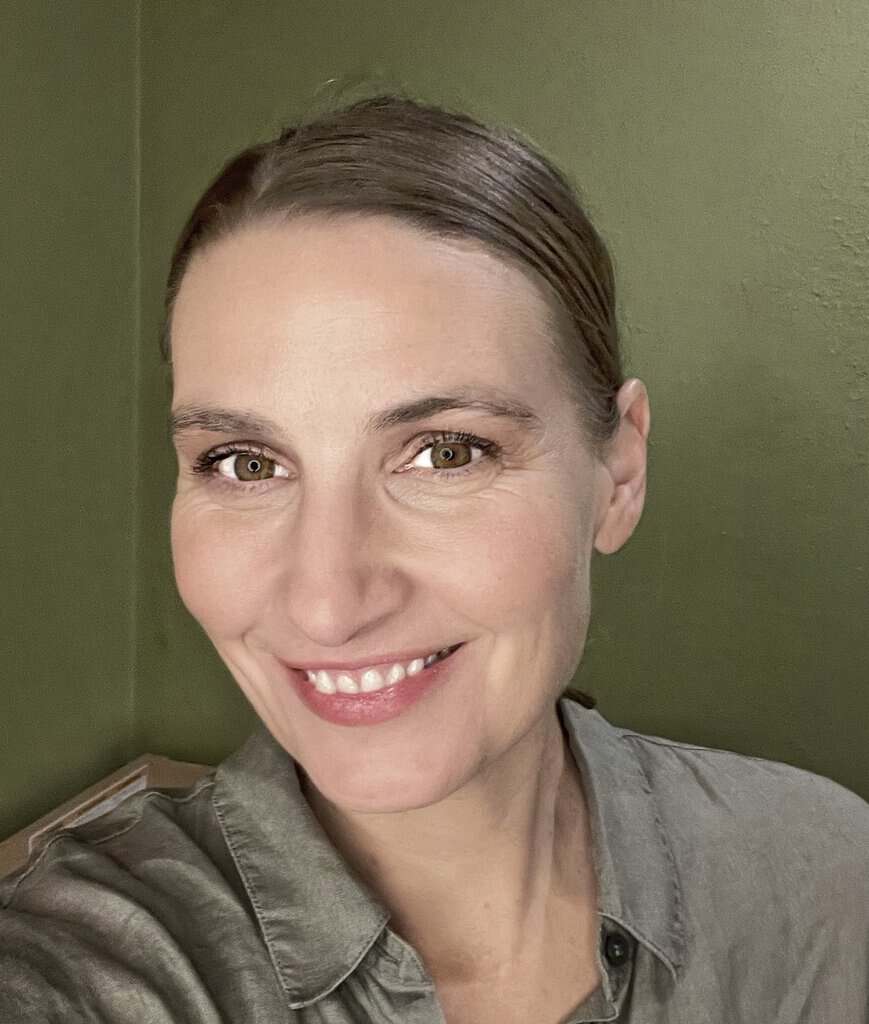
    Anja Taylor smiling in front of an olive green wall.

    As President of Kinesis, Anja Taylor combines her leadership and operational experience with her passion for building thriving teams and businesses. Since joining Kinesis as Director of Operations in 2017, Anja has played a pivotal role in shaping the company’s approach to growth and collaboration. Anja is a natural galvanizer. Her passion for building strong cultures that foster employee engagement fueling small business success makes her an engaging speaker and trusted advisor to many business owners.

  • Building Trust, Representation, and Opportunity with Titonian Wallace Sr.

    Building Trust, Representation, and Opportunity with Titonian Wallace Sr.

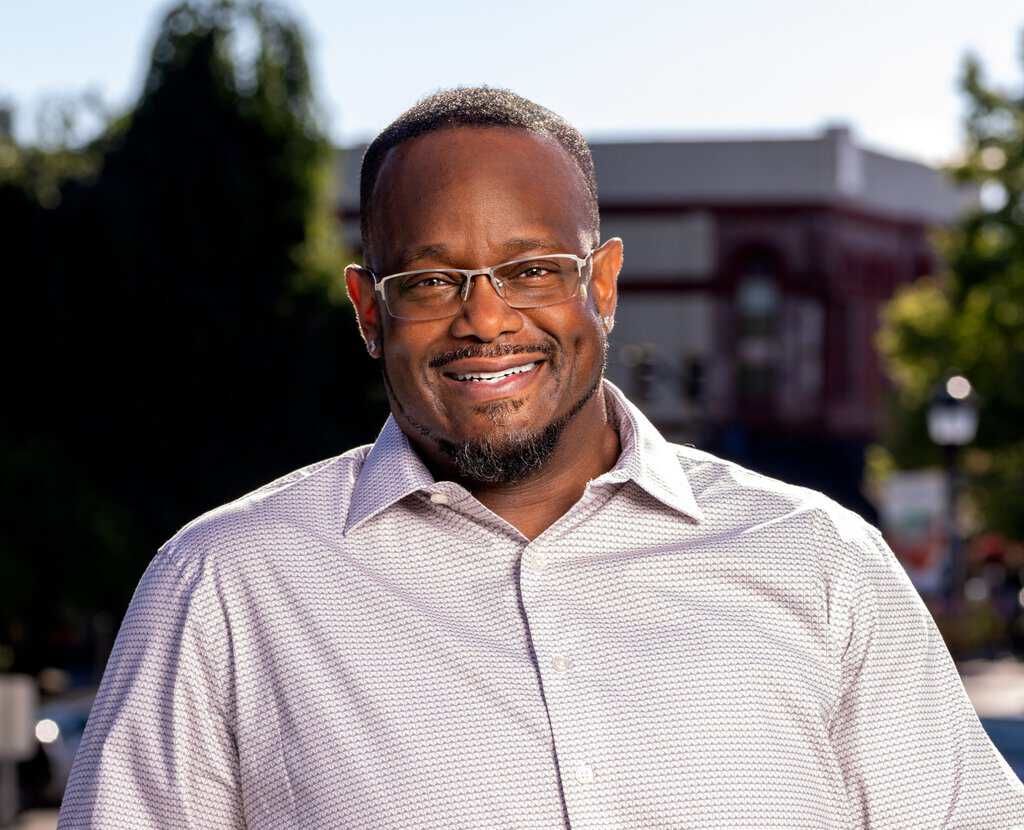
    Titonian Wallace Sr., founder of Nesace Media, community leader, and the first Black chair of the Washington County Chamber of Commerce, joins Kim Allchurch Flick for a discussion about building trust, representation, and opportunity. 

    Wallace shares his upbringing in Benton Harbor, Michigan, his mother’s “never say you can’t” lesson, leaving the University of Michigan, and returning years later to earn a BA in Mass Media with a sociology minor and a marketing certificate, later creating a scholarship fund in Hillsboro. 

    He discusses chamber leadership, creating Hillsboro’s Juneteenth celebration, and stepping down to run for Hillsboro City Council while job hunting amid economic strain on small businesses. 

    Wallace highlights fear in Hillsboro’s Hispanic community due to immigration enforcement, urges communities of color to unite, and finds hope in youth activism and leadership. 

    He argues Oregon needs jobs, regional collaboration, and adaptation to economic shifts, noting service cuts and affordability pressures.

    Listen Now

    Time Stamps

    00:00 Welcome and Guest Intro

    01:13 Business Builders Connection

    02:11 Origin Story and Values

    05:41 College Detour and Comeback

    11:22 Chamber Leadership and City Run

    14:43 Community Challenges and Unity

    20:16 What Gives Hope

    23:03 Fixing Oregon Business Climate

    29:07 Call to Action and Self Care

    30:52 How to Reach Titonian

    31:40 Dinner Guests and Leadership

    35:21 Oregon Economy Shifts Epilogue

    40:03 Closing Thanks and Sign Off

    Kim Allchurch Flick: Hello everyone. This is Kim Allchurch Flick with the Mighty Measure Podcast, and this is designed to bring inspiration from a variety of individuals who are doing wonderful things in the world, and collectively it makes our world better. Today we have, Titonian Wallace Sr. From Nesace Media. Titonian Wallace Senior is a community leader, business owner and founder of Nesace Media, who has built much of his work around representation, trust, and economic opportunity.

    He became the first black chair of the Washington County Chamber of Commerce in its 129 year history and has helped grow black business membership through the Black Business Advisory Council. He also created Hillsboro Juneteenth celebration and has worked to connect business leadership with real community impact.

    His work is rooted in making sure people feel seen, supported, and able to participate in spaces that have not always felt open to them. Today we’re talking about building trust, representation, and opportunity through community leadership. Titonian welcome. It is a delight to have you here. 

    Titonian Wallace: Yeah. Thank you for having me here, Kim.

    It was great seeing you again. 

    Kim Allchurch Flick: Yes, we met because of organizations and small conferences, local business gatherings, and it’s been wonderful. And then through the small business development center, you were one of the teachers for the Business Builders program, and that was wonderful. I learned so much about your business acumen to 

    Titonian Wallace: that.

    Kim Allchurch Flick: Yeah. 

    Titonian Wallace: Thank you. Yeah. And that was a great opportunity. I thank you for even offering that to me at the time, and I think. How long did I do it for? A year and a half or so. Year and 

    Kim Allchurch Flick: a half at least. Yeah, 

    Titonian Wallace: before I had to step back because. I was I guess volunteering for other roles, but I was gaining other leadership roles at the time that kind of took me away from that, plus running my business at the same time.

    But I highly enjoyed it and I hope all the businesses that went through the course and still likely still do to this day that they really got a benefit from that program. Yeah. 

    Kim Allchurch Flick: Oh, they did the feedback was terrific. And I see you as a multipotentialite. You’re one of these people that seems to be doing many things at once and doing them well.

    What is your origin story the inspiration and values that have brought you to this point? 

    Titonian Wallace: My origin story and what brought me here, my values at my, so for me, I am, I’m originally from Benton Harbor, Michigan. And then I lived in Topeka, Kansas before I came here. But at my core of who I am. I would say goes back to my, my upbringing and my mother, Sharon Wallace who raised me and my younger sister.

    I think one of the most profound things that she left on me that I carry to this day. And I try to share with my children and even other kids that I even mentor now. One of the strongest phrase she ever said to me that keeps me moving forward is never say you can’t. So I grew up not with that, believing that if I tried and did my best, there was nothing that I couldn’t do.

    So because of that, I don’t allow. Outside individuals to limit what they think of me or what I can and can’t do. You can’t do that. Only I can do that and I won’t do that. And so I thank my mother for that and I think our youth today need more of that to understand that. You are more than your situation and your circumstances.

    I grew up poor. I grew up in Benton Harbor, Michigan. A population I think may have been 14, 15, 13 to 15,000 at the time, predominantly black city often compared to your Flint, Michigan and your Detroit, Michigan, because of crime levels and everything like that. But I had a group of, a small group of friends.

    We grew up feeling like there’s more to life than this, than what we see here, where we’re from, and we don’t want this as for the rest of our lives. And we all fought hard to get out. I’ll tell you my from high school, my top 10 graduating class was a mixture of your nerds and your athletes.

    So we had geeks and athletes that were almost one unified circle. Different avenues and paths that we were taking. Some of us were using academics to get through school, others were using sports. But the unifying thing, the unifying message between all of us was, we’re gonna get out of here.

    And several of us did. And that doesn’t happen where I’m from. So to be able to do that and then to get to this point where I am, to where I am trying to make a difference really. I think resonates with people as well as you see when you can see yourself, when you know everyone struggles.

    Everyone comes from something somewhere. And most of us aren’t born with a silver spoon or a trust fund or a rich aunt and uncle that leaves you a large inheritance. We have to work for it. And I get the way the world is now, it seems like we’ve worked our butts off and we get nickels in return. So there, there’s a dynamic shift in the mentality of probably my generation and younger generations, even my kids and even those younger than them.

    To where we’re questioning that mentality of work hard, do good, you’ll get it because it seems like the American dream is no longer accessible by the normal, average person. So that’s my core. Benton Harbor, Michigan. I did go to, I, and I was the kid that did really well in school. I went to.

    What most people don’t know because it’s not on my resume, it’s not in my bio or anything because it’s, it was a part of my story that I had to learn to deal with almost a failure. So right out of high school, I did go to the University of Michigan. I majored in industrial operations Engineering.

    And I went for about three and a half years. Back in that time it was about a five year program, so I was a little over the midway point, but there were things in life that, I won’t go into too much details here, but I was taken out mentally and emotionally and that meant there was nothing left in me.

    And so that potential career path that I had went away. But I do, I will say that my love for education. Took me back to school when I was in Topeka, Kansas. An older adult, married three kids in the home, so we had a household of five. My wife went back to college first ’cause she was like me, a firstborn, overachiever, but didn’t finish.

    But her job that she had was really pushing her towards an accounting degree and she was loving it ’cause she was working for a tax firm at that time. So her and I made a, an agreement, a pact together, and that agreement was since your job, you have this job that’s pushing you towards this degree and you love it.

    Why don’t you go back to school first? I’ll pick up the slack here in the home, but you go to school, get your degree, your accounting degree, and when you finish, I’ll go back to, and I’ll go back and then I’ll get that degree that I felt it wasn’t gonna be engineering anymore.

    My passions had switched. And plus. I wasn’t sure if I was still that math as sharp math mathematically as scientifically as I was when I was younger. But plus I had a business in Topeka. I was trying to tailor my education to help further that business at the time as well.

    And so I ended up going back. My wife got her degree. The funny part with the story of how I actually started back. Was she finished, she got her degree, we celebrated, her family came down and all of that. And then it was time for me to start applying Washburn University where I was going to attend.

    And I hesitated and I continued to hesitate because in the back of my mind I remembered. I’m a student in high school, grade school, middle school, graduated fourth in my class from high school, blah, blah blah. Got a full tuition scholarship to the University of Michigan. But in the back of my mind, I remember something happened and I failed.

    At college once already, the University of Michigan time. So that put some, like for me it was, I think the hesitancy was like, do you really have it? Are you really as sharp? Are you who you were and used to be and say you are. And it, it put a hesitancy in my step of taking that next step to apply and get it done.

    And I don’t know why, because I’ve never hesitated like that before, but I think that that may have been my first bout with self-doubt, and that doesn’t happen. So that was the first and the biggest. So with that going on and me procrastinating of going back. I came home one day and my wife said, your FAFSA filled out.

    You need to finish the application for Washburn. And I was like, oh. She started the process for me. She put her foot in my butt and said, do it. And I did it, and I needed that. And I’ll tell you, my first semester at Washburn University, I got all A’s. I’m 30 something years old. I’m in this, I’m in class with these 19 year olds and these kids are in school talking about Cs, get degrees.

    And I’m like, in my mind, I felt God gave me a second chance to get what I lost and he’s not going to give me a third. And a C is not enough for me. And I got all A’s. And once I got that 4.0 that per, I was like, oh yeah, I’m back. Yeah. And, I breezed through Washburn as well. So I ended up graduating Bachelor of Arts and Mass Media with a minor in sociology.

    I graduated with a 3.9 GPA from college as well. But then I’m such a lifelong learner. I wanted some marketing credentials behind my name for the business that I had then at that time. But I didn’t want to go another four years. I wasn’t sure if I wanted to get a doctorate, so I was like, well, let me go get a marketing certificate.

    I can get that faster can get those credentials behind my name and show the potential clients that we were working with. Then that, yeah, I am a marketing professional as well, and so I went right back and it was. For me, it was invigorating to be able to start learning again and to then start applying it in the business that I had.

    So that’s my back journey, school journey. The roundabout of going to college right after school, not, right after high school, but then having about a 15 year break with life and wife, kids a divorce in there too. So there was a lot going on that. Prevented me from making that jump back into education, even though I loved it so much.

    And then with all of that being said, to this day, even now today, we, I have a black, I have a scholarship fund for students as well here in Hillsboro, Oregon. So that’s full circle for me. 

    Kim Allchurch Flick: Oh wow. What a story. And that brings us to now what are you doing now? 

    Titonian Wallace: Yeah. So now. I, and I know you’re aware of, so I had been the the first black chair of the Washington County Chamber of Commerce.

    But I have been involved with them. I joined the chamber. When I moved here, I started my business in the safe media. About 2016, I believe is when I started it, 20 16, 20 17. And I had a, I had previous experience with the Chamber of Commerce when I was in Topeka. Different experience. This one’s way better here.

    But I was aware that this is what. How you get your business out. You meet with like-minded individuals. After they get to know, like, and trust you, then potentially they become clients and all of that and so forth. But with all of that, I ended up being in a lot of leadership roles in the chamber over the last five years here.

    I recently stepped down from all of those roles on in December of 2025 because I am a. I decided to take the next step in leadership and impact, and decided that I’m running for Hillsboro City Council. But I also find myself in a situation to where I’m running for a council campaigning, but I’m also job hunting.

    The economy has negatively impacted a lot of small businesses, including my own, the ones that I talk to, not just on Main Street, those that work remotely or work from home but we are all being impacted and having to make tough decisions. And it’s not just within our businesses, it’s within our households and families.

    Costs are sky high, cost of living, inflation, interest rates gas, groceries, and it’s getting tough. And here where we are, it’s not just. Intel families that are filling and hurting from those lay from their layoffs. There’s regular families like mine that aren’t even intel related, that have been impacted by a layoff and a spouse having to take a job at a significant pay cut.

    A small business owner realizing. There’s not enough to help sustain the home from the business and then having to reenter the workforce. So those, that’s where I am now. I’m trying to balance running for office, potentially looking for employment, taking care of the mental wellbeing of my family as well during this time, and still wanting to continue to make a difference and an impact in the community where I live.

    Kim Allchurch Flick: That is something that I see. Thank you for sharing that because we are in communities where it is getting rough. For some I, you and I are both surrounded by entrepreneurs and small businesses and seeing that not everyone is thriving as they had been in the past. And there have been some differences that have come on slowly and some that have.

    Come on. Like flipping a switch. Yeah. Particularly when it comes to consumer goods and things like that we know what’s happening and this is April of 2026. And we’re talking about Oregon, but also talking about a broader scope. And yet you, you do so much and running for office is something that I am in awe of people who do that.

    So congratulations. 

    Titonian Wallace: Oh, thank you. Thank 

    Kim Allchurch Flick: you. And sadly, I don’t live in your city, so I can’t vote for you, but I can certainly advocate. What do you see as in the community and what is. Additional obstacles and challenges that you see for yourself and those entrepreneurs and other people around you?

    Titonian Wallace: In the community right now we can’t talk about what’s impacting the community without initially discussing the federal administration’s immigration enforcement on the Hispanic community. Which is our community here in Hillsboro, Oregon. They account for up to almost 25% of the population here in Hillsboro.

    So what happens to them matters, and it should matter to all of us. And what we’re seeing from these families they’re in constant fear. And when I look at it, when I try to analyze these things myself. My analogy for this last year under the current administration, how it’s impacted all people is, I feel it’s put everyone in a fight or flight response 24 7 and that stress, tension, cortisol, angst, all of that.

    All the time. And especially for our underserved communities, our minority communities, our communities of color, whatev, however you label them personally. But right now, specifically our Hispanic community is hurting. The businesses are hurting. We are seeing individuals not show up because they’re afraid.

    They can be taken away. Their kids, their family, things like that happen. So that on the business level also bothers me, but that’s a large community issue as well. But with that, I think also there needs to be messaging to all communities of color that you all need to band together moving forward and put aside any excuse this language is, if it sounds harsh to some, but any idiotic or asinine.

    Racial or sta racist stereotypes that you have against other communities of color, you need to get rid of that because it’s not a matter of when they come for you, it’s a matter of when, not if they come for you, but when and then also if we don’t band together and lock arms together, the day will come when you look to your left and right and you have no allies.

    And that makes you the easier target. You see it now, one by one is how they attack us, other than with sweeping policies that are affecting education, especially for black and brown kids. The dismantling of the Department of Education. So that’s on that wider national level. But even on the state level, we have a state that’s not really doing enough to promote.

    Business friendliness. Our economy here and I don’t even wanna say the economy, the job market here is in dire consequences right now. We need something to, we need people and leaders in place that understand that you need jobs. To have the services that your cities, your county, and your state depend on.

    You need those property taxes. You need the the payroll taxes on the state level, property taxes here on the city level. So those are some things that I’m seeing holistically. But on the local level, what I would really want is for our local leaders to understand that we have more than one crisis going on at the same time.

    One is humanitarian, one is economic, and we need to address both to the best of our ability right now, and then put things in place to where in the future no one particular group of people should feel like this ever again. Ever. I’ve often say I can’t believe I’m in 2026 and have to deal with racism still at this level.

    And having it being encouraged from the federal government at such a systemic level so high that I feel advancement for people of color has been set back at least 30 years and is going to take more than one democratic administration to change this and get it back to what we thought we were almost good.

    I just I’m appalled that we’re here and I wanna do my part, but I don’t want to, I don’t wanna come off too preachy to people, but I’ll make my points, especially during my run for office and just let them know there, the only way we’re gonna get out of any of this is if we work together.

    Put aside your petty differences. Let’s learn to communicate and collaborate and believe the democratic process will work when good people are in place. ’cause right now, we I just feel our leadership, especially on the national level, all needs to be changed. 

    Kim Allchurch Flick: Indeed. And you’re one of those good people.

    Thank you for running. You said a word that has always struck a nerve with me as being one of the most cruel, and that’s the word, stereotype because. When a sentence is started with those people or they, and encompassing an entire mass of individuals, most of whom are on the receiving end of a stereotype, are saying, that’s not me.

    I’m nothing like that. And these caricatures that, 

    Titonian Wallace: yeah, 

    Kim Allchurch Flick: create division between people are very cruel because most people are not the stereotype. And yet a stereotype is bestowed upon them by others, and it does become cruel and it does create these things we’ve seen. So thank you for being so candid about all of this.

    It’s super important. With that, what makes you optimistic?

    Titonian Wallace: The number one thing that make me more optimistic and this is, once again, it’s federal level, but here locally. The day when high school what? When? When high school kids in the city of Hillsboro walked out and protest against ice. That gave me hope because that showed me, there is some in the younger generation that are saying, enough is enough.

    Were tired of this. And now what they’re really doing and saying is, okay, adults, you need to do something now while. Because you are in power. You are the ones that can, but we’re going to continue this fight next too. So that gives me hope that there’s a generation of potential leaders that are being.

    Being made right now because of the situations that we’re in they’ll be sharpened, they’ll be hardened because of what we’re seeing, what they’re seeing happen to their friends and family and their neighbors and chiropractors dropping off their kids at preschool. Being snatched up and 5-year-old kids being taken to detention centers and people being killed across the country.

    But I also want others, I want. That gives me hope and optimism, but I want to take a step back. I also want people to realize this happened to black people in 2020, and I don’t want you to lose sight of that. We were the ones on the list. Then our Hispanic community is on the list now and there is some division about, well, who shows up for who?

    Show up for every community. Because we’re not, like I said, we’re not gonna make it through. We’re not gonna get to a better place without doing this together. But the kids that I’ve seen that did that walkout, that gave me, I smiled. That gave me hope. And then I think the other thing that gives me hope is I I attended a college and career fair.

    With I was at a booth that the Hillsboro Community Foundation had there with Madeline that works for Hillsboro Community Foundation and realizing that entire college and career fair was put together by the Hillsboro Youth Advisory Council, another group of high functioning kids making a difference, not just for themselves.

    Before an entire graduating class from the city of Hillsboro, that gives me hope. There, there are kids that care that wanna see students like them reach their dreams, whatever path that may be, whether it’s academic or vocational. And I love that. I think between the high school walkout and being a part of that college and career fair create put on by young men and women.

    That gives me hope. 

    Kim Allchurch Flick: Thank you for sharing that. What gives you hope for entrepreneurs and businesses? Is there anything else that 

    Titonian Wallace: in the state of Oregon that, oh, Kim, a lot has to change. 

    Kim Allchurch Flick: Yes. 

    Titonian Wallace: And that it has to come from the state level and we haven’t seen it. The one thing that gives me hope.

    Is that I know that there are leaders in place now across jurisdictions or that are running for certain offices that, and hopefully will be in those positions that have made it clear that they are open to dialogue across these jurisdictions. To do what we can to try to make the job market the economy better for all of us as a whole, because they recognize what I’m saying, what I’m saying on the social level about we need to work together.

    That applies on this governmental level as well, whether you’re city, county, region so all of those entities. I want, I’m hopeful that there are good leaders. Stepping up and wanting to step into these roles, and they’re willing to have the conversations, but not just have the conversations collaborate and get away from the negativity that’s in politics and realizing we’re here to do work for the people to make things better for them.

    And I’m not a politician, right, but I feel like. I had the, I had an opportunity while being a part of the Chamber for so many years to have an impact on not just the 800 business member organization, but on a city. Without being an elected official yet and seeing that impact. And that’s why I’m so freaking driven to want to continue doing it.

    When you see the good impact and the other people that then take it and do good work as well, that’s infectious. And it, it can drive you to, to say, well, I’m gonna keep doing good work until the city says no. 

    Kim Allchurch Flick: I love that. An impact without being a politician, that means all of us can do something. 

    Titonian Wallace: Any, you have to do it.

    Here’s what I’ll say, and I, it is not profound, but we as individuals, and that’s all of us right now, no one can sit back and say, what are they going to do about this? What are they going to do to change this? Because right now, the date the they is you, the date the they is you and I, we are the ones that have to.

    And I’m not gonna say they is everyone. ’cause there are some, the radicals we’re I’m done. We’re done. And that’s both sides we’re done with that. But the common sense, common good work for the majority, not the minority outside voices that just happen to be the loudest. That’s where we are now.

    Kim Allchurch Flick: And it seems also that business sustainability is a nonpartisan issue. It should be that having businesses be strong, having businesses where people can support their families, and Oregon is one of those states. Where the collectivity of small business is the economic engine of the state. And that’s built.

    Oregon founders said that Oregon in Oregon consumer goods is to Oregon, what tech is to Silicon Valley. And thinking of it that way in the collective matters, so the individual health of, and sustainability of every single business. Matters collectively, regardless of how people think politically.

    Titonian Wallace: Yeah. And it matters on so many levels because that’s just the start, right? Of course when you talk about business, you have to talk about land which here, the laws kind are very restrictive on what we can and can’t do. But what a number that fascinated me that I learned early 20 20, 20 25.

    That I don’t think is out there enough in messaging is when you talk about the development of the land in Oregon. Before we try to get down to Hillsboro itself, only 3% of the land in Oregon is developed or populated 3%. That means there’s 97% open. Maybe room to grow. What if we only needed to get to 7% to get our economy where it needs to be?

    Then that means we still have 93% of the great air, great water the wonderful views, the beauty. That we so value and we improve the standard of livability because now we can afford the services that we need. We’re in a position now to where I think people, I want the general public to realize you’re we’re likely about to see trickle down economics work, meaning, and it’s never get, make the money at the top and it trickles down.

    I’m talking about the deficits. You’re gonna see that finally work because the state is nearing what near a billion dollar deficit they’re gonna have to do. Cuts. Counties are going to eventually have to do cuts and cities are eventually gonna have to do cuts, and then you’re gonna see degradation of services.

    Maybe that’ll start waking up some individuals to realize we need jobs. We, we absolutely need it. And families are hurting and this is how things are paid for in this state. So things would have to change on the state level drastically. But if it doesn’t, I believe regional coalitions need to get stronger in inter city Coalitions need to get stronger.

    We need to have those conversations about. What can we do to shore up our economies as neighbors because the city isn’t doing us any because the state isn’t doing us any favors right now. What can we do together collectively? What can we do across counties? What can we do regionally include metro in that conversation as well?

    So that’s where my thought is. I don’t think we can get out of any of this used go by you, the old methods. Stand by trying to go it alone as single jurisdictions. 

    Kim Allchurch Flick: Wow. Exclamation point. That’s so profound. Is there anything else you’d like to share? 

    Titonian Wallace: Let’s see. I don’t know. What did I miss?

    Anything? With everything that’s going on. I just, I would just say I want business. Business is good, not just for the economy is good for standard of livability. It’s good for neighborhoods, it’s good for communities it’s great for schools, and which is another thing that, that really resonates with me.

    I also sit on the Hillsboro School Board bond development committee for 2026. So we’re in the middle of that, going back to the people asking for money for schools. But I think that’s very important and that’s something that I would never not support. Right on, right alongside libraries, public safety and school education and workforce development, and those things that we need to do.

    So I, I would say, I know it’s hard to stay positive now, but lean on your family, friends, and neighbors. Find the good that’s around, maybe turn the news off a day or two. I’ve had to do that. I’m an avid news reader. Most, a lot of other people, they may read books. I read news, knowledge, information data.

    That’s what I do. I don’t just read for fun. Sometimes the news can be very, depressing. How many wars are popping up? How many the criminal aspect of the government that we’re seeing? I’m right there with you. I’m in the fight. I want you all to join the fight, speak up.

    What we’re living through right now is not the reality that I hope the majority of us wanted or expected. Let’s do what we can to get back to some sense of normalcy is what I would say. 

    Kim Allchurch Flick: Yes, indeed. I appreciate that. How can people reach you? 

    Titonian Wallace: Yeah, so I can be reached. You can reach me. My, my business is Nesace Media, which is a digital marketing agency.

    It was full service, but I think I’m pulling certain services out during this time that I’m even going through in my personal business. I do still take on clients but you can reach me via go to the website at NeaseMedia.com. That’s NesaceMedia.com. You can email me at TWallace@NesaseMedia.com. Either one of those methods will work. 

    Kim Allchurch Flick: Absolutely. Thank you so much. This is a conversation that can and should be ongoing and I really appreciate all the points you’ve mentioned so far. It is a important futuristic looking. Conversation to be had, and I appreciate all the points you’ve mentioned.

    The final question is, if you could have dinner with anyone living or deceased up to three people, so you have a nice table of four, three, or two, who would they be and why? 

    Titonian Wallace: Okay, so given it a little thought, I think the two, the one alive person I would want. So I have dinner with is Barack Obama, president Barack Obama.

    The reason why ’cause that he is recent history and to me he is what an exceptional leader looks like and acts like and behaves like compared to what we’re seeing, and that’s why. Likely he’s constantly attacked because of those differences. Because when you talk about the best of the best, and he may not have been the best president, but normalcy empathy, how he treat and how regular individuals felt when they mentioned him, saw him, got to shake his hand or meet him.

    That’s an impactful leader. That’s that’s someone that resonates across cultural aisles. Generational. He has something in him that I probably need to learn. So I would love to sit down and pick his brain, especially if I’m going on a political route. Like I’m not going to be like you. I’m a I’m my own person.

    I’m really straight up and down, straightforward, speak my mind, speak my peace. But I do it from a aspect of I take data, knowledge, information, pros and cons, evaluate, then make a decision, but I’m decisive and we move forward if it works. We do what we, if it doesn’t, we go back and rebound. But I think he would he had the pulse of the people during his time in office and the hope that he helped invigorate in a nation.

    Some of that needs to come back. And I don’t know how. Because we’re so divided self-inflicted, I like to add as well based on the current government. So he would be one that I was like, what would you do to get us back to something that’s normal to where we all can work together, pick his brain on tho on those levels.

    But then just how his rise how he still maintains a public persona. He is still well loved out of office right now. And that’s something the current president can’t stand to. So I would love to sit down with president Obama, the second person. I would sit down with Albert Einstein just because I’m a math and science nerd, and nowhere near that genius level that, that he was.

    But God, wouldn’t it be fascinating to sit and listen to that mind, speak to you in person? I think it would just blow me away pro I probably wouldn’t understand much. Right. It depending on if he gets into, well, I’ll understand a little bit about the theory of relativity because like math and science was my thing.

    But he can go into some, I don’t wanna say some abstract concepts that I probably haven’t even thought about, and that would be a, a very. Intellectually stimulating conversation and an attempt to learn from a real genius, right? That, so he would be the other, and I may have another one, but I need time to think about it.

    So those would be the two that, different ends of the spectrum, different purposes, but they both fit who I am and what I would like to know, learn, do, and the type of individuals I would love to be around. 

    Kim Allchurch Flick: I think that’s a fascinating dinner table. 

    Titonian Wallace: I don’t know if you’re gonna have anybody else ever say those two together, but that works for me.

    Kim Allchurch Flick: Good for you. It’s your table.

    So a bit of an epilogue. We were having a discussion about history of Oregon, and I mentioned that when I moved into Oregon back in the early nineties and had a job where I traveled a lot, I drove through small communities, large cities, and observed that it was an era where a lot of people were unemployed because the timber industry shifted and.

    We were talking about our observations of how the economies have shifted through time.

    Titonian Wallace: And that was, as you know, it led me into into my talk, which I have had on my mind here for a while, and something that I think I would have to try to vocalize to, to the general public.

    I, what I feel is that. The general public may not be fully aware of the changes in the economy that has happened over time, even here in the state of Oregon, and hit City of Hillsboro. I think I was also mentioning how, some individuals have that nostalgia of what it was and wanting it to remain that what remain the same.

    But there are things that happen around us that dictate. Change and growth are necessary, and we’re in one of those times right now, and I related it back to, as the economy of this state in the past. I don’t have the years at the, in the top of my head before 80 something I would believe.

    Was the timber industry is what, what led the economy in the state of Oregon and the surrounding cities and whatnot. And then now after, I believe you were mentioning when you came, was it 85 when Nike was a little smaller? 

    Kim Allchurch Flick: Yes. 

    Titonian Wallace: When you came here. And I’m not sure how big Intel was yet, but. During the switch, then we switched.

    We became the silicon forest here which is another switch in the economy from the timber industry to advanced manufacturing in the semiconductor industry. And that required change, new jobs and growth. We are in another shift right now. Do generally caused by AI and advancements in technology and GPU usage and all of that, and energy storage and usage and things like that.

    But we’re in that, we’re in another change now to where we have to be able to adapt to what this new economy is going to look like if we’re going thrive and create the jobs that are needed for families to be able to stay. Here we are. The population in Oregon is stagnating or if not declining from the last study, if that.

    I remember reading there, there wasn’t as many transplants such as myself moving in but more moving out, especially from counties with high taxes and whatnot. There’s things that we need to be able to do and talk to and speak to the general public. These shifts in the economy are almost existential crises that we need to address.

    Quicker than what we have. And I believe we’re at a point now to where we should have been doing something four to five years ago to help us now because we lost 3000 something jobs from Intel in 2025. We lost a Edwards vacuum. Part of that, that supply chain, if I look at the state, we lost a Dutch bros moved to Arizona because we are no longer competitive.

    That means we’re going to, we’re losing jobs and it’s affecting all of us. So I hope, my hope is that people start seeing, like the shift in the economy dictates the things that we need to do to try to help our overall economic health. And we need to really consider what’s next in order for us to continue to thrive.

    Now, if we do nothing, you will see the cost for. Cuts. And I’m not just talking about just budget cuts, I’m talking about job cuts, cuts to critical key services that your city, your county, your state, depends on. You will start seeing that and sometimes I wonder, does our local population need to see Hillsboro begin to fall on that?

    That list of best places to live in America? Will you get it when we start falling down? And it’s because of the economy and the lack of jobs. The lack of op the lack of affordability. 

    Kim Allchurch Flick: Yeah. 

    Titonian Wallace: How starting at 600,000 is not affordable, so that’s why I believe they’re moving more to dense construction to where more apartments is here in Hillsboro will be built over single family homes.

    Like it may not be an option Now. So yeah, so that’s what we talked on stepped on 

    Kim Allchurch Flick: and very realistic. 

    Titonian Wallace: Yeah.

    Kim Allchurch Flick: Titonian Wallace, Sr. Thank you so much for your time and to all the listeners, thank you for your time as well. This is Kim Allchurch Flick with the Mighty Measure Podcast, and Mighty Measure impacts coaching in support of. Impact driven businesses.

    Thank you all so much. Have a great day. 

    Titonian Wallace: Thank you. 

    Kim Allchurch Flick: Bye-bye.

    This Episode’s Guest: Titonian Wallace Sr.

    Titonian Wallace Sr. headshot. Smiling and standing outside with a building in the background.

    Titonian Wallace Sr. is a community leader, business owner, and founder of Nesace Media who has built much of his work around representation, trust, and economic opportunity. He became the first Black Chair of the Washington County Chamber of Commerce in its 129-year history and helped grow Black business membership through the Black Advisory Business Council. He also created Hillsboro’s Juneteenth celebration and has worked to connect business leadership with real community impact. His work is rooted in making sure people feel seen, supported, and able to participate in spaces that have not always felt open to them.

  • Solving Oregon’s Housing Shortage with Nathan Wildfire of Missing Middle Innovations

    Solving Oregon’s Housing Shortage with Nathan Wildfire of Missing Middle Innovations

    Nathan Wildfire, a community and economic development professional and founder of the Missing Middle Housing Fund, joins Kim Allchurch Flick for a discussion about why housing is scarce and expensive and what can be done.

    Nathan traces his inspiration from growing up in post-industrial Pittsburgh and from his grandmother’s lifelong HUD-related work building senior housing, leading to a belief that housing choice underpins thriving people, places, and economies.

    He explains the “missing middle” (households at 80–120% of area median income) who earn too much for subsidies but not enough to avoid cost burden, and describes long commutes harming employers’ hiring and retention in places like Newberg and Boardman.

    The fund acts as a connector among communities and innovators across finance, policy, workforce, and building methods, highlighting projects like Yamhill County’s digitized zoning codes via UrbanForm and Newberg’s Hive cottage-cluster showcasing modular, mass timber, and other construction technologies, while sharing funding sources, expansion interest beyond Oregon, and personal reflections on housing stability.

    Listen Now

    Time Stamps

    00:00 Welcome And Guest Intro

    01:23 Roots In Pittsburgh

    03:47 Learning Community Development

    05:50 From Nonprofit To Government

    06:38 Oregon And Housing Shortage

    09:01 Choir Story Housing Is Personal

    11:26 What Missing Middle Means

    15:26 Starting Up And Building Coalitions

    17:19 Commutes And Employer Impacts

    21:48 Who Must Collaborate

    23:20 Four Quadrants Of Innovation

    26:44 Urban Form Zoning Example

    29:16 Zoning Code Simplified

    29:46 Boardman Housing Fund

    30:49 Coast Working Groups

    32:11 Hive Cottage Cluster

    35:38 Greener Factory Housing

    37:31 Who Is Paying Attention

    39:53 Commercial Crossover Ideas

    41:55 Optimism And Innovators

    45:27 Employers And Funding

    47:55 Expansion And Contact

    49:03 Why Housing Matters

    51:00 Dinner Guest Picks

    54:32 Final Thanks And Wrap

    Kim Allchurch Flick: Hello everyone and welcome to the podcast. I am so excited to have Nathan Wildfire with us today. Nathan has worked in community and economic development for over 20 years in Pittsburgh, Vermont, and Oregon. He’s passionate about the grassroots and personal connections of community building and the macro challenges possible through.

    And the macro changes possible through creative data-driven public policy. Nathan is privileged to have learned from incredible mentors through every stage of his career. He has been a choir leader, outdoor explorer, and I love this one, occasionally, unretired volleyball player. Today we’re gonna talk about why we have a housing shortage and what we can do about it.

    Nathan, welcome to the podcast on the stage. 

    Nathan Wildfire: Thanks Kim. It’s a real pleasure to be here. I appreciate being on. 

    Kim Allchurch Flick: I appreciate the work you’ve done. We met because of Oregon Entrepreneur Network and the more I learned about the missing Middle housing fund, the more I learned, first of all, how amazing how many layers it takes to do what you’re doing.

    The people involved and I really wanted to capture. All of that today. So what is your journey and inspirations and values that got you to this point? 

    Nathan Wildfire: I grew up in Pittsburgh, Pennsylvania. And for those of you listeners that don’t know Pittsburgh is very proudly in the Rust Belt of America. And before I was around really during World War ii, in the years that followed, Pittsburgh was the center of.

    Steel for the entire country and its economy was booming Close to a million people. Lived in the city of Pittsburgh by the time I came along in the 1980s. Half of those people had left steel mills were mostly all closed. And the city was a radically different place. Its bones as those of us in community development would say were still very, very good, but it was missing a lot of the lifeblood that had sustained it for decades.

    And that’s where I grew up. So whenever I would take the trolley to whatever internship I had downtown. I would go through many neighborhoods and each neighborhood looked so radically different than the rest, like block by block, right? Like why did these 10 blocks have so much vitality and activity and wealth?

    And then the next 12 blocks, it was vacant homes and things didn’t look so positive. And then the next 12 blocks something totally different. And my brain. Really wanted to figure that out. And then the other part of this story is that my grandmother worked full-time for HUD until she was 80 years old and then kept working for another three building housing for seniors in rural Pennsylvania.

    And so every family reunion I’ve ever been a part of, more or less part of it happened in a building grandma built. Maybe we were Christmas caroling for the residents, or we were having a pizza party and playing cards. So I have these two pieces of my journey. One was this curiosity for why do different neighborhoods and places to live end up so different?

    And then, wow, I have this hero, my grandma, who had 12 children, by the way, who was building housing in rural Pennsylvania for those that needed it. Most. So I guess you could say curiosity about housing is a bit in my DNA. So that’s how things started. Then I went away to school and learned, take the personal and put it over on this part.

    It’s still part of my foundation, but now I was learning. The why, right? The why are there’s such great needs in rural America for those with less means or seniors. And why would six neighborhoods in Pittsburgh look so radically different on a relatively short train ride? And so I started to learn about how these larger policy levels, levers start to affect why our built environment and our communities are the way.

    They are, I was really lucky. After I graduated college I got an internship at east Liberty Development Incorporated in Pittsburgh, and it was this powerhouse of thinking and doing. Around community development, and I was there for eight and a half years, and I like to say I was a, I became an expert of nothing but a dabbler in everything, community development, right?

    Whether that was affordable housing or market rate rehabs, or building bike lanes, or running a community plan process. I had so, so many meetings in church basements with angry people and bad cookies. Till like midnight, and so I, that’s where I really started to put into practice how housing and other parts of our built environment impact people’s lives directly, but also the place, not just the people, the place.

    And then the economy, right? And so I started to gain this belief that h enough housing, the right kind of housing and housing choice is what enables people, places, and economies to thrive. It’s the, it’s literally the thing most of us spend the most every month, like the biggest check we write is usually our mortgage or our rent.

    It’s foundational to like how we thrive. And so now I, now I’m starting to do this professionally. I eventually moved to Vermont and instead of working for a nimble nonprofit with all these giants where risk was encouraged and thinking outside the box was the norm. Now I worked for city government where I had more.

    Control, but all of a sudden risk was a four letter word and thinking outside the box N not so great, if you’re reporting to elected officials. And so it was interesting. It was a very interesting move. I went from a neighborhood that was predominantly African American below the poverty line.

    Lot of vacancy to one that was predominantly white, older, and wealthier. And so it was a kind of a rude awakening. And how community development happens in different places. And then, more recent part of my journey is I moved to Oregon and my bureaucratic journey continued and I started working for the state of Oregon and my role at the state was with the innovation team for the state.

    And that’s what really got me exposed to how entrepreneurs and innovators are. Changing the world and how they’re funded or not, and how they are constantly pushing at the edge of technology or good policy, or how you fund things. I, first, I was so close to the neighborhood I served, then I was in a city and I learned a lot about government.

    Now here I was working directly for entrepreneurs and the people that funded them actually. And in the midst of that, I left that job and I started thinking about housing with a few other smart folks. Why does it take so long? It costs so much to build housing because we’re, depending on who’s counting about 140,000 units short in Oregon, this, the country’s five to 6 million units short, and the consequence of having not enough housing supply.

    Especially for those middle income earners which my nonprofit is named after the missing middle housing fund. The consequence of not having enough housing is that the cost for everyone goes up. The cost of housing, no matter where you’re at right now, continues to rise, and part of that’s tied to it taking so long and costing so much to build a single unit.

    Of housing. So after speaking with a series of developers, architects, financiers, governments me and a few others launched the missing middle housing fund to try to get to the bottom of that question, why is it cost so much take so long? And what we’re trying to achieve is doubling our housing production for half the cost and half the time.

    And we believe that the way to do that is by working with innovators and policy. How our workforce is trained, how we fund things, and what we build our housing out of and how, so that’s I guess how I got here. If you don’t mind I’ll say one other thing. Please do and then we can get into it.

    But on the side, I’m also a choir director. I’m the co-founder of a choir in Portland and was the music director for many years. And as you might imagine people that sing in choirs come from all walks of life. They work in retail, they work in the service industry, they’re in manufacturing.

    They’re college professors, they’re computer coders. They work in a bank. They do everything. You don’t really get to pick who falls in love with singing, right? Based on. You know what they do for a living. And so when you have a choir, your most important thing is to be in harmony. But when the pandemic struck, and I think we had 22 folks we went really quickly down to eight people in our choir.

    And it wasn’t ’cause they got COVID, it’s because they had a housing disruption in their life. The economic consequence of the pandemic was a lot of folks lost their job or were underemployed. And so they moved they moved back home, wherever that was. Maybe they went back to school. They moved out of the Portland Metro.

    And so the consequence is that my choir family, literally our harmony was broken. So I got to see in real time how housing instability can affect a community like mine. So while I think today we’re probably gonna talk about a lot of really. Interesting policy or financial tools or really cool innovation at its heart.

    Housing is personal. It’s our sense of home, it’s our sense of stability and economic vitality. And without it, those people, places and economies suffer. And it’s important to me just like it was to my grandmother to be a part of that solution. 

    Kim Allchurch Flick: Thank you for that. Being in harmony and then noticing these people that have been hit harder by a pandemic than others and how it affects their housing.

    And it, it also strikes me that you’re very intentional about naming your organization. So if you could tell us more about that and what is it? What does it take to be noticed as the missing middle housing fund? How many doors do you have to knock on? How many unanswered emails, how many, what does it take to move this forward?

    Nathan Wildfire: So let’s talk about the name first and then we’ll talk about that grind that you just described. The housing that’s built, leased in America is the housing that is serving those making between 80 and 120% of area median income. Area Median income is if you lined up everybody in a city by income, it’s the middle person.

    It’s what does that person earn? And so 80% of that dollar figure, up to 120% of that dollar figure is what we call the middle. Okay. In kind of real terms that middle changes, depending on where you are in Oregon or beyond. But a lot of the time it looks like teachers, it looks like the folks that work in our banks or drive our buses.

    It looks like entry level computer programmers. It looks like people that work in retail. The truth of the matter is that those folks make too much money. To qualify for anything that we would call affordable housing or subsidized housing, but they don’t make enough money to spend less than 30% of their income on their housing if they want to live near where their, where they wanna be.

    Opportunity friends, great quality of life, whatever their reason is. And so if you spend more than 30% of your income on housing, you are what the federal government would call cost burdened by your housing. And the consequence of that is maybe you don’t send your kids to the daycare that you want, or you don’t go back to school, or you don’t go on the vacation that you wanted, or you don’t.

    Upgrade your living situation. And the missing middle refers to the fact that we don’t build housing for that income earner. Thank goodness we have all these subsidies for folks making less than 80% of a ami. We don’t have enough, but thank goodness we have some. And the folks making over 120% of a MI generally the market.

    Response to their spending power. And so that housing is built as well. So when we launched our nonprofit, we wanted to be clear that that was the income segment we were. Targeting. We are also a little bit strategic, right? There are a lot of people working on affordable housing, but they don’t generally work in that middle space because the economics are poor, right?

    You, if you think about it, it costs roughly the same to make a unit of housing no matter how much the person that’s gonna live in it. Makes right. Walls are walls. Electricity is electricity. Roofs are roofs. Foundations are foundations. The fin interior finishes might change, but at the end of the day, a lot of housing costs are the same.

    And if you are making it for those with less means, you generally have a subsidy that then accounts for the fact that you are going to get paid less in rent. Or in a for sale price. And if you’re building a market rate, the other end of the spectrum, you just don’t build anything unless someone’s gonna pay you for it.

    The market demand takes care of it, but in the middle the cost is the same, but there’s no subsidy and the people aren’t making as much, so they can’t pay as much in rent or mortgage. So that’s where we’re at. There’s also just, frankly, a whole lot less cooks in that kitchen. So we thought that if we could figure out how to solve that problem it would be really, really beneficial and we would attract a lot of partners to the, cause.

    A lot of cities desperately want more workers in that middle income range but it’s hard to do if you don’t have the homes for them to land in. So I think that’s the first part of your question. The second part of your question is like, how do you get. Noticed. How do you, how many, I think you said, how many doors do you have to knock on?

    Anytime you start something new, whether it’s a company or a nonprofit, any kind of organization, the first, thousand times you write an email or say hello, make a phone call. They say, who? Who are you? They might know me the human, but they certainly don’t know the missing middle housing fund, which, is the most ridiculously long email address of all time.

    But that’s, that. It takes a while. It takes a while and you have to, you have to hustle. You have to build connections and ask for help. The other reality is like we had good thesis, we had some really interesting innovations to highlight. We had some good ideas, but at the end of the day the only way that we’re gonna solve our housing crisis is through the power of many.

    You want to go fast, go alone, you wanna go far, go with many, right? You’ve heard that before. It’s true with housing. So you really have to build the coalition of the enthusiastic, right? The folks who are just relentlessly showing up for this cause, for this mission. And it’s a mission that also has to.

    Makes sense, like in a capitalist sense, right? Nobody’s gonna, nobody’s gonna join your cause if everybody’s losing money. So it can be the greatest. I just talked to you for 10 minutes already about how passionate I am about this mission, but partners come because they see economic upside. Whether you’re an innovator or whether you’re a funder, or whether you’re a city desperate for a certain type of person, it has to make financial sense. And that’s where it gets hard. That’s where it gets really, really hard. Yeah. Is that, I hope that’s answering your question. 

    Kim Allchurch Flick: Yeah. In some ways I’m also thinking about these statistics and.

    Think about with housing prices that vary wild widely between different cities. But for someone in that income bracket to afford a house, how far do they have to commute to the place of work? And sometimes that’s a rate limiting step. And I’ve had an active real estate license for a while and there have been times when.

    Just based on someone’s affordability. Sometimes we’ve searched 90 minutes, two hours out of the, the city center or whatever might be the most prosperous place to work to find something that, that their income can pay for. And I know that varies wildly, but for years I, I knew of people who lived in like Davis, California to work in Sacramento.

    Or no, not Sacramento. That’s close. But Sacramento is getting more expensive, but San Francisco, right? And that, that can be according to the traffic, a 90 minute plus commute. And it seemed to be coming. Portland didn’t seem to be that bad a while back, but now it’s seems that the commute gets longer because the traffic gets more and people can’t find the work that’ll pay for the house where they can live.

    So they’re commuting and I was wondering if you could speak to that. Sure. And what about those employers too? 

    Nathan Wildfire: So we work all over Oregon. So while this is really true in Portland, I actually want to use some examples from outside the Portland Metro. So we work a lot with the city of Newburgh, which is in Yamhill County, part of wine country.

    And Newburgh has some pretty significant employers. There’s a senior care facility, there’s hospital system. There’s a university, George Fox University. There’s big manufacturer. One of the largest dental equipment manufacturers in the world is actually in Newburgh, Oregon. And all of them. Are struggling to hire and retain employees.

    They’re the economic development agency that works down there is called SEDCOR, strategic Economic development Corporation partner of ours. And they were responding to their, the people they serve, which is the employers. And they said, geez, we can’t hire, we can’t retain. A few of them did a study and saw that their employees were coming from as far away as Gresham Wilsonville Salem, and further to work in Newburgh because they couldn’t afford to live in wine country.

    They also knew that, over a period of months, or a little bit more than a year, if you were driving more than 45 minutes, you were highly likely to quit. So it was very it affected their bottom line, right? But also their sense of community. I heard a great quote today. I want to attribute it to Julia Metz of Sightline who told me, this is actually Michael Anderson’s quote, but, the whole point of a lot of what we do is how do we allow people to live close to where they want to live? Or how do we allow people to live close to each other if they want to? Like that, that, that really struck me. And we work a lot in Boardman, Oregon. Boardman is down the Columbia River or up the Columbia River, I should say.

    In desert, Oregon. It’s the source of a lot of our food that we eat. A lot of Tillamook Creamery products come from there. It’s where a bunch of Amazon servers are today, and the city of Boardman has been one of the fastest growing cities in all of Oregon. But more people now work in Boardman than live.

    Which is wild. And they drive from as far away as the Tri-Cities in Washington, Hermiston, Umatilla, Southern Morrow County. Their commutes are sometimes over an hour, and those employers that are in Boardman understand that if they can’t figure out a housing solution that’s better, they’ll lose those employees.

    So this is a pretty. Big deal. The commute piece of this quality of life kind of stinks when you’re sitting in a car for two hours of your day versus being able to walk to work or have a short drive or a bike ride or whatever. Yeah. It’s pretty meaningful, Kim. 

    Kim Allchurch Flick: Indeed, it’s So who do you work with? What, who are the players 

    Nathan Wildfire: Yeah.

    That, 

    Kim Allchurch Flick: that have to come into play to make this happen? 

    Nathan Wildfire: It’s a cast of thousands, so yes. Yeah, so the Missing Middle Housing fund predominantly works with people who have an innovation on one side of the equation, and then the people who need housing. On the other side of the equation, let’s part, let’s start with the people who have need first.

    A lot of times we just think of the human that’s living in that house, right? Or that apartment. But really it’s like the people that are obsessed with that are the employers. Or a government, right? A city, a county. It might be a collection of employers. It might be the economic development nonprofit for our region.

    But these are entities that say we have a housing crisis, people are moving away, or the, our kids move away and they don’t come back. It’s too expensive. We can’t have, the folks that work in our economy live here anymore. We’re not growing our tax base. What do we do? So these are the entities with need, right?

    So those end up being our clients a lot of the time, and we’ll come back to like how we help them. But then on the other side of the equation are the people that are. Innovators and these innovators take the flavor of companies. Sometimes nonprofits, sometimes it’s other governments, sometimes it’s researchers, but they tend to innovate in four key areas.

    That are really important to the people I mentioned before with housing need, and those four areas are, and for those of you that are a visual learner, maybe think about four corners of a screen or a pie chart, it’s cut into four quadrants. Those four areas are finance. So how do we actually. Fund housing to get it built, to change how it’s in, innovate, right?

    It’s the money part. That’s one. The next part, the next quadrant would be policy. So it’s like the rules, the regulations, the red tape. How can that be used to either make it harder, fast, slower, more expensive, or easier? Faster, less expensive, more certainty. So that policy is big quadrant number two, big quadrant.

    Number three is the workforce. It’s the labor, the people that are actually building the homes, right? How are they trained? Where do they come from? Do we have enough of them? Is their job changing as we produce more? Offsite housing, factory based housing artificial intelligence, robotics, whatever, right?

    How do we get more women into the workforce? These are just very real problems that come with accelerating your, the number of units you build. If you don’t have enough people to do it you’re outta luck. And then the fourth is the piece that I think most people like to talk about.

    It’s the design, the materials, and the assembly. So what are we actually. Making these homes out of, right? How are they designed? Where are they constructed, and how can we have efficiencies of scale? So I’m here to tell you that there’s no silver bullet. You can’t just change a bunch of policy and all of a sudden how housing will get built.

    You can’t just create a new funding stream and housing will be built. You have to work in all four. Of those quadrants. So here we are, the missing middle housing fund, where a young nonprofit, we’re still young, but when we first were starting, we see on one side of the equation all these places and people that need housing but don’t necessarily know how to get it.

    And then on the other side of the equation, we see all these brilliant. Innovators trying to change how it’s regulated, how it’s funded, what it’s built out of, how we train the next generation of workers. And where we sit is right in the middle. We go find all those innovation companies and people and policies and governments, and we connect them to those employers or regional nonprofits or cities or counties, and we help them change their funding policy.

    Workforce and design materials, environments, we’re essentially a giant connector. And part of the way that we do that connection is by raising funds and putting money into innovation or actual housing creation. But at the end of the day, Kim, it’s quite frankly a lot of piecing the puzzle together.

    That’s what we do. 

    Kim Allchurch Flick: And how’s it working? 

    Nathan Wildfire: It’s really flu, but it’s real slow. I’ll give you some examples. So we met a company called Urban Form. Urban Form, digitizes zoning codes. And then there’s an online platform. You could just type it into Google right now and it would take you there. And like Google Maps, you can zoom in on any parcel in your city and you can.

    Very quickly understand what you can and cannot do. On that parcel of land, you can understand its zoning code. In a really quick, easy way. Now this is true if you’re Bob who’s gonna put a deck on the back of his house, or you are Cheryl and you’re gonna do a 30 unit development in a city in Oregon, or you’re the city planner and you have an inquiry from someone on the phone, or maybe it’s a zoning application, and very quickly you have to figure out.

    How to tell that person what they can and cannot do based on a zoning code that can be hundreds of pages long and hard to understand. And if you’re Bob the deck builder, this might be the one time you’re ever gonna touch the zoning code. But even though it’s your first and only time, you are clogging up that planner’s time and work just as though you were.

    Cheryl building 30 units of housing. So what urban form does is it makes it super clear to anyone in the cities they work in what you can and cannot build. And it reduces huge amounts of time for sometimes very limited planning staff in our cities across Oregon. So once we learned about urban form. We are pretty excited.

    It’s just an example of a innovation startup that impacts that policy part of the equation, right? So then our job was then to go connect this innovation to funding. And then the cities that might actually want to implement urban form through a partnership with SEDCOR. I mentioned them earlier. They represent the mid Willamette Valley in Oregon.

    We got funding to make Yamhill County in the middle of wine country, the first county in America that has had all of its zoning codes digitized. That’s a real thing and now people are using it. So did that happen fast? Not really. Each city has a different code. There are different concerns, but we had a great partner in urban form who is able to actually meet the concerns of all of those different cities and now there’s a great tool to simplify the housing process in Yamhill County.

    Nobody thinks about the zoning code, not really, unless you’re a builder or a developer. But it’s so core to getting things done and to actually building housing in Oregon. Another example would be in Boardman. I mentioned them earlier. Boardman is desperate to get more housing.

    And by working with us, they launched a fund. They launched an actual housing fund that is managed by a housing advisory committee, which we provide assistance to. And that committee then makes recommendations to their city council like. How should we spend this million bucks? And they use that capital to actually now go do things like implement urban form.

    That’s one of the things they did. Access better state programs for funding, be a pilot for the state for different funding programs, create a master plan for different assemblages of property. And eventually they’re gonna actually make probably loans to different companies to actually build housing of the type they want.

    In Boardman. So that’s another example. You, there’s a funding innovation, right? That you then connect to these folks that, that want housing in their community. We’re, a third example would be we work with a bunch of communities on the southern coast of Oregon Southern Oregon coast Regional Housing is our nonprofit.

    Partner down there, they get funding from a group called CCD which stands for COOs Curry Douglas Counties, the counties that they serve. And one of the things that we’ve been doing with them is standing up all these different working groups. They have many, many cities that they’re working on behalf, right?

    And it tends to be like the same 4, 5, 6 people that do everything across a giant region. And what they really needed. Was help. They needed more brains, more doers, more horsepower. So we have helped them stand up all these different working groups. One’s trying to launch a fund like I just described in Boardman.

    One of ’em is trying to do pilot. Projects. One of them is trying to cut red tape, right? So like you don’t really always know what each community needs. You gotta ask them and then you start connecting them to the different innovations that, that we see have promise or are actually getting the job done.

    Yeah. 

    Kim Allchurch Flick: That’s so fascinating. What other innovations. Like materials building designed. Oh yeah. What kind of innovations are you seeing? 

    Nathan Wildfire: It’s always fun to talk about like the stuff housing is made out of. So I have a colleague Ryan Olson. Ryan has helped conceive and is running a project in Newburgh, Oregon.

    I’ve mentioned them several times, but it’s a cottage cluster development we call hive. The Housing Innovation Village experience, we had a groundbreaking in December. Hive is 10 cottages built with six different builders using different building technologies. I’ll tell you about those in a moment.

    Some funky financing mechanisms that, again, through the help of SEDCOR and Rep. Anna Scharf, we have some funding to actually do this experiment to deliver 10 for sale homes at middle income prices with very different building. Materials. So I’ll list them ’cause I think they’re pretty cool.

    MOD’s, PDX is a partner of ours working with Hone. Those are two partners together who are building homes in our Hive project that uses Mass Timber and also different penalized construction. They do it all modular in a factory in North Portland. And then it comes down to Newburgh and Boop goes up in a period of a week or two.

    The next one is Ryan has his own company called Elemental. Elemental is all steel frame modular same kind of principle flat packed or shipped as a modular unit. So this is built off site and then comes in boop, goes up pretty quick. Cedar Stone. Builds out of cross laminated timber and so does un brick.

    Those are two separate companies who are building cottage in in hive. Out of cross laminated timber humankind homes is actually going to be building the community space. And then another home they use geopolymer. Concrete and their vision is to use robotics to actually build on site.

    Geopolymer concrete is like what the Roman aqueducts were made out of, if you’re tracking that. And then Mahoney in Northwest has a vision to build penalized housing across the mid valley. So there are sixth builders. So it’s wild. And we are going to have a home show for all of these building technologies in the early fall.

    So they’re all gonna get constructed over the summer. And then we will have a home show. Everybody can come and check ’em out, kick the tires, so to speak. And in the parking lot ’cause there’s a little parking lot we will have a whole bunch of other technologies that we’re gonna show off and an exhibition at the same time.

    Check that out. We have a links to it on our website, missing middle housing.fund. You can go see what Hive is all about. 

    Kim Allchurch Flick: That sounds fascinating. And it also. I may be wrong with this, but as I was listening to this the wood, the cost laminated, the other innovations, it sounds like these buildings are also potentially not only greener, but cleaner in terms of toxins and things like that, that Oh yeah.

    Have been consistently within home design and building that sometimes we don’t realize how. Toxic a home can be when it’s brand new

    Nathan Wildfire: and that’s a comis consistent commitment from these builders. First off, like I should point out you’re not gonna hand build your way out of our housing crisis.

    It’s just impossible. So we have to have more innovative solutions. We still are gonna build tons of housing by hand, but we have to have these sort of offsite. Solutions. It’s not like when we started building millions of cars in America, it was always just a couple people coming out to build each car by hand.

    That’s why we created the assembly line, right? So same principle is true with housing, but we’re not. There yet, while you do that, of course you can be sourcing local materials that, whether that’s timber, which has drive driven the Oregon economy for years. Steel, which we know has fireproofing properties geopolymer concrete, which uses the material that is all around us all the time.

    These houses want to be net zero energy or hyper efficient. A bunch of them want to incorporate solar panels, but all of them are, with the exception of maybe MOD’s, PDS, a lot of PDX, a lot of them are newer. To the marketplace. So what Hive does is it gives them a platform to show off their stuff get to house one or house 10, and then people and builders actually and planners can actually come and touch it and go inside and build familiarity with the product and process and trust in those products and processes, right?

    So it’s really hard. What we’re trying to do is, showcase this innovation and at the same time hit these middle price points. It’s really, really hard. 

    Kim Allchurch Flick: And it sounds like instead of street of Dreams, it’s a street of possibilities. 

    Nathan Wildfire: Ooh, I like that. Kim 

    Kim Allchurch Flick: just came to my head. It’s it’s encouraging. What are you seeing?

    Around you and who’s paying attention? Not names necessarily, but what types of people are paying attention and saying maybe we could do this in our area. 

    Nathan Wildfire: I can tell you a really fun one. Typically my, myself and my colleague Amy, we run these really big workshops, these huge events, they’re happen all over the state.

    We call them Let’s Build events. And the purpose is to introduce a region and the civic, infrastructure of that region to these innovations, right? Whether the materials or the funding or the policy or the workforce. And so once you do that, all kinds of people start asking. About one innovation or another, right?

    Whether it’s a builder that wants to understand how a kit of parts works or it’s a financial institution that wants to understand how these lending funds work, that’s what comes out of the woodwork. But the fun one was last week I was in two day long workshops that I did not have to run. I was just a participant, and it was the Government Accountability Office, which actually reports to our federal.

    Congress and our Congress and the GAO is very interested and curious about innovations in housing. Housing productions. So myself and a whole bunch of other folks who think big thoughts and do big things about housing nationally for two days, got to essentially answer questions and have debates in front of the government accountability office, which they will then take as a report to our Congress.

    I think our Congress understands that one of the biggest challenges of our times. It’s housing affordability. And so that was a fun one, Kim. That was I didn’t have to run anything. I just got to participate with a bunch of other people that are as passionate as me in housing and quite frankly, so much smarter in so many other ways and pieces.

    The housing puzzle I know so little about like insurance or, structure, insulated paneling or, there’s all these different think tanks on the call. It was truly really, really fun. Very encouraging 

    Kim Allchurch Flick: it. It is. And it seems like there’s some innovations in commercial. 

    Real estate as well, and buildings to make them greener, more affordable, accessible, all of those things. And that to have residential, are you seeing any crossover of ideas between. Commercial and residential at all. 

    Nathan Wildfire: Yes. So a lot of these modular approaches in particular work for commercial spaces as well, right?

    So if you, because you’re basically building boxes, you’re building a box and you’re trying to optimize that as best as you can for both quality and then repeatability. So how can we create this thing? And you can make the outsides look very different, but in the guts, how do we make this like kit of parts, so to speak again and again and again.

    Hotels are actually an industry that, that figured this out a long time ago. But now commercial properties and housing properties alike. Are trying to solve this challenge through automation, through replicability, through offsite creation. A lot of the times too, you’re using multiple suppliers.

    You don’t necessarily have to have everything in one factory. You’re outsourcing the different parts of the home to different builders and different suppliers, which is. Cool and interesting. And then there’s entire industries, mass timber would be an example of one where the commercial applications actually came first and housing is coming later.

    So in Portland, the one that we all know is the roof of the airport, right? And so that’s meant to be a showcase of local expertise and a local material. For kind of some. Engineering reasons. A lot of the first applications of mass timber were things that were big, big, big, big slabs and beams and floor plates.

    And so now as the technology evolves, we’re seeing more and more effort go into how you create residential. So that would be a big point of crossover between the two? Yes. 

    Kim Allchurch Flick: Wow. What makes you optimistic and what are some future goals? 

    Nathan Wildfire: When we first started we thought we, there was gonna be a secret sauce, right?

    We thought there was gonna be some sort of, oh man, we figured it out. This is how you make housing go faster and for less. And it turns out there is no secret sauce, but there’s thousands, and I really mean it. Thousands of people trying to solve this. Problem. There was innovation everywhere we looked, and some of it again was like.

    That really dogged planning director in some city who just figured out that housing was a challenge and they were gonna work as hard as they could to update their zoning code, their permitting process their, system development, charge process. They were gonna take it upon themselves to make housing easier.

    And that’s an innovator, right? That’s someone that really, really. Cares. It might not be as sexy as like the roof of the Portland airport, but it’s just as important. And then figuring out, like with a bank, how you actually create the right way to finance these innovative homes or these innovative companies.

    It’s just as important as the really interesting robotic technology because the money is what makes the world go round the most excited I ever saw. One of our partners, his name’s also Nathan, Nathan Young, Nathan Young Run runs Mods PDX. And he can, I think, accurately be described as a person who is passionate about precision and excellence.

    And he’s can be a little gruff. And he’s, he’s hands are probably the strongest hands I’ve ever shaken ’cause they’ve wielded so many hammers and screwdrivers, but he turns into the most. Effusive smiling person when he talks about training the next generation to work in construction and to do offsite modular technologies.

    He is so passionate about taking his hard-earned knowledge in bringing that to other people, particularly young folks. So you know what makes me optimistic? Nathan’s smile when he talks about the people he’s training. You know that planner who’s like, well, it’s taken three years, but I finally updated the zoning code.

    Good for you. Now let’s go do it again. Let’s go take it to the next place. Everywhere I look, Kim, I’m surrounded by innovators. It’s truly inspiring. 

    Kim Allchurch Flick: I love that. And also the thought of hard earned knowledge and sharing it. Because knowledge sometimes is hard earned. It’s making mistakes, or not even making mistakes, but just running up against obstacles and finding workarounds while still keeping values and keeping the end goal in mind, which is, the stability of a project the necessity of strong building doing things the right way and to teach others to do that.

    Nathan Wildfire: At the end of the day, real estate development’s a risk. You gotta be slightly crazy and have passion to do it. And I get to meet so many people that are doing it. 

    Kim Allchurch Flick: Yeah. And it’s a long game. You’re looking deep into the future, but more and more. And then how are the employees, employers responding?

    And as this is a nonprofit, how is it funded? 

    Nathan Wildfire: Employers, they, I would say they don’t know what they don’t know. They know they have a problem, but maybe they make widgets or they serve drinks, or they teach our kids or they heal our sick. So they know housing is an existential crisis to their bottom line and to their viability, but they don’t necessarily always know what to do about it.

    So it takes time. It takes time to guide them to the levers that. They can pull, right? Sometimes they have land, sometimes they have political clout. Sometimes they can pre-lease units. Sometimes they can just tell their employees about a, an opportunity, whatever it is. You do have to guide them to it.

    But their commitment to this is really critical. ’cause at the end of the day, it’s their people who are gonna live in these homes. So that’s what you said about employers. What was the second part? 

    Kim Allchurch Flick: How is it funded? 

    Nathan Wildfire: Oh, how In 

    Kim Allchurch Flick: the housing fund, 

    Nathan Wildfire: We were very fortunate to have an initial seed grant.

    This was five years ago from what was then Umpqua Bank. After that, almost all of our funding. Has come from contracts that we get with these different cities and regions. I’ll call two of them out or three of ’em out. ’cause they’re foundational. The one was with SEDCOR, who I spoke to you about earlier.

    They went out and raised money on behalf of the employers in Newburgh. And that capital is what’s enabling our project. The Hive Project in Newburgh to move forward. The, we work with the city of Boardman. That’s why I keep. Talking about them. They raised capital for their housing fund and then we helped them manage it.

    And then on the South coast we work directly with CCD and Southern Oregon Coast Regional Housing to be at the service of all those cities and towns along our southern coast. Those types of contracts help us keep the lights on, quite frankly. So we’re always on the hunt for what city or region needs our help.

    What is the employer base that needs our help and who are the innovators that are seeking funding and customers? That’s typically what they want most, right? 

    Kim Allchurch Flick: Indeed. Any thoughts of expansion? 

    Nathan Wildfire: Oh, yeah. So to date we’ve worked across Oregon. We are increasingly being asked to go beyond organs.

    Borders. And I think that is a thing that we are strongly taking a look at the board of directors is because these lessons shouldn’t just be limited to a single state, right? So how do we take our hard earned lessons and capabilities to other places that need housing help? Yeah. 

    Kim Allchurch Flick: I really look forward to that.

    And what else would you like to share with people? And for those interested, how can they reach you, which will also be in the show notes, but it’s a chance 

    Nathan Wildfire: to hear. It’s easier to find us. Go to our website www dot missing Middle Housing. Do Fund. You can also check out more about Hive at Let’s build hive.com.

    You can also email me that’s that same missing middle housing fund, but my name is Nathan Wildfire. You can just send me a note. That would be the easiest way to get in touch with us. Then I think what I would want to leave you with. Is I’ll go back to like, why do we do what we do?

    My, my family I told you already my grandmother had 12 kids. My family reunions are like 70 to 90 people, right? And when you have a family as large as mine, people have pretty much every housing situation you can think of across all the age spectrum and income spectrum. We all have people in our network that have challenges with housing, right?

    Whether it’s your friend or your family or a colleague. We’ve seen it. We had employers in Newburgh who were shocked that when the pandemic began and they were running a food pantry, their own employees were the folks using the pantry the most. Like housing is a burden for too many. And so I would urge your listeners that like all of this policy change or technology or innovative funding streams or training programs.

    They are awesome. They give me so much optimism and frankly joy. But at its heart, this is about a home. This is about shelter. It’s about a place to feel confident and safe and you reaching your potential. Whenever you think about housing policy or change in your community, think about how that impacts your choir.

    Your family, your harmony. Because it does, it just does. It it’s a fascinating subject to learn and innovative about, innovate around, but it’s personal. 

    Kim Allchurch Flick: That makes so much sense. That’s very touching. Thank you so much. I love the Harmony Choir analogy to it as well, because that also makes sense.

    So for the last question, what if you could have dinner with up to three people living or deceased, 

    Nathan Wildfire: who 

    Kim Allchurch Flick: would they be and why? 

    Nathan Wildfire: This is such an awesome question. I love lists. I would rather it be 10 people long, but that’s okay. I will limit myself. So I’m gonna I’m gonna make this a little bit seasonal.

    Actually, no, forget that. I love Teddy Roosevelt. I would love to have dinner with Teddy Roosevelt. He is a fascinating person of his time and outside of his time, and I wish that I could get as much done in a year as he seemed to get done. In a day. He’s one of our country’s first foremost naturalists.

    He was president of the Audon Society, more or less, invented our national parks created national forestry practices. He was a rancher. He was in the military. He was a police chief president. Pretty wild dude. So that’s one. Second there’s an author right now active named Heather Cox Richardson, who is a historian.

    She lives in Maine and I. I just think what she does on a day-to-day basis, connecting present day events to history predominantly of our country is fascinating. It’s so much of what happens in our world has happened before and she’s so good at connecting those. Dots in a way that’s pretty easy to understand and frankly is dispassionate, which I appreciate.

    I love history. You should be able to tell that from my love of Teddy Roosevelt. And I consider her one of the foremost historians of our time right now. So that’s the second one. And then I think my third is my grandma. I’d love to be able to, she passed away but I’d love to be able to tell her.

    What we’re up to and pick her brain about how we could do it better. 

    Kim Allchurch Flick: What a beautiful list. My, my husband has a not so secret crush on Heather Cox Richardson. 

    Nathan Wildfire: Gosh. 

    Kim Allchurch Flick: Let me join that club as ma as many people do. We had a chance to see her when I think it was the Oregon Historical Society that brought Heather Cox Richardson to the Schnitt in Portland.

    And we were there. 

    Nathan Wildfire: She’s awesome. 

    Kim Allchurch Flick: And is Art. Reading her, she knows her history. She is such a good researcher and really talks about how history matters. And it helps us anticipate, it helps us learn. And the way she disseminates her wisdom across history is just I’m with you there. That’s what an amazing list.

    Nathan Wildfire: Can I wait, can I have an honor roll mention? 

    Kim Allchurch Flick: Sure. Of course, 

    Nathan Wildfire: It is spring training and I am obsessed with baseball and I would love, love, love to be able to have dinner with Jackie Robinson, who broke the color barrier for Major League baseball and is just a one of the strongest people I think that ever played the sport.

    He’s also amazing at baseball and I would love to pick his brain about. Modern day, his journey, and I’m just a huge fan, so I’d want to go watch a baseball game with him. I dinner would be ballpark hotdog.

    Kim Allchurch Flick: Oh, what a great note to end on. That’s lovely. Thank you so much everyone. Thank you for listening. What a fascinating conversation we’ve had with Nathan Wildfire of Missing Middle Housing Fund. Take care. Have a great day. 

    This Episode’s Guest: Nathan Wildfire

    Nathan Wildfire headshot. Smiling, and outdoors, with a mountain in the distance.

    Nathan Wildfire has worked in community and economic development for over 20 years, in Pittsburgh, Vermont, and Oregon. He’s passionate about the grassroots and personal connections of community building, and the macro changes possible through creative, data-driven public policy. Nathan is privileged to have learned from incredible mentors through every step of his career. He has been a choir leader, outdoor explorer, and occasionally un-retired volleyball player.