Tag: Purpose-Driven Business

Stories and strategies for building a business rooted in purpose, where mission and profit work together rather than in competition.

  • The Impact Entrepreneur Breakthrough with Laurie Lane-Zucker

    The Impact Entrepreneur Breakthrough with Laurie Lane-Zucker

    Laurie Lane-Zucker, founder and CEO of Impact Entrepreneur, joins Kim Allchurch Flick.

    Laurie Lane-Zucker, who coined “impact entrepreneur” and whose upcoming book, The Impact Entrepreneur Breakthrough: A Field Manual for the Regenerative Economy (Sept. 1, 2026), argues for transforming an extractive economy into a regenerative one. Lane-Zucker traces his systems-thinking roots to environmental writers and his work on place-based education, linking cultural foundations, economic architecture (including B Corps), and systemic infrastructure as three nested layers needed for change.

    He frames today’s “polycrisis” as a single systems failure and introduces “real security” and the “prevention dividend,” citing returns from preventive investments like ecosystem restoration, hazard mitigation, and pandemic preparedness.

    The conversation also covers language shifts from sustainability to regeneration, mission protection through ownership models, the impact of the attention economy on community and place, and resources available at impactentrepreneur.com/breakthrough.

    Listen Now

    Time Stamps

    00:00 Welcome and Guest Intro

    01:48 Origins of Systems Thinking

    05:30 Indigenous Wisdom and Regeneration

    08:45 Polycrisis and Place Based Roots

    12:11 Three Layers of Change

    16:45 Real Security and Prevention Dividend

    25:03 From Sustainability to Regeneration

    27:50 Hope Through Certification and Ownership

    32:33 Mission Locked Ownership

    34:23 Berkshires Local Innovation

    36:24 Triad Local Global Thinking

    39:23 Attention Economy Threats

    40:51 Book Resources Pathways

    44:46 Starting The Impact Journey

    46:51 Monarch Butterfly Metaphor

    52:15 Grace Hope And Poetry

    54:22 Dinner With Adam Smith

    58:57 Closing Community Invitation

    Kim Allchurch Flick: Good morning everyone. This is Kim Allchurch Flick with the Mighty Measure Podcast, and I’m delighted to be here today with Laurie Lane-Zucker.

    Laurie Lane-Zucker is the founder and CEO of Impact Entrepreneur, PVCA global multimedia publishing platform serving more than 70,000 members across 200 plus countries in the impact economy.

    He coined the term Impact entrepreneur in 2011 and in the mid 1990s working with the educator, John Elder at Middlebury College gave the name, place-based education to a pedagogy he had spent years building as founding director of the Orion Society in 1992 through 2004. Where he worked closely with Wendell Berry, Terry Tempest Williams, Barry Lopez, and David James Duncan.

    He went on to found one of the earliest certified B Corporations and the Triad Institute. His new book, the Impact Entrepreneur Breakthrough, A Field Manual for the Regenerative Economy by Berrett-Koehler, September 1st, 2026 maps the architecture of an economy that builds value through regeneration rather than extraction.

    Learn more at impactentrepreneur.com/breakthrough. I am absolutely so excited for you to be here. Thank you, 

    Laurie Lane-Zucker: Kim. Thanks for having me. I’m delighted. 

    Kim Allchurch Flick: And I will admit that I am about three quarters of the way through the audio book. I own the hard copy of it, and that is because I went to one of your Impact Entrepreneur webinars where you discussed this book, and I believe it was an our webinar that went well over because everyone was so enthusiastic and also very, very curious about how to move this movement forward.

    So welcome. 

    Laurie Lane-Zucker: Thank you. Great to be here. 

    Kim Allchurch Flick: So what have been your inspirations and journeys to this point? You’ve got a, a marvelous history and a caring heart. What has moved you along the way? 

    Laurie Lane-Zucker: Oh, I’ve had so many inspirations. My book is filled with the voices and the examples of many of them.

    And I think my acknowledgements of the book is maybe longer than, almost longer than the book itself. A little bit of an overstatement, but I have a lot of people to thank for my path, my tra career trajectory the way I think about the world. And, the book maps a lot of the kind of the key moments and insights from that 35 plus year professional trajectory.

    It starts telling the story of one of my earliest, most formative experiences, which was a gathering in 1991. That I helped organize as a work study intern at Orion Magazine. It was the first gathering of leading environmental writers and nature writers. You name some of them, Wendell Berry. And although he was not in that particular gathering but Terry Tempus Williams and numerous other wonderful writers.

    And what I talk about in the book as far as how formative that experience was, it was so powerful to be in a circle of about, I dunno, between 30 and 40 of the kind of finest narrative weavers around the relationship between people in nature that were alive at that time. What struck me most.

    Was how they thought. They thought in systems. They, these are ecological thinkers and e ecology is systems. And that really and then having spent, then spending another, what, 13, 14 years, working closely with this community of writers, of scientists, of of policy experts who were and are focused on the relationship between people and nature and community that systems lens that is right at the core of so much of what they how they view the world, really impacted me so profoundly.

    And when I moved on, started one of the first B corporations. Then started Impact Entrepreneur and have been at that now for 15 years. Systems mindedness is a term I use to describe what the impact entrepreneur how the impact entrepreneur thinks is and what that, what I felt was really missing from a lot of the conversation ar around business building and impact finance.

    And that I felt was really essential for, to be right at the core of the conversation. So that’s some of, that’s some of my earliest and most lasting influence that I carry with me today. 

    Kim Allchurch Flick: I love that idea of systems and when you talk I’ve also read some Robin Wall Kimer and how even hundreds of years ago there, the people that were on the land that understood the systems and how to be reciprocal and not extractive and how you’re bringing that forward to the modern day. What are you seeing in the community you serve some of the responses and what are others doing and what do you think is happening out there these days?

    Laurie Lane-Zucker: You mentioned Robin Walker Kimer. I’ve invoked Robin’s work at a couple different junctures in the book. I, I invoke indigenous. Knowledge systems regularly throughout the book because really what we’re, when we talk about regeneration, the regenerative economy impact, as I’ve seen it, I’ve al I’ve always through impact, entrepreneur defined the word impact as transformation.

    We can go into that if you want later. But invoking the Hani seven seventh generation principles the work of Kimer and others reminds us that many of the principles behind regeneration are not new. They’re, in fact, that’s thousands of years old and they exist all over the world. Ubuntu is a African principle around regeneration.

    So we’re in a sense, we’re remembering a forgotten way of thinking and. And, matching it to modern instruments.

    Kim Allchurch Flick: That’s a beautiful way to put it. And because we are in a modern world, and yet these, these principles matter. They have worked. 

    Laurie Lane-Zucker: Yes, absolutely.

    The book is, in part a. Deep and profound celebration of a global movement of what I would call practitioners or impact entrepreneurs. A term I coined back in 2011 to, to give expression to a type of work and a type of thinking that I was seeing emerging around the world.

    And this is not simply entrepreneurs who are building enterprises, but people who are practitioners in transformation, so of the economy specifically. So entrepreneurs, investors, philanthropists, policy experts, academics. These are the people who are very much a part of our community at Impact Entrepreneur and are the ones who are bringing deep insight and an incredible amount of energy to what I feel is the greatest challenge of our day, which is to transform an extractive economic modality into a regenerative triple bottom line, impactful modality, however you want to discuss it.

    Much of the book in the examples I give in the tools that I share are examples and tools that this community of people have been building in recent years. In recent decades. It’s very inspiring to see I offer in the book. Kind of ways of thinking about this work, frameworks to better understand it and to also understand something I feel quite passionately about, that the poly crisis that we’re facing of social and environmental challenges, including the authoritarian of fronts or attacks on democracy.

    I consider that to be part of the poly crisis that includes climate change and wider ecological devastation. The brittle increasing brittleness of communities. This poly crisis is at its core a a systemic issue. It’s, and these are not separate problems. They are. Symptoms of a single systems failure, which is an economy that extracts rather than regenerate.

    So that transformation from an extractive to regenerative economy is, I believe the one of the most important things that humanity can be doing and that this movement is doing, and that there are amazing examples of this work all over the world. Talking specifically about work that I’ve done in the past, you mentioned in my introduction the work that I and colleagues were doing in the year, in the 1990s to develop something called place-based education.

    A form of e education, a pedagogy that uses the natural and cultural continuum of a place. For interdisciplinary learning to help get people to replace themselves in their homeland and become more deeper, more understanding participants in their places. Spent many years developing that. John Elder and I coined that term back in the nineties.

    Something really interesting happened. I moved on after my work at Orion and started one of the first B Corps and then in the early teens of this century the term place-based started emerging in impact finance. We started hearing about place-based investing. And that very much has r you know, roots in the, the work that we were doing in place-based education.

    But they are arose, out of the ground, at a distance from one, one another let’s just put it this way. Impact place-based education. Create cultivated soil that allowed place-based thinking to e eventually emerge into place-based investing, place-based funding and inform the community development, finance work that’s happening in many places around the world and through a lot of foundations.

    I take a lot of humble satisfaction in the fact in that, how that early work seems to have seeded things that have, can intersected with my later work in my career. 

    Kim Allchurch Flick: And it sounds like the work and the way you see it is very multifaceted, which is good. It means there are support systems growing and the finance part, the ecological part, entrepreneurs, innovators it’s encouraging.

    What are challenges and obstacles as you see them? 

    Laurie Lane-Zucker: I think one of the most important messages of my book, I’ve been a field builder, you could say, for much of my career, both at, at the work we were doing at Orion, we had a the Orion Grassroots Network and we’re doing a lot of network building, community building, and that’s followed me very much into the work I do in Impact Entrepreneur.

    I believe that as a field builder, as somebody who spent much of his career building movements in the environmental and social justice realm and then moving in the second half of my career into a into, very much into the entrepreneurship, finance economic realm and thinking about things from a movement perspective because.

    The transformation of the economy from an e a extractive and extractive to a regenerative state is take, will, takes a movement of people of practitioners, the types I’ve described earlier. What one of the most important messages of my book reinforces is the how important is to work across a number of different levels to have that transformation actually take and to have lasting effect. And that, and there are a number of frameworks I offer for that. One important one is to think about change in terms of three nested layers.

    One, cultural foundations, the cultural foundations of change. Two, the economic architecture of change, B Corp. Certification could be is one of those. And thirdly, systemic infrastructure of change markets and market transformation. And you need to have all three working at a very sophisticated level.

    If you’re missing any one of those, if you’re missing the cultural foundations, if you’re missing or forgetting the crucial importance of storytelling, then the you’re undermining the other two layers. So you need to have all three moving forward at the time. And I feel that that is a challenge.

    It’s a problem for our space because it’s so easy to think about impact as just impact investing and impact investing as kind of an incremental shift on traditional. Extractive capitalism rather than something much deeper and more systemic. 

    Kim Allchurch Flick: You frame that so beautifully, and I think it’s important.

    It also sounds like it’s important for you and us to reach policy makers as well, and legislators and bring that cultural storytelling into it. An example I’m lucky enough to live in the northwest. It’s not the only place that has some good things, that’s some bad things. But what’s happened recently, and it took years, is with tribal knowledge of the local tribes who were mostly the salmon fishery people, but also, they say that living on this land, not all tribes were salmon people. They weren’t all fishing people. They knew the land well. They knew how to trade well. They worked collaboratively. But there have been five dams taken down recently. One was in the news a lot, the Klamath system, which was four dams and one very close to where I live, called the Wild Boy Creek.

    And how it took about 20 years of planting and working together. But the indigenous knowledge was a big part of it. And the replanting of riparian species of plants so that the, the fish would have cold enough water and shaded water. And with all that coming into play, when the dams opened, they said the salmon, DNA and small salmon were showing up in four to six weeks.

    So for 60 years of degradation and ’cause dams are bad for a fish and they’re, therefore they’re bad for people. But it took that storytelling and that history and a lot of work and probably a lot of angst, but it actually happened and nature proves that healing and regeneration can happen really quickly if we just give it a chance.

    Laurie Lane-Zucker: A absolutely. And if we think about prevention rather than reaction one of the deepest rabbit holes I went into when I was researching my book ended up being the middle part of the book, part three, which is on which answers for me, the, a question that kept arising and that really is, has shadowed my work for 35 years.

    And that question is. What is real security? And as I looked into this from a kind of an impact economy with an impact economy lens, and I looked at research quite voluminous, research that exists across quite a few different sectors that we’re all looking at the value of in investing funding, preventative measures prevent rather than funding measures that would react to the inevitable disaster that’s going to come down the road.

    What I found was that pretty much across institutions, not simply governments, although government, municipal governments, national governments certainly hold here, but. It’s foundations, corporations, almost every institution, if you look at their budgets and their investments in what would be considered security related are reactive in nature, not preventive.

    And yet this, all this research that I was looking at, pointed to something that I call one of the greatest misallocations of funding on, on, on the planet, which is, a lack of funding of root causes and the dividend, the return on that investment if you invest in prevention. Some examples,

    first of all, just get your mind around this global military spending alone is $2.8 trillion globally. Okay? Most of that is reactive spending. Okay. That’s a, a very graphic number to hold in mind. Now, think about pandemics. Think about the things that really in the last five years have harmed you, Kim, or threatened you.

    It’s, in most cases, especially in, in the United States, it’s not the threat of a military invasion. Okay? It is a fi a wildfire. It’s a pandemic, okay? It’s a public health issue of some sort. It’s flooding. It’s, and these are the threats to real security. These are the pillars of real security.

    I, one of the frameworks I offer in the book are the five pillars of real security. And those five pillars are, ecological stability, public health capacity, economic equity, democratic infrastructure, and community cohesion. And again, all of these together are the sources of real security, I would argue.

    And that if you underfund or any, any one of these pillars is weak and potentially can crumble , it weakens the whole five pillars, all the other pillars together. Now, one of the, I wanted to make a financial argument around this, and I mentioned this term earlier, the prevention dividend. If one looks at ecosystem restoration, research shows that for every dollar invested in ecosystem restoration, again, preventative measures, you get a seven to $30 return on each dollar invested. FEMA hazard mitigation. Okay? Four to $7 of return for every dollar. So that’s $7 for every dollar for flood mitigation. Reinforcing building codes is you get $4 of return for every dollar invested.

    Pandemic preparedness, we have these numbers. We just went through a pandemic, right? It, the Jamil Institute has outlined that for every dollar spent on pandemic preparedness, you get a $1,102 return by hitting, by, by addressing these things before they happen. Okay, so this is a, this discussion around real security, I feel is a new way of looking at the work we do in the impact space and can potentially really shift the narratives that entrepreneurs impact entrepreneurs, social entrepreneurs who are developing solutions, often preventative solutions to social and environmental problems.

    It offers a new lens and a new layer of narrative that makes a very clear financial argument to people who are allocating funding that preventive matters, impactful solutions and enterprises are actually have, have a tremendous dividend that comes from them. If you shift your thinking around that question of what is real security?

    Kim Allchurch Flick: Wow. And of those five in the new standards of B Corp and others like benefit corporations for good, which is a verification, there is a way to measure impact in each of those. And it, the words might be different, climate, action environment you say ecology, but equity infrastructure could also be governance, health could be community and employees.

    There’s so many ways that I can see where this could intersect and interact. 

    Laurie Lane-Zucker: I gave a talk to the Super Crowd conference that Devon Thorpe put on a couple weeks ago. And it was about the prevention dividend. And I, when I was preparing that talk, I was looking through the other speakers and the topics of the conference, an impact conference of different solutions.

    And I look at it and I say, I could put every single one of those solutions into one of these five pillars of real security. And what I ended up realizing was what you’re, what that is, what that conference is, is a prevention portfolio for investors. And I just I’m just very excited about this, the reframing of the impact work because.

    If we can shift what I call the prevention ratio. So most institutions, when they do an audit of where their security related spending goes, they realize that between, usually between 10 and 20% of their spending goes to prevention. And about 80 to 90% goes to reaction if once you realize, or you do your audit and you find what your ratio is, let’s just say it’s 0.12, okay?

    Then you can start to measure what if we shifted that to 0.2 or 0.25? And then you can measure, because we have all this data on, ecosystem restoration, returning seven to $30 per dollar early childhood education, 17 to 13% annual rate of return you can match the increase in ratio.

    And actually. Numbers to, to what the dividend will be by shifting some of the security related, spending away from reaction to prevention. I think this, this is a game changer for the impact investing space and the impact entrepreneur space more broadly. More broadly. 

    Kim Allchurch Flick: Indeed. And so then helping you and helping us as B Corps companies and others who are interested in or have specific areas in the space is how to get this message across.

    And I have a question about words. ’cause we talked in the beginning about how framing words and ideas matter and that words like sustainability 

    Have become so broad that maybe the potential meaning might be lost. And we also talked about how sometimes we think we’re doing something good, but haven’t thought past that first initial step and.

    One might be recycling. Yeah. And but recent data, even not so recent data says that recycling is not a panacea. That perhaps thinking in ways of how not to recycle at all by going back and saying, how can I not use anything that needs to be recycled? What are some of the switches? How could that be better?

    What do you think about in these circles that you’re in, in these conferences? How the words matter and how do people perceive what we’re getting to, which is how do we get to that prevention? Not just stopping something and thinking we were doing well, but really asking ourselves the question, how could we do better?

    How could we be literally more preventive? 

    Laurie Lane-Zucker: You mentioned the word sustainable sustainability, which is a, yeah. A term that’s been at the core of our space for so long. Sustainability really is about accepting the di decay state of the natural world and the existing state of our social situation and trying not to make it worse.

    Okay. Regeneration is very different. It’s about saying no. We, the, the existing state is not at all satisfactory. In fact, on so many levels. It’s not looking very good at all for human prospects. And so we need to heal. Regeneration is about healing. It’s about using business, using levers of finance, using policy.

    Using education to heal, to make things better. That’s what this work is about. And so while I believe the word sustainable has been a useful term and has helped create a shift in thinking it’s still not anywhere near where we need to be given the reality of the world. And so that’s why the subtitle of my book is A Field Manual for The Regenerative Economy, not a Sustainable Economy.

    Kim Allchurch Flick: And One Reason I’d love the book so much what makes you optimistic? 

    Laurie Lane-Zucker: All the work I see. I’m a journalist at heart and an editor and I, with Impact Entrepreneur Magazine, with the other work I’ve done in journalism in the past, I’ve had the. Great benefit of being able to see work that’s happening and emerging all over the world.

    And our magazine tells those stories every, every week. And our community is filled with people who are innovating and supporting the development of those solutions. Again, all over the world. That is hopeful work. That’s hope. I don’t know of much more hope than that. Your work, I know as you’ve said, is very much in, in B Corp certifications.

    The sophisticate increasing sophistication of certification systems B Corp, first and foremost among them is a tremendous source of hope. But we can’t stop there either. This is a point I make. Throughout the book, especially in part two where I talk about enterprises that heal and where I talk about capitalist custodian and markets that reflect what matters that certifications are raise the floor, right?

    That we need to have every, every business needs to have this kind of rigorous assessment of practices and baseline for them to shoot for more. But another thing that we have to keep in mind, and I have a whole chapter on this subject, is that much of the success, the near term success of a business resides with the current owners and managers of a business.

    But that can always change and that will change when a business is exited. When the owners sell or retire, we see this. So in so many ways, Ben and Jerry’s, lots of different things. And then reactions to that to the problems such as what Ben and Jerry’s has been going through for decades now that have been emerged with things like what Patagonia has done with creating a purpose trust in a nonprofit organization to secure mission.

    My point here, and again, I have a whole chapter on this chapter, is on ownership. Ownership and the questions of ownership. Who owns the business? And how do you secure mission as ownership shifts? When original founders and managers shift, Paul Pullman was a wonderful CEO impact wise for Unilever, but then he left and things changed, right?

    So certification is essential. It’s a floor, but ownership and questions of ownership and all the legal innovation that’s happening around ownership that is really exciting to see is everything above that floor. 

    Kim Allchurch Flick: And as you’re speaking, it also strikes me that we have maybe a responsibility, but at least should have a curiosity as consumers and stakeholders to question that sometimes and say.

    We love Ben and Jerry’s during this ownership. Now, this new ownership, it seems that things are changing. That’s not to our liking. What could we do about it? We could also vote with our wallets, which is an another way of doing things. And I’m in a position now where my bank which is a small regional bank and is a benefit corporation, and it’s intimate enough that I’ve met employees who work there and it’s been great.

    Was just merged or bought out by a much larger bank. And one of my first questions is, will the benefit corporation status remain? And they don’t know yet. So part of that I’m thinking is, I don’t wanna give up on ’em yet, but also ask the questions along the way and say, what are your values?

    As you’re bringing this up it seems as, as we move forward and we’re optimistic and people are doing amazing things, there’s some winds of change along the way and. And we should probably question that or be aware or at least think along those lines and say, okay how do we encourage people to keep going down that path of regenerative economy or say, can’t support you anymore.

    There’s somebody else that I will go to. 

    Laurie Lane-Zucker: Yeah. Yeah. Absolutely. Consumer pressure is always gonna be an important dynamic and change. I think that the, my chapter on ownership explores various different models of ownership where that are aimed at protecting mission over time and through the new eventual or possibility of mission dilution through exits and, new funders coming in and new board members coming in. Things like, cooperative ownership, employee ownership, as we mentioned with Patagonia, the purpose trust model. There are really interesting examples, not simply in the United States, but around in different parts of the world.

    Monon in Spain is a great example of a cooperative that’s been running for decades, very successfully. Nova Vita in Latin America. Another example there, there are a lot of examples of ways to lock in mission and so that it takes the, a question of future dilution out. It, you don’t have that.

    I think that this is really crucial. You can’t, certification is essential. Questions of ownership are foundational. And the earlier a business takes those up, ideally at formation the better, 

    Kim Allchurch Flick: it sounds like the business equivalent of having a conservation easement on a piece of land to protect it.

    Yeah. 

    Laurie Lane-Zucker: Community land trust. Another example of that I give in the ownership section, where the community owns the land and individuals own the buildings on the land. Yeah. Again there’s, and community Land trusts have been around for quite a long time. We have one of the, the first community land trust here in the Berkshires where I’m at.

    And yeah, the first community supported agriculture farm is based down the road from me here. Lot, lot, a lot of amazing work has happened in our very rural, beautiful area of the Berkshires. And I write about that in the book as well. One of my favorite narratives in the book is telling about this place a conference impact economy conference that we hosted here with Rockefeller Philanthropy Advisors back in 2018. But it gave me a chance to talk about the amazing history from the legacy that w Webe Du Bois who grew up down the road here and went to the public schools and called the Berkshires, his ground of consciousness and as well as some of the other innovation Berkshires, the local currency that the Schumacher Center for New Economics developed also just down the road a lot of really forward thinking innovations have emerged from this little part of the world that I inhabit.

    Kim Allchurch Flick: And you’re also doing something which I think about a lot local is emphasized in the 

    The impacts sphere and B Corps encourages us to support local stakeholders, and yet the world is global trade is global and you cover both local and global in such a beautiful way. And I love how you’re speaking about your local economy and where you live.

    I’m really encouraged by some of the things happening here where I live, which is we’re in the same latitude, but different sides of the us. But could you speak a little bit to that acknowledgement or understanding of your global viewpoint and gets protecting and helping people regenerate there, but also protecting and encouraging support of local.

    Yeah. How does that work in, in. Your thought process with impact entrepreneurs? Yeah. 

    Laurie Lane-Zucker: In the introduction you gave or my bio, you mentioned that I founded some years ago, something called the Triad Institute which was a think tank. And the, the triad refers to a triad, what I call tatic thinking, which is a way of thinking that is simultaneously deeply local or place-based, national and global.

    So three levels, and with all each informing the other, that to me is the most productive form of citizen engagement that we can have. Where you’re, you are. Sophisticated in all, all three levels. But it comes again with that, just as I was talking about the three nested layers of change for to the regenerative economy and the cultural foundations, the economic architecture and the systemic infrastructure.

    Just as cultural foundations are foundational, so is place, so is home, so is locality. And so much of the globalized economy that we do exist in has had a negative impact on not only local economies but our understanding of our, literally our place in the world. Our place in the world.

    And so place-based education is a pedagogy as I was, we’ve discussed. That’s in part aimed at revivifying, that connection, that relationship, that understanding that the continuum of nature and culture that defines each place is essential to our own self, our own identity our own wellbeing.

    You have to have that foundation and it really needs to be a deep one. Otherwise you’re just displaced from the world. Yes. From reality. 

    Kim Allchurch Flick: Oh. And like I said. It really needs to be a deep one, and that means getting to know local shopkeepers and thinking about school boards are one of the most local things that we could think about. And I admit to not considering things like that, but yet it’s become really important, all these intersectionalities of community and what it means.

    And I really appreciate how you bring that out in the book. And, but a lot of it just has to be about support. And I do find it interesting that there are some neighborhoods, even apartment buildings, where people might live next to each other and not know each other’s names. And yet in other places, community is neighborhood and isn’t it wonderful when people know each other’s neighbors and the kids grow up in that kind of environment?

    And that’s, that’s what a lot of historically. People knew each other very well. They were working together. And with other groups as well. And I just love the way you frame that. Sounds 

    Laurie Lane-Zucker: like you 

    Kim Allchurch Flick: Yeah. 

    Laurie Lane-Zucker: It reminds me of another part of the book that I explore in the cultural foundations aspect of the book, which is part four which is focusing in on the attention economy and how algorithmic takeover, the indefinfinite scrolling that so much of our social media, of our just online existence is aimed at at preserving, just keep you online, keep you looking at things that 10 minutes later you’re gonna forget you even looked at.

    But still it’s gonna, it’s gonna put money in the pockets of. Yeah, tech companies, so much of this draws so much of this so much of our attention is drawn away from place, from relationships, from communities. And that in, when you’re thinking of the movement from a re extractive to regenerative economy, caretaking our own attention, our attention spans is an essential piece of this.

    And I go deeply into that in the book and or try to articulate why we have to be very conscious of the the threats to our attention, 

    Kim Allchurch Flick: caretaking our own attention. 

    Laurie Lane-Zucker: Yeah. 

    Kim Allchurch Flick: That’s one to sit with. 

    Laurie Lane-Zucker: Yeah. 

    Kim Allchurch Flick: That’s super important. What would you more, would you like to share and how can we, the audience help you?

    Laurie Lane-Zucker: I’ll share my book. It’s out in the world. It’s really 35 plus years of my experiences, my insights and my connections with people who are doing wonderful work. That, can be, I think you’re gonna you’ll share that in the information, but impact entrepreneur.com/breakthrough is where you can find all the information.

    It’s not simply the book though. I I finished writing the book over a year ago. That’s how long the publishing process takes with a publisher to, and that’s ex they expedited it. But I gave BA basically that gave me a year to develop a whole slew of resources around the book to support the book.

    So at impact Entrepreneur. Dot com slash breakthrough. There are, there’s a reader’s companion there for those teaching the courses. There’s a lot of different resources there. There’s the instructor’s guide. There are framework canvases that people can print out and use as they go through each chapter of the book to examine where they are in the work, in, in the transition, and and that, and those are directly linked to the toolkits that are exist at the, in the book, at the end of each chapter.

    The, so there’s just a lot of supplementary resources that exist to support the book. There’s so many tools in the book, so many examples that I felt the need to create a, a pathways section of the book, which is upfront, which. Tells depending on where, what kind of work you’re doing, whether you’re an entrepreneur, you’re an investor, you’re working in policy, you’re an educator, you’re a student.

    There are articulated pathways or suggested pathways through the book. Entrepreneurs definitely, you can start with page one, but if you wanna skip to certain parts of it for entrepreneurs, focus on the enterprises that heal, focus on the capitals in the market section.

    For those who are cultural workers, parts four and five of the book are very much supportive of that work. If you are a funder, of course, the capital, the work the chapter and work on capitals and markets is really important. So this book is not made. Simply for entrepreneurs, enterprise builders, it’s made for practitioners in the impact economy, and I’ve done as much as I can to make it as usable a resource as possible.

    Kim Allchurch Flick: And in my work, I see this book as a tremendous resource that I can offer to others and helps improve. Because another thing I see is entrepreneurs are busy and sometimes it’s head down, and this sounds wonderful. And they’d love to be able to focus on ideas, and yet they’re working long hours running the business.

    And like part of the work that I love is helping people see that you can do the good values work as well, make the impacts and make it, it doesn’t have to feel like a second job. That there’s ways to in incorporate and create systems that help and innovators like you, this book is innovative and some practicality of it can help that future journey be a little bit easier.

    And that recognizing that running a company is hard work and being impact driven is work. It’s also joy and yeah, that we can make that trajectory more meaningful and that these, these helpful ways of doing it can actually be supportive. So I, that’s why I love sharing ideas like this that sometimes then it’s an aha moment where somebody says, oh, I could, if I incorporate this, it might actually make the rest of the work easier.

    The systems matter too. 

    Laurie Lane-Zucker: Yeah. You talk about, you mentioned journey and it is a journey life’s journey of course but entrepreneurship is a journey and any activity within the impact space is such an important journey to be taken for those who are not yet on on a journey in the space.

    It can sometimes be intimidating. Where do I start? This is not a simple challenge. We’re taking ourselves to, moving from a quote unquote single bottom line to a triple bottom line operating system, find impact investing speak here is adding two more bottom lines. It’s adding complexity to it, to, to the process.

    And everything we’ve been talking about in this conversation is really suggests added. Complexity. The world is complex. We’re no longer going to be shunting off things like environmental degradation as an quote unquote externality. We’re going to internalize these things and we’re going to accept that is the proper moral role of enterprise.

    Now, that can be very intimidating for people who don’t know where to start and what, but, and the way I answer that is a couple different ways. One is by one of the companies I talk about regularly in the book is Patagonia, which made, a lot of headway news a few years ago when it could preserved its mission for eternity by transferring ownership to a purpose trust in a nonprofit organization.

    But it didn’t just happen. Overnight. I chart in the book 30 years of in incremental changes to make their mission more and more embedded over time. Becoming a B Corp, 10, 15 years ago was an important step in that and a step toward this. So iteration over time is very much a part of this work.

    Don’t expect you can do everything. No one’s perfect. We’re all going and everything has flaws and we’ll always have flaws, but we can improve, we can embed mission more deeply, more structurally as we go along. The other way I answer this question is through the last section last piece narrative in the book.

    It’s the code of the book. It’s called Breakthrough picking up the name from the title of the book, the Impact Entrepreneur Breakthrough. And it tells the story of going with a group of environmental writers. This is back 25 years ago or so to Michoacan Mexico to honor one of the great Mexican poets and conservationists, Omero URIs.

    And he took us to the Monarch Butterfly wintering grounds. I don’t know if you’re familiar with these, this utterly extraordinary natural phenomenon where most of the north American monarch butterflies travel to this few ac few acres in Michoacan, Mexico to winter. And you walk into this grove with not thousands of butterflies, not millions of butterflies, but, and not even tens of millions, but hundreds of millions of butterflies, all in a few acres hanging on trees so that they sway they bend almost to breaking and.

    I talk about the monarch butterfly, not simply about how collective these, these light, almost feathery creatures can create enough weight collectively to bend branches of trees, almost to breaking, but about their journey itself. That the journey that they take when the light shifts and the temperature changes and they feel it’s time to move.

    They start going north and they migrate all the way up to Canada and then they come back. But here’s the thing, they don’t all, no, no one butterfly makes that whole journey. It takes three to four generations of monarchs to create that journey. Somehow they know they’re coded to take that journey and to follow that journey.

    And when one dies and the new one is born, somewhere along that journey, somewhere along that. Distance. They know where to go, so it’s encoded into them. For me, this is a very powerful statement and works on many actual metaphorical levels for the path and the journey of the entrepreneur who doesn’t know where to start.

    It doesn’t matter. Find your starting point. Know there’s a community behind you with you and follow it and know that at some point you’re gonna pass it on to someone else or somebody else will pick it up. And that’s how I end the book.

    Kim Allchurch Flick: That’s beautiful and thank you I think it encourages all of us to think, yes, it’s okay to start anytime and it’s okay to keep going. It’s okay to stumble. It’s okay to ask for help. It’s okay to be in community. 

    Laurie Lane-Zucker: Yeah. 

    Kim Allchurch Flick: And it’s okay to keep going, which is. A really important part. 

    Laurie Lane-Zucker: Yeah. And to understand this is a multi-generational shift that we are a part of, and that none of us will see the end of it.

    It goes, flat in the face of the traditional extractive capitalist, entrepreneur hero story. This is heroic. But the timeline, the perspective on what the task is at hand is very different than, start a business, sell it for a, a trillion dollars, and and you’re successful.

    Kim Allchurch Flick: Indeed. You’ve added beautiful words to this podcast series. The Mighty Measure and the innovators that have been on before, everything you’ve said encapsulates part of their journey and a thing that they are doing that. Helps create this whole system. And one of the ones I immediately started thinking of, particularly since the Monarch butterflies actually die and regenerate, is there is a shift in our system of funerals, burials, things of that nature, which is a very big industry, makes a lot of money, and has been relatively toxic for, at least for western culture.

    And yet there’s an innovator named Katrina Spade who created recompose, which is human soil transformation, human composting. And there’s another company called Earth Funeral. And it’s the, it’s non-toxic. And what it gives back is like three cubic feet of soil that is being donated to land trusts and put in people’s gardens and literally.

    Trees are being planted. And 

    Laurie Lane-Zucker: yeah. 

    Kim Allchurch Flick: And it’s almost like that, that forward journey of the Monarch, and hopefully these kind of ideas can inspire us in our business too. How we have to think beyond our own future and what a handoff looks like and shifting an entire industry. And it takes a lot, it takes a lot of effort to do that, but people are catching on.

    Laurie Lane-Zucker: Yeah. 

    Kim Allchurch Flick: And that’s just one, one example of one industry and what you’re talking about is multiplicity of industry’s ideas, how to finance it, how to support it. 

    Laurie Lane-Zucker: Yeah. We published an article on one or two of these new funeral companies compostable funeral companies in the magazine, a few, a couple years ago now.

    It makes me, I’ve had this poem on my mind that’s been very meaningful to me and many others in the last week or so because the person who wrote it just passed away. Wendell Berry. It’s called The Piece of Wild Things. I don’t know if you know it, but it, what we were talking about, what we were just talking about, brings a new lens for me on that.

    The poem is a beautiful one. It is again called The Piece of Wild Things. And it goes I want to tell, no, that’s not it. When de it goes, when despair for the world grows in me and I wake in the night at the least sound. In fear of what my life and my children’s lives may be, I go and lie down where the wood Drake rests in his beauty on the water and the great heron feeds.

    I come into the peace of wild things who do not tax their lives with forethought of grief. I come into the presence of still water and feel above me. The day blind stars waiting with their light for a time. I rest in the grace of the world and I’m free. 

    Kim Allchurch Flick: Oh, thank you. 

    Laurie Lane-Zucker: And when you know that lying down where the wood Drake rests and the thought of, we were just talking about where we want our final resting place to be and how we want to get there.

    Of course he’s talking about a living person, but it connects right? It’s it’s beautiful and I believe ultimately that this work that people who are building. Enterprises, funding enterprises and teaching how to do this is our ultimately it’s a work of grace, a work of great hope, 

    Kim Allchurch Flick: a work of grace, and great hope.

    I love that so much. I’m writing it down. Great. I concur because sometimes you, we can feel down and things are, can be stressful and yet the optimism and the people like you that are constantly forging ahead and encouraging others, that makes me so optimistic. Thank you. For the final question, this is the one that has nothing to do with any of the others unless you want it to, is if you could have dinner with up to three other people living or deceased, who would they be and why?

    Laurie Lane-Zucker: I guess there’d be two. I’m going to break the rules of your question a little bit here. The first is, I mentioned earlier in the conversation that one of the most formative experiences was a, a gathering in Cape Cod in 1991 that I helped organize as a 26-year-old work study intern of an a gathering of environmental writers who had such great influence over my thinking for the rest of my life.

    I would love to have, go back and do that again now. Now some of them have passed, some of them are still around, but, decades on to have that gathering again, to have dinner with them and to share my, what I’ve learned and how I’ve taken their inspiration into the work that I do and the and to.

    Share thinking of the book and to hear what they’re thinking about. So that would be one. And the other one would be to have dinner with Adam Smith. The father of capitalism who lived in the late mid to late 18th century 17 hundreds, wrote The Wealth of Nations. Which many consider the founding document for capitalism who has been considered by most people through the centuries.

    And today as this, paragon of self-interest and the invisible hand of the markets and, one of the, my favorite narratives of my book is the earliest story I tell of being a college student studying at Edinburgh University in Scotland, and taking the train to Aldi, Scotland, which is where Adam Smith wrote The Wealth of Nations living in his mother with his mother.

    And I tell the story of that trip and how something I brought to that trip, a general understanding or conventional understanding of Adam Smith and his role in self-interest and in starting extract, what it became, extractive capitalism. But the what I talk about is how different.

    What I was experiencing in Scotland at that time in ality, which had a really strong communitarian streak to it that was very different than what I was hear. What I understood Adam Smith was writing about, and it was years later that I came, I was pointed to an earlier book that he wrote called The Theory of Moral Sentiments.

    He wrote this 17 years before The Wealth of Nations, and it is about sympathy and puts the whole discussion of markets and marketplace within a moral framework. And that is one of the, the main emphases of the book is that you cannot have suce successful markets if they don’t live within a framework of human sympathy for others.

    This was completely lost. I argue that it was hijacked. In favor of those who wanted profit to be the main message of his work. And that is a real important what finding for me in the book was that, so much of what we think about is capitalism and its origins is wrong, is misplaced.

    So dinner with him, I’d like to talk to him about that. 

    Kim Allchurch Flick: Oh, I’d love to be a fly on the wall. I would love to be the server in the room. That is fascinating. And I think it brings us back to words matter. It’s important to not always accept the first framing of an idea that Adams Smith had something behind that.

    And that money’s important, but. With empathy and with sympathy, we could do some wonderful things. 

    I love that. Oh, that must have been amazing. Is there anything else you’d like to say before we, we close up? 

    Laurie Lane-Zucker: I would love to if and when any of the audience has a chance to spend time with my book and they have thoughts, feedback, ideas that it might have inspired in them, I would love to hear about them.

    And so just reach out through Impact Entrepreneur, become a member of Impact Entrepreneur. We have a, a wonderful community all over the world. We have a lot of resources including like 150 webinar program archive with many, many of the leading lights and impact investing and B Corps and so forth.

    Just connect with Impact Entrepreneur and me and let’s start a conversation. 

    Kim Allchurch Flick: Absolutely. Well, thank you so much. I enjoy being a member. This is Kim Allchurch Flick of the Mighty Measure Podcast. Thank you so much. Take care. Have a wonderful day. 

    This Episode’s Guest: Laurie Lane-Zucker

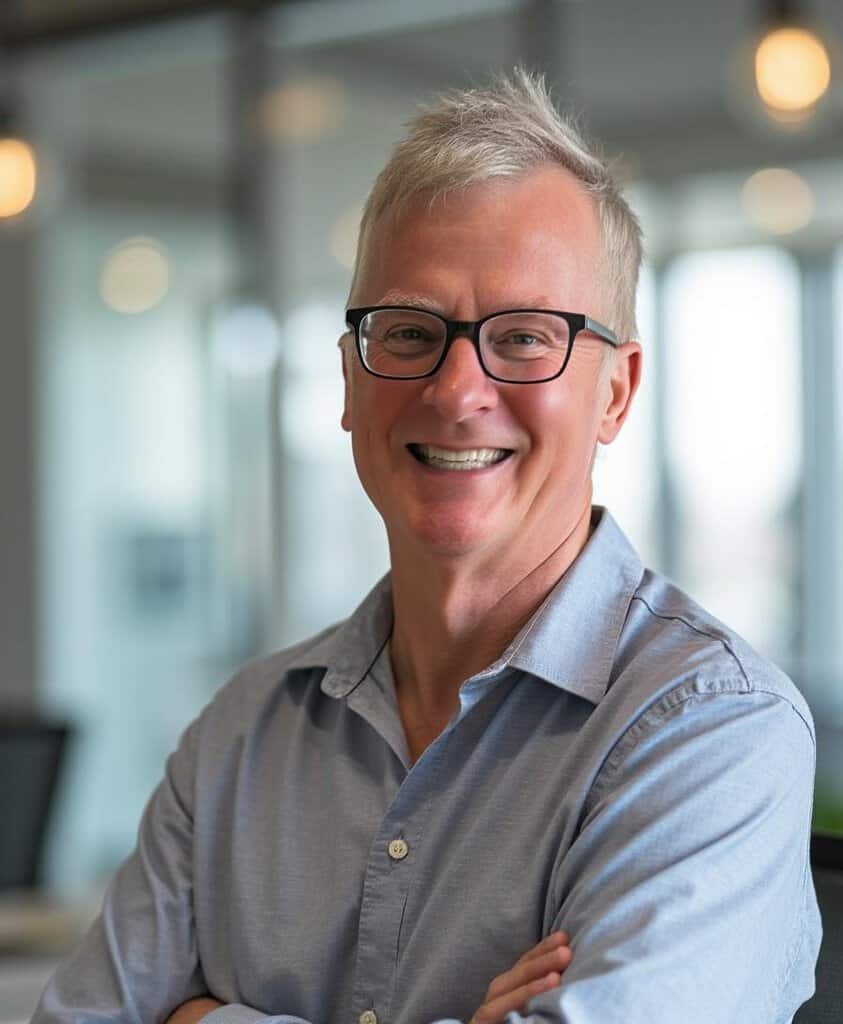
    Headshot of Laurie Lane-Zucker.

    Laurie Lane-Zucker is the founder and CEO of Impact Entrepreneur, PBC, a global multimedia publishing platform serving more than 70,000 members across 200+ countries in the impact economy.

    He coined the term “impact entrepreneur” in 2011 and, in the mid-1990s, working with the educator John Elder at Middlebury College, gave the name “place-based education” to a pedagogy he had spent years building as founding director of The Orion Society (1992–2004), where he worked closely with Wendell Berry, Terry Tempest Williams, Barry Lopez, and David James Duncan.

    He went on to found one of the earliest Certified B Corporations and the Triad Institute.

    His new book, The Impact Entrepreneur Breakthrough: A Field Manual for the Regenerative Economy (Berrett-Koehler, September 1, 2026), maps the architecture of an economy that builds value through regeneration rather than extraction.

  • Sustainability in Practice and the Evolution of Triple Bottom Line Businesses with Lisa Geason-Bauer of Evolution Marketing

    Sustainability in Practice and the Evolution of Triple Bottom Line Businesses with Lisa Geason-Bauer of Evolution Marketing

    Lisa Geason-Bauer, founder and president of Evolution Marketing, joins Kim Allchurch Flick to discuss sustainability/ESG consulting, impact storytelling, ethical marketing, and environmentally responsive design. 

    Lisa describes founding the firm on Sept. 15, 2007 to prove a professional services company can succeed using a triple bottom line lens – people, planet, and profit – while navigating Wisconsin’s long recessionary period after 2008. 

    She recounts building the state’s B Corp ecosystem through Be Local Wisconsin and helping companies certify, noting growth from a handful of B Corps to 26+ statewide and preparing members for B Lab’s new standards. 

    The conversation covers challenges like politicization of environmental and social sustainability, the need to find common ground, and Lisa’s optimism tied to launching Evolution Marketing’s 2025 Carbon Footprint and Operational Impact Report, climate education, and practical actions such as home efficiency, reduced plastics, local food systems, and Malarkey roofing innovations.

    NOTE: Lisa made an error, saying B Local Wisconsin started in 2007 when it was actually 2017.

    Listen Now

    Time Stamps

    00:00 Welcome and Guest Intro

    02:30 Evolution Marketing Origins

    02:40 Triple Bottom Line Explained

    04:43 Recession Era Lessons

    06:51 Wisconsin B Corp Growth

    11:26 New Standards and Recert

    12:53 Polarization and Language

    18:59 Finding Common Ground

    23:55 Climate Report and Hope

    27:52 Beyond Tech Fixes

    28:42 Clean Tech Optimism

    29:14 Off Grid Reality

    30:24 Low Cost Home Swaps

    31:27 Question Behind Green

    34:08 Responsible Consumption

    35:14 Local Food Mindset

    38:14 Farmers Markets Shift

    39:56 Beeswax And Preserving

    42:53 Eco Roofing Case Study

    46:07 Research And Community

    47:31 Dinner With Ancestors

    48:52 Land Stewardship Lessons

    51:16 Closing Reflections

    Kim Allchurch Flick: Hello everyone. I am Kim Allchurch Flick with the Mighty Measure Podcast. Delighted to be here today with Lisa Geason-Bauer of Evolution Marketing. She’s the president and founder, and our topic today is the 19 year journey of impact, sustainability and practice, and the evolution of triple bottom line businesses.

    Lisa Geason-Bauer is the founder and president of Evolution Marketing, a Wisconsin based woman owned, certified B Corporation, specialing in specializing in the area of sustainability consulting, impact storytelling, environmentally responsive, creative design, and ethical market. Lisa is a sustainability ESG practitioner and has been helping companies tell their impact stories for almost two decades.

    As a consultant, she has worked on projects in supply chain sustainability. For example, product transparency, social sustainability, for example, workplace or workforce engagement, culture and DEI, renewable energy, energy efficiency. The green building space. Lisa is a co-founder of Be Local Wisconsin and current co-president.

    Be local Wisconsin’s nonprofit. Mission is to connect, support and educate Wisconsin businesses on how to drive positive community impact. Through adoption of sustainable and inclusive practices since 2016, Lisa has helped companies become certified B Corps, and she is Wisconsin’s only consultant to have completed multiple to 2023 and 2026 blab US and Canada.

    Trained consultants program. So Lisa, it’s so awesome to have you here and reading this. I’m delighted because we got to meet in person at the Champions Retreat in Milwaukee, Wisconsin earlier this year, and I took one of the side programs, which was the Green Home Tour at your house, and I was. Jazz, I was awestruck.

    I was so happy. So welcome and thank you so much. 

    Lisa Geason-Bauer: Oh, thank you, Kim. I’m so excited to be here and I’m so glad we got to meet in person at the Champions Retreat and at my home. It was. It was. It was very nice. It was nice to see B Corps people and get to show the things that we’ve done over the last almost 10 years at my homes.

    Kim Allchurch Flick: Absolutely. So 19 years in business too. What has been your journey and inspirations to this point? 

    Lisa Geason-Bauer: Okay, so literally September 15th, 20 2007. Evolution Marketing was founded in Wisconsin, and when I started the business, my entire mission was literally to demonstrate that a pul, professional service company could operate in a triple bottom line manner, meaning that we could run all of our decisions through the lens of impact on community.

    So that would be the social side. So that’s people. We could run our decisions through the lens of environmental stewardship. So making sure that all the decisions we make actually we’re best for the environment. And then lastly, that we could be economically viable. Over long term. And again, it’s worked because we’re not, here we are 19 years later still in business.

    And that we’ve been able to actually make a profit, but also besides making a profit, have an impact on our local community. So that’s why I started Evolution Marketing and on our services, as you’d read. Our sustainability consulting and then marketing communications for sustainability consulting. So we’re, we work in this really intersectional space of public policy, operations, sustainability, and communication.

    And so when I started, nobody was doing this in Wisconsin and there were very few firms, I think honestly in the United States that were doing this really. I’ve looked to companies in the EU that were doing things similar. Again, maybe not exactly like evolution marketing. So when I started, I’m like, let’s just prove that we can do this.

    ’cause again. This is 2007. This is before the great Recession. This is, I’m in Wisconsin, so a truly purple state in the Midwest. Maybe a little bit more fiscally conservative, maybe a little bit more socially conservative, but big time environmentalists. So I really entered the market space doing a lot of environmental communication environmental communication tied to compliance like sustainability, storytelling about environmental actions a business was doing.

    And we’ve evolved over time. Of course, there was always the environmental consulting piece. Sustainability consulting piece or ESG consulting piece, pick a phrase in my mind is holistically I think of systems, but that’s how I entered the world. And at our 10 year anniversary we realized, hey, we’ve been doing this.

    We spent the first 10 years of our business literally beta testing my mission, and we were able to do it, which is gives us where we are now. But I think people forget that in 2007 the world was so different. We had a horrible, and then when the great recession happened in 2008 businesses in Wisconsin, really from 2008, actually, the recession, Wisconsin was under recessionary terms from 2008 to 2018.

    We did not come outta the Great Recession until quarter two. Our end of quarter one, early quarter 2, 20 18. So for 10 years we were under recessionary economic terms in the state. And so think about trying to implement really innovative sustainability stuff where there was a price tag associated with it would, it was very challenging.

    So we’ve come a long way since then, but I think people forget a lot of this stuff was new and triple bottom line from a concept. It, it only came out in the late eighties, early nineties. So that concept has only been around about, mid, like 30, 30 plus years. So we’re still perfecting what does that look like in practice?

    And so that’s what I strive to do with Evolution Marketing is to actually beta test it and demonstrate that it is doable to operate in a triple bottom line manner and also be successful and create impact and help my community, 

    Kim Allchurch Flick: and you’re doing such a good job of it. And as you’re speaking, I’m thinking I’ve been in the social enterprise world through corporate life quite a bit, but then with my own company fewer years, but over 10 and just how many landmarks you’re mentioning the great recession of 2008, and then there was COVID and how, I think part of it is companies that create resilience do so because they still have belief.

    In the triple bottom line and managed to work their way through it, but also how many things are changing and we’re both B Corps consultants and know that this new standards has been a topic of the last three years that is coming to fruition and actually being activated now, and how it’s like a great leap forward.

    There are a lot of these things happening, but I love how you’re hearkening back to. To the past and using some words that still have meaning. So with that what is your worldview of your community and what are you seeing happen with, how are people in your community rising up? How are people waking up to this and how have you been changing along the way?

    Lisa Geason-Bauer: Okay. So I think when you say community, I have a lot of communities that I’m part of. So there’s the, our B Corp community, which, as I said, this is my 10th year of helping companies become B Corps. So I was doing that before I was even a B Corp myself. And way before there was ever the B Corp consultant training program.

    Again, because I’m a sustainability person, right? So it’s really exciting to see in 10 years. We’ve went from when we started Be Local Wisconsin. We started rumblings of it in 2007. We officially launched January 1st, 2008. But throughout 2007 we were building the foundation for Be Local Wisconsin.

    And at that point we had. Five, certified B, either there five or six certified B Corp of the state, and it might’ve been five. And then that note, like November, December of 2007, the sixth one came in. My company was the seventh. And so I was like, well, we started this thing called Be Local Wisconsin. I’m helping folks in the B Corp community.

    My company really needs to be a B Corp. And I honestly, I just didn’t have time to do my own application because I was busy helping my clients. In 2018, my, we did, one of my interns, my intern that year she was like, I wanna do that. I’m like, fantastic. So she did our B Corp application the first time.

    And so July, I don’t remember the date, but I wanna say it’s July 23rd. Sometime in mid July 2018, we became the seventh certified B Corp in Wisconsin. And then. That fall, we had done a half day workshop for, with the, the handful of us that were B Corps in Wisconsin, half day workshop, and we had 20 plus people in attendance.

    Almost every one of those co people represented a company. Those companies have all, now, I shouldn’t say all, the vast majority, I wanna say it’s like 90% of them have now become B Corps in Wisconsin. So we went from this, this small scatter, like a handful, right? Or a. Whatever, six or seven B Corps, six B Corps mine mc became a seventh handful, to now we have over 26 in Wisconsin and that’s, to me, I know we think 2018 is a long time ago, but it’s really not that long ago. And I think we, we saw a big in influx of B Corps second half of 20 18, 20 19, 20 20. So we’ve seen a bunch of growth in that space, which is amazing. And these are folks from all across the state.

    And so we’ve really built up our community. And what I love about our little be local Wisconsin, I say little because we’re a mighty small, mighty nonprofit. Half of my board are folks that used to be at B Corps in other states, and they lived in Wisconsin, but they work for B Corps remotely and now over, career changes, job changes.

    They’re no longer at B Corps, but they’re still involved with B local Wisconsin which is really nice because that shows their commitment and maybe some of them are working in government or in other really social impact or social justice aligned positions. So I think. When you think about it that way, because there’s only 26 of us, we’ve really helped to grow the movement in our state by having folks associated with the B Corp community move into other roles and other jobs, which has, I think, been super helpful because in a state like Wisconsin we truly are a purple state.

    I mean our ballots are split ticket. One person votes, they vote for a for president, and you vote B for secretary sorry, Senator. So two diff from two different parties. But that’s how a lot of wisconsinites think. So with that I think it was really important for us to grow our community.

    And then in Wisconsin, we happened to have, it was originally called the Wisconsin Sustainable Business Council. They’ve rebranded to be the Sustainable Business Council a couple years ago. But I was on their board for a really long time and actually. Be local, Wisconsin came out of that board and out of that organization because it was the people in Wisconsin doing sustainability and said, Hey, we’ve got enough folks now in the B Corps space to let’s form a B local.

    So for me, when I think of community, I’ve got my sustainable business community, that’s B Corp. It’s folks that used to be a B Corps, but now in government and other jobs that maybe they’re not at B Corp, but they’re like B Corp allies or B Corp supporters. And then we have our sustainable business community, which is huge and continue to grow.

    And so that’s. That community in my mind is not stopping. It’s moving forward. We have a conference every year for the Sustainable Business Council and we bring together every year we have folks from the B Corps community who speak. It’s just a really nice, like holistic space where anybody who is.

    In, in that bigger holistic sustainability bubble, they all come together, right? And we meet, we talk, we learn from one another. And it’s not that, it’s like we’re learning about things that aren’t related to B Corps. Everything is related to B Corps at the end of the day. And I think in all sincerity, everything B Corps is doing helps the sustainability community, right?

    So I just think sometimes we need a little translator. And so I end up being that translator a lot of the time. Hey, we’re doing this in the B Corps community. What can the regular sustainable business community use? So that community it’s like it’s my family, right? I’m surrounded by them, they’re wonderful.

    But I think everyone right now is having just a challenging time from a community perspective, right? And so I think we doing programming where we can really help and educate the folks within the B Corp space especially about all the changes under the new V two version tube, I think is really important.

    And so that’s actually the theme for Be Local Wisconsin for the next year and a half, is what can we do to help folks in our community? Educate them to help them be prepared so that they can have a successful experience going through the recertification. And I say this as I was the first company in the US and Canada to submit for recertification earlier this year, and I’m still working through Evolution Marketing’s application.

    So it’s a process. The new standards are a big pivot, but it’s not a bad pivot. It’s just different. And I’m really excited about the new pivot. It’s just, it takes time to be prepared. With everything you need, meaning the documentation. 

    Kim Allchurch Flick: Indeed and with anything change can for some be a struggle.

    It’s always different and yet it’s still moving forward. And because it’s somewhat unknown. Maybe that’s part of it. And I was wondering if you could speak to obstacles and challenges you’re seeing some of which you already brought up. And you also mentioned that some B Corps have perhaps chosen this change in the standard as a window to, not recertify, but what are you seeing as obstacles and challenges for some of the people you work with, including those allies and everyone else in the community?

    Lisa Geason-Bauer: I think, at least in Wisconsin. So this is probably maybe a more Wisconsin or maybe a more Purple State issue, but many companies right now are afraid to talk about the things that they’re doing that might be pro Jedi, which is justice, equity, diversity, inclusion. Pro de and I, or I like to say social sustainability because they’re worried about what an elected official might say.

    There’s been proposed legislation in Wisconsin that has not gotten traction, but that. Doesn’t help the things that I’m doing say to say it kindly, right? And so I think there is a sociopolitical shift happening in some places where things have become partisan that actually are not. So to me, environmental sustainability is not partisan.

    I believe everyone. Republican, Democrat, libertarian, green Party wants clean air, clean water, right? They want to make sure that we have natural habitats for fish. When you go fishing, you want to make sure the fish you’re eating are healthy, you want to have the ability to go hunting. All of these things are all connected together.

    You. And I think in some cases there’s this partisan divide that’s occurred that’s made environmental sustainability a partisan topic, which it should not be. To me, environmental stewardship is not partisan, and the work that I’m doing is at these intersectional spaces. So I work with folks from all different sociopolitical and ideological differences on a daily basis.

    And I think ’cause of that, I’m very consciously aware that words have meaning. And especially right now, certain words may have been co-opted or influencers or media organizations may have attached meetings or co-created a new meaning for words. And so what you say to somebody really matters. And I am in one of, one of the, the Reds counties in, in the United States in the, I’m in the, the three, three most conservative counties in the state of Wisconsin.

    And every day I interface with folks who are different than me. And so it’s really important for me at least, to meet people where they’re at. And I think this goes to the challenges, but yet also the opportunity because I have young people that come to me all the time who are getting degrees or finishing school or in their first job and they’re like, oh my gosh, I had this problem.

    I got into a fight with my uncle at Thanksgiving. You know, about carbon reporting or about some, some nuanced thing, and. I said what happened? The young people are like I yelled at them and I was like, okay, hold up. Yelling at your family members is probably not a good idea, instead, I’m like, you need to take a step back. You have to be more neutral. And so this ends up being a conversation I, I have. A lot, probably more so than I actually wanna admit, but I, this also ties into how do we as sustainability practitioners advance sustainability? How do we as B Corps consultants encourage businesses to become B Corp and to advance the programming and the strategies and actually implement and op the, operationalize the B Corp standard.

    So I think we all really need to. Maybe take a step back Sometimes from the emotional response we may have to words and specific words or phrases that people put out because at the end of the day, I truly believe there’s more that unites us. Then separates us. And I think it’s hard to think about that sometimes because of the, the partisan nature of everything.

    It’s like everything’s been coopted by partisanship, which is a real problem. So I think that’s a real challenge. But we also have an opportunity because many of the people I work with, come across from very different perspectives, and I’m not saying one is bad or one is good.

    I have no I work in the nonpartisan space, because of the work that I’m doing. Because at the end of the day, it’s really about how can I help your company to advance sustainability? Whether that’s addressing your workforce issue and challenges or helping you to address environmental stuff so that you’re ready for your next audit.

    It’s, to me, that’s holistic sustainability. So does that answer your question? I hope 

    Kim Allchurch Flick: it does, and it makes me reflect a lot as well. There’s I have a, a couple of clients that have also, they are also in more conservative states, and when they share their values upfront with a client, sometimes they’ll get pushback, like what one said.

    She was, she would say, well, you’re just trying to turn me into a Democrat by a potential climate client. And we talked about okay, what can you bring to the table that makes the connection? Maybe it isn’t sharing the value so hard or leading with it, but what’s the work you can do together? And find a way to build that bond.

    But it also makes me laugh in a way, because when I was in Wisconsin with you and you’re very well run Champions Retreat, there was someone from Georgia who was talking about being a B Corps and going into a space which was clearly, clearly very conservative. Red hats and shirts everywhere. But she said she was going through this massive store.

    And seeing B Corps products on the shelf as well. So at the same time, two things can be together at once, and it doesn’t have to be opposing and polarizing. But I love what you said about being the interpreter. And I think that’s where it matters is because polarization helps people make assumptions and stereotypes, and that is no good at all.

    But when it comes down to it, yes, we all want clean water. We want clean air, we want to f. Feed ourselves and others. We want to live a basically good life and support our families, and you’re so good at interpreting across those lines and hopefully making the lines dissipate a little bit over time. So I love what you said about that.

    And we see it as well. I do wanna give some grace to also the people that are afraid. To speak up or present what they feel because potential backlash, which could come out of nowhere. And I live in a small rural town where that has actually been happening and happen yet with it. I, I think, that still things can still move forward and do well that serves everyone in a nonpartisan fashion.

    So with that, what makes you optimistic and what new things are you working on? 

    Lisa Geason-Bauer: Okay. I will address that in a minute, but I wanna say what you’re experiencing in your rural town. I think that’s very real right now and I just wanna voice over that. That it’s real. And I do, I, I had, I strive to give myself and my clients grace each and every day because these are really challenging times that we’re living in.

    And one of the things I’m a sociologist by training, so one of the things that we do here or that I do, that my team at Evolution Marketing does, when those situations arise. And I literally, I advise people on this all the time. Find something, find a common ground about something. Like for example, I was on our regional workforce development board for 15 years.

    I stepped off of it last year, and usually in the room I was, for a long time I was the youngest person in the room. I was one of the few women in the room. So I represented a lot of different diversity buckets, for lack of a better way of saying it. And of course, with my business being a B Corp.

    Very different than this room filled full of manufacturers that were owned by men. And so we would go to the board meetings and it don’t get me wrong, like I was on the board for 15 years, so it evolved over time. But when I first joined the board, I would find things that I could talk to elected officials about that we all agreed on.

    So innovation was something that everyone agreed on, saving money. Taking your operations, so finding efficiencies in your business operations, especially in manufacturing. So it’s finding whatever the, whatever those little pieces are. The other thing, at least in Wisconsin, and I think this is probably pretty universal across the US and Canada, a living wage.

    I was on the workforce of all award for so many years, and living wage was not a conversation point. And I’d say the last four to five years, living wage has become very important across the board. Vast majority of people, everyone I know says we should have a living wage. I don’t know, many people who are disagreeing that folks should be paid a living wage.

    And so I think finding those little nuggets or those little items that there’s agreement on, and then working from there, because I, that’s the only way I, and that’s, to me, that’s sociology 101 find our commonality and then work from that commonality towards a solution. But you have to also be willing to give and take, and I think that’s the part that’s hard. We’re told right now it’s like my way or the highway. And it’s like in actuality everything’s a negotiation, right? And you know what? There may be things that somebody else knows that I don’t know. So being open to hearing these ideas, and I truly believe the more diverse people you have at a table, the better the solutions are going to be.

    I know that’s a little off, off topic, but I just think it’s important to talk about. 

    Kim Allchurch Flick: Absolutely off topic, but on and here we are in 2026, more than halfway through the year. It also reminds me of some of something the British did. They took people from very different walks of life, but they knew they were, would be polarized, and they put two people in the same room and they said, you can talk about anything you want, but politics.

    And they started talking about. They’re church, they’re grandkids, they’re do I love dogs? Do, what kind of flowers do you grow? What type of work do you like to do? What makes you laugh? What’s your favorite music? And it started really breaking down some barriers. And there’s a little bit of magic that happens when we give ourselves a chance to be able to do that.

    And one of the things I’ve been doing in our small little town is no matter where I go. I smile and say hi to everybody in the grocery store, in the gas station line, whatever it might be. I’m just gonna approach everything in that fashion. And who knows maybe I’ll get a smile back, maybe I won’t but at least just not try to enter into anything as it might be a conflict, but enter into everything as it might just be a moment of grace in passing.

    Lisa Geason-Bauer: That is lovely and I 110% agree. My response in any situation is to smile. And I know not everyone does that. Sometimes people will frown or you can read facial expressions, but I’ve been in enough meetings over the last 30 years of my career where. Things are being said, and like my face, if I did not smile, my face would portray how I really felt, right?

    And so that, and that’s not gonna be helpful if I’m trying to negotiate and or come up with a solution that works for everybody. And so I think responding in a positive manner, smiling is really important because at the end of the day, we’re all humans, right? We are all people, and I think sometimes we forget that because we get into the emotions of everything.

    It’s like we take your step back, we’re all human. We all, at the end of the day, wanna take care of our families. We wanna support those that we love. We all should have access. I believe we should all have access to, to clean air, clean water be the ability to support ourselves and be paid a living wage.

    So 

    Kim Allchurch Flick: Concurs. And so what does make you optimistic and what cool things are you working on? 

    Lisa Geason-Bauer: Yeah, so what I’m optimistic about is we are just, we’re launching today the Evolution Marketing 2025 Carbon Footprint and Operational Impact Report. And Kim will be sharing out a copy of it with with the podcast, which I’m very excited about.

    And this year, because again, we’re working through the new standards and we’re going through our, verification part of that. Right now with Two cert, we have a whole section dedicated to our climate action plan. Again, my business was started in 2007. My first climate action plan was done in 2008.

    So I took, and we’ve been working on it for years, and I think what gives me hope is that there’s always something to do. I think a lot of times folks are like, here’s a goal. Let’s meet the goal and then we’re done. And it’s like, no, that’s not the case. We’re 19 years in. I have new goals for this year.

    We’re taking actions every year. Now, are the goals different today than, than they were actually, I should say were the yearly goals different? Yes, but the overall, the arching goals in our climate action plan have been the same. Our climate action goals were high enough level that we could implement yearly, and part of that is understanding holistic sustainability, which I don’t know if everyone does.

    I was in grad school in the late nineties. I’ve been working in carbon space since the late nineties, so I’ve been doing this a really long time. So when I started Evolution Marketing, I really wanted to make sure that we, in b in everything we’re doing. Operating in a climate responsible, climate friendly, environmentally responsible, pick a word manner.

    And to me that was decarbonization. And so we’ve been taking decarbonization actions for years. However, we’re at the point where we’ve decarbonized to the point where we can’t do anything else. Let get a sip of my water.

    But instead, now we do education. So once you’ve done the actions, then you need to educate about those. And so what gives me hope is that I truly believe and we joined this program, it’s called the Department of Natural Resources, so Wisconsin’s, department of Natural Resources, green Tier Charter for Climate Action.

    We joined it last year. It was a new charter last new charter. I think they came out in 20 23, 20 20, 23 or 24. So they’re pretty new. We were the, I think, the sixth business to join Wisconsin, either fifth or sixth. So there, there aren’t that many of us, but. When we did that we go we agreed to go to quarterly meetings with folks that are part of this program throughout the state of Wisconsin.

    And at our last meeting, our state of Wisconsin climatologist released a new state of Wisconsin Climate Impact report saying basically, this is what, what’s going on with climate in Wisconsin. And I’m borrowing his phrase, that’s why I’m talking about this. He said, we’re at a point in time where it’s all hands on deck moment, everybody.

    Doesn’t matter the size of your business, doesn’t matter the size of your home, right? Like everybody needs to start taking actions. And so in one way, it’s horrible that we’re in a climate emergency, but in another way, we have so many more tools now that we could use to address it. We have businesses like mine who are doing climate education on a regular basis.

    There’s so many more resources now. So my hope for the future is that every single person listening to this podcast can take action. And if you like something that we’ve done in our Impact report, copy it. That’s why we put this out there. We really want to help elevate the conversation and let business people know that small businesses could take action too.

    ’cause I also think sometimes we expect big businesses to make, Microsoft, we’re gonna decarbonize back to 1975. That’s amazing that Microsoft is doing that. However, they’re a huge multinational company. We can’t expect Microsoft to solve all the problems. Or the fact that, I love Google and I’m using the Google office suites and that’s running on renewable energy.

    That’s awesome. But that’s just one choice. There’s so many other little things we can do each and every day. And I know you were at my home, so we went through, like we compost. It’s just an example. We removed the buckthorn, which is a invasive species in Wisconsin, you know, so we do a whole variety of.

    Things that all tie into decarbonization every year. And that’s how we operate. But then we also educate and share what we’re doing with others so that other people ’cause you don’t know what you don’t know. And the older I get the more I’m really convinced that there’s a lot of things that, that I don’t know either.

    So being open and being curious to hearing about what things we can do to help address this challenge, I think is important. And just knowing that we all can have an impact. We can’t, we don’t, it’s not. We don’t want to put all of our hopes and dreams on technology. We can’t tech our way out of the climate crisis, right?

    So what can we do? We can all be empowered to take action.

    Kim Allchurch Flick: We can’t tech our way out of the climate crisis. That what a beautiful quote. And it’s so important and there’s small things we can all do as individuals. The other thing, as you were speaking, I was reminding myself how I’ve been so excited about innovations some things that weren’t there 3, 5, 10 years ago 

    Lisa Geason-Bauer: Yeah.

    Kim Allchurch Flick: That we can now embrace and future innovations are coming. And there are incubators for tech innovators, like clean tech incubators like Virtue Lab, which is based in Seattle and Portland. So there’s things there that even if we don’t see them every day, just knowing they’re there can help us with a little bit of optimism.

    And you’ve done so much with your house almost completely taken it off the grid in many ways. 

    Lisa Geason-Bauer: I wish we 

    Kim Allchurch Flick: could 

    Lisa Geason-Bauer: it, it’s illegal to go off the grid. Yes. We, so even if we wanted to, we could not leave the grid because it is currently illegal in the state of Wisconsin. 

    Kim Allchurch Flick: Oh, okay. That pardon my misstep then, but it does make sense.

    But your energy usage is so low and giving somewhat back to the grid. And I live in a house with solar panels as well, where every power bill is in the negative because it’s also giving back somewhat.

    There’s things we can do. 

    Lisa Geason-Bauer: Yeah. I wish we, this is a point of contention that I have with the state of Wisconsin.

    I wish we could go off the grid. But yeah, the way we have invest, we have five investor owned utilities, and currently that is not, if you build a new home, you could potentially build it not, and not connected to the grid, but it has to be a new home. And it has to be, there’s a bunch of criterion that have to, it can’t be like in a subdivision.

    It has to be, in a rural farm field surrounded by nothing for miles, but there’s a system in place that’s, that controls me in Wisconsin. 

    Kim Allchurch Flick: Yeah, indeed. And the other thing is it means we, we can continue talking about this and make a step at a time.

    Sometimes we can’t do everything at once. Some adjustments, particularly in environment cost money, like buying solar panels is not inexpensive and yet there’s an upside to it. But there are other things. That we can do that leave us pretty even. Some examples in my house are I decided I’m anti plastic as much as I can possibly be, even though food is almost impossible to wholly do away with it.

    But cleaning supplies, I now am down to zero plastic packaging and zero plastic content in any cleaning supplies in the house, and I start spreading the word the cost of that has. It’s been pretty much parody. It hasn’t cost that much more. And another bonus I hadn’t thought of in the beginning was because some of these things are.

    Dry capsules that you mix with water. I got so much space back inside of my cabinets that it’s just remarkable. So there are things and I think the other thing that you’re really wise about, you and your husband and I think about more is. Sometimes we tend to stop at the first question, and I’m gonna give an example.

    I was at the Oregon Zoo one time, which has a lot of conservation and whatever people might think about zoos, and I’m one of them. But this particular one has a lot of conservation science and is doing things behind the public view that are very strong for the environment. But there were some volunteers out of probably high school age who were standing by an exhibit that said There’s renewable palm oil.

    And I said, oh, what do you mean by that? And I said Palm oil grows, so once it’s planted, it grows and you never have to plant it anymore. And I said, but I’m gonna tell you a story about someone I know who’s a friend who happened to, at one point in time, be the US Ambassador to Malaysia. And in Borneo, there has been so much deforestation for palm oil that is yes, now sustainable.

    It is still growing in producing fruit every year. But all those orangutans lost a tremendous amount of habitat and. When the helicopter took off outta the forest and flew over the palm oil, the heat inside the helicopter increased. So what’s the question behind the question? Is this palm oil sustainable?

    Yes. If a plant keeps growing, keeps producing, all it needs is maybe some water, sun. But what’s the downside? What was before that? What was taken away? And I think that’s one of the mindsets that it’s hard for us to grasp. We tend to stop, like recycling is really good because we’ve been trained that, 

    Lisa Geason-Bauer: yep.

    Kim Allchurch Flick: Recycling has some huge downsides per the New York Times article of February 14th, 2025 and others before that, the green fence that I studied at Portland State University. Gosh, that was 2013. We knew then that recycling was bad, that China was sending full containers back of our recycling back to us because they wouldn’t take it anymore.

    Yes, exactly. So how do we reshape our questions and try to unpeel the onion a little more and ask the question behind that, that first point? Because. A lot of people would stop and say, oh yeah, recyclable palm oil. I feel better about that. I know that are renewable. So I think we’re. Framing that a lot has been done.

    We’re excited about where we are. We’re excited about innovations, but we can still challenge ourselves to keep thinking more and asking questions and saying, okay, this is good where we are at this point. What more can we do and what can we press against a little bit to challenge and say, yeah, but is it as good as we’re being told?

    What do you think about issues like that? 

    Lisa Geason-Bauer: I think you’re right and I wanna take it a step further and say. Again, I’m a sustainability person through and through, right? I’m a sociologist who worked in I’m a rural and environmental sociologist, so like that’s my classical training.

    So for, so me, for me, I’ve always watched people and watched companies and watched how things happen. And to your point, okay, what does responsible palm oil mean? How is it different than sustainable palm oil? And what third party certifications exist now? And I think. We’ve come so far from the late nineties when I was in grad school till now about factoring out or digging into, I call it, doing a deep dive right into these topics.

    And people are learning so much more. And I think taking, bringing the regenerative mindset is also really important. But also I think at the end of the day, we have to move away from this take, make, and consume model to. Do we do? First of all, do we even really need this? And if we really do need this, how can we do that?

    And I’m gonna use the word responsible because people define things differently, but for me, responsible is gonna be both socially and environmentally responsible. Okay? So should we be buying in the middle of summer tomatoes grown in a different state? Not state, a different country. In the United States.

    If we can grow our own tomatoes here, should we not be buying our tomatoes locally? And I remember being at a, a food ag conference, literally, I think it was like 2000, it was either 1999 or 2000 and Michigan State University. And the keynote speaker talked about apples and he said, I went to the, this was in the fall time, and he is like, I went, I think it was 2000 this happened.

    He went to, I went to the, the local co-op and he’s like, I looked at all the apples. There was only one, one set of apples that were local to Michigan. So fall and Michigan, there’s lots of apples, but they weren’t at the co-op. The apples were from Oregon, they were from Washington, they were from the West coast.

    So those, the food miles for all those apples. And so like that. Got me thinking about, okay. And I grew, and now I grew up on a dairy farm. So a lot of our food was local. Like we raised our food, we ate our food, we ate our animals, we drank our cow’s milk, we had our butter. All of that was from our cows.

    But I think a lot of people just go to the grocery store and they just, they want something, they get it. I remember being a kid. Avocados, were not at the grocery store in the wintertime, avocados and, I don’t know, I actually don’t know when avocados started showing up at the grocery store. But I was, I, from what I can remember, it was the nineties, like probably late nineties.

    I remember seeing avocados at the grocery store, unless you were in Hawaii or, ’cause trust me, like I’ve gotten lots of avocados awesome. In Hawaii or California or places where avocados go. But I think we’ve moved away from this seasonal diet, just as an example. And I think now, as we look towards the future, if.

    If we are, ’cause all the prices are going up. And my mother-in-law was really concerned about prices this fall for food because so much of the food that she buys at the grocery store is trucked in.

    An organic farmland surrounds us. It’s lovely. So I said to my mother-in-law, , well, you could go shopping at the Farmer’s market stores.

    And she’s like, yeah, but they’re only open Lisa from whatever, nine to five. And she started kinda giving me, like, pushing back and they don’t always have what I want. And I’m like. Yes. They won’t always have what you want, and you’re going to have to make the effort to go when they’re open.

    I get that you could go to the grocery store at any time of the day or night. Grocery stores are open 24 hours now. But I’m like, at the end of the day you’re also like, you don’t always need to have tomatoes. Don’t get me wrong. I love tomatoes. I love avocados, but I also realize I don’t buy tomatoes in the middle of winter unless I’m getting them at a farmer’s market where I know they were grown hydroponically by a farmer.

    Now I understand there’s a level of I have that privilege, right? And I know that there are people that don’t have that privilege, but I just think the more local we can eat as an example, that helps all of us. So then I can manage my pricing because I know, but I also need to realize that maybe in fall I’m eating different things and I ate in spring.

    And I think sometimes we want what we want, what we want it, and we don’t realize that there’s a cost to that. Not just a physical cost, but like a, like an environmental cost. And so to your point I mean I’m trying to use this as a good example, but I think people have started to really rethink food and food systems.

    I’m not saying it’s perfect. I’m not saying we’re done, but like I’ve been part of the farmer’s market food scene for over. 30 years now. A really long time and I know that we, during the great recession, more and more people across the United States went to farmer’s markets. More and more farmer’s markets opened in Wisconsin.

    Like I literally started a winter farmer’s market and then all these winter farmer’s markets started showing up all winter long during the Great Recession because people wanted to support farmers, but also help. Buy produce into the middle of winter. So you could buy 20 onions for, I don’t know, five bucks.

    I’m making up a number right now. But you could buy a lot of things at the farmer’s market that were gonna be cheaper, but you just had to know how to process it. I remember buying like bags of carrots and we made carrot cake, carrot muffins, we did all these different carrot things you know what I’m saying?

    So it’s like you have to understand how to process it and have the ability to do that, but. When we have less things and we, when we, when the price of things goes up, that I think encourages people to start to think about it. To do your point, ask these questions. What things can we do? That can change that, and I think growing up on a farm like I was taught, never waste anything. You only buy something if you’re, if you actually need it. Not because you want it, though. I do enjoy jewelry. That’s one of those things that it’s just. It’s an individual thing. My husband’s like, you don’t need any of that.

    He’s like, you just want that. I was like we can debate that. The point at the end of the day is, I’m not saying don’t treat yourself, but I think if we all start to look at our daily habits and the things we’re doing, there’s probably many things that each of us could do to live more sustainably or responsibly.

    And then the last thing I’m gonna say is, have you heard of bees wax paper? Oh my God. I love. I’m obsessed. I all of the presents, I do a lot of baking, so I gave vegan baking to all of our friends and clients. Last year for Christmas or for the holiday season, they all got it. It’d be bees wax, wax paper, and they all got their own set of bees wax paper with it so that they could start taking plastic out of their homes.

    Kim Allchurch Flick: I love that. There’s so much we could talk about. I think there’s a webinar in our future, you and I, about all the, the things that can add up by what seemed like small but mighty changes that we can make getting rid of plastic is a big one. And you’re also making me think of historically what did people do?

    They took their fresh produce and they preserved it. 

    Lisa Geason-Bauer: Yep. 

    Kim Allchurch Flick: Canned, and that’s where canning and freezing and in all, in some countries they pack things in salt, like fish and Yep, yep. There, there are ways to do it and, but also supporting local because I do think that a lot of us forget about what transportation costs are, and they’re not just monetary costs, they’re climate costs as well, 

    Lisa Geason-Bauer: discussion.

    Kim Allchurch Flick: So I do appreciate all these points you brought up. 

    Lisa Geason-Bauer: One, just with the transportation right now, the costs are going up because the fuel is went up. Right? 

    Kim Allchurch Flick: Fuel. Yeah. 

    Lisa Geason-Bauer: So my mother-in-law, she was really upset and concerned. She’s like, I don’t know how people, and she’s on a fixed income, she lives in a retirement home.

    She’s like, I don’t know how people are gonna be able to afford their groceries. And I was very nice when I said, there are winter farmer’s markets. There are things you can do. It may be inconvenient, but I think sometimes that inconvenience is probably gonna also be better for your health in the long run too.

    But people just, they don’t know what they don’t know. And so my mother-in-law’s awesome. And she means, well, she just, it’s from a generation that ha was, it had so many things like I can’t imagine. Growing up in the sixties and, and then looking at what we have in the two thousands, right?

    The fact that you could get any type of food you want any time of the day, it just it’s amazing, right? We have food from around the world in our grocery stores. And my mother-in-law loves to cook, so she loves exotic things, and I’m just like maybe tone that back a little bit, 

    Kim Allchurch Flick: yeah, indeed. Or get some exotic seeds and grow some under a, a light in the basement or something. There’s fun things we can do. 

    Lisa Geason-Bauer: Yes, exactly. She does not grow. She I literally, I’m growing organic lettuce for her and she’s like, oh my God, I want lettuce, Lisa. Because she’s, she does not grow. But that’s, we all, we each have our own thing.

    But the point, I just think we have to have these conversations though.

    Kim Allchurch Flick: Yes. And I loved what you said is responsible, what, thinking about what are things we can do responsibly that is a, and around a couple of layers of it. But there, there’s a future discussion here and I think it’s super important and ongoing.

    And also for everyone, everything will be in the show notes as well. There’s a lot of links that Lisa’s providing. Is there anything else you’d like to add before the final question? 

    Lisa Geason-Bauer: I think you should talk about the Malarkey River real quick because I think people need to know that. We have an Eco Home page on the Evolution Marketing website that’s in English and Spanish, and we showcased that page when we had our tour, the Eco Home Tour.

    But tell everybody your story, Kim, about what you learned and then what you did with the Malarkey RevX. I think this is just amazing. 

    Kim Allchurch Flick: Here we go. Because I was at your home tour standing outside as you were discussing with that group of people, all the energy efficiencies you’d added to your beautiful home.

    And one of them was these roof tiles, and you talked in detail about the roof tiles and how they actually reflect instead of pull heat in. And I know in older homes, if you’ve ever been in an attic in the summer, it’s in uninhabitable. And how that. This particular roof tile actually helped reflect that back out, but also that you said that, and these roof tiles were made in Oregon and two of us were standing there in Wisconsin saying, that’s an Oregon company.

    This is fantastic. And while my primary work is being a consultant in the same space in Oregon and Washington. I’m also a licensed real estate agent and we were selling, getting our house ready to sell in Beaverton, Oregon. It needed a new roof, so guess where I went for the new roof. Went over very well with the buyers and also two houses that I’m representing now have malarkey roofs on them as well.

    And it’s a very good company that. It has a lot of values driven I things baked into their charter and also my, our solar panels are from Oregon and they’re also from a benefit corporations for good benefit company. So that there are ways to do things that are really super, so it’s sometimes it’s asking the question, I need a new roof.

    What are some options? That are really good for the environment as well, and the good part is the price point was really no different than standard options, so I thank you for that, Lisa, because I didn’t know about a company in my backyard until I went to Wisconsin and saw it on your house. 

    Lisa Geason-Bauer: But you know what, that’s okay because what I did my research, and I think I drove my husband a little crazy before we put our new roof on, and I did all of this research and this was back in 2021, and I came down to it and I was like, okay, I want the malarkey roof.

    And so our roofer company was like, oh, okay, Lisa, they’re out of Oregon, so you’re gonna have to pay. A fee to get it shipped here. And I was like what’s the fee? And he’s like it’s $5,000. And I looked at him and he said, but you know what? Let’s, we’ll do Hals these, if you pay 2,500 for shipping, we’ll pick up the other 2,500.

    And I said, done. So like at the end of the day, yes, I paid a little bit more, but again, this is 2021. So I think the prices have probably come down since then, but. Well worth it because not only does it reflect the sun, it also pulls water out of the air and pulls well, actually pulls smog outta the air and makes, turns it into water, and it’s made with recycled materials.

    So O-M-G-I-I should just go work for malarkey because I’m so obsessed with our roof. But the reality is. There really are some cool companies, to your point about innovation and sometimes we just don’t know because these are newer companies, they have newer product lines, right? So it’s incumbent upon us to do our due diligence.

    But I think it’s hard because there’s so much going on in the world right now that we don’t maybe have the time. So I, that’s the other thing is I would just encourage people, if you have a big decision to make, take some time. Do some research, look into it, talk to people. ’cause that’s how my dad did it, 30 years ago or whatever, a long time ago.

    That’s how my dad and my grandpa did things, is they would talk to people. They were always asking, oh, we have to do this on the farm. Well, what have you done on your farm? And I didn’t ever fully understand that at, but now we, at, on our fingertips, we can ask Google and we, there’s so much more that we can find today where back in the day we didn’t have to, but I think.

    Reaching out to folks in our community is so priceless because let’s learn from each other. I don’t need to reinvent the wheel. So I think that’s a, something that maybe like a, a drawback or throwback to the way things used to be. 

    Kim Allchurch Flick: Indeed, a little bit of research can go a long way and some good keywords, and we have for some that are certified.

    B Labs directory. Or other places, other ways to search too. But keywords like eco-friendly. There’s so many ways to run a search and try and hone it down just a, a little bit and also and. Certainly try and keep it local, but this is an example of where the options weren’t available. So maybe more and more will happen.

    But I think you and I are both so encouraged by innovations and taking advantage of them as well. So for the last question, this is, if you could have dinner with one to three additional people living or deceased, who would they be and why? 

    Lisa Geason-Bauer: So I was just talking about my dad. So my father, my grandmother, and my grandfather are all deceased.

    My grandpa and grandma died on my dad’s side of the family over 30 years ago. My dad passed away 11 years ago. So I would have dinner with all of them and I would actually talk about what we what my company does, and how the world has changed. Because I keep thinking back to, I grew up on a dairy farm.

    My grandfather was born on the family farm. He died on the family farm. My dad was born on the family farm. He died on a piece of land next to the family farm, which was his home. That’s not gonna be my future. I am. I the, where I was, the home I lived in my whole life as a kid, that’s not the home I’m gonna pass away in.

    And just these shifts that have happened in familial like agricultural families where you have a piece of land. ’cause our family farm is 110 years old, and so like I would love to talk with my grandparents and my father about just. My father, not as much as my grandparents, just ’cause my grandparents had been gone so much longer, but how the world has changed and.

    Most people today aren’t born in the same home that they’re gonna pass away in. And most people don’t have that relationship with the land. And so I think land stewardship is so important to me. So I would love to talk with them about that and just see their take on the things one that I’d also love to like.

    Okay. We’ve done these things in my house. We’ve done these things in my yard. What other things could we do? Because growing up on a dairy farm, we did a lot of things that one might say. How do I say it the right way? Were environmentally responsible farming practices, but they also were things that just made sense and it was the way farming used to be done.

    50, 70, 80 years ago, you planted cover crops. You wanted to make sure that in the middle of winter there was something growing so the soil didn’t road. Because we live in Wisconsin and we have snow, and snow comes down and then snow melts, right? So erosion’s always been an issue here, however. More mainstream farms or bigger production, ag farms change their farm management practices to do things that maybe weren’t as environmentally responsible, that then the short term produced results.

    But at the end of the day, there were long-term ecological repercussions, right? And how does what I learned as a kid and what our farm did, and all of us kids working on the farm, how does that then translate to what I’m doing today? I’m striving to use that same mindset, of like a addressing, not per se I don’t have cover crops because I don’t have that big of a spot of land to have cover crops.

    But I have trees and I’m taking care of my trees and I’m planting things with the trees and and just trying to. Make good decisions. And so I would love, I think, to talk to my grandparents about that because they lived through the recession and as a child, like we had a cellar, and then the, the cellar were jars of, everything was tanned, or it was pickled.

    And then we started freezing things. I remember we got the chest freezer, I don’t know, maybe I was seven, five or six. They got this chest freezer and it was this big deal because then the meat went to the chest freezer, and so just all of these things that. To me we’re like huge technological changes, but have actually revolutionized how we eat, how we feed ourselves, how we take care of ourselves, right?

    And to see, and then the sustainability space. ’cause my grandpa would always be like do you really need that? I said this earlier, do you actually need that? No, I want that. You don’t need it, Lisa. That’s fine. Don’t worry about that. You don’t, you only worry about what your needs are.

    And I think if all of us as a society, maybe we’re less consumer driven, consumer product driven, I, I think that would make the world a better place and maybe help to address some of the plastic problem and. Other overproduction problem that we have. 

    Kim Allchurch Flick: Oh, indeed. What a beautiful table. I am so appreciative.

    I think there’s future conversations and let’s talk about that. Everyone, thank you so much for being here, listening. This is really special. This conversation is going to continue and we hope that you’ve all picked up something. Show notes are there for you. And this is Kim Allchurch Flick signing off with the Mighty Measure Podcast.

    Wishing you a wonderful day. Thank you all very much. Bye-bye. 

    This Episode’s Guest: Lisa Geason-Bauer

    Lisa Geason-Bauer's headshot. She's smiling and looking at the camera with glasses on, standing outside with trees in the background

    Lisa is a sustainability, ESG practitioner and has been helping companies tell their impact stories for almost two decades.  As a consultant she has worked on projects in supply chain sustainability (i.e. product transparency), social sustainability (i.e. workforce engagement, culture and DEI), renewable energy, energy efficiency and the green building space.  Lisa is a co-founder of  B Local Wisconsin  and current co-President.  B Local Wisconsin’s nonprofit mission is to connect, support, and educate Wisconsin businesses on how to drive positive community impact through adoption of sustainable and inclusive practices.  Since 2016, Lisa has helped companies become Certified B Corps and she is Wisconsin’s only consultant to have completed multiple (2023 and 2026) B Lab US & Canada Trained B Consultants Programs.

  • Language Access, Impact Measurement, and B Corp V2 with Jeffrey D. Stewart of Enharmonic Encounters

    Language Access, Impact Measurement, and B Corp V2 with Jeffrey D. Stewart of Enharmonic Encounters

    Jeffrey D. Stewart, founder and executive director of Enharmonic Encounters, joins Kim Allchurch Flick. Enharmonic Encounters helps companies measure impact and amplifies non-English speaking stakeholders through language access.

    Stewart describes becoming the first company in the United States to certify under B Lab’s new standards (V2) and explains the need for real case studies to show compliance is possible across company sizes.

    He traces his path from a Fulbright experience in Brazil to working at B Lab as a Portuguese-speaking analyst certifying over 100 companies, then launching a translation practice combined with B certification consulting.

    They discuss global versus local impacts, the growing need for language access amid B Lab’s global consolidation, and key V2 updates including required climate action planning, continuous improvement mechanisms, equity integrated across standards, and higher-level governance buy-in, as well as early challenges setting qualitative climate SMART goals.

    Listen Now

    Time Stamps

    00:00 Welcome and Intro

    01:15 First on New Standards

    02:50 Fulbright to B Lab

    06:35 Founding Enharmonic

    11:20 Community at Crossroads

    19:38 Local Meets Global

    28:42 Climate and Improvement

    35:55 Purpose and Governance

    41:05 Obstacles and Optimism

    48:09 Stories and Next Wave

    50:13 How to Connect

    53:14 Dinner Question Finale

    56:21 Closing Thanks

    Kim Allchurch Flick: Hello everyone. Welcome to the Mighty Measure podcast. This is Kim Allchurch Flick and I am so delighted today to have someone who I met at the Champions Retreat in 2026. Jeffrey Stewart, who is the founder and executive director of Enharmonic Encounters, one of the coolest names I’ve ever heard, dedicated to helping companies measure their impact and amplifying the voices of non-English speaking stakeholders through language access.

    As an expert consultant on the B certification process, placing Enharmonic encounters at the helm of the world’s largest. Third party verified socially responsible business movement as the first company in the United States to certify on B Lab’s new standards, otherwise known as V two. Jeffrey is uniquely positioned to guide companies on their B certification journey, ensuring that companies values shine to the fullest extent.

    Today we’re gonna talk about trailblazing on B Lab’s new standards, and there’ll be a lot of takeaways and good discussions here. Welcome, Jeffrey. It’s so good to see you again. 

    Jeffery D. Stewart: Thank you, Kim. I really appreciate the invitation. 

    Kim Allchurch Flick: Yes. First of all, congratulations being the first. You are truly a trailblazer and I believe that you and I as other be certified or be meg, be trained consultants.

    I’ve been learning about the new standards and giving feedback on the new standards for a while, but to actually embed in them and complete, that’s a first, so congratulations. 

    Jeffery D. Stewart: Thank you very much. This achievement means everything to us, and you’re exactly right that for quite some time now, we’ve been speaking about the new standards we’ve.

    Been doing our best to study and prepare ourselves for compliance. What we ultimately needed was to begin seeing examples, real examples of companies implementing the requirements, verifying what works and what maybe doesn’t work. And we really needed to see how companies were approaching the requi, the requirements.

    I’m glad that at N Harmonic Encounters, we were able to set an example for our ecosystem and show that compliance is indeed possible for any size company and for any, well, almost any industry. 

    Kim Allchurch Flick: I concur. Let’s go back to your story a bit and what led you to this, and a lot of listeners may not even know what B Corps is at this point, but what has been your journey and inspirations that brought you to this point?

    Jeffery D. Stewart: Really, everything began for me with the Fulbright grant that I originally applied for back at the end of college. I applied for that grant in Jordan. At that point in time, and still today, I was very serious about studying Arabic and I wanted to put those skills on the ground in a real environment. I then applied for a Fulbright grant coming toward the end of college, and ultimately Brazil gave me a chance instead of Jordan, since the program is very prestigious.

    I decided to go to Brazil and learn Portuguese, which at the beginning was not part of my plan at all. I was so focused on taking Arabic to the next level. I had never considered Brazil Brazilian culture or the Portuguese language before. Then as it happened, that Fulbright experience changed my entire trajectory.

    That when I came home, I knew that I wanted to have my own practice in translation. One of the biggest things that the Fulbright did for me in Brazil was that they gave me experiences and real opportunities to leverage my language skills in the work I was doing in Brazil, in federal universities. I then saw that.

    The, the language profession was something very serious for me and I wanted to take it forward. When I got home, I then understood that eventually I would have my own practice, but I needed to get started in my professional career some other way. I wasn’t going to be able to have my own company and start making all this money right away.

    I decided that I would need to pursue a normal employment kind of experience first, that pursuit led me to B Lab as it happened. At that point in time. B Lab was searching specifically for Portuguese speaking individuals to serve as analysts for companies pursuing B certification. I knew nothing about.

    B certification. Nothing about sustainability really. My college studies were in music performance, but I did have the language skills that B Lab was seeking. So that’s how I found myself entering into this ecosystem of certified B Corporations through the year and a half that I worked as an analyst at B Lab, I personally certified over.

    100 companies, of course in Brazil, throughout South America, really all over the world. That showed me how it looks for businesses to run their operations in a different way, in a way that prioritizes people and planet over profit as it happened that could, that was the best thing that could have happened, because I originally had.

    An idea of what I would wanna do. And now through the experience working as an analyst, I had a much clearer image of how I would run my own company. Those two things were pivotal in those early days. And then when I departed from the analyst position at B Lab, a third element came into play that was.

    The experience gained as an analyst would be very beneficial for companies because as we know, the certification journey is sometimes long and complex. Companies often benefit greatly from working with someone who understands the in and outs of the process, knows what to expect from analysts, from the audit, and can guide companies accordingly.

    I then understood. Not only would I have a company based around translation, but we could also add this very niche consulting service to guide companies on their B certification journey. That’s what led me to found N Harmonic Encounters, which the name by the way is giving or paying homage to. My studies in college in music performance and harmonic is a music theory term to signal that when you have in sheet music two notes that look different on paper, yet they sound the same to the ear.

    That’s kind of where I was going in terms of aligning different voices or different viewpoints to be on one accord and I’ve. Been threading the needle in that where whatever industry or whatever company that comes to the B certification journey or whatever stakeholder that needs to engage in crucial conversations on people and planet, whether they be a Portuguese speaking individual, Arabic speaking individual, or English speaking individual, or even any other language that.

    Through our partnership, we are able to align all of those different linguistic backgrounds or all of those different business perspectives to be on one accord that is very powerful today and relevant to the new standards for B certification in that we’re making a larger push than ever toward collective action.

    That is to put all of our voices and all of our efforts together and to leverage them to be a much stronger force than any of us could have been individually. 

    Kim Allchurch Flick: That is so fascinating and what a beautiful gift you’re bringing to people and that is that of language and translation. And while you were talking, I was thinking back on all the opportunities I’ve had to perhaps learn a language to fluency and I have studied some and yet have fallen way short of the mark of really being able to communicate.

    Any other language I stumble upon and I really admire that you did that. And also this story of serendipity where going from Jordan to Brazil, totally different continents, perhaps even different hemispheres, and yet it was, ended up being a gift because it led you into the B Lab community where Jordan May not have who knows what that we can’t know what the other path might have been, but what an incredible story 

    Jeffery D. Stewart: Indeed.

    I often look back on it today, and you’re absolutely right that it’s impossible to predict how things could have been otherwise. Although what we often say is that hindsight is 2020. That, that particular decision the decision for Fulbright to give me a chance in Brazil instead of Jordan, that changed everything both in my life and for my family.

    Brazil has become very personal in my life, and now it’s a permanent part of my life. I was blessed to meet my wife in Brazil. Today, my in-laws, a whole new part of my family is in Brazil, and we go regularly and it of course informs the, the never ending journey of learning of the language and culture that plays a direct role in the type of language access that we provide at end Harmonic encounters.

    Kim Allchurch Flick: Absolutely. And it leads me to my next question. What do you see in your community and how is the community that you see solving it, solving problems that are of life experience, but also what is, what are you seeing as solutions? But I also wanna add that there’s. More than one community for you, there’s the Brazil community and the US community and your local community and more global.

    How does that feel for you and how do you think about issues in Brazil? Issues in the us Not necessarily as competition or contrast, but in their own worth. What is true for the people in Brazil and what you see there and what is true for the people in your local community in the US and how does in, Enharmonic encounters be a part of finding solutions and working with those communities?

    Jeffery D. Stewart: I’ve often seen myself and have identified in many ways in our. Global ecosystem of certified B corporations. I mentioned earlier that my start was as an analyst at B Lab. Since then, I’ve really grown and expanded how I’ve served this ecosystem, both in the United States and both in Brazil and on a larger global context as we know.

    B Lab as an entity is moving toward a global consolidation, whereas in the past it has been or focused on different regions. For example, United States and Canada has been one. There are various Sistema Bay presences, for example, Sistema Bay in Brazil, or Sistema Bay. Mexico and others. I’ve seen that our community, particularly now, is at a crossroads where the update in the standards has been implemented as a way to meet the current challenges that people and planet are facing.

    One of the biggest concerns with this update is. How companies will remain compliant and how they will rise to the occasion. And so what we’ve done in pursuing the certification on the new standards and being the first company to do so in the United States is begin to give our ecosystem a clear image of how it looks to meet the new standards, ultimately seeing others.

    Complete something that we are ourselves are pursuing, I believe, gives us a higher sense of confidence. It gives us more encouragement and really sets a path that we ourselves may consider adopting in some way. Of course, that’s going to look different in the case of every company, and the magic of this transformation is that gradually we will see different.

    Ways that companies spotlight their form of meeting the new requirements. Ultimately we need to see some real case studies and that was part of the biggest motivation for us, that End Harmonic encounters when we took that step. We want to do everything possible to, of course, build our credibility among stakeholders in our ecosystem, but also serve.

    As a resource to communicate to companies that in making this transition, companies are not alone in embarking on this journey, and from our part at an Harmonic Encounters, we’re here to serve in any way we can. That was one of the major points for us in how we identify and what we’re seeing in our community.

    There’s also another element. That element is really how we’ve been working to embed our language access arm at end, harmonic encounters with the global consolidation of B Lab. Ultimately, that’s going to mean a higher need for language access. That’s really what we’ve been seeing more and more in our community in September last year.

    Right before COP 30, which was held in Brazil, I had the privilege of attending the equivalent of Champions Retreat in South America is what is called, that is the, the premier platform in South America for, for everything B Lab related. Last year in Quent MAs Bay was held in Brazil, and it was my first time attending this conference.

    It switches countries every year and it’s on a biannual basis. The, the previous one they had was in Mexico. This current one, or this most recent one was in Brazil. That really did something for me in showing me and showing our team at end Harmonic encounters how we’re able to. Step up even more for our ecosystem.

    We’re not just about being one dimensional in how we show up and serve our community. We see that everything that we’re doing and every part of the expertise we have is applicable to our community, and we are fully dedicated to pouring everything we have into it in Entro MAs Bay in Brazil. Was a coming together of the entire continent of South America.

    Not only were there Brazilian companies, there were also Mexican companies, Colombian companies, Argentinian companies and stakeholders present. You can imagine the kind of linguistic celebration and cultural celebration that that was. That’s not something that we see to the same degree. In the United States or at Champions Retreat.

    And so what we’re looking to do moving forward is to leverage our linguistic expertise, our language access services, to once again be at the helm of driving this ecosystem forward. And we believe that we are uniquely positioned to do so on the basis of yes, our. Consulting work. Were deeply embedded in the standards and the jargon of this ecosystem.

    But then when you combine it with the lifelong journey, that is language learning and a never ending pursuit, I often compare it with the work of professional athletes that even when. An athlete arrived to the NBA to the NFL to is even on the World Cup platform. Those athletes do not stop training and refining their craft.

    That’s language learning, that is the provision of live interpreting services. We’re saying that we are uniquely positioned in a multitude of fashions to see our ecosystem. To make our for people and plan it and pushing it forward. 

    Kim Allchurch Flick: Wow. I’m gonna share an observation as well because BB Lab and a lot of social enterprise talks about how it’s important to think local and you have grown up and done many things overseas.

    I myself grew up overseas, mostly in, in Europe, was exposed to different languages, and then later in life I got an international master’s and have been part of the Global Trade Center in, in. The Oregon area and the way I see local is important, and yet there are chemicals internationally all the time everywhere, and it can be through a supply chain.

    For instance, one thing I learned one of my first B Corps journeys with another company was helping a winery very, very local. The grapes are on site, making the wine on site, and yet the corks and the barrels. Come from overseas. And so an international component. I see even in some service companies or growing companies sometimes.

    Sometimes the international connection is through who they employ. How the diversity comes in is someone an immigrant who is part of the employment as well. So local can mean something. But listening to you speak, it seems if we keep ourselves in a bubble that is defined by whatever individual might think what local means, we’re losing the beauty of that.

    That emphasis that the world is connected. And I also really appreciate what Rebecca Dre has done as being part of creating the purchasing with purpose movement, which is how to think about connecting. Across all sorts of networks to think about how do we purchase together, work with each other, network, work with each other for purpose.

    And it goes across a lot of local lines and you’re bringing up so much with the language piece, which makes you as, a B certified consultant or B train consultant, as am I, an and a growing number of people, that there’s this uniqueness to you that I’m really so happy to talk about today because it’s fascinating, it’s important, and I was wondering if you could address that a little bit before we dive into what.

    What V 2.1 looked like when you were deep in it? I, myself am in V 2.1, not even close to being finished with it yet. And and we’ve both been, trained in it and working with it and giving feedback on it. But before that I was just wondering if you could speak to that international and local.

    Local piece that I brought up because listening to you really inspired me to think that it is important to see the global impacts that we all have or the global influences. Even though focusing on local is remains important. 

    Jeffery D. Stewart: That’s correct. I believe that with the new version of the standards, we are of course encouraged to consider local in various ways.

    We’re also encouraged to look at the supply chain in general, and in fact, encouraged to be more deliberate about our relationships with suppliers and how those suppliers even treat their own team members. When we look at the, our global ecosystem in general, the majority. Of certified B corporations are located outside of the United States.

    According to my most recent numbers, there are about 1,800 companies, certified companies in the United States. I believe there were upwards of 3000 or so when you consider the United States and Canada. Then our global ecosystem is over 10,000 Now, I believe there’s something to be said about the, the collective power that we have when we look beyond the United States.

    There are plenty of case studies and plenty of examples of how companies are prioritizing people and planet that. We would benefit greatly from considering. Oftentimes, I feel that those stories don’t reach us either because of distance, oftentimes because of language barriers. One of the main pieces that we’re emphasizing, which we found in ourselves over our journey toward.

    Version two of the standards is that many of the voices, narratives, and solutions that are crucial in facing the challenges in front of people in planet today are with stakeholders, non-English speaking stakeholders. Those voices, narratives, and solutions need to be brought to the fore, and they need to be made accessible to the rest of the world.

    We believe that. That’s going to play a very crucial role in taking us to where we want to go in this ecosystem to creating a world that is more just more inclusive and an economy that is more regenerative that has to go well beyond the borders of the United States. And so through the new standards.

    Through the collective, the, the direction more toward a collective voice that we’re now emphasizing through these new standards. We believe that both local and global need to be part of the conversation. 

    Kim Allchurch Flick: Yes. And it reminds me of a friend of mine who is a professor at a variety of places, including in Paris and Berkeley and Portland State wrote a book called.

    Brand global, adapt local, and it isn’t necessarily B Corp focus, but the gentleness and the concern about how different cultures may not interpret something a company is trying to say. If it’s too broad and if the same message is going everywhere, it will mean different things. So to think about.

    Adapting local means taking a look at it. And when I, sometimes I teach a little bit at Portland State and small business development center, and one thing I teach is marketing and branding and we look at branding failures and there are some, and most of them are cultural, that the companies didn’t do enough research to find out how a culture will interpret what they’re trying to say.

    So it’s really a fascinating topic and I think that you also bring that expertise as well about what it means to reach out and communicate with someone somewhere else and be able to adapt language that suits their needs instead of assuming that our message will mean something. Because sometimes it can really, there’s some funny ones, but there are some, some crisis ones as well, and to.

    To know that is meaningful.

    Jeffery D. Stewart: Indeed, it is very meaningful and I’m so glad that it’s a topic that we can move toward having more and more and to make more commonplace. I maybe because it’s in my nature now, or from what I’ve been studying, I’ve always had a desire to. Engage with the world more widely through, through different languages.

    That, that seems to have been my channel or what I discovered in myself. But of course there are plenty of other ways, but I’m glad that we’re able to leverage not only our, what of course is now our vocation, but to for it to also be aligned with. Something that we generally, genuinely like doing, that’s a blessing for us and we’re proud to continue to move in that direction.

    Kim Allchurch Flick: I love that you said genuinely like doing. I think that’s something about this whole community, even though sometimes it can be tough, it is really a joy to work with companies that are trying to be a force for good. So as we go into your experience in B 2.1, could you also tell us a little bit about, just in general, what obstacles and issues are you seeing and in, in your work in the community and.

    If anything, how can V 2.1 shine a light on some of those issues, positive or negative? 

    Jeffery D. Stewart: One of the biggest additions about version two of the standards is all companies are now required to take some kind of action on climate change from the very smallest companies to the very largest companies. Taking action on climate change has, in a way been viewed with concern because of course, when you look at smaller companies, the resources might not always be available to measure greenhouse gas emissions or, step reduction goals, offsetting and so on.

    What the new standards require, even from the smallest company for us, from US at end, harmonic Encounters, for example, is to create a climate action plan that contains, among other things smart goals. The smart goals will list actions that we take to ultimately address and combat the climate crisis in some way.

    It doesn’t mean that we measure scopes one, two, and three of our emissions, in fact, that’s not part of the requirement for the smallest of companies. Of course, that is always the best and encouraged practice, but really the spirit of climate action for smaller companies is to not get bogged down with.

    Measuring greenhouse gas emissions, but rather to take some action because at the end of the day, taking some action is better than remaining stagnant. There’s nothing wrong with better Mo moving forward in some way. That’s ultimately what it’s about, and in fact is aligned with probably what I would say is, has become the slogan of.

    B Lab, or particularly around the new standards, which is a continuous journey of improvement. I believe that phrase has come to the fore in a way that was much stronger than before. On the previous version of the standards, companies weren’t really held accountable to making improvements over time as long as they.

    Maintained the minimum score of 80 points, then they were deemed eligible for certification and remained in the ecosystem. There was no mechanism to measure what has been done over the years for certification ultimately, that allow companies to remain stagnant in their journey on continuous improvement.

    The biggest update now with version two is that there are mechanisms in place that mandate progress be taken, that progress be made over the years of certification, and that shows up in new requirements that will only come into play in years after the initial certification on version two. I think that is.

    Going to be very significant in getting all companies aligned on the collective action piece that no longer are we identifying high performers or individual companies in the sense that they are different things that they’re doing, or they scored very high, they scored. Over 150 points on the previous version.

    It’s not about highlighting high performers anymore. It’s about leveraging the collective voice of an entire movement that is implementing a blanket set of standards. Climate action is one of those standards.

    Kim Allchurch Flick: I concur, and I love that you said it’s a continuous journey of improvement and you don’t reach a goal. You can celebrate it, but the goal’s not the end. The goal is the journey and part of it. The other thing I really appreciate about the new standards and part of it’s my training, I was also, I’m certified with the Institute of Equity Centered Coaching and just as a white person trying to learn as much as possible and be an advocate, be an ally, but I love that equity is not a category.

    It’s more of an imperative that overarches everything in the standards because climate considerations have to also consider equity. Employee considerations also have to consider equity. Community considerations should also consider equity. What does that mean? And I look at it as, as one of the benchmarks that are part of the values that I’ve learned is to look and examine.

    If there’s a question and a decision to be made, the question is who benefits, who’s burdened, who’s left out? And sometimes those left out, it’s okay because it, it’s not harming them to be left out, but to measure things against that. So when we’re making climate decisions, purchasing decisions employment decisions, that those three things, who, who benefits, who’s burdened, who’s left out can.

    Kimberly help us. And the V 2.1 standards seem to help us incorporate that equity decision making across the board. And I was wondering, since you’ve been deeply fully through and submitted the new standards, how did that appear to you? And was what is, was it as good as I think it is supposed to be or what challenges and obstacles do you see?

    Jeffery D. Stewart: I believe so that it is becoming as good as we would hope it would be. Certainly moving the needle from where we were before. One of the, to be honest, if we talk long enough, we could say that all of these pieces from the new requirements are so significant for this particular moment. Another of the biggest elements of version two is that there needs to be approval from the highest governing body for various requirements.

    That means that at the very top of any company there not, there needs to be not only awareness, but also buy-in and. A willingness to remain committed to those requirements that are held for a company, not just in the beginning, but over time. For us at N Harmonic Encounters, that was key. And really identifying our purpose.

    I, I, when we’re. When we continue to think about these standards and then serve our partners on their B certification journey, what we’ve found is that the new standards really move us in a direction of intentionality. In defining our purpose, I’ve discovered that the purpose is really connected.

    To every subsequent requirement that appears for companies that starts off from the purpose and stakeholder governance impact topic, where companies are required to define a purpose statement that is articulating why they exist and how the work that they do generates a positive social or environmental impact.

    That’s a bit different from a mission statement. We find ourselves distinguishing between the two, that a purpose statement can be a part of a mission statement, but a mission statement isn’t always automatically a purpose statement. When we got down to it, we defined our raison death, why we exist and connecting it.

    To a positive social and environmental impact. In addition to making explicit the integration into our strategy and demonstrating business relevance, when we did that, we found that every subsequent requirement goes back to that purpose statement. I believe that’s a huge discovery for our ecosystem and a nugget that we should take with us moving forward.

    Because the definition of that purpose ultimately leads us to make decisions for every other aspect of our company. For us, at End, harmonic Encounters, we defined our purpose as incubating a world. Really we were thinking about our ecosystem of certified B corporations empowering it. To be more inclusive, accessible, and representative of our diversity, particularly that last part, representative of our diversity, that then leads us to make certain decisions on the partners we serve.

    It leads us to make certain decisions on the, on our supply chain where we direct our spending. It leads us to make certain decisions on the community investments that we make and so on. It leads us to make decisions on our Jedi actions, our collective action examples and so on. It really shows up in every single aspect.

    And so I believe that we need to really focus on the purpose of a company, get that locked in, and then we can really. Take the next steps. It really guides us in how we approach the next steps on, on the B certification journey. 

    Kim Allchurch Flick: And what I’m hearing too is there’s kind of this joy of discovery that sometimes the purpose statement comes first and a company might build around it.

    But it also sounds like on your journey that the journey itself helped create, inform, and evolve a purpose statement. That can be a really dynamic process, and it doesn’t mean that a statement has to be static through time. It can last a long time, but as times change, and we’re recording this in 2026, there’s what I’m hearing from you is it’s also giving you some freedom to develop and question and hone a, a purpose statement as the company itself.

    Hones and grows and adapts and evolves and improves and all the things that companies do. Very few of us are standing still. I love what you said. I was also wondering if you could speak a little bit to what obstacles your and issues are out there for you and clients, what you might be seeing, and then we’ll go into what makes you optimistic too.

    Jeffery D. Stewart: Sure that’s a very relevant point to raise, particularly in the early days of version two, allow me to bring up the climate action plan again, as in this area as well. I’ve been seeing a little bit of un uncertain uncertainty, a few obstacles around setting the smart goals. I had mentioned before that small companies are not required to measure greenhouse gas emissions.

    In fact, that only comes into play for large companies and above. That means that for the majority of the ecosystem, a considerable number at minimum, companies aren’t gonna have to do that. I found early on that. Not measuring greenhouse gas emissions isn’t necessarily bad in and of itself, but it seems to make setting smart goals a little difficult in that, my sense initially is that we wanna have some kind of reduction goal very specific with a percentage.

    For example, we want to. We want to emit, 25% less emissions than a baseline year. You can’t really do that if you don’t first have a clear image of the inventory by measuring the different scopes and setting goals that way. However, the standards do allow for the setting of smart goals that are qualitative.

    The smart goals can be both quantitative, they could be quantitative or qualitative, but it seems, at initial glance in these early days, I repeat that we have a natural tendency to want to set quantitative smart goals on climate action. How does it look for companies to set qualitative goals? Are still compliant, that that’s an area where I still would like to see more definition, more examples of how that looks.

    We’ll get it in due time while we’re at this early stage. That’s still an area that we’re wrestling with a bit. 

    Kim Allchurch Flick: That’s. I concur. I hear you speaking, saying yes, this is a dynamic process and those are very good things to consider. What makes you optimistic?

    Jeffery D. Stewart: What makes me optimistic is the gravity and the weight of this moment for our ecosystem. The update for version two of the standards took four years, if I’m not mistaken. A lot of stakeholder feedback, a lot of things that were taken into consideration. Some four years it took for us to reach this moment.

    The moment has arrived at the end of September this year. The new European Union regulation will go into effect, and that in fact is what? In fact has driven in large part this, this significant transition for our ecosystem this year. Not too many companies, at least in the United States, will be certifying on the new standards, but for those who are subject to the new European Union regulation, they will seek to do that next year.

    A slew of companies, a myriad will be due for submission, and so at that point in time, we will really begin to see un mass, how our ecosystem is entering into compliance and making their case for all of these requirements. What makes me optimistic is that any initial kinks. Uncertainty in the new standards will begin to be addressed with that large number of companies that will be submitting, going through the audit, corroborating the requirements with their evidence, substantiating their arguments, and so on.

    That makes me very optimistic because it’s really through real live case studies. I think that we will most efficiently move forward. At present we work with the guidance and the information that the standards and that B Lab provides. Although real examples from companies give us it seems to me that gives us a, a.

    A clear image. And so my optimistic is really based on seeing this large wave of companies now come to submission and get to the other side 

    Kim Allchurch Flick: and stories matter and it’s fun. And I also see, and I’m one of them, my, my company re certified in the old. Version in November. This is a handful of months ago, and yet I’m in the V 2.1 and the way I’m looking at it, because I like to know how things work and if I’m going to share something with others and encourage others not to wait, because even though there’s a if companies are already certified, that’s a beautiful history of documentation and learning.

    And yet look at the new standards as a fresh start. It is a year zero, and it is a way to take everything, whether certified or not, and start to establish a new baseline that takes us into something. And learning how it works is, for me, is part of the joy. Yes, it’s part of the work and it can be part of the frustration, but yet it’s also.

    Part of the joy and everything you’ve said about this is a lot about the reasons why and the dynamic and the positivity that can come from it. So I truly appreciate your words about this and how the ecosystem can be stronger because of it as well. 

    Jeffery D. Stewart: In fact I wanna highlight what you noted on the storytelling.

    I believe that that’s really what it is, that stories. I’m not making this line up myself. I actually heard it somewhere, so I’ll give wherever I heard. The credit stories are what move us, I believe more than anything. When companies reach the end of the audit with the po, with the positive decision, it then enables them to.

    Tell a story of that journey, of that experience, that’s what’s gonna move companies, and that’s where B Lab is heading. I see. In amplifying more stories to highlight the innovation of such a wide array of companies in this ecosystem, yet somehow all aligning on. What is now a, a blanket set of standards applicable to everyone, that’s gonna look different for companies.

    We need to hear those stories in every case. That’s really what will move us forward and encourage companies to join us and continue to grow this ecosystem at Enharmonic Encounters, we are fully committed to contributing to that growth. Whether through retention or through welcoming new companies into our ecosystem, our pursuit and success early on in this b certification process hopefully will give us a, a jumpstart to, to that storytelling, to inspire other companies to follow along.

    Kim Allchurch Flick: Yes. And I do think that B Lab and we can all do a better job of sharing the stories and getting them out there so that people can find them. But that’s part of the journey. What else would you like to say and how can people reach you? 

    Jeffery D. Stewart: I would like to say that for all companies out there that are considering or concerned in some way.

    About compliance on version two of the standards. Please know that this journey is more than feasible and more than worth the effort, the requirements. I believe once companies begin to dig into them, companies will find that the requirements are doable. They may not be as intense. Some may not be as intense as the former version, whereas others may be more intense.

    Certainly there will be some new things that companies encounter, whether from Jedi or from a more deliberate focus on the supply chain to the consideration of certain impacts in procurement decisions. No matter where we are in the standards, there is a path forward and I want all companies to know that from our part at end, harmonic Encounters.

    The whole reason that we embarked on this journey so early was for this moment so that we could be as equipped as possible with as many resources to serve you. We are available. On our website at www.nharmonicenc.com. I’m also very active on LinkedIn at Jeffrey D. Stewart, and we’re also available on Instagram at n Harmonic e nnc too.

    I should say. And Harmonic ENC as well. We want all of you to engage with us. To learn more about our story and understand that we’re here to help you in any way we can. We’re so glad to have accomplished what we’ve accomplished early on. We know that it’s for a higher purpose, and we stand ready to play our part.

    Kim Allchurch Flick: Oh, beautifully said. And I see you as a community builder, a connector, catalyst, and, we can create more together. It’s also really interesting that B Corps is now not the only verifier of benefit corporations, and I think that’s a good thing, that there are other ways to go that create more of a common ground community and to consider purchasing with purpose.

    And I think the new standards are more key to embrace that possibility instead of trying to be. Exclusive. It’s more inclusive. Now. For the final question, it’s a fun one. If you could have dinner with anyone, up to three individuals living or deceased to have a table of four, who would they be and why?

    Jeffery D. Stewart: That is a very tough question, and I’ll tell you, I spent some time thinking about this one. Allow me to go back to my days in college. What exactly sparked in me? A desire to pursue languages in my career or to center things around being a language professional. In my very first Arabic class in college, Arabic 1 0 1 a, a basic course for beginners.

    There was a point where I was on YouTube. I looked up, I don’t exactly remember how, but I found myself watching this video in the aftermath of a very tragic event in Ra, in, in tortilla.

    The then Prime Minister of Tortilla was addressing the nation on that tragic event, and there was live interpreting into Arabic. Of course those early days, I understood very little of the live interpretation. It was on El Ja Zura. Yet somehow the words of that interpreter touched me and moved me a great deal.

    Still today. I remember it fondly that was, can you believe 11 years ago? I heard that YouTube video I listened to it time and time again over the years, gradually understanding more and more of the live interpretation into Arabic. But when I really get down to it, that video is what inspired me to pursue everything that I have as a language professional, not just related to Arabic, but really related to everything.

    Unfortunately, I don’t know the name of that Arabic interpreter on El Jazeera’s network, but if I was able to somehow obtain that information and contact that individual, I would want to have dinner with them and learn all about their life trajectory and how they achieved everything that they’ve achieved as a language professional.

    What they did on that video. On that occasion, which was tragic, really set the tone and gave me a clear image of what I would wanna do someday. For me, that is the equivalent of appearing on the World Cup stage or appearing in the Super Bowl or any other equivalent in sports.

    Kim Allchurch Flick: I hope you find that person.

    Jeffrey, thank you so much. I love. Time with you listening to you, your brilliance, and I appreciate every listener who’s here and the future ones. Thank you so much. This is Kim Allchurch Flick with the Mighty Measure Podcast and coming soon, Mighty Impacts Continuum cohort learning.

    We appreciate you. Have a wonderful day. 

    This Episode’s Guest: Jeffrey D. Stewart

    Jeffrey Stewart headshot - smiling at the camera and wearing glasses, a light blue shirt and gray suit jacket.

    Jeffrey D. Stewart is the Founder and Executive Director of Enharmonic Encounters LLC, dedicated to helping companies measure their impact and amplifying the voices of non-English-speaking stakeholders through language access. As an expert consultant on the B Certification process, placing Enharmonic Encounters at the helm of the world’s largest third-party-verified, socially responsible business movement as the first company in the United States to certify on B Lab’s New Standards (V2), Jeffrey is uniquely positioned to guide companies on their B Certification journey, ensuring that companies’ values shine to the fullest extent.

  • Your Spending Is a Change Tool: Using Purchasing With Purpose for Impact-Led Buying with Rebecca Dray of Purchasing with Purpose

    Your Spending Is a Change Tool: Using Purchasing With Purpose for Impact-Led Buying with Rebecca Dray of Purchasing with Purpose

    Rebecca Dray, Executive Director of Purchasing With Purpose, joins Kim Allchurch Flick for a discussion about how spending can drive systemic change through impact-led purchasing. 

    Dray shares her journey from corporate hospitality to mental health advocacy to founding UK workforce social enterprises with open hiring, then moving to the US and launching Buy Social USA (later renamed Purchasing With Purpose) to simplify language and build a national network-of-networks connecting buyers to values-aligned suppliers. 

    They discuss the US “up-down” wealth gap, misconceptions that impact suppliers cost more or lack quality, and research suggesting most are cost-competitive with added benefits like talent retention and reputational value. 

    Dray describes tools and training to help organizations start small, improve supplier searchability, address logistics barriers, collaborate across networks, and support global verification via People and Planet First.

    Listen Now

    Time Stamps

    00:00 Welcome and Guest Intro

    00:56 Rebecca’s Career Pivots

    02:44 Building UK Social Enterprises

    05:56 Moving to the US

    08:39 Why Purchasing Matters

    15:48 Misconceptions and Value

    18:27 Tools and Training

    21:16 Finding Suppliers and Logistics

    24:02 Networks Working Together

    25:53 Habit Change and Advocacy

    31:36 Local vs Global Supply Chains

    33:08 Global Collaboration Basics

    34:05 People On Planet First Explained

    36:07 Atlassian Perks Worldwide

    38:08 Verification Growth Story

    42:10 Directories And Search Tools

    47:12 Optimism And 2027 Vision

    51:06 Signposting Not Scaling

    52:42 Verification Against Washing

    54:00 Calling People In

    55:47 Where To Find Them

    57:01 Dinner With Loved Ones

    59:49 Warm Farewell Signoff

    Kim Allchurch Flick: Hello everyone. This is Kim Allchurch Flick. Welcome you all to the Binding Measure podcast. And today we have Rebecca Dray. Rebecca Dray is the executive Director of Purchasing With Purpose, a national network of membership networks, connecting buyers with values aligned impact LED suppliers across the United States.

    Rebecca is a leading voice on impact led purchasing and believes that buying is one of the most powerful and underused tools that all of us have for driving real systemic change. She works with corporations, institutions, small businesses and individuals to help them see that where you spend is where you stand.

    The topic today is your spending is a change tool. Are you using it? How we can all become intentional purpose-driven buyers? I love this topic and I’m so happy you’re here. 

    Rebecca Dray: Thank you, Kim. I’m happy to be here. 

    Kim Allchurch Flick: It’s good to have you. So what has been your journey to date and some of the interesting pivots or inspirations that have led you to this point?

    Rebecca Dray: I, how did I get into the sort of social enterprise impact led purchasing space is a bit of a twisty journey. So I started many, many moons ago working in the hotel industry for some well-known big corporate hotel brands. And I didn’t feel completely like it was fulfilling me. And I decided to study mental health counseling as a completely random aside, and I ended up shifting into working in mental health advocacy.

    And during that time. It was really obvious to me how many people were unemployed who had mental health problems, but they had nothing really stopping them from working now other than the fact that people wouldn’t give them a chance in employment. And so I decided to look more into how I could help people with mental health problems get employment.

    And I was at a conference and this man started talking about the concept of social enterprise. So running a business, the business sells goods and services, but you use the profit from the business to fulfill a social or environmental mission. And. This was in 2005. And I just thought maybe this is my thing, right?

    That I can use my corporate hospitality background and my mental health advocacy background and I can put the two together, so the sort of nonprofit and for-profit sectors together. And I set up a social enterprise with two other people. And we employed everybody and anybody who considered themselves disadvantaged in the labor market and had what we called an open door policy where we would basically say, if you feel that your, you have a barrier to being in work, then you can come and work for us and you’ll get a living wage and you will have support, and we will have wraparound services that will help you to work out why you are not able to hold down a job.

    And I’ve told this story many times, but the funniest thing wa well, the sort of funny slash terrifying thing was that two days before we o we were going to open, we were going to do an open recruiting day, and I went on the local radio and started talking about this concept and about what we were going to do with this business.

    And so then we get to the next day and we open up to start the open hiring and people were queued literally around two blocks. There were so many people waiting to come in to the open hiring session. We just thought, oh my God, what have we done right? Like this kind of terrifying, I think in our initial business plan, we said that we were gonna help 30 people.

    I think 120 people came to the open day saying, I need a job. I have a struggle. I have this barrier. And they were people with all, from all walks of life. And anyway, really long story short we went on to open eight of these businesses across the uk helping people to turn their lives around and get back into work.

    We were helping hundreds of people a year. And because the barrier for most people being in a job isn’t the job. It’s all of the things that happen in your life that stop you being able to hold down a job, right? Anyway, at the time I didn’t really know that the name of that would be Employment Social Enterprise or Workforce Social Enterprise.

    But I had this idea and I wanted to, to do it. And we started starting new businesses when we could see that there was a demand and an interest in a different area or a different kind of business. So we were running all kinds of different businesses, cafes and cleaning companies and gift shops and tea rooms.

    And we had a theater bar and all kinds of diverse things that employed people. And we also contracted a lot with local government and with local business in something that in the UK gets called social procurement. And so we had a lot of contracts. We actually were the preferential. Hiring support organization that actually took over the contracts that the local job centers had because we were so good at hiring and helping people retain employment who were considered like difficult to hire or difficult to place.

    Our workforce retention rate was the highest in the country. And so it was amazing, like our whole system of doing things and supporting people. So anyway, I, 12 years ago moved to the US and when I came here was to run a business in Florida originally. Which I still do, but when I got here I was curious about social procurement and I was like, why, what’s happening in this space in the us?

    And I couldn’t find anything. There was just nothing that was talking about this concept. And I was having meetings with people to explore and find out what was going on. I had a meeting with the Social Enterprise Alliance and various others, and I actually joined and ran the chapter that was in Michigan and I just discovered that nobody was really talking about this topic and nobody wanted to work on it.

    Social Enterprise Alliance actually said if you have skills and knowledge in this, maybe you should start something. And so I was like, okay, I will. So seven years ago, something like that, 2019, I think we started an organization called by Social USA and the whole point was to do social procurements across the us And nobody understood what on earth we were talking about.

    They’d never heard of social procurement. Most of ’em hadn’t ever heard of social enterprise. It was a complete anomaly to people like trying to work out what this concept meant and what it was. So we’ve learned a lot over time. We’ve changed and pivoted and had to read the room a lot in terms of working out what fits here and what we can do and what does and doesn’t resonate with people.

    And so three, four years ago we changed the name to Purchasing with Purpose. And funnily enough, just the simplification of the language helped people understand more. That they wanted to purchase intentionally and have impact in their purchasing. And so it’s helped us to change the language and to change the way that we were doing it as well.

    So trying to bring together networks all over the country. But yeah, it was a very meandering strange beginning, which I think is often the case for people that end up in this field. It’s usually, they don’t come into it in a straight path. 

    Kim Allchurch Flick: I do think you’re right. I think that’s, it’s been that way for me as well.

    And we actually met because of the Social Enterprise Alliance, or SEA Yeah. And I’m so appreciative. So while I’m still new to purchasing with Purpose as you know, my company is People and Planet First verified in a Purchasing with Purpose partner. And I wanna ask you what is your worldview and how is Purchase with purpose fitting into it now?

    And what would you like to see? 

    Rebecca Dray: So I would say.

    And I’m gonna say maybe let’s say US view for now. So I would say us view, we have a lot of people who feel really stuck and powerless and frustrated and like their lives aren’t really improving. And I guess a lot of the framing that we see around us tells us that that’s a left right problem, but I actually don’t think it is a left right problem.

    I think it’s an up down problem. I think that there are. Too many extractive businesses and people who want to accumulate wealth at the top and don’t want it to cascade down to everybody. And I think that money isn’t circulating, it’s not creating resilient local economies like it used to. The idea of capitalism has become something more ugly instead of what its actual roots were.

    And what the intention of it was right at the beginning, which was about building, strong resilient local economies and communities and having business that circulated money locally so that everybody could do well. And I think that’s, that has really significantly changed and is getting worse in many places.

    And so the gap between up and down, top and bottom is widening. The place in the middle is becoming even harder for many people. And yeah, so I think that’s what we’re trying to tackle is you don’t actually have to run a business in that way. That isn’t actually what somebody spelled out.

    And people like to talk about shareholder primacy and things like this, but it’s really a myth. It’s not actually the way that business has to be. Business can be good for people on planet, it can be good for everybody. It can reinvest in solving problems in its local community or for the planet.

    And and so that’s where we’re trying to go, is we’re trying to help people to see that in the US and to think about the way they run their business, the way they buy. And our purchasing spend is. Absolutely the best way to do that because it is so much bigger in number than our donating dollars.

    So what we buy versus what we donate is probably about some people say it’s 650 times more. I’ve seen other research that said it was even higher than that, right? So that the amount that we just purchase every year it’s in the trillions. And if we could just shift some of that to these businesses all over the country that have chosen to prioritize solving problems versus making two, three people richer, I think that society would be stronger from it.

    And and so that’s what we’re trying to help people to do and to see. And it’s difficult in the US because, I came from the uk. The concept of this type of business model is much better known, right? The Scottish government, I dunno if you saw this, but the Scottish government passed a bill just I think last week, maybe the week before, called the Community Wealth Building bill, which talks about, money that’s spent, should stay local, should improve things, should be with businesses that reinvest and solve problems.

    And and it’s all about, building this kind of social economy. But it’s much harder to find those organizations in the US because they call themselves tons of different things. So when we did some mapping research last year that I think you took part in, I think we had 30 different terminologies that people were using to describe their business.

    They’re like, I’m a regenerative business. I’m a cooperative, I’m a steward owned company. I’m a B Corp. I’m a social enterprise. I’m a fair trade enterprise. I’m, I mean on and on and on was the terminology. And so we also don’t have a legal structure, a single legal structure that just would help people find that business model, right?

    So you can really choose any legal structure in this country and then put protections in place to, to protect that long term. But people don’t really know how to do that. They don’t know, there’s not a lot of support out there for doing it. A lot of attorneys that help with business startup and so on don’t know about the different protections you can put in place.

    And so I feel like the movement. It’s here, it’s big. We think from the research, it’s well over a million organizations in the us but it’s finding them and getting them to self select and say, that’s me, right? So that we can know that this is something huge and that it’s a strong, powerful force of business within our sector that people can be doing business with and that they sell just about everything, right?

    So consulting services to toilet paper, right? And break room supplies through to T-shirts. So it’s everything and anything, but I think that the education piece in the US right now is it needs a lot more work and we need a lot more collaboration. 

    Kim Allchurch Flick: Indeed. And it sounds like things are really murky for people to grasp it all and that some organizations and others work in parallel, but they’re not crossing over and working together.

    And what you say about the language is really true in terms like sustainability and impact becomes somewhat murky. And then I think, what do you think about this? I, there’s possibly another perception that doing something with businesses that are doing something as a force for good would also cost more.

    And even though Nielsen says, I think it was 2014 and 2017 or so, this study said that two thirds of consumers globally are willing to pay more for products and services. When a company has good values, what if, but it doesn’t say that you have to pay more necessarily. Pricing can be in parity. It can be more, sometimes it, I think it all depends.

    But do you think there’s an image that. Like organic used to be a lot more expensive. Now there’s a lot of leveling that’s happened over the years, but what do you think are the perceptions in the consumer’s mind about, even though two or thirds of the globe wants to buy from companies that have good values, what do you think are the obstacles and the challenges on their side, but also on the seller side?

    And this is B2B and B2C. 

    Rebecca Dray: It’s really a complex mix of problems. I think so and we’re trying to look at within purchasing with purpose, we’re trying to look at multiple fronts that we see as missing puzzle pieces. And I see it like a big puzzle. You need to fix quite a few different things and have them all working in harmony for us to be able to change this.

    So one thing would be, yes, a lot of perception, right? So the perception is they’re all tiny. The perception is that they all cost more. The perception is that they’re looking for a handout or, might not have a good quality product. They just are doing a nice thing. So therefore you should buy something from them and feel good.

    And instead of realizing that these organizations are selling to corporate government, retail, et cetera, the same as any other business, they’re just choosing to do it differently and have their model be different. They’re choosing that the majority of their surplus gets re reinvested into the mission they’re trying to solve, rather than going to a few shareholders or an owner.

    But it also doesn’t mean that you shouldn’t. Pay the owner, right? Or that you can’t make a salary or the, so there are lots of those misconceptions. We don’t have enough research in the US about some of those topics too, so that’s difficult. But I know that so the software company, SAP, that they’ve always been a really strong supporter globally of this type of procurement.

    They did a piece of research or they were involved in a piece of research in Europe a number of years ago, and I think they said that sometimes the cost was maybe 1% or 2% higher than another supplier. But the knock on impact for their company as a whole of doing this type of procurement actually more than negated the additional cost if there was one.

    So this research, I think, found that. In general, something like 95% were cost competitive or lower in cost. And that where it was hiring cost, just the fact that the company was doing this kind of procurement in the first place made the company itself better able to hire top talent, retain its staff, make its shareholders and customers happier.

    So there were all of these additional benefits that, that they were getting from doing this type of purchasing, which is why they were doing it. Interestingly one of our team, Jared who works for Purchasing of Purpose has created, and we are beta testing this tool called three T, which is helping a company to see the additional value that is created when they buy in this way, because I think it’s one of the missing pieces.

    So that for us is another missing piece, right? Is. Give somebody the data to be able to go to their boss and say, this is the value we create. Because it’s all of these things that you wouldn’t think of, right? If you are just talking, I want to buy this paper or this paper, and this one comes from Staples or any big box store, right?

    And this one comes from one of these businesses, these impact businesses, like generally speaking, you have to have the reason why behind it. And I think those are some of the tools we’ve been missing. And so we’re beta testing this new tool and I’m hopeful that that’s gonna help. We’re doing a lot of training.

    We’re actually just about to launch a series of 10 self-paced training classes to help people learn the essentials of how to do this type of purchasing. Why, how to talk to your boss about it or your colleagues about it. ’cause the other thing is that. You need to involve more than just the purchasing department, right?

    You, if you’re a bigger organization, you probably want to also involve PR and marketing and CSR and all of these other people in other departments that will have a knock on benefit from you doing this type of purchasing. So teaching people how to structure this, how to talk about it internally, how to put their foot in the water and get started, right?

    And another misconception, I have to make a billion dollar commitment. That’s like ridiculous and often fails, right? There’ve been multiple big companies that have made billion dollar commitments and then they just slowly stop talking about them because they can’t achieve them. And so we encourage people, no, start small, right?

    So buy one thing in one product category. Change out some break room supplies, change out, get the next time you’re doing an event, have your printing done by a social enterprise, right? So things like that that are small, incremental steps that you can take. And then you feel out the relationship with this new supplier, right?

    And you see, oh it’s amazing quality. It costs the same, it was delivered on time and we helped all of these people, for example, to get a job or to come out of poverty or homelessness or whatever. And so small steps is another piece. I’d say that the piece around not being able to find them is huge, huge barrier.

    The reason that people go on places like Amazon and that isn’t. B2C anymore, right? Amazon is used by schools and colleges and during COVID, Amazon’s B2B sales went through the roof, right? Because they were able to force discounts onto sellers. They were able to do all of this sort of, huge scale purchasing that was easy for the buyer.

    We don’t have something comparable to that. And part of the reason we don’t is logistics. So we’re trying to work on, and we have been for many years on a national logistics cooperative that could have warehousing, fulfillment services delivery and last mile delivery in a number of hubs around the country so that all of the social enterprises could buy their logistics services from this one huge cooperative.

    Because right now, how are you gonna. Compete with the buying power that Amazon has, right? There’s just no way. And or you’re going to buy things from like our directory or marketplace, but each vendor or seller that you’re buying from is gonna package things individually and ship them individually to you because they’re not all sitting in a huge warehouse that you know is owned by Amazon, just down the street from you, right?

    So there’s all sorts of different barriers that we are incrementally trying to work on, and I think helping the enterprises to do things collaboratively and collectively, helping them to get collective visibility and for people to understand what they are and what they do and why should I make this switch.

    But also helping them with all of that reduced overhead that a lot of these huge, they’re not monopolies, but they might as well be right. A lot of these bigger companies. Who are purely making Jeff richer, right? Is essentially they’re buying power. They’re storing power. Their delivery power is, you can’t compete right now if you are, if you’re not in that space.

    And so a lot of these enterprises end up selling on these marketplaces and losing 30, 40% of their sale. It’s huge, right? If you are already have got an additional overhead because you chose to solve a problem in the world that we are facing in our society or in your community, you don’t need that additional overhead of the 30% of your profit going out the window, right?

    So I think there’s so many different facets. The other thing is around getting all of these different networks of enterprises to work together. So the reason we became purchasing with purpose instead of by social USA, was as by social USA. We were going out and searching for sellers, suppliers for individual buyers, and quite often we would find them through networks, right?

    So like Kim you are part of several networks. You mentioned Social Enterprise Alliance. You’re a big part of the B Corps space. You are part of all sorts of different networks, right? But the networks weren’t necessarily working with each other again, because of terminology. Oh, you are different from us, right?

    You are B Corps and we are social enterprise. Okay, we have more in common than we have a part, right? And so if we have similar values, if we have similar way of looking at the world, we should be working together, not apart. And I understand why it happens, but I think there needs to be a tide turning of all of these similarly values aligned organizations coming together and collaborating.

    And that’s essentially what we’re trying to build with purchasing with purpose. And we have about. 30 something networks now who are part of the collective, but we’ve found more than 250 across the country. So it takes time to get people to work together, trust each other, want to collaborate. 

    Kim Allchurch Flick: It does.

    And I also heard a statistic, and it was around COVID when the B Corps applications exploded, but also the shift went from B2C business to consumer approvals to more B2B business to business. So we found that very interesting and that hopefully lends something that more people can learn to work with purchasing with purpose.

    And the other thing, and this is just personal, I notice how hard, maybe not hard, but slow it can be to change a habit. And my purchasing just personally has been one of, and it took a. A while, but I wanna eliminate plastic as much as I can, or at least not buy with plastic. So an example is with cleaning and laundry, I managed to completely eliminate plastic packaging From those two things.

    Those two things, yes. Not just items, but the whole idea of cleaning and laundry. No more plastic, but it takes a while. But when, as a consumer going into a grocery store, it used to be, I want this. I want my favorite peanut butter, or I want this. And now I look at it and it took some brain training, like several repeats to say, I want the best packaging and I will find the product.

    But the first decision point is the packaging, not the product itself. So for instance, one of them is, I love peanut butter. I love a certain brand. They used to be in glass, now they’re in plastic. I don’t buy it anymore. I look for the plastic ones. Yeah. But it takes some time. So I want to give people grace, including myself, that it is a habit forming idea.

    But leading the decision point with something different than the product itself is training the brain. But I find it really liberating once I get there because it, it narrows the scope of how many choices there are to pick the one that fits everything I wanna do and my values and my lifestyle.

    Rebecca Dray: Yeah I think that’s really interesting and it’s something that. We’ve been taught that we need everything now as well, right? So we’ve been taught I need it tomorrow, right? I want it to come overnight. But we don’t think about the cost of that. And I say we, lots of people do think about that, right?

    Lots and lots and lots of people do think about it. However, the system for choosing something different is not yet developed enough to be able to compete and make it easy. And so I do think there are lots of people, particularly younger generation, my kids’ age, in their twenties, really care about this topic and as they should, because we are, as the older generation messing up the planet that they’re gonna try and live in, right?

    And so it’s thinking ahead for what we’re leaving behind and what do we want? I say vote with your wallet, right? It’s like what do you want the world to look like? And if you’re not going to help create it, then you are essentially voting in the other direction, right? Because you have to make choices.

    And so the other thing, people might say to me that’s easy for you to say, right? You can afford to make the choice between this thing and this thing. And I would say, yep, that’s very true in parts of my life, I have disposable income where I can think about making a choice to buy something different, to wait for it three days, whatever.

    But I think the thing that everybody can do is be an advocate, right? So if you can’t do it yourself, think about all of the places you touch, where you could. Impart the knowledge and ask people to do better. What about your kids’ school? What about colleges or hospitals in your local area? What about your place of worship?

    What about your workplace? What about your local government office? There are all of these different places where any of us, what about other people you meet and your friend circle and your family circle? Can we just help each other to see what’s out there, to learn to share this knowledge?

    Funny, strange story, but I was sitting in the at a hotel lounge last night waiting for my partner to come in on a plane that was delayed and he got chatting to this man opposite me who’s in a completely different field of work for me and. We start talking and eventually I start talking about social enterprise.

    ’cause that’s my favorite topic and and purchasing. And he was just like, this is so fascinating. I never thought about it. And then he starts telling me things that his company is doing. He’s like, wow, we have a special program where we support veterans, for example. I’m like, fantastic.

    You could buy from this social enterprise that’s in Detroit that employs homeless veterans, right? And he’s like, no way that exists. It’s like, just, it’s a conversation, right? I wasn’t making him buy something, but he’s now aware and he’s like, my wife’s gonna love this. And, and so that’s how you spread the word you, if you are not able to do the purchase yourself for whatever reason.

    You can tell somebody else that can do it, and so that is something that every one of us can do that’s free. Is inspire change in others. Talk about this because we want money to circulate in our community. We don’t want it to flow straight out the door again. That’s one of the divisive things that’s happening in this country right now.

    And it’s not about politics, right? It’s about this massive wealth gap and this sort of extractive behavior rather than regenerative behavior that we want to see more of in the world. 

    Kim Allchurch Flick: Indeed. And also we all think, a lot of us think about purchasing local. The world is beyond local. And the way I look at it is, yes, supporting local companies is very, very important and keeping money where it can be and build a local economy.

    And yet even local companies that have usually have a product wine might be one of ’em. It’s the grapes are grown locally, the people are hired locally, but the corks and the barrels are in France or Portugal. So there’s still this interconnectivity that is international as well. The supply chain for a lot of us is still global and even when they’re, we’re choosing to purchase local, there’s usually a tentacle or some kind of a web that is international.

    It’s the world we live in. And how do you speak to that with purchasing with purpose? 

    Rebecca Dray: We work alongside organizations like ours all over the world all the time. I spend a lot of time on calls and emails and WhatsApp messages and so on with colleagues in so many different countries. Interestingly, this whole topic of impact led purchasing is much, much bigger outside the US than in the US right?

    I was talking earlier about how we called ourselves bi social USA. One of the reasons we chose that is because there’s a bi social Canada right across the border, right? I’m 45 minutes from Canada. And but the name didn’t track here in the US it totally tracks in Canada, right?

    They’re very successful doing what they’re doing. And working with, for example, local government on when new construction happens, making sure that the purchasing for that, those construction projects happens with these social enterprises So internationally. We have to and want to, help each other learn, share knowledge trade that, that’s how we all thrive, right?

    I think at the moment we’re not particularly a popular destination for a lot of people. And so that’s, that’s fair. So I don’t see us doing as much of that right this moment, but I think even, so I was on a call yesterday with colleagues who were in Brazil and we were talking about working across, from Brazil and the US and Canada.

    And so that stuff is happening all the time. We briefly touched on the verification people and Planet First and Europe people and Planet First verified organization. There are, multiple organizations all over the world who are getting verified. The reason that people on Planet first started as a global participatory verification system was because of this issue of not being able to see these organizations easily globally.

    So the motivation behind it came from consultations with network leaders in, I think 35 countries or something like that, saying, is there a minimum standard that we could all agree to across the world that is, you might call social enterprise and I might call the social and solidarity economy and somebody else might call a fair trade enterprise and et cetera, et cetera.

    Is there a standard that we could all agree is the minimum bar for that and could we then. Offer a super affordable way of verifying those organizations that literally just covered its own cost, right? It’s not there to extract money from the system. It’s not there to become prohibitively expensive, and that can work across any legal structure or lack of legal structure in many countries, right?

    So many, many countries don’t have, the US doesn’t have a legal structure that exactly fits all of the criteria. So that’s how people on Planet First came about. And purchasing the purposes, one of the three steward organizations that ensures that the standards are being upheld globally and we donate a lot of people time and money to help build it and grow it and expand it, but.

    But yeah, that has 85 partners, I think across 132 countries now working together on trying to get these enterprises visible, verified, and work on things, benefits for them. So Atlassian software company just acknowledged that if your people on Planet first verified, you can have free Atlassian software.

    That’s amazing. That’s like such an amazing win. If you are any verified enterprise that uses Jira or, I’m trying to remember the name of all of their different products, right? But Trello. 

    Kim Allchurch Flick: Trello is one 

    Rebecca Dray: of the Mio, I think. Yep. So yeah, so there’s, that’s an example of collaboration internationally.

    The conversation with Atlassian was started by one of our partner organizations in Australia. And they said, we want to offer this in Australia. And we said could we offer it everywhere? Because these enterprises are everywhere. And they’re like, yeah, that’d be great. And so here they are.

    Now they’re listed in the supporter directory for people and Planet first supporters that want to offer things of benefit to verified enterprises globally. That’s a great example of participation across multiple networks all over the world working together. And it doesn’t always have to be about trade.

    Sometimes it’s about opening up a benefit or an opportunity or visibility for enterprises in a way that doesn’t exist right now. 

    Kim Allchurch Flick: And people in planet first verification, at least in my small worldview, is becoming. Increasingly noticeable. People are recognizing that beautiful logo, and I see more and more companies that are going for that first, they may verify as other things as well.

    And the other beautiful thing I believe about people in Planet First is that it can organizations can get that as well. Like nonprofits absolutely can do it. 

    Rebecca Dray: Yep. 

    Kim Allchurch Flick: And the environmental climate piece is included as well, because I don’t think we can separate social and environmental very much because it, everything environmental affects us and it can affect economies and vice versa.

    So I’m glad that that’s there as well. But what has been the people in Planet First verification growth? ’cause it seems like it’s a reasonably new verification among many certifications. It is verifications. 

    Rebecca Dray: It is. So it came out in 2019, but as a sort of not a test case, but almost, we were running it to see how it would go.

    And it actually had a different name, it had a different badge. It, and interestingly in the US I said I don’t think this is gonna work in the us. For a start, it used the word social enterprise in the badge. And so I said, yeah, what we are finding here in the US is people don’t know what that is, so we’re going to lose all of these people that, that sort of would love the concept, but they don’t know the wording, the terminology.

    And we actually brought in branding firm in the US and said, can you help us to create a brand for this that, that we can move to just in the US And originally and they came up with. Through lots of consultation with us, what’s important? What are you doing? What’s the, and we said essentially we had come up with the name of Will.

    All of these businesses put people on planet first. They put people on planet before profit, right? So they make a profit, but they all put it first. It’s not an afterthought. They’re not just considering it, it is central to their existence. And they came up with the badge for us, with the word first, slightly to the left and first, and it was great.

    And now we’re seeing about 20 to 25 organizations verified every month, which which is great because, I think when the B Corps badge started. I remember somebody told me a statistic that was like, after five years there were 75 B Corps certified. And I was like, okay, so we’re in year three and we’ve got over a thousand.

    And that’s amazing, right? We’re doing really well. And I think, so I think it’s resonating with a lot of people from a lot of different backgrounds. And partly because it doesn’t use any one terminology, it just talks about what we try to do. It does have a catchy badge that I have stamp all over just about everything that I wear and walk around with and have on my water bottle and my laptop and my t-shirt and, things like that because I love the logo and people actually often ask me about it.

    What does that mean? What is it? And they’re always curious. So yes, I think it’s getting good pickup and the more partners and networks we can get involved in promoting it and supporting it, the more it’ll grow, I think. 

    Kim Allchurch Flick: I believe so as well. And some companies have one certification or verification.

    Some have many 

    Rebecca Dray: Multiple. 

    Kim Allchurch Flick: Yeah. And yeah and I just don’t always know how people prioritize or what to think. But the fact that it is possible to have many, and maybe that’s one of the things that will bring people together more is recognition of what these verifications are doing for companies, but even more importantly, what they’re doing to the networks or for the networks, for the consumers, for the partners who are buying for the supply chains.

    And the more recognition, the better, so that people can think, I need to have something printed. I will only print from a verified. 

    Rebecca Dray: Yeah. 

    Kim Allchurch Flick: Company that cares about the planet and people, however they talk about that, whether it’s social enterprise or not, but putting that choice first. It’s not that the printing is needed first because printing is ubiquitous.

    We could get it anywhere. Yeah. But putting the value of the type of company from which we will purchase that first, that could catch fire and make a big difference. Yeah. But I still think the terminology gets a little bit tricky and the lack of searchability for things is an, it’s just something that is still tricky.

    So one of the things I would dream of is what’s a great online directory where somebody could just go in and search? And what do you think are possibilities of that, of improved searchability? 

    Rebecca Dray: So we’re building directories now. We have a Purchasing with purpose has a marketplace and a directory.

    Of the enterprises that we work with in the US Good Market Global has the has a much bigger directory and marketplace of organizations all over the world. The People On Planet First website has a directory of all of the verified enterprises around the world, but I think it will become more and more, and more.

    I think it needs to like that visibility piece is really important. One of the things I love about what we do is we’re not asking people to move away from a network. We’re asking the whole network to join and be part of this collaborative, right? So we’re not, we are not Purchasing with Purpose is not a membership organization.

    It’s just a collaborative of people who want to work together on purchasing opportunities and visibility. So we are terminology agnostic. We’re network of not agnostic. We’re not saying this one’s better than this one. We’re saying these are all values aligned. And I think the more we build that trust base with people within different networks, and that could be local, right?

    It could be a city directory. It doesn’t have to be something national or international or statewide or whatever. It can be small. The other thing that we are doing this year is we’re changing our website and our searchability functions so that not only could you look at going back to this discussion we had earlier, right?

    Where are all of the places that I spend money or make choices about what I buy? We’re going to change our search tools so that. You can find a map in the place where you are, but you can search under multiple categories. So not just what are the goods and services I can buy? Who am I hiring? There’s tons of enterprises across this country that focus on workforce development. Back to my story of what I did in the UK 20 years ago, right? 25 years ago, we were in considered a employment social enterprise, right? There were loads of these organizations in the US particularly that focus on supported employment for people with disadvantaged.

    Mental health challenges, physical disabilities, learning difficulties homeless people, people who’ve been previously incarcerated, PE people who have been trafficked or, had domestic violence and things like that. There’s so many workforce focused social enterprises that sell amazing goods and services.

    But they also have people who are learning to get their confidence back and their skills back, who then move on into other employment. So many of them broker hiring. What if you can search for your next hire from one, from this directory as well? What if I can find a restaurant or a bar or an art exhibition or a piece of music I want to listen to that’s within this values, right?

    That’s reinforcing and helping me feel attached to this community of value. And I think there’s more and more of that. So we’re gonna build out that functionality and we’re also gonna have a recommendation tool so that you could be out and about in your community and maybe you end up somewhere.

    I remember Danielle who works in our team. Text me one day and was like, I’m in this different city and I just went in this cafe and it turns out that it’s a social enterprise and they’re working with women who have been being trafficked, right? And being victims of abuse.

    And she’s like, that’s amazing, right? And so she’s sending me a photo of them and it made me think we want everyone to be able to send us a photo and say, here’s one, right? Here’s this organization. So that you can recommend, because I think word of mouth and recommendation it gives people agency to take action and to be an advocate for what it is we’re trying to see in the world.

    So yeah more ways to have that happening and then connecting that to others globally doing the same thing. 

    Kim Allchurch Flick: As a visual thinker, I can just see MindMeister maps in my head. Yeah. But some people aren’t always that visual. But you’ve said advocacy twice, and I love that word. Especially when it, we really feel it.

    Advocacy is a force of nature. It can be so amazing. And the other thing is, it sounds like this is bringing you full circle back to some of your origin story about originally helping people who weren’t considered hireable and showing that Absolutely. They have, they are. And what a wonderful thing to do.

    So what makes you optimistic at this point? 

    Rebecca Dray: I think people make me optimistic. Generally speaking. I think most people are good people and they want to do good things. I think many people feel scared, frustrated, stuck, unsure. Uncertain, so what I am seeing is that we’re offering tools, right?

    Tools for people to be able to take that and take a little piece of power back and have a pocket of positivity in their day where they can feel like they’re helping and they’re contributing and so on. Doesn’t have to be financially, it can just be in spreading the word in advocating and talking and sharing.

    So I feel really positive that people want this. I’ve seen more networks wanting to work together than ever before which is fantastic. Actually. I don’t even know if I should tell you this, but we’ve been talking about, the idea of maybe doing a collaborative conference in 2027 or like a conference of conferences, right?

    So like all of the values aligned networks coming together in one place, probably a convention center, having an expo of all of the different types of businesses, no matter what they call themselves, but they’re all values aligned, right? All the buyers that buy from all of these organizations cross populating across all of the other organizations.

    Like to me I put an email out into our networks and said, what do you think? Is this a good idea or a bad idea? And I was shocked at how many networks thought it was great idea. And we’re having a meeting next week to start seeing if we can work it out. And so that makes me optimistic that people want this and they’re looking for what they can hold onto and affect change with.

    And I think that’s what we’re building. 

    Kim Allchurch Flick: Count me and I’m excited about that too. And it also. It’s important to recognize that this is across so many sectors. It isn’t just consumer goods. This is big. How the consumer goods get to us. It’s also about services. It’s about support. It’s about so many things.

    And I think that the thing that, as you’re talking also gives me optimism is there are many people who are doing this under the radar, but knowing that there’s such a large quantity of people who care makes me really optimistic and not feel so alone. And 

    Rebecca Dray: yes, 

    Kim Allchurch Flick: And I actually don’t feel alone because I’m in groups that are like valued.

    But I also have a lot of optimism in the innovators because there were changes we couldn’t have made maybe 20, 30, 50 years ago. Because the innovation wasn’t there yet. But sometimes solving a problem creates an innovation. Like somebody solved my laundry and cleaning problem by doing something with no plastic and all plant-based, and it works.

    It wasn’t, those things weren’t there before, except, in my grandmother’s time with, with inconvenient things. And I think that’s another thing is answering things in a way that people, the uptake will be good because I think people still need some convenience in their lives, and I’m willing to make changes that are inconvenient.

    Yeah. But maybe not across everything, every day, all the time. And. But giving ourselves the opportunity to find, and I think this is something that you’re solving with purchasing, with purpose and people in planet first, is making the searchability easier. Because if we want to do good, but we can’t find a way to do it, that becomes very frustrating.

    It’s a roadblock we give up and people have lives to lead, but there’s other things we have to do. But to make it searchable is such a gift. Yes, 

    Rebecca Dray: It is. I think. So I’m sure that the people that work for me at purchasing Rep Purpose find it very strange in that I say to them all the time, I don’t want us to grow.

    I really don’t like genuinely, we’re currently a team of four. We may at some point become a team of five. That’s plenty. What I want to grow is all of these grassroots networks that are working on the ground with people. What I want to grow are the enterprises themselves, right? Everything we do, and I always talk about this, we should be signposting, we should be connecting dots.

    We should be listening to people and going, oh, I know somebody else whose needs to work on that or is interested in this thing, or, and connecting people together. So I see purchasing with purpose as more of a sign poster. Making things visible, connecting dots, just sharing knowledge, getting people to share with each other.

    That’s genuinely where I want us to be. Because it doesn’t exist right now in the way that it should. And actually that makes us. Weak and less powerful than I think we really are as a sort of movement of movements or a, network of networks or whatever you want to call it. I think there are tons of values aligned people out there.

    So how do we connect them all together is the piece that I would love us to be able to solve and I don’t need that to make our organization bigger. I need it to make those organizations bigger and those enterprises bigger. 

    Kim Allchurch Flick: Yeah, I love that. I also love that people in Planet First is a verification.

    It is third party because there’s something really good about verifying what someone says and as a company owner. Yeah. And my company has verifications. It’s that proof point that I am doing what I say I’m doing and somebody else verified it and said yes. And it also gives us a chance to really think about how to improve.

    Yes. 

    Rebecca Dray: And 

    Kim Allchurch Flick: how to demonstrate, because the last thing we want do really 

    Rebecca Dray: important. 

    Kim Allchurch Flick: Yeah. Yeah. The thing, the last thing we want in these networks of networks is a lot of greenwashing is things Yeah. And whitewashing. 

    Rebecca Dray: Absolutely. 

    Kim Allchurch Flick: Whatever, washing, because there’s been so much of that in the past. So I look at it as a good gateway, not a negative.

    To think about having a verification really does help us get past any thought barriers to a point where everyone in these organ, in these networks of networks together understands that they’ve all crossed the same bridge. And that is that somebody says, yes, you are doing what you said you were doing.

    You are making a case. You are making a claim. Yes, you are doing what you said and you’re proving it. I personally, I think that’s great. 

    Rebecca Dray: Yeah. No I agree with you. And I think that not only is it a way of. Proving something and showing something and being validated. I think it also calls people in on the journey and it shows them what good looks like.

    And so for me, we talk about this a lot in terms of the verification. We never say to somebody, you don’t qualify. You are not verified right in that way. What we say is, at this time, you don’t meet all five of the standards, but we encourage you to read the review guide, to read the documentation, to read what the standards say, and we are more than happy to help signpost you to how to improve.

    People ask us for improvement points all the time, and I think that’s fantastic. We should be calling people in, not calling them out for what they haven’t done yet. And I think we need more of that in society. To me, this is a journey, right? It’s like when you were talking earlier about buy local is great, but what about, and I remember hearing somebody once talk about this as concentric circles.

    So yes, if the gold standard is right in the center, there are all of these ripples and concentric circles coming out from that of good, right? And so how do we pull people towards the middle rather than pushing them outta the circle? I think that’s really, really important and part of the mission of what we’re trying to do is educate, bring people along, call ’em in, show them what’s possible.

    So the verification really does that, and it’s being used more and more now by networks globally who want to educate others and say this is what good looks like for your business. Which is fantastic. 

    Kim Allchurch Flick: Yes. And how can people find you and join. 

    Rebecca Dray: Purchasing with purpose.org people and planet first.org.

    So very simple. Both of those if they want to email me personally, Rebecca, at one of those two it’s very simple. As I say, with a really small team, we can have a very simple email address, which is our first name, and then the name of the organization. But yeah, there’s, there’s directories and things on our website.

    There’s, we haven’t even touched on all the other things that we do around local place-based buying initiatives and things like that. Some of the things that we’re building out this year, which are gonna be really exciting around shifting spend, but I think a lot of it’s on our website, the same with people on Planet First.

    It’s got a quick links page that has the answer to just about any question anybody might ever ask you about the verification. And we add to it and improve it all the time. So if people want to know more. It’s easy to find a lot of information on the people on Planet First website. 

    Kim Allchurch Flick: And I second that because I do support other companies that are seeking to do it and 

    Rebecca Dray: yeah, 

    Kim Allchurch Flick: and help them along with that.

    And everything is in the show notes. So if you’re ready. The final question is the one that has nothing to do with what we just talked about, but that is if you could have dinner with up to three more people, so a table of four living or deceased, who would they be and why? 

    Rebecca Dray: So my answer’s probably going to be a little bit pedestrian and sentimental, but actually it would be three people who have passed who I really care about and and all of them died quite suddenly.

    And I think, so one of the things I try to do now in life is. Tell people that I love them. Tell them that I care about them. Explain how I feel. Give somebody a hug. Things like that. I think we need more of that in our daily lives. And there are three people in my life who passed very suddenly.

    And one of them was my father-in-law and we were politically about as opposite as you could get, but we cared about each other really deeply. And he was a very caring, loving person who I would have amazing debate with about the state of the world and so on. But he really, really paired and he had this sort of graph exterior, but he was a teddy bear really on the inside.

    And I miss him greatly. And he died very suddenly. And the same with. One of my really, really close friends. It was actually his birthday yesterday. And it’s not quite a year since he passed, but I didn’t get to say goodbye to him. And I have another friend as well that that happened to. And I think when somebody, I can think from a sort of nice, cuddly perspective, either these authors or famous people or, whatever that I might want to talk to and Sure.

    I love talking to people. I love the sociology and the psychology of people and learning how they got into things and why they do them and so on. But there’s something to be said about having that last bit of time back with somebody that was taken from you really quickly and that you didn’t get to say goodbye to.

    That I think is very important. And, whenever I am away from my son or my partner or people I love, I always say, I love you as the last thing. I was telling somebody the other day, an unsolicited I love you from my child is probably the most amazing thing in the world. You can’t explain that, explain unless you’ve felt it.

    But when your kids go through like teenage years, and they don’t really need you as much and stuff, but then just outta the blue you get, and I love you mom. Oh, I, it’s just so special. I really, really value those moments. So yeah, that’s who I would sit down with. 

    Kim Allchurch Flick: Oh, that’s so beautiful.

    I thank you. I can’t wait to see you in person and give you a hug. I love you. I love what you’re doing and I think you’re a blessing in the world. So thank you very much. Thank 

    Rebecca Dray: you. 

    Kim Allchurch Flick: And everyone says, oh, I really 

    Rebecca Dray: enjoyed chatting to you. 

    Kim Allchurch Flick: Oh, you’re so full of amazing ideas and making the world a better place.

    Thank you so much everyone. This is Kim Allchurch Flick with Mighty Measure. Signing off. 

    This Episode’s Guest: Rebecca Dray

    Dedicated to creating visibility, opportunities and awareness for enterprises that put people and planet first. Proving that impact procurement improves society alongside corporate sustainability, shareholder and customer satisfaction & employee retention. Rebecca Dray is creator of the Purchasing with Purpose movement, and engaged with the People + Planet First verification.

  • Embodying B Corp Certification: The Next Economy, Financial Gravity, and Mission-Locked Business with Ryan Honeyman of Lift Economy

    Embodying B Corp Certification: The Next Economy, Financial Gravity, and Mission-Locked Business with Ryan Honeyman of Lift Economy

    Ryan Honeyman of Lift Economy, co-author of the B Corp Handbook, about “embodying” B Corp certification and aligning stated values with lived leadership and culture – joins Kim Allchurch Flick. 

    Ryan shares his path from criminal-justice-focused psychology work to sustainability consulting and early B Corp advising beginning around 2010, helping over 100 companies certify and recertify. 

    They discuss takeaways from the B Corp Champions Retreat, including shifting from anxiety about new standards to implementation and the value of in-person community. 

    Ryan explains Lift Economy’s broader “next economy” work (worker ownership, racial equity, regenerative agriculture) and the Next Economy MBA, which has reached 800 participants across 16 cohorts. He identifies “financial gravity” as a key barrier and references Eric Ries’ forthcoming book Incorruptible on mission-locking structures. 

    Listen Now

    Time Stamps

    00:00 Welcome and Guest Intro

    01:13 Champions Retreat Takeaways

    02:38 Ryan’s Origin Story

    04:43 Discovering B Corp Early

    07:36 Why Lift Economy

    09:34 Next Economy MBA Explained

    10:53 Community Shifts and Principles

    13:37 Barriers and Financial Gravity

    17:32 Optimism and AI Ownership

    21:56 Equity Focus and New Standards

    24:16 Meeting Companies Where They Are

    25:10 Consumer Demand for Values

    26:17 Real World Barriers and Hope

    27:28 Champions Retreat Strategy

    30:17 Where to Find the Work

    31:32 B Corp Paradox and Standards

    34:54 Defining Social Enterprise

    38:17 Marketing Claims and Verification

    39:29 Future of the Movement

    42:24 Dinner Table Dream Guests

    44:41 Closing Thanks and Sign Off

    Kim Allchurch Flick: Hello everyone. Welcome to the Mighty Measure Podcast. This is Kim Allchurch Flick and I am so excited today to be with Ryan Honeyman. Ryan Honeyman is a partner and worker owner at Lift Economy and co-author of the B Corp Handbook. The next economy, MBA, both published by Barra Kohler. For more than 15 years, Ryan has helped over a hundred companies, including Patagonia, Allbirds, Ben and Jerry’s, and Thrive Market become B, certified B Corporations, and Recertify under evolving standards and use certification as a catalyst for deeper organizational change.

    In recent years, his work has expanded beyond standards and strategy into leadership, embodiment, and culture. Ryan works in long-term advisory and coaching relationships with founders, CEOs and leadership teams to address the gap between stated values and lived behavior, helping leaders build organizations where governance, decision making and culture actually reflect their social and environmental commitments.

    Today we’re gonna talk about embodying B Corps certification. Rain. Welcome. It is a joy to have you here in the room. 

    Ryan Honeyman: Thanks so much for having me. 

    Kim Allchurch Flick: Yes. So we’ve known each other through B Corp for a few years, but never met until last week at the Champions Retreat in Wisconsin. That was a delight. It was amazing.

    And I learned more than I’ve ever known before, and I feel like I’m pretty up to date with some things. But what did you feel about that event? 

    Ryan Honeyman: Yeah and thanks, thanks for having me on. I think the. The things that stood out about the Champions Retreat were, a lot of the B Court movement.

    I think in the, over the past few years we’ve been feeling a little bit stressed or anxious about the new standards and this, the content of this, champions Retreat was a lot on the new standards and luckily I do feel like people are moving from fear and an anxiety and. Feeling stuck to, okay we’re actually doing this and now let’s move into implementation.

    So it was nice to feel a little bit more of the sort of movement towards. Getting the work done and a little less of the stalling out around the new standards, so that, that stood out to me. And similar to you your opening comments I really found a lot of value. I’m reminded of how valuable it is to be in person with folks.

    I, I often forget that that is so amazing. And so that was also replenishing for me to be around other humans.

    Kim Allchurch Flick: Thank you so much for that. What, before this, what was your life journey and inspirations to this point? 

    Ryan Honeyman: Yeah, so I started out wanting to reform the criminal justice system.

    So I was into psychology and the psychological effects of incarceration. My, one of the professors I had in college was leading the Stanford Prison Experiment for folks who randomly know about that. But anyways I was doing this. Sort of, reforming criminal justice approach. And one of the things I did was work at a, in San Francisco at San Francisco General Hospital, had a mental health unit for emotionally troubled kids.

    Folks who were systems impacted. And that was both very. Difficult, very fulfilling. It was like, wow, this is really in the trenches. This isn’t just writing papers, in college or academia is like what? Writing papers on things. This was like one-on-one interventions and when working with the kids, but it was also so incredibly hard that I was like, wow I’m burning out.

    This is, it had been I think two years of doing that work and it was really not, it was just so hard. And also I felt like the. Where I was intervening with, kids that were already 13 to 18 had already been through so much trauma that it was feeling like I was catching folks, later in the path.

    And so what happened is that my. Brother had studied environmental studies in college and he had some of these early sustainability books. I think things like natural Capitalism, I dunno if you know, readers May, listeners may have heard some of these. Cradle to Cradle, which was a funny book, but it was like made outta plastic and it was all about remaking things and and then, some other books around about Paul Hawkin and I read these books. This is around 2010, and I said, wow, this is pretty cool. I could be, I would much rather do this green thing than what I was doing, before. And so I convinced the. The executive director of this nonprofit I was working at to allow me to be a sustainability person, sustainability manager for a year.

    So I was at the nonprofit working, but I was more looking at, lighting and, energy efficiency and water and waste and how to, make sure the kids were getting healthy food, et cetera. And then at the end of that, he the executive director was like, we can’t really keep you as a sustainability person, so what do you wanna do?

    And I was like I think I’m gonna just start a solo consulting business to work, with a number of companies around sustainability. And this is pretty early in the B Corp movement. And so as I was starting this solo consulting business by fall of 2010, I had found out about B Corps and was like, oh, this is cool because this is, all this social and environmental things.

    In one wrapped up in one thing, was the legal structure, but also the certification. And so I said, instead of sustainability more broadly, what if I just talk to companies about B Corp as a way to, to become more, socially and environmentally conscious and, so I started doing that.

    IB lab had just opened an office in San Francisco around I think 2010 or 2011. And I met folks know Andy Fife from B Lab. He’s one of the. He’s back and he was an intern. It was funny we met pretty early and yeah, I started helping companies with B Corp certification and that was the good old days when the Bay Area, we had I think there was 200 B Corp and it was like 20%, I think there was a thousand in the world and there was 20% of all the B Corps were in the Bay Area.

    But now that’s those are, those days are over. The other, I think Portland’s probably ahead of us and, and definitely places like the UK are head of the United States now. So yeah, that was the history and how I got into B Corp work. 

    Kim Allchurch Flick: That’s fabulous. And I was listening to the dates ’cause B Corp, as we know, Dar B Lab just turned 20 years old.

    So you’ve been doing this for 16 years, so you were really on the cutting edge. And I got into it through Portland State University kind of sideways because I’d been laid off and had to find something to do. But my values came with me and that was around 2013 and it felt like there weren’t that many people out there doing what we do.

    And now there’s a lot. Yeah. But progress is really amazing. But you’re definitely one of the headliners for the B Corps movement and have always been there. I think to your question, Portland is above a hundred B cores, the state of Oregon. Just slightly above. We’re like getting toward 1 30, 1 40.

    I don’t know the exact number, but it is growing and it’s so fun to, to watch and be a sideliner of, as well as doing the work with, so how has the lift economy created and what are the solutions that you’ve been bringing about? 

    Ryan Honeyman: Yeah, so you know, one of the things that led me to lift economy, so I was a solo practitioner.

    From 2010 to 2014 actually till 2016 technically, but I met Kevin Bayou and Sean Berry, my current business partners in 2014 or so. And what I was intrigued by, so they had started Lyft. As a company to redefine success, basically to create an economy that works for the benefit of all life.

    And it felt like they were talking about things that the B Court movement wasn’t quite talking about yet. Things like, worker ownership or. Racial equity and, also regenerative agriculture, really getting into like carbon sequestering and how do you manage land in ways that yeah.

    Is beneficial for the climate. And so I was like, wow, this is what they’re talking about is are some things that. Pretty far past what my, at the time in 2014, I was, I thought B Corps were like the highest you could go. I was like, wow, this is the top of impact. And there are some B Corps that really live into that.

    But also, there’s, the movement has some large, larger companies and large businesses that are not necessarily looking at, permaculture and regenerative ag and worker ownership. And so I was intrigued and I started to work with Kevin. On a few projects where I would do the B Corp side, and then he would help with the vision and culture and strategy around like, how do you change your business to actually be more regenerative or more aligned with all life.

    And I said maybe I should just stop being a solo consultant and work with Lyft Economy to be, a team member there so that I can handle the B Corp component of the business and still participate in some of the other pieces. And so one of the things that. Yeah, so Lyft economy more broadly so we do B Corp certification.

    We do some of the nuts and bolts consulting for vision, culture, strategy, operations, but we also have some other things that are pretty cool, like the next economy MBA, which is a, an online MBA course that we started in 2018. And we just put it out there as this. Idea of what if people wanna learn business, but they don’t wanna do a traditional MBA and they wanna learn business a different way.

    And so we had worked with 300 social enterprises more customized to help them with their business. And so we took some of the learnings from that and some of those permaculture principles and other ideas and put it into this curriculum. And we had 50 people sign up in the first year.

    Of this online course, and that was the first cohort. And now we’re actually, we’re just launched cohort 16. And so we’ve had 800 people take the next economy MBA over the last, eight or nine years. And the. Cohort 17 is gonna be launching in the fall. I think that’s September. And yeah, those are some of the different things we do as well as our other podcast, next Economy Now and The Beyond The Be Podcast.

    Kim Allchurch Flick: So I’m going to switch my question in order a little bit because it leads me to, you’re getting to know so many people who are going through this program and also working with companies. What are the communities doing in response and what is, what do you see in your community as a growing worldview about these topics that you’re teaching?

    Ryan Honeyman: Yeah. I think the cool thing about the MBA is we go into some of the first six sessions are really like, let. Define the problem set and some of the, and some of the solutions. So it’s like really getting clear with folks about why we’re in the situation. We are, like, one of the things we talk about is just we call it the business as usual economy versus the next economy.

    So business as usual, we don’t really use capitalism or those things. ’cause there’s, people often have strong views like capitalism is this, or socialism is that. So we just say business as usual versus the next economy. And the business as usual is constant pressure to grow, constant, make money extraction at all costs.

    It’s the sort of standard operating model for business that we all know about in the B Corp world, in this impact world. And what we do is take folks through, like here’s some of the basic principles of what’s happening and then what are some next economy principles that could help you change your company.

    So things like defaulting to open source, something that we don’t really do in the B Corp world, which is kind of cool. Like I feel like it could be more open source. Components of things we do. Definitely shared ownership democratizing governance not just ownership, but also how do you run the company and how do you create organizations that are, vibrant and can operate more on a flat model.

    And, talk about regenerative operations. Talk about deliberately developmental. So it’s like how are you developing people? And we go through all these components and then set people up for then. Okay, let’s now go through specifically how do you do marketing from a next economy lens?

    How do you do sales? How do you do culture? How do you do, all of these things? And it’s been great ’cause there’s been a lot of B Corps who’ve come through. A lot of B Lab staff actually have taken the course and I think the way that people are responding in their communities is to say.

    Hey I’m either starting a new business and I want to integrate some of these principles or ideas from the start, or I’m within an existing company. There’s also folks who work at B Corps, maybe even large B Corps, who are like, I’m not gonna start something, but how do I bring some of these principles within my organization?

    And, yeah, people are doing different things. It’s just depends on what their role is, but it’s it’s been a vibrant community and people are building towards something that goes beyond even what B Corp can offer. 

    Kim Allchurch Flick: Yes. Thank you. This is so inspiring. And what, along the way and currently are some obstacles and challenges?

    Ryan Honeyman: Yes. Some of the obstacles and challenges and know I can go in a little bit too. One of the things that I have learned recently is there’s a author named Eric Rees who wrote the book, the Lean Startup many years ago in 2011, and he became very famous for that because he was all, the basic theory was like, how do you create the minimum at MVP, which is a minimum viable product, which is basically tried something, test it, and then iterate instead of doing a lot of work to create these fully fleshed out things.

    He’s been. He started something called the Long-Term Stock Exchange, which is also a, for publicly traded companies who want to go public but associate their their going public with long-term investors. And so they’ve got a couple companies, I think thread up is one and Asana, and there’s another one.

    So it’s in the earlier stages. But the reason I mention Eric is one of the main barriers. For a lot of us in the mission-driven world is what he calls Financial Gravity, which is like the business as usual idea that we talk about, but financial Gravity is just that. Ultimately everything comes down to how are you going to, how.

    Make money and protect against the pressures of, what it means to run a business which is usually to maximize shareholder value. And so he talks about benefit corporations in there, but he also talks about some of the things that benefit corporations are one aspect of this.

    Sort of, he calls it like creating armor for your company. Like benefit corporations are one thing, but you can also do things with the board of directors where you have your board take an oath to like always uphold the mission, which is pretty important. You can also create. He calls it spiritual holding companies, which is like a nonprofit, which owns a a for-profit entity.

    There’s also purpose trust, like Patagonia with their purpose trust. I think Tony Choon also has a trust ownership structure. So the, I think some of the barriers to this expansion of the B Court movement or the next economy has been just, the financial gravity of always feeling pressure to do more with money.

    And so what he’s been able to do is to create this, his book is called Incorruptible that’s coming out and it’s basically how do you structure your company not just as a benefit corporation, but other unique models that will really mission lock your company for the long time and help us better prevent.

    Things like what happened to, to Allbirds or others who were, Allbirds was a benefit corporation and a certified B Corp, but they still felt that pressure to expand and grow and they weren’t even, they were never actually profitable and it led partially to their unraveling of their company and like an AI company now, which is crazy.

    Yeah, there’s a lot of, there’s a lot of barriers and I think the Eric’s book, incorruptible is a great resource for folks 

    Kim Allchurch Flick: and in a timely fashion. As we’re recording this in spring of 2026, I just saw your newsletter come out this morning with that book mentioned, so we’ll put that in the show notes too.

    It’s great that people are thinking along those lines in a pragmatic fashion. The what? Businesses, but not the old ways where it used to be the corporate world that I came from, where you live and die by your quarterly numbers and. The stress level is just beyond, but it’s all for the stakeholders and it’s like, what have you done for me lately?

    Ryan Honeyman: Yeah. 

    Kim Allchurch Flick: And so I’d love the way you’re talking about that. I’m gonna get the book Incorruptible and I’ve read your books as well. Also wanna mention to the audience that the B Corps handbook is going into version three, so keep our eyes out for that. Really, really interesting topics. All of this what makes you optimistic?

    Ryan Honeyman: I think going to something like the Champions Retreat and just. Getting that sort of feel like the live contact with other people and the sort of inspiration from being around other B Corps. That’s, that makes me optimistic. I’ve got a, an 11-year-old and an eight 11-year-old daughter and an 8-year-old son who are like very cute and.

    Joyful, but also pushing my daughter’s pushing into tween zone, she’s still, she’s very sweet and so I just, I’m optimistic because I see it’s just so fun to be with them and to parent them and things like that. And this is kind of a weird way to go, but I will say that maybe 12 to 24 months ago I was.

    Much more pessimistic about all the AI stuff. With I, I still know that it’s like using a ton of energy and it’s, potentially changing a lot of things for the worse. And at the same time, like I just am. I feel like I’m more, it’s more like it’s here. And I think maybe a year or two ago it was like, wait, we should stop it.

    And slow down and things like that. But now it’s just it’s here. And then, so how are we working with it and using it in ways that are actually beneficial to folks? And creating, creating an economy that works for all. My, my business owner, my business partner Kevin, talks about, with ai you need to pair it with inclusive ownership. The example he uses was in the seventies when, Ford Motor Company would come in with robots and say, we’re gonna lay off, 5,000 employees because we’re gonna have robots build the cars.

    If you are just an employee of Ford Motor Company, you’re like, this is terrible. You’re gonna fight it as hard as you can. You’re gonna push back. If you’re a co-owner of Ford Motor Company, like if there was broad based ownership of Ford or something and you’re, the robots came in, you’re like. I’m an owner of Ford, and so the profits and benefits of these robots coming in is actually gonna make my work easier.

    Like I don’t have to, it’s not as unsafe as maybe it was and blah, blah, blah. And so that changes the dynamic of technology advancing because you’re participating in the upside. And so Kevin’s thing with AI is like, how do we make sure that the. The, there’s more broad based ownership of AI models and the sort of profits that come because then the sort of wealth creation and benefits go to the people.

    All people as opposed to it being a, just more financial gravity and shareholder primacy and going to these super rich billionaires. So that, that makes me optimistic too, about that possibility. 

    Kim Allchurch Flick: It’s interesting you brought that up because a AI is still something I find hard to define.

    Because of so many things. I use it a little bit to help correct my grammar. That’s way different than flying airplanes and a lot of other things that it does. But I love how you phrased that. And also anytime there’s change and people worry about losing jobs, you mentioned the robots. I said, yeah, but somebody’s gotta build the robots.

    So that’s creating jobs. So there, there also seems to be that along the way and we. Now we have more and more B Corps. So also looking for who are those innovators that are doing some really amazing things with good values. And I think that’s why I find optimism is in the innovators. And there’s one I’d love to support.

    It’s called Virtue Lab. That’s mostly Cleantech. Not every company’s gonna make it from the get go, particularly when they’re. Inventing something that has to have prototypes. It takes a lot of money and research. Often it cannot prove out, so some companies never get off the ground. But the ones that do can do some amazing things, and maybe AI is helping them go faster.

    I think AI can help medical research be clearer and go faster. So there’s so many possibilities, but I’ve gotta admit, I can’t understand. That the two little letters that are bigger than me. Yeah. And then there’s the energy concerns as well that come up with that. But I’m glad you brought it up because this is real conversation in real time.

    It’s talking with you is the other thing that comes to mind is we work in a world where we’re working with businesses and each one of those businesses has a silo or a niche. Or something that they’re very, very focused on. And we get to see a global view of all that. But I love that you brought up really specifics that people are focusing on, like permaculture, regenerative, ag regenerative business, how to do things better for people, employees doing it with equity and not backing away from that.

    And I think one of the things I really appreciated right from the get go at Champions retreat was they put equity and current affairs on the table and said, we are here. To talk about it, to do the right things, not shy away from it and stand for our values. And that made me feel really optimistic because it’s the not shying away from it part, nobody tread lightly.

    But it wasn’t combative. It wasn’t anything that was anything. But like Michael said, this is about all people. What else would you like to share? What else is on your mind about the world you work in and what you’d like to do?

    Ryan Honeyman: I would be curious, maybe we could talk a little more about. What you’re sensing from your, we could talk about the conversations around B Corp, did you find folks, in your conversations, did you find people still feeling overwhelmed by the new standards or were you finding people get grasping it a little more?

    What? What did you see from your conversations at the Champion retreat? 

    Kim Allchurch Flick: I think it’s twofold. One is people who haven’t looked at them yet still have trepidation. And the other discussions I’ve had with the organization that I’m in, in Oregon, the on purpose Oregon, which used to be local PDX.

    Also talking about how it almost seems like the companies that have recently recertified or certified and still have some time are postponing. So there’s that gap too. I, what I did is, as you did, worked with B Lab along the way. So the last two years have been aware enough. My company just recertified in November and I just jumped right into the new standards.

    But I’m plotting along and taking a bit at a time as I do other things in life as well. I’m a visual learner. I really, really like it. I think another thing that I’m seeing that. For me, and this is my world of view about it, is I wanna meet people where they are. And I love B Corps. I’ll always say that.

    Not every company wants to become a B Corps, so how can I help other innovations have come along? B Corps is definitely the, the stake in the ground 20 years plus. And yet there’s benefit Corporations for Good, which was created seven years ago, almost eight now, and it’s a lighter version. It’s also more accessible to companies at a lower price point.

    And then there’s the purchasing with purpose movement and people in planet first, and somewhere in there there’s something for almost everybody who’s mission driven. The other thing I never forget is Nielsen’s data from, one is from 2014. One’s from 2017, I think, and I’m always paraphrasing, but it’s that globally, 66%.

    Of consumers are willing to pay more for products and services when they know a company is sustainable and has good values. So there’s a lot of interpretation in there. The world sustainability can mean a hundred different things to a hundred different people. It’s kind of overused term, but knowing that people are looking.

    That gives me optimism. So how can they find us? And all these B cores, that’s to me is the missing link. And it comes with the marketing, the expression, all of that. And then the other study was about millennials. Same kind of questions, but they were in the 73%. And I also believe that as we’re growing and innovating and becoming more prolific as B Corps and mission driven companies, that the price point doesn’t always have to be higher.

    That maybe even if they’re willing to pay more. They can also know that they’re gonna pay the same to transition and find a company that has good values. So that’s what I’ve been operating with. And, but also being really realistic. For instance, there’s a couple of companies that really wanted to strive for B Corps.

    They’re also consumer products. They also import, and guess what happened? The tariffs went from 15% to 50, and the last thing this business owner can do is become a B Corps. And she’s just struggling to survive right now. So that’s the worldview. I really hope that through this year that more opportunities arise for people instead of fewer and that they find their way.

    But I do think the possibilities are endless, and I love seeing that there are people in agriculture. That are getting certifications, like regenerate certifications, and they really know what they’re doing in that realm. And that really gives me optimism too. And there’s people in different sectors who really know what they’re doing in these realms, whether it’s energy environment, but also with equity, with hiring, with treating people well things that they’re doing in community.

    So it’s out there. 

    Ryan Honeyman: Yeah. 

    Kim Allchurch Flick: Yeah. But how do you see it? 

    Ryan Honeyman: Yeah. Yeah. I think other takeaways for me from the retreat were, it’s funny, one of my strategies. For B Corps retreats is I actually don’t go to that many formal sessions. I just more hang out in the hallways because I I tend to see a lot of people that I wanna talk to.

    And, usually at retreats it’s they’re quite heavily scheduled of you have 10 minute break and then you go into this 90 minute session, then there’s an eight minute break, and then you’re, but most of the. People, there are the people I wanna see. And yeah, I just tend to go to the hallways and also pace myself ’cause, it’s also hard to, and I’ll mention it to Karen for the feedback on the retreat, but a lot of the events also had really loud music. They’re like, and it was like hard to have communic to like communicate with folks. But yeah I think that that was a piece that, that stood out was just the sort of, the whole retreat strategy and like how do you get, go and meet the right folks and get the most out of it? For me, my retreat strategy is mostly to go to a couple sessions, but mostly hang out in the hallways just to communicate with folks.

    Kim Allchurch Flick: That’s so smart. This is my first Champions retreat and I was all in, and I did find it exhausting at the end. I also noticed the noise level like you did. I met so many new people, but it was also great to see people that I’d been on Zoom with for years and never met in person. So things of that nature I thought were, it was so interesting.

    I also made an error. I, because I needed to come home, so I had to leave before the end sessions. I also missed all the. Banter and everything at the end that was coming up in LinkedIn. I’ve seen photos of, and I said, oh, I should have not done that. So lesson learned, but I also go to really specific conferences sometimes, like one was Go Green that I haven’t heard of anymore, but Clean Tech ones that are more focused on a specific type of industry, but still doing it with values and optimism and what I see as the.

    Connectivity and how much of that champions retreat like touched on, things like that they touched on. I went to one about water. It was really interesting. Even though it may not affect me directly, the indirect knowledge is still important. So it’s, the thing about general business is we can’t always be too general.

    It’s nice to know some really deep specifics and I think Champions Retreat did touch on that as well. Yeah, absolutely. The vendor marketplace was great. It was fun. Yeah, I came home with stuff. Yeah. 

    Ryan Honeyman: Awesome. 

    Kim Allchurch Flick: Is there anything else that you’d like to add? 

    Ryan Honeyman: I. Maybe we could I’m happy to jump on the, like the dinner with the three people or like the dinner one question or something.

    Or I dunno if you had other questions as well. 

    Kim Allchurch Flick: One is, how can people reach you? And I do wanna make sure that people know that in the show notes is your books, that newsletter. Everything. So how would you refer people to reach you? Yeah, 

    Ryan Honeyman: yeah. Folks wanna reach out? I definitely would suggest folks check out the Next Economy mba.

    That’s at lyft economy.com/mba. The Lyft economy.com site has all of our. Sort of content. I’m probably, I’m most active if folks are on social, on LinkedIn. I’ve removed myself from Twitter whatever the platform is now. And I never made it to the other transition platforms like Mastodon or anything.

    And I also never really signed up for Instagram. So LinkedIn is is where folks can go if they want to connect. And. Yeah the other podcasts I mentioned, so Next Economy Now is it’s more of a broad podcast that we’ve been doing now for 10 years at Lyft. And we’ve had. I think 300 people on now.

    But it’s things like, climate activists racial and racial justice activists. Also like business leaders. Like we had the, a number of people from Patagonia on there’s one gonna be coming out. With Eric Rees on the, his new book that’s coming out soon. And so it, it ranges the gamut.

    And then our Beyond the Be podcast is more B Corp specific. We also like to get into the, so we talk about the new standards and things and developments, but there’s also the bigger juicy questions of one of the recent episodes we did was on the paradox at the heart of the B Court movement with todd Ling and Ante Kim, and if, have you heard of that? The h the Harvard Business Review article that they did? 

    Kim Allchurch Flick: No, I haven’t. I’d love to. 

    Ryan Honeyman: Yeah, so they did a an article called The Paradox of Growing as a Values LED Company and it was a Harvard Business Review article from 2024, and it was about the B Court movement and how the B Court movement has.

    Grown but not collapsed like a lot of other social movements. Famously, like there’s been a lot like Social Venture Network, which started and then is like not really as, as strong anymore. I think it’s trying to be revived, it’s a little unclear. There’s like the American Sustainable Business Network, which I think is still going, but also had merge with Social Venture Circle and the Investors Circle and so there’s been a lot of.

    Communities that have been shifting. And so their research was on B Corp and they’re trying to say, why has it lasted? And so their paradox was that B Lab has both relaxed the standards or relaxed the sort of. The requirements at times, like for example, to allow in Ben and Jerry’s in 2012, but at the same time it’s tightened the standards.

    So for example, if Ben and Jerry’s could get in 2012, but then they also required Ben and Jerry’s and other companies to have, fully transparent, like a hundred percent of their. Their B impact assessment answers are transparent and it, and you have to have a full audit of all of your answers on a much more strict frequency as opposed to the frequency for other B Corps.

    You have to have the governance, they have to examine the governance of the sort of subsidiary to make sure it’s truly independent and has their own sustainability management system, et cetera. And so there’s they’ve both relaxed and strengthened, and they called it the paradox.

    Another word they use is consistently inconsistent about some of the changes. But it I think it’s a really helpful article and like framework to think about why B Corps have grown and been successful, and at the same time why there’s. Tensions in the movements because, like they, they list organic as something that had a lot of early momentum and then they had a lot of, or some of the fair trade controversy, but then a lot of multinationals came in and took over and it felt like that got co some of those things got co-opted, whereas opposed to the.

    The true purity side. They mentioned like the craft beer movement where it’s like you literally cannot be a large brewery in it. So it’s, it only stays small. And they would, were saying that maybe limits the effectiveness of the B Corp movement, if it was like never allow any multinational, like we would probably never.

    Reach effectiveness threshold or like a public awareness of how we are. So it’s a really fascinating article and it’s we did an interview that’s coming out on that just came out on beyond the b but I also recommend folks check out the Harvard Business Review article as well.

    ’cause it. Nerds out on B Corp stuff. 

    Kim Allchurch Flick: I’ll do that. And it also makes me think about some of the large B Corps that have chosen not to recertify and what is the definition of social enterprise. Can a B Corp be a P corp and not a social enterprise? And there’s another podcast out there and I was listening to one about an alcohol company.

    Tequila is tequila social enterprise. Probably not. Is alcohol’s been around since the dawn of humans almost. And yet how they run the company is another example is a company that I love locally. That is, they do oil changes in auto mechanics. They don’t sell fossil fuel, but they work with cars that use fossil fuel.

    Oil is a fossil fuel, and yet they’re a B Corps. And. And he says I can’t stop people from driving, so I might as well help people take care of their car and do it in a way that the other oil change companies don’t. So what are you seeing in as far as that goes? What is a social enterprise?

    Can you be a B Corps and not be a social enterprise? And what about these ones that have been B Corp for a while and are choosing not to? Yeah. 

    Ryan Honeyman: It’s funny, I. That oil, that car mechanics company, do you know if it’s run by someone named Farhad? Farhad 

    Kim Allchurch Flick: Kadi, yes. 

    Ryan Honeyman: Okay. So I went to college with him.

    Oh, at uc, Santa Cruz. 

    Kim Allchurch Flick: Yeah. That’s 

    Portland. 

    Ryan Honeyman: Yeah. Yeah. And now I know, I knew that he had opened up at B Corp auto mechanic. It’s so That’s great. Yeah, tell him hi, if you say, if you talk to him. But yeah I actually, the whole social enterprise thing is interesting to me because. It wasn’t until Aaron Sahan from Donate Economic, formerly of Donate Economics had made some, critical statements of B Corps allowing espresso in that I ever thought that the B Corp movement were not comprised of or composed of social enterprises. Like I thought everyone was just a social enterprise and I, and it was helpful to have some conversations on beyond the b and otherwise with a, to, to have him clarify well look, social enterprise is you’re doing this for the benefit.

    Of society and your, probably donating or you’re probably putting a majority of profits back to the mission as opposed to taking them out for shareholders. And so he is like not, not every B Corp you could say is doing it. For the for the benefit of society and the environment, you could argue that something like, I don’t know, maybe Allbirds or others was like more of a profit driven company that had some sustainability components.

    But is it a social enterprise? I think they would, Erin would’ve quibbled with it. So it was interesting conversation and I do, that’s one reason I like the people in Planet Firth first certification and Rebecca Dray’s work and Erin’s work as well because as but just for listeners who don’t.

    It’s only five requirements and one of them is you have to donate or you have to give a majority of profits or reinvest or give a majority of profits to your purpose. Like you can’t just say you’re a social enterprise and then take like 98% of the money out for shareholders, to enrich shareholders or something.

    And that I think is a really great, like litmus test for a lot of companies is what are they doing with the majority of profits that they make. 

    Kim Allchurch Flick: Yeah, I agree with that. Thanks so much for that. I think it is important to talk about definitions and where definitions can be lacking, so they can mean different things to different people, and yet it can still all be good.

    You have words like sustainability, words like impact. They all mean different things to different people. So in conversation I think it helps to discuss it in some ways and say what does it really mean to us or to a person or to a company? And have that be defined? And for me, I find the frustration when I know a company is doing really good things.

    The frustration is the lack of expression not strong marketing, not. Making a claim and not having a way to back it up. All of these things. So that’s where I see a lot of work can be done is, and if companies aren’t, they don’t say so. That’s, I think that the verifications are really terrific for helping weed out what might be potential greenwashing and.

    Which we’ve been through before in, in recent and long histories. There’s long history of making false claims. So I do think there’s tremendous value in making claims and being able to prove it and have a third party verification. Yes, absolutely. Yeah. I’d love to talk to you about the future a little bit.

    What Sure. That comes with the optimism. And then let’s go to dinner with your four people. What is there anything in the future. That you wish for or think about might happen? 

    Ryan Honeyman: One thing that’s, that is weighing on me a little is you mentioned I’m writing the third edition of the B Corp handbook.

    And so that’s probably gonna come out in September, 2027. A little bit TBD, but I think. The, so the, you know what I’m hoping for the future is to write something that’s both, takes into account the things that have happened because I feel like in 2019 when the last edition was written, it’s like a whole new, it’s actually all the racial justice uprising, all COVID, all the anti woke.

    Everything has happened since then. So it’s actually interesting to write a new edition, but I think what I’m hopeful for is doing some writing something and. That can be a tool for expanding and growing the movement in a way that takes into account everything that’s happened, but also, helps I think, position the B Corp movement for the next 20 years.

    That like some of the founders of B Lab have said. ‘Cause I’ve spoken to a few for this book and they’re like, don’t look backwards in the last 20 years. Let’s look forwards the next, the next 20 years. And I’m like, yeah, that’s true.

    There’s a lot of exciting stuff. So I think it’s like balancing those things while staying sort of authentic. And I’m optimistic that B Corps can maybe adopt some more some of these potential like mission lock structures that Eric Rees talks about that we can create more systems change with the new the new B Corps standards being focused on systems change a little more than individual company performance and that.

    Fingers crossed, we don’t have any more big negative scandals in the B Corp community. Seems like we’ve gotten out of that pattern a little bit, but, honestly, with with 10,000 companies, Bart Houlahan at the Champions Retreat was saying this is the largest business for good movement in the world now.

    And I did ask AI to verify that it’s the UN like global compact for business is larger, but those aren’t verified third party. So I was like, okay, it’s the largest, maybe it’s the largest third party verified of business for good movement. And so yeah, I’m optimistic about what’s possible in the future.

    Kim Allchurch Flick: Great. And I think the global B Corps is also growing. Yes, B Corps is around the world that’s faster than 

    Ryan Honeyman: us, 

    Kim Allchurch Flick: and the purchasing with purpose movement is actually growing more quickly. The US is the slowest growth. It’s growing more quickly and in Africa, Latin America, Asia, Europe. So yes. Thank, thanks so much.

    I think we could geek out for a long time, but let’s wrap it up with the dinner question. If you could have dinner with up to three people living or deceased. For a table of four, who would they be and why? 

    Ryan Honeyman: Oh, wow. The one person that popped into my mind just, so alive is Yon Scho from Patagonia because he’s such a, he’s such a, a I would, I will say like weird or like eccentric or he’s just so out there that it’s like, who is this guy? And what, what really makes him tick? And I’ve only, I’ve seen some of his talks. I did many years ago in, I think 2014 or something, I did see him speak live and got to meet him at a 1% for the planet event.

    He’s not very, he’s not like a gregarious, he doesn’t like open up and just let loose. But I feel like in a dinner table context, he might just say more about, about himself. So that’s definitely one person that, that comes to mind immediately. Another person would probably be.

    I think Barack Obama would’ve a lot of interesting things to say about what he sees in the world and what it’s like being president and all the balances, all the things that he’s had to go through. And so that’s someone I’d probably want at the table. And then, yeah, maybe some. I think I’m like searching for more of a historical.

    Figure that’s been through some stuff that could maybe put all the, like global unrest, in context. ’cause that, someone who’d been through the civil rights movement, like the easy answer would be like Martin Luther King or something. But maybe it’s maybe or may not, it’s that, but just someone to be like, how are we doing?

    And is this, are we like way outside the norm of what we’ve been through in America or the world? Or is this like just. It’s a cycle and, these are the moves that like, keep doing this, keep pushing forward because things will change rapidly and then, suddenly what you’re doing could really break through.

    So I think I would be yearning for someone to have that like historical perspective, a little bit of like systems change. 

    Kim Allchurch Flick: Oh, that’s so intriguing. Oh, I think having you at that table too would be pretty awesome because you have done a lot of systems change for a lot of people, and it’s been terrific. I really appreciate you being here.

    Ryan Honeyman: Thanks so much for having me, Kim.

    Kim Allchurch Flick: Thank you. Everyone, thank you for listening. This is Kim Allchurch Flick with the Mighty Measure Podcast. Signing off and wishing you a good day. 

    This Episode’s Guest: Ryan Honeyman

    Ryan Honeyman is smiling in an outdoor setting.

    Ryan Honeyman is a Partner and Worker-Owner at LIFT Economy and co-author of The B Corp Handbook and The Next Economy MBA, both published by Berrett-Koehler. For more than 15 years, Ryan has helped over 100 companies—including Patagonia, Allbirds, Ben & Jerry’s, and Thrive Market—become Certified B Corporations, recertify under evolving standards, and use certification as a catalyst for deeper organizational change.

    Ryan is the co-host of Beyond the B, a podcast exploring what is working and not working in the B Corp movement, and a co-host of Next Economy Now, a LIFT podcast highlighting leaders advancing regenerative and whole-systems approaches to business.

  • Accountability, Certification, and the Triple Bottom Line with Tom Hering of Benefit Corporations for Good (BCFG)

    Accountability, Certification, and the Triple Bottom Line with Tom Hering of Benefit Corporations for Good (BCFG)

    Tom Hering, co-founder and managing partner of Benefit Corporations for Good (BCFG), joins Kim Allchurch Flick for a discussion about whether small businesses truly reflect their values and how to communicate them with accountability.

    Hering shares his three-act career journey from advertising to purpose-driven business through the Benefit Corporation structure, and describes BCFG’s work since 2018 certifying businesses across 13 states and one Canadian province around people, planet, and profit.

    They discuss challenges including a trust deficit from purpose-washing, accessibility for small businesses, funding and scale, purpose fatigue, and an awareness gap about Benefit Corporations.

    Hering outlines BCFG’s process (values quiz, legal benefit status, 60-question assessment across eight standards, annual public benefit reports) and highlights community-building events, student support from University of Oregon’s Allen Hall PR teams, optimistic market data and generational expectations, ways listeners can help, and how to connect via BCFG’s website, newsletter, and YouTube.

    Listen Now

    Time Stamps

    00:00 Welcome and Guest Intro

    02:00 Tom Journey to Purpose

    04:38 Trust Deficit and Community

    09:44 Key Challenges Today

    14:34 Why Optimism Is Rising

    18:04 Expansion Beyond Oregon

    21:39 How Certification Works

    27:05 Student Outreach and Mentorship

    33:53 Recertification and Value Proof

    39:33 How to Support and Connect

    43:22 Dream Dinner Guests

    47:00 Closing Thanks and Wrap

    Kim Allchurch Flick: Hello everyone. This is Kim Allchurch Flick of the Mighty Measure Podcast, and I’m thrilled to be here today with a friend. Tom Hering is co-founder and managing partner of Benefit Corporations for Good, also known as BCFG, an organization he launched in 2018 along with Mary Anne Harmer to grow the benefit company movement across Oregon and North America.

    Under his leadership, BCFG has certified businesses in 13 states and one Canadian province championing a triple bottom line of people, planet, and profit. He is the co-founder of two books. Putting soul into business, how the BI Benefit Corporation is transforming American business and 25 building blocks to create a conscientious organization and currently serves as a member of the advocacy action team for the Interfaith Alliance on Poverty.

    Tom holds a degree from the University of Oregon School of Journalism and Communication. Today we’re gonna talk about. Does your small business truly reflect its values? And there’ll be some key takeaways why a responsible small business communicates its values to all stakeholders. What lies at the heart of small businesses practicing the triple bottom line, and how a small business builds in accountability to its mission, vision, and values.

    Tom, welcome. It’s so great to have you here. 

    Tom Hering: It is awesome to be with you, Kim. I am honored and look forward to chatting with you here over the next few minutes and see if I can, help bring some interesting viewpoint or enlighten a few people or just reaffirm some things to some of the great leaders that might be listening to your podcast, 

    Kim Allchurch Flick: all of the above.

    And a nod to Mary Anne Harmer. I met her first and she led me to BCFG in 2018, and we’ve all been friends ever since. So I am truly blessed by that. So let’s start with what has been your life journey and the inspirations that brought you to this point? 

    Tom Hering: This is just a very interesting question. I know that, you sent these ahead to me, Kim, to look at ’em, and really, my journey is simply defined by three x.

    All right. And honestly, I didn’t really figure out how they were connected until I was deep into this one, the third one. And little bit about the first two acts they were spent in advertising. I was copyrighted creative director. Are two decades of learning how to shape stories communicate what a company stands for.

    And I really did love it at that time, but somewhere along the line I started asking a harder question, particularly in my second act, that what do I actually wanna stand for? And, the question started to become impossible to ignore. And that is I wanted my third act to mean something beyond the campaign, beyond the ads, beyond the beyond beyond the radio spots.

    And so I started exploring the intersection of business and purpose, along with my co-founder and now retired partner Mary Anne Harmer. And that’s when we discovered the Benefit Corporation structure. The idea that a company could embed its commitment to people and plan it into its legal DNA, not just in its marketing materials or pr brochures.

    But something that was genuinely electrifying. And my inspirations have always been, the entrepreneur, the entrepreneurs who refuse to accept the false choice between profit and purpose, that they were not, opposites but actually work together. And those business owners who you know, who look at their team, their community, their environment, and say, these are not trade-offs, these are responsibilities.

    Every one of our certified members in the BCFG community inspires me, including you, Kim, and you are our very first certified BCFG. I want listeners to know about that. And we’re very humbled still to this day by that and you all in, in that community and our community are really proof that there’s another way of doing business.

    You know that it’s not only possible, but it is actually happening.

    Kim Allchurch Flick: What a lovely way to put it. And thank you for the nod. It’s the so much fun. I was so delighted to hear about BCFG. And learn what you and Maryanne were putting together. And I thought, I’m, I’ve gotta be on board and haven’t looked back. I’m so delighted. What are you seeing and hearing in the community and what do you see about you in terms of what you’re doing and how the community’s responding?

    Tom Hering: Yeah the way I see it as the communities we serve are small business owners and they are simultaneously really the most underestimated. And as I see the most powerful force in the American economy the issue I see most clearly with them, it’s a trust a deficit. Consumers are, increasingly skeptical of corporate purpose claims and rightfully so. purpose washing is everywhere. I remember hearing about greenwashing so much the very first time I heard about Oregon Benefit Company in 2017. From a good friend of ours in the Oregon Secretary of State’s office, and, there’s this thing about companies plastering sustainability language across their websites without a shred of accountability behind it.

    And I think the cynicism, it damages everyone, including the businesses that are general, generally trying to do things right. Another issue that bubbles up for me is accessibility. The infrastructure for purpose-driven business has historically been built for larger companies with ESG departments or legal teams that have the monies to engage with those those specialists, those subject matter experts and small businesses, which represent the vast majority of employers in our country have been largely locked out.

    And so that’s why we came up with Benefit Corporations for Good a, a solution that has a certification but is aimed at the small business person. And this is from solopreneurs to, we have a few businesses that are in the thousands, a 1500 thousand employees are teams. But for the most part, they’re for smaller businesses.

    And our standard really was developed alongside, respected bodies like B Lab and what is the other one I’m thinking about? Green America, GRI, those are similar organizations that are recognized by the Oregon Secretary of State. And designed to be really accessible to small businesses, and we are humbled to be on the, on that page with those three other great business organizations.

    And then we also offer something just as valuable as the certification itself. And I call that community, when our purpose-driven business owners find each other. They’re able to accelerate and encourage and inspire each other, and they share practices, they refer customers, and the cool thing is that they really raise the bar collectively.

    And so the solution really to a trust deficit is verifiable accountability. And I think that’s what we provide to these purpose-driven leaders that become part of our community. 

    Kim Allchurch Flick: I concur from my vantage point as well being in Portland, but also you’re building this across several states and your gatherings are mostly in person, but there are some virtual ones as well, and they aren’t typical networking events.

    I think the magic that you do is bring people together where everyone gets to announce who they are, what they do. And it’s a chance to see who’s in the room. And it brings people much closer together. And I know that I personally have done business with a lot of BCFG businesses because of that, because we’ve had a chance to shake each other’s hand and say hi.

    But not in a sense of networking. It’s more in a sense of the commonality of we’re all here too. Work our butts off, earn money and do it for a higher purpose. And everyone has their own individual view of that. 

    Tom Hering: Yeah. Yeah, absolutely. To use an old cliche, you are all singing out of the same hymn book, and it delights me to no end.

    When we have those happy hour for good events or get togethers that bring not only just to our community, but others that are interested or are also purpose-driven leaders, nonprofit leaders come, that it is something that inspires me. That’s what really keeps me going. It is it’s great energy and I’m grateful for every one of those really inspiring professionals that are in the same room on those events in particular, to see that energy and that connect connection.

    Kim Allchurch Flick: And I think you also do something magical, which is bring a focal point. There’s always someone who’s talking about something specific for 15 to 20 minutes, not too long, not too short, and yet it, it encapsulates the meaning for a particular event. So you’re very, very good at that. We’re gonna switch gears just a little bit and say, what are some of the obstacles and challenges that you’re seeing these days?

    Tom Hering: Yeah, so I, yeah, I came up with three. And these are the ones that, it definitely enters my mind and my heart, pretty regularly every week. And, the very first one is really about scale and advocacy and certification for good. Don’t necessarily attract traditional interested investors.

    We’re not a product, with a hockey stick kind of growth curve. We’re really building infrastructure for a moment and a movement, I should say, and that requires a different kind of patient mission aligned support. Finding that support at the scale needed to grow our impact remains our most persistent challenge.

    And so that’s cer certainly one of the three obstacles challenges I think that are on that weigh on me pretty regularly. And the second one is what I call purpose fatigue. There’s so much noise around ESG and sustainability and social impact. That I feel business owners and consumers are becoming somewhat numb.

    When everyone claims to be purposeful, nothing feels meaningful. And our job is really to cut through that noise with something concrete and certification and accountability and annual reporting all add up to, to proof not promises. And I think that’s a good direction.

    And then the last one, and this has been one, since Maryanne and I founded this in this organization in 2018 it’s the awareness gap. And it’s surprising how few people still know about the Oregon Benefit Company or the Benefit Corporation across the United States at this time and date, even though that ability for a business to incorporate as one has been on the books since 2008.

    We’re talking almost 20 years. A remarkable number of small business owners have never heard of it, and a lot of them are living the triple bottom line in practice how they run their businesses. They just don’t know that there’s a legal framework and a certification that formalizes and then validates exactly what they’re doing.

    Every conversation we have is partly in education, and education at scale takes time and resources. That’s something I finally have accepted. So none of these, it’s funny, Kim. None of these challenges really discourage me, but they certainly help clarify the work that I need to do as the leader of this community.

    Kim Allchurch Flick: And you’re doing it well and you bring up something really important it that it is true. There is still greenwashing and purpose washing, looking good, but not really doing it. And then there’s the other thing that you and I have talked about is in our community, finding these small companies bumping into some, someone in retail may be walking through a door and it’s obvious that they’re doing things with heart, with soul, with purpose, doing some really great things.

    And to see the depth at which they are thinking about their employees, their sourcing. This happens a lot in food. And so ask a couple more questions what is your purpose? What are your values? What do you do? And. They tell me and then I say, oh, and how do you track that?

    Oh, we don’t. Or, it’s, or there’s some vry to it. So there’s the also this I’m not gonna call it a trend, that’s not what I see, but people that really are doing great things and they haven’t thought about really bringing that to light and the value of measuring and documenting and keeping track of that and.

    I find that because of our work my work as well, because I live in the certifications and verifications world and want to showcase what companies are doing, and part of that is measuring and reporting it so that consumers can find the companies that are doing well and know exactly what it means to these ones that are doing great things and don’t showcase it at all.

    And. And that seems to be a gap. And I was wondering what you’re seeing in that regard too. Not the over promising ones, but the ones who are doing great things and can’t even find it on their website or 

    Tom Hering: I think that’s, getting that message out and clarifying that there is some third party that’s helping, to validate claims that have been made by businesses that are doing good is a helpful thing. And you’re right, there are many that are doing that, and I think that’s the one thing that Maryanne and I saw. Back in 2018 is that there were so many good small solopreneurs, small businesses doing amazingly good work but didn’t either have the time or the resource to go through a formal certification.

    I think until we, I think we came along at least and offered an alternative there, things that are really making me optimistic because I was talking about my challenges, but I think there’s some things that are really making me optimistic. Data Next Generation and the businesses I meet every day are totally fueling that for me.

    So a couple interesting recent stats here. For your audience and this is really some data that is pretty much unambiguous. So PricewaterhouseCoopers in 2024 in their voice of consumer survey, found that consumers are willing to pay nearly 10% more. For sustainability produced goods, and this is even in an inflationary environment.

    So this was just two years ago, not even two years ago, Deloitte found that purpose-driven companies retain employees at a 40% higher rate. And a 2024 study from them showed that 94%, 94% of Gen Z consumers expect companies to address social and environmental issues. These aren’t fringe numbers, they’re mainstream market signals.

    The way I see it. This next generation does give me enormous hope particularly millennials and Gen Z. They aren’t asking whether businesses that you know, business asking the question whether a business should be purposeful, but rather they’ve already decided it should be. They’re the dominant consumer and work workforce for the next three decades.

    And they’re businesses that the businesses that understand this now are gonna have a structural advantage for sure. We always say to businesses that are considering coming to our community or whatever certification standard they might be seeking, is that if you really wanna attract the best and the brightest in terms of employees, make sure that you’re paying attention to the needs of those two generations.

    And that is. Basically they wanna work for a business that does more than just make a profit. And, and then I guess the last thing really is that there are the inspiration I find are from, as I mentioned earlier, the business owners themselves. Every company that we’ve certified, from solar providers to law firms, to artisan food producers.

    It’s proof that profit and purpose are not opposites. And these opportunities aren’t sacrificing performance for values. They’re discovering that values, their values are a competitive advantage. And so when I look at all of this together I just don’t feel optimistic. I feel like we’re on the, the right side of history.

    We’re really at an inflection point, I think, and I think that history is moving faster than a lot of people realize. 

    Kim Allchurch Flick: I think you’re so right and it’s why I think I have the best seat in the house with this podcast series as well, is hearing the stories of those people and collectively how much optimism I have as well.

    Because there are innovators and creators and supporters that are doing something for good and collectively, this is a pretty large force of just values and purpose-driven people. In concentric circles all over the place. 

    Yes, and 

    and you’re right. And it’s really encouraging to hear those statistics as well.

    Very encouraging. Yeah. And tell me about the expansion. Other states you’re in 13 states now. Not all states have the, legal entity of Benefit Corporation, but a lot do. And what are you seeing beyond the local area? 

    Tom Hering: I think they’re very similar. right now, I think it’s 40 states that offer Benefit Corporation legislation.

    And I gotta believe that almost every state’s gonna have that at one time or another. Before this whole chapter I guess is written, but what I see a really no different than what I’ve seen in the businesses that we’ve certified in in Oregon. They they’re very purpose driven.

    It’s all built Kim, on values. Their values are aligned. All 13 states have values that are aligned. And I think this is something that I always say, even in our happy hours for Good, which is in person here in Portland, and that is, people should be talking with one another.

    It’s always one of, you’ve heard my pitch, dozens of times now. But I always say to everybody in the room, and we have plenty of people that are new that come each time that are not necessarily certified, but I say. You should be talking to your neighbor who, even if you don’t know them at this point, because your values are aligned, and why would you not wanna do business with somebody who, believes and acts the same way that you do in terms of how you run your business?

    So I see that in these, 13 o other states. I just certify one of our businesses in New Mexico two weeks ago. And it always comes through loud and clear that, they are built on. The belief that the triple bottom line that people, planet and profit that idea is the only way to do business.

    And they’re doing it, they’re doing that. They’re reflecting that in their certification process with BCFG. 

    Kim Allchurch Flick: Well, congratulations. That’s another state. And I think the other thing I see happening with the magic that you create between companies, and I wanna say not everyone’s like-minded, but certainly like valued.

    And I think the beauty of it all is also diversity of thought that comes into it. Diversity of businesses, diversity of the types of people running those business and working with those businesses, but doing the work together and discovering. Supply chain. Discovering potential partnerships, discovering supporters, discovering contractors discovering.

    Helpers and the assistants and all within that community and beyond. And I know that because of it, I’ve found great companies to work with that I didn’t know of if I wouldn’t, may not have known of if it wasn’t for your group. And because of the group, we’re all getting to know each other more. And that differentiator is values driven because we all have competition too, and some values driven, some not.

    But having that differentiator and being able to find it is really, really something. 

    Tom Hering: It really is. And you’re right. And that’s a, another real benefit of being certified is it is a clearly a differentiator in how you market your business. And it’s something to be, as I said earlier, something that younger generations are particularly looking for.

    And they will do their due diligence and they will look to see what does this business, whether they’re a customer or a prospective customer or a prospective employee. Or just a prospective supportive community member, see what this particular business stands for and stands up for, is what I say. So 

    Kim Allchurch Flick: abs, absolutely.

    And would you mind talking a little bit about the evolution of BCFG since 2018 and what the assessment’s and any changes you’ve made to it? 

    Tom Hering: Yeah, I think ours, is a, it’s a simple process. Really there are just we say there are really three things to move forward into our community. And that first thing is obviously to see if you’re a good fit. And we have a free values alignment quiz that is on our homepage. There are 12 questions. It takes you less than two minutes. You get a good idea of whether you’re a good fit now, whether you’re working toward it.

    And then we’re able to offer some follow up information to help them get on that path if they need more help. Secondly we always suggest that they incorporate their business or amend their business if they’re already incorporated to include that benefit company or benefit corporation box and that structure in their legal documents on their Secretary of States website.

    And then the questionnaire is 60 questions. Somebody goes through it, and our pricing is all based on the number of FTEs in a particular company. And as you could imagine, we, the majority are in our smallest fee range. And that’s five FTEs or less. And those questions are based on eight standards.

    And the eight standards are understanding the values of Benefit Corporation, what we call conscientious leadership diversity, equity, inclusion. Green practices, community engagement, customer service, strategic business practices, and work life, or what we call life balance. 60 questions based around those and it’s self-evaluating.

    And then once somebody’s done, we ask if they’re supporting documentation on why you gave yourself a particular score. To include that. And then we go through the process of not only scoring, but evaluating what are some quality steps that you might be able to take to improve your scores and here’s where you’re doing great work.

    And recently we’ve added a new written report then that follows that we hadn’t been doing that. Because of our, what we felt was a very low price point. But now we’ve added this not only in documentation, but in scoring and an infographic that shows a company leader what’s being done well and where can we improve and something they can refer to each year.

    And we do, speaking of each year, we do require our founding 20. Businesses. Our first 20 businesses ask that we bake in some real accountability, and that is the annual benefit report must be produced. That is pretty much a legal requirement in all 40 states. How did you improve people and planet, or that’s the simple word.

    There’s some more policy statement that talks about positive impact, positive material impact on people and planet. But and nobody gets re-certified in our committee until that report has been, not only created and, but it has to be published on that particular businesses website.

    Kim Allchurch Flick: That’s super important. And you’re saying something that is so. Critical to remember is the state is requiring it, it’s, it is written in there and that means make it public. It can be on a website. And there are other organizations we know other verifications and certifications that are also saying Benefit report annually must be public.

    I find re-certifying annually to be. Something where you gotta brew a good pot of tea or something and sit down and just do it. You’ve made it so it can be saved and can go back to it. But I also find that I love having a sense to look back and look forward and retrench. Certification is usually the hardest because sometimes we don’t know what documents to prepare, and that’s where consultants and people like I come in.

    But also, once you’ve done it. The documentation doesn’t have to change. It needs to be updated, but the platforms created can be similar and it doesn’t have to feel like a second job. It can be part of the operations to keep documenting in those eight standards, and then you’re ready to prepare and in some ways, preparing for taxes annually.

    Feeds into this type of documentation because if you’re a company that’s tracking philanthropy volunteer hours, things of that nature, then you’ve got some of the documentation there anyway. And I think that’s where some people get scared and put off is they think that the tracking is gonna feel like a heavy load, but when it becomes.

    When it becomes I’m trying to find the right word for it, but when you have a system 

    And can create a system that works really well, it can be plugged into so many different things and you feel really good about it. But for companies that do have employees or to be able to share with partners, like to attract part partners in a supply.

    That’s also something that becomes really great to share and people start to find each other. 

    Yeah, so 

    I think what you’re doing has so many layers to it, that the assessment itself is one thing, but what it does for companies is many things. And that’s great to know and it has been updated. And tell us a little bit about your outreach too and how you’re being supported by and are supportive of the U of O students and others.

    Yeah that’s a bright spot too. That’s a really cool thing. 

    Tom Hering: It is a very bright spot. So I’ve been fortunate. So this is almost the end next week I think is the end of my fourth year of engaging with Allen Hall pr, which is a student run. PR organization with the University of Oregon, my alma mater, and I’ve had the privilege of working with a different student team the last four years who’ve helped me and BCFG with its social media and some great creative thinking to help me problem solve particularly when it comes to communication.

    About our community about our businesses, and it’s, I’m gonna do it again. I’m gonna be, I’m gonna be signing up for year five because it’s something that I get their creativity and their energy and their smarts, and they get a little bit of mentoring from me. But I’ve had some students on those teams that have gone on and are doing great things at very young ages at least in my perception.

    And it’s been a total delight and joy. They’re just really I think students today, the majority that work on these teams, they’re passionate and yet they’re really maxed on time on the time that they have because the majority of them are all working as well. They’re working part-time to get themselves through school.

    And, I was privileged to go to a time where I could work on a summer and make enough money to put myself through school. And that’s just not a realistic thing. So I even have I place even a higher value of what they bring because of that and because. They have been doing such good work for our community.

    Kim Allchurch Flick: Yes. And I see the products of that on your LinkedIn post. I know they’ve been creating some of those graphics. Yes. And that beautiful infographic that you create for the people that have certified, that becomes a beautiful marketing tool and something to put in a benefit report. But the highlighting that you’re doing of members and when the teams show up at the BCFG happy hours and when they do a survey.

    All these things are a huge part of the community that’s built through BCFG, and I’m very appreciative and I know a lot of other people are as well. So what makes you optimistic? 

    Tom Hering: Optimistic I think is pretty much, what I think I mentioned a little bit ago about just having meeting with the company leaders, these business owners.

    They’re the ones that truly make me the most optimistic. I see them firsthand. I’ve met them. Some screen to screen, but mostly face-to-face and what they’re doing and their commitment as leaders to do something that is very mission-driven. Even though they’re not necessarily nonprofits, but they are very mission-driven in how they approach their business.

    I recently certified a business in the last two weeks. That is doing some amazing work for teenage financial literacy, and I am just absolutely blown away by these two co-founders who. Found this deep need through one of the founder’s nephews as a matter of fact. And it’s being around people that wanna do good and not only wanna do good, but are doing good, Kim, that really give me this good, healthy dose of optimism and a world, at least from my viewpoint, that needs a whole lot of it right now.

    And that’s where I can find it for me for sure. 

    Kim Allchurch Flick: I thank you for that. Yeah, it’s, it, this is 2026 and people are having some challenges and, we find this network that we have in our community, but also see in other communities of mission-driven, values driven entrepreneurship. That there’s a lot, and that’s where I find my optimism is small, but collective is mighty and I think there’s a lot of good people.

    People are doing some really great things and you also help bring people together so that they can see it. And because of that, I mean I’ve been able to hire people and get jobs done with because I’ve met people through your organization and your networking, and I have an opportunity to really find out how they feel and how.

    They care about their employees. One was solar panels and it was a really rough time because of tariffs. And they were talking about the, the employees were talking about how they loved working for this company, power Northwest, that, and they’d been with other companies that probably would’ve laid them off, but.

    They, they kept their jobs, but the other thing I saw is they were empowered to be creative problem solvers and they really worked together and issues came up and they solved together. And I was able to observe it and they were great to be around and they did a phenomenal job. So I think that’s part of it too.

    It ripples down and it ripples up and it ripples through everything that companies do because when employees recognize it and feel happy and they say, yeah, we could go to a similar company anywhere, but we wouldn’t be treated like this. That’s just one example. And we have others. And you know who they are too.

    But some produce, food, some produce, services, some produce a variety of things. And collectively it really makes a difference in how we do our work, but also how we live our lives. 

    Tom Hering: Absolutely. Yes. Yeah, it makes a real difference. I think that whole stakeholder’s approach versus a shareholder’s approach works wonders for everybody in a business across the board.

    And I think the one thing that, again, we see that is a very consistent marker of the leaders that are in our community is this idea. Not necessarily a new idea, but still a great one is servant leadership. They walk alongside their employees, not in front of them, and their team members and they’re all treated equally.

    And it is really refreshing and that’s why. Employees, team members stay together. They recognize that. And this whole, this example you just shared Kim about Power Northwest is, I didn’t, I wasn’t aware of that. It’s very impressive. And I believe that’s happened to a couple other companies recently that I’ve, recertified.

    So I’ve been hearing the same kind of story. It’s just how these leaders are built. It’s what’s in, their DNA. 

    Kim Allchurch Flick: Absolutely.

    Every once in a while somebody’ll say, oh, we’re not gonna recertify anymore for a variety of reasons, but we’re doing the work. What do you see and what are your thoughts about that?

    Tom Hering: Yeah. I think that’s a, it’s a, it’s an interesting question and certainly we’ve had, a good number of businesses that have chosen not to recertify with us. I think, my feeling is that. The mission of that particular business might have changed the profitability of that organization might have changed.

    And that has been probably the most, those are the two most common reasons why people haven’t recertified with BCFG. Now, I recently heard from a. Business that had been certified then did not recertify for two years, and now wanna be back and recertify. And I said absolutely. They said that they believe in our mission.

    We were helpful as a community. They’re still struggling a little bit, but they’re working out, their revenue scenario. And I always say particularly to to historically challenge communities, we do offer scholarships too. That means, there is no cost to go through our certification if there indeed is a financial challenge with that particular business. As long of course as they’re aligned and with the triple bottom line movement. So we try to do that as well. But overall, I think that the majority, we have businesses like you, Kim, that have been with us, eight, nine years now I think, and several as a matter of fact.

    I think what it help, what helps with businesses that continue to recertify is it, I was gonna mention as we were talking earlier. That a leader gets each year at the recertification while it at 60 questions seems pretty onerous to some people. I understand it, particularly if you’re a solopreneur, but the information that you glean from just going through that process, even if I’m not involved, that leader is able to recognize almost right off the bat, here are some things I need to be doing better.

    Let’s see what BCF GC is doing this. It’s this self-awareness of, wow, here’s a way I can improve my business with my team members. Here’s something that I’m missing. Or I haven’t thought about this particular grain practice. Why haven’t I looked into that? It is an ama It’s very enlightening.

    You’ve been through it and I know that you’ve discovered that yourself. And I think that’s the one thing that I keep telling people that even though I heard from one of our leaders and I, a solopreneur and rightfully so, just a week ago on, on how, she saw this questionnaire and thought, oh my gosh, 60 questions.

    Do I have time? And that’s the question. It’s not that they, that she didn’t believe in it, but did she have the time? And I said, here’s how to do it. Chunked this out. However, whatever guidance I could give her. But in the end I know that she will find some new things that will help her be a better purpose-driven leader and as a result, better purpose driven business, which I think is gonna be more attractive too.

    The, types of customers and prospective customers that she wants as part of her business. 

    Kim Allchurch Flick: I concur. And I think it also goes back to those statistics, and I’ve always done the older Nielsen 20, I think 20 14, 20 17, that said two thirds of consumers globally were willing to pay more for products and services when they know a company has good values.

    I’m paraphrasing. And around 2017, they said that 73% were millennials, and now you have the 2024 PricewaterhouseCoopers. Are justifying paying up to 10% more in the Deloitte, up to 24% more, and 94% of Gen Zs expect values driven. So having a verification helps all those percentages of people find you if you’re a company owner and also helps us find each other.

    When we wanna do business, ’cause we as business people are also consumers 

    Yes. Of 

    something either whether B2B or B2C. So having the proof points and that beautiful infographic, it can be enlightening for somebody who’s looking to do business with someone who’s has great values. So that’s one of the reasons why I personally am driven to recertify, is to keep current, to keep up to date.

    Also, because I like to know how things work and I help others do their certification. So I have a different motive. But I also have a motive for myself, and that is striving and being recognized. For that and what you have as an infographic and a badge that is becoming increasingly recognizable.

    And so all of this helps because consumerism is full of, we know this, millions of messages daily and how do we sort through it? So this is, gives people a way to, to cut through. And those percentages I think are very important. And, but I also don’t wanna dismiss that there are people who’ve been consumers longers.

    Baby boomers onwards, and a lot of those people have good values too, whether it’s originally or evolved over time. And people are also getting more data. And the more we know, the more we might seek to do something good or work with companies that are doing good and there are new innovations that didn’t exist back, didn’t give us choices.

    So having new choices also means we can shift and our values can be pointed in that direction to make choices. 

    Tom Hering: Absolutely. Absolutely. Yeah. 

    Kim Allchurch Flick: So what else would you like to share? 

    Tom Hering: I just, I think what I would share maybe is a couple things, how people might be able to help me better listening help me move the needle a little bit more on this expanding this community.

    And I would say, the first and probably obvious one is maybe to tell someone about it. And particularly if you’re a small business owner listening who cares about the world they’re operating in, thinks about their team, their community, their carbon footprint, tell ’em a little bit about BCFG.

    I, being in the, my first two acts in the advertising world, word of mouth from Trusted Voices is still our most powerful growth engine, and I don’t think that’s ever gonna change. The second is maybe if you’re interested to champion certification as a standard.

    As you were saying earlier, we live in a world where consumers and partners increasingly and those stats from Pricewater House Coopers you know, and Deloitte increasingly, underscore that people wanna support businesses that mean what they say. And if you’re in a position to, to recommend vendors or choose choose certified benefit corporations or certified B Corps you know that they’ve been verified if you’re a journalist or an investor or a community leader, talk about certification, the way you talk about other quality standards and normalize this expectation of accountability.

    And then I guess again, maybe just as a little part A part B of the last, second point I just made there about championing certification is think about maybe being a certified member. And again, whether it’s through our community or through one of the other three communities in Oregon, or many of them are available throughout the United States.

    Do that. I just put a pitch for us is that we’re a Lean Oregon. Organization. We have an outsized mission. Every dollar, every relationship we bring in, goes directly into building the infrastructure for a more accountable econ economy. We don’t need everyone to do all three.

    We just need more people maybe to do one of those things. 

    Kim Allchurch Flick: Well said. How can people reach you? 

    Tom Hering: The best front door is obviously our website benefit corporations for good.com. I know it’s a mouthful. Everything lives there. You know how certification works who’s already part of our community.

    You can see the annual benefit reports of those that have been recertified. You know how to start a conversation about becoming a certified member. If you wanna stay connected with our movement, the. Best practices, member stories, policy updates tips and tricks.

    Sign up for our newsletter. It’s also available on the website. We make it worth your inbox. And, if you’re a small business owner who’s asking the right questions about what your business stands for I’d love to hear from you directly. You can reach out through the website.

    Our work really grows through conversation more than anything. I’m generally energized by every, small business leader, entrepreneur who’s ready to take the next step towards accountability. And then I’ll just say the one thing that we’ve just been building out is if you wanna even just learn more quickly.

    Our YouTube channel now is getting several shorts that have been posted. They’re usually one minute, and that’s at ben Kors for good.com. You can find us on the YouTube channel. So those are some ways that you certainly can reach us. 

    Kim Allchurch Flick: Very clever and I highly recommend the newsletter as well.

    You always have great tips and all sorts of things happening, and it’s for beyond Oregon. It’s a really solid, good monthly newsletter. Yes. 

    Tom Hering: Yeah. Yes. Appreciate 

    Kim Allchurch Flick: it. So thank you so much. And now for the final question, if you could have dinner with up to three other people living or deceased for a beautiful table of four, who would they be and why?

    Tom Hering: So this is, I’m smiling as I’m saying this because I, I thought about this more than I probably should admit, but I kept coming back to the same three people. And not because they’d agree with each other, because the tension would make for the most honest, important conversation I could imagine.

    And because I recently read what, I could probably say is the most important and memorable book I’ve ever read. It was the biography on Martin Luther King, Jr. And it’s a book called King by Jonathan eig. It was written in 2025, I believe, and it got the Pulitzer Prize. Dr.

    King understood something that most business leaders still haven’t absorbed, and that is that economic justice and moral justice are inseparable. His vision, the of the beloved community wasn’t just about civil rights, it was about building an economy where every individual, every person has dignity.

    That’s the North star of what we’re trying to do at BCFG. I’d want him, to push us on whether we’re being bold enough. Probably he’d say no. But the second seat would go to Yvonne Sheard the founder of Patag. And, most people who are aware of the B Corps community or of that particular organization, or both, know that he recently gave his entire company to a trusted, dedicated trust dedicated to fighting climate change.

    He’s the most radical practitioner, I think of exactly what benefit corporations certification is meant to protect. He’s also as people that are, familiar with him know he’s a reluctant entrepreneur who stumbled into purpose. The same way many of our members do. Not by following a framework work, but by following his conscious or conscience or values, I would say.

    So I’d wanna learn from him what he got right and what he’d do differently. And then the third seat’s gonna be probably a clank here. But this is the one people might raise an eyebrow as I said here. It goes to Milton Friedman. And so for those that are unfamiliar with him, he was the Nobel Prize winning economist who wrote the, the famous 1970 essay arguing that a corporation’s only social responsibility is to increase its profits.

    And that essay became the intellectual foundation for shareholder primacy, the ideology that we at BCFG is, essentially built to challenge. We were built to challenge that. So I’d invite him not to argue, but to listen because I think if Friedman were sitting at the table with Dr.

    King, with Yvonne Chouinard and with the evidence of what purpose-driven business actually produces for employees, for communities. For long-term value, he might be the most interesting person in the room to watch, change his mind. I think that dinner would be worth every minute. 

    Kim Allchurch Flick: I think that would be amazing.

    You’ve really got me thinking there. Yeah. And the snarky side of me wants to say, and I’d love to video the whole thing, encapsulate it and put it on 60 minutes.

    Tom Hering: Maybe we could Yeah. Have Scott maybe get Scott Palley to introduce it too. Yeah. 

    Kim Allchurch Flick: Indeed. Oh, well it is 2026. What are we gonna say? Yeah, Tom Hering you are a treasure. I also wanna thank you for. Just this the beauty and friendship you bring to everything. And a nod again to our friend Mary Anne Harmer, who co-founded with you and continues to be a friend to both of us and all things there.

    Thank you for everything. Thank you audience for listening. This is Kim Allchurch Flick. I appreciate you listening to the Mighty Measure. Please share it with friends and listen to other episodes because there’s a common thread running through this and I’m noticing it sometimes purely by accident, but there’s a lot of good out there and a lot of people doing great things to give us a lot of optimism.

    Thank you.

    This Episode’s Guest: Tom Hering

    Tom Hering headshot, smiling, in an office setting.

    Tom Hering is Co-Founder and Managing Partner of Benefit Corporations for Good (BCFG), an organization he launched in 2018 alongside Mary Anne Harmer to grow the Benefit Company movement across Oregon and North America. Under his leadership, BCFG has certified businesses in 13 states and one Canadian province, championing a triple bottom line of People, Planet, and Profit. He is the co-author of two books, Putting Soul Into Business: How the Benefit Corporation is Transforming American Business and 25 Building Blocks to Create a Conscientious Organization, and currently serves as a member of the advocacy action team for the Interfaith Alliance on Poverty. Tom holds a degree from the University of Oregon’s School of Journalism and Communication.

  • Solar in 2026: What Changed, What Didn’t, and What’s Next with Garrett Hartwell of Power Northwest

    Solar in 2026: What Changed, What Didn’t, and What’s Next with Garrett Hartwell of Power Northwest

    Garrett Hartwell of Power Northwest, a Portland-based residential and commercial solar installer serving Oregon and Washington, joins Kim Allchurch Flick to talk about the 2026 solar landscape and the company’s purpose-driven approach as a Benefit corporation.

    Hartwell describes how a 2019 reset in Spain and concern about climate change led him to start the company in 2020, navigate licensing and electrical code requirements, pivot during COVID to virtual consultations, and grow to 35 employees.

    He explains Power Northwest’s three pillars—happy homeowners, enriched employees (including apprenticeship programs), and a clean environment with extensive jobsite recycling.

    Hartwell discusses the end of the 30% residential federal tax credit, continued 48E commercial credit enabling third-party owned residential leases (including PPAs and prepaid leases), supply-chain disruptions, tariffs, and evolving compliance rules, while remaining optimistic about solar’s durability and impact.

    Listen Now

    Time Stamps

    00:00 Welcome and Guest Intro

    00:48 Garrett’s Solar Origin Story

    01:21 Spain Reset and Purpose

    02:31 Launching Power Northwest

    06:10 COVID Pivot and Growth

    08:20 Becoming a Benefit Corporation

    09:03 People Planet Profit Pillars

    11:04 Jobsite Waste and Recycling

    13:50 Customer Story and Team Culture

    16:41 Solar in 2026 Incentives Shift

    18:24 Third Party Ownership Explained

    19:55 PPA and Prepaid Lease Options

    23:54 Community Solar Explained

    24:43 Solar Future Vision

    26:26 Supply Chain Crunch

    27:13 Tariffs and Regulations

    28:17 Solar Economics Today

    29:29 Hidden Coal in Grid

    31:04 Solar and Shipping Impact

    32:22 Benefit Corporation Mission

    34:03 Climate Hope and Nature

    35:41 How to Get a Consult

    36:50 Winning the Solar Games

    39:16 Dinner Guests and Values

    41:22 Final Thanks and Wrap

    Kim Allchurch Flick: Hello everyone. This is Kim Allchurch Flick, and my guest today is Garrett Hartwell of Power Northwest, a local solar installation company at a Portland, Oregon. The company serves Oregon and Washington providing both residential and commercial solar services.

    Founded as a Benefit corporation, Garrett had a passion for creating a purpose-driven company, putting people and planet first. He believes that more profit simply means more purpose, and is striving to build a lasting company that can make a positive impact in the world where people enjoy going to work every day.

    The topic is the current landscape of solar in Oregon. Welcome. It’s so good to see you. Yeah. 

    Garrett Hartwell: Good to see you, Kim. 

    Kim Allchurch Flick: So tell us, we’re in 2026. So solar is certainly one of the options, has been an energy option for a while and things are changing constantly. But tell us about your journey and what has shaped your values to this point in time.

    What is, 

    Garrett Hartwell: yeah, 

    Kim Allchurch Flick: so what has your life been like? 

    Garrett Hartwell: I’ve been in and around solar for about 15 years. I was in a side market. I worked for an inverter manufacturer and a very small part of what we did was solar. But my wife and I, we had been saving our money for a handful of years and in 2019 we quit our jobs and we moved to Europe for six months.

    It was for us something we’d wanted to do forever and really just a reset, look, look at our lives and figure out what we want to do going forward. It was fun. We each had our own requirements, so she wanted Europe and somewhere with good food. I wanted to be able to work on my Spanish and then surf.

    And we landed on this little city in northern Spain that had everything. It had like great food and surf and but yeah, while we were out there, I was just, I read a lot. And climate change was just weighing super heavy on me. For me, it became really clear I wanted to create something where I could be part of the solution.

    And I’d been in and around the industry, but I wanted to be able to make a big impact on our local community. When I was at the inverter manufacturer, we would sell or design projects all across the country. And at the end of the day, it just was a project name. I had no real connection with it.

    But coming back and starting Power Northwest was phenomenal. I got to shake homeowners hands and it started with just me an electrician, so I sold the first couple of projects and we installed ’em together. But then it became tough, I would be doing project management from the roof and ordering the panels for the next job and trying to, answer homeowner questions while we’re, setting a ladder or, what have you.

    Pretty quickly I realized I needed help. And yeah, just slowly started hiring people. It started with a sales guy that. Did a great job and sold more than we could handle. So pretty quickly we got yeah, just a small crew and and grew from there. Gosh, six years later we now have 35 employees and hundreds of, I hope happy customers.

    And yeah, it’s been quite an experience. I’m really proud of what we’ve built.

    Kim Allchurch Flick: Wow, that is so amazing. I’d love to dial back to Spain a little bit and 2019, which means before COVID 

    Garrett Hartwell: Yeah. 

    Kim Allchurch Flick: That COVID happened. And what, how did that shape your thoughts about. How to come back and create a solar company, but also other things like comparisons of living in a different culture, different country.

    What was that like for you? 

    Garrett Hartwell: I could talk forever about the Spanish, like cultural experience. But just quickly, I think my biggest takeaway was how close they are to like family and friends. We quickly, met this group of three guys that brought us in and we still talk with them today.

    One of ’em is coming to visit us this summer, which would be super cool. But yeah, coming back after a break I was super motivated and had this idea in mind where, yeah, my, my goal was to install. I think what I wanted to do in that first year, which is 2020 was just one house.

    And I wanted to do everything perfectly, do a ton of research. And initially in 2020 it was already tough. Those couple months before COVID, just understanding the licensing requirements, the fact that I needed to know inside and out. The National Electric Code and then how Oregon changes and manipulates that code and they have their own set of rules and regulations.

    So what was this kind of fantas full like dream of mine all of a sudden just became insanely tough. But yeah, I just, I studied a ton. I read that code book from front to back. I took a handful of courses on it. Later I ended up taking and passing the Washington State Admin Test, which is supposedly one of the harder electrical tests in the country.

    It’s literally torture. It is seven hours. They lock you in a room and you can come out to go to the bathroom if you need to, but the clock keeps going and you need every second of it. I’ve taken a lot of tests in my life, but that was definitely one of the hardest. But yeah, so going through that process, understanding what’s required, and then the biggest thing, I was super fortunate to, to meet an electrician that shared a lot of my same values, but also knew solar inside and out.

    And as I mentioned, we got to install, a lot of the early projects together. Just the two of us, and I learned it from nuts and bolts up. But then yeah, COVID hit and my wife who had also gone on her own personal journey of what she wanted to do. She had landed at a great fertility clinic in town, so she’s a nurse and she realized she wanted to get into fertility, help families, create their families.

    And unfortunately they were classified as a non-essential group just because Fertility’s elective, and then that their clinic ended up having to donate a lot of their supplies to the hospitals. So she lost her job. I was spending money, not making money, and so we quickly had to move out of our house, rent it to somebody else, and we took our dog and my wife and I went and lived with my parents.

    And so at the same time. I was ramping up to go meet people in person and go see their roof and check the, the shading. And all of that just changed and I had to quickly pivot to doing virtual consultations which was nuts. But looking back, those first two years, COVID was super beneficial for us.

    People were home, people were using electricity at home people were looking at their monthly expenditures, and solar was a great solution. And it still is, but I think at that time it became a big focus for people and home projects became a big focus for people. It allowed for a lot of just organic growth.

    But yeah, at the time I probably would’ve. Told you a lot of opposite things. It was pretty scary, but, 

    Kim Allchurch Flick: oh, what a struggle. It’s, thank you for sharing that and it brings back, memories of the realities of that time as well. And I’m glad things worked out so well that, and it’s interesting how you’re right, I hadn’t thought about staying home.

    Working remotely means people see their own power bills. More than if they were going to work every day and somebody else is paying a working day power bill. But you’re right, it, it becomes personal then, and yeah. And tell us about being a benefit corporation as well. How did that come about? 

    Garrett Hartwell: Yeah. So I knew from the get-go I wanted to create a mission driven organization.

    And so that was in our DNA from the get go. I believe we got certified as a benefit corporation in 21 or 22. And that was a chance for us to write down and really put in writing what being a mission-driven organization meant for us. And then to have a third party come in and critique and articulate that and.

    It’s great and it’s great that every year we can revisit that. And so for us, what it means is we are a we’re a business that’s profit driven but everything is arranged around our mission. Our mission is to transition our community to renewable energy, and we support that with three pillars.

    First pillar is happy homeowners. So we’re super customer centric. We wanna make sure that everything we do, at the end of the day that the customer or well homeowner or business owner, is completely satisfied and they got everything they wanted and hopefully more. Our second pillar is enriched employees.

    I tell everyone this company’s built for us. We can make of it what we want. I want it to be a great place to work. We provide or we strive to provide a lot of resources. So we’re a training agent for journeyman electricians, which means that we have a four year apprenticeship program where people can come in with really no prior experience and work through both weekly classes.

    But then, obviously daily time in the field underneath a licensed electrician. We also have a subset of that, which is a two year program for, specifically for solar and renewable energy. So that’s the limited renewable technician apprenticeship program. So for everyone in the field it’s a great path upward.

    Electricians in Oregon, specifically in Portland make great hourly rates. And then we support that with great health insurance, a 401k program. So yeah, enriched employees is like very strong pillar for us. We wanna make sure that it’s a cornerstone of what we’re doing.

    And the third one is clean environment. So obviously that aligns with, the solar thing. But we try to take it a step further and look at how our business. Uses electricity and the carbon footprint that we create and how we can reduce that. So one of the things that really surprised me when we were first starting is how much waste comes off of a, just a single project.

    The amount of extra wire cut rail, all this packaging that everything comes in boxes, plastic, cardboard. So we have a great process now where we take all of that back. We recycle our cardboards, we actually get paid to recycle our metals. But then we actually pay to have our plastics recycled.

    So our films, our hard plastics we collect it all and batch it and sort it and then pay to have that recycled. So the amount of stuff that ends up in the landfill from a project is very minimal. And I just wish more companies were doing the same thing because, we hire installers from other companies and like they, they’ll tell us that sometimes they’ll throw away.

    I won’t even get into it, but I just it’s one of the important things that we really try to strive for is recycling. We carpool when we can, we fill our box trucks up with biodiesel, any little thing to yeah, just reduce our carbon footprint. 

    Kim Allchurch Flick: How. What about the recycling?

    Where do you get film and things like that? Where do you take 

    Garrett Hartwell: it? Yeah. Film has been a really tough one for us. We had a recycling partner, I believe it was Denison Plastics that used to take it for us. And then they stopped. And then we actually were taking it to New Seasons for quite a while.

    But we just recently found a new recycler. I’ll have to get back to you on their name, but they’ll pretty much take anything except for the straps that a lot of our pallets are strapped in. We’re still having trouble sorting those. But they will take our films and then in any hard plastic with a number on it, they’ll take for us.

    Kim Allchurch Flick: That’s so good to hear. And that’s commercial because I know that residential, Ridwell, started a while back and there’s a place by the airport, but they’ll take film bags lids that formerly, can’t go in the street. Recycling. Recycling is. Not as a simple thing. And it’s interesting to learn how to separate and get things to the right places so that it actually works.

    But on a commercial level with that volume, it’s really curious and so glad that you’re doing that. That’s really remarkable. 

    Garrett Hartwell: I reached out to rid. ‘Cause they’ve got a great setup and a great process. But I think we’re not. Might not be the right customer for them. I don’t know.

    They never end up responding who knows? But yeah we’ve got some decent avenues for recycling most everything that comes off a job site. 

    Kim Allchurch Flick: And that’s so good to know because every job site is a lot. And in, in discussion, we hired. We hired you to come out and install our solar panels a year ago and at our house, this is in Washington, a metal roof, and it was such a great experience, but I was so impressed with your guys because they were installing on a metal roof, which is really slippery in pouring rain over, I think it was four or five days.

    And what I observed was how. Incredibly engaged. They were with each other and something would come up and they’d huddle and problem solve. And because there’s so many components to it, just the installation. But the things I don’t understand so much is the electrical, the box, having to get the inspection, all of that is new to me and how much they work together.

    And it did not work around, but we’re saying, okay, this is the situation. We could do this, or this. Let’s decide. It was really on the ground decision making that I thought was so empowering for them because they, they were all involved in it. And the other thing I noticed is on, on breaks I’d let my dogs out.

    The dogs just fell in love with them, all of them. And they’d sit around on breaks discussing things and some of them were just talking with the each other about other companies they’d worked for and how it was so much better working for Power Northwest because of those benefits. Because the way they were treated, and this was in 2025, is still off the heels of COVID and how they felt taken care of.

    Appreciated. And so I, that made my heart feel really good because there are options to choose for residential, solar and we’re have zero regrets and are so happy. And so thank you for creating a company where it really shows when workers show up and you know that they’re. They’re happy, but also empowered in decision making and empowered in trying to figure out how to solve a problem and working together, doing that, it made a huge impression on me and I’m 

    Garrett Hartwell: Oh, that’s awesome.

    Kim Allchurch Flick: And we also paid nothing for our power. It’s really pretty incredible to see a power build. It’s in the negatives and how power is. Going off to somewhere else and feeling yes, we can make a reduction, we can help something. It is clean and I’m grateful. I’m really grateful.

    Garrett Hartwell: Yeah. That’s so cool. That’s awesome. 

    Kim Allchurch Flick: So what is it like in the solar community and what are obstacles and challenges now 

    Garrett Hartwell: right now? 

    Kim Allchurch Flick: It’s 2026, so I’m gonna guess tariffs, but what, what is happening in current now, but also your future view? 

    Garrett Hartwell: Yeah. Right now is tough. There was a big change at the end of last year the one big beautiful bill.

    Sunsetted the 30% residential solar credit at the end of December last year. And that was like the biggest incentive available for solar. That really did make it pretty viable. And so to give you an example our average system still blows me away how expensive it is. An average system’s about $30,000.

    And so that 30% federal tax credit took 30% right off the top. Got a lot of threes in here, but yeah, so that $30,000 solar system, nine grand would, would come right off the top. And so that net cost would be 21,000. So yeah, as you can assume, that’s a big chunk of money that is now no longer available for traditional residential systems.

    And when that came to pass in July last year I was pretty scared. I didn’t really know what that meant for the future of solar, but one thing that I’ve learned about the solar industry is we’re. Kinda a big group of people that really care about the environment. We care about the, our future as humans on this earth.

    And there’s a lot of innovative and creative people in this industry. And so one of the carve outs deep inside this bill was that they are continuing to allow the 48 e commercial tax credit. So that’s for businesses. But inside that category they also allow for third party owned systems.

    So a third party owned system is a solar system that’s owned by a business or a corporation, but it’s installed on a residence. And these are. Products that have actually been very popular in the solar industry. I read an article the other day that about half of the systems installed up to 2025 were categorized as third party owned.

    And they’re not as common in Oregon, but very common in Texas, Florida, California Illinois some of the bigger solar markets. But essentially third party owned system, they can set it up as a lease. And there’s a handful of different ways that these leases present themselves. But the main thing is we can still capture that 30% federal tax credit and then push those savings onto a homeowner.

    The two main lease products that we’re offering. We’ve vetted a lot of ’em because unfortunately there are some, I don’t wanna say bad actors, but there’s just some stuff that’s not as beneficial for the homeowner. But the two that we found we’re actually really excited about. So the first one is what they call power purchase agreement.

    This one specifically works really well in Portland General Electric or PGE Territory because. They if your h if your house big if your house is good for solar this company called LightReach can lock you in at a cost of power that’s actually below what you’re paying from the utility. It’s incredible.

    So most PGE customers pay about 18 to 20 cents per kilowatt hour. And LightReach can get you in at 17 cents. And they do that at zero upfront cost. And then that 17 cents it typically does increase over time. The term of the lease is 25 years, which aligns with a lot of the warranties around solar product.

    And it’ll typically increase at, let’s say 2.99% every year. So that 17 turns into 17.30 cents and then 17.60 cents or whatever it might be. Whereas historically we’ve seen the utility increase its rates at 5% or more. So not only are they able to undercut the utility day one.

    They’re gonna protect the homeowner against future costs of power, increase increases and provide them with something that’s very predictable. Yeah, speaking of COVID the four years after COVID utilities specifically PGE increased their rates 40%. And I don’t think that’s a trend that’s gonna go away.

    When we look at some of the macroeconomics of. Electric vehicles and the power consumption required for all these big computing data centers that are fueling ai. We’ve been pretty fortunate with historically low costs of power, but yeah I’m expecting it just to continue to rise in the future.

    So long story short, this power purchase agreement I’m excited about. I think it’s a great way for people to. Get free clean energy or less expensive clean energy. The other third party owned product that we have is actually a prepaid lease. So it’s common to a prepaid lease on a vehicle where you pay a large lump sum upfront.

    Now that lump sum has got the 30%. A 30% discount baked in. So for that $30,000 system, we’re actually able to offer it at $21,000. The lease is a shorter term lease, so it’s about six years and it’s year six. There, there’s three options for the homeowner. They can either renew the lease, they can.

    Cancel the lease and request that we come remove the system from their roof or they can purchase the system at fair market value. And the good thing about that last option is they can purchase the system at fair market value, but they get to apply that prepaid lease amount.

    Kim Allchurch Flick: Oh. 

    Garrett Hartwell: So yeah it’s hopefully a relatively small amount at the end of that lease term.

    In some scenarios it, it might be free, but yeah, it’s essentially a great way for owners that want to get that 30% discount, eventually want to own the system, it’s after you’re six. But yeah, caught in this weird place where. Federal tax credit just isn’t available for standard homeowners.

    Kim Allchurch Flick: That’s good to know. And we’ll put anything you can send us in the show notes as well. And I also think in some states there are, it’s not installing solar, but being able to pay into a large solar system that helps reduce. Power as well. So people are catching on in ways before they get to the point where they’re installing their own.

    Garrett Hartwell: Yeah. I know, I don’t wanna get too technical, but what you’re referring to is community solar. 

    Kim Allchurch Flick: Oh, that’s what it’s, yes, 

    Garrett Hartwell: and it’s great. Essentially either utility or a different entity goes out and they build a big solar farm and then they get subscribers and they can. Essentially offer usually less expensive power than from the grid.

    And it is generated by the sun. And so it’s like owning a solar system that just isn’t on your house, it’s in a field somewhere. Yeah, community solar is phenomenal. If it’s available in your area. 

    Kim Allchurch Flick: And the third party prepaid lease sounds really great as well. And before we open the.

    The podcast we were discussing the book, here Comes The Sun by Bill McKibbon. And what struck me about that book is how upbeat and optimistic he is. And this is a climate scientist who’s in high regard, has been thrown in jail many times for protesting, and is really passionate about all things climate.

    But to have him be this optimistic is really something. And he said that solar is one of the best future forward ways of getting clean energy and how solar is. It’s getting to the point where it can be so small, you can put it on a deck rail. You could put it on and it was mostly looking at what China is doing because they’ve been able to really reduce costs and put solar everywhere.

    Think of parking lots with roofs that are solar agriculture, where solar putting just right allows grazing animals beneath it and gives enough dappled shade that different crops can grow and enough sun that crops can grow. And it seems like what a genius way to use land if we need the energy and the solar to be able to multipurpose something.

    And so I was wondering how your, what is your current worldview and the future, and also in your industry, like what is the supply chain like and how’s it changing and what’s happening there? And what kind of partnerships, if any, are being formed? 

    Garrett Hartwell: Gosh, I don’t even wanna 

    Kim Allchurch Flick: talk questions. 

    Garrett Hartwell: Yeah. I don’t even wanna talk about the supply chain.

    Okay. It got crunched really hard towards the end of last year. So as you could imagine with the incentives going away, we had a lot of people that wanted to get in before they did. And we made a lot of commitments to people and. Everything went awry. Panels that we could usually buy were gone.

    Racking, disappeared overnight. And it was a really big challenge for us. Good news. We were able to get every single customer in by like December 31st at 8:00 PM but it took every ounce of our company to do it. Everyone was. January 1st, we were exhausted, we were done. So it’s like PTSD at this point.

    But. Going forward. Yeah we’re navigating tariffs. One of the new regulations is a foreign entity of concern. So for that commercial tax credit there’s another layer that was added to it. Essentially for us to still claim that for 48 e commercial one, any product that we use must comply with those FEOC regulations, or foreign entity of concern.

    What that even means. It has been very nebulous up until about last week. We finally got some clarification from IRS I believe it was last Wednesday, but long story short, it’s just very convoluted. Solar is becoming more and more complicated, more and more politic, politicized. But at the end of the day, it is a great technology.

    One of the best things about it is. In itself, very simple and it’s passive. It’s a set it and forget it sort of thing. The products come with 25 year warranties. I don’t know anything else that does. And they’re expected to last much, much longer. And so my outlook on the future is that solar will endure.

    We are going through some relatively tough times now but already. There’s some great solutions out there for people. And I think even as the commercial tax credit sunsets in 27 I’m hopeful for a world where solar can stand up on its own. I think what’s tough about that though is almost every other form of energy receives pretty substantial sub incentives or subsidies. And but I think what would be really exciting is if solar can continue to compete with alternatives without any subsidies. I saw an article a year or two ago that solar at scale. Is the cheapest form of new electricity. But what’s really encouraging is with this power purchase agreement, we’re seeing it’s the cheapest form of electricity even for a house, at small scale.

    Which to me is mind blowing that we can have a better form of electricity, solar that is less expensive. And just to touch on that real quick, small tangent we did an analysis of, okay, we live in Oregon. We get a lot of hydroelectric electricity. It’s relatively clean as far as carbon footprint’s concerned.

    But what’s the what’s in the rest of that mix? And we crunched some numbers and we passed ’em around to a couple experts. And what we came up with is the average home in Portland. This is nuts. Average home in Portland burns about 120 pounds of coal a month. And we even did a fun commercial.

    We took a wheelbarrow, we filled it full of coal and we dumped it on a porch. And that’s what’s happening without people even realizing that is our current. Energy mix, we get a lot of hydro, but then we supplement it with coal that’s purchased from outta state with natural gas fired plants.

    And with nuclear. And I, and nuclear I do believe is a pretty good source of energy. But that natural gas, which is just poisonous methane and obviously coal yeah are not good sources of electricity. So anyway, it’s my small tangent. On 

    Kim Allchurch Flick: hundred and 20 pounds of coal a month. 

    Garrett Hartwell: Isn’t that nuts?

    And we don’t even think about it. If it showed up at our porch every month, and we had to put it into a burner and watch all those fumes go up into the sky, people might think twice, because it’s all produced hundreds of miles away. Yeah. We just don’t even think about it.

    Kim Allchurch Flick: So true. There’s something else in the book that Bill McKibbon brings up as well is that the more solar is used, the less fossil fuel need to be used. And in supply chain and logistics, a lot of the ships on the ocean are filled with oil, are gasoline. We transporting like crazy and if more and more people went to alternative sources and there was solar, which becomes passive.

    So once it’s made and granted energy need is needed to make solar panels and all the parts, but as you said, it’s passive once it installed and just imagining if solar were the replacement and there was no need for the ships to transport. That’s how big the transition could be in the future.

    And what would that do for the environment, for the ocean environment as well? What would it mean to have fewer, granted, there would need to be transport ships for solar panels because we’ll probably still import export those. But it’s interesting to forecast that out and think what could solar do?

    And the other. Bonus about solar is it’s really quiet. It’s so passive that it’s just there and it’s super quiet and I think you’re really onto something. What has been, what’s been the upside of being a benefit corporation for Good? Has that been noticed in the world of solar? I know there’s competition for residential and commercial, but what has it been like for you to be a benefit corporation?

    Garrett Hartwell: Yeah. We don’t really market it that much. We do put our little seal on our proposals, but for us it’s just more of like, why do we get up every day? What is it that we’re doing? ‘Cause there are a lot of challenges we face. And so sometimes you just need that guiding light of, we’re here for a reason.

    And yeah it makes us feel good at the end of the day. And those three pillars, like every decision we make, how’s that gonna affect the employees? How’s that gonna affect our customers? How does that affect our carbon footprint? We run ’em through those three things. And does it align with the mission?

    For example as we prepared for a little bit of a reset in solar, we looked at, okay, what are other things that we can do? We’ve got great electricians on staff. We’ve got a team of roofers on staff. What are other areas that we can go into and what is that? How does that align with our mission?

    As we looked to diversify a little bit. So yeah, being a Benefit corporation has definitely provided us with kind of that guiding light and that rubric as we strategically plan out our future. And the end result of that has been pretty cool. Things like, like you mentioned, just we’ve got great people here and I think everyone subscribes to what we’re doing and we’re better for it.

    Kim Allchurch Flick: That’s wonderful. And what makes you optimistic? 

    Garrett Hartwell: As tough as things are and as hard as people might be trying to fight against renewable energy, which still just blows me away that that’s a thing. I’m optimistic about that future that you described where we’re not constantly polluting our planet where we can generate electricity and still have all of our common luxuries that we need but in a much more sustainable way.

    I got a little 2-year-old boy and I’m watching our winters get warmer, less snow. I’m, we go. Off to Mexico and coral reefs that used to be full of life are just bleached white. I’m already seeing changes and effects of climate change and I’d love, a future where we’re able to reverse some of those effects that we’ve we’re starting to see.

    Kim Allchurch Flick: Wow. 

    Garrett Hartwell: Yeah. 

    Kim Allchurch Flick: That’s really something and so important and I. Scuba diver. I’ve also seen that through time. And it is super heartbreaking. But there’s something we can do about it. And I find the resilience of nature to be remarkable. If we can lift the pollutants and give nature a chance, things come back fast.

    Garrett Hartwell: Yeah. 

    Kim Allchurch Flick: And it’s, and noticing going back to COVID, fewer people driving. Going outside and finding, there are mountain ranges behind mountain ranges that I’d never seen before. And it’s, and birds are coming back. And so if we give it a chance, and I think solar is a really big part of that. So how can people reach you?

    Garrett Hartwell: Yeah. Me personally, email works great. My email is Garrett@PowerNW.com. But I would encourage everybody that’s interested in having a solar discussion to just get on our website and you can schedule a time with one of our designers. And we can either come out or we can actually do quite a bit virtually, whichever you prefer.

    But it’s essentially a free service where we tell you whether or not your house is good for solar or not. ’cause not all homes are good for solar. And if it is good for solar, walk you through what options may or may not make sense. And that in itself is so fun for us ’cause we get to share our knowledge and expertise.

    But then fun for homeowners too, where they can learn about how much they could potentially save if solar is right for their house. 

    Kim Allchurch Flick: Oh I highly encourage it. I, it is fun and it is interesting and I’ve become a believer. I appreciate that very, very much. Anything else you’d like to share?

    Garrett Hartwell: We had a kind of a fun piece of news last week. So every year there’s a big solar conference it’s called Intersolar. This last year it was in San Diego and part of that conference, they’ve got all the booths and manufacturers there, but they hold what’s called the solar games. And it’s where.

    They pre-select I think usually it’s eight teams. This year was six teams. And it’s like you gotta apply to get in. It’s pretty tough. But they do ’em in head-to-head competition, so they’ve got this mock roof and they’ve got an inverter that you’ve gotta wire up and batteries. And so it’s this timed thing where you are judged on.

    Quality, speed, safety, teamwork, and then overall professionalism. Long story short, made it through the first day. There’s three days of competition, so we made it through the first day, onto the second day. We won on the second day by a big margin, by 20 points, just nuts because it’s out of a hundred points.

    And then on the third day we won the finals. Wow. With the highest score they’ve ever seen in solar game history. So we’ve got a picture of the guys with a $10,000 check and yeah, it was just, what was really cool to see is obviously everybody there knows what they’re doing. They’re all phenomenal installers.

    But I think what set us apart is. Our guys just worked together, so well, they could communicate together so well. It was I think one of the nicknames the judge had for us was the silent assassins. Like without even speaking, we knew what each person was doing and were able to just execute.

    So it was really cool. We’re really excited about the guys bringing home the gold,

    Kim Allchurch Flick: what fun your own Olympics. Yeah, and when you were talking about that, I was envisioning seeing those guys on my roof and in the driveway taking a lunch break with, this, with the dogs around them talking about things.

    And that’s exactly what I saw was that like collaboration and thoughtfulness and inquisitiveness and skill and 

    Garrett Hartwell: yeah, 

    Kim Allchurch Flick: and delight. It’s very cool. Anyway, it really is. Oh I’m. What a great story. What a great story to end on. If you, this is a final question. If you could have dinner with anyone living or deceased up to three people, who would they be and why?

    Garrett Hartwell: Okay. First one, Robin Williams. Yeah, I think that’d be a good one. Second one. Leonardo da Vinci. I just, I don’t know. That’d be crazy. He is a creator, an inventor. I, be a very interesting dinner. And then the third one I don’t usually like to get political, but I’m gonna say James Talarico.

    I don’t know if you’re familiar with him. But yeah, he’s the Democratic senator or I guess running for Senate out of Texas. And I just love his message of hope and love. I think right now a lot of our politics are driven by fear and hate, and I think the only thing I can truly fight hate is love.

    And he’s got a great message. Sounds like you’re familiar with ’em, but anyone who’s listening who isn’t, look ’em up. He actually has a great interview with Ezra Klein from a month or so ago. And yeah, a dinner with him would be super interesting and inspiring. 

    Kim Allchurch Flick: Yes. And I was exposed to an interview with him when he was on Stephen Colbert, and it wasn’t aired on Colbert.

    Garrett Hartwell: Right. 

    Kim Allchurch Flick: And it went to YouTube where it had more views than it would’ve been if it was only on Colbert and. You’re right. And he brings faith into it in a way that is for everyone. Yeah. And he you’re right. And we’re, we have a discussion here about solar that is evergreen, pardon the pun, but it can be heard for years to come, and we’re recording this in February, 2026, so it’ll be interesting as a look back to see what resonates in this conversation of about the people. But what a great table. Creative people. 

    Garrett Hartwell: Yeah. It’ll be fun. 

    Kim Allchurch Flick: Very inspiring and a lot of comedy. Yeah. Yeah. Thank you so much.

    You are a delight. I appreciate you. I do wanna be clear that I am a customer and I’m very appreciative and I know we picked the right solar company for us because of the values as well as it wasn’t just the, had the ability to get federal. Federal kickbacks and not kickbacks, that’s the wrong word.

    But to be able to take advantage of that timing. But we’re so glad it was Power Northwest and moving forward, it’s it every day. I feel like it’s a way that I’m in a tiny way, but tiny matters when a lot of us do it collectively. There’s a lot that can be done when more and more people do small things, and my house is not big.

    But it’s making a contribution and the more people that do it, the better we do. And it’s all about being able to breathe clean air and have the birds come back to the trees and all those things. It’s a little bit of a way to pave the road for that to get better. 

    Garrett Hartwell: Absolutely. Yeah. I love it.

    That’s why I get to do it every day. So it’s a lot of fun. Yeah. Thank you so much. And Solar 

    Kim Allchurch Flick: Works in the Pacific Northwest. It really, it 

    Garrett Hartwell: truly does. 

    Kim Allchurch Flick: I know it’s shocking, but it 

    Garrett Hartwell: does. Today is a beautiful sunny day, so it’s absolutely working. 

    Kim Allchurch Flick: Yeah. Thank you so much. Take care everyone. This is Kim Allchurch Flick signing off.

    Thank you. We’ll talk soon. Bye-Bye. 

    This Episode’s Guest: Garrett Hartwell

    Garrett Hartwell is the Founder of Power Northwest, a local solar installation company out of Portland, OR. The company serves Oregon and Washington providing both residential and commercial solar services. Founded as a Benefit Corporation, Garrett had a passion for creating a purpose driven company, putting people and planet first. He believes that more profit simply means more purpose and is striving to build a lasting company that can make a positive impact on the world, where people enjoy going to work every day.

  • Clarity and Resilience with Hussein Al-Baiaty of Rising Authors

    Clarity and Resilience with Hussein Al-Baiaty of Rising Authors

    Hussein Al-Baiaty, founder of Rising Authors, joins Kim Allchurch Flick for a discussion about clarity and resilience.

    Hussein shares his journey from Iraq and a refugee camp to building multiple businesses, including a t-shirt printing company with a refugee-focused mission, and later pivoting into author marketing after working at Scribe Media and being laid off in 2023, which accelerated the launch of Rising Authors.

    He discusses learning through adversity, staying present, and how parenting his eight-month-old son teaches him to be in awe of the world.

    Hussein emphasizes niching down by deciding “I am the most sought-after X,” aligning daily actions with that identity, and defining marketing as sharing a clear message. He describes optimism, happiness, and kindness as intentional practices.

    Listen Now

    Time Stamps

    00:00 Welcome and Guest Intro

    00:48 Clarity and Resilience Theme

    02:30 Journey and Inner Growth

    07:00 Parenthood as Teacher

    09:50 Multipotentialite Career Path

    11:44 From Architecture to Rising Authors

    14:31 Resilience Through Setbacks

    15:35 Building Rising Authors Vision

    18:35 Van Podcast and Authentic Marketing

    21:16 Trademark Lessons and Due Diligence

    23:47 Choosing a Niche to Be Known For

    25:54 Define Your Expertise

    26:45 Live the Identity

    28:12 Bold Claims and Proof

    30:55 Relief Through Focus

    32:06 Niching Down Wins

    35:07 Forge Interests Into One

    38:46 Be Sought After

    40:31 Optimism as Practice

    43:54 Connect and Closing

    Kim Allchurch Flick: Hello everyone. This is Kim Allchurch Flick. I’m delighted to have you all listening to the podcast and today I have a dear friend, Hussein Al Baiaty, whose business is rising authors. Hussein Al Baiaty is a speaker, author, and marketing strategist who founded Rising Authors to help nonfiction writers turn their books into platforms that actually grow their impact.

    His podcast runs out of a 1985 Vanagon built for rising author voices and stories. His book, the Art of Resilience, which I have read and highly recommend, shares his journey from a war torn childhood and refugee camp to building businesses, writing books, and teaching others how to amplify their message and clarify with purpose.

    Today’s topic is clarity and resilience. Welcome, it’s so nice to see you. 

    Hussein Al Baiaty: Kim, thank you so much for having me. I really appreciate this and thanks for the time that you spent with my book. I’m so grateful to just pop in today and just hang out with you. 

    Kim Allchurch Flick: Indeed. And we were talking before about how we had met in the Portland, Oregon area long before COVID through the benefit corporations world and.

    Good community of people and now you are not in Portland anymore. And Yeah. How life is expanding 

    Hussein Al Baiaty: Yeah. 

    Kim Allchurch Flick: For both of us in different ways. And it’s so good to be in the same room together

    Hussein Al Baiaty: thing. Yeah. Yeah. Thanks for making this happen. This is so good. Yeah. And it was our work before all of this and pre COVID and all this stuff, you were such a great connector and communicator. I remember you invited me to like your LinkedIn community thing and you just have this beautiful spirit about how you can further connect people and listen to their voices, and listen to their, and pain points and solutions. So I always just wanted to say, I always appreciated that about how you go out in the community and do your work.

    So thank you. 

    Kim Allchurch Flick: Oh, thank you. I think I appreciate that. I find that stories resonate and remind me that I’m not the only worldview around. And yeah it broadens so much to hear people have been through different things and bring so much kindness and value to the world. And I definitely see that in you, a beautiful, kind heart.

    So thank you. What has been your journey to this point and how has it shaped some of your values to where you are today? 

    Hussein Al Baiaty: Yeah, we, I guess we’re all on a journey to discover things in our world, and I think for me what my journey has taught me coming from Iraq, then refugee camp and getting the blessing of growing up in America is.

    I realize there’s a lot of self-discovery through good times and bad times. Times just teach us a lot about ourself and if we can just raise our awareness just enough to where you can anticipate that you’re going to learn something from what’s in front of you and to pay attention to that.

    I think my journey has helped me. Yeah, just really cultivate like an awareness of how I can learn from the past and present and apply it to the future as best I can and know confidently that it’s in a lot of ways it wants to work out for me and, not to plan too much, but plan enough not to try to control everything but control what you can.

    Not to. Overanalyze, but just lean into your own philosophy and develop that philosophy and like you said, learn from others. Whether it’s reading, whether it’s meeting people, whether it’s having conversations and just remembering like how, I think for me specifically, just remembering how lucky I get to.

    The how lucky I am to one be alive, two, experience, what it means to experience being a human. Three, connect my values and spiritual understanding to that experience. 

    And then lastly, it’s just like in enjoy what is in front of you. Because if you’re overthinking the past, and if you’re overthinking, like I’m talking about me, right?

    I’m overthinking the past or overthinking the future. I’m not really living right now. I’m living in those other worlds that don’t necessarily exist right now. So I try to remind myself of that. And there’s been many teachers and many amazing people. And whether they’re here now or in the past, or hopefully come in the future, that in a lot of ways, if you’re paying attention, they’ll remind you of that.

    And it’s cool. It’s beautiful. So I think the thing about my journey personally. That I’ve come to realize is that it’s teaching me something about myself and I, it’s all about the interior, in my opinion. And ’cause your exterior begins to reflect what’s on the inside. I’m just looking for ways to learn and relearn what my journey is trying to teach me and.

    Through my actions, I hope to teach, right? I hope to teach again, reteach myself, teach now my son, who’s eight months old, which is crazy. And teach the people I get to work with by being, I think the best teachers are themselves, right? It’s like they’re not even really teaching they are or advising you.

    They’re just being, and you’re like, oh man, I want that. I want that habit. I want that demeanor. I want that calm, but they just embody it. They’re not telling you how to do it. You gotta come to it yourself. I think that’s beautiful. I think that’s something my, ’cause when you’re young, you want to learn and do and reenact and want to be taught to where I think at some point I learned.

    I can just be myself and, and pay attention. And by just by being attentive, my behavior will change. And from behavior, that’s what we seek in leaders, in people around us and whatever. It’s like we seek an attribute that they may be carrying, but in order to practice that attribute, you gotta see where it can apply in your life. Where do you go practice that? So I don’t know. I think that’s what my personally, I think that’s what my journey has taught me and how it shaped me. And yeah, I don’t know if that’s a good answer or not. That’s just where I’m at. 

    Kim Allchurch Flick: Oh, when you were saying that, it also strikes me that as a teacher and a young parent, that also becomes a two-way street.

    It’s gonna be a new, 

    Hussein Al Baiaty: very much, 

    Kim Allchurch Flick: a new part of the journey. Beautiful. Making impressions on someone that’s young, but How much they can teach us too. 

    Hussein Al Baiaty: Exactly. I look at it like, oh my God, I’m relearning. What it, because it’s a part of, obviously when they’re, when you’re babies, when they’re babies, it’s a part of you that you didn’t know ex almost existed.

    You don’t remember being a two month old. And, but it’s like, oh, this is interesting, this how, this is how I must have been. Or they’re, like it’s things that like, oh, this is how my father must have felt, or my mother must have felt, or whatever. And it’s closes the loop on things you didn’t realize.

    And I and that is such a beautiful learning journey, but what, guess what, he’s not teaching me anything. He’s just being, and that is, is teaching. It’s just the being the innocence of, they’re not trying to do anything. They’re just trying to exist and learn and look around and they’re paying attention, obviously, like him just.

    Looking at the room and like looking at the little thing and falling over to it and I realized oh wow, like that is the most powerful way to teach. It’s just to, you yourself has have to be in awe of the world that you’re in. And that’s so inspiring to other people because everyone I’ve ever looked up to or wanted to be, they’re just.

    They’re beautifully in awe of the world that they’re in, and they’re trying to investigate, figure out, solve and I don’t think there’s a better teacher right now than my little one. So yeah. 

    Kim Allchurch Flick: Be beautifully in awe of the world you’re in. That 

    Hussein Al Baiaty: makes, yeah. Obviously there’s a naive, hey, right?

    There’s a Yes, absolutely. There’s a pause and disbelief 

    Of the things that are completely and utterly out of our control. But there is a beautiful thing when you’re just in your environment and everything is interesting and beautiful, like the pen that you hold the fact that you get to do, just like remembering how beautiful our built in natural world is and just being in it and we just forget because we.

    Are consumed by so many other things that are completely and utterly out of our control. And I, yeah, I think that is what I’m insanely grateful for these days, is how my son is reminding me to just be in this moment. Yeah. 

    Kim Allchurch Flick: I am so happy for you. I’m excited. 

    Hussein Al Baiaty: Thank you. 

    Kim Allchurch Flick: So we have a friend who uses a word that I love, multipotentialite.

    And I think you can guess who that is. As a multipotentialite, how has it been to create new ideas? Because I’ve known you through four or five different companies. You still live here now you’re in the desert, and what has that been like? 

    Hussein Al Baiaty: Yeah, so I guess we could walk through them, right? So I went to school for architecture.

    I, I was in the graphic, so at first. I was a, I’ve always been an artist a creative, a drawing and painting, big part of my life. And then I wove that and got into architecture school, got an architecture degree, but also got a business mine. I’ve always been interested in how I can utilize my skills to earn some income because, I didn’t.

    Become very affluent, co, family or anything like we were on welfare and Medicaid and all that stuff. So I always wanted to figure out how I can, not only grow my business or grow a business, but I was also surrounded by some business owners. So I used to work at the Saturday market, flipping euros and, whatever it was to just earn some extra income to help myself and my family.

    But I learned at a very young age. That you can take if you’re good at something or if you can get good at something, you can offer it to someone else. So that started for me. I was like hand painting t-shirts for my friends and selling ’em on eBay. That was my first spark. Actually, even before that, I offered to paint the wall of the bowling alley.

    I was working at like the two big walls that run across the the sides of the bowling alley. That was my first taste of oh, I can use my skill to earn extra income. And that was really powerful. And so anyway, I went to school for architecture. I came out of that. I could not get a job like my life, like I just could not get something going.

    I had an a brief internship, but it didn’t go anywhere. I started t-shirt printing again just to make extra income because I was like maybe this is like intermediary so that I can eventually get a job in the architecture world. And the t-shirt business started growing and growing some more, and then I started doing like, marketing stuff and like websites and just learning how to market my own business.

    And I started taking it really serious. Eventually you and I met and then I started saying, okay, how can this turn into a mission so I could be a little bit different than all these other print shops, which led to refugees giving back to refugee communities. And then, at some point I just was like, I didn’t really set out in life to be a t-shirt printing business owner.

    There’s, there was something else bigger for me but I was really good at consulting and coaching other people and like doing and telling stories and speaking. I was getting hired to speak, which was so fun and I loved every minute I spoke for 10 years to like high schools and colleges and so I was like, oh, maybe there’s something there for me where I can do like more consulting, more speaking.

    I really wanted to write a book and I, and there was a moment. That made the flip for everything, which was unfortunately when my father passed away, which was in 2016, and I knew, like at the end of 2016. So I knew I, I wanted to do something more fulfilling and change the trajectory, and so I went on this path for the next like few.

    It took a while, it took all the way to 2020 to sell my shop and sell that business and then start something new. I wasn’t new to starting something new but I also moved and I completely just shed I don’t wanna say older version of myself, but like a, an exterior version of myself that felt like I needed to hustle and bustle and just go outta my way to over please people.

    And there was a lot of layered things. I needed to break out of, to enter this new version of myself, which was this kind of getting back to being a creative and, but what does that mean? For me, it was, I wanted to write, I wanted to paint, and I wanted to build something around helping pe other people understand how they can clarify and spread their message.

    And that was my like resilience thing. The resilience thing came from how many times I like tripped up and started over. Tripped up and started over. Or built something after something not so good happened. Which was again, my father passing, or like before that it was like the NBA suing me.

    Before that it was, I didn’t get into architecture school. It was, like there was so many sort of dips in. Before it became somewhat successful, there was like a huge, this is not gonna work, I gotta make it work. And so I learned a lot from those times and I think that’s what helped me build the courage.

    When my wife and I decided to move down to Tucson and start over. And not really start over, right? It’s just starting a new chapter. And I think that’s the realization I, I’m like, I’m not starting over. I have all of this amazing life experience and I know what not to do. I know how my financials better.

    I know all of these things, and now I can apply them to a new trajectory, which is gonna make it that much better and more potent. Rising authors didn’t just come outta nowhere. I went and worked for the company that published my book, scribe Media for almost three and a half years, or a little bit more.

    And I worked with some of the best, writers and editors, and I worked with Tucker Max and this woman, Emily Gidel Barger and Chaz Hoppy and Charlie Hoen. Someone like I worked with some. Amazing people to, and I learned so much about the publishing world. That and then there was like a missing element that I felt like I could eventually fulfill, which was the sort of marketing and brand element that I was good at from all these previous things that I’ve done.

    But now I could bring them to this sort of specific niche and I can deploy all my creativity, all my. Ideologies, my learnings and everything to this niche. And so unfortunately I got laid off along with a hundred other people in 2023, like May of 2023, and that stung. But immediately, literally within two weeks, I had rising authors up and going, I had a website, I had people signing up for my coaching programs and my, brand programs.

    And I just knew I like. I was, at the time too, I built this other little community of everyone that got laid off and all the authors that were impacted because I rec, I know a refugee when I see them, right? And so we developed this whole thing where they can still connect and like work with each other.

    So that was really cool. And so it was just a moment of like, I know what to do when chaos happens. In that moment, I never felt more calm. I never felt more oh, and again, it was just all of the, my previous experiences had led to, okay, this isn’t here anymore. What am I gonna do now? And it’s, and honestly even months before I was prepping that I was eventually going to leave this job and go do my own thing, this just sped it up.

    So that’s part of my journey that I feel like. Was important to me. And again, level of awareness and paying attention to what’s going on and the paying attention. I saw the problem and then I started investigating a solution. And in that solution there was skills, skills that I can apply.

    And so when I started rising authors it just, it felt almost natural. It felt like a. Duh, next step. And yeah. And then, there’s a component of rising authors that we’re still developing and working on, which is going to be like the Garden of Wisdom Publishing. I have two more books in me that I wanna publish.

    There’s where we, the idea is where we can, grab onto and help. People of color stories resonate and publish as well and help build their brands. And I dipped my toes in podcasting in my van before the rising author stuff, and. Today it’s oh, this is a no-brainer to use the van and travel around.

    Obviously I put it on a back burner ’cause I had a son this last year and a half, right? But when we bring it back and do the travel tour to interview authors and things like that’s something I’m very passionate about. And like I love meeting people and there’s something about the immigrant, this idea of movement.

    And then like settling for a moment and then moving again, and then investigating and learning. I think for me, the van is a metaphor to that. And now we can utilize it to highlight other people’s stories, but also to bring awareness and attention to my work as a marketer. And it’s like you can do all kinds of different things.

    That can align with who you are and how they help your business. So I’m not a, I’m not a fool. Like I want to grow my business and grow what I’m good at, but I need clients for that. And it’s like, well, how can I use the van, the, this, the, that, my marketing abilities do something for that person and in return, get some kind of work out of it.

    But do it in a very authentic and clean way. So I’m not like. One, I’m not like begging for work or whatever, but I’m actually giving more than I’m receiving. So yeah, that’s the journey of, I think being multi, you can use your multi-pass, multi-dimensions and apply it to a I don’t wanna say narrow field, but apply it to something you are really passionate and trying to obsess over.

    And for me, I learned that. All of these things. I just, I love the idea of marketing, and marketing is sharing a clear message so that other people can resonate with it. And I didn’t realize that for a long time that all of these things fit under that umbrella, but that’s where I ended up going.

    It was like, you know what? I’m gonna try to become a really good marketing expert for authors so that they can learn from me and then I can meet them and help them. 

    Kim Allchurch Flick: I love that and marketing is sharing a clear message and emphasis on that. ’cause marketing can be clear a lot of things. But I, I know from that history that you’ve been a benefit corporations for good company owner and the clarity of message fits into vision and values, which resonate through you so much.

    And I also wanna tell you unintentionally. You gave me a gift more than one. But there’s one that stands out and it triggered my memory when you said about being sued by the MBA because I am a business generalist and coach and was also in the small business development center for five years.

    As a business advisor and working with companies that come up with names or wanna have taglines or do things. And in the back of my mind, there’s always been a few stories about. Danger. Danger. You don’t wanna cross a trademark, you don’t wanna do copyright infringement. And people’s gut response, even if they think about checking something, is to go straight to Google.

    And I’m like, Nope. That is not a way to, 

    It’s okay for a little bit, but do the due diligence to check copyrights. And part of it was when you were. I’ve been to several, few lectures, but one of them, you told that story and it really helped me bring home to other people’s people cautionary tales of don’t go the way you wanna go without some due diligence.

    Because it’s very painful to get expensive to, to get caught. And we have ways to search and look and that story taught me so much about helping people anticipate. And helping people forecast a little bit what could be down the road. And to be cautious and because it’s great to have a, it’s feels, you know how it is, it feels so good to have a good name for a product or a service.

    It’s, it feels great to think you’ve nailed it and then find out, oh, that might get a cease and desist letter down the road. How to anticipate that and shift beforehand and have some disappointment beforehand because I have seen, unfortunately, several really sweet, wonderful entrepreneurs almost go bankrupt because of things that they didn’t anticipate.

    And it’s it, 

    Hussein Al Baiaty: right? It’s, 

    Kim Allchurch Flick: it is brutal. A cruel world out there. But knowledge is power and being able to anticipate and learn how to do due diligence can be part of that. And your stories resonate with me. Constantly about, these other parts of business ownership as well and, I don’t wanna overuse the word pivot, so I’m not going to here, but sometimes to sidestep or move in a different direction or be observant and see that there’s something even more important to others out there. Yeah. If you just take an off ramp and a slightly different journey, it can lead to beautiful things.

    Hussein Al Baiaty: Yeah, I think a lot of people get, this has happened to me and it happens to a lot of people, is that we get stuck, especially if you’re like, oh man, that name is taken, or whatever, and then they like don’t move past it and they just like get frustrated or irritable and it’s like, no, try a hundred different names, try it.

    I think as, as much as I’ve been able to narrow and concentrate my energies on what I’m doing now, I think. There’s one thing that really helped me with that and it might help you and other people, and that is to realize, like for me it was what do I want to be known for?

    I think this is like a the black smith back in the day can make knives and swords and make your shoes or whatever. And then it became shoe making is like a completely different thing. And then. Even in shoemaking, there’s like the leather and there’s different types, right?

    There’s subcategories to almost every category, right? And so I’m not a marketer for, I can do marketing for plumbers and electricians, but that’s not what I want to do. That’s not what excites me. Nothing wrong with them or what they do. I think it’s a very necessary thing in our world, clearly. Can I do that?

    Yes, of course I can apply what I know to that world. However, for me, I just, I love the world of books. I just attribute so much of who I’ve become from learning from books that I was like and working with authors who have wild stories and experiences and all these things, and I feel like it’s another way to experience the world.

    So wait, why don’t I take what I know and say, and this is, I know this is really corny, but it’s a really good practice. You say something like, I am the most sought after X, Y, Z, right? So for me it was, I am the most sought after author marketing expert in the world. So if you can take that sentence and say, I am the most sought after X, but that X needs to be specific.

    So for me, it’s author marketing expert, right? Everything else lines up right behind that. So what does that mean? I, so the three definitive things that I have is I help an author with clarity. I help an author build an online presence, like their website and all this stuff, and then I help an author with how to get their message out into the world using their online presence.

    So once you define what is. Author, marketing expert, like what do they do? What is the daily thing? It’s like a shoemaker takes leather and turns it into a, a pair of really cool shoes. So it’s like that is the thing. And I think people need to visually see that for themself and visually recognize what it is that they’re actually providing.

    So for me, once I like wrote that sentence. Slowly, like really leaned into believing it. So I’m like, okay, if I am the most sought after X, what does the most sought after X do? What does this person do to be that the most sought after? So then you have to live up to this identity and it creates a little bit of pressure and it creates a little bit of uncomfort and it creates a little bit of excitement.

    And for me. Duh. I’m not the most, like from the world perspective, I’m not the most sought after author, marketing person, whatever. But for me, I am that and that’s all that matters. And I need to live up to that for myself. I need to not fool myself. ’cause if I am that person, then I need to wake up in the morning.

    I need to show up like this. I need to read the right books or the books that will help inform this knowledge so that when I teach or work with people that I’m delivering things that matter. Practicing it myself. So speaking and going out there and getting work and marketing myself and marketing my brand.

    And that is, there’s so many people who will tell you like, oh, I know how to help market you, but they don’t market themself. That doesn’t make any sense to me. I’m gonna give you the best shoes on earth to wear for basketball. But we actually make soccer shoes. What? You know what I mean?

    It’s the. Do you live up to that thing? Does do your action. Are your actions the byproduct of what you’re doing? Is it visual? Is it, is there proof? That’s the biggest thing. Is there proof? So as a business owner, but more so as a person this, when I decided that I am the world’s most sought after X, then.

    Everything lined up behind that to make that as powerful as it can be and as true as it can be for me and hopefully for other people, when they get to experience working together with me. So I’m not here to try to promote my thing. I’m just saying that was a one-liner that really like is very uncomfortable, because a lot of people will just say I don’t wanna be the most sought after thing. It’s okay, now you’re playing it safe, right? Because saying I’m the world’s most whatever, is very bold. It’s very big, right? It’s scary. But also if you just want to say, I just need a few clients and I just want to be a marketing, whatever.

    That’s okay. That’s you and the rest of everyone else because. And they’re not gonna stand out. They’re not. So when you say, I’m the world’s most sought after whatever, that must mean everything you do, all the bold statements, it means you own a contrarian way of doing something. It means you are going to, like, when a basketball player decides that they’re gonna be the best basketball player in the world, it means they’re gonna show up to the gym differently.

    They’re gonna wear their shoes, they’re gonna put their socks on a specific way. They’re going to all of these, they’re gonna drink the right things. Their diet is gonna be a specific way, right? So that, that’s literally going from amateur to being a pro. When you make a decision that you’re going to be the best at the thing that you’re gonna do.

    Right now, again, that’s a leap and that’s the leap I help people make, is that when you build a personal brand as an author, as a person who wants to share a message of any kind, even a small business owner of any kind, if you have a salon, if you have a radio station, if you have whatever, an app, just decide you’re the best at it in the world because it’s not the business that’s gonna be the best at it in the world.

    It’s you have to rise up to that occasion. And that’s the rising up, which is literally why rising authors exists. It’s the rising up to that occasion that differentiates what you can offer and put on the table. You’re gonna do things differently. It’s gonna force you to yeah, think differently, think in a ways that really empower you and others.

    Sorry I went off on a tangent there, but I think that’s really important. 

    Kim Allchurch Flick: You gave me a lot of quotes though. You have to rise to that occasion. And it, what I also means to me is particularly for people who are trying to do too much and wearing several different hats and things of that nature, is we can’t be the best at one thing if we’re doing a lot of different things and 

    Hussein Al Baiaty: oh my God, 

    Kim Allchurch Flick: to be able to, I have so much 

    Hussein Al Baiaty: to say about 

    Kim Allchurch Flick: this, focus it in oh and guilty trying to do too many things, and yet what?

    As you were saying those words, I felt relief. Oh, if I can just say that, I can shed 

    Hussein Al Baiaty: a lot. Tell me about that relief. Why? Why did you feel a relief? 

    Kim Allchurch Flick: Because trying to do too many things and be too broad is a lot of extraneous work that doesn’t feel very fulfilling. And to be able to tell ourselves, this is a very specific niche that I someone else.

    Can, the specific part speaks to niche, which speaks to, okay, if it doesn’t fit in the niche, you don’t have to worry about it to really create something that resonates. And if it resonates inside, it resonates with others. And as this through the SBDC, there’s this story I’m, I may have told you before, but just take a couple of seconds about niche and what you’re speaking to.

    One of my friends was teaching a class at a new entrepreneur. Was very good at repairing windows, and the niche was repairing windows. That could be Home Depot to anybody. It’s like the homework was be more specific, create a niche, and after some time this person came back and said, the niche is to repair windows with sash windows that were created.

    Before, I think it was 1887 and the teacher who’s my friend was saying, I’ve never met a niche. That may be too specific, but there’s something about that. That was the end of hand tools and hand repair and hand creation of windows. And there, after that we got into, machine age. And the reason this person is so successful is in fixing windows like Mount Vernon and historic registry buildings is because they’re one of the few people in the world that knows that specific, 

    Hussein Al Baiaty: that’s it.

    Kim Allchurch Flick: Talk about success. It’s not about fixing every window out there. And so when you were talking about I am the most sought after specific in the world. It wasn’t about windows, it was about history. And I think what you’ve, if everyone listening can take this and think, oh wow, this is really something.

    Hussein Al Baiaty: Yeah. 

    Kim Allchurch Flick: And it makes a difference. It resonates. And anyone searching for that or wanting to find something, it really resonates. And then the marketer in you also knows searching for a window repair. It’s gonna be a lot broader in crazy making than I have a historic building who can help me.

    Hussein Al Baiaty: Exactly. 

    Kim Allchurch Flick: And knows it a whole bunch. 

    Hussein Al Baiaty: Yeah. Because let’s say there is a million historic windows that need to be repaired. You probably can’t do them all in your lifetime, and you’re gonna make an amazing living doing that and doing what you love. Because you know those historical, you know the frames, you know the wood and the brick around them, and so much that even if it takes you five minutes, you can still charge $10,000 because you are the only one in the entire state that could probably do that, right? Or you are one of five great. That means someone else can fix all the other windows that I can’t, and even in my niche, right? So people are terrified of niching down.

    In fact, I even saw. A post today that I completely disagreed with, which was you don’t have to, you don’t have to niche down. Don’t take that advice. And I’m like, yeah, cool. Keep being a generalist because that’s fine. You can be a gen, like in, in reality, I’m a generalist. I’m, I love painting, drawing, writing, copywriting, websites, marketing.

    I’m interested in Arabic music I’m in. You know what I’m saying? Yeah. Like I have a ton of interest. Here’s where it gets strong is that it’s all forged, right? It’s all forged into a beautiful sword so that I can cut through the noise and deliver one thing that I’m remarkable at, right? And that is how you build a garden.

    You walk by somebody’s house and their garden is beautiful, front yard, back yard, whatever. You can see it and you pause and you look and you appreciate, and you see the birds and the bees and the person there, gardening and all of these beautiful things, and you appreciate that home, right? That’s what it means to build our thing.

    Literally my next book, it’s called The Garden Warrior, which literally means how do you cultivate and build something so unique, so beautiful, right? And so you, right? If you’re if you just grew roses in front of your house, just grew roses, imagine how many people will come and stop and take pictures of those roses, right?

    Just imagine. So it’s the same thing with your business. I always I love like a good taco truck that serves like not a bunch of different types of tacos, just the biggest and best chicken taco in the world, right? Like it’s just the one thing and they just pour all their energy into that.

    I met, those are the ones that have lines. The best sushi place doesn’t serve burgers. It’s evident all of everywhere, like Michael Jordan to the little kid who decides not to play every sport but just run track and he becomes great at running track, whatever it is. When we decide that I want to, I wanna obsess over this thing, then the world becomes your library.

    This is a quote from Kobe Bryant. The world becomes your library on how you become the greatest thing at that thing, right? So it’s like Kobe Bryant used to take ballet classes to improve his feet and legs, right? So yes, you can be multidisciplinary and learn a bunch, but the key is how do I apply this to the world?

    How does it make me the world expert at that thing? Or my business at that thing. And so people think they need to spread their, so that comes also from fear and insecurity, where we spread ourselves thin. ’cause we’re trying to people please. How do I know? Because I’ve done this, when we are saying like, I’m good at this and I’m good at that and I don’t know where to go and I have so many good things and I don’t wanna decide on what type of business.

    My business does everything. And it’s if you’re everything for everyone, you’re for no one. It’s just the way it is. I’m sorry to say it. Why? Because we love when people put a lot of effort. Look at these Olympians that we were just watching. The, in the, whether they’re skiing or snowboarding or whatever, they spent years just perfecting that one thing, that one, ten second thing that they’re working on like after life.

    But we’re all watching all around the world to see who’s gonna get the microsecond win, something unique about that. So when we think about that and apply it to our work, and I say I am the now, here’s the key part, sought after, which means people are looking for me for this thing as opposed to me going to find people for my thing.

    So the problem with a lot of marketing and marketing advice is that we go out there and do outreach. Which is, so somebody goes and comes back and says, oh, I want a website, but I need it for my plumbing service. And I’m like, yeah, I can do that. And then I need a website for my thing. I can do that.

    Now I’m a generalist website developer and there’s nothing wrong with that. There’s people who make a good living doing that. But I’ll never be the go-to plumbing website builder person on earth because that’s not my world. Because I wouldn’t, I would build a plumbing podcast. I would build a plumbing newsletter.

    I would build like a plumbing community. I would build a plumbing conference. I would build all of these things for the plumbing people to show them that I love them and guess what’s gonna happen. They’re gonna show me that they love me too. ’cause I provide things and services and community and all those things for them, right?

    It goes back and forth. So everyone I feel like I’ve ever admired in business or whatever, and at least their niche, they’re not only good at that thing that they’re really seeing, but their business is a reflection of this whole thing. They lead that conversation and people look to them for what they’re doing or not doing to build their own thing.

    So that’s just really powerful. So the word sought after, before the X is just as important as the X because it’s cool. You don’t have to go out there and look for work. People are referring you. 

    Kim Allchurch Flick: Words of wisdom. And this is so awesome. And I feel so upbeat about it. I’m just wondering what makes you optimistic?

    Hussein Al Baiaty: You can see my energy go through the roof when I talk about this stuff, right? 

    Kim Allchurch Flick: Yes. 

    Hussein Al Baiaty: I think optimism is a practice. It’s like patience. It’s gratitude. It’s health and wellness and taking a break and it’s work. I look at everything that we are trying to be as we gotta work at it.

    You can’t just be optimistic, right? But being optimistic requires paying attention. So that’s a practice that you can do to the, and the byproduct of paying attention. Can be opportunity prospects, solutions, optimism. Kindness, generosity, when you’re paying attention and looking for the thing, right? You gotta look for the thing.

    It starts with intention. So I look for ways to be optimistic. I look for ways to create opportunity for myself and others. I look for ways to grow my business. I look for ways to be happy. Happiness is not a, a state, it’s a, it’s an inten. It starts with an intention. I can look at my baby and be happy as whatever, right?

    Because how can you not? I can look at my wife and feel the same way. I can look at my work and feel the same way. So just as much as you can feel bad or sad or shitty about the world, you can also choose to be happy, excited, optimistic, and prosperous about your world. Happiness, optimism, patience, kindness.

    All of those things are a practice. They are not something you receive because you are privileged. They are not something you receive because you’re white, black, Asian, Jamaican, whatever. They are a privilege that you get to practice and it is a choice and I strongly believe that now do things.

    It’s again, because it’s a byproduct. I believe what makes for Optum optimism is to generate luck. And the way you generate luck is you create it by working hard at the thing that you’re doing and sharing about it and being excited about it. And there’s not gonna be, you’re not gonna be excited about it every day.

    So just put that away. You’re probably not gonna be excited for about it for a month, maybe two, but, all of these things that we expect are a reflection. They are a mirror. So if I’m optimistic, the world is gonna come back with optimism. If I’m happy, the world is gonna come back to me with happy things to see.

    So I want to pay attention, take your attention and direct it towards something in your life that is positive. And you guess what? Literally the byproduct of that attention is optimism, piece, love, happiness, all the things that we want are there, but they’re hidden behind your attention, your intention.

    That’s how I feel about that stuff. So optimism is not something I have, it’s something I work on. It’s something that I practice, something that I go out there and look for. It’s, it requires me just as much as I require it. 

    Kim Allchurch Flick: Wow. I, that’s the most profound answer to that question. I just, I love that. As we wrap up, I’m curious how can people reach you and then we’ll go to our final question.

    Hussein Al Baiaty: Yeah. Just HusseinAlBaiaty.com or rising-authors.com. Or you can find me on LinkedIn. That’s where I love to hang out. LinkedIn community. Reach me there, Hussein Al dash B-A-I-A-T-Y. Yeah, I’d love to connect with you there. You wanna reach out, message me, whatever. 

    Kim Allchurch Flick: I love that. And if you could have dinner with up to three people living or deceased, who would they be and why?

    Hussein Al Baiaty: Yeah, I think that one for me is pretty easy. I would, I just there’s, I don’t have a pedestal anymore. I knocked that down a long time ago. There’s no one on a pedestal. I don’t really care about that world anymore. I just, I would love to have dinner with my father again and I would love to have dinner with my father and my son and all three of us can hang out and have a beautiful dinner together.

    And 

    Kim Allchurch Flick: yes, 

    Hussein Al Baiaty: and most of the conversation would just be.

    Thank you. 

    Yeah, it’ll just be, thank you. 

    Kim Allchurch Flick: You are amazing. I really wish I could give you a hug. 

    Hussein Al Baiaty: Thank you. I 

    Kim Allchurch Flick: appreciate 

    Hussein Al Baiaty: your time. I’ll be back in Portland soon, so we’ll make it happen. 

    Kim Allchurch Flick: Oh, fantastic. This resonates so deeply. Thank you. Thank you everyone for listening. So many messages to take forth and that’s where wisdom lies.

    I think it’s learning, sharing, spreading those things. I’ve learned a lot today and carry it close to heart. Thank you so much, everyone. Have a wonderful day. Take care. 

    Hussein Al Baiaty: Appreciate 

    Kim Allchurch Flick: it. Bye-bye. 

    This Episode’s Guest: Hussein Al-Baiaty

    Hussein Al-Baiaty is a speaker, author, and marketing strategist who founded Rising Authors to help nonfiction writers turn their books into platforms that actually grow their impact. His podcast runs out of a 1985 Vanagon, built for raising author voices and stories. His book, Art of Resilience, shares his journey from a war-torn childhood and refugee camp to building businesses, writing books, and teaching others how to amplify their message with clarity and purpose.

  • Tropical Salvage and Earth-Friendly Natural Burial Vessels with Tim O’Brien

    Tropical Salvage and Earth-Friendly Natural Burial Vessels with Tim O’Brien

    Tim O’Brien, Director of Operations at Tropical Salvage and founder of Natural Burial Vessels, joins Kim Allchurch Flick for conversation about his environmental values and design-driven social enterprise.

    O’Brien describes early awareness of human-caused ecological disruption, then explains how travel and work in Indonesia led him to salvage deconstructed old-growth timbers—often from centuries-old buildings—into distinctive, durable furniture, later shifting to river “sinker log” recovery as competition raised costs.

    He discusses efforts tied to Borneo’s Katingan conservation project, restoration work in Java and Mount Muria, and challenges such as local impacts from reforestation shade on rice paddies.

    O’Brien then outlines his move into fully biodegradable woven funeral products, critiques pollution from embalming and cremation, notes growing U.S. demand for green burial (from two to hundreds of sites), and shares how to find Natural Burial Vessels.

    Listen Now

    Time Stamps

    00:00 Welcome and Guest Intro

    02:04 Early Environmental Awakening

    07:07 Indonesia and Salvaged Wood

    13:11 Building Tropical Salvage

    20:14 Borneo Conservation Lessons

    26:34 Java Reforestation Efforts

    36:19 Shift to Burial Vessels

    44:45 Greener Funerals and Cremation

    49:18 Finding Natural Burial Vessels

    52:43 Dinner With Influences

    57:46 Closing Thanks and Wrap

    Kim Allchurch Flick: Hello everyone. This is Kim Allchurch Flick, and I am delighted to have a dear friend on this particular podcast, Tim O’Brien, who runs Natural Burial Vessels and also a company called Tropical Salvage Role as Director of Operations. Tim O’Brien is a serial entrepreneur who has worked in Indonesia for over 25 years.

    He has focused on working with artisan communities to apply natural renewable materials to craft distinctly beautiful, multifunctional and earth friendly furniture and homewares. This history of design and craft segued into his current work, designing and marketing completely earth-friendly funeral equipment, including burial vessels, carriers, shrouds and urns.

    Tim’s design instincts are influenced to some extent by George Nakashima’s work and strongly by the mesmerizing beautiful forms and textures offered by nature itself. He believes that environmentally circumspect and supportive product choices should be available in every marketplace. He also believes that people evolve to prefer natural materials in forms to characterize their living and workspaces.

    Tim leads the natural burial vessels design team, and he also offers an experienced hand in logistics and management. Today’s topic is a lasting last and lasting gesture of peace within nature. Welcome, and thank you so much for being here. 

    Tim O’Brien: Hey, Kim. Good to see you. Thank you for having me on your podcast.

    It’s flattering and I’m inspired. 

    Kim Allchurch Flick: I’ve been inspired for years because we met a couple of decades ago. 

    Tim O’Brien: Yeah. 

    Kim Allchurch Flick: Because I found out about Tropical Salvage and I’d love the furniture and friendship has since blossomed and I’ve been following you into natural burial vessels. 

    Tim O’Brien: Yeah. 

    Kim Allchurch Flick: So I’m always inspired social enterprise at the very least, with environmental care.

    What inspired you in the beginning? What things did you see in life that helped you create tropical salvage and what are just, what are some of the values that led you along the way? 

    Tim O’Brien: I think in terms of my my determination. To work in capacities that are supportive of, environmental integrity.

    I think exposure to environmental tensions and dramas when I was a young kid that, predictably were man driven. One that I always found pretty interesting was just the I grew up along Lake Michigan in the suburbs of Chicago, the North suburbs of Chicago. And the Great Lake system has been artificially connected to the Atlantic Ocean, right through the St.

    Lawrence Seaway. And when I was a little kid, I liked to fish. And there was a period when a species called the Alewife, which is a kind of herring, that likes to. It’s sea going, and then it spawns and fresh water. It was just hordes of them were coming into Lake Michigan where they had never reached before because there was, there were too many, geographical obstacles along the way.

    There was just never there. But it was one of those things that occurred because we monkeyed with the ecosystem. And so when I was a kid, I remember these huge, really huge piles of this fish, that had died after spawning, piled on the beaches. And it was really awful. It looked very, it looked like a great disaster, which it was an ecological disaster.

    And in order to, and the reason that occurred, of course, is that. Another group of species has been, had been compromised by an also seagoing fish that had gotten into the Great Lakes because of that St. Lawrence Seaway. And that was the Lampre eel, and it was killing all of the big fish that ordinarily would eat the, but it’s a, it’s a very interesting series of ecological disasters that humans reacted to, to try to, fix.

    And so that, that was one of my early inspirations to understand how ecosystems work. Alright. And in school I’m certain I took some courses that focused on that my sort of inclination to, and readiness, to, to start tropical salvage. Was to some extent influenced by my mother, who always appreciated old wooden antiques and yeah.

    Oh yeah. She was a, wonderful sort of celebrant of old wood before it was a popular thing for, it was popularized, for example, by Martha Stewart or something like that. But in any case times were different. When we were young Kim, it was easier, this is pre-internet.

    It was easier, for example I think America had, though we have economic strength today, we had yet more strength in some of those earlier decades, late in the 20th century. My point being, I was able. As a young man who did not have debt from college to save enough money, you could afford your own apartment, you could save enough money to travel frugally in parts of the world that were extremely charismatic, not yet disturbed by the heavy hand of capitalism.

    And and I took advantage of that rather than seeking a, like a corporate job or something like that, as a lot of my friends did. And so during that time, traveling around Southeast Asia in particular, I became aware that there were all of one, you become acutely aware of biodiversity, right?

    Because it’s, especially back then, think of it. Between the time when I was about 10 years old and today the population of the world has approximately doubled, right? So there were many less, many fewer people back when I was adventuring, if you will. And you could do it so easily and affordably Back then, I many times I would stay in simple but clean, shared rooms, with several people for a buck or two a night, traveling in Laos or Thailand or Vietnam.

    But when I did finally make it to Indonesia in mid 1990s. I became aware that one, it’s one of the most biodiverse places on the planet then and continues to be today, though much has changed. And also within that scope of biodiversity, it had the most, most diverse number of tree species because of all the speciation that occurs on the world’s largest archipelago.

    It was a very foresty woody place. And yet it was, it’s wood resources were being recognized for such a narrow scope of species for the international market. And by that I mean they had vast teak plantations, they had mahogany plantations, they had rosewood plantations and then paper pulp, acacia tree plantations.

    They were not, they were creating all of these plantation scenarios for growing trees. And in order, ironically, a very common scenario in those days was they would cut down biodiverse old growth forest and then plant a plantation for the international market. And my feeling back then was, they’re wasting so much wood.

    And then at about the same time they had be, one of the expressions of modernization in Indonesia was they were deconstructing all of these old wooden structures and then replacing them with concrete and rebar. And so all of this deconstruction would be, I’d be traveling around one of the, beautiful islands there and discover that.

    Somebody had invested to expand or build new building, expand existing buildings, or build new ones. And they were deconstructing all of the old buildings, some of them three, four or 500 years old. And you just, you’d encounter these huge piles of beams and boards just sitting alongside of these dirt roads.

    And I just started asking questions because at the time I, I was thinking, I want to get into, I guess I already was doing import business. I was buying at the time silver jewelry in Thailand, in India, and then in Bali to send back to the United States. The, the profit margin was pretty good, but it’s something that didn’t really inspire me.

    It was just, I was chasing money around. It was reliable. It turns out that young people forever want to orate cement themselves with Bobs, right? So I’m selling lots of silver jewelry. But I started to see this as an opportunity that, I would encounter all of these wood opportunities, used wood, deconstructed wood.

    And there was not, the ethic of recycling had not really infected that culture yet the way it had in the United States. So I came with kind of what eyes open to a possibility like that because I mean it’s pretty, I think it’s plain why Indonesia didn’t start to practice recycling wood as quickly as the United States because there was so much wood there.

    And when people thought of. Acquiring wood for a project, they would just look at a teak plantation and gauge how many trees to cut, but in my opinion too, from my experience, my mother’s guidance of perspective when I was a kid about what is beautiful, right? I found old wood, particularly beautiful because of its history and its blemishes, its distress.

    And so a lot of these woods already had a quite distinguished history. My first project actually was salvaging I many mosques that they had deconstructed in order to build much bigger mosques. And I found that very poetically. Enchanting, the idea that this wood had been used in houses of worship for sometimes three and 400 years, absorbing all of that passion of belief, and suddenly it was just cast to the side of the road, right?

    And I just thought, wow, these beams were, they were like 15 inches square, five meters long. And they would sell ’em to me for a song. Sometimes they would be happy if I just would arrange to get them picked up. And I didn’t have any idea what I was gonna do with it, except that I knew that this wood was strikingly charismatic, strikingly unique.

    You couldn’t really see what the woods looked like. But because wood over time, it all there’s this uniform grayness that it all will acquire when it’s left in the weather. But my, the logic that occurred to me then was that, look, they’re not gonna, back in the day, 300 years ago, to build a special structure like a house of worship, they certainly would’ve chosen the best woods that were available at the time.

    And so I, not a big risk because just by lifting those beams, you knew that they were dip tarot carbs, which is a family of tree that grows in the Southeast Asian tropics. And and those are all really have always been sought after for their, integrity as wood. I just started acquiring all these piles of wood with no, of course I was already thinking we just have to make furniture out of this.

    I examined flooring as well, but. Whereas in furniture, I discovered people are much more willing to accept a variety of woods carpentered together as one form. Flooring is not the same. They want more uniformity. And so we could never really get the flooring thing going. And also because the woods were so distressed there, there were lots of blemishes that were acceptable and I would say even beautiful in a piece of furniture, but on a floor, people might see it as a flaw that, you might trip over or something, right?

    So anyway, we just started experimenting because again, it wasn’t expensive back in the day. This was pre-internet. This was, there were different sort of hierarchies of value in different parts of the world. Fine woods, which at the time were probably, fairly expensive in the United States, were regarded as just so many weeds.

    And, especially if they’re recycled or deconstructed or whatever in Indonesia. And so it was easy to, back then to experiment, to make mistakes. Mistakes were not so overwhelming, the cost of them was not so overwhelming. And so we just went about making different furniture designs making mistakes along the way.

    And eventually we started shipping containers to the United States. Of this, a hundred percent salvaged At the time it was deconstruction wood. I’ve been doing this for like 25 years. That deconstruction resource was cost-effectively available for about five years, and then many people recognized the resource.

    And so people with of greater, capacity, business capacity came in and started driving the prices up. And I realized that for what my sort of price structure was, I could no longer afford to buy that. So we alone in Indonesia, I believe, started seeking other salvage wood opportunities in, we, first thing we did was go to some of the water resources, the rivers and the lakes in the area.

    They were all full. Sinker logs absolutely full. In fact, I would say clogged in some places because nobody had ever salvage them, ever because there was no perceived need for it. But I was doing it to relieve stress, relieve impacts from existing forests, right? So I figured the more that people will buy these salvaged wood products, the less, impact there would be on forests.

    And I’m sure that that has worked its way into the, that calculus in some ways. But, I became pretty quickly aware that look, each human has just such limited capacity. And you pick your pursuits, you pick your battles. And this is something that I could do, I could turn what was just the other day perceived as garbage into value.

    Bring it to the United States, prove that value. Now, that didn’t come easy because I believe even in Portland, Oregon, which is progressive and has very woody aesthetics and everything, it was not an easy sell in the beginning to communicate to people, prospective consumers, buyers, that this is value, these, these distress, the history, the biodiversity of the wood itself, the different boards that are used, that, that has added value.

    Most people. They were used to in the marketplace encountering wood furniture with uniform grain, straight grain, uniform color. If there wasn’t the precise uniformity of color that the company, you know, that the consumer wanted, the company would just throw some artificial dye on it to darken it or lighten it or whatever.

    And my feeling was really the less we do to these beautiful representations of, these artifacts, of these ecological artifacts, these pieces of wood, the more beautiful they are. And that’s always been my perspective. It’s not shared by everybody, but I think we did turn the minds of many, many people, because tropical salvage today continues to have strong demand by a small.

    Sort of sector of the furniture buying economy.

    Kim Allchurch Flick: Yes. 

    Tim O’Brien: And I’ve noticed too many companies imitated us over the years. They, they started to bring distressed and story wood, this was from a burn barn in Iowa. This was from, and I feel like if I had some, effect on growing that perception, then that too is a positive outcome, right?

    I think we were very, certainly in the Pacific Northwest influential in, fortifying that value perspective, that these old woods are actually added value rather than, not as good as these traditional perspectives on how wood furniture should look so 

    Kim Allchurch Flick: well.

    And as a consumer, I can attest to that because I know I own some pieces that are unique, that even though the style may be the same, each one is unique. Oh. And when people see it the compliments, but also the longevity. 

    Tim O’Brien: Yes. 

    Kim Allchurch Flick: These will last for years. 

    Tim O’Brien: Absolutely.

    Kim Allchurch Flick: And I was wondering if you could also tell us what I’ve learned about your heart and your values over the years is also how the people who are doing the craftsmanship.

    Are treated and supported by you and also your desire to help save some of the forest in Borneo in other places. And how has that translated 

    Tim O’Brien: Java and Borneo? So we did, to clarify the, my connection to Borneo, we were part of a group that was developing one of the world’s largest forest conservation sites.

    It’s called the Katingan Project. And it’s in Borneo central Borneo, I believe. It’s an amazing thing. I know the principles in that project. I worked with them in the beginning and our contribution was I was working there before they were even, maybe they were envisioning it, but I had discovered, my group had discovered that in.

    South Central Borneo, the river salvage opportunities were like off the charts, amazing, huge sinker logs, and we did salvage many of them. And the reason they existed, of course, is because of the rapaciousness that people practiced in harvesting, the trees from those forests 40 or 50 years ago.

    Again, Southeast Asia has some of the most it, it’s densest or richest biodiversity. And then also the range of tree species that are phenomenal. Within the Dip. Tarro carp family have always been sought after. Chinese concerns have always recognized the great value in those, but.

    No one ever stopped to, these logging expeditions had occurred for throughout the 20th century, I’m sure. And nobody ever like dove into the rivers to assess what might have become cast off by those projects. I, so we started doing that discovered there again, so much wood salvage opportunity.

    We brought that to the attention of the project and the people who were envisioning the Kagan project and they, for a time included us as a a facet of the broader project. And so we were salvaging and we had, the point to a lot of this is to create jobs. That are, that are environmentally reasonable, right?

    So work on salvage wood was one of those things. What we did not anticipate was a cultural impediment. And this is, the world was so different back then, but Borneo to some extent was just in the parts where we were working. It was really only in a sleepy way beginning to participate in international capitalism, right?

    Many of the people, they lived these, they were no, they were diac people who no, no longer were nomadic obviously, but they still lived with a certain kind of. Ease and comfort in the simplicity and purity of the natural place they lived in. If they needed food, it was easy to go catch fish, or it was easy to walk into the forest and, capture a wild boar or many of the other mammals that lived there, then the weather was, is beautiful year round.

    And so you really just needed a shelter. The food, everything was there for you. And, as populations grew as business practices started to capture some of the natural resources, that ability to easily live life simply, diminished, right? So they began to participate in the the market economy.

    And we engaged crafters from in this area to, to work on making furniture parts. And then we would compile all these parts and send them to our central production in Java, and then assemble all those parts and refine them. That was the business model and it would’ve worked, except what we didn’t anticipate is the cultural tendency to, when you’re, when they’ve decided they’ve worked enough, like they’d work a week, maybe two weeks, and then decide they want to take a week off.

    And that was, that was a surprise to us. That was a cultural norm, because when you think of it of course people wanna do that, right? If you’ve never, if you’ve lived in a culture where life was, natural bounty surrounded you, what’s the point of working every day to scratch out a living, right?

    For, as they over time integrated with the global economy and global cultures, of course, they would form these ambitions and aspirations. Okay I hope X child will go to school here or whatever. But at the time it was very simple in this place and so we could not really make that work even as the Kagan project.

    Has continued to be a re like a world leader in forest conservation projects. And I think they can, they have modified the model, but I think they do have woodworkers on site now who are in a lesser, to respond to a lesser vision. I think they sell salvage wood objects at the site.

    So if there are visitors who go there, they might be able to buy something or whatever. But I saw, I envisioned something little larger at the time. So that was my involvement in Borneo. We’ve acquired most of our land in Java and that has been fascinating because again, it was inspired more by.

    Anecdotal observation over the years of working in Southeast Asia, intuition rather than deep and complex scientific calculation. So my view was, and the view of my associates was that nature is so driven to exist, to express itself in the tropics, with biodiversity and competition.

    And there’s just species, back in the day you’d go into some of these hinterlands in Indonesia where there had been few people ever and there were still, primordial forests. There were trees that were just one after another. Huge diverse. I just thought that was Indonesia, my naivete.

    I didn’t realize that this was the last gasp of this representation of nature right on the planet. Because I was visiting these places before the oil palm industry had yet really captured land. And but my experiences encountering biodiversity, in the mid nineties in the out, the far parts of Indonesia made it clear to me that if you just leave land alone, give it the time to make its, ecological decisions in a place that is.

    More suited to, to growth to life than any place on the planet really. Because in Indonesia, especially in places like Java, you have tro a tropical climate, and then you have a sort of, soil fertility aspect that’s provided by the 21 active volcanoes on the island of Java. And by that I mean they are always, one or two of them is always spewing.

    And we always, every year we read in the news here about a volcano that has erupted in Java, sometimes Sumatra, sometimes h Lui, but most of them are clustered in Java. There’s constant. Volcanic ash falling on Java. And that is some of the richest material for plant growth. So that plant growth begins and it attracts everything else, the insects, the, the birds, the reptiles, the small mammals.

    And so intuitively we understood, okay, this is the most, the richest, most dynamic growth, natural growth that occurs on the planet. And so we were like, okay, so if we set aside, our first purchase was I think two hectares. What is that? Five or six acres or something? I’m not sure.

    But a beautiful bit of land that previously had been a rice field, but had little sort of patches of forest still around it. And then there were other rice fields too, down to this beautiful and rare in Java, undisturbed small river. ’cause usually they’re, what happens to rivers in Java, which I think is the most densely populated place on the planet, is what happens to them in the United States.

    They get polluted. But so it was just an idyllic little spot. And so we purchased this land with the idea of the only work we would do on it would be to plant a set of these dip carbs and just let it grow. And occasionally, it had some fruit trees on it. So we’d go and harvest the jackfruit.

    The it had a mangus tree. It had a durian tree, but we bought it. Production was about two miles away. So we bought it in this like rural little enclave, very simple community and planted these trees. The, our local neighbors were pretty excited about an idea of somebody doing something different with the land that wasn’t agricultural, wasn’t usually growing rice, excuse me.

    And sure enough, within five years, the trees were growing incredibly quickly and sure enough, all of these species found the little spot, partly prob, I think because, the biodiversity was generated so. Rapidly there probably, because so many places were displacing species at the, just like I said, when I was a kid, the planet was, the population of humans in the world was half as much as it is today, and Java is a very densely populated place.

    But yeah, on six acres within five years, there were all these, insect species, reptiles. Within 10 years, we got C cats, we had squirrels, we had, small mammals and I believe, and within 20 years, the trees were really getting pretty big. Those that existed were huge and the local community took full advantage of the fruit that was grown on the property.

    And, we said go ahead and harvest it, but then an issue occurred. We didn’t anticipate this. So often we just don’t. People who were growing rice around our little forest restoration project said the shade that was now cast onto their patties was making them less productive.

    So the, as the trees grew bigger, the shade was making the rice patties less productive. And they had a local meeting, we weren’t violating any laws, but they basically at a local meeting and said, you have to cut down all the trees. It was really stunning and sad, but at the same time, just, this is what comes of.

    Lots of people in one place, and so we compromised with them and cut down the trees that were casting, the shade that was the most onerous to them. But, it’s the site still exist, exists today, as does another much larger site. We worked with the Indonesian government on Mount Moria to create a 60 hectare restoration product project, and those trees continue to grow today, which is, but unless really you have culture wide agreement to the importance of.

    Integrating our business pursuits with environmental rationality, right? We’re going to keep distressing the natural environment. And so what I do, what I’ve done with Tropical Salvage is just, a tiny example, a tiny demonstration of a person with an idea to do business without dis, with as few distresses, meet it out to the, natural environment as possible.

    And in many ways, benefiting the natural environment with, thoughtful restoration work like yourself, your 10 acres in battleground. That’s huge. That because you’re approaching it. Thoughtfully sensitively, you’re informed, but you have discovered what hard work is. It’s really challenging to try to do 

    Kim Allchurch Flick: it 

    Tim O’Brien: right.

    Kim Allchurch Flick: Indeed. And so wonderful to have help and to have the resources. And I think about your story in Indonesian, how really beautiful and wonderful it is to create a company that supports you and your family and others and gives back. And yet it’s not a complete panacea in terms of Oh, the rice and I think the other thing I’ve seen is small is mighty.

    And there are pockets of areas like Costa Rica for instance, re forested over 30 years from 25% only forest that was left to now 50. And a lot of it’s based on very small biodiverse. Farms not industrial and they’re connected together and it’s really made a difference. So like I have some hope there.

    And I al I’m also so intrigued by your story with Tropical Salvage, which still exists, is still amazing. And you’re also going into a new industry. Yeah. 

    Tim O’Brien: So this, so we have, as you mentioned, segued into weaving, using quickly renewable plant species to weave burial vessels and other funeral products.

    And I’ll tell you how we got into that. But I, it’s an exciting sort of offshoot of tropical salvage. We continue to use naturally occurring materials. So a part of Tropical Salvage has always been creating handwoven accessories for the furniture. Handwoven from natural naturally occurring species like sea, grass and water, hyacinth and pana and raton and so forth. And we’re known in our little space in Indonesia as a company who does that, as well as making the salvage, which would furniture.

    And a guy who I was acquainted with, who does his work in Europe, he asked us if this is now three or four years ago, he asked us if we could weave him. Some caskets and I was a little taken aback. I had never thought of that as a use of what we did. But after some practice we were able to do that to his satisfaction and it led me to consider something us of us who are living and life centric.

    Rarely consider what goes on in the funeral industry. We don’t really become acquainted with that until somebody close to us passes. And it is either our responsibility or partly our responsibility to answer the needs of that milestone. And, but because of business, I started thinking about, wow, he was really happy with these woven caskets, what’s going on in the United States with woven caskets. So I started to do a little research and discovered that not enough was being done in the United States with respect to earth friendly funeral practices in general, including what handwoven caskets.

    And while there was some established concerns, businesses, none of them had the craft ability or the range of material options that we were aware of and had used over many years in Indonesia and much of what was offered in the market for natural burial options or whatever. Were very simple and in my opinion, almost frumpy.

    They were entirely concerned with the earth friendliness, which is greatly admirable that that was happening. But there was not, in my opinion, enough attention paid to the aesthetics, which we had become very good at least envisioning and practicing within a range. Like I’ve told you what my aesthetics are.

    Not everybody loves ’em, but there, they’re rustic. They’re, but with an emphasis on fine craft, right? And using beautiful materials. And we envisioned those three years ago that we can. Bring our products to the United States and very, very cost competitively offer much better products. What I didn’t understand then, because in my mind it was just absolutely rational.

    If we can practice something in our culture that is much more earth friendly than how we’ve been doing it, and it’s not causing any kind of sort of market distress, of course people wanna do that, but I didn’t anticipate, as with in Borneo not anticipating some cul cultural elements of the people who we employed, I didn’t anticipate cultural elements of my own culture, which is just how.

    Committed to traditions. For example, one thing is committed to traditions. People are, even if they’re not particularly environmentally sensible and you gotta give people a lot of latitude when they’re interpreting what they want for the milestone of death, right? So whatever people want, we pretty much give them, but I figured if we get it into the, out, into the consumer awareness that, look, you can have beauty and earth friendliness if you choose to, bury your loved one, for example.

    This is something you can choose and it’s very affordable too. So I figured just offering better elements. Would appeal to people. And it definitely has caught people’s attention. I didn’t realize how few people, many progressive people I know, were not even aware that these options exist, like woven caskets that are, entirely handwoven. And I should add, this is a bit of a non-sequitur, well, not a non-sequitur, but it’s a bit of a departure from what I’m talking about right now. What really excites me about this industry as well is that the weaver weaving community we work with, I’ve watched it absolutely collapse in 25 years.

    There’s still little families who work here and there to make the furniture accessories that we produce. Storage vessels and floor mats and table settings, things like that. We still sell that stuff and they still make them, but there’s just not wide demand when you’re, when you have competition from, say China, where they have great government supported, machinery to do the weaving in any case the market.

    But with the caskets that we now weave and the carriers and other woven products there’s such a demand that occurs in the world now, and it’s just growing, just beginning to grow in the United States that I’ve watched these little groups of family, cottage industry weavers. Begin to work with bigger weaving groups and get paid more money because they really do have a very clear, a lot of them have a very clear skill that is in demand.

    Because when it comes to end of life, many people like myself, we were, and you Kim, we were raised on being, trying to be sensitive to the environment whenever possible, right? Even in a world where we’re jerked around to do many things that we know aren’t really the best thing for the forest around us or whatever.

    But we have that sensitivity. It’s ingrained, we were raised in the 1970s, the eighties, and my feeling is that a lot of people, if they’re, oh, I was talking about that. So the demand is rising because more people are buying into it. It’s that simple, right? 

    Yeah. 

    They don’t want their last gesture on earth to be contamination of the soil and water.

    And frankly, I know this is really it’s troubling to say it perhaps, but cremations are not really a great thing. Okay. The they’re 

    Kim Allchurch Flick: actually really bad. 

    Tim O’Brien: They’re really bad, right? But you don’t wanna be the one to get out. I’m not gonna get out on a street corner and start saying, cremations are bad and waving my finger because they are the most economical and maybe they’re not environmentally economical in the long term, but in, in the short term.

    With respect to people’s, financial profiles. People don’t have a lot of money to spend on a, a burial plot and what other accoutrements, right? And so I think a lot of the choice of a cremation for people often is almost purely economical. But I am here to say that many people can’t afford alternatives that aren’t so expensive, but certainly are more expensive than a cremation.

    And if they really, if the person who has passed really cared about environmental issues and the providing the kind of, ceremony that is appropriate to that person’s perspective during life is not too economically onerous for a family. They really should consider alternatives to a cremation Yes.

    And but at the same time, somebody, some people are going to have to get out there to report that the system of cremations is not really good for us. All of these, particular matter is that occurs from cremation. It goes into the atmosphere. There are not, strong filtering systems that are applied 

    Kim Allchurch Flick: Yes. To 

    Tim O’Brien: these 

    Kim Allchurch Flick: criminal and I’ll add to the show notes, a blog that I wrote when my mother passed away, because it’s often, we don’t think about burial until something happens. And I have empathy for anyone who’s surprised by a death and they have to make a decision.

    But when we know someone’s aging and there’s time to plan what my sister and I found out is that there weren’t many options until we asked and we started asking I knew that cremation is very heavy carbon load and it’s not environmentally friendly at all. So we asked for aquamation and it took I think eight different mortuaries to find one that would actually do it because the competition is so heavy to keep the old industrial.

    Burial paradigms going, there’s a lot of money there. And the other thing was, where are your green offerings as we walk past all these multi-thousand dollar caskets that, that never biodegrade and that and lots. I also researched, I’ve and found out that when people are embalmed, a lot of times that pollutes soil in the end as things over time start to leak, horrible things to think about.

    But the thing that gives me optimism as as we wrap up this story, because what you’re doing is so innovative, even though it’s ancient and the thought that. Given the knowledge, people can make decisions even in the short term. And the optimism I find is in what you’re doing completely biodegradable, yet beautiful ceremonial ways of bearing people.

    Also finding that there are cemeteries popping up that only are green. That’s all they will take. And then the other thing is the advent of many states approving and legalizing soil transformation, also known as human cremation. And that all these things are coming at the same time. And part of it is asking the questions.

    And I’m hoping that in the future it doesn’t take somebody like my sister and I going to somebody and saying, where are your green offerings? And finding out that they’re tucked in the back corner somewhere, but they’ll be more in the forefront. This is what I believe you are doing with natural burial vessels and also the other two companies that are doing the the soil transformation are gaining traction.

    Absolutely. So you’ve got a, a wave to ride. So I was wondering as we wrap up, if you can tell us what makes you optimistic and how can people find you and find out about these things? 

    Tim O’Brien: They can find us. Just, you can go, our email is info@naturalburialvessels.com. Our website is natural burial vessels.com.

    We are, so we’ve restricted our work to the Pacific Northwest thus far because there’s a lot of demand here. And as you just noted the, the numbers of dedicated natural burial cemeteries or sites have really, really grown dramatically in only like 16 or 17 years. I think 16, 17 years ago, there were two dedicated natural burial cemeteries in the United States today, I think it’s in the six hundreds and rapidly multiplying because consumers want this.

    And another thing that I encountered that I didn’t anticipate is just these sort of resistance within the established industry to yeah, to paradigms that are not in accordance with what’s been established now for about 150 years. And. They, I think many of them thought they could just ignore it, just avoid it.

    And it was a trend that would go away. But in fact, this is a deeply held feeling of many, of an increasing number of people. And I think because baby boomers are beginning to pass, right? And they really believe that we, when we can we should be an ally to the natural environment and not a, an impediment to it, smoothly occurring.

    And

    Kim Allchurch Flick: oh, what beautifully said, what a beautiful quote, be an ally to the natural envi environment, not an impediment. 

    Tim O’Brien: Yeah, an impediment is a euphemism, right? We’re we have caused such contamination. And I know it was not intentional when a lot of these practices were formed and became habituated.

    I don’t think we were even thinking about the repercussions within the natural environment. We were just thinking about ways that we wanted to celebrate these people who we love. I think many families, if they understood that these established ways of celebrating people who we love was not really in keeping with the perspective of this person who we love, who has passed, they might want to adjust some of the practices.

    And I indeed, 

    Kim Allchurch Flick: I’m 

    Tim O’Brien: absolutely sure that that’s true. 

    Kim Allchurch Flick: What a beautiful way to, to wrap up this segment, be an ally to the natural environment, not an impediment. Then we both have optimism that people are catching on and also people don’t always live to be able to visit the loved one’s sites. So some of these other ways make memories and shrine’s different.

    Tim O’Brien: Yeah. There’s so many things. I mean, it’s exciting time.

    Kim Allchurch Flick: I concur. That 

    Tim O’Brien: was at the end. Okay. 

    Kim Allchurch Flick: Let’s, I have a final question for you that I always find so intriguing and did I lose you? You are so amazing at doing such incredible things with two businesses to make the world better. But the last question is, if you could have dinner with anyone living in 

    Tim O’Brien: deceased, I’ve lost you.

    It happened to our.

    Of course I think many people could think of many different people. Off the top of my head, I think this is a good time for satire in order to really needle what’s going on in our culture in the United States in particular. I think I’d really like to have dinner with Jonathan Swift.

    One of the most what pointed satirists of what 18th century, I think wrote Gu Gulliver’s Travel and several other notable. I’m not sure they were books, but they were treatises on just some of the problematic ways that England was, behaving back in the day. And that I think of another English guy I’d like to meet, who his name is William Dampier, also from, I think 18th century, early 18th century.

    He’s known as a a naturalist pirate. And the reason I’d like to meet him is ’cause he was able to witness much of Southeast Asia and Australia as well, those 300 years ago or whatever. And. What a wonderland at most. It’s a wonderland today, those places. But what a wonderland it must have once been.

    And he was very, very in inspiring, because he decided to train himself, let his curiosity lead him. He was extremely resourceful and he was an, acutely interested naturalist botanist, entomologist who, who wrote some, and there’s been some great stuff written about William Dampier.

    I forget the name of one particular historical novel, but definitely check him out. William Dampier. I would love to have met him. 

    Kim Allchurch Flick: Oh, wonderful. 

    Tim O’Brien: I think too I’d have to. Mentioned my grandfather on my father’s side, who I knew until I was about 13, but I just never had the wherewithal to asked, ask many of the questions I would ask him today because he was a very colorful and shrewd man.

    He, as a young man, an 18-year-old, he was flying a, one of those double winged aircraft in World War I even did some bombing runs when they were basically throwing bricks with hand grenades tied to them. He also was tasked to take aerial photos. Of the battle lands of World War I, all of the trench warfare.

    So he would be flying over it and taking these photos of the atrocities the destruction, that caused by war. Yeah. And later, oh my goodness, a story where as a tra traveling salesman for US Steel, he pulled up to a gas, gas stations were another thing back in the day. They’d always have a restaurant with them.

    There would be in the in, and this was during prohibition, and he was asked to, when he was filling or having his car filled with fuel, they asked if he wanted to have a drink. And he unfortunately was a, quite a drinker for too long. But, at the time, he was a young man, a young traveling salesman.

    His the gas station attended, asked him during prohibition if he wanted to have a drink, goes in back of the gas station where there’s a Betty, a gambling hall, and was able to meet Al Capone who was there too, having a drink. But anyway, there’s a lot of colorful stories of the life he led.

    And he was an extremely wide and deep reader. So my, that grandfather, I’d like to have a chance to talk to him again, and I, 

    Kim Allchurch Flick: wow. 

    Tim O’Brien: There’s 

    Kim Allchurch Flick: a book in 

    Tim O’Brien: there somewhere. I think I’d really like to talk, I’d love to talk to John Muir. The wit the guy who witnessed California when it was still undisturbed,

    Kim Allchurch Flick: yeah, your table’s getting even bigger. I think there’s a book in there somewhere about your grandfather and Tim, I really appreciate your time here and I want everybody to know about TropicalSalvage.com because the furniture is beautiful and Natural Burial Vessels for a whole new look at how we can be kind to the planet while we loved on our deceased loved ones as well.

    Thank you. Thank you. This is Kim Allchurch Flick

    I am always so encouraged to be around people like you, Tim, who are doing great things for the world.

    This Episode’s Guest: Tim O’Brien

    Tim O'Brien is sitting with another person, outside and smiling.

    Tim O’Brien is a serial entrepreneur who has worked in Indonesia for over twenty-five years. He has focussed on working with artisan communities to apply natural, renewable materials to craft distinctly beautiful, multi-functional, and earth-friendly furniture and homewares. This history of design and craft segued into his current work designing and marketing completely earth-friendly funeral equipment – including burial vessels, carriers, shrouds and urns. Tim’s design instincts are influenced to some extent by George Nakashima’s work and strongly by the mesmerizing beautiful forms and textures offered by nature itself. He believes that environmentally circumspect and supportive product choices should be available in every marketplace. He also believes that people evolved to prefer natural materials and forms to characterize their living and work spaces. Tim leads the Natural Burial Vessels design team and he also offers an experienced hand in logistics management.