Tag: Racial Justice

Posts exploring racial justice, organizing, and equity in business, with insights from leaders working to address systemic inequities.

  • Building Trust, Representation, and Opportunity with Titonian Wallace Sr.

    Building Trust, Representation, and Opportunity with Titonian Wallace Sr.

    Titonian Wallace Sr., founder of Nesace Media, community leader, and the first Black chair of the Washington County Chamber of Commerce, joins Kim Allchurch Flick for a discussion about building trust, representation, and opportunity. 

    Wallace shares his upbringing in Benton Harbor, Michigan, his mother’s “never say you can’t” lesson, leaving the University of Michigan, and returning years later to earn a BA in Mass Media with a sociology minor and a marketing certificate, later creating a scholarship fund in Hillsboro. 

    He discusses chamber leadership, creating Hillsboro’s Juneteenth celebration, and stepping down to run for Hillsboro City Council while job hunting amid economic strain on small businesses. 

    Wallace highlights fear in Hillsboro’s Hispanic community due to immigration enforcement, urges communities of color to unite, and finds hope in youth activism and leadership. 

    He argues Oregon needs jobs, regional collaboration, and adaptation to economic shifts, noting service cuts and affordability pressures.

    Listen Now

    Time Stamps

    00:00 Welcome and Guest Intro

    01:13 Business Builders Connection

    02:11 Origin Story and Values

    05:41 College Detour and Comeback

    11:22 Chamber Leadership and City Run

    14:43 Community Challenges and Unity

    20:16 What Gives Hope

    23:03 Fixing Oregon Business Climate

    29:07 Call to Action and Self Care

    30:52 How to Reach Titonian

    31:40 Dinner Guests and Leadership

    35:21 Oregon Economy Shifts Epilogue

    40:03 Closing Thanks and Sign Off

    Kim Allchurch Flick: Hello everyone. This is Kim Allchurch Flick with the Mighty Measure Podcast, and this is designed to bring inspiration from a variety of individuals who are doing wonderful things in the world, and collectively it makes our world better. Today we have, Titonian Wallace Sr. From Nesace Media. Titonian Wallace Senior is a community leader, business owner and founder of Nesace Media, who has built much of his work around representation, trust, and economic opportunity.

    He became the first black chair of the Washington County Chamber of Commerce in its 129 year history and has helped grow black business membership through the Black Business Advisory Council. He also created Hillsboro Juneteenth celebration and has worked to connect business leadership with real community impact.

    His work is rooted in making sure people feel seen, supported, and able to participate in spaces that have not always felt open to them. Today we’re talking about building trust, representation, and opportunity through community leadership. Titonian welcome. It is a delight to have you here. 

    Titonian Wallace: Yeah. Thank you for having me here, Kim.

    It was great seeing you again. 

    Kim Allchurch Flick: Yes, we met because of organizations and small conferences, local business gatherings, and it’s been wonderful. And then through the small business development center, you were one of the teachers for the Business Builders program, and that was wonderful. I learned so much about your business acumen to 

    Titonian Wallace: that.

    Kim Allchurch Flick: Yeah. 

    Titonian Wallace: Thank you. Yeah. And that was a great opportunity. I thank you for even offering that to me at the time, and I think. How long did I do it for? A year and a half or so. Year and 

    Kim Allchurch Flick: a half at least. Yeah, 

    Titonian Wallace: before I had to step back because. I was I guess volunteering for other roles, but I was gaining other leadership roles at the time that kind of took me away from that, plus running my business at the same time.

    But I highly enjoyed it and I hope all the businesses that went through the course and still likely still do to this day that they really got a benefit from that program. Yeah. 

    Kim Allchurch Flick: Oh, they did the feedback was terrific. And I see you as a multipotentialite. You’re one of these people that seems to be doing many things at once and doing them well.

    What is your origin story the inspiration and values that have brought you to this point? 

    Titonian Wallace: My origin story and what brought me here, my values at my, so for me, I am, I’m originally from Benton Harbor, Michigan. And then I lived in Topeka, Kansas before I came here. But at my core of who I am. I would say goes back to my, my upbringing and my mother, Sharon Wallace who raised me and my younger sister.

    I think one of the most profound things that she left on me that I carry to this day. And I try to share with my children and even other kids that I even mentor now. One of the strongest phrase she ever said to me that keeps me moving forward is never say you can’t. So I grew up not with that, believing that if I tried and did my best, there was nothing that I couldn’t do.

    So because of that, I don’t allow. Outside individuals to limit what they think of me or what I can and can’t do. You can’t do that. Only I can do that and I won’t do that. And so I thank my mother for that and I think our youth today need more of that to understand that. You are more than your situation and your circumstances.

    I grew up poor. I grew up in Benton Harbor, Michigan. A population I think may have been 14, 15, 13 to 15,000 at the time, predominantly black city often compared to your Flint, Michigan and your Detroit, Michigan, because of crime levels and everything like that. But I had a group of, a small group of friends.

    We grew up feeling like there’s more to life than this, than what we see here, where we’re from, and we don’t want this as for the rest of our lives. And we all fought hard to get out. I’ll tell you my from high school, my top 10 graduating class was a mixture of your nerds and your athletes.

    So we had geeks and athletes that were almost one unified circle. Different avenues and paths that we were taking. Some of us were using academics to get through school, others were using sports. But the unifying thing, the unifying message between all of us was, we’re gonna get out of here.

    And several of us did. And that doesn’t happen where I’m from. So to be able to do that and then to get to this point where I am, to where I am trying to make a difference really. I think resonates with people as well as you see when you can see yourself, when you know everyone struggles.

    Everyone comes from something somewhere. And most of us aren’t born with a silver spoon or a trust fund or a rich aunt and uncle that leaves you a large inheritance. We have to work for it. And I get the way the world is now, it seems like we’ve worked our butts off and we get nickels in return. So there, there’s a dynamic shift in the mentality of probably my generation and younger generations, even my kids and even those younger than them.

    To where we’re questioning that mentality of work hard, do good, you’ll get it because it seems like the American dream is no longer accessible by the normal, average person. So that’s my core. Benton Harbor, Michigan. I did go to, I, and I was the kid that did really well in school. I went to.

    What most people don’t know because it’s not on my resume, it’s not in my bio or anything because it’s, it was a part of my story that I had to learn to deal with almost a failure. So right out of high school, I did go to the University of Michigan. I majored in industrial operations Engineering.

    And I went for about three and a half years. Back in that time it was about a five year program, so I was a little over the midway point, but there were things in life that, I won’t go into too much details here, but I was taken out mentally and emotionally and that meant there was nothing left in me.

    And so that potential career path that I had went away. But I do, I will say that my love for education. Took me back to school when I was in Topeka, Kansas. An older adult, married three kids in the home, so we had a household of five. My wife went back to college first ’cause she was like me, a firstborn, overachiever, but didn’t finish.

    But her job that she had was really pushing her towards an accounting degree and she was loving it ’cause she was working for a tax firm at that time. So her and I made a, an agreement, a pact together, and that agreement was since your job, you have this job that’s pushing you towards this degree and you love it.

    Why don’t you go back to school first? I’ll pick up the slack here in the home, but you go to school, get your degree, your accounting degree, and when you finish, I’ll go back to, and I’ll go back and then I’ll get that degree that I felt it wasn’t gonna be engineering anymore.

    My passions had switched. And plus. I wasn’t sure if I was still that math as sharp math mathematically as scientifically as I was when I was younger. But plus I had a business in Topeka. I was trying to tailor my education to help further that business at the time as well.

    And so I ended up going back. My wife got her degree. The funny part with the story of how I actually started back. Was she finished, she got her degree, we celebrated, her family came down and all of that. And then it was time for me to start applying Washburn University where I was going to attend.

    And I hesitated and I continued to hesitate because in the back of my mind I remembered. I’m a student in high school, grade school, middle school, graduated fourth in my class from high school, blah, blah blah. Got a full tuition scholarship to the University of Michigan. But in the back of my mind, I remember something happened and I failed.

    At college once already, the University of Michigan time. So that put some, like for me it was, I think the hesitancy was like, do you really have it? Are you really as sharp? Are you who you were and used to be and say you are. And it, it put a hesitancy in my step of taking that next step to apply and get it done.

    And I don’t know why, because I’ve never hesitated like that before, but I think that that may have been my first bout with self-doubt, and that doesn’t happen. So that was the first and the biggest. So with that going on and me procrastinating of going back. I came home one day and my wife said, your FAFSA filled out.

    You need to finish the application for Washburn. And I was like, oh. She started the process for me. She put her foot in my butt and said, do it. And I did it, and I needed that. And I’ll tell you, my first semester at Washburn University, I got all A’s. I’m 30 something years old. I’m in this, I’m in class with these 19 year olds and these kids are in school talking about Cs, get degrees.

    And I’m like, in my mind, I felt God gave me a second chance to get what I lost and he’s not going to give me a third. And a C is not enough for me. And I got all A’s. And once I got that 4.0 that per, I was like, oh yeah, I’m back. Yeah. And, I breezed through Washburn as well. So I ended up graduating Bachelor of Arts and Mass Media with a minor in sociology.

    I graduated with a 3.9 GPA from college as well. But then I’m such a lifelong learner. I wanted some marketing credentials behind my name for the business that I had then at that time. But I didn’t want to go another four years. I wasn’t sure if I wanted to get a doctorate, so I was like, well, let me go get a marketing certificate.

    I can get that faster can get those credentials behind my name and show the potential clients that we were working with. Then that, yeah, I am a marketing professional as well, and so I went right back and it was. For me, it was invigorating to be able to start learning again and to then start applying it in the business that I had.

    So that’s my back journey, school journey. The roundabout of going to college right after school, not, right after high school, but then having about a 15 year break with life and wife, kids a divorce in there too. So there was a lot going on that. Prevented me from making that jump back into education, even though I loved it so much.

    And then with all of that being said, to this day, even now today, we, I have a black, I have a scholarship fund for students as well here in Hillsboro, Oregon. So that’s full circle for me. 

    Kim Allchurch Flick: Oh wow. What a story. And that brings us to now what are you doing now? 

    Titonian Wallace: Yeah. So now. I, and I know you’re aware of, so I had been the the first black chair of the Washington County Chamber of Commerce.

    But I have been involved with them. I joined the chamber. When I moved here, I started my business in the safe media. About 2016, I believe is when I started it, 20 16, 20 17. And I had a, I had previous experience with the Chamber of Commerce when I was in Topeka. Different experience. This one’s way better here.

    But I was aware that this is what. How you get your business out. You meet with like-minded individuals. After they get to know, like, and trust you, then potentially they become clients and all of that and so forth. But with all of that, I ended up being in a lot of leadership roles in the chamber over the last five years here.

    I recently stepped down from all of those roles on in December of 2025 because I am a. I decided to take the next step in leadership and impact, and decided that I’m running for Hillsboro City Council. But I also find myself in a situation to where I’m running for a council campaigning, but I’m also job hunting.

    The economy has negatively impacted a lot of small businesses, including my own, the ones that I talk to, not just on Main Street, those that work remotely or work from home but we are all being impacted and having to make tough decisions. And it’s not just within our businesses, it’s within our households and families.

    Costs are sky high, cost of living, inflation, interest rates gas, groceries, and it’s getting tough. And here where we are, it’s not just. Intel families that are filling and hurting from those lay from their layoffs. There’s regular families like mine that aren’t even intel related, that have been impacted by a layoff and a spouse having to take a job at a significant pay cut.

    A small business owner realizing. There’s not enough to help sustain the home from the business and then having to reenter the workforce. So those, that’s where I am now. I’m trying to balance running for office, potentially looking for employment, taking care of the mental wellbeing of my family as well during this time, and still wanting to continue to make a difference and an impact in the community where I live.

    Kim Allchurch Flick: That is something that I see. Thank you for sharing that because we are in communities where it is getting rough. For some I, you and I are both surrounded by entrepreneurs and small businesses and seeing that not everyone is thriving as they had been in the past. And there have been some differences that have come on slowly and some that have.

    Come on. Like flipping a switch. Yeah. Particularly when it comes to consumer goods and things like that we know what’s happening and this is April of 2026. And we’re talking about Oregon, but also talking about a broader scope. And yet you, you do so much and running for office is something that I am in awe of people who do that.

    So congratulations. 

    Titonian Wallace: Oh, thank you. Thank 

    Kim Allchurch Flick: you. And sadly, I don’t live in your city, so I can’t vote for you, but I can certainly advocate. What do you see as in the community and what is. Additional obstacles and challenges that you see for yourself and those entrepreneurs and other people around you?

    Titonian Wallace: In the community right now we can’t talk about what’s impacting the community without initially discussing the federal administration’s immigration enforcement on the Hispanic community. Which is our community here in Hillsboro, Oregon. They account for up to almost 25% of the population here in Hillsboro.

    So what happens to them matters, and it should matter to all of us. And what we’re seeing from these families they’re in constant fear. And when I look at it, when I try to analyze these things myself. My analogy for this last year under the current administration, how it’s impacted all people is, I feel it’s put everyone in a fight or flight response 24 7 and that stress, tension, cortisol, angst, all of that.

    All the time. And especially for our underserved communities, our minority communities, our communities of color, whatev, however you label them personally. But right now, specifically our Hispanic community is hurting. The businesses are hurting. We are seeing individuals not show up because they’re afraid.

    They can be taken away. Their kids, their family, things like that happen. So that on the business level also bothers me, but that’s a large community issue as well. But with that, I think also there needs to be messaging to all communities of color that you all need to band together moving forward and put aside any excuse this language is, if it sounds harsh to some, but any idiotic or asinine.

    Racial or sta racist stereotypes that you have against other communities of color, you need to get rid of that because it’s not a matter of when they come for you, it’s a matter of when, not if they come for you, but when and then also if we don’t band together and lock arms together, the day will come when you look to your left and right and you have no allies.

    And that makes you the easier target. You see it now, one by one is how they attack us, other than with sweeping policies that are affecting education, especially for black and brown kids. The dismantling of the Department of Education. So that’s on that wider national level. But even on the state level, we have a state that’s not really doing enough to promote.

    Business friendliness. Our economy here and I don’t even wanna say the economy, the job market here is in dire consequences right now. We need something to, we need people and leaders in place that understand that you need jobs. To have the services that your cities, your county, and your state depend on.

    You need those property taxes. You need the the payroll taxes on the state level, property taxes here on the city level. So those are some things that I’m seeing holistically. But on the local level, what I would really want is for our local leaders to understand that we have more than one crisis going on at the same time.

    One is humanitarian, one is economic, and we need to address both to the best of our ability right now, and then put things in place to where in the future no one particular group of people should feel like this ever again. Ever. I’ve often say I can’t believe I’m in 2026 and have to deal with racism still at this level.

    And having it being encouraged from the federal government at such a systemic level so high that I feel advancement for people of color has been set back at least 30 years and is going to take more than one democratic administration to change this and get it back to what we thought we were almost good.

    I just I’m appalled that we’re here and I wanna do my part, but I don’t want to, I don’t wanna come off too preachy to people, but I’ll make my points, especially during my run for office and just let them know there, the only way we’re gonna get out of any of this is if we work together.

    Put aside your petty differences. Let’s learn to communicate and collaborate and believe the democratic process will work when good people are in place. ’cause right now, we I just feel our leadership, especially on the national level, all needs to be changed. 

    Kim Allchurch Flick: Indeed. And you’re one of those good people.

    Thank you for running. You said a word that has always struck a nerve with me as being one of the most cruel, and that’s the word, stereotype because. When a sentence is started with those people or they, and encompassing an entire mass of individuals, most of whom are on the receiving end of a stereotype, are saying, that’s not me.

    I’m nothing like that. And these caricatures that, 

    Titonian Wallace: yeah, 

    Kim Allchurch Flick: create division between people are very cruel because most people are not the stereotype. And yet a stereotype is bestowed upon them by others, and it does become cruel and it does create these things we’ve seen. So thank you for being so candid about all of this.

    It’s super important. With that, what makes you optimistic?

    Titonian Wallace: The number one thing that make me more optimistic and this is, once again, it’s federal level, but here locally. The day when high school what? When? When high school kids in the city of Hillsboro walked out and protest against ice. That gave me hope because that showed me, there is some in the younger generation that are saying, enough is enough.

    Were tired of this. And now what they’re really doing and saying is, okay, adults, you need to do something now while. Because you are in power. You are the ones that can, but we’re going to continue this fight next too. So that gives me hope that there’s a generation of potential leaders that are being.

    Being made right now because of the situations that we’re in they’ll be sharpened, they’ll be hardened because of what we’re seeing, what they’re seeing happen to their friends and family and their neighbors and chiropractors dropping off their kids at preschool. Being snatched up and 5-year-old kids being taken to detention centers and people being killed across the country.

    But I also want others, I want. That gives me hope and optimism, but I want to take a step back. I also want people to realize this happened to black people in 2020, and I don’t want you to lose sight of that. We were the ones on the list. Then our Hispanic community is on the list now and there is some division about, well, who shows up for who?

    Show up for every community. Because we’re not, like I said, we’re not gonna make it through. We’re not gonna get to a better place without doing this together. But the kids that I’ve seen that did that walkout, that gave me, I smiled. That gave me hope. And then I think the other thing that gives me hope is I I attended a college and career fair.

    With I was at a booth that the Hillsboro Community Foundation had there with Madeline that works for Hillsboro Community Foundation and realizing that entire college and career fair was put together by the Hillsboro Youth Advisory Council, another group of high functioning kids making a difference, not just for themselves.

    Before an entire graduating class from the city of Hillsboro, that gives me hope. There, there are kids that care that wanna see students like them reach their dreams, whatever path that may be, whether it’s academic or vocational. And I love that. I think between the high school walkout and being a part of that college and career fair create put on by young men and women.

    That gives me hope. 

    Kim Allchurch Flick: Thank you for sharing that. What gives you hope for entrepreneurs and businesses? Is there anything else that 

    Titonian Wallace: in the state of Oregon that, oh, Kim, a lot has to change. 

    Kim Allchurch Flick: Yes. 

    Titonian Wallace: And that it has to come from the state level and we haven’t seen it. The one thing that gives me hope.

    Is that I know that there are leaders in place now across jurisdictions or that are running for certain offices that, and hopefully will be in those positions that have made it clear that they are open to dialogue across these jurisdictions. To do what we can to try to make the job market the economy better for all of us as a whole, because they recognize what I’m saying, what I’m saying on the social level about we need to work together.

    That applies on this governmental level as well, whether you’re city, county, region so all of those entities. I want, I’m hopeful that there are good leaders. Stepping up and wanting to step into these roles, and they’re willing to have the conversations, but not just have the conversations collaborate and get away from the negativity that’s in politics and realizing we’re here to do work for the people to make things better for them.

    And I’m not a politician, right, but I feel like. I had the, I had an opportunity while being a part of the Chamber for so many years to have an impact on not just the 800 business member organization, but on a city. Without being an elected official yet and seeing that impact. And that’s why I’m so freaking driven to want to continue doing it.

    When you see the good impact and the other people that then take it and do good work as well, that’s infectious. And it, it can drive you to, to say, well, I’m gonna keep doing good work until the city says no. 

    Kim Allchurch Flick: I love that. An impact without being a politician, that means all of us can do something. 

    Titonian Wallace: Any, you have to do it.

    Here’s what I’ll say, and I, it is not profound, but we as individuals, and that’s all of us right now, no one can sit back and say, what are they going to do about this? What are they going to do to change this? Because right now, the date the they is you, the date the they is you and I, we are the ones that have to.

    And I’m not gonna say they is everyone. ’cause there are some, the radicals we’re I’m done. We’re done. And that’s both sides we’re done with that. But the common sense, common good work for the majority, not the minority outside voices that just happen to be the loudest. That’s where we are now.

    Kim Allchurch Flick: And it seems also that business sustainability is a nonpartisan issue. It should be that having businesses be strong, having businesses where people can support their families, and Oregon is one of those states. Where the collectivity of small business is the economic engine of the state. And that’s built.

    Oregon founders said that Oregon in Oregon consumer goods is to Oregon, what tech is to Silicon Valley. And thinking of it that way in the collective matters, so the individual health of, and sustainability of every single business. Matters collectively, regardless of how people think politically.

    Titonian Wallace: Yeah. And it matters on so many levels because that’s just the start, right? Of course when you talk about business, you have to talk about land which here, the laws kind are very restrictive on what we can and can’t do. But what a number that fascinated me that I learned early 20 20, 20 25.

    That I don’t think is out there enough in messaging is when you talk about the development of the land in Oregon. Before we try to get down to Hillsboro itself, only 3% of the land in Oregon is developed or populated 3%. That means there’s 97% open. Maybe room to grow. What if we only needed to get to 7% to get our economy where it needs to be?

    Then that means we still have 93% of the great air, great water the wonderful views, the beauty. That we so value and we improve the standard of livability because now we can afford the services that we need. We’re in a position now to where I think people, I want the general public to realize you’re we’re likely about to see trickle down economics work, meaning, and it’s never get, make the money at the top and it trickles down.

    I’m talking about the deficits. You’re gonna see that finally work because the state is nearing what near a billion dollar deficit they’re gonna have to do. Cuts. Counties are going to eventually have to do cuts and cities are eventually gonna have to do cuts, and then you’re gonna see degradation of services.

    Maybe that’ll start waking up some individuals to realize we need jobs. We, we absolutely need it. And families are hurting and this is how things are paid for in this state. So things would have to change on the state level drastically. But if it doesn’t, I believe regional coalitions need to get stronger in inter city Coalitions need to get stronger.

    We need to have those conversations about. What can we do to shore up our economies as neighbors because the city isn’t doing us any because the state isn’t doing us any favors right now. What can we do together collectively? What can we do across counties? What can we do regionally include metro in that conversation as well?

    So that’s where my thought is. I don’t think we can get out of any of this used go by you, the old methods. Stand by trying to go it alone as single jurisdictions. 

    Kim Allchurch Flick: Wow. Exclamation point. That’s so profound. Is there anything else you’d like to share? 

    Titonian Wallace: Let’s see. I don’t know. What did I miss?

    Anything? With everything that’s going on. I just, I would just say I want business. Business is good, not just for the economy is good for standard of livability. It’s good for neighborhoods, it’s good for communities it’s great for schools, and which is another thing that, that really resonates with me.

    I also sit on the Hillsboro School Board bond development committee for 2026. So we’re in the middle of that, going back to the people asking for money for schools. But I think that’s very important and that’s something that I would never not support. Right on, right alongside libraries, public safety and school education and workforce development, and those things that we need to do.

    So I, I would say, I know it’s hard to stay positive now, but lean on your family, friends, and neighbors. Find the good that’s around, maybe turn the news off a day or two. I’ve had to do that. I’m an avid news reader. Most, a lot of other people, they may read books. I read news, knowledge, information data.

    That’s what I do. I don’t just read for fun. Sometimes the news can be very, depressing. How many wars are popping up? How many the criminal aspect of the government that we’re seeing? I’m right there with you. I’m in the fight. I want you all to join the fight, speak up.

    What we’re living through right now is not the reality that I hope the majority of us wanted or expected. Let’s do what we can to get back to some sense of normalcy is what I would say. 

    Kim Allchurch Flick: Yes, indeed. I appreciate that. How can people reach you? 

    Titonian Wallace: Yeah, so I can be reached. You can reach me. My, my business is Nesace Media, which is a digital marketing agency.

    It was full service, but I think I’m pulling certain services out during this time that I’m even going through in my personal business. I do still take on clients but you can reach me via go to the website at NeaseMedia.com. That’s NesaceMedia.com. You can email me at TWallace@NesaseMedia.com. Either one of those methods will work. 

    Kim Allchurch Flick: Absolutely. Thank you so much. This is a conversation that can and should be ongoing and I really appreciate all the points you’ve mentioned so far. It is a important futuristic looking. Conversation to be had, and I appreciate all the points you’ve mentioned.

    The final question is, if you could have dinner with anyone living or deceased up to three people, so you have a nice table of four, three, or two, who would they be and why? 

    Titonian Wallace: Okay, so given it a little thought, I think the two, the one alive person I would want. So I have dinner with is Barack Obama, president Barack Obama.

    The reason why ’cause that he is recent history and to me he is what an exceptional leader looks like and acts like and behaves like compared to what we’re seeing, and that’s why. Likely he’s constantly attacked because of those differences. Because when you talk about the best of the best, and he may not have been the best president, but normalcy empathy, how he treat and how regular individuals felt when they mentioned him, saw him, got to shake his hand or meet him.

    That’s an impactful leader. That’s that’s someone that resonates across cultural aisles. Generational. He has something in him that I probably need to learn. So I would love to sit down and pick his brain, especially if I’m going on a political route. Like I’m not going to be like you. I’m a I’m my own person.

    I’m really straight up and down, straightforward, speak my mind, speak my peace. But I do it from a aspect of I take data, knowledge, information, pros and cons, evaluate, then make a decision, but I’m decisive and we move forward if it works. We do what we, if it doesn’t, we go back and rebound. But I think he would he had the pulse of the people during his time in office and the hope that he helped invigorate in a nation.

    Some of that needs to come back. And I don’t know how. Because we’re so divided self-inflicted, I like to add as well based on the current government. So he would be one that I was like, what would you do to get us back to something that’s normal to where we all can work together, pick his brain on tho on those levels.

    But then just how his rise how he still maintains a public persona. He is still well loved out of office right now. And that’s something the current president can’t stand to. So I would love to sit down with president Obama, the second person. I would sit down with Albert Einstein just because I’m a math and science nerd, and nowhere near that genius level that, that he was.

    But God, wouldn’t it be fascinating to sit and listen to that mind, speak to you in person? I think it would just blow me away pro I probably wouldn’t understand much. Right. It depending on if he gets into, well, I’ll understand a little bit about the theory of relativity because like math and science was my thing.

    But he can go into some, I don’t wanna say some abstract concepts that I probably haven’t even thought about, and that would be a, a very. Intellectually stimulating conversation and an attempt to learn from a real genius, right? That, so he would be the other, and I may have another one, but I need time to think about it.

    So those would be the two that, different ends of the spectrum, different purposes, but they both fit who I am and what I would like to know, learn, do, and the type of individuals I would love to be around. 

    Kim Allchurch Flick: I think that’s a fascinating dinner table. 

    Titonian Wallace: I don’t know if you’re gonna have anybody else ever say those two together, but that works for me.

    Kim Allchurch Flick: Good for you. It’s your table.

    So a bit of an epilogue. We were having a discussion about history of Oregon, and I mentioned that when I moved into Oregon back in the early nineties and had a job where I traveled a lot, I drove through small communities, large cities, and observed that it was an era where a lot of people were unemployed because the timber industry shifted and.

    We were talking about our observations of how the economies have shifted through time.

    Titonian Wallace: And that was, as you know, it led me into into my talk, which I have had on my mind here for a while, and something that I think I would have to try to vocalize to, to the general public.

    I, what I feel is that. The general public may not be fully aware of the changes in the economy that has happened over time, even here in the state of Oregon, and hit City of Hillsboro. I think I was also mentioning how, some individuals have that nostalgia of what it was and wanting it to remain that what remain the same.

    But there are things that happen around us that dictate. Change and growth are necessary, and we’re in one of those times right now, and I related it back to, as the economy of this state in the past. I don’t have the years at the, in the top of my head before 80 something I would believe.

    Was the timber industry is what, what led the economy in the state of Oregon and the surrounding cities and whatnot. And then now after, I believe you were mentioning when you came, was it 85 when Nike was a little smaller? 

    Kim Allchurch Flick: Yes. 

    Titonian Wallace: When you came here. And I’m not sure how big Intel was yet, but. During the switch, then we switched.

    We became the silicon forest here which is another switch in the economy from the timber industry to advanced manufacturing in the semiconductor industry. And that required change, new jobs and growth. We are in another shift right now. Do generally caused by AI and advancements in technology and GPU usage and all of that, and energy storage and usage and things like that.

    But we’re in that, we’re in another change now to where we have to be able to adapt to what this new economy is going to look like if we’re going thrive and create the jobs that are needed for families to be able to stay. Here we are. The population in Oregon is stagnating or if not declining from the last study, if that.

    I remember reading there, there wasn’t as many transplants such as myself moving in but more moving out, especially from counties with high taxes and whatnot. There’s things that we need to be able to do and talk to and speak to the general public. These shifts in the economy are almost existential crises that we need to address.

    Quicker than what we have. And I believe we’re at a point now to where we should have been doing something four to five years ago to help us now because we lost 3000 something jobs from Intel in 2025. We lost a Edwards vacuum. Part of that, that supply chain, if I look at the state, we lost a Dutch bros moved to Arizona because we are no longer competitive.

    That means we’re going to, we’re losing jobs and it’s affecting all of us. So I hope, my hope is that people start seeing, like the shift in the economy dictates the things that we need to do to try to help our overall economic health. And we need to really consider what’s next in order for us to continue to thrive.

    Now, if we do nothing, you will see the cost for. Cuts. And I’m not just talking about just budget cuts, I’m talking about job cuts, cuts to critical key services that your city, your county, your state, depends on. You will start seeing that and sometimes I wonder, does our local population need to see Hillsboro begin to fall on that?

    That list of best places to live in America? Will you get it when we start falling down? And it’s because of the economy and the lack of jobs. The lack of op the lack of affordability. 

    Kim Allchurch Flick: Yeah. 

    Titonian Wallace: How starting at 600,000 is not affordable, so that’s why I believe they’re moving more to dense construction to where more apartments is here in Hillsboro will be built over single family homes.

    Like it may not be an option Now. So yeah, so that’s what we talked on stepped on 

    Kim Allchurch Flick: and very realistic. 

    Titonian Wallace: Yeah.

    Kim Allchurch Flick: Titonian Wallace, Sr. Thank you so much for your time and to all the listeners, thank you for your time as well. This is Kim Allchurch Flick with the Mighty Measure Podcast, and Mighty Measure impacts coaching in support of. Impact driven businesses.

    Thank you all so much. Have a great day. 

    Titonian Wallace: Thank you. 

    Kim Allchurch Flick: Bye-bye.

    This Episode’s Guest: Titonian Wallace Sr.
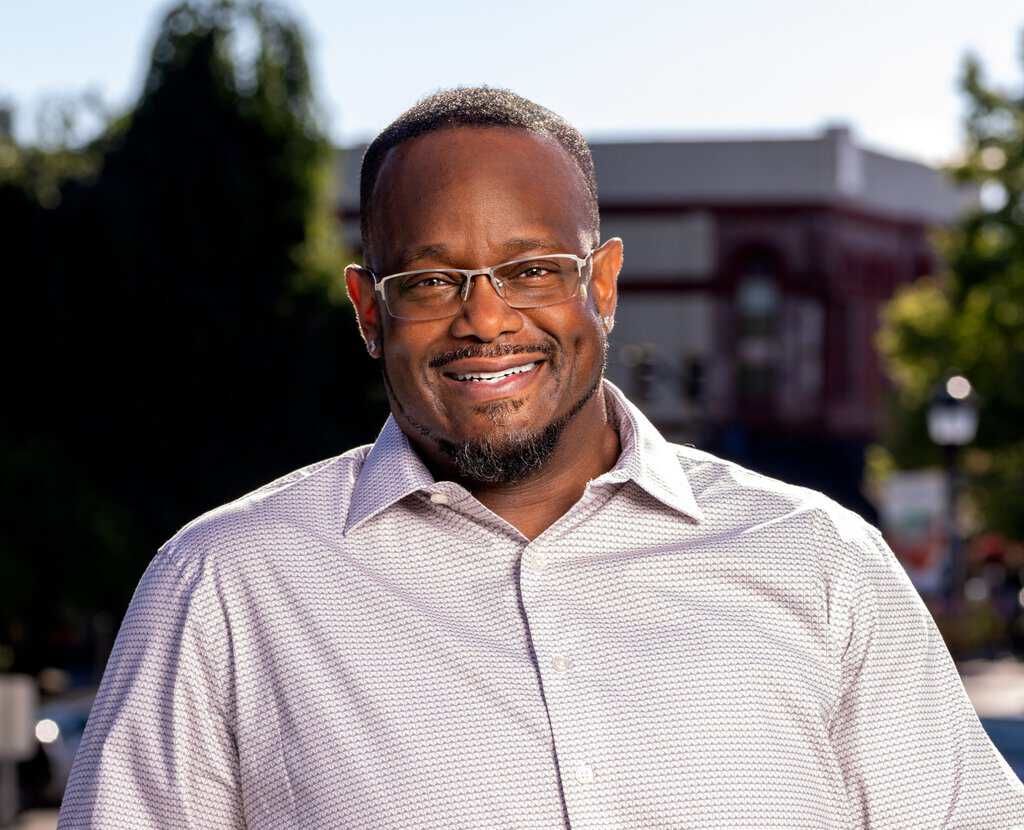
    Titonian Wallace Sr. headshot. Smiling and standing outside with a building in the background.

    Titonian Wallace Sr. is a community leader, business owner, and founder of Nesace Media who has built much of his work around representation, trust, and economic opportunity. He became the first Black Chair of the Washington County Chamber of Commerce in its 129-year history and helped grow Black business membership through the Black Advisory Business Council. He also created Hillsboro’s Juneteenth celebration and has worked to connect business leadership with real community impact. His work is rooted in making sure people feel seen, supported, and able to participate in spaces that have not always felt open to them.

  • Strategy and Solidarity: Theresa Logan on Racial Justice, Conflict Resolution, and Organizing in a Rising Fascist Landscape

    Strategy and Solidarity: Theresa Logan on Racial Justice, Conflict Resolution, and Organizing in a Rising Fascist Landscape

    Theresa Logan – Portland-based facilitator, trainer, and consultant – joins Kim Allchurch Flick for a discussion about “strategy and solidarity.”

    Logan describes her 20-year background in community organizing, public policy engagement, organizational equity, conflict resolution, and restorative justice, emphasizing analysis of race, gender, and power dynamics and using conflict as an opportunity for collaboration, racial harm repair, and trauma healing.

    She shares formative experiences: growing up in Portland after her teen mother moved the family there for college; early exposure to sociology concepts like gentrification and racial inequality; attending a predominantly Black middle school and being raised in a multiracial family; studying abroad (Guatemala, Spain, Cuba); a high school pilgrimage to El Salvador for the 20th anniversary of Oscar Romero’s assassination; and retracing the Cuban Revolution with a professor who fought in it.

    Logan recounts work with the Inter-American Foundation, immigrant families in early childhood development in Washington, DC, earning a master’s in conflict analysis and resolution at George Mason University, returning to Portland during the recession, and roles including bilingual field interviewing for the National Survey on Drug Use and Health, helping launch Oregon’s Foreclosure Avoidance Program, and working at Resolutions Northwest after its merger with Uniting to Understand Racism.

    She explains how racial equity consulting grew from repeated organizational calls about racialized harm and conflict, and notes that DEI became a buzzword, with her and Carlos focusing instead on human rights and racial justice and on shifting organizational outcomes.

    The conversation covers federal funding cuts and program shutdowns, hostility and legal challenges targeting DEI-related work (including a “Dear Colleague” letter that was appealed twice and rescinded), and the need to learn from history rather than treat current conditions as unprecedented.

    Logan previews a community learning lab, “Conflict Resolution for Anti-Fascists” (February 10–26), focused on lessons from revolutionary and anti-fascist movements and on choosing conflict strategies based on who is being moved, when collaboration is useful, and when it is unsafe with bad-faith actors.

    They discuss themes including stereotypes and immigration, the role of public data in journalism and public awareness, the Haitian Revolution and global anti-Blackness, the strain of chronic crisis during “the fall of an empire,” neighborhood-level mutual aid and organizing, and the importance of knowing one’s neighbors for resilience.

    Logan shares sources of hope: the miracle of life, long time scales and survival through past mass extinctions, her children, and younger generations’ self-advocacy and emotional intelligence; they also discuss human innovation, climate solutions, and comparisons of infrastructure investment.

    Logan provides ways to connect with Strategy and Solidarity (strategyandsolidarity.com; online community at strategyandsolidarity.org with free membership and sliding-scale offerings).

    Listen Now

    Time Stamps

    00:00 Welcome and Guest Intro

    01:39 Theresa Origins and Values

    05:26 Travel and Revolution Lessons

    08:21 Career Turns and Recession

    11:17 Building Racial Justice Practice

    14:50 DEI Backlash and Funding Cuts

    16:35 Haiti History and Stereotypes

    21:29 Conflict Resolution for Anti Fascists

    26:37 Empire Collapse and Mutual Aid

    31:03 Know Your Neighbors Strategy

    33:46 Finding Hope and Optimism

    41:28 Where to Find Theresa

    42:41 Dinner Guests and Closing

    Kim Allchurch Flick: Hello everyone. I’m Kim Allchurch Flick on the podcast today, with Theresa Logan. Theresa is a facilitator, trainer, and consultant based in Portland, Oregon, with 20 years experience in community organizing, community development, public policy engagement, organizational equity. Conflict resolution and restorative justice.

    She approaches all of her work with a critical analysis of the race, gender, and power dynamics that are present in every interpersonal conflict, every group and organization, and every social structure. Theresa’s deep holistic skill set offers clients and workshop participants, tools and frameworks for transforming conflict into opportunities for collaboration or in collaborative problem solving, creating strategies for mitigating and repairing racial harm and healing, personal and collective trauma in service of universal human wellbeing.

    Today we’re gonna talk about strategy and solidarity. And if a topic like this wasn’t needed anytime more than now, I mean there probably have been some many historically, but true to fact now is one of those times when you were an important person to have in the world.

    We met not because we were, I import, we’re both in Portland, Oregon. It was more accidental that I found. Strategy and solidarity, and we’ve never met in person online and I’ve taken the courses and I am dedicated to learning in the framework that you and Carlos provide.

    What has been your journey and the values that have shaped and guided you up to this point?

    Theresa Logan: I think Carlos, who’s my business partner and I were just driving back from a trip to San Francisco over the weekend and we were sharing even more of our life stories than neither one of us had known for an hour drive. So I’ve been giving this some thought about my journey and some of the things that got me where I am today.

    I do say in doing racial justice work as a white woman, that I’d certainly never do it alone, right? That I’m always working in partnership and collaboration with my colleagues of color, because that’s what’s required to, to combat these systems of white supremacy and patriarchy and capitalism is to be willing to be part of a collective when we’re so trained by society through movies and pop culture and all these things to be like the one, the hero, the answer, spend a lot of time arguing about whose opinion is right or wrong, to remember that we are all part of a collective. And so I think that is one of those values that’s driven me through my journey through, interesting experiences. Probably not unique in the history of humanity, but maybe not so common for someone of my background.

    I’d say I always go back to starting with being the child of a teen mother who moved us from Bend, Oregon to Portland, Oregon in 1989 so that she could pursue a four year degree at Portland State University because there was no four year university in Bend, Oregon at that time. And so I got to get a sociology degree along with my mother as a.

    A child from 

    Kim Allchurch Flick: Oh wow. 

    Theresa Logan: Elementary school through middle school. And so she often came home and told us what she was learning about at school that day, which was a lot about gentrification and racial inequality and how to critically analyze the world around us. My sister and I mostly sound really annoying.

    So I tell parents like, it may not land, but you are planting seeds and they may or may not develop in the way you expect, but when you’re a parent, you are planting seeds with your kids. And so having that critical analysis of the world around me was something, an amazing gift that she gave me at a fairly young age.

    And again, as a. White girl growing up in one of the whitest cities in America, in Portland, Oregon, in the nineties. I went to Harriet Tubman Middle School, which is a predominantly black school at that time. And so I had a cultural immersion without leaving my city. And I’d say from, pretty much from middle school, through college, lived in the whitest city in America, but did not have very many, if any, white friends.

    And I was also in a, raised in a multiracial family. So I myself am not genetically multiracial. And so I had that experience of being adjacent and within Portland’s black community for most of my life. And understanding those places where I found cultural affinity and belonging, but also the ways where my whiteness, just how to navigate that, right? Trying to understand what it was to be white in a black community and what it means to be part of that community while recognizing the ways that I will never share those experiences of living the experience of blackness and getting taught and learning how to stay in my lane and recognize, my privilege and my place and where I was overstepping and what’s just not for me, right?

    Because I don’t actually share that experience. 

    So I’d say those were pretty foundational experiences of my young life that set me up to follow my mother’s footsteps into a sociology degree. Among other things, I came out of PSU with about five or six degrees of learning. Yeah. So I did end up was very fortunate to get a scholarship from the Ford Family Foundation.

    Is here in Oregon outta Roseburg, not Ford cars, but the Roseburg Roseberg wood products Ford family who gives about a hundred scholarships a year to low income. And I underprivileged students in Oregon. And they pay for my entire undergraduate and a good chunk of my graduate degree.

    Part of that included being able to study abroad. I was able to take my loans and go spend a summer in Guatemala at a language immersion program to learn Spanish, and I spent a semester abroad in Spain, another semester abroad in Cuba. And so many things there. It’s gonna go back, I guess even before then.

    Probably one of the things that may have helped me get that scholarship is that I traveled with my, I was, I’m not very. Practicing Catholic anymore, but at the time, through our Catholic church, went on a pilgrimage to El Salvador when I was a senior in high school to, it was for the 20th anniversary of Oscar Romero’s assassination.

    And so we spent a week in El Salvador really traveling through all these places that had been involved in the Civil War and learning about what the. FMLN and the radical Jesuit priests and other folks who were really fighting for social justice and really brutally oppressed, had endured and hearing first person accounts from folks who fought in war.

    And as an American, civil War, revolutionary War feels so far away, like things that happened in the past, but really being in a place where folks had just, lived through that kind of brutal violence really gave me more of an understanding of, you know what we mean when we talk about revolution when Americans talk about revolution, it often is an abstract story that might be in a movie sometime, but when we’re talking about revolution in El Salvador and Nicaragua, and Cuba in Venezuela, like there’s a whole, excuse me, whole different lived experience of what that really means, what it takes to engage in that, and then what it takes to rebuild something on the other side that isn’t just replicating the harms of the past. So that was a pretty foundational experience. And then I when I was in Cuba, we were an amazing group led led by a Chilean expat who we landed in Havana and the next day we hopped on an old Russian plane and flew to the other end of the island in Santiago, and spent the next two weeks retracing the steps of the Cuban Revolution across the island with a professor who himself had fought in the Cuban Revolution.

    Again, just a really amazing, like visceral voyage through history. That helped me understand a lot about strategy and solidarity and what it takes to create not just reform of an existing social system, but to truly enact a revolution that tries to set up something completely different.

    And how often are our dreams and aspirations, many things Cuba has achieved and also many, many challenges. Along the way especially right now. I met my ex-husband in Cuba and so I married into a Cuban family and still have family on the island.

    And again, seeing what our family over there is enduring. Though I got divorced, we have three kids together and I still consider all his family. My family, again, a different level of understanding. When we talk about struggle and hardship here in the States, I’m like, well, we got running water and electricity all day long, so we’re doing pretty good.

    So I’d say those have all been fairly foundational experiences in my life that really put me on a path of thinking about strategy and solidarity. Lots more. I could say I was a community organizer in college. I went and worked at the Inter-American Foundation after college supporting grassroots community development projects in Latin American and the Caribbean I worked with, immigrant families doing early childhood development in Washington, DC when I was in grad school getting a master’s in conflict analysis and resolution at George Mason University. And then somehow I found myself back in Portland, Oregon. Unemployed as a mother welfare said, how did this just happen? I’ve been traveling the world and doing all these things.

    I was a professional in DC living my best life, and then all of a sudden I was in my mother’s basement, unemployed with a baby in my marriage on the rock. And it was 2008, so we’re in the middle of that. Or no? Oh yes, 2010. It wasn’t 2008, it was 2010, 2011 and we’re in the middle of the recession.

    So I had a fresh master’s degree. I was ready to go out and get a master’s level job and no one would hire me in Portland for anything. So it was a really humbling moment after having had all these experiences and a lot of professional su success in my career up to that point. I ended up working part-time for the national Survey on drug use and health as a bilingual field interviewer, and as I’m naming all these places, almost none of them exist anymore as of 2025 because they’re all programs have been shut down by the Trump administration, the Inner American Foundation. Oh my. There was a suit in place to try to get it restored, but they’re a very small agency compared to U-S-A-I-D, but they were shut down the same way U-S-A-I-D was.

    Last year, the national survey on drug use in health, I think has had most of their funding stripped away. And that’s really where we get most of our information and data about how many glasses of wine per day people have, or how many kids have tried this drug or that drug. It gives us really important information that helps us plan public health and policy.

    So I think most of that’s been shut down. I was just like, yeah, in one year I think they shut down pretty much all the funding in every job I ever had. I am sure they’ve shut down the funding for early childhood development and those sorts of things. And let alone, instead of trying to support our immigrant families, people are hunting them down in the street regardless of the circumstances of their arrival or what could be waiting for them back home.

    Kim Allchurch Flick: Wow. 

    Theresa Logan: Yeah. And then I moved on to work at the Oregon Foreclosure Avoidance Program and help set that up as we’re coming out of that recession to help homeowners, find strategies for moving forward. ’cause the banks are so terrible that they’re just like, lose your paperwork and not process things and you couldn’t talk to anyone on the phone.

    And so Oregon in instituted this program that required the banks to meet in mediation. And while they weren’t gonna come up with some magical solution to save people’s homes, if they could not afford to continue paying for them, it did require them to show up and be accountable. And make sure that they were processing paperwork correctly, that they were following the law and hold them accountable without putting all that burden on homeowners alone.

    We’re in the middle of crisis. I’m not sure how to navigate it. And then I got hired after several years of volunteering as a mediator and facilitator at Resolutions Northwest, which was I think maybe still has one small mediation program going, but has also lost a lot of its funding local organization doing mediation Center.

    And they had just merged when I got hired with Uniting to understand Racism, which was running kind of a nineties style. Racial awareness dialogue program. And the merger really infused everything r and w was doing with a focus on racial equity. And so we were doing public engagement facilitation for the city.

    A lot of conflict mediation. But more and more we started getting calls from people who were. Either having racialized incidents or incidents of racialized harm at the organization and needed someone to come help them figure out how to move through that in a restorative way.

    Or people were trying to move forward racial equity work and encountering a lot of conflict in doing that. So we started getting a lot of calls for conflict resolution, specifically around racial justice and racial equity issues. Our consulting work really grew out of that. We didn’t start off.

    And Carlos and I who now have our own independent practices did not start off ever thinking racial equity consultant was a job. I don’t know that it still is in 2026, but it really grew out of working at a conflict resolution center with a racial equity, racial justice focus, and then getting a lot of calls from folks and a lot of conflict.

    Because working for racial justice does not minimize conflict. It tends to exacerbate conflict in organizations. Like getting the puss out of a wound. Like you gotta clean out the gunk that’s in there if you’re gonna let it start healing. Otherwise it’s gonna keep 

    Kim Allchurch Flick: right, 

    Theresa Logan: Getting more infected and growing.

    And so after getting a number of those calls and working on a number of those cases, we started to just recognize the systemic patterns. And so we were able to work with organizations more intentionally around. What are the systematic approaches to mitigating and minimizing harm and inequity in organizations?

    And also increasing not just increasing diversity for diversity’s sake, but increasing the skillset and lived experience and appreciation of what folks who have historically been excluded from the places and positions of power bring to an organization and how to. Bring people in and make the most of their experiences and not tokenize people or, sideline them or traumatize them because they’re not agreeing with your limited perspective.

    And so we left resolutions northwest around 2019. Weren’t necessarily expecting to work together for, but had one client contract that we picked up together on the way out the door. And I have continued to find a lot of success together, working with mostly public agencies and nonprofits to transform their cultures, to support leaders.

    And again, not just being more inclusive, but being very strategic in in, in shifting their outcomes. There’s a, we, diversity, equity, inclusion were never our favorite words because they became very buzzwords. There’s a lot of performative things happening around DEI that weren’t actually shifting outcomes for staff of color or customers, clients the communities of color that, that right agencies work with.

    So our focus was always more on human rights and racial justice. And so we’re able to work to transform systems and cultures to shift their outcomes fairly successfully over the past six and a half years to ago. Six and a half years. It’s a little rough right now in 2026. There’s not a, certainly not the boom of DEI contracts and commitment that there was in 

    Kim Allchurch Flick: indeed 

    Theresa Logan: 20 21, 20 22.

    There are people who are still deeply committed and because of federal government has shut down so much funding for so many social programs across the board. It’s just created such a budgetary crisis for everyone, everywhere. I’m not sure about other states. I’d say in the Pacific Northwest and probably most of the West Coast, there’s still a deep commitment, probably 80.

    When we go into organizations, 80, 90% of people would tell us that understanding racial equity is essential to their job. Not important, not interesting, but like essential. Essential, what they’re trying to do, absolutely essential. And that commitment and that understanding is still there, but the funds to bring in folks who have the expertise to help shift those systems to do that just aren’t there.

    So we, we do see people still making an effort, still moving where they can and there’s just so much hostility trying to shut things down with legal challenges. Some of those have been one, there was an important one recently where the Department of Justice and Department of Education dropped this dear Colleague strong arm tactic they were trying to use to intimidate school districts away from any kind of anything that could be related to what they call DEI, which is don’t ever talk about people of color or women.

    But that they lost an appeal twice on that letter, and so they’ve dropped it and rescinded it. They’ve done a lot of harm in the process. But the legal challenges aren’t always catching the headlines, but are successful. So that’s a very long but also short version of my path and where we’re at today.

    Kim Allchurch Flick: And so impressive, so relevant. So. Interesting and intriguing, and there’s a couple of things I’d dislike to summarize that pop up for me as also it’s, I grew up overseas, but not in not in Latin America at all Holland, Belgium and England, but still outside the US and different, and being exposed.

    To different cultures. I think, has really helped shape my world views particularly, even though I didn’t realize it was when I was a kid. But looking back, it really frames things. And you said a couple things that are super important about the importance of history and what does revolution mean and tracing someone’s steps.

    And when you were saying that, it popped up a story I heard on NPR yesterday about. Haitians in Springfield and someone was talking about the Haitian community that is afraid that they will be deported back to a country that has no infrastructure or very little gangs. It’s very dangerous. And the stereotypical assumptions of who the Haitian people are and the local people who live around them are saying, no, you’ve gotta understand these people had their leader assassinated.

    Have had earthquakes, have had so many things happen, and the people that left the country, not because they wanted to leave their home but for survival are the doctors, the lawyers. And they said the brilliance and the capabilities that have brought been brought into that community are being welcomed by a lot of the local people.

    And we’ve gotta get past. That’s why I’m so anti stereotype. It’s so wrong. And you also talked about data, and I was thinking when data is shut down, journalism doesn’t have as much to work with and flow of data shuts down, then a population is somewhat blinded. And when that happens, that’s where historically and understanding history, this.

    These chapters have been written before and absolutely many times over. And to recognize that if we recognize it and with the kind of work you do should help us put the guardrails up early instead of saying, oh, that happened before it’s happened again. Stop the cycle before it gets worse. 

    Theresa Logan: Even with Haiti, we can go all the way back to Haiti was the first country to successfully stage a revolution in the Western hemisphere, post colonization.

    They were the first independent nation in the Western hemisphere, the Haitian Revolution. Yeah. And the anti-blackness and the fear of black liberation drove so much of colonial policy in the rest of the Americas and the US in particular. Fear of but they’re gonna come here and do the same thing.

    That’s why we have to keep these people enslaved and keep them in line. Like the way that Haiti was used as a cautionary tale for the rest of the Americas. Yes. And the way that the, you know, difficulty Haiti finds itself in today is an entirely a function of the way Haiti was. They didn’t call it an embargo at the time, but held responsible for paying reparations to France for its own freedom.

    Cutoff from global trade by the rest of the colonized world. It’s not an accident that, oh yes. Assassinations. Who was involved? How has the US and other countries, influenced what’s happened in their politics, but also just the global anti-blackness that really made Haiti a pariah in the middle of colonization when the global powers, European powers were trying to hold onto their colonies and the rest of the hemisphere.

    The US and other countries that were engaging in the slave trade, were trying to protect their property, their ability to traffic human beings, and it just, the, it feels so appalling to see the Epstein files and all these things coming out, but the threads go directly back. It’s not hard to see where they go back to.

    How much exploitation happened in, in the Caribbean islands when Yes. Where, that’s the place where Columbus first landed, right? Was Haiti. And we call the whole island Espanola because of Haiti and Dr two different countries on one small island, but Id was the name, the indigenous people called it and the havoc and just atrocities that were wreaked on the indigenous folks there by the first colonizers.

    We are still paying for that today. Haiti’s still paying that for that today. We’re still paying for that today. 

    Kim Allchurch Flick: Yeah, in human lives in many other ways. And your perspective also about how it’s important to recognize what we have compared with people who are living without running water and electricity.

    There’s a lot to work with here. I was wondering how this wonderful arc of your very young life so far and and that knowledge of history is shaping what you’re doing now. 

    Theresa Logan: How is it shaping what we’re doing now? Right now and I’m not sure when this will broadcast, but next week, starting February 10th through 26th, we are running a community learning lab called conflict Resolution for anti-fascists.

    And a lot of what we’re trying to do there is draw on these lessons from the past, from history of other revolutionary and anti-fascist movements and look at what lessons we can learn and how can, how we can apply that today. There is among a certain mainstream population of the United States, a lot of this is unprecedented and it’s all fallen apart and we’ve never seen anything like this before.

    And I understand where that’s coming from, but it’s absolutely not true. And re trace these patterns all the way back through the entire history of this country through the entire history of European colonization, of the Americas. And so to not fall apart because our level of expected comfort and ease is falling apart.

    But to find ourselves to find strength and lessons and all of the many freedom fighters who have come before, Harriet Tubman, who with a very severe disability, freed like 800 people from enslavement, 750 of them in one raid that she led during the Civil War. Yeah. So many, right? So many lessons.

    Hatuey was a Eno indigenous leader. When Columbus and them landed and he fled Haiti to go to Cuba to warn the Taino folks in Cuba that those Spanish were coming. And then he led a gorilla warfare for several months. So tried to fend off the Spanish and do everything he could to get them out of Cuba.

    He was eventually caught and burned at the stake, and while he was on the state, the Franciscan friar is like, do you wanna like claim Jesus Christ as your Lord and Savior so you don’t go to hell? And he was like, are the rest of these Christians gonna be there? He was like, yeah. He’s like, absolutely not.

    Send me to hell. I don’t wanna be anywhere y’all are ever again. So it’s like there’s no 

    Kim Allchurch Flick: recognizing recognition of what’s real. 

    Theresa Logan: Yeah, absolutely. And we can carry that thread of those horrific acts of violence and acted on indigenous people in the Caribbean when the first Europeans arrived.

    Absolutely follow through to people who will sit in Christian churches today and not do a, not do anything to support people who are being harmed in the street. Like these threads carry through, they’re not brand new. In this conflict resolution for anti-fascists, we’re looking at history to learn those lessons and to remember, we don’t have to start from scratch.

    We don’t need to rebuild the wheel. We’ve been doing this and black and indigenous folks in particular have been doing this since the, arrival of the colonizer age. And if we’re willing to sit back out of our own narrow perspective and recognize, where we are, how we got here, and who has been fighting this fight already.

    Then we can’t pick up the torch that they’ve left us and carry it forward instead of feeling like we have to start some brand new thing now. So that’s one part of is history. The other part of is really thinking about how we engage with conflict. We have terrible conflict resolution skills in our society overall.

    It’s a lot of based on domination and control and how can I force others to get my way.

    Kim Allchurch Flick: Indeed. 

    Theresa Logan: And so we’ll be talking about how we engage with conflict specifically in the. The current, rising fascist landscape, it requires different tactics. But if we only go to the old standbys of

    Try to yell until I get my way or go to violence, it just escalates into more violence. But to really think about who am I trying to move and what’s the best way to move them? If I spend all day yelling at people who have an entirely different worldview and understanding and do not care about the things I care about online, I’m probably not gonna move them anywhere, but deeper entrenched into their point of view.

    If I also just spend my time arguing with the people who I’m trying to build with until I get my way, because I think I know the right way and they’re wrong, we’re probably not gonna build a very effective movement. So thinking about where collaboration is helpful, where collaboration can lead to abuse and harm.

    There’s a kind of basic conflict resolution methodology. Assumes that everyone’s moving with, good as good enough intentions to meet a basic need and working in good faith When you have people who are actively trying to cause harm to others, just kidnapping people off the streets want to imprison people for profit and want to strip people of their rights, like that’s not the time to collaborate.

    We will end up getting harmed and abused because they will weaponize and take advantage of our good faith and willingness to be thoughtful and empathetic and creative. So thinking about what strategies work, where and how and to what end. 

    Kim Allchurch Flick: And I am delighted that I signed up for it. I think there’s always something to learn, even though I try to continuously learn and apply, there’s always something to learn and to put good use of the lessons that you teach.

    So I’m very impressed by that. And we’ll put that in the show notes as well. And what. What problems are you seeing in your work and in the community and solutions that you’re able to use for you and your work and also the solutions you’re providing for others? 

    Theresa Logan: Oh, the problems. The problems. We’re living through the fall of an empire and we’re living through the fall of an empire.

    In a culture in which we’ve been taught to be like prioritize individual success and failure, right? And so living through the collapse of an empire and then feeling like it’s my fault that I’m struggling to keep my bills paid while the economy is crumbling around me. So I think that’s one of the biggest issues I see is just like everything is changing.

    For the better in the immediate term. I hope that in the long term there is the potential to take the transformation that’s happening in this time and push it towards that just and thriving future for all that we’re working towards. But it’s gonna be very challenging in the short term. And so just getting to a place where things we’ve taken for granted are not going to be reliable anymore is a really hard place to be for folks.

    Human beings tend to be really good in a crisis. Like in an acute crisis, natural disaster, something like that, we can come together and do the most amazing things for each other. We have a lot harder time working through like chronic sustained stress and trauma because it just becomes too much. And so I think as we’ve seen a Minneapolis, the, I’m not even gonna call it silver lining, I’m just gonna say the like honest human response.

    To the occupation of a city has been all of this really incredible organizing. And it’s not to romanticize or pretend like it’s not taking a very high toll on folks there because it is, but we can also see what we’re capable of, right? Which is of this like self organizing and just small neighborhood level units who are taking whatever action they can to protect their neighbors and themselves.

    Not that they’re a hundred percent successful all the time, but they really are. Making a difference and building the kind of cohesive web of relationship that we need to move through the compounding and continuous crisis we’re probably like to see for, at least the next decade, maybe more.

    How things go. So that’s part of the problem and it’s just, when everyone is struggling, it’s harder to feel like we know how to support one another. If mostly everyone’s, got a job and one person loses their job, we can do a GoFundMe and help that person get their rent paid.

    But if nine of the 10 of us are out of jobs, we can’t pay our rent, then, it becomes a lot more challenging. So I think that 

    Kim Allchurch Flick: absolutely 

    Theresa Logan: scarcity of money, resources is gonna be a big challenge for folks right now. I think that will force us whether we want to or not to turn to the abundance of other resources available to us and human connection and connecting with the earth and figuring out how we make do with less than we’re accustomed to.

    But it’s not gonna be easy. It’s not gonna be fun. And I think that interconnectivity and return to recognizing our relationship as part of the earth. Not just ants walking on it, but as like the ants, one of the fabulous creations that the earth has made, pretty much a sent mud walking around out here.

    Those are things that will allow us to create something different on the other side. I don’t know that I will get to see it, ’cause I think it’ll take several generations to get there. But I. I am finding hope in recognizing myself as one chapter in this great long story going back to Hati and Harriet Tubman and John Brown and 

    All the folks who’ve come before they played out their chapter and I’m playing out mine and hopefully leaving something for my kids to continue to work with. 

    Kim Allchurch Flick: Indeed. And you’re making me think about what it’s like to be in arcs of history and. How history speaks. And now I’m hearing stories of there’s an example of someone who’s lived in an apartment for seven years and doesn’t know any of their neighbors and decided to knock on doors and say, how are you?

    And put a QR code, print it up in elevators and say, do you wanna connect? This is the, how can we do this? And sometimes that grassroots power, small, mighty. Very local can be transformative. And I’m also hearing how much that our words do matter and in ways that are expressed, where it brings in the masses and the collective of those voices really does something.

    Theresa Logan: Yeah. 

    Kim Allchurch Flick: And we. Go ahead. 

    Theresa Logan: We’re so socialized into this like instant gratification, hero culture of some, no, someone needs to go out and make a stand and do the thing, and that will change everything tomorrow. And I think maybe ’cause of the way we’ve made story made movies about like the civil rights movement and things like that.

    Without understanding the years and amount of organizing, relational organizing, strategic planning that went into those movements, that it was not just a spontaneous protest. Rosa Parks didn’t just not feel like moving that day. That was a planned effort. She was chosen very specifically because she was light skinned and pretty and would be a more what do you call it?

    A victim we would have more empathy for than if she was a older, darker skinned woman or something like that. There’s, there was strategy there, there was planning, there was many years of thought going into this or other people who had refused to move before and it didn’t lead to the whole Montgomery bus boycott.

    There’s a great deal of planning and strategy that go into these things. And so trying to help folks realize that it’s not just, well, I want it to change so it should change. ’cause that’s not how we get change. Right. But there is a lot of entitlement we hold as Americans about des deserving and demanding to get our way.

    And so breaking out of that and realizing it’s not about being a hero or starting the, the general strike that will change everything tomorrow. It really is what you were talking about of do you know your neighbors? If the lights go off, who can you go get a candle from? Or how are you gonna stay warm if there’s no heat in your entire building?

    Those ways where it’s like, how are we gonna get through challenging crisis together? And once we, when we know our neighbors and we have conversations and we can start to build that capacity for strategy and solidarity and organizing, and I say these things not to discourage folks from going out to protest or do whatever you can do today.

    Absolutely do that and make sure you know your neighbors also. There’s been so much. Especially since COVID and even before, so much movement towards virtual communities of affinity around, political ideology or special interests or whatever that we found ourselves with in, in these small groups of like-minded people or large groups of like-minded people through virtual connectivity, which is beautiful.

    And there’s also a way where it’s started to, detach us from connectivity with the folks we’re actually in physical proximity to which if things get real bad and the lights go off and there’s no more internet are the ones you’re gonna depend on for survival. So for me, I always tell people, you wanna see the revolution happen?

    Go make sure you know your neighbors. Start there. Start by talking to your neighbors and finding out what they need, what’s most impacting them right now. And don’t just, throw them out because their concerns don’t immediately align with yours. But start looking for that, that shared common ground.

    That, that does connect you in physical reality.

    Kim Allchurch Flick: You wanna start the revolution, get to know your neighbors. That’s so quotable. I love that. With all of this, what makes you optimistic? 

    Theresa Logan: Oh

    I struggle with that one. I can go back and forth. There’s some days where, like today and we’ll set aside. Should not be this warm and sunny in Portland, Oregon in February. But the sunshine, I saw a hummingbird in the yard the other day and there’s like chaia trees, which I had learned are actually supposed to bloom in the winter.

    And it’s not just climate change causing them to bloom right now. Going outside and filling the sunshine on my face and the wind blowing through my hair and just remembering that I’m alive in the world is such a miracle that any of us are here, that anything exists at all. Given what we know of, the rest of what we can see of the universe, like the fact that this much life exists here on this planet is just miraculous.

    So that gives me hope, right? There’s been, not everyone finds this comforting, this works for my brain, but to look at the vast scape of scale of time, of life on this planet. It has been five mass extinction events before we even got here. Life still succeeded, right? Five times we’re like 90, 99% of life got wiped out on the surface of the Earth.

    And that 1% that survived is what gave birth to all of this that we see here now, including us, right? And so that place of I don’t know if humanity’s running out the clock. We may be done. Maybe we deserve to be, I don’t know. On good days, I don’t think we do on bad days. I’m like, maybe. But to know that maybe plastic eating microbes will become the next, dominant species on the earth.

    Clean up the mess we made. I don’t know. And I don’t need to know for me in my own spiritual understanding of the nature of life. I find that comforting in a way that’s not just about me, it’s about I have this incredible opportunity to be here today. How do I make the most of it?

    I don’t know what’s coming next. I have no control over the evolution of humanity and whether we do or don’t save ourselves from climate catastrophe. 

    I will do my part where I can to try to push things the way I would like them to go. As I did in the last presidential election, it did not go my way.

    And yet we are still here and I have three amazing children and. My job is help them hopefully still get to live out whatever life is calling for them to be and do in the world. So those things give me hope. They’re pretty incredible, even just in one generation. I look at the difference between how I understood the world and many of the dumb mistakes I made as a teenager, largely based on my socialization as a woman in the society and be.

    The awareness my children have about grooming and pedophilia and what’s right and what’s wrong, and they understand a lot of dynamics. I was still, I’m 43, I’m like on the cusp between Gen X and millennials. I don’t consider myself a millennial, but I’m definitely not real Gen X either. I was, I graduated in the year 2000, so I consider myself generation class of 2000.

    I really am on the cusp. I have a lot of things in common with Gen X, a lot with millennials, but I really don’t identify with either. Anyway, in my era, we were still very much socialized into this, like older men, younger women. That was like desirable or romantic for younger women to have relationships with older men.

    And my kids are disgusted. I don’t know if you remember or ever watched Buffy the Vampire Slayer, but it’s like a 300 year old vampire with a 16-year-old girl. And my kids were aghast. I was like, none of us had that response in my era. I don’t think. It was just like, oh yeah, of course. My kids have no patience for that.

    They’re such good self-advocates. They’re so self-possessed that they give me a lot of hope and optimism for the future and see a lot of, it’s not perfect. That’s not every young person, but I see a lot of hope in our young people who have so much more and emotional intelligence, ability to self-advocate and are not interested in going along with systems that don’t make sense and are not just.

    Kim Allchurch Flick: Oh, I love that. And it also makes me think that, these brains are gonna continue to do incredible things, be inquisitive and also be innovators of solutions. And that’s one of the things that keeps me optimistic is even when things feel like they’re falling apart, I learned that somebody’s creating something new and it’s gonna be amazing.

    And in Portland we have a lot of. Innovators, there’s clean tech and there’s other incubators of people that are starting things and it’s encouraging. They’re not all gonna make it. Starting a business is hard, but they’re creating solutions to longtime problems and it’s pretty, pretty fascinating.

    Theresa Logan: Absolutely. I think I have that and I, I do have a Pisces Sun, so it gives me a positivity bias, but. I do just see there’s we’re so incredible humans. Like the things we can create, are just there’s, we can absolutely solve climate catastrophe. We probably create more problems in the process because that’s how it goes.

    But if we just invested our resources there instead of lining the pockets of billionaires and creating plagiarism machines that make people dumb. ’cause they stop thinking for themselves. You know, we could do so many things. And those are the days I feel less optimistic is like, why?

    Why are we not all choosing that? The answer seems so simple and I struggle with that one a lot on the hard days, but 

    Kim Allchurch Flick: sure. 

    Theresa Logan: On the good days, I think, life is pretty incredible and Sprout will always grow. 

    Kim Allchurch Flick: Oh, I agree with that. And also it depends on where we look. I was just listening to NPR today, the man who knows China very well and he was, he lives in San Francisco.

    He was talking about how current, since COVID onwards, such a short window, the infrastructure that has been invested. Into China for transportation. They’ve been leapfrogging wind to go to solar. The forecast in a book called, here Comes the Sun, is that they’ll have much cleaner air in 10 years than any other city, even though they’re still really bad now.

    But they’re knowing and that the difference he sees between the US and China is both countries are very wealthy. How that money is directed into infrastructure for populations and how they’re doing it. So well. I said, wow, we should take a chapter outta this book. Take a look. How could it be any compared it to San Francisco and the Bay Area, just in terms of transportation.

    And it says it’s night and day difference, even though the money’s there and part of it is how it’s allocated, but also how it’s used and. He said that the US is good at litigating and China is good at creating and building infrastructure. And maybe that’s another place where our voices, locally can matter.

    And I also have heard that if we call our Congress people and senators as business people, and the first sentence is, I’m a business owner. There’s some real weight to that and I got that from Oh, interesting. Camilla Taylor of the American Sustainable Business Network, which is a nonprofit that advocates and supports for businesses and also builds in a lot of equity into that.

    So I think we’re also in, in networks that we can connect to and create a web of these thing, same thought processes and be grassroots about it, but do some big things. And I think you’re part of that the strategy and solidarity and the anti-fascist upcoming program that, that you and Carlos are holding is part of that, pushing needles, helping other people along.

    It’s transformative. 

    Theresa Logan: No, thank you. 

    Kim Allchurch Flick: Thank you. Is there anything else you’d like to add?

    Theresa Logan: Oh no. I’ve said a lot. We talk very fast. This might be one of the times where you have to slow down the podcast instead of speeding it up. 

    Kim Allchurch Flick: No, I think we’re doing great. And how can people reach you? What are the websites and the socials where people can reach you? 

    Theresa Logan: You can learn more about the strategy and solidarity collective@strategyandsolidarity.com.

    You can join us in our online community, it’s strategy and solidarity.org. We have a free basic membership to join our community. We have a sliding scale for the conflict resolution for anti-fascists coming up next week. And we have other offerings over the course of the year where we are trying to build community and strengthen our ability to find strategies and build solidarity and create that world.

    Not in one, centralized economy way necessarily. But in that beautiful way of if we let everyone do their own thing, we all have a lane, we all have a gift, we all have something to offer to this world right now. And if we can do that while also coordinating our actions together. We can create a lot more than if we’re each just trying to start our own thing.

    Kim Allchurch Flick: I love that. Thank you so much. And the closing question is, if you could have dinner with up to three people living or deceased, who would they be and why?

    Could be one, could be two, could be so hard to 

    Theresa Logan: pick. I’m thinking about all these people on our flyer for the thing from history and oh, there’s so many people. And I’m like they wanna have dinner with me though. I don’t know. I think I would like Tui Harriet Tubman and John Brown. I could invite a lot more people to this dinner party, but I’d start there and just see what lessons I could learn from there.

    Really radically different, understandings of time and place, but also still entirely human right. And what, we have a way that we exoticize the past as much as we exoticize other people’s and cultures. It’d be really fascinating to be able to see what, how they framed their understanding of their experience and what parts of that would be radically different and what parts of that would be really useful to shifting our perspective.

    Kim Allchurch Flick: Now that would be amazing. Thank you so much. It’s been a pleasure to spend time with you. This is Theresa Logan and Kim Allchurch Flick signing off. Be safe out there. Thank you. 

    This Episode’s Guest: Theresa Logan

    Theresa Logan - Subduction Consulting - headshot

    Theresa Logan is a facilitator, trainer and consultant based in Portland, Oregon. With 20 years’ experience in community organizing, community development, public policy engagement, organizational equity, conflict resolution, and restorative justice, she approaches all of her work with a critical analysis of the race, gender and power dynamics that are present in every interpersonal conflict, every group and organization, and every social structure. Theresa’s deep, holistic skill set offers clients and workshops participants tools and frameworks for transforming conflict into opportunities for collaborative problem solving, creating strategies for mitigating and repairing racial harm, and healing personal and collective trauma in service of universal human wellbeing.

  • How Competency Checking and Race Collide at Work with Shari Dunn of ITBOM LLC

    How Competency Checking and Race Collide at Work with Shari Dunn of ITBOM LLC

    Kim Allchurch Flick interviews Portland-area author and consultant Shari Dunn, whose book “Qualified: How Competency Checking and Race Collide at Work” examines how systemic anti-Black bias shapes workplace decisions. Dunn describes her Milwaukee working-class upbringing, varied career (attorney, news anchor, professor, nonprofit leader), and how Portland has offered unexpected community. She cites political backlash, fear, and confusion about DEI, stressing DEI as a workplace initiative distinct from civil rights law and warning against unrealistic expectations. Dunn explains “competency checking” as holding Black people and other marginalized groups to higher standards for hiring, advancement, and retention, rooted in history and myths of meritocracy, and argues solutions should focus on changing systems and communication rather than “unlearning” people. She discusses truth denialism, the need for accurate history, highlights Dr. Marian Croak’s VoIP contributions, and shares optimism from growing public willingness to name white supremacy and engage civically.

    Listen Now

    Time Stamps

    00:00 Welcome and Guest Intro

    01:42 Shari Journey and Values

    03:57 Community and Portland

    06:05 DEI Backlash and Confusion

    09:50 History Truth and Critical Thinking

    14:41 Reimagining the Future

    18:54 Innovation and Hidden Figures

    20:14 Competency Checking Explained

    22:35 Why Anti Black Bias Persists

    23:42 Meritocracy Myth and Class

    25:22 Workplace Bias and Shifting Standards

    26:59 DEI Beyond Unlearning

    29:41 Groundhog Day Racism Toll

    32:00 Pragmatism and Translating Worlds

    34:47 Questioning Power to Move Forward

    35:42 Reasons for Optimism and Activism

    40:13 Where to Connect and Closing Reflections

    41:23 Black History in the American Story

    42:53 Dinner Guests and Farewell

    Kim Allchurch Flick: Good morning everyone. This is Kim Allchurch Flick. I’m here with Shari Dunn and I’m so excited about this episode. Shari Dunn is an author, consultant, and strategist who brings a legal communications and equity focused lens to helping organizations address systemic barriers at work. She’s the author of Qualified How Competency Checking and Rates Collide At Work, a Harper Collins.

    Business titled Shortlist for the S-A-B-E-W Best in Business Book Award. A former attorney and media professional. Shari is known for translating complex issues around race, power, and decision making, and declare actionable strategies for leaders. Her work focuses on embedding equity into organizational systems, leadership practices, and communication, not treating it as a side initiative.

    Today we’re gonna talk about competency, checking the invisible system, shaping modern workplaces.

    What a great title and what an important topic. 

    Shari Dunn: Thanks for having me. 

    Kim Allchurch Flick: Thank you. So we both live in the Portland area. Yep. And I met you through LinkedIn and have been a follower. I’ve read the work, read the book, and so excited.

    And we’ve met in person a couple times and I’m very honored to have you here to talk about the issues at hand. This is February, 2026, and also your writing and your worldview. 

    Shari Dunn: Well, thank you. I’m always glad to be anywhere. Actually, I’m gonna snag a copy of my own book just in case there’s a question I wanna answer.

    Kim Allchurch Flick: I have one, my one on my bookshelf as well. So for the listeners and I, tell us about the, your journey and the guiding values have had along the way to this point. 

    Shari Dunn: Oh wow. What a question. My journey, I am from a working class family in Milwaukee, Wisconsin. Both my parents were union people.

    I grew up in a working class black neighborhood, which I always tell people the world seems to edit out of existence. So there’s either wealthy people like the Cosby Show or you’re super poor, like good times, but there is a whole world of working class. Black people who worked, factory union jobs and those values that my parents especially my mother, gave me about showing up.

    These are uniquely, I think, Midwestern values in a lot of ways. Being as good as your word, doing as best you can and speaking plainly about what you mean. And the older I get, the more I realize how much the Midwest shaped me as a person. Although I’ve lived many places.

    I’ve lived in New York and I do consider myself a spiritual New Yorker ’cause I love the directness of New Yorkers. I’ve lived on the West Coast, down south. East. 

    Kim Allchurch Flick: Yeah, 

    Shari Dunn: north. And now I’m in the Pacific Northwest. And but still at my core there is this Midwestern dynamic. And then also my parents were not highly educated people.

    I mean, they both went to high school, but they ne they were very good at communicating that. To be black in the world was not less than and also good at translating a lot of those messages that black children do have to get growing up in a society that does not value you. So that once you’re an adult, those things don’t.

    Hurt you. So, I, I tell people it’s like an inoculation that, that black parents have to kinda give their kids to live in a world that is going to question you a lot. So I was a practicing attorney for several years. I was a news anchor. I’ve been an adjunct professor. I’ve run a nonprofit, and now I run my own consulting firm.

    Kim Allchurch Flick: That’s a, that’s amazing. Thank you for that history. I truly appreciate that. And with that, how has it shaped your local and worldviews and how do you view community? 

    Shari Dunn: Yeah. It’s very interesting. Community for me growing up was my family. Me and my mother had a very big family, and so I had, I have, I don’t know, I have more than 61st cousins, I had a large family and then my mother’s. Ex my mother’s cousins lived in Milwaukee and my grandfather’s siblings, most of them. And, so this is a large worldview of people who I was related to. That, that was enough community, that was a lot of community of people.

    And then I would say, and I’ve said this to people, and people find this, I think surprising, Portland, Oregon, of all the places I’ve lived, has been the most community. Engaged place that I have ever lived, actually. I know that in chicago and in New York where I live you find your pockets and you can do that.

    But Portland is more, come on, come be a part of this community with us. Which is really, it starts with things like partners in diversity say, hey, right? Like welcome to Portland. There’s these little touch points. And then, for me, I think I have found one of the most robust black communities as far as a community that intentionally tries to create that in Portland.

    And I know a lot of people would be surprised by that, but you know, that’s how I found it. 

    Kim Allchurch Flick: Yeah, and I, we are so different. I grew up in Victorian England with grandparents who were very, very, very Victorian. It’s small family and we know each other, but everybody’s very disparate. But I would say the same thing about Portland and the black community has been engaging to me as well, white woman.

    And I’ve found so much innovation and. So many interesting things happening in the community and I really enjoy learning more, but it also seems like Portland is making some progress with initiatives as well. And so I’m glad you’re in Portland. What are some obstacles and challenges that you see in your work and for the people you serve and community?

    Shari Dunn: The biggest obstacle right now is the political environment. There is fear, a purposeful fear being run through the land as well as confusion. There’s just a lot of confusion. I have to say that people are super confused about what they can and can’t do. There’s a lot of fear, and then there are people who, were teetering anyway about inclusion, so.

    It’s it’s really complicated and it’s, I, my specialty I’m beginning to realize is really the business world. And the way it should and could, address diversity, equity, inclusion in the workplace and really separating out for people that diversity, equity, inclusion is a workplace initiative is not, it is an extension of what it means to implement affirmative action, but it is not affirmative action.

    It is not civil rights law. It is. And partly and the other problem is the unrealistic expectations people had for diversity, equity, inclusion in the workplace. So all of these things are converging at once you have a national level, you have an administration that is expressing disdain and hostility.

    Hostility for diverse workplaces, consumers, brands, which is just wild, and then you have fear. People are afraid, you have confusion and then you also have anger and disappointment that DEI couldn’t have undone 250 years of, or 400 years really of racial animus. Like it’s, it is a weird spot to be in.

    Kim Allchurch Flick: Oh, in Indeed. And what do you see as solutions and possibilities? With the recognizing that this is 2026, and I’m gonna dial that back just a little bit because I am also, some of the realities are people who do work like yours, and there are others who have been doing DEI work. Even though those three letters aren’t the definition of the work they do they really wanna create e training and equity and platforms and engagement.

    The workload has diminished in the last 18 months or so, the contracts are going down, so the work to be able to do that is not as available. And I think it’s a lot. Might be exactly what you just said about the current character of the time. 

    Shari Dunn: The thing of it is, and I will say this it might be 2026, but it’s not very far from 1966 or 1866, sure. Some of the foundational things about us never changed, so it’s kinda tricky to. Expect us to be in a different place. I lately have been talking about this with a, an Oro Boris, which is a word I just learned, a snake eating its tail. We stay in a circular. Problem. So in some sense it’s everything everywhere, all at once.

    It’s 1886. It’s 1676. It’s, it’s never changing because we don’t break out of the circle and we don’t, we never really, we poke at it a little bit and then we run away and go back to the regularly scheduled programming. And it’s no surprise that we are here and we are still wrestling with foundational questions because we don’t really spend a lot of time getting at foundational questions.

    You know what I mean? 

    Kim Allchurch Flick: Indeed. And part of it may be early education history often is. Not that deeply taught with the nuances of things that we’re talking about that are somewhat repeatable and could be recognized if we understood historical context. 

    Shari Dunn: And that is such a great point because that is exactly why this administration is attacking history, the inclusive, because history.

    The phrase he who holds, who controls the past, controls the future. You know what I mean? If you are able to tell us one story, you can direct the future toward a place where certain things stay immutable, they stay in place. If you tell a different story, you can change the course where things change.

    Where things become changeable, and so you hit upon something very important. It’s, it is fundamentally a lack of knowledge and contextualization. If we recontextualize how we told our story. There would be a different world possible, but as long as we keep telling the same story or hiding information, it’s much easier to manipulate us back in that, or Boris to keep us back in this circle.

    Because I never heard of that. I know that’s not true. We can’t even agree upon things we see with our eyes. There are people who saw. Renee Good gets shot and are convinced she mowed down a police officer or ice officer and he killed her ’cause he was terrified for his life.

    There are people who look at the tape and see a man who steps in front of a moving vehicle where a woman is being given multiple directions. She skirts him, does not appear. She touched him and he doesn’t fall. He steps back. Plenty of time fires into her. Riddles her with bullets, walks away and calls her, you know, a f-ing B

    You know what I mean? Yeah. That’s what others see. So it’s quite difficult now because. The undermining of truth goes hand in hand with the undermining of history, because if I try to give you an objective fact, but there are no objective facts, that’s the whole thing behind Holocaust denialism, right there, there are these people, and that used to be more fringe where.

    You have pictures. Oh they’re made up. You have people. Oh, they’re lying, right? Well, now that’s everything. Everything is in dispute, so it’s kind of crazy, you know? Yeah, I don’t know if I answered that in a positive 

    Kim Allchurch Flick: way. I think so. But it also, you just said something that reminds me of something I heard from.

    The Guardian a journalist from The Guardian, and this is very recent, within months, went to Tel Aviv to ask people on the beach about what they knew about Gaza. And a lot of people said, oh, those videos are fake. And there can’t be a war down there. It’s only 60 miles away. And look how peaceful it is here.

    And he even went to clubs and was. Trying to interview and find out what they knew. And he left actually after being threatened. And, but he has that, I believe it, it’s searchable, but it made that impression that sometimes things don’t change. Sometimes people do say the same things over and over and over again.

    Shari Dunn: And deny

    Kim Allchurch Flick: all sorts of things. And, 

    Shari Dunn: and you would be like, how could there, how could there be how can there be that, but 

    Kim Allchurch Flick: Right. 

    Shari Dunn: Apparently it is easier to convince people of a lie than it is of the truth. And this must be something with human nature. Because it sure is replicable so easily replicable over history and over time.

    So there’s gotta be something about our wiring or something that. The truth seems fantastical, but a fantastic lie seems true. So it’s, it’s not surprising. And that’s where critical thinking skills come into play. And that’s where, high level thinking. And but then we have an administration that’s against that.

    Years and years ago when I lived in Texas, there was a state legislator who proposed outlying critical thinking in, schools K through 12 and his reason was it causes people to question God and family. So they didn’t pass. But it still is woven into Texas education actually.

    You have a whole group of people who don’t want people to have critical reasoning skills, you know what I mean? Because it’s, it makes it easier to tell the lie. And it makes it so much harder because truth can be nuanced. It can be complicated, it can be shades of gray. Truth is rarely black and white, whereas lies are much easier to make black and white, 

    Kim Allchurch Flick: oh my goodness. That’s such a powerful thing and now it makes me. See how some of that, not always, but some of that is deeply rooted in religion to, to be a follower means to believe so. So with all of that, what do you see as possibilities for your community? For you? For, for us, for black people, for workers.

    Shari Dunn: Yeah. Oh. We’ve had so many chances in this country to turn a corner, and it looked like we were gonna turn a corner, the Civil War. Okay, we’re gonna turn a corner. But we, we’d never required full reconciliation from the south. And that allowed to flourish this anger that still is with us today.

    Right? There was, emancipation like, oh, we’ve turned a corner. But we never fully made a count or restitution or acknowledgement of the period of enslavement. Then there’s reconstruction seems like, oh, we’re gonna do that. We are gonna do that. Then we end it and we go take Jim Crow, and then Jim Crow only ends when I’m born.

    And then. We have these episodes, George Floyd me too. We have these things and it’s like, okay, we’re gonna turn a corner, but we go right back. So this opportunity for us is a painful opportunity, but it is an opportunity to perhaps finally. Like I said in we talked about this before we started in some spiritual circles.

    There is this idea of a theory of development where your consciousness develops and then it goes back. World consciousness develop, and then it goes back and it’s necessary. And so maybe Donald Trump’s breaking of every norm. Destroying of every structure. His disregard and disrespect means that none of us have to follow any of this and that should there be another chance to change this country.

    We don’t have to follow outdated norms either. Not toward domination toward, but toward liberation. A lot of the things that we have been told you can’t do, apparently you can do. Apparently you can do ’em ’cause they do ’em every day. So there’s a opportunity to reimagine on the other side of this.

    That we shouldn’t say we wanna go back to business as usual and go we, what we had was not actually working. It looked like it was, but it wasn’t actually working. It certainly wasn’t working for a good portions of the population. So what this strange opportunity gives us is the ability to think.

    Differently about a future that doesn’t have to look like our past. We don’t have to go back to the norms. We can make new norms. We can make new things going forward. And I think that is part of it. And then I. I hope for white people, not for black people. I hope for white people to finally metabolize in their systems that the issues around civil rights and race and things were never just about black people.

    They were also always about them. That it was always about keeping working class black, white people. Working class, keeping poor white people, poor keeping and it was always about a disenfranchisement that ultimately protects the oligarchy and the wealthy. But race is a key part of that. So we don’t ignore race to fix that.

    We run right through it and we try to figure out how we account for, and so I hope for white people that they can see that this has always been their fight. It’s not just our fight, it’s always. Characterizes as black people’s fight, and what I hope for black people is. An ability to have some humanity and have people treat black people with the full spectrum of humanity that we still haven’t received.

    The book Qualified talks about that. It’s like, black excellence is great, but black people should have the right to fail without it being indicative and an indictment on their race. They should have the right to succeed without it being threatening and a challenge. They should have the right to be media.

    Just like any other human being does. So what I hope for black people on the other side of this is the ability to live in this society as full human beings, and a recognition of the fact that there needs to be a restitution for the harm done to black folks. 

    Kim Allchurch Flick: Indeed and the creativity and innovations that have come from black people and often like with music, not given the credit for their creations.

    Shari Dunn: Yeah. 

    Kim Allchurch Flick: But also with other things along the way. And yet there’s so much innovation and some comes from world experience and some. Because they’re so creative and finding new ways and Well, 

    Shari Dunn: and that goes back to your history though, because how many things have been stolen?

    We are on Zoom and the the mechanism to develop Zoom was developed by a black woman, right? So she was a black, sciences or engineer. I forget which one, but no one. Like, why is that not in a history book, or why is that not taught? Black people have been a part of this enterprise from the beginning, and yet the things that we’ve done have either been lost. We keep perpetually getting. To history, hidden figures, hidden in history. Lost and hidden and then co-opted and then but again, that’s how you tell a story. If you wanna tell a story that this group of people is lazy, they don’t care.

    They’ve never tried, that’s why they fail. Then you keep doing that. If you wanna tell a story that these people keep trying, they keep innovating, they keep participating, we keep standing in their way, that’s a different story. So it depends on where you wanna put your emphasis, what you want the story to be.

    Kim Allchurch Flick: Oh indeed. Oh, and I read your book. I also listened to it because I’m a slow reader. And I drive a lot. So listening to books is another way. And I get different things out of it that way. And your book talks about those touch points quite a bit. And that competency checking is like assuming that.

    Someone can’t do the job or is not fully qualified to do that even though their background has so much more than maybe a different candidate, a white candidate and how it still plays out even today. And I’m, I was, I always thought that things would get better than every initiative made or every step forward meant that we’re on a trajectory toward better.

    And it’s been disproven. Yeah, a few times and we still do make progress, but I thought your book really dealt with psychology 

    Of how people think in the workplace and how we really need to reframe what people bring to the table and understand it. So I was wondering if you could speak more to the, more to that in the book.

    Yeah. 

    Shari Dunn: Yeah, competency checking is the ways in which primarily black, but also other people of color and women are made to meet a higher, harder standard to get the job to advance in the job and to keep the job. And that’s really the three primary things around competency checking and the reason, I highlight black people is because it is different, and I do wanna say this as a. Someone the other day kind of all lives matter me for but related to people of color. In other words, this presentation doesn’t include this group. That’s not DEI. Well, yeah, it is because sometimes you’re gonna focus on the most impacted.

    Sometimes you’re gonna use different examples, and in the same way we ask white people to get comfortable with that. Turns out other people of color. Also should get comfortable with that. When we talk about the impact of anti-black bias in the workplace, that doesn’t mean we’re ignoring other people’s bias.

    But what I submit to people is that when you cure for anti-black bias, it has historically cured for women, for other people of color, for ethnics, ethnicity, for religion. So it’s and it has still. Black people still lag behind. So caring for anti-black bias has helped so many other people, and yet black people still lag behind.

    And so that’s why it’s important to, to identify that because the psychology as you were talking about, is so rooted in the history. The psychology of black intelligence, or lack thereof, the psychology of fear or a fear of black dominance is very different than the psychology people have toward Asian Americans or Latinx Hispanic people, or white women.

    These are, they’re very different kind of fears, and because those fears are different and more complex the resistance to those groups. Shows up differently. But there is something entrenched about the nature of anti-black bias, and if you don’t identify it, it remains a blockage. But if you remove that blockage, everybody can flow through so that, that’s why it’s justified to, to focus on that.

    And in the workplace we. So we talk now a lot about merit, which I talk about in the book. And the United States has never been a system built on merit. It is absolutely false. I don’t even know why. It’s so laughably false. It’s wild. But again, I guess it’s back to basically reading about history or knowing history or anything like that.

    But the United States is a, has always been a system built on class. And access. The planter class comes here. They’re all wealthy English guys, white, Protestant and religion is a big part of it for a long time. Protestant men. They hold all the power, they trade the jobs and things between themselves.

    There’s no merit base. It is not one or two people. Might wiggle through, but really this is a system of patronage. If you are a working class white man at that time, if you can get a patron who’s wealthy, that’s still wealth, is access, not necessarily merit. And as I point out in the book, the only time this merit thing really begins to change, it starts a bit after World War I but it really picks up speed after World War II where the GI Bill opens the educational and economic door for white.

    Ethnic veterans who returned from World War ii. Not black veterans, but white right. Veterans who and that. And then the second. Thing that knocks it down is civil rights. Civil rights legislation, outlaws housing discrimination for Irish, Italian Catholics and Jewish folks, right? Not just black people.

    It changes employment discrimination. I always tell people to remember our workplaces used to be segregated. We, Catholics and Jewish folks didn’t work together. Black economic classes didn’t work together, right? So the modern workplace. From a psychological perspective, there’s a lot going on, right?

    In that workplace. And if you are in a workplace and you have for your entire life not seen or worked with black people, and the only thing you’ve really heard is they’re not that smart, or they’re not that competent. If you hire somebody and they make one mistake, what data has found is people tend to highlight and exaggerate that mistake of black people as dispositive of everything, and then they start over micromanaging them over supervising them.

    It becomes competency checking and action. I’m gonna keep checking your competency. I got it. I got it. And. While they’re doing that, they’re missing incompetent people who look more like them. And they’re also creating, a space that is inhumane because it is no human can operate before to operate in a space where no mistakes are possible.

    And then we do this thing psychologically where we shift our standards. This happens to other people, happens to women, happens to black folks where they come for a job and they wanna do a job. And there was some research with a. There was like a scenario with two police, I think it was police chiefs or sheriff deputies for hire all the same qualifications, but one was a woman, one was a man.

    Well, when the people knew one was a woman, they say, oh, she needs more experience, but when they were given, they didn’t. So we are psychologically shifting and people do that to black people. They’ll show up, they’ll have oh, but you know, I think they need more experience. They need to do more of this and more of that.

    And it’s the shifting standard psychological. In the workplace. Workplace. And I think this is a bit controversial for some people. But I don’t think you can fundamentally change a human being. Like I always explain to people like this, I don’t think I can train you to unlearn your ABCs.

    You know what I mean? Like, I don’t remember when I learned my ABCs. I know them. They’re in there somewhere, but I don’t think you can unlearn them. But what you can do is teach me how to use those. Words in different ways. You can potentially teach me a new language. You can potentially teach me new interpretations.

    And I think in the diversity, equity, inclusion space, we’ve spent way too much time trying to unlearn people’s ABCs rather than teaching them ways. To talk and to express and to, you know what I mean? And so when I think about solutions, they look more like that than trying to change people’s, trying to unlearn your ABCs.

    Does that make sense? 

    Kim Allchurch Flick: It does. And while you were talking, I was thinking, one of the best compliments of having a really good book like yours is that other people are also writing about the same topics. And there was a book, I believe it’s. The first, the few, the only written by a woman for with Indian heritage.

    So brown-skinned woman who had climbed the corporate ladder and made it to the C-suite and everyone said, you made it. You’re one of the first. And it was so stressful because upon arrival she was forced to assimilate into the culture that had been, so white man prominent for so many years.

    Resulting in physical illness and that whole striving to get there, to prove oneself, to be competency checked, to pass all those bars and then to get there and be told, okay, you, you rose the ladder, now you do the job the way we’ve always done it when this woman also had so much creativity and intellect and knowledge to bring into it, to make change. And that book talks about the. Like the physical detriment to her health.

    And how really, really horrible it was. And there was another example, and this was in Portland, it was a few years ago, of a woman, CEO, who was also of color, who talked about going into a big meeting and being the last person in the room.

    And when the CEO arrived, there was no seat for her. 

    For her. 

    Shari Dunn: Yeah, 

    Kim Allchurch Flick: no one has saved a seat and usually it CEOs at the, has a prominent position at a table. There was no chair at all. And she talked about walking in saying, okay, this is sending me a signal. And, 

    Shari Dunn: well, and the other thing about that is the constant.

    It’s, I tell, I don’t know if you’re familiar with these movies a long time ago, or I’ll go with Groundhogs. It’s like Groundhogs Day. You know the movie with Bill Murray where every day you wake up and it’s like, I think for people of color and black folks in particular, it’s like Groundhogs Day.

    It’s like. I did all this work on this day and there’s no memory of it, and there’s no restored goodwill and there’s no stored respect. So every day I’m starting from scratch and that is incredibly exhausting to a person that is incredibly tiring, and that is, really hard. For somebody to have to manage and that, they’ve talked about racism and it’s physical implications for a person.

    And there are real physical, emotional implications to, to having to live like that to having every day is groundhog’s day. Yeah it’s hard. 

    Kim Allchurch Flick: Oh, indeed. One of, one of my best friends from fourth grade is a black woman in, I went west, she went east.

    She became a physician and I remember being in Manhattan with her when she was, I think in med school and there was something that happened to her. We were on the street and somebody said something and I was just shocked. And I said, oh, this is. I can’t believe that happened to you. This is terrible. And she said, oh, it’s just another Tuesday.

    And that was the first time I realized how really prevalent, and it gave us a talking point where I learned more about her life and her history that I hadn’t even seen, even though we were best friends. From that phrase. 

    Shari Dunn: Oh yeah. 

    Kim Allchurch Flick: I mean our buddies, they, nobody treated me like that. 

    Shari Dunn: It’s something you have to and that’s why I use the word metabolize.

    It’s something you have to metabolize into your system and parents. Used to, I don’t know about nowadays, but parents used to spend more time helping black children in particular. Doing that, helping you to understand what is gonna happen and how this works so that it doesn’t rock you so much. Because it could be, it could destroy a person not knowing, going in what’s going on and how this is gonna show up and and I often. Talk about this. I think black people are incredibly pragmatic. Like we don’t get enough credit for our pragmatism. Like we are people who’ve had to figure out things and say, okay, what is the worst of the worst?

    What is the lesser of the two evils? How do I, how do I man? But that pragmatism can be incredibly helpful, like in a business setting, in a workplace strategy. But our pragmatism and the things we bring are kind of devalued a lot. But we see things differently because we’ve had to negotiate and navigate.

    I remember I did a session with a, a la a Latina woman and. She’s a first generation American. And I talked about how I’m a first generation American, really, I, my family goes back to slavery in the United States. But I am the first fully, legally free generation of black people.

    60. I was born in 68. And there was still, some vestiges of Jim Crow when I was born. So I’m the first gener just one generation in that had full access to say housing in theory, even though we know redlining exists still today. 

    And discrimination around mortgage valuation lending.

    But in theory to have full access to the loss, we’re literally like one generation in and the same way people who speak a different language. Bring different perspectives because they’re, because translating fires up different portions of your brain. And so what people don’t understand is just ’cause somebody speaks different language doesn’t mean they’re stupid.

    Because they have accent. It actually frequently means that they’re looking at things for multiple dimensions and so they’re seeing things in different ’cause they have to, to translate. It’s the same thing with being a black person in this world. It may not. I am literally translating different languages, a white normative world language.

    I’m translating a whole host of things. I am trying to pragmatically move through life my day, so I’m always translating. And so I think there are these, there’s some values to those things and the things that they bring that could be lifted up more. However, I would love not to have to do that.

    In a world of difference when I do my training, I always talk about this in a world of difference, we should always assume we’re translate. Always, no matter who we’re talking to, because you could be talking to your spouse or your cousin, and you may not be agreeing on the fundamental things you’re saying.

    So you should always clarify. You should always not assume agreed foundational understanding. Like maybe that’s just the best way to move forward for all of us,

    Kim Allchurch Flick: words of wisdom. I think that’s so true. And how wonderful would it be if we did that instead of jumping to conclusions? Actually, 

    Shari Dunn: yes.

    Just 

    Kim Allchurch Flick: ask a question. 

    Shari Dunn: And that, but then that goes back to this newsletter I wrote today, which folks can look up, but about pettiness and policy. People have to be okay with being questioned. And we do live in a society where power, wherever that power is, it could be little p just in your neighborhood and your family.

    It could be your manager, could be the president. Power doesn’t like to be questioned and that is a foundational problem. 

    Kim Allchurch Flick: Oh indeed, and I love getting your substack almost every day. You are amazing at writing and touching on hot button issues, but also realistic issues referring to historical narratives and having read the book, I just encourage everyone to get the book and also sign up for a really good substack.

    Called qualified with all of this, what makes you optimistic? 

    Shari Dunn: What makes me optimistic is that we are saying things out loud that we’ve never said really before. I love to hear white people talk about white supremacy. I love that white people can identify that it’s not about them personally.

    It’s about a system that actually is harmful to them. I love that. I love that we are breaking down barriers. In how we understand each other, even as those who are trying to erect more barriers that people are working so hard to break down those barriers. I love that even as our media is becoming.

    Oligarch guys, and you know that there are people doing independent journalism and trying to tell stories and trying to share. I love, a lot of people talked about initially people said, oh, what good did that No Kings Rally do? We saw in the off year election a sweep, and I actually tie that to the activism from the No Kings rallies, where people were like, okay, I’m ready.

    Put me in Coach. And as soon as there was a chance to jump in the game, they were there. And that is this huge sense of community. I’m a mid westerner, so I’m proud of Minnesota, I’m proud of, it’s cold man. The cold thing that to play with. And I’m, and I always I’ve known Midwesterners to be more practical than people give them credit for, more decent than people give them credit for.

    And I was very hopeful about the way people there showed up. And they and in the face of real danger in the face of you losing their lives. And that is not hyperbole. I don’t know other than Kent State when the United States has had protestors murdered in this fashion now we’ve had black folks murdered where we just ignore it, we’ve had george Floyd in Minnesota, Philando Castile, all these people. But society has, because of the lies told, been able to justify the murder of black folks. But to see white American protestors gunned down in the street.

    Does capture something for people. But even more specifically that people would continue to come out after that, that tells you something about the character and the urgency of people. And so I’m proud of that, and. I am proud of everybody who in their way.

    And there are so many people who are just trying to do it in their way. It might be in their family, it might be it in their neighborhood, it might be in their church, trying to speak truth to power. I think there is a, I think there is in fact a pent up wave coming in November, and I think that’s why folks are running scared and trying to come up with all kinds of skullduggery and shenanigans because people, it turns out. People are more decent than we thought they were. That there’s a large percentage of people who, who are like, oh yeah, I don’t actually want that.

    But they were, they thought they did, and and then there and then.

    I think our ability to say race is a factor racism is a factor. Is something that is so necessary for us to get to the other side. And I hear people being more willing to have that conversation, not from a distance. Like I would say that with George Floyd. So many people were involved, but they were involved because they felt solidarity or sadness for black people, or they wanted to be allies.

    You are not an ally. You are part of this fight, right? People are getting shot down and they look like you. And so we need to shift that, that the, this isn’t something, and then because I’m an ally, I’ll go back to my nice, safe life. No, because there isn’t a safe life. For any of us if there isn’t a safe life for all of us.

    And so that change psychologically is really hopeful to see, 

    Kim Allchurch Flick: oh, wow, I concur. You’re not an ally. You’re part of this fight. And it’s and it is pretty terrifying to see people literally come down and, my, my husband remembers Kent State and he wasn’t there, but close enough. And it’s still traumatizing.

    So when these things started happening, the, these trauma waves come back and the recognition that, no, this is really, really bad and it has been for other people, and now

    it’s happening to more people. Is there anything else you’d like to share and how can people reach you and connect with your website?

    Shari Dunn: Yes, the website is the shari dunn.com and it’s S-H-A-R-I-D-U-N-N. So if you look for E you might find me, you might not, but it’s S-H-A-R-I-D-U-N-N. If you just put the shari dunn.com, you’ll find my primary website and links to everything else.

    Kim Allchurch Flick: And this will all be in the show notes. And I’m also gonna do that some research on the woman who was the engineering background behind Zoom as a friend.

    Yes. Because I think that’s 

    Shari Dunn: fascinating. 

    Yes. Yes. In fact, let me just quickly see if I can find her name. Which I knew because I did a training and I knew her name, but I’m, I’m getting older. I can’t remember everything all at once. Her name is Dr. Marian. Croak, C-R-O-A-K. And she is the pioneering woman who helped develop voice over internet VoIP, protocol Technology, which is the foundation for Zoom, Skype, Google meets all of this, and she, I think still alive, if I’m not mistaken.

    Yes, she’s 70 years old. Yeah, it just, it’s just, it seems like such a little thing, but it’s such an important thing that these stories be woven because, the only reason we have a Black History month is as we close out, we’re in Black History Month. Black people don’t want to have a separate black history month.

    This is so interesting, like a lot of, what about White History Month? That’s literally every month. And black people would love to be. A part of the American story in a truthful telling. But Texas as slaves were workers who were treated well. So how can we allow those false stories to stand?

    So then we have to go ahead and create this alternate. Version so that people can know this history from what is actually true, what actually happens. So it’s not that black people want to have to have their own history month. We love for American history to be our history. It is our history.

    We are American history. And so why are we constantly marginalized out of it? It matters that this woman. Exists today, right? It matters throughout history, the contributions of black Americans to this country. It matters to our perception, and ultimately it matters once we reach the workplace. Because it tells a historical story about who’s competent, who has the ability, who can be promoted, who, you know. It tells that story,

    Kim Allchurch Flick: what a beautiful exclamation point for ending this. And we could talk about so much history, but that was a great way to sum it up. And the last question is the random one.

    If you could have dinner with anyone living or deceased up to a table of four, including you, who would they be and why? 

    Shari Dunn: So it’d be three other people, right? 

    Kim Allchurch Flick: Up to you could have one, two, or three 

    Shari Dunn: up to, yeah. Okay. Up to three. I would say Malcolm X, James Baldwin, who has had the most influence on me and the historical Jesus of Nazareth.

    That’s who I wanna talk to. I got questions. Only those three can answer. 

    Kim Allchurch Flick: Oh, I love it. And I, you said James Baldwin in this image came up of this historical footage of James Baldwin with Johnny Carson. And they’re both smoking like crazy. So they have the timing, but it was so insightful.

    Shari Dunn: He has such a big impact on my writing and my worldview. Yeah. 

    Kim Allchurch Flick: Well, thank you so much. Thank you everyone. Thank you. This is Kim Allchurch Flick signing off. Take care. Bye-bye.

    This Episode’s Guest: Shari Dunn

    Headshot of Shari Dunn, smiling at the camera.

    Shari Dunn is an author, consultant, and strategist who brings a legal, communications, and equity-focused lens to helping organizations address systemic barriers at work. She is the author of Qualified: How Competency Checking and Race Collide at Work, a HarperCollins Business title shortlisted for the SABEW Best in Business Book Award. A former attorney and media professional, Shari is known for translating complex issues around race, power, and decision-making into clear, actionable strategies for leaders. Her work focuses on embedding equity into organizational systems, leadership practices, and communication—not treating it as a side initiative.

  • From Purpose to Presence: Building Brands That Mean Something with Eleazar Ruiz of Odd Notion

    From Purpose to Presence: Building Brands That Mean Something with Eleazar Ruiz of Odd Notion

    Host Kim Allchurch Flick interviews Eleazar Ruiz, Dominican-born award-winning brand strategist and founder/creative director of Odd Notion, a brand development studio focused on businesses that benefit people and the planet.

    Ruiz shares how Odd Notion’s purpose crystallized in 2020 after George Floyd’s death, prompting reflection on community impact and leading him to leverage graphic design and brand strategy for change. He outlines Odd Notion’s guiding values—presence, simplicity, and hope—and explains their pro bono initiative providing brand work for minority-owned businesses.

    Ruiz describes how his team re-energizes founders by digging into the “why” behind their work, and introduces the “take a left” approach to differentiation (zig/zag and Blue Ocean strategy), connecting it to his immigrant experience of assimilation and the freedom and business leverage of embracing difference.

    The conversation covers challenges for B Corps and purpose-driven companies in balancing impact with running a fiscally healthy business, and discusses marketing values through proactive content (podcast, LinkedIn video) rather than relying only on search.

    Ruiz notes support from the Impact Collective in aligning business outcomes with purpose, and shares optimism drawn from Portland’s community efforts (including the 1803 Fund and the Albina Trust) and the power of creativity and art to shape culture.

    Listen Now

    Time Stamps

    00:00 Welcome and Guest Intro

    01:08 How We Met in B Corps

    01:53 Odd Notion Origin Story

    04:27 Core Values Show Up

    08:48 Pro Bono Impact and Client Fire

    13:15 Take a Left Differentiate

    17:32 B Corp Tension Purpose vs Profit

    20:35 Marketing Values and Hope Framework

    26:42 Business as a Force for Good

    28:11 Optimism Creativity and Community

    31:01 Where to Find Odd Notion

    32:55 Dinner Guests and Closing

    Kim Allchurch Flick: Hello everyone. Welcome to the podcast. This is Kim Allchurch Flick and today I am with Eleazar Ruiz, a wonderful human being who I met a few months ago. The business is odd notion and his the creator and director. Eleazar is a Dominican born award-winning brand strategist, creative director, and entrepreneur with almost two decades of experience in design teams, agencies, and startups.

    Ruiz founded Odd Notion, a studio focused on brand development for business that benefits people and the planet. His approach centers on strategic clarity and visual storytelling guiding organizations from concept to confident brand launches. He has earned prestigious accolades, including Anthem Awards, brand new print, and the Webby Awards where he now serves as a judge.

    Our topic today is from purpose to presence, how to build brands that mean something. 

    Eleazar Ruiz: Thanks for having me. 

    Kim Allchurch Flick: Welcome. I am so glad to have you here. We met because of the. Basically the B Corps community in the Portland, Oregon area and beyond. And a lot of it is these brands were rebranding brands that I know, and when they were revealed, everyone said this was done by odd notion and what a great thing to do.

    They were, they’re so unique. And then I got to meet you from Odd Notion and say, you’re the guy that did all that wonderful rebranding work. I’m excited to have you here. Welcome. And for the record, you also helped me with my rebrand, which will be announced later in the podcast series. 

    Eleazar Ruiz: Awesome. Thanks for having me, and it was wonderful working with you. 

    Kim Allchurch Flick: It’s been fun. What inspirations and values have come to light in your life journey to this point,

    Eleazar Ruiz: Odd Notion got started. Because of a moment that all of us know and remember it wasn’t that long ago. It was 2020.

    George Floyd I think for a yes, for a lot of people. That moment meant a lot of different things. For me was a moment of reflection into my own life and asking myself the question, have I done anything to, stop this from happening or have I done anything to yeah, help the problem get solved, and 

    And the honest answer for me at the time was no I haven’t like actively served in my community in a way that I would feel proud of and in a way that would bring lasting change or a different outcome than what we saw and. That really was like a wake up call for me. And an inspiration.

    I think most of the big moments in my life I have. They have been born out of pain. And odd notion. Odd notion was born out of pain out of seeing our world wrestle through that moment and feeling a bit powerless into what can I do to help. And yeah, our notion was born out of that urgency and feeling of.

    Being, feeling paralyzed not feeling like we, I could do anything meaningful to prohibit that or to help that. And I’m like, I’m a graphic designer, like what can graphic design do? To change the world, I guess, and yeah. So I was like, I’m building, I was in the middle already of launching a studio with a different name and, and in the middle of that I was like, I feel like that moment was the, when the heart of a notion was implanted into the brand. Before it was just like, we’re just gonna help brands launch. Then that moment was like, no, no, no. We’re gonna launch these kinds of brands for this kind of purpose. And literally it was like a body with no heart.

    And then that moment happened and the heart was implanted into it. And that’s where I felt the most passion about moving forward. Yeah. And that, so to me, everything’s built on this kind of urgency and. My selfish desire to do something and to show up and to feel good about showing up in a sense,

    Kim Allchurch Flick: and 

    Eleazar Ruiz: being present, I think that’s, I think that there’s three, three values that we run by now is presence, simplicity I forgot what the other one is, but, presence is about the idea that 

    When big moments and big catastrophes happen in people’s lives, someone died and you showed up for them, you really didn’t fix the problem. That person’s still gone for them and they’re still suffering. And all you had to do was show up and be present and be there for them. And I think that concept translates to cultural moments where we’re like, well, I can’t change racism or I can’t change a lot of the problems that we’re seeing today as an individual, I cannot really do anything about it.

    But collectively and with presence, I think we can do something. And really it requires just being present and being there and available to collectively with that group of people to do something about a problem. So I believe in presence. Like I may not have all the tools and all the things, but showing up goes a really, really long way.

    Worst case scenario, I’ll learn something. Best case scenario, I link up with a group of people that want to do that and we’re able to to move the needle together. So that’s one value that has been really important for me and to remove the performance I would say Western mentality of like results.

    And. I need to come, I need to go to this place. I need to get something out of it. And removing that mentality from my engagement with community is more about showing up whether I get something out of it or not. About showing up. So show up. It’s really the name of the valley is show up.

    Just show up and see what happens. I think the other one values simplicity. I didn’t really reinvent myself and learned a whole new I didn’t learn a whole new skill. I didn’t learn a whole new set of anything to make an impact. I leveraged what I already knew to do something so that, I call that simplicity.

    A lot of people get paralyzed by, oh man, I can’t change, I have to be a politician to move the needle. I have to learn social justice. I need to learn like all these laws. I need to learn. I, there’s so many hurdles that I have to jump over in order to do something, and I’m like, like, no, no, no, no, no, no.

    Actually, it could be very simple. You’re not, that people are not wrong in thinking, I need to be a politician to change something. They’re not wrong in thinking that, but I think they’re wrong in being paralyzed by not being a politician. And I would say, something that has helped me is what’s in my hand.

    What’s currently in my hand that I can use to drive change. And so that has been, so for me is graphic design. I’m a strategist. I know marketing. I’m a brand person. Like I’m, I know how to influence culture through brand. And I know how to say things through the power of brand, and I use every single one of our engagements to say something about what they’re doing that I also want to say that I think is worth saying.

    And brand is a great tool to say stuff. And some of it gets like culturally relevant and exposure. And that message spreads really big. And I would say simplicity is, I think, catalytic, to understanding like my role in the impact world, if you will if I wanna make an impact.

    I think simplicity. Simplicity is huge. So show up. Use what you know, use what you know and do something with what you know. Yeah, man, I forgot what’s the, what the third value is. So I’ll revisit how important it is, but I re I remember it being very important. But those, I think simplicity and presence has been like the most impactful values in the last few years for me.

    Kim Allchurch Flick: And I think being around you, I’ve also noticed that you exude the values even if they aren’t spoken and see that in the work. What do you see in the community and as your worldview as good in the, and what are some examples of how your work has inspired others?

    Eleazar Ruiz: Man I’ve seen some folks have emailed me, especially when we launched our we, one of the ways that we show up is that we donate pro bono brand work to minority owned businesses. And 

    Kim Allchurch Flick: yes, 

    Eleazar Ruiz: Some folks have reached out to us saying, Hey. I was like, I think that’s really dope.

    I’m like, like this is another like, service industry owner. Business type of person. And they’ll, they reach out like, Hey, that’s a great idea. You inspire me to do the same. So they like started to do pro bono work for causes and organizations and people that they’re passionate about.

    So some folks have reached out and said thanks for the inspiration. That’s awesome. Yeah I think, I would love to think, I think one of my goals is to, mobilize through passion and inspiration. And I would like to think that whenever I, we engage with a client.

    At least we definitely get that feedback is that, some folks come in and they’re like, they’re coming like, Hey, I need a new logo, I need a new website. And they come out feeling really like motivated and really inspired. And really moved. And I think that’s because, we really get to the heart of the thing that they’re doing that most of the time they forgot why.

    We literally, first question we ask when we jump in a call in a three hour call, it’s like, why? Why should I care? Why do you wake up in the morning? Why should anybody care? I 

    Kim Allchurch Flick: love it 

    Eleazar Ruiz: about what you’re doing. That starts to like really dig about the thing to remind them, oh, I started this ’cause I’m so passionate about honey, or, I’m so passionate about whatever, and I’m so passionate about health.

    I’m so passionate about this. I’m so passionate about kids, or, I’m so passionate about education. I’m so passionate about all these different stuff. And they just get going. And the kind of like, my job is almost kinda not done, but there’s the flame. Like whenever I can see the flame.

    When I see the flame, I’m like, oh, okay. There it is. And I can always pinpoint it in a strategy call. I know I got something when I see the flame in the founders. Speed of speech, they talk to start fast and passionate or whatever or they get really angry or they get really riled up.

    I was like, okay. I’m like, I’m up to something here. And so I’m looking, that’s what I’m digging for, and I think folks are, they need that reminder. And so our strategy sessions really help them be reminded of that. And then he hones them in and centers them. So now they can rebuild or continue to move in the direction that they started with, and be reminded of that.

    And then we build a whole, we either rebrand or brand from the beginning and just like really energize, bring that into the energy of the brand and launch in the brand. Literally the call that I was in right before this one it was like someone that we’ve been helping for the last six months. And they’re about to launch this week.

    They’re gonna like launch at a conference. They, we did a booth for them and she’s like, oh, giddy. And like happy and stoked and and yeah, just feeling, seeing it all come together and her feeling really energized, like really gives me a lot of energy as well. But yeah, I think our impact’s really, it’s a great question.

    I think our impact is really in like a. Encouraging the people that are already doing good work to keep doing that good work. And we use brand as a way to re-energize them. ’cause they’re the ones doing the work, we’re just here to let me equip you and help you do your work better, and more effectively and reach more people through brand.

    But you’re the one doing the work up there. Out there doing it. We’re just trying to give you as many tools as possible for you to be effective at it. 

    Kim Allchurch Flick: And I’ve seen that being a part of that as well for my own brand, which will launch fairly soon. But the other one we’re in a group working together and it is inspiring and we do talk faster and we do get excited.

    And for listeners, the, I’ve also noticed that the beautiful genius way you work is people don’t come in and say, I wanna rename my company to whatever. You’re not gonna let that happen. It’s much more experiential than that. And it, and I also love how you bring up, it’s good to take a left and have examples.

    So what do you mean by take a left? 

    Eleazar Ruiz: Yeah. If you’re doing any kind of a branding effort for yourself the. The goal should be differentiation. Everybody’s taking a right. You take a left. There is a book on branding called SIG Sag or it’s called sag, I think I’m actually looking at it right now. And that’s, it’s like literally the synonym of left, just take a left zag where everybody’s zigging, go to the other opposite direction.

    It’s also if you are familiar with the ocean the blue ocean strategy, it’s the same concept of a red ocean is an ocean where there’s lots of sharks and they’re eating everything. And you don’t want to be in a red ocean. It is a lot of competition. You don’t want to be there.

    You wanna go to a blue ocean, no blood, no one’s fighting, it’s open skies, like the, you want to go where nobody’s going. And that’s good for business. It gives you more opportunity, makes you stand out, all that stuff. But in branding, it’s also that same idea of just take a left, like really go completely the other.

    The other direction within your industry in order to stand out in order to communicate your unique value proposition. And I use the analogy of my own experience as an immigrant to talk about this. We, our tagline as a brand is Embrace your difference. That is speaking to brands, telling brands, embrace your difference.

    Take a left.

    Your difference. It is the one predicator and there’s it’s so important, at least when it comes to branding to differentiate if you wanna win in business. There’s so many people solving that same problem. Why should I choose you? Why, how are you choosing that?

    How are you solving that problem that I should choose you over the others? So it is very important. But I use the immigrant experience, which is an experience of assimilation. It’s an experience of trying to survive, brands are doing the same thing. So brands when I talk to a founder, they’re trying to launch, they have some ideas of what they’re gonna do or how they’re gonna look like, potentially because they are seeing other people do it. And so they’re like, oh, I think it’s gonna look like this. I think it’s gonna be named this, and here’s some references. Here’s some other folks that are doing it. And so if we don’t get involved, really they’re just going to look like them and do what those other businesses are doing.

    Maybe slightly different, communicate a little bit differently, but at the end of the day. They’re gonna present themselves very similarly to how their competitors are presenting themselves. And that is a desire for lowering risk. 

    A desire for Hey, if you work for them, you should work for me.

    So why not just do what they’re doing? So lowering risk, survival, what immigrants do we assimilate, we try to imitate and become as much as the majority culture. To remove risk, lower risk we wanna be accepted, we want to get the jobs, we wanna do all that stuff. So we’re gonna remove risk by becoming like everybody else.

    I people do that. Brands do that. Brands are run by people. That’s why the psychology works and lines up. And I think that’s the brand experience, that’s the immigrant experience. And so we’re like. My own journey was 10 years of assimilation, 10 years of fitting in, 10 years of dress, trying to dress like everybody else was dressing trying to get the same haircuts, the same facial, the same, trying to remove my accent, trying to like, just survive, trying to not stand out. But standing out is eventually what gave me freedom as a human being and the most happiness.

    And I think in the business world, different freedom and difference and embracing your difference is what gives you the most business leverage. And so for a psychologically, for a person, it’s really healthy and really awesome. It feels great. And for a business. It just creates this like infusion of cash if you do it well, that allows you to be healthy as a business.

    And so I just see that correlation and that’s why, that’s our tagline. And that’s what we mean by take a left, embrace your difference. 

    Kim Allchurch Flick: I love that. And also your company notion is a B Corps as is mine. And this community is important. And with that. What obstacles and challenges do you see along the way?

    Eleazar Ruiz: Yeah I’m actually experiencing it right now. I think, the B Corp community, anybody who’s doing, like a lot of the folks that are doing like, good through their business and try to make an impact and are very intentional about that. We all have kinda I noticed just in the room there’s an energy of a lot of optimism for sure.

    But I think at least in the conversations that I’m a part of this feels just to be like let’s do good. And sometimes the real, the realistic expectations of what a business needs to be. Kind of get forgotten, we’re so focused and so energized by doing good that we don’t do a good job at running our business.

    In order for you to do an, to make, to be impactful, you also have to run a healthy business to do that. You wouldn’t, you couldn’t do it without it. And so running a healthy business is just as important. I think because we’re such typically our community, we’re givers, we’re very generous. We’re willing to take LS even when they don’t make any sense financially.

    We’re just willing to do it ’cause we’re, we are passionate about making an impact. And I think the side of the coin that’s not great is that we sacrifice the livelihood of our business to do that. And I think the challenge is running a healthy business. That’s fiscally responsible and is doing really well while also care caring about the community and being impactful in that front as well.

    I think doing both of those with the right amount of tension is really challenging. And so I’m notion ourselves, we’re in this for the last maybe nine months year, we’re like balancing ourselves a little bit. ’cause we started with this, we’re. Trying to show up, this conviction that we need to show up, we need to do right by our community.

    We need to do all this stuff. And because we’re, we were so focused on that, I think some of the bi more of the business metrics things start to not really work out the way that we wanted to for them to work. And so we’re like in this, trying to like fine tune and. Create the right amount of tension between the business side and the purpose side and have more of a balance there.

    And so I think the challenge is just like, how do you make money and also show off for your community and have time to do it all and do it all responsibly and with the right amount of tension, i’m a very intense. Like I’m a one track runner I’m a sprinter, and so doing multiple things and doing it well and the balance act is really challenging.

    So that has been probably, I think what I see other people cha wrestling with and what I’m wrestling with myself. 

    Kim Allchurch Flick: Indeed and Sprints, that’s how you run rebranding and doing the work is in sprints and they are fast and they are informative and they are so amazing. I wanna speak to you about this as well because I heard a quote that values should be marketed like a product and I know in my work and just observations, being a business coach and I’ve seen extremes.

    Like companies that are really good at marketing their product or services, but their values are nowhere to be seen. And I’ve also seen front page values all over the place. But you have to look and see what are they selling? What did they do? And somewhere in between you meet this sweet spot.

    And we also know from Nielsen studies. That back to 20 14, 20 17, there’s several studies pointing in the same direction. I’d say that, and I’m paraphrasing, but two thirds of consumers globally are willing to pay more for products and services when they know a company has good values. 

    And my question and what I work on is, okay, fine, they’re looking and you have values, or this company has values.

    Where’s that straight line between finding. And between wanting good values and finding, and granted certifications do give directories and there’s some Google searching that can happen. But in between that, in my experience, if I’m looking for something and I use words like eco-friendly or sustainable or impact, or it’s a sea of mess to try and really pinpoint, I love what you say about, the being so values driven and the right amount of tension. What could you speak to that a bit about? You gotta make money, sell your product and service and be found for those values as well. Because if you can express values, people should know. 

    Eleazar Ruiz: Yeah, I think we have a when it comes to marketing, we have a more we go with where the customer is.

    We’re not like sitting around. Waiting to be found where at least ourselves. Like the way I run marketing for that notion, it’s very we’re gonna go to them and we’re gonna so we, if you follow us or if you know anything about us, we have a podcast as well. We have video content, we have video content on LinkedIn.

    And that’s our way of we’re gonna get in front of you. We’re not gonna rely purely on, SEO or like being found on Google. We’re gonna no, no, no, we’re gonna, we’re gonna get in front of you and we’re gonna be talking about this stuff. And, we’re in the middle of, we’re gonna release some content that we recorded over the summer last year.

    And it’s all about putting, creating the conversation on social, at least for us on LinkedIn, creating that conversation around. The values creating around how the values and the bridge between the values and the work and brand and that sort of thing, and really bridging that gap.

    But I think, yeah, I think something that has also been super helpful for us in bridging the gap between business and impact is we have higher the Impact Collective, which they’re like another consulting firm in town. And they help folks like us figure out and figure out how to line up the business outcomes with the strategy and that sort of thing.

    And yeah, we, they helped us a lot with connecting these are our three values. And I found my third one. My third one is actually the most important one is hope.

    Kim Allchurch Flick: Oh, beautiful. 

    Eleazar Ruiz: So it’s hope, simplicity, and presence. I can do neither simplicity or presence without hope. ’cause hope is the idea that I believe that showing up works.

    I believe that I can make, I can move the needle if I show up and if I use my skills. I gotta have hope first before I can do those things. And so we literally created a framework for the business that Hope is our business line, is our purpose line. And that thing shows up in many, many ways, in different ways throughout the business and throughout our purpose.

    And we’re delivering on both. Profit planet and people we’re delivering all three of them at each column on simplicity. How are we doing simplicity? How are we doing hope, and how are we doing presence? And so presence for us is like events. We put events together. We talk about those subjects.

    Sometimes we charge for them, sometimes we don’t charge for them. So that’s where like the profit part of it, like how do we make sense? How well do we make that sustainable from a business standpoint? Sometimes we get a sponsor so we have somebody else pay for it, and just figure out the business of it.

    You can’t do it all for free, simplicity is a lot of what we do with. Dream Night, which is our pro bono initiative. Simplicity because is our, we’re using our own skills, like we’re not reinventing the wheel. We’re using our skills, we grabbing underserved community, and we’re saying, we’re gonna help you with our skills.

    So that’s simplicity. We’re not changing. We’re delivering to them exactly the same service as we deliver our pay clients. We’re not rewiring that. We’re not, it’s based similar to like when you have a product company like Tom’s, these shoes, it’s the same shoe. You’re making the same shoes, the same factor, it’s the same process is the same, everything.

    You’re just shipping it to a different place. It’s that same idea. How do you, 

    How do you not reinvent the wheel in order to deliver impact? And so because it doesn’t make sense to, to which is a business problem, like it doesn’t make sense to reinvent the wheel for something you’re gonna do for free.

    So how do you make the business work? How do you keep the tension between the business, the needs of the business and the needs of your community? And so I’m like, okay, well, we can fix that by just using the same business, with the same people, with the same skills, with the same process, with the same deliverables that we use on the business.

    And we let’s just repurpose it and do it for people that need it. And so it’s always finding that oh, how can we. Use our business structure to deliver on this thing. So yeah I think it’s always, I think that’s always the challenging part. I think it’s very easy to do purpose with no business and to do business with no purpose.

    But it’s really hard. It’s, it can be very hard to do bo both with tension and delivering on bo on both fronts. 

    Kim Allchurch Flick: Indeed. And do you see, or do you experience and observe businesses as a force for good? Do you think that’s possible? 

    Eleazar Ruiz: We believe that we wouldn’t, yes. We wouldn’t do what we do without that notion.

    I think it’s our responsibility. I think especially the bigger guys, I think start small. But I think the bigger guys have even more of a responsibility just because they have more access to the we wealth and marketing. And people. And users, and they have a bigger microphone. They have. They just have more responsibilities like the Spider-Man line, with more responsibility, it comes with great power, comes great responsibility. And so it’s, 

    Kim Allchurch Flick: yes, 

    Eleazar Ruiz: the more power you have, you need more responsibility. But I don’t believe that that’s only reserved for the big guys, we mostly serve small businesses and so I think while it’s hard for us to do it because we’re smaller and we don’t have as much margin and all this different stuff, I think if you don’t start small, there’s a risk that you may never start at all. It’s harder to do when you’re bigger but if you started with those values and you built your business with those values it’s hard to get away from them too. I think. I think the best place to start with those values is at the beginning is the easiest.

    It’s easiest to become a B Corp when you’re small is easiest. Like it’s just easier all around. And then you just build on top of that. And even, yeah, so I would say, I forgot what the question was, but I hopefully I answered it. 

    Kim Allchurch Flick: I think you did. Absolutely. And what makes you optimistic? 

    Eleazar Ruiz: The collective really, there’s so many people in Portland and beyond, but I’m connected to the Portland community.

    They’re doing so much awesome work out there. And I don’t think we speak about it enough. There’s so many amazing things that are in the works right now, like the 1803 fund stuff that’s happening locally. There’s. Ibin trust. There’s so many amazing, inspiring things that are happening around us that gives me a lot of optimism.

    Doesn’t make me feel as alone. I’m not the only one who’s seeing the problems. Other folks are seeing those same problems. And they’re getting to it, and so we’re not passive, we’re I think a lot of us are moving forward and we’re pushing. So that makes me really optimistic.

    We’re not being passive in our work. Yeah the collective is really, I think I’m also like super optimistic about this sounds as a creative, probably super nerdy, but the power of creativity continues to be a very powerful force. I think there are, I think there’s something about creativity similar to comedians.

    Comedians can get away with saying a lot of crazy stuff in the middle of their show. And a lot of the times get away with it, and. I think it’s because comedy kind of lowers the walls, it opens people up to a new form of communication that has a wink to it that 

    Just allows for the message to land in a less confronting way. I think creativity is just the same. Comedy is creativity, but visual arts. Art in general brands really employ to do their, to do, deliver their message is really powerful. You can create cultural moments around that stuff and and so I’m always optimistic about the power of art.

    I think there’s something about art that, what art can do that politics cannot do. There are arguments that there’s arguments that art can have with people that politicians cannot have with people and win. And so like their election or whatever. But art can have that kind of conversation in a way that people are willing to engage with it.

    So I’m always optimistic about my craft and the power that my craft has to deliver that message,

    Kim Allchurch Flick: and you are very artistic and branding is such an art form as well. It’s incredible. I will put in the show notes the Albin Trust in 1803 links, so listeners can see that this is about formerly and currently displaced communities over the past 70.

    Even more recent years and starting to reverse those trends, but understanding history brings us to a place where it’s important to make amends. And there’s some great things happening in the area and I really appreciate that. Is there anything else you’d like to add and how can people reach you?

    Eleazar Ruiz: No, I think that, thank you for all the wonderful questions. This was super fun. Yeah, I, you can find us on Instagram, at LinkedIn odd Notion Studio. And we have a podcast called Sony Brands. You can listen to that. A lot of conversations like this one where we kinda, we dissect different brands.

    And we figure out like. How are they doing it? What can we learn from the way that they’re doing it? So we cover any, we cover like Lego, we cover Patagonia of course, and we cover several brands there that we try to learn how are they integrating purpose into their massive business. Yes, we cover a few smaller folks as well, and we wanna continue to do that.

    And then our website is@notion.com. You can find us there. 

    Kim Allchurch Flick: I love the Sunny Brands Podcast and I have learned so much. And there’s also the term social enterprise, like define it. Some companies are created or there’s an innovation where the product or service itself is the innovation is the doing good in the world.

    And then there are other companies in two I Portland come to mind. One does oil changes and one does trash and recycling on a commercial scale. And they’re both B cores and part of that is some innovation in that space. Which is still a space that it has trash and recycle or oil changes can have some ne negative impact.

    And yet they’ve found innovative ways to do it and it’s the way they treat their employees, run the company, work with their communities that make them that social enterprise. And I love so brands for bringing up topics like that saying, is this product really a social enterprise? Probably not, but the way they’re running the companies and doing things for the community really is, so, I highly recommend everybody go to Sunny Brands as well, so thank you for that.

    Of course. Last question. If you could have dinner with anyone living or deceased up to one, one person, or up to a table of four, including you who would those people be and why? 

    Eleazar Ruiz: Man. Yeah, that’s so tough. For selfish reasons. I would probably want to have a long conversation with my grandparents on both sides, so that kind of fills the room already.

    There’s just a lot That’s 

    Kim Allchurch Flick: so beautiful though. 

    Eleazar Ruiz: There’s a lot about my background that I don’t know. And I just wanna know more. Yeah. And, I’m also, religious and I obviously would love to have a conversation with Jesus and see what all of this stuff is all about. So that, that would be really interesting for me as well.

    Kim Allchurch Flick: That would be incredible. Thank you so much. You are such a joy to spend time with, every moment is creativity like possibility. Fast-paced often and truly Wonderful. 

    Eleazar Ruiz: Amazing. Thanks so much. 

    Kim Allchurch Flick: Take care everyone. Have a good day.

    This Episode’s Guest: Eleazar Ruiz

    Eleazar Ruiz of Odd Notion

    Eleazar is a Dominican-born, award-winning brand strategist, creative director, and entrepreneur with almost two decades of experience in design teams, agencies, and startups. Ruiz founded Odd Notion, a studio focused on brand development for business that benefit people and planet. His approach centers on strategic clarity and visual storytelling, guiding organizations from concept to confident brand launches. Ruiz has earned prestigious accolades, including Anthem Awards, Brand New, PRINT and The Webby Awards where he now serves as judge.

  • Diversity Results in a Mighty Improved Bottom Line – 2024 Update

    Diversity Results in a Mighty Improved Bottom Line – 2024 Update

    Two years on, the importance of Diversity and Inclusion remains incredibly important – progress in that regard is hard to define.

    ‘Diversity Dishonesty’ Is the Toxic Workplace Trend We’re Not Talking About Enough

    Questions to be asked prompted by this article: “Diversity dishonesty is where a company or organization works hard to look like they are invested in diversity, without making the internal changes to support their diverse employees.” These are considerations worth investigating and acting upon. Do you see it, hear of it? It’s 2024.

    The 2024 Outlook on Diversity

    From the article:

    • As we end 2023, DEI is at an inflection point. There is a mixed bag of evidence showing continued slow support of DEI:
    • Job postings for DEI are down.
    • Most employees perceive DEI as positive, yet there is a significant political divide.
    • DEI investment is steady and projected to double by 2026.
    • Investors and legislation are continuing to pressure organizations to prioritize DEI.
    • Younger employees see DEI as non-negotiable.

    And yet there’s hope – forward looking:

    There are some silver linings for 2024. Those who remain committed are deeply committed. Those that were performative have abandoned DEI efforts. It has never been clearer where organizations stand. For those that want to capitalize on this competitive advantage, 2024 is the right time. By 2030, our U.S. workforce will be majority non-white, and labor shortages will continue to magnify the need to engage women, LGBTQ+ and those with disabilities.

    Forbes Article

    We can still forge ahead as a major force for good

    Adoption of strategic business management systems (i.e. human resources and operations) built around issues of equity has the potential to be a major force for good and address social problems.

    How Forward-Thinking Businesses Can Address Systemic Inequalities Through Adoption of the SDG

    I wrote this 2 years ago: the potential still exists!

    Mighty diversity results in mighty money! Improving your company’s diversity and inclusion results in improvement in the bottom line — profitability. And more importantly, inclusion, not assimilation. Written before covid, now, perhaps more than before, we see things to be evident and on going.

    This common thread has been woven into local presentations, events and webinars. I’m listening! The idea, supported by research, is that hiring for diversity results in improved bottom line, partnerships and collaborations, increased revenue and productivity. Employee contentedness improves as well. Providing employees financial strength improves education, contributions to local communities, health. Companies thrive too!

    Ethnically Diverse Companies Outperform….35% !!!!!

    Diverse companies outperform less diverse companies. The results show that diversity results in improved bottom line.
    Diverse Companies Outperform others by 35%!

    Much important work is being done to train and encourage companies and organizations to hire for more diversity, and yet there rallying cry that it’s not enough, we can do better. Hiring for diversity is the right thing to do for people, and yet some are uncomfortable, try to assimilate, or can’t let go of stereotypes. When hitting roadblocks, remember that diversity results in improved bottom line and company profits.

    Because if I’ve said it once, I’ve said it a million times… A more diverse community results in more diverse startups. Which become more diverse companies. And more diverse companies are more successful. Fact.

    Rick Turoczy – Silicon Florist regarding Portland Business Journal Article*

    Diversity is a broad term, as race, gender, ranges of ability, ranges of age and experience can contribute to diversity. Each person brings their own education, experience, insights and brilliance and when there is the diversity of race, gender, abilities, age and experience, team wisdom can be elevated, productivity enhanced, revenues improved, social good bestowed.* It’s been talked about for years and yet action has been paltry.

    Business Benefits of Diversity: 6 times more likely to be innovative, and 8 times more likely to have better business outcomes. Diversity results in improved bottom line.
    Business Benefit of Diversity – Jen Coyne and Cinthia Manuel

    “Diversity Kaleidoscope of Hope”

    Cole Reed

    Cole Reed spoke to a group for LinkedIn Local PDX in June 2019 about Diversity Mindset for Best Workplace Productivity, about her experience as a CEO and then an entrepreneur. Her experiences are many and varied and as she was talking about mindsets for success, she spoke about diversity in the workplace being a contributor to making more money. Masterful during her engaging presentation at getting the audience to think for themselves, attendees started talking about how important it is to have a place where individuals can make contributions and rise in their abilities. Cole has a passion to support businesses, strengthen community and engage with everyone to work together to strengthen the fabric of our communities, we all have the potential to be a contributing thread.

    Cole Reed Diversity Mindset
    Diversity Mindset for Best Workplace Productivity – Cole Reed

    “When diversity lives, we can make more money, create a bigger pond” support communities. “DEI (Diversity, Equity, Inclusion) is good for the bottom line”

    Cole Reed
    Intersectional Diversity Map - The Peak Fleet
    Inter-sectional Diversity Map – Jen Coyne of Peak Fleet at Conscientious Leadership Conference 2019

    Neurological Effects Matter

    At the ninth World Domination Summit in Portland Oregon, I attended an Academy entitled Neuro Science of Diversity and Inclusion with Paloma Medina of 11:11 Academies.

    The neurology of equity, diversity & inclusion with Paloma Medina.

    It was a fascinating look at human and animal responses of frontal cortex (thinking and reasoning) and amygdala responses (fright, flight, fight types of responses).  Stress responses are important for survival. But when a  person repeatedly doesn’t get a job even through they are qualified, or when they are pulled over in their car and afraid they may be shot, or a host of other scenarios, the stress can become chronic and unhealthy.  The same can happen at a workplace unless the person feels as though they are included and contributing, the prefrontal cortex of reason and decision are in charge. Paloma said that a result of diversity and inclusion in workplaces can result in better outcomes and results, including money.

    Diversity Results in Improved Bottom Line versus “Culture Fit”

    As a hiring manager for a new company, I had 3 states and 14 sales positions to fill in 12 cities. We were told to hire “young, hungry, up to 3 years of experience. A good fit for the culture.”  I hired for people who knew their communities and had great capability; SE Asian, Latino and Latina, Black, some of whom had more than the 3 years of experience. 

    …. Like-Mindedness Is Dangerous ….

    Mae Busch*

    As upper management always has the final interview, there was feedback on the candidates.  One of my candidates for a territory had a stellar track record, terrific relationships in the area, but was over 50.  My manager was not happy about that hire. The team gelled really well, they had expertise to share, and they soared to become the number one district in the country. The “old” representative was #1 in the nation.  Each of them were in the top 10%.   And yet my manager held some of those hire against me, not a “culture fit.”  The team seemed to like each other, laugh and learn together, they were all very unique.

    Anyone over 40 was not a good culture fit!

    Blog author

    I felt good about the mix of life experience, work experience, cultural insights, and range of time walking on the planet. The results were great for our district team, the company made money, my team received higher than average raises, a couple of them went on to promotion. I was forced out 2 weeks before they won their awards for their best year and shared a week long trip to a sunny beach location.  This was years ago. We did good things for our company and each team member had a chance to be rewarded. My entire team was an outlier, not a culture fit. While an N of 1 that was not an experiment, this team showed me that I did the right thing.

    Leadership Essentials with Della Rae
    Leadership Essentials – Della Rae

    Oregon Women’s Health Network events hosted by Della Rae hone in on issues with a laser focus, the panel discussions are riveting and conversation around them is intense and important. The topic of DEI is touched frequently and with Della’s background in HR, she guides conversations beautifully. We’ve all seen for years, job postings and company websites that state a goal of diversity in hiring. And yet often HR departments are all white, hiring managers aren’t well trained to hire and words only that, words without meeting directives. . This isn’t a new concept, what is new is a growing deep cry that accountability is lacking, action needs to happen!

    “Are you practicing What you Preach or Just Preaching?”

    Della Rae
    Court Morse presented at LinkedIn Local on the value of diversity results in improved bottom line.
    Resilience of Communities of Color – Court Morse

    “DEI is an opportunity”

    Court Morse

    If Court Morse is presenting, I want to be there! I heard Court Morse present twice, B Local group event and LinkedIn Local PDX. Their message is profound: living and working with diversity, equity and inclusion can reduce harm and is an opportunity. Why is it uncomfortable? Still?

    “Seek knowledge, spread peace! “

    Hussein Al-Baiaty
    Hussein Al-Baiaty, Seek Knowledge and Spread Peace
    Seek Knowledge and Spread Peace, wisdom from a refugee camp
    Hussein Al-Baiaty Inspires!
    Refutees, seek knowledge spread peace, refugees matter

    Hussein Al-Baiaty spent a bit of his childhood in a refugee camp with his family in Iraq. From that place to the U.S. to becoming a business owner, he champions peace, possibility and understanding of refugees and helps through a subset of his company The Printory called Refutees. During a great presentation he mentioned that when a refugee child is in class, other children often perform better, learn more. It’s about knowing each other’s stories, gaining empathy, striving.

    “A Diverse Gathering Where the People Aren’t Talking About Diversity”

    Stephen Green

    Built Festival and Built Oregon – champions Diversity by supporting entrepreneurs, businesses, communities.

    Money was mentioned as a bonus to diversity during an online event with the wonderful Trudi Lebron and Louiza Doran of That’s Not How That Works podcast and Working Towards Woke coaching. They mentioned there is research and data demonstrating diverse companies and organizations that foster teamwork and contributions make more money. Again, diversity results in improved bottom line. 

    That's Not How That Works
    That’s Not How That Works – Louisa Doran and Trudi Lebron

    Diversity of generations, genders, races, backgrounds and experiences in human teams helps increase diversity of thought, strengthens teams and communities, and is a high tide that raises all boats. Our planet thrives on biodiversity, human teams can thrive on diversity, equity, inclusion.

    Definition of diversity

    1: the condition of having or being composed of differing elements : VARIETY especially : the inclusion of different types of people (such as people of different races or cultures) in a group or organization programs intended to promote diversity in schools
    2: an instance of being composed of differing elements or qualities : an instance of being diverse a diversity of opinion

    Miriam Webster

    Even in 2019 the vast majority of pitch fest, business awards and celebrations of entrepreneurship appear to have little diversity. Pitch Black and Pitch Latino were created because there has been so little opportunity for minority founders to pitch for investments and support. Investing in minority companies is shockingly low. And year after year many pitches and awards continue to go to non-minority companies.

    Business partners, support, collaborate and supply to each other. Diversity is needed in collaborations outside of companies in addition to the array of employees within them. Minority owned companies need to be noticed, our communities need them to be supported, it’s better for everyone. Money lifts communities.

    “The Western world needs innovation, widely spread ownership and diverse firms that adapt fast to society’s needs. That is the really enlightened kind of capitalism.”

    The Economist August 24th 2019

    Mighty Epiphyte supports companies and helps enhance mission and values.

    CONTACT US: @mightyepiphyte | mightyepiphyte@gmail.com | Learn More Here #mightyadvocate Kim is a mighty advocate for people, planet, profit and the greater good.

    Thank you.

    *References and Awesome Articles!

    Charts and graphs couresty of: Jen Coyne, Co-Founder & CEO: The PEAK Fleetand Cinthia Manuel, Founder & CEO, Autentica Consulting

    How Forward-Thinking Businesses Can Address Systemic Inequalities Through Adoption of the SDGs

    ‘Diversity Dishonesty’ Is the Toxic Workplace Trend We’re Not Talking About Enough

    Post by Stephen Green on Medium.com, “We Out Here (yes, even in Portland)” 

    3 Reasons You Should Stop Hiring for Culture Fit – Forbes 

    Racism and inequity are products of design. They can be redesigned – Medium 

    Different Motivations for Different Generations of Workers: Boomers, Gen X, Millennials, and Gen Z

    Meet the 4 Black Men Who Are Shaking Up the White Male-Dominated Venture Capital Investment World 

    Paloma Medina 11:11 TED – The Neurology of Equity, Diversity and Inclusion

    McKinsey July 2015 Why Diversity Matters

    McKinssey 2018 Delivering Through Diversity 2018 Report

    CSR headlines – High-Impact Diversity and Inclusion – Bersin by Deloitte

    Trudi Lebron & Louiza Doran – That’s Not How That Works

    Mae Busch Why Being With Like Minded People is Dangerous

    Malia Spencer in the Portland Business Journal Oct 31, 2019 Connecting People of Color in the “Whitest” City in America

    Della Rae, Director Oregon Women’s Health Network

    Louis Woods PhD Dumb Sh*t White People Say Vol 1

    B Lab UK in Medium Jun 11 How Businesses Can Create Brighter Futures for People Seeking Refuge

    And So Much More!

  • Pitch Black 2024: Mighty Bright Spots Amid Ongoing Setbacks

    Pitch Black 2024: Mighty Bright Spots Amid Ongoing Setbacks

    Pitch Black 2024 #pitchblackpdx Black entrepreneur competition awards

    February is Black History Month – History Matters Always!

    Earlier this month, I had the pleasure of attending Pitch Black 2024 in Portland. The annual event was founded by Stephen Green in response to statistics showing that year over year, decade over decade, BIPOC (Black, Indigenous, and People of Color) founders have been consistently underfunded. The Event, now in several cities, sells out every year and creates a fun way to provide access to money and exposure to BIPOC-owned companies. These companies are groundbreaking, founded by people creating solutions to real community issues.

    (I’ve only missed one #PitchBlackPDX event because it was sold out – I learned my lesson- I was not about to miss Pitch Black 2024!)

    PitchBlack spotlights entrepreneurs with companies or new ideas who pitch those concepts to an audience. Organizer Stephen Green previously said the event that started in 2015 is as much of a pitch event as it is an entertainment one.

    “(This) is the opportunity for a community to show out and reframe what it is to be a Black business. People get in the room and have no idea the breadth of different things Black businesses are doing. Whether they (go on to) make billions, that isn’t what this event is about,” Green previously said.

    Portland Business Journal
    White Black wealth gap disparities

    Stephen and many advocates rally support and make the issues known to state and local government decision-makers. And yet many BIPOC people are still behind. What Would It Take To Close America’s Black-White Wealth Gap? is a recent article showing there’s a long way to go.

    Pitch Black and research shows that Black-owned businesses can thrive and contribute to the community and to their generational wealth. The data is out there. And yet things are slow to change, in some cases, including real estate, wealth building for Black people is even going backward. * The Color of Law is an incredible book in this regard, by Richard Rothstein. Why is progress so slow, the history of these disparities is long. Together we can do better

    Call to Action – How can we help?

    Black entrepreneurs are three times as likely as white entrepreneurs to say that a lack of access to capital negatively affects their businesses’ profitability and almost twice as likely to cite the cost of capital.

    McKinsey – Building supportive ecosystems for Black-Owned US Businesses

    There are many ways that we can help, both as individuals and as companies:

    1. Choose where we spend money – There are directories for Black, BIPOC, and LGBTQIA-owned businesses in my local area, search for some in the cities close to you.
    2. Shopping local – This is a good way to keep money in the community. Stephen Green has a TEDxPDX talk on this called Cheat More!
    3. Hire BIPOC contractors – When searching for contractors, be intentional to look for BIPOC contractors, and ask for referrals.
    4. Improve the equity landscape in your company – I recommend starting with this TIME article: 9 Things Corporations Should Do To Address Racial Inequality.
    5. Keep Learning – I recommend the book *Micro Activism by Omkari Williams (featured in this newsletter of Feb 2024).
    6. Connect on Social Media – Push Black is a great resource for learning history and taking action too, with daily, short educational posts on Messenger.

    The more we know, the more we can look for ways to advocate for, and contribute to making change. Without improving equity and access, capital and legislation, communities will continue to suffer.

    The Portland Business Journal has written about the lack of Black, BIPOC business funding year after year. And these issues are not unique to Portland. Awareness can bring us all to action.

    What will you do?

    Advocacy and activism are good places to start. Focus your money and support. Look for and create bright spots like Pitch Black!

    Thank you for reading, please share your thoughts and ideas.

    With respect and gratitude,

    Kim.

    Mighty Epiphyte Consulting is a full-service Benefit Company consulting firm along the Impacts Continuum, coaching for all social enterprise companies. And we’ll help with certifications and benefit report writing! advocate@mightyepiphyte.com #mightyadvocate Mighty Epiphyte Consulting is an Equity Centered Practice. *affiliate link to bookshop.org

    Certified Equity-Centered Coach Credentials from The Institute of Equity-Centered Coaching
    B-Corp logo in green
    Benefit Corporations for Good logo
  • Mighty Tiny Actions Matter!

    Mighty Tiny Actions Matter!

    “The journey of a thousand miles begins with a small step.”

    Lao Tzu

    I am inspired by Pam Slim and what she wrote on Martin Luther King Jr Day. What can we do? Thoughts are after her blog:

    “Today on Martin Luther King Jr. Day, I am reminded of three things:

    • Arizona was the last state in the U.S. to enact MLK Day as an official holiday. We have a lot of work to do in our community.
    • Change makers, particularly those who are the most vocal and historically most marginalized, face stress, violence, and even death.
    • Strength, momentum and success comes when we realize we all need each other and collaborate.

    The other day, a dear friend of mine who spends his life working to make change, showed up in my office tired and deflated.

    “I really don’t know if the arc of the moral universe bends towards justice,” he said of the famous MLK quote. “It sure doesn’t feel like that.”

    I couldn’t disagree. We can see evidence all around us of continued inequity, strife and unfairness. Even while working every day to make things better.

    Do your daily actions matter?

    I think they do. Even if and sometimes because change is painfully slow and difficult.

    We need to remind ourselves and each other every day that a step toward justice is a step worth taking. It is our covenant with each other to support, protect and see each other.

    In tiny ways each and every day in our life and our business we make choices and take action to direct change toward the arc of justice.

    This deepens our relationships and visibility in different communities, which also has a positive impact on our business.

    TMA Tip #5: Direct the Arc of Justice

    Rationale:

    The every day choices you make in your business can have far-reaching impacts. We have power to not only make positive long-term change by working together, but to create a feeling of love and support in our connection with each other. In doing so, we feel more safe, strong and supported while doing the work, and those around us (especially the next generation like our kids and extended nieces and nephews) see that change is worth it, and possible.

    TMA Recipe:

    1. Reflect on the mission of your business. Beyond making a profit, what bigger change does it support?
    2. Identify some fellow Architects of Liberatory Change also doing work in this area
    3. Share, sponsor, support, nudge and encourage them and their work. This can look like:

      -Sharing an article or book they wrote (Like Tricia Hersey’s Rest is Resistance)
      -Contributing to a fundraising effort (like Palabras Bilingual Bookstore here)
      -Volunteering in a political campaign (Like we were thrilled to do for now AZ House Rep Lorena Austin)
      -Bringing their work to your organization (Like Black Women Thriving)
      -Lending an ear and advice when they get in a bind
      -Sending a text with an uplifting or funny GIF when you know they are going through something
      -Sharing your physical space (like we do at the K’é Community Lab)
      -Sponsoring an event, a podcast or a piece of art (like Kerra Bolton’s Return of the Black Madonna)
      -Subscribing to their newsletter to learn more about their body of work (like Zaretta Hammond’s Culturally Responsive Teaching and the Brain)

    My examples are from our own circle of friends, clients and partners. Yours will be unique to your mission, neighborhood and body of work.

    Each of these efforts deepens the connection with your community partners and furthers the mission you share.

    I wake up every day excited to do community work because I believe it makes a difference.

    You matter. Your family matters. Your community matters.

    With love,

    -Pam”

    Tiny Actions As Advocacy

    I love Pam’s work and her blog above. Tiny actions matter, and so does advocacy. With Black History Month beginning on Wednesday, our tiny actions and advocacy can carry good work forward for change every day into a long future. A day of remembrance and a month of history aren’t more than reminders that our actions matter. Even the tiny ones. Collectively tiny accumulates to grand and good.

    Others doing this work and guidance are Omkari Williams who has an Activist Micro Action Dispatch and Myisha T. Hill who’s book is Heal Your Way Forward and Trudi Lebron founder of the Institute for Equity Centered Leadership

    Do your daily activities matter? Beyond posts and retweets? Yes, I think they do to. Thank you Pam, Omkari, Myisha, Trudi, Char and the team, and so many others who guide us every day and remind us that our Mighty Tiny Actions matter! And to recognized that tiny negative actions are super harmful, to call them out, recognize the impacts and do the tiny positive actions. It matters!

    Set of segmented circles. 2,3,4,5,6 segments. Contour circles.

    Mighty Epiphyte Consulting LLC is full service social and environmental business advising with focus on operations for good, measuring, improving and reporting impacts and guidance through certifications including B Corp! Thank you for being here!

    Kim Allchurch Flick | advocate@mightyepiphyte.com

  • Mighty Way Forward to … New Opportunities for Good!

    Mighty Way Forward to … New Opportunities for Good!

    Two years ago many people were rallying to be better allies. Did it work? 2022! Two years later, as a company and and as a community member, I’m blessed to have had the privilege to continue a lifelong journey and after a year will soon certify with the Institute for Equity Centered Leadership – leadership track and I’m beginning the Coaching track with many of the same cohort. The founder of the Institute, Trudi LeBron published The Anti-Racist Business Book (Bookshop.org affiliate link) this year! Two years on the links I shared below still matter. We can all to more with an equity centered lens for the greater good.

    The Institute for Equity-Centered Coaching – Trudi LeBron

    Building true advocacy for BIPOC, women owned, LGBTQIA owned businesses is a passion! Particularly for local businesses that have not received funding through covid, or haven’t been treated with equity. My goal is to support entrepreneurs! Advocacy means getting to know them, sharing their stories, purchasing their products and sharing with others. There are opportunities to support in other ways such as through Black Founders Matter. And as a B Corp consultant for impact companies, the lead conversation is about values and equity in all areas of business and impacts.

    Black Founders Matter Fund

    Where are we now? Two years ago I wrote:

    I don’t want to go “back” to the normal of lack of diversity hiring, pollution from traffic, cultures that only find fit in the “like minded” and overt racism. We all have a chance to move FORWARD for better and differently for people, planet, profit, purpose. What’s your purpose? Covid and Black Lives Matter are sending us signals to do better every day from now on. We have to work for it.

    “If this week is the beginning of your awareness, welcome. Truly. We need you and we are so glad you’re here. But please understand that you are only taking one step. Waking up is only the beginning.”

    – Ciara Pressler

    Diversity improves productivity and profits

    1999

    In 1999 and 2000, I hired a team of 15 for a new company in the US, for a product launch in the type 2 diabetes/metabolic syndrome space. We were told as managers to hire “young and hungry….” I hired three white people, the rest Asian, Latino and Black, all with great resumes. I was accused of “collecting people.” I was also one of the oldest people in the company and not yet 40. When I hired a 55 year old, my boss hated that I threw off the metrics. Each person had a territory from Sacramento to Olympia WA. Most teams nation wide were predominantly white and very young…. 3 years in my team was consistently in top 10% and won #1 team in the nation and the 55 year old was #1 representative in the nation. I was ostracized. Many of these hires are still friends and keep in touch. The irony was not lost on us that larger per-capita percentages of Black, Latino and Native Americans suffer disproportionately from metabolic syndrome and type 2 diabetes, our target market. And yet the company wanted a troupe of similar people to call on a wide variety of practitioners who treated a wide variety of people. My team was smart, fun and taught me much, I have no regrets, yet management made my work life hell.

    2019

    Fast forward to 2019, Cole Reed of openHAUS and greenHAUS spoke on Diversity Mindset for Best Work Place Productivity with data and compassion about this topic. 20 years after my experience, little has changed in hiring in too many sectors. Cole’s words are supported by data and experience, it’s time to increase productivity and profits in these great ways, through inclusion of talents and thought, experiences and capabilities. In my memories of my team, we would talk over dinners and in meetings with each other about ideas, the Buddhist sharing ideas with the Catholic, the Black person sharing ideas with the Mexican Immigrant, the team sharing ideas about how to approach a broad range of customers. Why would and leadership want “like minded” teams of look a likes and culture fits? Hiring for inclusion matters for human good. Break some old molds, don’t go “back to normal.” Cole brought home all the reasons why it’s so beneficial to have a diversity mindset in business, in community, in all we do.

    Diversity is not just anti-racist, it’s humane

    Kali Ladd – Executive Director of KarosPDX

    Benefit Corporations, Champions for Social Justice – article by Mary Ann Harmer

    Companies can create stronger values, lead other companies, lead communities, challenge to create new policies, challenge governments. It’s a new day. (Read below)

    What to do? Contribute

    Who to Follow? The Leaders

    That;s Not How That Works
    That’s Not How That Works – Louisa Doran and Trudi Lebron

    What to Read and Research?

    …a man hears what he want to hear, and disregards the rest-

    Simon & Garfunkel

    2022

    Certified B Corporation logo
    B Corp

    Two years later, as a business advocate I help other businesses lead with an equity centered lens. To measure and improved social and environmental impacts, write Benefit Reports and ultimately certify if that is the goal.

    Mighty Epiphyte Consulting LLC

    Kim at Mighty Epiphyte is a Connector, Collaborator and Catalyst for good! We helps company leaders and supporters measure and improve impacts, connect to stakeholders, vendors, communities, and clients through raising value systems and doing well while doing good. Well versed in Benefit Corporations for good and B Lab version 6 for B Corp, we also nurture companies through certification processes while building custom templates and doing the heavy lifting! @mightyepiphyte – mightyepiphyte@gmail.com Help your customers find you through the good you do in the world!

  • 10 Mighty Considerations!

    This month I began a Mighty yearlong journey to become certified with the Institute for Equity-Centered Coaching! It’s an exciting move forward on the journey of being a better human. There are so many reasons not to go “back” to normal, but to create a new, inclusive social environments with communities and structures that serve everyone. A high calling. Trudi Lebron has been working on this for years, I’m honored to be under her tutelage. Below is part of the why, written by Trudi.

    The Long Game – Diversity of thought is important for all of us to work on, inviting diversity, competition, innovation. I’m reminded of “Facing Race, Equity and Diversity in the Coaching Industry: 10 Considerations” by Trudi Lebron of Impact Coaching, for the long game of making impacts as coaches, as members of communities, as humans. Shared here verbatim with thanks to Trudi, a good coach, a great leader, a friend.


    Facing Race, Equity & Diversity in the Coaching Industry: 10 Considerations – by Trudi Lebron

    April 18, 2018

    I’ve spent more than 10 years of my career as an educator and coach in the diversity/cultural competence/ racial equity field. I’ve done trainings and coaching for nonprofits of all sizes, schools, school districts, and corporations. The work is hard. But I love it.

    As a biracial Latina (racially white/black, ethnically Latina) I have experienced privilege and systemic oppression, microaggressions and overt prejudice, access and inequity. My family – a multi-racial, multi-colored blend of rice and beans, collard greens, and ham and cabbage – has had every extreme and in between experience of the access and opportunity spectrum.

    This is why I’m so committed to increasing access, creating equity, and dismantling systems of oppression while also helping people build socially responsible, impactful businesses that create freedom for themselves and their loved ones.

    Lately, I’ve been thinking about how my consulting work in diversity, equity, and inclusion intersects with the coaching industry and how I might be of service. At the same time, I’ve been part of more and more online discussions about the lack of diversity in the coaching and personal development world.   

    So, here is a list of 10 things to consider as you’re reflecting on the lack of diversity in the coaching world or in your individual practice. It’s not a comprehensive list and you might think that some of these things are obvious but I promise you, they are not. Everyone is at a different place in their journey and you just might be a little further along.

    But before we dive in, let me ask you for one thing: be open to what I am sharing here, try to stick it out till the end, expect discomfort and know that on the other side of discomfort, is growth.

    1 – Color Blindness

    We can’t fix problems until we see them. Color blind approaches in the coaching world means that we aren’t looking at the reasons why the industry is overwhelmingly white and how we might be contributing to that. Seeing color doesn’t make you bad, or a racist, but not seeing color definitely makes fixing the problem impossible.  

    I’ve heard coaches say things like “I don’t see color” and “I treat everyone the same”, and “this isn’t an issue for me because I’ve had clients of color before”. We have to get comfortable seeing color because realizing that people are marginalized and excluded because of color will help us do better.

    2 –  People of Color (PoC) don’t see themselves reflected in your business or service

    If I go to your website will I see a picture of you sitting in a coffee shop or twirling on the beach? These images send messages that say “I’m free! I can work in my favorite coffee shop and go to the beach and hang out… even if it’s Tuesday afternoon”. Right? That is all great. I love it and I want that kind of freedom, so I might hire a coach who can teach me how to get that.

    But, will I also see images that say “I’m a business owner of a multicultural, inclusive business”,  “I’m committed to social justice and anti-oppression”, “I serve clients of all races and ethnicities”, “I travel the world and deeply care about the people in the communities that I go and visit regularly”.

    Seeing oneself reflected in your business means more than sharing the same skin color or ethnic background. A person can see themselves reflected in your business if you share the same values, you have experience supporting people like them, and you use language in your marketing that signal that you get them.

    3 – You’re not prepared for what it takes to create a safe environment

    One of the things that People of Color tend to think about before deciding to participate in a conference, retreat, school, job, bar, festival, a summer time cookout is… “will I be the only person of color there”. The second thing is “do I have enough energy to deal with white people that I don’t know”.

    That second question is based on a montage of experiences dealing with inappropriate comments, glances, inaccurate assumptions, and racist comments disguised as compliments (aka microaggressions).

    Verbal microaggressions are phrases like, “Where are you really from”, “you’re so articulate”, “can I touch your hair”, or “Oh, you’re Puerto Rican. I love Puerto Rico. Say something in Spanish?”. There are also non-verbal and environmental microaggressions like staring, or avoiding eye contact, touching, and holding an event in a space that isn’t welcoming to people of color (LGBTQ people, or differently abled people… ).

    Are you prepared to monitor your Facebook groups, mastermind retreats, and group calls for microaggressions (or worse)? Do you know how you would respond if someone in your group programs makes a comment about “illegals” on a group call? Or do you assume that it’s something you don’t need to worry about?

    If you take the position that everyone is entitled to their own beliefs and free speech then you might be creating harmful spaces in your community and you have to take responsibility for that.

    Instead, learn about appropriate responses to these types of issues and practice calling yourself and others out when they are exhibiting harmful, racist, or otherwise discriminatory behaviors or language.

    4 – Teaching practices that ignore systemic racism and oppression

    Now, of all the things I am sharing in this article this might be hardest for people to consider so I’d love to ask you to reaffirm your commitment to being open and reading the whole thing before you disagree with me.

    Teaching people that we create everything in our life is tone deaf and perpetuates white supremacy.

    So many teaching practices in the life, business, and personal development coaching world center the Law of Attraction or manifestation as the key to creating a healthy, wealthy, free life and when things aren’t going right it’s because something is wrong with the client’s mindset.

        Before telling you why this is wrong, harmful, and sorta racist I will say this…

    I believe that we create many of the things in our life, I believe that we can create better lives for ourselves and that part of that work is shifting our own perspective and adjusting our mindset. And, I believe that we are responsible for our own lives. I won’t argue with that for a moment.

    What I won’t do is ignore the intentional oppression and marginalization of people of color over hundreds and hundreds of years, how many of those practices are still in place today, and how those practices resulted in some people having access to things while other people do not have access to them. That is not about anyone’s “mindset”. That is about structural racism.

    Think of it this way. There are people who, throughout our history, sat around tables to think up ways to prevent people of color from having access to wealth, housing, education, healthy food, health care, and social capital and who made it easier for other people to have those things. This means there are people who have things that they, themselves, did not “manifest”; the things they have are based on their entry in a system that was designed to grant them access to it.

    Much like the way you strategically optimize your website to improve customer conversion, people have strategically created systems to optimize the chances that White people will have more access to opportunities than people of color.

    We did not manifest our way to Jim Crow because of our collective mindset, we do not have a gender wage gap because women have not manifested equal pay, and we do not have a Prison Industrial Complex because men of color focus on too much negativity.

    Is there a place for Law of Attraction and manifestation work in your coaching practice? Absolutely! But if this is the center of your practice and your core strategy you just might not attract people of color into your practice.

    5 – You’ve done a lot of personal development but you may not have faced your own identity, biases or privileges.

    Understanding how your identity impacts your coaching practice, your core values, and the techniques that you use, is essential to your personal growth. If you’re in a personal development program that has not asked you to reflect on what you’ve learned about race, ethnicity, ability, gender, etc. then you have missed a big part of your own journey.

    Racism, prejudice and discrimination, even when it is implicit and accidental, is harmful to everyone including the people who hold those beliefs. So, if you haven’t confronted the programming that you’ve had about race you can’t be totally free, and you can’t serve your clients as your best self.

    6 – The cost & commitments of coaching

    It’s just a fact that PoC, as a community, earn less money, have more expenses, and have less discretionary income. They are more likely to have single income households, more debt, less savings, decreased access to credit, and are less likely to have a rich uncle Joe who can make an investment in them or their business. (Center for American Progress, 2018).

        And coaching can be expensive.

    I’m not going to ask you to change your rates and I’m not going to tell you that PoC can’t pay for your services but I’ll ask you to consider this: if diversity is important to you, creating some more affordable offers might be a starting point and those people might even decide that your higher end programs are something they want to invest in in the future.

    If your starting point is a 5- or 6- figure investment over the course of a year then you just might not be accessible.

    The other thing is that PoC are less likely to have a safety net which means that a few small unanticipated events can cause months of financial ruin. This makes long term commitments really scary.

    And before you say to yourself “well that’s their fault, they should have savings” remember #5. This system has been created for people to start and stay behind. PoC’s might be more likely to sign up for programs that are lower cost and have shorter time commitments, at least at the beginning of your coaching relationship.

    7 – But, you’re not a racist…

    This article isn’t about determining whether or not you are a racist. This article is asking us to 1) face that issue that the coaching industry is not accessible and equitable for all people 2) take responsibility for our individual parts 3) work towards equity as a collective whole.

    You may not be racist but that doesn’t mean that you’re not holding on to some subconscious biases that are rooted in racism. This is work WE ALL have to do, including PoC. We all have to evaluate our biases for implicit, explicit, and internalized racism, and other harmful ideologies like heterosexism, toxic masculinity, colorism, sexism, ableism, etc..  

    8 – You consider extra efforts to reach marginalized communities as “nice” things that you do instead of non-negotiable parts of your business.

    If you feel like its “extra” or “burdensome” to take the steps to make your business more accessible for marginalized communities, then you have not fully committed to having a business that serves all people. The same way that coaches talk about finding your niche, and not being afraid to attract some and repel others you have to realize that if your audience is mostly homogenous it’s because you are attracting a homogeneous audience.

    You need to take specific steps in order to create the community you want and you can’t see those as extra things.

    9 – Most the the coaches you follow look like you.

    It is true that the coaching industry is overwhelmingly white but it’s not exclusively white. Do you follow any non-white coaches? Do you follow any non-white coaches that you haven’t met in person? Have you worked with any coaches of color?

    How many PoC have been invited on your podcast or to be a guest contributor to your blog? How many have you collaborated with?

    You get it right? If you want to create diversity among your clients, you have to create diversity in all aspects of your business and your life.

    You will grow so much from it.

    10 – Resistance to this type of critique.

    If you’ve made it this far then Thank You from the bottom of my heart. This article has taken hours of my time and over a year to have the guts to actually write. I’m afraid to share it because I know that there will be people who read this and hate it, and maybe even hate me for it.

    If you’ve been feeling resistant to some of the ideas that I’ve put forth here that is actually fine. I would expect you to feel uncomfortable reading and reflecting on some of these things.

    If you find yourself disagreeing with parts of this article, then I have to ask you to be open to the possibility that more than one experience can be true and that if one person’s truth has been an experience of harm, isolation, and marginalization, it would serve us well to examine things a little more closely to see things from that person’s perspective. We might be better if we all look a little closer.

    But if you’re angered by it, that is part of the problem. This is not a personal attack on any individual person. It’s an examination of our industry based on conversations with many PoC, my own personal and professional experiences, and a whole lot of research. We need to be open enough to hear and understand the criticism of our industry so that we can improve it.

    And we can improve it. We own this industry, we believe that it has the ability to transform people’s lives and I think it gives us a great responsibility to try and make it more accessible to people who need support.

    So where do we go from here?

    We have a long road ahead of us. The reason that things are the way they are right now is because of years of systematic division, so it will take a long time to undo.

    How do you feel about some of the suggestions I’ve made here? How do you feel about scholarship programs geared for marginalized populations? Sliding scales? Low-cost programs? A new marketing campaign?

    Are you dragging your feet about it? When the budget gets tight will that be the first thing cut?

    Committing to equity and inclusion is not the same thing as being open to welcoming people of all backgrounds, races, religions, genders, etc. Committing is about doing what it take to create your vision. 

    To help you on that journey, I’ve put together a toolkit of resources and steps that you might take on your own as you explore this further.

    Click Here to access the Equity & Diversity Toolkit for Coaches

    I hope you’ll be open to continuing this conversation with me. You can reach me on Facebook and Instagram or you can send me an email to hello@trudilebron.com . I’d be happy to connect with you.

    If you have any questions about any of the ideas here, want to go deeper with your own awareness or if you want to share this message with your audience feel free to contact me. I’d love to talk about how I could support you.

    *I’d like to give a special shout out to everyone who reviewed this article, gave me critical feedback, and pushed me to go deeper. You all know who you are. Thank you 🙂 Trudi

    Trudi Lebran Impact Coaching

    Trudi Lebron is an amazing coach and I thank her. You can contact her on: Trudi Lebron Impact Coaching

    Mighty Epiphyte

    At Mighty Epiphyte we help businesses thrive, deepen their impacts and do the greater good. @mightyepiphyte | mightyepiphyte@gmail.com